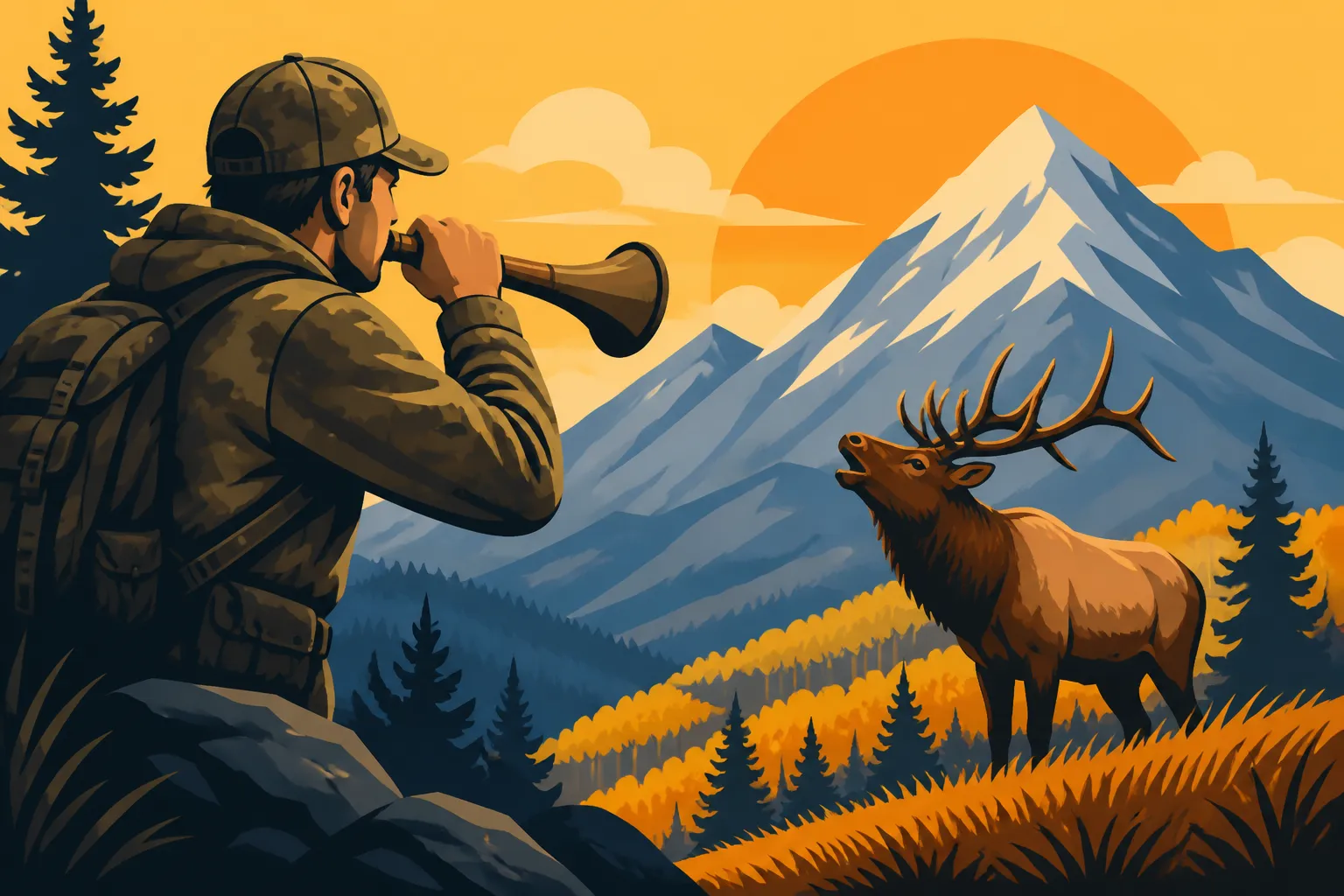
How to Bugle for Colorado Elk
Few sounds in the Colorado wilderness are as electrifying and intimidating as a bull elk's bugle echoing through the high country. For many hunters, trying to replicate that call, let alone use it effectively to draw in a wary bull, feels like trying to speak a foreign language in a high-stakes conversation. It's frustrating to hear a distant bugle and feel utterly powerless to engage, or worse, to try a bugle yourself and get nothing but silence in return. This comprehensive guide is designed to demystify elk bugling in Colorado, breaking down the essential techniques, gear, and strategies you need to confidently communicate with elk and increase your chances of success in the field.
Understanding the Elk Rut and Vocalizations
To truly master bugling for Colorado elk, you first need to understand the rich tapestry of sounds they make and, more importantly, why they make them. Elk are highly social animals, and their vocalizations are a complex form of communication, especially during the rut (mating season). It's not just about making noise; it's about understanding the context, the emotion, and the message behind each call. Without this foundational knowledge, you're just blowing air through a tube, hoping for the best.
The rut in Colorado, typically from mid-September to mid-October, is a period of intense activity where bulls become highly vocal. They're establishing dominance, gathering cows, and challenging rivals. This is the prime time for bugling, as bulls are often willing to respond and investigate perceived intruders or potential mates. However, elk communicate all year round, albeit less vocally outside of the rut. Learning their language will serve you well, regardless of the season.
The Language of Bulls: Understanding Different Bugles
Bulls have a diverse vocabulary of bugles, each carrying a specific message. Distinguishing these and learning to mimic them accurately is paramount. A challenge bugle, for instance, sounds vastly different from a locating bugle, and using the wrong one at the wrong time can either scare off a bull or simply yield no response.
A locating bugle is often a shorter, higher-pitched sound, sometimes with an inquiring tone at the end. It's like a bull calling out, "Is anyone else here?" or "Where are you all?" This is typically used to solicit a response from other elk, helping the bull pinpoint rivals or potential cows. When you're trying to find elk, especially in vast timber or across a canyon, a locating bugle is your opening gambit. You're not necessarily challenging them yet, just trying to get them to reveal their position. Many hunters find success with this early morning or late evening.
Then there's the challenge bugle, which is the classic, drawn-out, guttural roar that most people associate with elk. This is an aggressive call, often accompanied by chuckles and grunts at the end. It’s a bull proclaiming his dominance, asserting his territory, and daring other bulls to approach. When a bull is bugling back at you with this kind of intensity, he’s serious, and you’ve likely struck a nerve. This is when you know you're in the game, but also when you need to be prepared for a potential confrontation. It's a high-stakes poker game, where your calls are your bets.
Finally, you have what might be termed a herd bull bugle or a gathering bugle. This is often a deeper, more resonant sound, sometimes less aggressive than a full challenge but still authoritative. It's the sound of a bull keeping his harem together, letting them know he's there, or signaling to stragglers. These can sometimes be tricky to interpret because they aren't directly challenging you, but they indicate a bull with cows, which is exactly what you're looking for.
Cow Calls, Mews, and Chirps: The Supporting Cast
While bugles grab headlines, the subtle sounds of cows and calves are often the most effective tools in your calling arsenal. Many successful hunters will tell you that the quickest way to bring a bull in is to appeal to his desire to breed or his protective instincts, rather than directly challenging him with another bull's bugle. It's like inviting a friend to a party versus punching them in the nose to get their attention.
Cow mews are soft, pleading, or inquisitive sounds. They are used by cows to communicate with each other, with their calves, and often to attract bulls. There's a wide range of mews – from a short, soft "mew" indicating contentment to a longer, more drawn-out "meeeew" that signals loneliness or a desire for company. Mimicking these sounds can be incredibly effective, especially on a satellite bull looking for unattached cows, or even a herd bull who might come to investigate what he perceives as a new cow entering his territory. You can learn more about how to incorporate these sounds by checking out our guide on How to Cow Call Colorado Elk.
Estrus whines are a more specific and intense form of cow mew, indicating a cow that is ready to breed. This is a longer, higher-pitched, and often more nasal sound than a regular mew. When a bull hears an estrus whine, it often triggers an immediate, primal response, drawing him in quickly and aggressively. It's a powerful call that needs to be used with confidence and conviction.
Calf chirps and mews are even softer, higher-pitched sounds. These can be used to elicit a protective response from a cow or a curious response from a bull. Sometimes, if a bull is hesitant, a few soft calf sounds can reassure him that the situation is safe, or even pique his curiosity enough to come check out what sounds like a new group of elk. The key with these softer calls is often subtlety and realism. You don't need to scream them; just a gentle, authentic sound can be enough.
The Science Behind Elk Vocalizations
Beyond just mimicking sounds, understanding the underlying biology and behavior behind elk vocalizations can give you a significant edge. Elk vocalizations are deeply tied to their reproductive cycle, social structure, and survival instincts. Bulls primarily bugle to advertise their fitness, establish dominance, and gather a harem of cows. The louder, more complex, and sustained a bull's bugle, the more dominant he often appears to rivals and the more attractive he might seem to cows.
A bull's bugle is a direct indicator of his testosterone levels. During the rut, these levels surge, driving the aggressive bugling and fighting behavior. Cows, on the other hand, use mews and chirps to maintain herd cohesion, locate their calves, and signal their estrus status. The constant communication helps elk navigate their complex social world and ensures the continuation of the species. When you're out there calling, you're tapping into these ancient, hardwired behaviors. Understanding this physiological and behavioral context helps you not just make the right sound, but also interpret the responses you get from actual elk, allowing you to adapt your strategy on the fly. It's a game of chess, not checkers, and the more you understand your opponent, the better your chances.
Essential Gear for Bugling Success
Now that we understand the language, let's talk about the tools. You don't need a massive amount of gear to start bugling, but having the right calls and knowing how to use them is crucial. The market is flooded with various elk calls, and it can be overwhelming for a beginner. However, they generally fall into a few key categories, each with its own advantages and learning curve.
Many hunters, including those using platforms like GoHunt for their scouting and planning, realize that investing in quality calls is just as important as investing in quality optics or footwear. Good calls are durable, produce realistic sounds, and are comfortable to use in the field. Don't skimp here; a cheap, unreliable call can ruin a potentially game-changing encounter.
Types of Bugle Tubes and Reeds
The bugle tube is the essential amplifier for any elk bugle. It's a simple tube, typically made of plastic or carbon fiber, that you blow through to project sound. The length and diameter of the tube affect the resonance and volume of your calls. Longer tubes generally produce deeper, more resonant bugles, while shorter tubes are more compact and easier to carry. Some popular choices include models from Phelps Game Calls or Native by Carlton.
Within the bugle tube, you'll use different types of reeds to create the sound itself.
External reed calls are often the easiest for beginners to pick up. These calls consist of a mouthpiece with a single or double latex reed stretched over it, which you bite down on or press against with your tongue while blowing. The sound is produced by the vibration of the reed. They can create very realistic cow mews, estrus whines, and even a decent bugle. Their main advantage is their ease of use and versatility, but they can be a bit bulky to carry and require some dexterity to keep quiet in the field.
Diaphragm Calls and External Reeds
Diaphragm calls are arguably the most versatile and widely used calls by experienced elk hunters. These small, horseshoe-shaped calls fit entirely in your mouth, resting on your tongue, with a latex reed stretched over a frame. You produce sound by forcing air over the reed with your tongue. The beauty of diaphragm calls is that they allow for hands-free operation, which is invaluable when you're drawing a bow or shouldering a rifle. They can produce the full spectrum of elk sounds—bugles, mews, chirps, and whines—with incredible realism and nuance.
However, diaphragm calls have a steeper learning curve. It takes practice to master the tongue pressure, airflow, and mouth shape needed to create consistent, realistic sounds. Many hunters struggle initially with getting a clear sound, often producing squeaks or squawks. Don't get discouraged! This is where dedicated practice comes in. Think of it like learning to play a musical instrument; it takes time and patience. Start with a single-reed diaphragm call, which is often easier to blow, and gradually work your way up to double or triple reeds for more volume and rasp.
Accessories: Mouthpiece Holders, Call Lanyards
While the calls themselves are the stars of the show, a few accessories can make your life a lot easier in the elk woods.
A bugle tube mouthpiece holder is a small, elastic strap that keeps your bugle mouthpiece securely attached to your bugle tube. This prevents you from fumbling with separate pieces when a bull suddenly screams back at you. When seconds count, you don't want to be searching for a lost mouthpiece in your pack.
Call lanyards are also incredibly useful, especially for diaphragm calls or external reeds. A good lanyard keeps your calls accessible around your neck, preventing them from being dropped or lost. You want to be able to switch between a bugle and a cow call seamlessly without making unnecessary movement that could spook an incoming bull. For example, if you're trying to call in a silent bull, you might want to switch between a soft mew and a locating bugle quickly.
Finally, consider a protective case for your diaphragm calls. These small, delicate calls can easily be damaged if left loose in a pack. A small, hard case will protect the latex reeds, ensuring your calls are always ready when you need them.
Mastering the Art of the Bugle
Learning to make an elk call sound somewhat like an elk is one thing; mastering the art of the bugle, making it sound realistic, emotional, and convincing, is another. This takes significant practice, dedication, and an understanding of what makes a bull "believe" your call. You’re not just blowing into a tube; you’re telling a story with sound.
One of the biggest frustrations for new buglers is the sheer inconsistency of their calls. One minute it sounds okay, the next it’s a total squeaker. This is normal. Think of it as developing muscle memory for your diaphragm, tongue, and lips. It takes repetition, just like any other skill in hunting or elsewhere.
Learning the Basic Bugle: High Pitch to Growl
The classic elk bugle starts with a high-pitched whistle, transitions into a deep, guttural roar or growl, and often ends with a series of chuckles or grunts. Breaking this down into its components can make it easier to learn.
- The Whistle: This is the most challenging part for many. With a diaphragm call, place it firmly against the roof of your mouth, with the open end facing your front teeth. Breathe deeply and force air over the reed, similar to spitting a seed. Experiment with tongue pressure and the amount of air until you get a clear, high-pitched squeal. The goal is a clean, piercing whistle. With a tube and external reed, it's about lung power and lip pressure.
- The Transition and Growl: Once you have the whistle, gradually drop the pitch by reducing air pressure or changing your mouth shape (opening your mouth wider, dropping your jaw). As the pitch drops, introduce a guttural growl from your throat. This is the raw, powerful part of the bugle. It should sound deep and aggressive.
- The Finisher (Chuckles/Grunts): As the growl fades, add a series of short, choppy, guttural sounds, often called chuckles or grunts. These signify aggression, excitement, or a challenge. To make a chuckle, keep the diaphragm call in your mouth and use your diaphragm to push short bursts of air, while making a 'hup-hup-hup' sound in your throat.
Practice each component separately until you can make it consistently, then try to string them together smoothly. The aim is for a seamless transition, making the call sound like one continuous expression of a bull's emotion. Don't be afraid to sound a little rough at first; actual elk aren't always perfect opera singers!
Adding Emotion: Chuckles, Grunts, and Whines
Once you've mastered the basic structure, it's time to infuse your bugles with emotion. A flat, robotic bugle rarely fools an experienced bull. Elk listen for nuance, confidence, and aggression.
Chuckles and grunts are critical for adding realism. As mentioned, these often follow a challenge bugle and convey dominance and readiness to fight. Practice making them sound short, sharp, and confident. They should punctuate the end of your bugle, leaving no doubt about your bull's intentions. When a bull returns your bugle with chuckles, he's telling you he's coming or that he means business.
Whines and mews are more about subtlety and seduction. An estrus whine, often produced with a diaphragm call or external reed, needs to sound desperate yet alluring. It’s a drawn-out, nasal, high-pitched sound that mimics a cow in heat. Practice varying the length and intensity. Sometimes, a series of soft mews, followed by a louder estrus whine, can paint a vivid picture for a bull that there are receptive cows in the area. This can be particularly effective when a bull is "hung up," reluctant to commit to your position.
The goal is to paint a complete sonic picture for the elk. Are you a lone bull looking for company? A dominant bull defending his territory? A hot cow ready to breed? Your calls need to convey this story convincingly.
Realistic Calling Sequences
Real elk don't just let out a single bugle or mew and then fall silent. They communicate in sequences, often responding to each other, escalating or de-escalating their calls based on the interaction. Your calling should mimic this natural flow.
A typical calling sequence might start with a soft locating bugle to see if any bulls are in the area. If you get a response, you might follow up with a series of cow mews to pique his interest. If he bugles back aggressively, you might escalate to a confident challenge bugle with chuckles, letting him know you're not backing down. This back-and-forth, known as calling and listening, is key. Give the elk time to respond. Don't call too frequently or too loudly initially.
Here's a common sequence:
- Silence: Listen for natural elk sounds.
- Soft Locating Bugle / Cow Mews: A gentle probe to gauge interest.
- Listen: Wait for a response. Could be 5-10 minutes.
- Respond to Elk: If a bull bugles, gauge his intensity.
- If he’s distant or weak: More soft cow mews or a less aggressive bugle.
- If he’s close and strong: A confident challenge bugle, perhaps with some raking of a tree to simulate rubbing antlers.
- Escalate/De-escalate: Adjust your calls based on his responses and proximity.
The most important part of any calling sequence is listening. Often, the elk will tell you exactly what they want to hear through their own vocalizations. If they go silent, you might have called too aggressively or too often. If they bugle closer, they’re interested. For detailed advice on this, our article on How to Bugle-Locate a Colorado Bull offers more insights.
| Call Type | Description | Primary Purpose |
|---|---|---|
| Locating Bugle | Short, high-pitched, inquiring whistle | Pinpoint distant elk, elicit a response |
| Challenge Bugle | Long, aggressive, guttural roar with chuckles | Provoke a dominant bull, assert presence |
| Grunt/Chuckle | Short, sharp, guttural sounds, often after a bugle | Convey aggression, excitement, dominance |
| Cow Mew | Soft, inquisitive, pleading "mew" sound | Attract bulls, calm elk, maintain herd cohesion |
| Estrus Whine | Long, high-pitched, drawn-out cow call | Mimic a cow in heat, highly attractive to bulls |
| Calf Chirp/Mew | Very soft, high-pitched "chirp" or "mew" | Evoke protective instincts, curiosity |
| Bugle Sequence | Combination of bugles, grunts, and cow calls | Realistic dialogue, tell a story to the elk |
Strategic Bugling in the Field
Knowing how to make the sounds is only half the battle; knowing when and where to use them is the true test of a skilled elk caller. Bugling in the field is a strategic endeavor, heavily influenced by terrain, wind, time of day, and elk behavior. A poorly timed or misplaced call can be worse than no call at all, potentially spooking the very animal you're trying to attract. This is where fieldcraft meets vocal artistry.
Always consider your surroundings. Are you in thick timber where sounds are muffled, or in an open basin where sounds carry far? Is the wind in your favor? Are there other hunters nearby? Being strategic means adapting your calling to the specific situation you find yourself in. This is where scouting, often aided by tools like GoHunt, which helps analyze terrain and elk patterns, truly pays off. Knowing the terrain helps you anticipate where an elk might come from and how best to set up.
Situational Calling: Locating, Challenging, and Decoying
Different situations call for different bugling approaches. You wouldn't use a full-blown challenge bugle when you're just trying to locate elk on a silent morning, just as you wouldn't use soft cow mews when a bull is screaming his head off at you.
Locating Elk: Early in the morning or late in the evening, when elk are typically moving between bedding and feeding areas, a soft locating bugle can be very effective. It’s an exploratory call. You're not trying to challenge anything, just get a response. Often, bulls will respond with a similar locating bugle, giving away their general position. Once you hear a response, silence is golden. Move quickly and quietly to close the distance, always keeping the wind in your favor. This is crucial for hunters interested in Colorado DIY Elk Hunting Guide.
Challenging a Bull: Once you've located a bull and determined he's a potential target (and ideally, you've closed some distance), a more aggressive approach might be warranted. If he's bugling confidently, a confident challenge bugle back can often get him to commit. This is where you might rake a tree with a branch, mimicking antlers, to add visual and auditory realism to your challenge. However, be careful not to overdo it. Too much aggression too soon can sometimes intimidate a bull or make him circle downwind to scent-check you, which is almost always game over.
Decoying and Drawing Them In: Often, you’ll get a bull to respond, but he hangs up just out of sight, unwilling to commit fully. This is where decoying tactics come into play. Having a second caller (your buddy) set up behind you, acting as the "bull" while you (the primary shooter) are positioned 50-100 yards forward as the "cow," can be deadly. The bull focuses on the challenge from the back, while he's actually walking into your shooting lane. You can also use a small elk decoy to add visual stimulation, especially for archery hunters. For more on setting up, check out How to Set Up on a Bugling Elk.
Reading Elk Responses and Adjusting Your Strategy
Elk are constantly communicating, even when they're not vocalizing. Learning to read their responses, both auditory and subtle, is as important as making the right calls.
- Aggressive Bugles: If a bull is screaming back at you with deep, guttural bugles and chuckles, he's likely coming and means business. Prepare for a shot.
- Weak or Distant Bugles: A bull bugling softly or moving away might be less interested, already with cows, or simply not dominant enough to challenge. You might need to change tactics, perhaps becoming more submissive with cow calls, or circling to get ahead of him.
- Silence: Sometimes, a bull will go completely silent after you call. This can mean a few things: he's spooked, he's curious and coming in quietly, or he's already with cows and doesn't want to give away his position. If you suspect he's coming in quietly, stay put, stay quiet, and remain vigilant. Often, a few soft cow mews can coax him to reveal himself. Our article on How to Find Elk When They Go Quiet delves deeper into this scenario.
- Antler Rubs or Tree Raking: If you hear this, it's a sign a bull is close and aggressively marking his territory. He's responding to your challenge. Get ready.
- Circling Downwind: If you suspect a bull is circling to get your scent, you need to react quickly. Either move to intercept him, or, if possible, reposition yourself to keep the wind in your favor. This is often the death knell for a setup, so preventing it is key.
Adjusting your strategy means being flexible. Don't be afraid to change your calling sequence, move your position, or even switch to a completely different calling style if what you're doing isn't working. The elk will tell you what they want.
Common Bugling Mistakes to Avoid
Even seasoned hunters make mistakes, and bugling for elk is no exception. Avoiding these common pitfalls can significantly increase your success rate.
- Calling Too Much/Too Loudly: This is probably the most common mistake. Elk have incredible hearing. Start soft and listen. If you blast a bugle every 30 seconds, you'll likely scare off wary bulls or make them believe you're a threat that's too close for comfort. Let the conversation unfold naturally.
- Calling at the Wrong Time: Avoid aggressive bugles in the middle of the day when elk are bedded down and often less responsive. Save your most intense calls for prime feeding and rutting hours (early morning and late evening).
- Ignoring the Wind: The wind is your ultimate ally or enemy. Always position yourself so your scent is not blowing towards where you expect the elk to come from. Even the most perfect bugle won't overcome being winded.
- Not Practicing Enough: Don't wait until opening day to pull out your calls. Practice regularly, in different environments, to master realism and consistency.
- Lack of Realism: A generic, monotonous bugle won't cut it. Vary your pitch, tone, and aggression. Add chuckles and mews to your sequence. Make it sound like a real elk interaction.
- Expecting an Immediate Response: Elk don't always respond instantly. Give them time. Sometimes a bull will remain silent for several minutes before responding, or even come in without a sound. Patience is a virtue in elk hunting.
By being mindful of these mistakes and actively working to avoid them, you'll become a more effective and successful elk bugler.
Integrating Bugling with Hunting Methods
Bugling isn't a standalone hunting method; it's a powerful tool that integrates with various other techniques. Whether you're an archery purist or a rifle hunter, knowing how to weave calling into your overall strategy can elevate your hunt from a silent stalk to an engaging, dynamic experience. The best Colorado Elk Hunting Methods Explained often involve some form of vocal communication.
The specific nuances of how you bugle and where you position yourself can change dramatically depending on your chosen weapon and the hunting season. What works for an archery hunter in the thick of the rut might be counterproductive for a rifle hunter later in the season.
Bugling for Archery Elk Tactics for the Rut
Archery season, especially during the peak rut, is prime time for bugling. Bulls are often highly vocal and aggressive, making them more susceptible to calling strategies. The challenge, of course, is getting them within bow range—typically 40 yards or less. This requires precision in calling and an impeccable setup.
When hunting Archery Elk Tactics for the Rut, you'll often use aggressive bugles and estrus whines. The goal is to make the bull believe there's a rival bull encroaching on his cows, or a lone cow ready to breed. As the bull approaches, you need to be extremely quiet and still. Remember the hands-free advantage of diaphragm calls; this is where they truly shine. You can continue to call softly, perhaps with a few mews or chirps, as the bull closes the distance, keeping his attention while you draw your bow.
A common tactic is to have a caller positioned behind the shooter. The caller engages the bull, drawing his attention away from the shooter. As the bull comes in, he's looking for the "other" bull, presenting a broadside shot to the concealed archer. This "run and gun" style can be incredibly effective during the rut, allowing you to move quickly to hot action areas. Colorado's diverse terrain offers plenty of opportunities for archers willing to put in the legwork, and a well-placed bugle can make all the difference.
Using Bugles in Colorado Rifle Elk Hunting
While bugling is synonymous with archery season, it can still be highly effective for rifle hunters, particularly in the earlier rifle seasons (like Colorado 1st Rifle Season Dates and Colorado 2nd Rifle Season Dates). Bulls are often still vocal, especially early in the first season, before heavy hunting pressure silences them.
For rifle hunters, the goal might not be to draw a bull within 20 yards, but to get him to stop, stand broadside, or reveal himself from cover at a longer, more comfortable shooting distance. A sharp, confident bugle can often make a moving bull stop to investigate, giving you a crucial moment for a shot. Similarly, if a bull is hidden in thick timber, a well-timed cow call or soft bugle can sometimes entice him to step out into an opening.
As the rifle seasons progress and pressure mounts, elk often become more wary and less vocal. In later seasons, aggressive bugling can often be counterproductive. Instead, softer cow calls, mews, and chirps are usually more effective. These less threatening sounds can sometimes calm nervous elk or pique a bull's curiosity without putting him on high alert. You might also use a bugle purely for Colorado Elk Hunting: Calling Tactics to locate elk from a distance, then transition to a silent stalk once you pinpoint their general area.
Combining Calling with Spot-and-Stalk Hunting in Colorado
Spot-and-stalk is a classic Western hunting method, and bugling can be a fantastic complement to it. In vast, open country or across large basins common in Colorado Backcountry Hunting Guide, you can use a locating bugle to find elk that might be miles away. Once you hear a response, you can then plan your approach.
For instance, imagine you're glassing a distant ridge in the San Juan Mountains and hear a faint bugle. Instead of blindly hiking towards it, you can use your spotting scope to try and pinpoint the bull or his herd. Once you have a visual, you can then plan a silent stalk, using the wind and terrain to your advantage. As you get closer, you might use soft cow calls to gauge their location or even to stop a moving bull for a shot.
Conversely, if you're on a pure Spot-and-Stalk Hunting in Colorado and unexpectedly bump into elk, a quick, sharp cow call can sometimes stop them momentarily, giving you a chance for a shot before they vanish into the timber. The key is using calls judiciously—not as a primary means of drawing them in, but as a strategic tool to locate, stop, or direct elk during your stalk.
Advanced Bugling Scenarios and Troubleshooting
Even with perfect technique and the right gear, elk hunting is rarely straightforward. There will be times when bulls act contrary to expectation, and this is where advanced bugling strategies and troubleshooting come into play. Dealing with pressured elk, silent bulls, or those frustratingly "hung-up" animals requires patience, adaptability, and a deeper understanding of elk behavior.
Colorado's public lands, particularly during over-the-counter (OTC) seasons, can see significant hunter pressure. This pressure dramatically alters elk behavior, making them warier and often less vocal. Learning to adjust your calling to these conditions is vital for success.
Calling in Silent Bulls: When They Go Quiet
The silent bull is the bane of many elk hunters. You know they're in the area, but they refuse to bugle, making it incredibly difficult to pinpoint their location. This often happens after heavy hunting pressure, or when bulls are wary or simply not feeling vocal. However, silence doesn't mean they're not listening.
When faced with silent bulls, your calling strategy needs to shift from aggressive challenges to subtle invitations.
- Start with Soft Cow Mews: Instead of a bugle, try a series of soft, lonely cow mews or chirps. These are less threatening and can often pique a bull's curiosity without putting him on high alert. He might not bugle back, but he might start moving towards the sound, or respond with a soft grunt that's barely audible. You can find more specific guidance in our post on How to Call in a Silent Bull.
- Wait and Listen: After making a few soft calls, go completely silent for an extended period—10, 15, even 20 minutes. Listen intently for any subtle sounds: a twig snap, a branch rub, a distant grunt. Elk can approach incredibly quietly.
- Use Locator Calls: Sometimes, a very loud, sharp bugle—even a non-realistic one like a coyote howl or an owl hoot—can be used as a "locator" call to shock a bull into giving away his position. This is a Hail Mary pass, to be used sparingly, but it can sometimes work when all else fails.
- Simulate a Herd: A mix of soft cow mews, calf chirps, and an occasional soft, submissive grunt can create the impression of a small, peaceful herd. This can sometimes draw a wary bull in, especially if he's looking for companionship.
The key with silent bulls is to be patient, subtle, and incredibly observant. They are often listening more than talking.
Dealing with Hung-Up Bulls
Ah, the "hung-up" bull. You've called him in, he's bugling enthusiastically, but he just won't commit. He's standing just out of sight, maybe 100-200 yards away, and no matter what you do, he won't take those last crucial steps into range. This is an incredibly frustrating scenario, and it happens to almost every elk hunter.
Here's how to try and break a hung-up bull:
- Silence and Patience: Sometimes, going completely silent after a few calls can make the bull impatient. He might think the "cow" or "rival" is leaving and come to investigate.
- Move Away Slightly: If you have a calling partner, have them slowly back away while continuing to make soft cow calls or satellite bull bugles. This can make the bull think the other elk are leaving, triggering him to follow. This "retreating cow" or "retreating bull" strategy can be incredibly effective.
- Simulate Sparring/Raking: If you have a partner, have one person make a challenge bugle while the other rakes a tree loudly with a branch or an elk antler. This simulates a fight, often enough to draw a hung-up bull in to investigate.
- Estrus Whine: A loud, pleading estrus whine, especially if you haven't used one yet, can sometimes be the irresistible temptation that pushes a bull over the edge.
- Wind Check: Be hyper-aware of the wind. A bull that hangs up is often trying to get downwind to scent-check the situation. If you suspect this, you might need to reposition quickly.
- "Break Him Off": If you have an aggressive bull and a second caller, a very aggressive bugle and heavy tree raking can sometimes "break him off" from his current position. This is risky, but if he's not moving anyway, it might be worth a shot.
Dealing with a hung-up bull often boils down to playing on his curiosity, dominance, or breeding instincts in new ways.
Public Land Pressure: Bugling Smart
Colorado's public lands are a treasure, but they also see significant hunting pressure, especially during rifle seasons. This pressure makes elk incredibly wary and less likely to respond to aggressive calling. Learning to bugle smart in these conditions is crucial. Our How to Hunt Elk on Public Land Pressure guide offers extensive strategies.
- Go Deeper, Get Further: The easiest way to escape pressure is to go where others won't. This often means getting into true backcountry areas where you might find less pressured elk more willing to respond.
- Be Subtle: On pressured public land, less is often more. Start with very soft cow mews and chirps. Avoid aggressive bugles unless you get a very strong, close response. Many bulls will go silent or even move away if they hear too much bugling, as it often signals other hunters.
- Hunt the "Quiet Times": Consider hunting during the middle of the day when many hunters are often back in camp. You might find elk that are more relaxed and willing to respond to a soft call during these less pressured hours.
- Use Terrain as a Shield: Utilize topography to muffle your calls and direct sound. Call from the back side of a ridge or into a deep draw to keep your sound localized, preventing it from carrying too far and alerting other hunters or wary elk.
- Be Aware of Other Hunters: You're not the only one out there. If you hear other hunters calling, consider moving to a different area or changing your calling style to differentiate yourself. You don't want to get into a calling battle with another hunter, and you certainly don't want to bring an elk into another hunter's setup. This requires constant situational awareness, which is greatly enhanced by using mapping tools like GoHunt that show public land boundaries and even topo maps.
Bugling on pressured public land is an exercise in restraint and realism. The goal is to sound like a real elk, not a hunter with a call. It's challenging, but with smart tactics, it can lead to incredibly rewarding encounters.
Disclaimer
Hunting is an inherently dangerous activity. This guide provides information for educational purposes only. Always prioritize safety, follow all local, state, and federal hunting regulations, and obtain proper licenses and permits. Be aware of your surroundings, hunt with a partner if possible, and let someone know your hunting plans. The author and publisher are not responsible for any accidents, injuries, or legal issues that may arise from hunting activities.