Archery Elk Tactics for the Rut
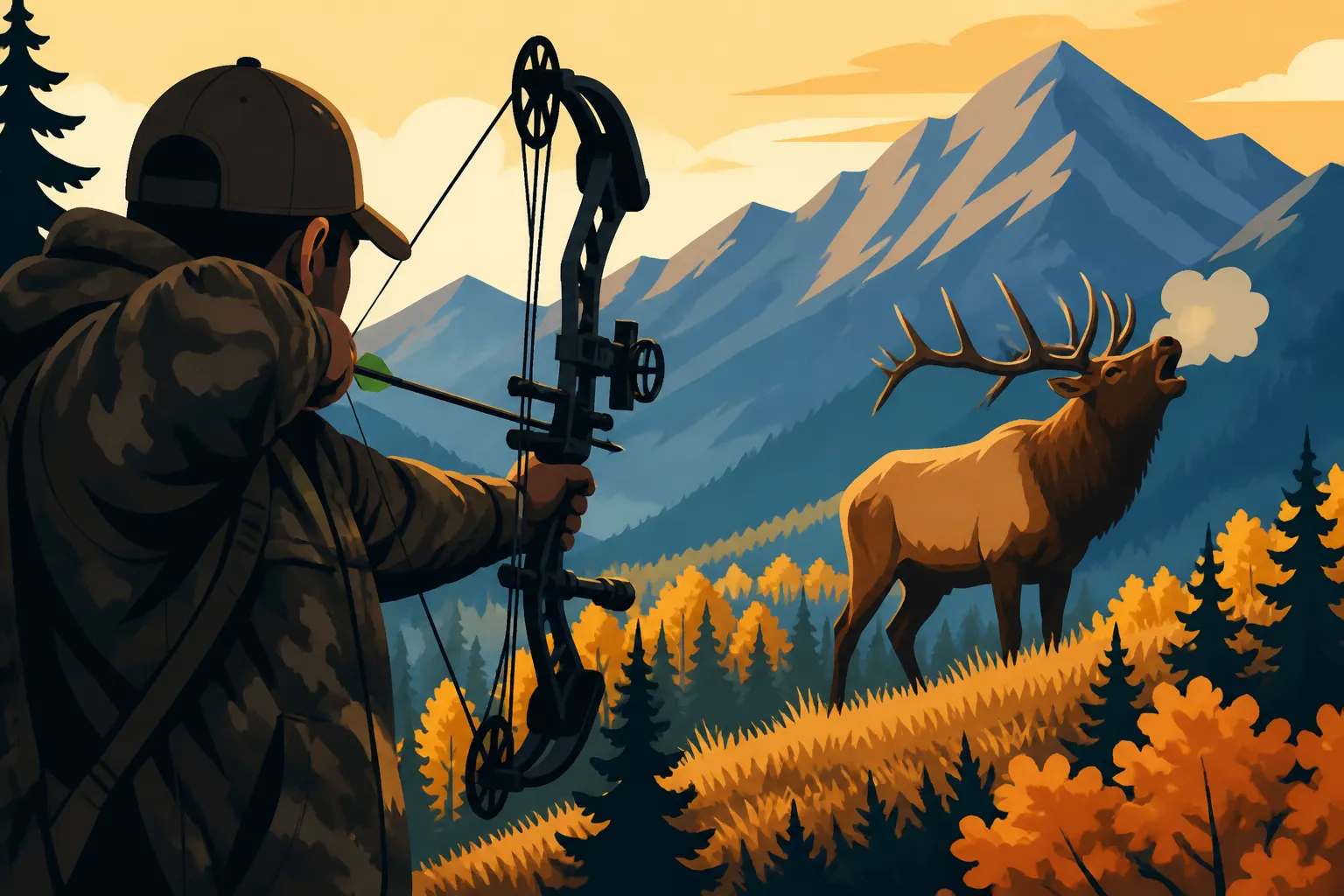
The unique challenge and thrill of chasing a bugling bull with a bow in the Colorado high country during the rut is something many hunters dream of, but the reality can often be a frustrating dance of near misses and silent timber. It's a game where a split-second decision, a missed thermal, or a bad call can mean the difference between punching your tag and heading home empty-handed. This comprehensive guide is designed to equip you with the essential archery elk tactics for the rut, helping you decode their behavior, master your approach, and increase your odds of success when those elk are most vocal and vulnerable.
Understanding the Rut's Influence on Elk Behavior for Archery Hunters
The elk rut in Colorado is a magical, yet challenging, time for bowhunters. It's a period of intense activity, heightened vocalizations, and decreased wariness in bulls, but it also brings increased hunter pressure and unpredictable conditions. To truly capitalize on this narrow window, you first need to understand the nuances of elk behavior throughout the rutting phases.
The Phases of the Rut and Archery Opportunities
The rut isn't a single event; it's a progression with distinct behavioral shifts that savvy archery hunters can exploit.
During the early rut, typically in late August and early September, bulls are still separating from their summer bachelor herds. They're starting to feel the urge, testing their dominance with sparring matches, but the cows aren't quite receptive yet. This phase is often characterized by sporadic bugling and bulls that are responsive to calls but still cautious. It's a fantastic time to locate bulls with less pressure, often before the peak bugling frenzy. As an archery hunter, you can capitalize on bulls responding to calls by approaching slowly and methodically, using subtle cow calls to draw them in, as they might be less inclined to charge head-on.
The peak rut, usually from mid-September into early October, is what every hunter dreams of. This is when bulls are screaming, cows are receptive, and the mountains resonate with a chaotic symphony of elk communication. Bulls are aggressive, territorial, and their caution often takes a backseat to their desire to breed, making them more susceptible to calling and decoying tactics. However, this also means significantly more hunter pressure on public lands. This is the time for bold calling and aggressive setups, but also for extreme patience as multiple bulls (and hunters) might be working the same herd. A screaming bull might charge in, only to lock up when he smells another hunter's scent.
Finally, the late rut and post-rut period sees breeding activity winding down. Cows become less receptive, and bulls, exhausted from weeks of fighting and breeding, often start to gather again, seeking recovery in secluded areas. While calling can still work, it needs to be more subtle and strategic. You might focus on challenging a lone, satellite bull rather than trying to pull a dominant bull away from his now less-receptive cows. Bulls at this stage are often wary and looking to regain energy, making a quiet, persistent approach or even an ambush near known feeding areas more effective than aggressive bugling.
Reading Elk Sign and Communication Cues
Successful archery hunting during the rut isn't just about making noise; it's about understanding the silent language and the subtle cues elk are constantly providing.
Fresh rubs on saplings and wallows filled with muddy water are screaming indicators of active bulls. During the rut, these spots become community bulletin boards, revealing travel patterns, presence, and even the size of the bulls in the area. Pay close attention to the size of the rubs – bigger bulls often rub bigger trees, leaving deeper gouges. Wallows, especially those still wet and pungent with elk urine, are high-traffic areas where bulls assert dominance and cool down. Setting up downwind of an active wallow can be a highly effective ambush tactic.
Beyond the iconic bugle, you need to learn to interpret chuckles, grunts, cow mews, and calf chirps. A bull's chuckle can tell you he's agitated, herding cows, or actively breeding. Rhythmic grunting might mean he's pushing his cows or challenging a rival. Understanding How to Cow Call Colorado Elk can be a game-changer. Soft, contented cow mews and calf chirps convey safety and can be incredibly effective at drawing in a bull that's reluctant to respond to an aggressive bugle. The better you understand these nuances, the more realistically you can mimic their communication and predict their next move.
Interpreting responses is perhaps the most critical skill. A bull that charges in is one thing, but what about the one that hangs up, circling downwind for a scent check? Or the one that bugles once and goes silent, only to reappear 100 yards to your left? Learning to read these responses – understanding why they might be hesitant, where they're trying to circle, and how to adjust your tactics on the fly – is crucial. Sometimes, a silent approach after a distant bugle is far more effective than an immediate, aggressive response. Every call and every response is a clue in the intricate puzzle of the rut.
Strategic Pre-Season Preparation and E-Scouting
Before you even step foot in the Colorado high country, your success during an archery rut hunt is heavily influenced by how you prepare both mentally and physically, and how effectively you use modern tools to scout your hunting area.
Leveraging E-Scouting Tools for Rut Locations
In today's hunting world, digital maps and satellite imagery are just as important as your binoculars, if not more so, for pre-season planning.
Identifying prime habitat from your living room is no longer just a dream. You should be dissecting maps, zooming in on every contour and feature. Look for north-facing slopes with dense, dark timber, which are often preferred bedding areas, especially as the sun gets higher. Conversely, south-facing slopes with good forage can be feeding grounds. Identify saddles, drainages, and reliable water sources. Platforms like GoHunt provide invaluable data overlays, allowing you to pinpoint potential wallows, natural travel corridors, and bedding areas without putting boots on the ground. You can mark these waypoints, create routes, and even identify potential ambush points long before opening day.
Modern scouting tools also offer rich historical data and success analytics. You can find layers showing historical fire scars, timber cuts, and even migration patterns. Understanding how these features impact elk movement can help predict where animals might congregate during the rut. Using a service like GoHunt's Insider can offer critical insights into draw odds and harvest data by unit. While this doesn't tell you exactly where a rutting bull will be, it can guide you to units with higher populations and better success rates, especially if you're trying to secure a coveted Colorado elk tag. This pre-analysis can save countless hours of wasted effort.
Think of it as virtual "boots on the ground." E-scouting isn't just about passively looking at maps; it's about actively imagining yourself in the terrain. Trace potential routes, identify possible ambush points along drainages or benches, and mark areas where you'd expect to hear or see elk during the rut based on topography and vegetation. This virtual reconnaissance will save you precious time and energy when you're actually in the field, allowing you to arrive with a well-researched game plan rather than just a hope and a prayer.
Physical and Mental Conditioning for the Mountains
Archery elk hunting during the rut in Colorado is not for the faint of heart. It demands peak physical condition and an iron will.
Building mountain endurance is non-negotiable. This isn't a casual stroll; you need to be able to hike for miles through steep, unforgiving terrain, often at elevations exceeding 9,000 feet, carrying a heavy pack, and still draw your bow smoothly when the moment of truth arrives. Your training regimen should heavily focus on cardio, leg strength, and carrying weighted packs up inclines. Incorporate exercises like step-ups, squats, and long hikes with your hunting pack. The better your physical conditioning, the quieter and more persistent you can be in the mountains. This is where your fitness plan truly pays off, especially if you're preparing for high-altitude hunting.
Mental toughness and persistence are equally critical. The rut can be a rollercoaster of emotions. There will be days of silence, days of blown stalks, and moments of intense pressure where a bull might hang up just out of range. Maintaining a positive mindset, staying persistent through the grind, and being mentally prepared for the physical and emotional challenges are just as important as physical strength. Don't let frustration derail your hunt. Remember that How to Find Elk When They Go Quiet is a common challenge, and overcoming it requires resilience and a belief that the next ridge holds your opportunity.
Finally, a thorough gear shakedown and practice are essential. Your gear is an extension of yourself in the backcountry. Ensure your archery setup is perfectly tuned, and you've practiced shooting at various angles, including uphill and downhill. Spend time practicing with your broadheads, not just field tips. Test all your clothing layers, your pack, and your boots. There's nothing worse than discovering a gear malfunction – a ripped pack, a leaky boot, or a squeaky bow limb – deep in the backcountry when a bull is screaming in your face. Being comfortable and confident in your gear allows you to focus solely on the hunt.
Mastering Archery Elk Calling During the Rut
Calling for elk during the rut is an art form, a conversation that, when done correctly, can bring a massive bull into bow range. But it's not just about making noise; it's about intelligent, situational communication.
Situational Calling: Knowing When and What to Call
The key to effective calling is understanding the context and adjusting your sounds accordingly, rather than just blasting out random bugles.
Knowing when to use locator bugles versus challenge bugles is paramount. A soft, questioning bugle, especially early in the morning or late in the evening, can help you locate a bull without immediately alerting him to your exact presence. Once you've established his position and mood, your calling strategy can become more aggressive. A full-throated, dominant challenge bugle, especially when paired with aggressive raking of trees, can often infuriate an insecure bull and draw him right into your lap. However, use caution; too much aggression can also send a dominant bull the other way if he thinks you're not a real threat, or if he's already tending to his harem of cows. Mastering How to Bugle for Colorado Elk takes practice and nuance.
Never underestimate the power of subtle cow and calf talk for drawing in bulls. These sounds often convey safety, contentment, and the presence of receptive cows, which can be irresistible to a bull cruising for breeding opportunities. Soft, social mews and chirps can bring in a hesitant bull that wouldn't respond to a bugle. Sometimes, a series of light, inquisitive mews is all it takes to pique a bull's interest and draw him in silently. These calls are especially effective when a bull has gone quiet, and you suspect he might be circling downwind.
Calling should always be thought of as a setup, not just a noise-making exercise. A good caller knows how to orchestrate a sequence, moving callers strategically to mimic a real elk herd. For archery, the primary caller should often be positioned 20-40 yards behind the shooter. This creates the illusion that the bull is approaching the "cow" that's calling, drawing his attention away from the actual shooter, who can then prepare for the shot as the bull comes in. This requires teamwork and communication, but it dramatically increases your chances of a successful ambush.
Advanced Calling Techniques and Decoys
Once you've mastered the basics, you can elevate your calling game with more advanced techniques and the strategic use of decoys.
When you've got a bull fired up and responding, adding aggressive raking and antler clashing can create an irresistible illusion. By scraping a stick or a small antler against a tree, you mimic bulls fighting and establishing dominance, which can often infuriate a bull enough to investigate. If you're hunting with a partner and both are comfortable and safe, light antler clashing can add incredible realism. Just be mindful of the wind and your exact location; these sounds can bring elk in fast and aggressively, so be ready.
Modern elk decoys, like those from Montana Decoy, can be absolute game-changers, especially during the peak rut. A lightweight, realistic silhouette of a cow or a small bull can draw a territorial bull's attention away from your actual position and provide that crucial few seconds needed for a shot. Position the decoy carefully to mask your draw cycle and give the bull something to focus on other than you. It often gives the bull something to approach head-on, allowing the shooter a quartering-away shot as the bull passes. Remember to practice setting up on a bugling elk with a decoy in your practice routine to ensure smooth execution when it counts.
Sometimes, the best call is no call at all – a technique often referred to as silent calling. During the peak rut, elk are incredibly vocal, but they also rely heavily on silent communication and body language. Pay close attention to how a bull is moving, his body language, and whether he's responding to the calls of real elk around him. Sometimes, mimicking their silent movement patterns, using minimal calls, or simply settling into a hidden spot and waiting patiently is more effective than another bugle. Bulls will often move in silently after hearing calls, circling downwind for a scent check. The hunter who is still and observant has a distinct advantage over a moving hunter who might spook the silent approacher.
Strategic Approach: Spot-and-Stalk, Ambush, and Blind Hunting
While calling is a significant part of rut archery hunting, it's just one piece of the puzzle. How you move through the landscape and position yourself for the shot are equally critical.
When to Employ Spot-and-Stalk in Rut Archery
Spot-and-stalk hunting requires a different mindset and skillset than calling, and knowing when to use it can greatly increase your success.
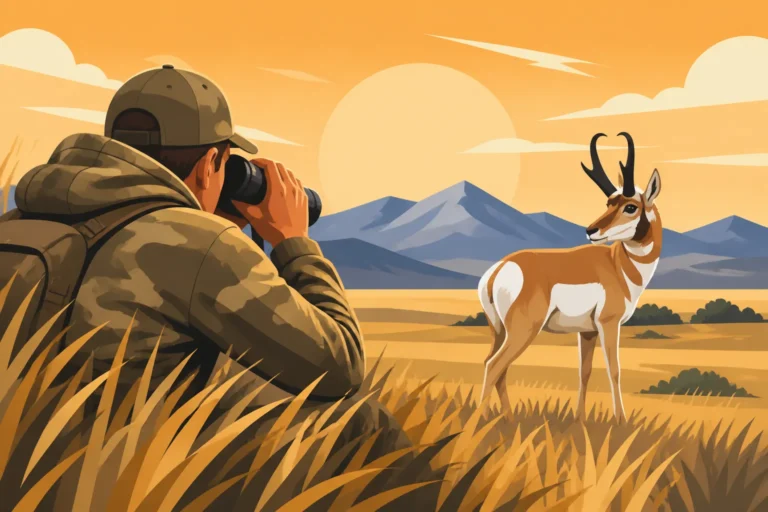
Spot-and-stalk is most effective when you can visually locate a bull or an entire herd, often in more open timber, across expansive basins, or on open ridges. This typically involves extensive glassing from a distance, identifying bedded or feeding elk, and then planning a precise, wind-conscious approach to get within bow range. This method demands extreme patience, exceptional woodsmanship, and a keen understanding of terrain. Mastering How to Glass Big Colorado Basins to find those elusive bulls is a crucial first step. Once spotted, the real work begins.
Colorado's diverse terrain—from dense, dark timber to high alpine basins and open sage country—dictates when and where spot-and-stalk is viable. Always use the terrain to your advantage, staying out of sight by using every depression, ridge, and clump of trees for cover. The wind is paramount; a sudden shift will blow your stalk, regardless of how stealthy you are. Always be aware of thermals, which are air currents that flow up the mountain in the morning and down in the evening; they are a critical factor in the mountains and can carry your scent for miles.
The art of the stalk is not a race. Every step must be deliberate, quiet, and thought out. Focus on breaking up your silhouette, moving slowly, and pausing often to glass and listen for subtle sounds or movements. Often, the final approach on a bedded or bugling bull will require crawling on your hands and knees or even belly crawling through the underbrush. Your goal is to get within 40 yards, ideally less, for a high-percentage, ethical shot. This method can be incredibly rewarding but is also mentally and physically taxing.
Ambush Tactics and Natural Blinds for Rutting Elk
Sometimes, the best strategy is to let the elk come to you, especially when dealing with pressured animals or in dense timber where spotting-and-stalking is challenging.
Elk are creatures of habit, and during the rut, they frequently use the same travel corridors between bedding and feeding areas, or visit specific wallows and water sources. Identifying these routes through tracks, droppings, and rubs allows you to set up an ambush point downwind. A well-placed natural blind, built from downed logs, brush, or simply a strategic cluster of trees, along a game trail or near an active wallow can be incredibly effective, especially if you know elk are in the area and moving during low light.
Utilizing terrain features is key to effective ambushing. Saddles, benches, and creek bottoms often act as natural funnels for elk movement, channeling them into predictable paths. By understanding How to Hunt Colorado Elk Benches and Saddles, you can position yourself for a high-percentage shot as elk move through these constricted areas. The goal is to make the elk come to you, minimizing your movement, vocalizations, and scent signature. Look for areas where wind currents are predictable and provide a consistent advantage.
The "silent wait" is a powerful, yet often underutilized, tactic. Sometimes, after a series of calls, or after locating a vocal bull, settling into a hidden spot and simply waiting can be highly effective. Bulls often move in silently after hearing calls, circling downwind to get a scent check before fully committing. The hunter who is perfectly still, patient, and observant has the advantage over a moving hunter who might spook the silent approacher. This strategy requires immense patience and confidence in your setup, but it often pays dividends with wary, rutting bulls.
Here's a table comparing common rut calling scenarios and recommended archery tactics:
| Scenario | Bull's Behavior | Recommended Calling Strategy | Archery Tactic Focus |
|---|---|---|---|
| Locating a Bull | Distant, unknown location, occasional bugle. | Soft, questioning bugle; subtle cow mews. | Identify wind, move quietly, get closer before aggressive calling. |
| Bull Responds, Hangs Up | Bugles back, but won't commit, circles downwind. | Light cow mews, soft chirps; mimic a hesitant cow. Avoid over-calling. | Patience, set up for a silent approach, be ready for a shot at 50-70 yards or closer if he commits. |
| Aggressive, Coming In Fast | Strong, frequent bugles, grunts, sounds close. | Light chuckles, soft cow mews. Rake a tree lightly. | Set up immediately. Shooter 20-40 yards ahead of caller. Use a decoy if available to draw attention. |
| Silent Bull, but Close Sign | Fresh rubs/wallows, distant muffled calls. | Soft, inquisitive cow mews or subtle calf chirps. Minimal bugling. | Ambush near wallows or travel corridors. Be extremely patient and quiet. Let him come to you. |
| Bull Herding Cows | Surrounded by cows, occasional bugle. | Challenge bugle (moderate aggression). Flirty cow calls. Try to break him from the herd. | Aggressive tactics can be risky; try to draw the bull away from his cows with a dominant tone, or get between him and his herd. |
Essential Gear and Bow Setup for Colorado Archery Elk
Your gear is your lifeline and your tool for success in the demanding Colorado backcountry. Optimizing your archery setup and ensuring your gear is dialed in can make or break your rut hunt.
Optimizing Your Archery Setup for Mountain Hunting
Your bow and arrow setup must be robust, reliable, and perfectly suited for the challenges of mountain hunting.
Your bow and arrow configuration is the heart of your archery hunt. Your bow should be reliably tuned and comfortable for you to shoot consistently, especially after a strenuous hike up a steep incline. While modern bows are incredibly advanced, choose one that fits your draw length and weight comfortably, allowing for a smooth, repeatable shot cycle under pressure. For arrows, heavier arrows (typically 450-500 grains total weight) with strong, razor-sharp broadheads are often preferred for elk. Fixed-blade broadheads or stout mechanicals with a wide cutting diameter ensure maximum penetration on such a tough animal. Critically, you must practice extensively with your hunting broadheads before the hunt; they often fly differently than field tips. Consider consulting Best Archery Setups for Colorado Elk for more in-depth advice.
High-quality optics are non-negotiable for archery elk hunting. A reliable pair of binoculars (10×42 or 10×50 are popular choices) is essential for glassing open country, spotting bedded elk, and identifying fresh sign from a distance. A precise rangefinder is equally critical. During the rut, elk can appear suddenly, and judging distance in the mountains, especially on steep slopes, can be tricky. A reliable rangefinder helps you make an ethical shot by eliminating distance guesswork. For more detailed insights, check out Best Optics for Colorado Big Game.
Finally, a variety of calling devices should be at your disposal. This includes a diaphragm call for hands-free bugling (allowing you to keep your bow ready), an open-reed cow call for versatile mews and chirps, and perhaps a grunt tube for deeper bull sounds. Practice extensively before your hunt to sound realistic and confident. The better you mimic real elk sounds, the more believable you are, and the more likely you are to draw in a bull.
Essential Backcountry Gear and Clothing
Beyond your bow, the right backcountry gear and clothing will keep you safe, comfortable, and effective in unpredictable mountain conditions.
A versatile layered clothing system is paramount for Colorado mountain weather, which can change in an instant from warm sunshine to driving snow or freezing rain. Start with moisture-wicking base layers to keep sweat off your skin. Add insulating mid-layers, such as a puffy jacket or fleece, for warmth. Finish with a waterproof/windproof outer shell to protect against the elements. Many elk hunters favor merino wool for its excellent warmth-to-weight ratio and natural odor-fighting properties. Being able to adapt to changing temperatures by adding or shedding layers ensures comfort and prevents overheating or getting chilled.
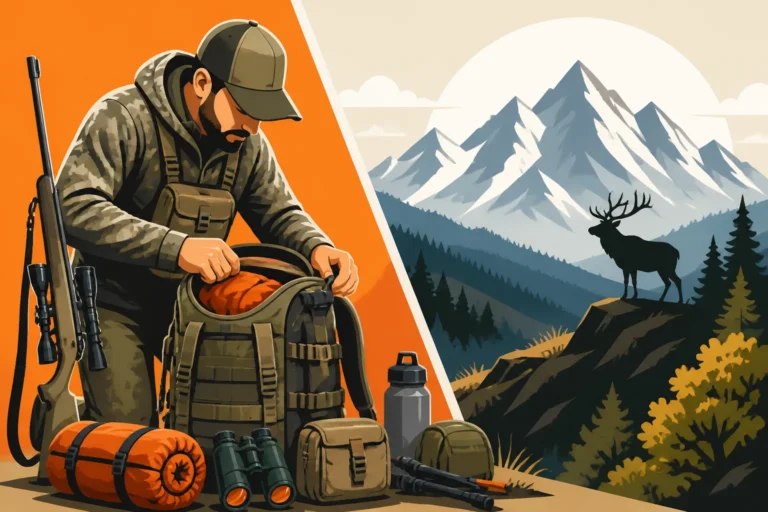
Your reliable backpack and boots are perhaps the most critical pieces of non-weapon gear. Your pack is your mobile base camp, carrying all your essentials and, hopefully, an elk quarter. Choose a comfortable, durable pack (60-80 liters for a multi-day hunt) that fits you well and can handle heavy loads. Equally important are sturdy, broken-in hunting boots that provide excellent ankle support and traction on steep, uneven terrain. Blisters can ruin a hunt faster than almost anything else. Make sure your boots are waterproof and have been thoroughly tested on steep terrain before you head out. For a comprehensive list, consult a Colorado Backcountry Hunting Gear List.
Navigation and safety tools are not optional; they are life-saving essentials. A reliable GPS device (like a Garmin inReach or a mapping app on your phone with downloaded offline maps, such as OnX Hunt) is critical for navigating vast public lands, especially in unfamiliar territory or dense timber. Always carry a headlamp with extra batteries, fire starter, a well-stocked first-aid kit, and emergency shelter. Critically, let someone know your detailed hunt plan and expected return. Safety in the backcountry is always paramount, ensuring you return home to share your stories.
Navigating Public Land Pressure and Ethical Considerations
Hunting in Colorado's stunning landscapes is a privilege, but with the increasing popularity of elk hunting, particularly during the rut, comes the challenge of hunter pressure and the non-negotiable responsibility of ethical conduct.
Strategies for Dealing with Hunter Pressure
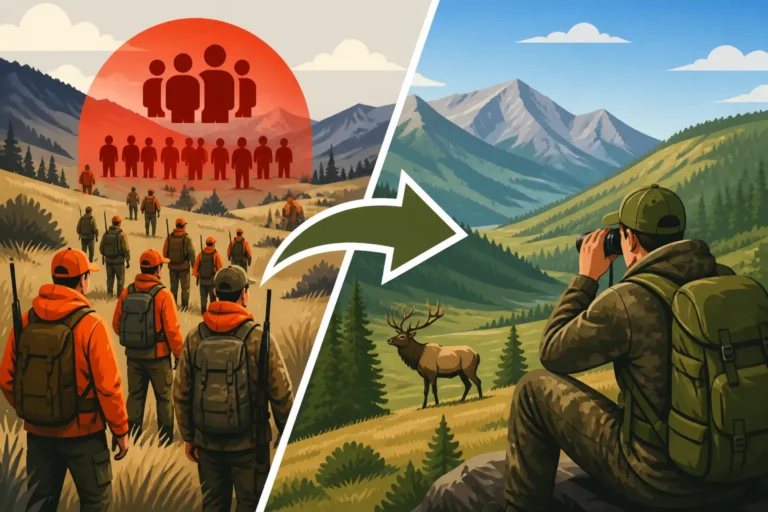
Colorado's over-the-counter (OTC) units, while offering incredible opportunities, can get crowded, especially during the peak of the rut.
To find solitude and unpressured elk, be willing to hike further and deeper into wilderness areas or roadless terrain. Look for areas away from easily accessible trailheads and popular access points. Often, even a mile or two off the beaten path can make a huge difference in encountering elk that haven't been constantly harassed. Consider hunting mid-week if your schedule allows, as weekends tend to see the highest influx of hunters. Learning How to Hunt Elk on Public Land Pressure effectively means doing the hard work to escape the crowds.
Utilizing mid-day tactics can give you a significant advantage. While many hunters head back to camp for lunch or a rest during the middle of the day, this can be a prime time to keep hunting. Elk often move between bedding and feeding areas during the quieter mid-day hours or visit water sources. While others are resting, you could be finding success. During the peak rut, a bull's desire to breed often overrides some of his natural caution, making him more vulnerable throughout the day.
Always be courteous and respectful of other hunters you encounter. Public land is for everyone, and a little civility goes a long way. If you come across another hunting party, communicate, share information if appropriate, and adjust your plans to avoid interfering with their hunt. This might mean giving them space, moving to a different ridge, or planning your approach to avoid pushing elk towards them. Always be aware of your surroundings, and never mistake another hunter for an elk. Hunter orange, while not required for archery season, can still be a wise choice to carry for visibility if you see other hunters or have a pack-out situation.
Ethical Hunting Practices and Shot Placement
Ethical conduct is the cornerstone of responsible hunting, ensuring the welfare of the animal and the integrity of the sport.
For archery elk, ethical shot placement is everything. Your goal should always be a quick, clean kill. Aim for the "crease," targeting the vital heart-lung area just behind the shoulder. Practice shooting from various angles, including steep uphill and downhill shots, to ensure you can make a clean kill regardless of the terrain. Understand your maximum effective range, and stick to it, especially when adrenaline is pumping. Taking a shot beyond your comfortable range dramatically increases the risk of a wounded animal, which is a tragic outcome for everyone involved. Practice making these shots, perhaps after an intense physical workout, to simulate hunting conditions.
Following up a shot correctly is crucial. After the shot, observe the animal's reaction intently, listen for sounds of a crash, and mark the exact spot of the hit with a marker or by tying a ribbon. Wait a reasonable amount of time (typically 30-60 minutes for a good hit, but several hours for a questionable hit, especially if it's not a heart or lung shot) before initiating a blood trail. A patient and thorough blood trail often leads to success. If in doubt, back out, give the animal more time, and return with more light or help. Knowing How to Quarter an Elk in the Field is also a crucial part of ethical hunting, ensuring the meat is cared for properly immediately after recovery.
Respecting the animal and the land is the ultimate sign of a true hunter. Elk hunting is a privilege that should be taken seriously. Take pride in your harvest, recover all edible meat, and pack out everything you pack in, leaving no trace of your presence. Adhering to all Colorado hunting regulations, including bag limits, proper tag validation, and unit-specific rules, is part of being a responsible and ethical hunter in Colorado's wilderness. Leave the land better than you found it for future generations of hunters and wildlife.
Disclaimer
Please remember that hunting regulations and season dates in Colorado can change. Always consult the official Colorado Parks and Wildlife (CPW) website or their most current hunting brochures for the most up-to-date and accurate information before planning any hunt. This guide is for informational purposes only and does not supersede official regulations. Stay safe and hunt ethically.