How to Pack for a Colorado Backcountry Hunt
The sheer thought of packing for a Colorado backcountry hunt can feel like staring at a mountain range before you even leave the driveway. You're trying to balance carrying enough to survive the unpredictable elements with not overloading yourself for those grueling climbs, all while making sure you have the essentials to successfully hunt and pack out an animal. It's a daunting task, and the fear of forgetting something critical or packing unnecessary weight can drain your confidence before your boots even hit the trail. This comprehensive guide is here to systematically break down how to build a smart, efficient pack that will serve as your mobile base camp, ensuring you're prepared for whatever the Colorado wilderness throws your way.
Confronting the Reality of Colorado Backcountry Conditions
Hunting the Colorado backcountry isn't like a walk in the park; it's a profound test of preparation, physical endurance, and mental grit. The environment itself presents unique challenges that demand thoughtful packing.
The Unpredictable High-Altitude Environment
Colorado's high country is a land of extremes, where weather can pivot from bluebird skies to whiteout blizzards in a matter of hours. You might start your day hiking in sunshine, shed layers as you climb, and then find yourself bundling up against a sudden hail storm by noon. This isn't an exaggeration; it's a typical Tuesday in the San Juan Mountains or the La Plata Mountains during hunting season. The altitude itself, often above 10,000 feet, means lower oxygen levels, making physical exertion tougher and the air significantly colder than at lower elevations.
This wild variability means your gear can't be one-dimensional. You need versatile layers that can be added or removed quickly, and every piece of outer clothing must be capable of handling sudden downpours or even a foot of unexpected snow. It's not just cold, it's bone-chilling cold, often followed by scorching sun, and you're miles from the truck, potentially days from resupply. Packing for this means thinking about insulation, waterproof membranes, and protection from intense UV radiation all at once. For more detailed information on thriving in these conditions, consider checking out our How to Hunt Elk at High Elevation guide.
The Demands of Rugged Terrain and Physical Exertion
Beyond the weather, the sheer physical toll of hunting Colorado's rugged backcountry cannot be overstated. You'll be climbing steep grades, navigating dense timber, traversing rocky scree fields, and pushing through deep snow, all while carrying a substantial pack. And that's before you even consider the added weight of an animal quartered and loaded onto your frame. Imagine the struggle of gaining 2,000 feet of elevation with a 60-pound pack, only to then spend hours tracking an animal, and then facing the prospect of packing out 80-100 pounds of meat over similar terrain. This isn't a job for gear that will fail or that causes undue discomfort.
Self-sufficiency is paramount. Unlike a front-country hunt where a quick trip to town for forgotten batteries or a torn rain shell is feasible, once you're deep in a wilderness area, you're on your own. Every item in your pack must be reliable, durable, and perform its intended function without question. This means investing in quality gear that can withstand abuse and selecting items that are lightweight without compromising on performance. Your boots, in particular, will bear the brunt of thousands of steps over unforgiving trails and off-trail sections, making their choice as critical as your rifle. Learn more about preparing for these challenges with our How to Physically Prepare for Colorado Elk guide.
Building Your Core System: The Essential Gear Categories
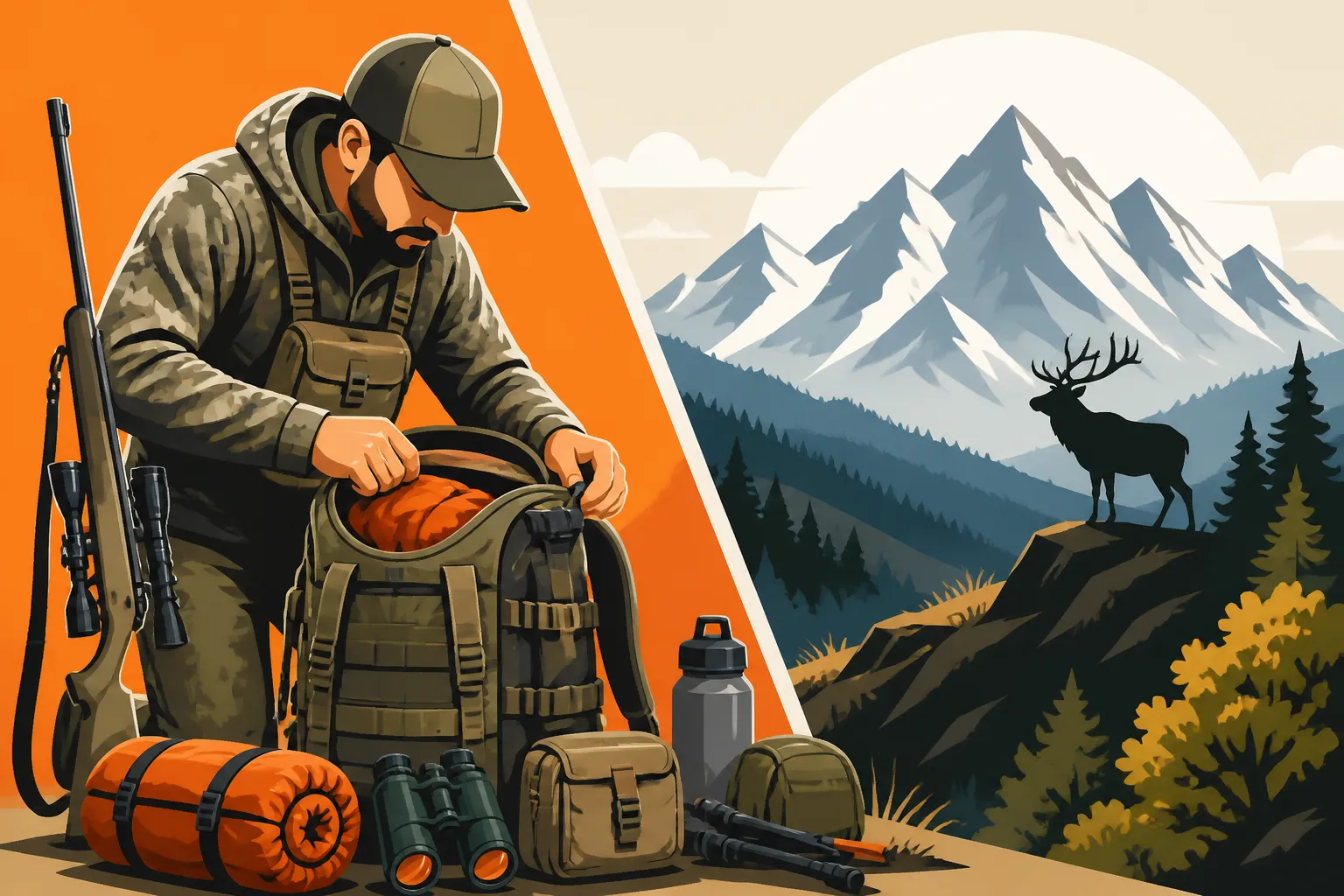
When you're putting together your pack for a Colorado backcountry hunt, think of it less as a collection of random items and more as a meticulously designed system. Each component plays a vital role, and they all work together to keep you safe, comfortable, and effective in the wilderness.
Your Mobile Home: Shelter and Sleep Systems
Your shelter and sleep system are literally your mobile home in the backcountry. After a long day of hiking and hunting, having a warm, dry place to rest is non-negotiable for recovery and morale.
When it comes to tents, you'll be weighing ultralight single-wall options against more robust double-wall tents. While single-wall tents save significant weight, they can be prone to condensation in humid conditions, which can be miserable at altitude. Double-wall tents offer better ventilation and moisture management but come with a weight penalty. Look for a tent that offers good vestibule space for stashing wet gear and cooking, and ensure it can withstand strong winds and heavy snow loads. Imagine setting up camp near treeline, perhaps in the Flat Tops Wilderness, and a late-season snow squall rolls in unexpectedly. A reliable, sturdy tent will be the difference between a miserable night and a restful one.
Your sleeping bag needs to match the coldest temperatures you expect to encounter, plus a buffer. For most Colorado elk seasons, a 0- to 15-degree Fahrenheit rated bag is a safe bet, especially if you tend to sleep cold. Down bags offer superior warmth-to-weight ratio and compressibility, making them ideal for backcountry hunting, but they lose insulating properties when wet. Synthetic bags perform better in damp conditions but are heavier and bulkier. Pay attention to the EN/ISO rating on sleeping bags, as this provides a standardized temperature guide.
Finally, your sleeping pad is just as crucial as your sleeping bag for warmth. It insulates you from the cold ground, preventing heat loss. Look at the R-value, which indicates insulating power; an R-value of 3 or higher is generally recommended for shoulder season backcountry hunts in Colorado. Inflatable pads offer excellent warmth-to-weight, but always carry a small repair kit. Closed-cell foam pads are bombproof but less comfortable and bulkier. A good sleep system is paramount for recharging your body for the strenuous days ahead. For those venturing into the deepest parts of the wilderness, a Colorado Backcountry Hunting Guide often emphasizes the need for lightweight and robust gear in these categories.
Sustenance on the Go: Cookware, Water, and Nutrition
Keeping your body fueled and hydrated is fundamental to maintaining energy and focus during a strenuous backcountry hunt. This means careful consideration of your cooking system, water purification, and food choices.
For stoves, canister stoves (like Jetboil or MSR PocketRocket) are popular for their simplicity and light weight. However, their performance can degrade in extreme cold or at very high altitudes where canister pressure drops. Liquid fuel stoves (MSR WhisperLite, Coleman Peak 1) tend to be more reliable in colder temperatures and at higher elevations, as you can pressurize the fuel tank, but they are generally heavier and require more maintenance. Consider your specific hunt dates and expected conditions when making your choice. Don't forget enough fuel; a small miscalculation here can leave you with cold meals or no hot drinks, which is a real morale killer.
Water purification is critical. You'll rely on natural water sources, so a reliable filter or purifier is essential. Brands like Sawyer, Katadyn, or Platypus offer excellent options. Consider factors like flow rate, ease of use in cold weather (some filters freeze and break if not properly cared for), and durability. Always carry a backup method, such as purification tablets (Aquamira or Katadyn Micropur) or a small bottle of iodine drops, in case your primary filter clogs or fails. Carry enough capacity in bottles or a bladder to get you between water sources, especially in drier areas or units with limited water.
Your food strategy should prioritize calorie density and lightweight options that are easy to prepare. Dehydrated meals (Mountain House, Peak Refuel) are staples for their convenience. Supplement these with high-energy snacks like nuts, jerky, energy bars, and dried fruit. Think about nutrient balance to avoid hitting a wall midway through the day. Repackage all food to remove excess packaging weight and bulk. A good rule of thumb is 2-3 pounds of food per person per day, aiming for 3,000-5,000 calories depending on exertion.
Navigating and Communicating in Remote Wilderness
Getting lost in the Colorado backcountry is a serious concern, and cellular service is often non-existent. Having redundant navigation tools and reliable communication devices is vital for both safety and success.
A dedicated GPS device (e.g., Garmin GPSMAP series or a GPS-enabled watch like a Garmin Fenix) is your primary electronic navigation tool. While your phone can run mapping apps, dedicated GPS units are more robust, have longer battery life, and are designed for outdoor abuse. Pair this with a downloaded topographic map on your phone (using apps like GoHunt, Gaia GPS, or OnX Hunt) and, critically, a physical paper map and compass. Knowing how to use all three together is a skill every backcountry hunter must possess, as electronics can fail. The physical map and compass serve as your ultimate analog backup, requiring no batteries. Our How to E-Scout Before a Colorado Hunt guide can help you leverage these tools effectively.
For communication, especially in areas beyond cell service, a satellite communicator is a game-changer. Devices like the Garmin inReach or Zoleo allow you to send and receive text messages, share your location, and, most importantly, send an SOS signal to a 24/7 monitoring center in an emergency. This peace of mind is invaluable, especially if you're hunting solo or with a small group. They allow you to check in with loved ones, update them on your progress, and summon help if you or a hunting partner sustains an injury deep in the wilderness.
Finally, headlamps are indispensable. You'll use them for predawn hikes, navigating camp after dark, and crucial tasks like field dressing an animal in low light. Carry at least one reliable headlamp with extra batteries or a power bank for recharging. Some hunters carry a small backup headlamp as well. Ensure your headlamp has a red light mode to preserve night vision.
Specialized Hunting Gear and Practical Considerations
Beyond the core survival systems, your pack must also efficiently carry the tools necessary for the hunt itself – from locating game to ethically harvesting and preparing it for the journey home.
Weapons, Optics, and Ethical Harvest Tools
Your primary hunting tool, whether it's a rifle, bow, or muzzleloader, needs to be protected and carried securely. A good sling is essential for rifle hunters, allowing hands-free movement. A sturdy, lightweight case or scabbard can protect your weapon from bumps, scratches, and the elements, especially during rough travel. Don't forget adequate ammunition or broadheads; a few extra rounds can be crucial. For those considering a rifle hunt, our Colorado Long-Range Shooting Considerations article offers valuable insights.
Optics are your eyes in the vast Colorado landscape. High-quality binoculars (10×42 or 12×50 are common choices) are a must for glassing distant slopes. A spotting scope (60-85mm objective, 20-60x magnification) on a sturdy, lightweight tripod is invaluable for analyzing distant animals, judging antler size, and saving countless miles of walking. A rangefinder is also non-negotiable for accurate shot placement in the mountains where judging distance can be tricky. Investing in quality glass will pay dividends by helping you locate game and make ethical decisions from afar.
Once you've made a successful harvest, having the right ethical harvest tools is paramount. A sharp, reliable knife is absolutely critical for field dressing and quartering. Many hunters carry a second, smaller knife or a folding saw for cutting through bone or pelvis. Don't forget a small sharpening stone or a quick sharpener to keep your blade keen. Game bags are another non-negotiable item; synthetic, breathable bags are preferred over old cotton pillowcases as they are lighter, more durable, and allow air circulation to cool the meat quickly, which is vital for preserving the quality of your hard-earned elk meat. Our guide on How to Quarter an Elk in the Field provides a step-by-step approach to this crucial process, and How to Keep Elk Meat Cool in Warm Weather offers further tips.
Clothing Strategies: The Art of Layering
The key to comfort and safety in Colorado's unpredictable weather is a well-thought-out layering system. Forget bulky, single-purpose garments; think versatile layers that can be combined or removed as conditions change. The cardinal rule of backcountry clothing: no cotton! Cotton absorbs moisture, dries slowly, and loses all insulating properties when wet, leading to hypothermia risks.
Start with a base layer made of merino wool or synthetic fabric. These layers wick moisture away from your skin, keeping you dry and preventing chafing. Next are your mid-layers, which provide insulation. This could be a lightweight fleece, a puffy jacket (down or synthetic fill), or a vest. These layers trap warm air, providing warmth without excessive bulk.
Your outer shell consists of a waterproof and windproof jacket and pants. These are your primary defense against rain, snow, and biting winds. Look for durable materials with good breathability (e.g., Gore-Tex, Pertex Shield, or similar proprietary membranes) to prevent you from getting clammy from sweat during exertion.
Don't forget the extremities: multiple pairs of wool socks (changing them daily prevents blisters and keeps feet warm), warm gloves (and a lightweight liner glove), and a warm hat (much of your body heat escapes through your head). Some hunters even pack a lightweight balaclava for extreme cold. Each layer serves a specific purpose, working in concert to regulate your body temperature, keeping you comfortable whether you're climbing a steep ridge in the sun or hunkered down in a snowy basin waiting for an elk.
Your Backbone: The Backpack Itself
Your backpack is more than just a bag; it's your mobile base camp, carrying all your essentials and, hopefully, a significant load of meat on the way out. Choosing the right pack is one of the most critical decisions for a Colorado backcountry hunt.
The frame system is paramount. Backpacks come with internal or external frames. Modern internal frame packs are generally preferred for backcountry hunting as they keep the load closer to your body, offering better stability over uneven terrain. Look for a robust frame that can handle heavy loads – well over 80-100 pounds for a successful elk pack-out. Many hunting-specific packs, like those from Stone Glacier, Kifaru, or Mystery Ranch, feature integrated load-shelf systems designed specifically for hauling meat between the frame and the bag. Our article on the Best Backpack for a Colorado Elk Hunt delves into specific recommendations.
Capacity is also important. For multi-day backcountry hunts, a pack with a volume of 65 to 80 liters is typically recommended. This allows enough space for all your gear, food, and water, with room to compress down when empty and expand when packing out meat.
Fit and adjustability are crucial for comfort and efficiency. A properly fitting pack will distribute weight onto your hips, not just your shoulders. Ensure the hip belt sits correctly, and the shoulder straps, load lifters, and sternum strap are all adjustable to customize the fit to your body. Test the pack with weight before the hunt; a fully loaded pack after a successful hunt near Aspen could easily weigh 80-100 lbs, and you need to ensure it carries that load comfortably and securely. GoHunt's mapping tools can help you visualize the terrain you'll be covering, allowing you to appreciate just how important a well-fitting pack will be for those long hauls.
The Final Touches: Testing, Adjusting, and Mental Preparation
Even with the best gear, a successful backcountry hunt hinges on how well you've prepared yourself and your equipment. The final stages of packing are about refinement, practice, and building confidence.
The Ounce-Counting Obsession: Minimizing Weight Without Sacrificing Safety
Once you've gathered all your potential gear, it's time for the often-agonizing process of ounce-counting. Every single item needs to earn its place in your pack. Lay everything out, weigh it, and scrutinize its necessity. Can an item serve multiple purposes? For example, trekking poles can double as tent poles for some ultralight shelters, or a water bottle can serve as a hot water bottle in your sleeping bag on cold nights.
Look for opportunities to repackage items. Instead of a full tube of toothpaste, squeeze a small amount into a tiny container or cut off a week's worth. Remove all unnecessary packaging from food items. This meticulous process might seem obsessive, but when you're climbing a steep ridge at 11,000 feet, every ounce you've shed translates directly into less fatigue and more energy for the hunt. The less you carry, the farther you can go, the faster you can move, and the less exhausted you'll be when you finally spot that bull. This meticulousness is a hallmark of a true Colorado DIY Elk Hunting Guide and critical for success.
Shakedown Hikes: Your Pre-Season Dress Rehearsal
There's no substitute for experience, and a shakedown hike is your chance to gain some without the pressure of an actual hunt. Load your backpack with everything you intend to take on your hunt – including the estimated weight of food and water. Then, go for a multi-mile hike over varied terrain, ideally simulating the elevation and conditions you expect to encounter.
This "dress rehearsal" is invaluable. It allows you to identify hot spots or chafing points with your pack or boots. You can test your layering system, assess your physical fitness, and identify any gear malfunctions or inefficiencies. Does your water filter flow slower than expected? Is your stove difficult to light in the wind? Does your tent pitch easily? Sleep in your tent, cook a meal, use your headlamp. A shakedown hike provides crucial insights, allowing you to make adjustments before you're deep in the wilderness. It's also an excellent way to practice your Altitude Training for Colorado Hunting and ensure you're physically ready.
Contingency Planning and Mental Fortitude
Even with the most meticulously packed bag and rigorous physical preparation, things can and do go wrong in the backcountry. Contingency planning is about anticipating these challenges and having a backup plan. What if your water filter clogs? (Backup tablets). What if your GPS dies? (Map and compass). What if you injure yourself? (Well-stocked first-aid kit, satellite communicator). Always carry an emergency shelter (a lightweight tarp or bivy) and extra high-calorie food, even if you don't expect to use them.
Beyond the physical gear, mental fortitude is perhaps your most important tool. Backcountry hunting is tough. You'll be cold, tired, wet, and often frustrated. The ability to persevere, to make sound decisions under pressure, and to maintain a positive attitude when things get difficult is crucial. Visualizing challenges and mentally rehearsing how you'll respond can build resilience. This mental game, combined with your detailed packing and preparation, completes your readiness for the Colorado backcountry. For a deeper dive into overall hunt planning, consult our How to Plan a Colorado Backpack Hunt resource.
| Category | Item | Importance for CO Backcountry | Weight Saving Tip |
|---|---|---|---|
| Shelter | Lightweight 3-season tent | Protection from rapid weather changes (snow, wind, rain) | Share tent with partner, use tarp/bivy if solo & experienced |
| Sleeping Bag (0-15F rated) | Essential for cold nights at high altitude, vital for recovery | Down is lighter/more compressible than synthetic (if kept dry) | |
| Sleeping Pad (R-value 3+) | Crucial insulation from cold ground, enhances sleep quality | Inflatable pads offer best warmth-to-weight; carry a repair kit | |
| Water | Water Filter/Purifier | Access to safe drinking water from mountain streams, prevent illness | Carry purification tablets as backup for filter failure or freezing |
| Water Bladder/Bottles (2-3L capacity) | Hydration on the go; capacity for dry stretches, camp use | Use soft flasks to save space when empty; consolidate containers | |
| Navigation | GPS Device / Phone with App (GoHunt) | Essential for staying found in vast wilderness, tracking, planning | Download offline maps; carry backup battery/power bank |
| Physical Topo Map & Compass | Critical analog backup, no batteries needed, understand terrain | Laminated map for durability; practice using it before hunt | |
| Safety | Satellite Communicator (e.g., Garmin inReach) | Emergency communication beyond cell service, peace of mind for you & family | Share itinerary with someone, know how to use SOS features |
| Comprehensive First Aid Kit | Handle injuries, blisters, altitude sickness; self-reliance | Customize with specific meds, blister treatments, trauma items, pain relief | |
| Headlamp + Spare Batteries | Navigate in dark, camp tasks, field dressing, safety in low light | Check batteries before departure; consider rechargeable with power bank | |
| Hunting | Game Bags (synthetic, breathable) | Keep meat clean, allow airflow for cooling in pack-out, preserve quality | Use lightweight, breathable bags; avoid cotton which gets heavy/dirty |
| Sharp Knife & Sharpener | Essential for efficient, ethical field dressing and quartering | Bring a sharpener or spare blade for multi-day hunts; carry a small fixed blade | |
| Backpack (65-80L, robust frame) | Comfortably carry all gear and heavy meat loads; your mobile system | Try different packs with weight; ensure proper fit and adjustment | |
| Clothing | Base Layers (Merino wool/synthetic) | Wick moisture from skin, crucial for warmth and preventing hypothermia | Choose lightweight, fast-drying fabrics; pack minimum needed |
| Mid-Layers (Fleece/Puffy) | Provide insulation, adaptable to changing temperatures | Down offers best warmth-to-weight for dry conditions; synthetic for damp | |
| Outer Shell (Waterproof/Windproof) | Primary defense against rain, snow, wind; breathable for exertion | Test breathability; ensure zippers are waterproofed | |
| Wool Socks (multiple pairs) | Prevent blisters, maintain foot warmth, crucial for comfort | Change socks daily; hang damp socks to dry inside sleeping bag | |
| Hat/Gloves | Prevent heat loss from head, protect hands from cold and elements | Layer gloves (liner + outer); pack a warm beanie and a ball cap for sun |
Disclaimer
Hunting in Colorado's backcountry carries inherent risks, including but not limited to adverse weather conditions, treacherous terrain, wildlife encounters, and the potential for serious injury or illness. This guide provides general information and recommendations; however, individual situations may vary. It is crucial to conduct thorough personal research, assess your own physical capabilities, acquire proper training in wilderness first aid and navigation, and always prioritize safety. The author and publisher assume no responsibility for any accidents, injuries, or losses incurred during your hunting adventures. Always check the latest regulations and conditions with Colorado Parks and Wildlife before your hunt.