Colorado DIY Elk Hunting Guide
Trying to navigate the complex world of Colorado elk hunting on your own can feel like staring at a mountain range and not knowing which peak to climb first. The sheer volume of regulations, the daunting landscapes, and the dream of a successful hunt can be incredibly overwhelming, often leading folks to either give up or shell out big bucks for a guided trip. This comprehensive guide aims to demystify the process, offering you a realistic, step-by-step roadmap to plan and execute your own unforgettable do-it-yourself (DIY) Colorado elk hunt, equipping you with the knowledge and confidence to chase those Rockies bulls.
The Allure and Reality of DIY Elk Hunting in Colorado
There's a special kind of pride that comes with a successful DIY hunt. It's not just about the meat in the freezer or the antlers on the wall; it's about the journey, the struggle, and the self-reliance gained from tackling one of North America's most challenging big game animals in some of the most stunning, yet unforgiving, terrain. Colorado, with its vast public lands and healthy elk populations, is a mecca for DIY aspirations, but it's crucial to understand both the immense rewards and the very real difficulties involved.
Why Go DIY? The Freedom and the Challenge
For many hunters, the appeal of a DIY elk hunt in Colorado boils down to a few core principles: independence, authenticity, and cost. When you're running your own hunt, you're not on someone else's schedule, bound by their unit choices, or limited to their preferred tactics. You get to wake up when you want, scout where you want, and pursue elk using methods that resonate with you, whether that's aggressive calling or quiet still-hunting through thick timber. It's an immersive experience where every decision, every footstep, and every effort is entirely your own.
This freedom, however, comes hand-in-hand with an unparalleled challenge. You are responsible for everything: the research, the physical conditioning, the gear, the navigation, the cooking, and, if successful, the grueling task of field dressing and packing out a massive animal from remote country. It’s a test of skill, endurance, and mental grit that many find more rewarding than any guided hunt could ever offer. The stories you bring back aren't just about the hunt; they're about overcoming immense personal obstacles.
Common Misconceptions and Harsh Realities
One of the biggest misconceptions about DIY elk hunting is that it's simply "cheaper" or "easier" than a guided hunt. While it's true you save on outfitter fees, the upfront investment in quality gear, licenses, travel, and time off work can quickly add up. More importantly, it's definitely not easier. Many first-time DIY hunters, especially those from flatter states, drastically underestimate the physical demands of hunting at elevations between 8,000 and 12,000 feet. The air is thin, the terrain is steep, and the weather can turn from sunny and warm to snowing and freezing in a matter of hours.
Another harsh reality is that success rates for DIY public land elk hunters are significantly lower than for guided hunts, especially for non-residents. This isn't meant to discourage you, but rather to ground your expectations. You'll be competing with other hunters, navigating vast wilderness, and trying to locate animals that are experts at disappearing. It often takes several trips and years of learning to consistently find success. This isn't a weekend whitetail hunt; it's an expedition that demands meticulous planning and unwavering perseverance. The good news is, even without a kill, the experience itself is often worth the effort.
Understanding Colorado's Elk Hunting Landscape
Colorado boasts the largest elk herd in North America, with estimates often exceeding 280,000 animals, making it an undeniable draw for hunters. However, knowing the herd is there is one thing; knowing where to find them and how to legally hunt them on your own is another entirely. The state's hunting regulations, season structures, and vast public land resources require careful study.
Public Land Access: National Forests, BLM, and Wilderness Areas
The backbone of any Colorado DIY elk hunt is public land. Thankfully, Colorado offers millions of acres managed by various federal agencies, primarily the U.S. Forest Service (National Forests) and the Bureau of Land Management (BLM). These lands are generally open to hunting, but understanding their characteristics is key. National Forests often comprise high-elevation, forested mountain terrain, perfect for elk that prefer timbered slopes and dark canyons. BLM lands, particularly in western Colorado, can range from sagebrush flats and pinyon-juniper breaks to rugged, roadless mesas. Both offer incredible opportunities, but they demand different scouting and hunting tactics.
Then there are Wilderness Areas, often embedded within National Forests. These are designated areas where motorized travel and even bicycles are prohibited, meaning access is strictly by foot or horseback. This creates incredible opportunities for hunters willing to go deep, as these areas often hold less pressured elk. However, they demand superior physical conditioning, robust navigation skills, and a commitment to packing everything in and out on your back. Exploring a Colorado National Forest Hunting Guide can provide deeper insights into these vast tracts of land. Always cross-reference your chosen hunting unit with detailed maps to ensure you're on public land and understand any specific restrictions.
| Public Land Type | Primary Characteristics | Typical Elevation | Road Access | Hunter Pressure | Suitable Habitat |
|---|---|---|---|---|---|
| National Forest | Dense timber, high peaks, alpine basins, thick vegetation | 8,000 – 14,000+ ft | Moderate-High | Moderate-High | Ideal Elk |
| Bureau of Land Mgt | Open sagebrush, pinyon-juniper, canyons, some high mesas | 5,000 – 10,000 ft | High | Moderate | Good Elk |
| Wilderness Area | Remote, rugged, roadless, pristine ecosystems | 9,000 – 14,000+ ft | None | Low-Moderate | Ideal Elk |
| State Trust Land | Scattered parcels, often checkerboarded, requires permit | Variable | Variable | Variable | Variable |
Navigating Draw Systems and Over-the-Counter Tags
Colorado's tag system can feel like a labyrinth, especially for new non-resident hunters. The state utilizes a preference point system for most limited-entry elk tags, meaning highly coveted units can take many years to draw. However, a significant appeal for DIY hunters is the availability of over-the-counter (OTC) elk tags for certain rifle seasons and most archery seasons. These tags don't require any preference points; you simply buy them.
For archery hunters, OTC either-sex elk tags are available in many Game Management Units (GMUs) across the state. This means you can hunt a bull or a cow. For rifle hunters, OTC tags are generally available only for antlerless (cow) elk in the second and third rifle seasons, and in specific units for bull elk during those seasons, often with certain restrictions. Understanding which units offer Colorado OTC Elk Tags Explained is critical for planning your DIY hunt, as these units tend to see higher hunter pressure due to their accessibility. Carefully researching the regulations for your desired weapon and season is paramount.
The Colorado Parks and Wildlife (CPW) website is your absolute best friend here. Don't rely solely on forum posts or old articles; always go to the source for the most up-to-date regulations, season dates, and unit information. The application period for limited draw tags is usually in April, while OTC tags can be purchased later. Ensure you also understand the Colorado Hunting Seasons Explained to pick the best time for your hunt, considering factors like the rut, weather, and animal behavior.
Key Colorado GMUs for DIY Hunters
While it's impossible to name the best GMUs (partly because that information changes and good spots are earned, not given), successful DIY elk hunters often focus on areas with certain characteristics. These include large tracts of public land, challenging terrain that deters casual hunters, good access to water sources, and diverse habitat ranging from dark timber to high alpine basins. Units within the Flat Tops Wilderness, White River National Forest, San Juan National Forest, and portions of the Gunnison and Routt National Forests are popular choices for their vastness and relatively strong elk populations.
When starting your research, look for units with a high percentage of public land, especially those containing designated wilderness or extensive roadless areas. These require more effort to access but typically offer a more authentic backcountry experience and less competition. A general rule of thumb is that the harder it is to get to, the fewer people you'll encounter. Consider units that are a significant drive from major population centers like Denver or Colorado Springs, as proximity often correlates with increased pressure. Don't be afraid to study several GMUs and have a few backup plans in mind, especially if you're pursuing an OTC tag where flexibility is key.
Essential Pre-Season Planning and E-Scouting
Success in DIY elk hunting isn't found during the hunt; it's meticulously built in the months, even years, leading up to it. Pre-season planning and "e-scouting" – using digital tools to explore potential hunting areas – are arguably the most crucial components of your entire endeavor. This is where you transform uncertainty into strategy.
Leveraging Online Resources
In today's digital age, the amount of information available to hunters is staggering. Gone are the days of relying solely on paper maps and word-of-mouth. Websites like the Colorado Parks and Wildlife (CPW) offer official regulations, harvest statistics, and herd objectives for every GMU. These statistics can be incredibly valuable, showing you historical success rates for specific units and seasons, helping you gauge the realistic potential of an area. However, remember that high harvest numbers can also indicate high hunter density.
Beyond official channels, a service like GoHunt is an invaluable tool for any serious DIY hunter. It provides detailed unit data, draw odds, and filtering capabilities that allow you to analyze a GMU's public land percentage, road density, wilderness presence, and historical success rates, all in one place. Using tools like GoHunt, you can quickly identify units that fit your criteria for an OTC hunt or strategize for future draw applications. Forums and online communities can also offer insights, but always take anecdotal advice with a grain of salt and verify information through official sources. Learning How to E-Scout Before a Colorado Hunt effectively will drastically improve your chances of finding elk.
Interpreting Maps and Topography
Once you've narrowed down a few potential GMUs, it's time to dive deep into topographical maps. Satellite imagery from Google Earth, coupled with hunting-specific mapping apps like onX Hunt or Gaia GPS, become your virtual boots on the ground. Look for key terrain features that elk are known to utilize: north-facing slopes with dark timber for bedding cover, south-facing slopes for early season feeding, saddles and ridges that act as natural travel corridors, and perennial water sources like springs and creeks. Remember, elk are creatures of habit and efficiency; they'll use the path of least resistance when moving between food, water, and cover.
Pay close attention to changes in elevation, steepness of terrain, and the presence of natural barriers like cliffs or dense, impenetrable stands of timber. Identify potential ingress and egress routes, both for hunting and, critically, for packing out an animal. Mark potential camping spots that offer cover from the wind and access to water. The more thoroughly you can dissect a unit from your computer, the more confident and efficient you'll be once you actually set foot in the field. Don't just look for where elk are; look for where you can access them effectively and safely.
Identifying Prime Elk Habitat and Travel Corridors
Elk habitat is diverse, but certain elements are consistently present in areas where elk thrive. They need cover for security, especially bedding areas that offer thermal protection in hot or cold weather. They need food sources, which vary seasonally but include grasses, forbs, and browse. And perhaps most critically, they need water. In arid Colorado, identifying reliable water sources like springs, seeps, wallows, or year-round creeks is often the key to finding elk, particularly during drier early seasons.
Look for "transition zones" – areas where two types of habitat meet, such as the edge of a meadow and dark timber, or where dense forest gives way to open parks. These are often preferred feeding and staging areas. When studying maps, think like an elk: where would you bed down for security during the day? Where would you feed in the morning and evening? What's the easiest way to get from bedding to feeding to water without exposing yourself too much? Pinpoint these locations, mark them on your map, and be prepared to spend time physically scouting them if possible, or virtually scouting them repeatedly. This analytical approach, coupled with an understanding of Colorado Elk Habitat and Elevation, is fundamental to DIY success.
Physical and Mental Preparation for the Colorado Backcountry
Hunting elk in Colorado is not a casual stroll through the woods; it's an athletic endeavor, a true test of physical and mental endurance. Many first-time DIY hunters are simply not prepared for the rigors of high-altitude mountain hunting, and this lack of preparation is often the primary reason hunts end early or unsuccessfully. Your body and mind need to be as tuned as your bow or rifle.
Tailoring Your Fitness Regimen for Mountain Terrain
Altitude is the silent killer of many elk hunts. The reduced oxygen at elevations above 8,000 feet significantly impacts your aerobic capacity, making even simple tasks feel like a marathon. Your fitness regimen needs to focus on cardiovascular endurance, muscular strength (especially legs and core), and flexibility. Start training months in advance, ideally 6-9 months out. Incorporate exercises that mimic mountain hunting: hiking with a heavy pack (starting light and gradually increasing weight), hill sprints, stair climbing, and exercises that build strength in your glutes, hamstrings, and quads.
Don't just hit the gym; get outside. Find the steepest hills or stairs in your area and repeatedly climb them. Wear the boots you plan to hunt in to break them in and identify any potential hot spots for blisters. Simulate packing out an elk by loading your pack with 70-100 pounds and taking a strenuous hike. This isn't just about being strong; it's about being strong for the demands of elk hunting. Many resources are available to help you create a specific Colorado Elk Hunt Fitness Plan, which is essential reading for anyone embarking on a DIY journey.
Developing Mental Fortitude and Resilience
While physical fitness is paramount, mental toughness is equally, if not more, important for a DIY elk hunt. There will be days of relentless hiking with no elk sightings, unpredictable weather that chills you to the bone, frustrating misses, and moments of profound doubt. Elk hunting is a grind, and the mountains have a way of testing your resolve. You need to be prepared to push through discomfort, maintain a positive attitude, and problem-solve on the fly.
Practice mental visualization before your hunt. Imagine yourself cold, tired, and wet, but still pushing forward, still hunting. Develop coping mechanisms for frustration and fatigue. Understand that setbacks are part of the process and not failures. Your ability to stay positive, focused, and adaptable when things inevitably go wrong will often determine the outcome of your hunt. A strong mental game also means knowing your limits and being willing to turn back if conditions become unsafe. There's no elk worth risking your life over.
Gear Selection for a Successful DIY Hunt
Your gear is your lifeline in the Colorado backcountry. Unlike a guided hunt where a good portion of the camp infrastructure is provided, as a DIY hunter, every item you bring needs to serve a purpose and perform reliably. There's a fine line between being prepared and being overloaded, so thoughtful selection is crucial. This often comes down to investing in quality, lightweight, and durable equipment. Consider researching a comprehensive Colorado Backcountry Hunting Gear List to help ensure you don't miss anything vital.
Backpacking Gear: Shelter, Sleep System, Cooking
For a true DIY backcountry hunt, you'll likely be living out of your backpack for multiple days. Your shelter needs to be lightweight, durable, and capable of withstanding harsh mountain weather, including high winds and snow. A quality 3-season tent (or a 4-season if hunting late in the year) is a must. Pair this with an appropriate sleeping bag rated for temperatures at least 10-20 degrees colder than you anticipate, as mountain nights can drop quickly. A good sleeping pad is also crucial for insulation from the cold ground and for a decent night's rest, which is vital for recovery.
Your cooking system should be efficient and compact. A small backpacking stove, a fuel canister, and a lightweight pot are usually sufficient. Freeze-dried meals or other dehydrated options are the standard for backcountry hunting due to their low weight and ease of preparation. Don't forget a reliable water filter or purification tablets; carrying all your water is simply not feasible in the mountains. This core backpacking kit forms the foundation of your camp and ensures you can sustain yourself comfortably enough to hunt effectively day after day.
Hunting Essentials: Optics, Weapons, Navigation
Beyond your shelter, the gear specific to hunting needs careful consideration. Quality optics are non-negotiable in the vast landscapes of Colorado. A good pair of 10×42 binoculars and a spotting scope (15-45x or 20-60x) are essential for glassing distant slopes and identifying elk without expending unnecessary energy. A rangefinder is also critical for ethical shot placement in steep, broken terrain where distances are notoriously difficult to judge.
Your chosen weapon – whether rifle, bow, or muzzleloader – must be sighted in, practiced with, and capable of ethical shots at typical elk ranges. For rifles, cartridges like the .300 Win Mag, .30-06, 7mm Rem Mag, or .308 Win are popular and effective choices. Understanding Colorado Long-Range Shooting Considerations is important, as shots can sometimes be extended. A well-fitted and comfortable hunting backpack is paramount, not just for carrying your daily essentials but for its ultimate purpose: packing out meat. Look for a pack with a strong external or internal frame that can comfortably handle 80-100 pounds. Finding the Best Backpack for a Colorado Elk Hunt can make or break your ability to haul out your prize.
Finally, navigation. A reliable GPS device or a smartphone with a downloaded mapping app (like onX Hunt) is essential. Always carry a physical map and compass as a backup, and know how to use them. A headlamp with extra batteries, a first-aid kit, a knife, fire starter, and some emergency signaling device (like a satellite messenger or whistle) round out your crucial safety items.
Clothing Systems for Variable Mountain Weather
Colorado mountain weather is notoriously unpredictable. You can experience all four seasons in a single day, from freezing mornings to warm midday sun, followed by afternoon thunderstorms or even snow flurries. The key to staying comfortable and safe is a layered clothing system. This typically includes:
- Base Layers: Moisture-wicking material (merino wool or synthetic) to pull sweat away from your skin.
- Mid-Layers: Insulation for warmth, such as fleece or puffy jackets.
- Outer Shell: Waterproof and windproof jacket and pants to protect against the elements.
- Insulation: A heavy down or synthetic puffy jacket for glassing sessions or sitting in camp.
Avoid cotton at all costs; it absorbs moisture and loses its insulating properties when wet, a recipe for hypothermia. Choose quiet fabrics in camouflage patterns appropriate for the terrain. Don't forget a warm hat, gloves, and quality hiking socks (multiple pairs!). Your boots are perhaps the most critical clothing item; they need to be waterproof, provide excellent ankle support, and be well broken in. Investing in the Best Boots for Colorado Elk Hunting can prevent blisters and injuries that could derail your entire hunt. Always check the weather forecast before and during your hunt, but be prepared for it to change without notice.
On-the-Ground Tactics for DIY Elk Hunters
Once you're in your chosen GMU, the real work begins. Your pre-season planning has shown you where elk should be, but finding them and making a move on them requires specific on-the-ground tactics tailored to the Colorado landscape and elk behavior.
Effective Scouting and Locating Elk During the Hunt
Even with extensive e-scouting, the first few days of your hunt should involve on-the-ground scouting to verify what your maps told you. Look for fresh sign: tracks, droppings (fresher means darker, shinier, and softer), rubs on trees, and wallows. Pay attention to game trails, especially those connecting feeding areas to bedding areas or water sources. Your binoculars and spotting scope will be your most valuable tools here. Find a high vantage point at first light and last light, and spend hours patiently glassing distant slopes, drainages, and timber edges. Elk are often most active during these low-light periods.
Learning How to Glass Big Colorado Basins is a skill that takes practice but is invaluable for covering vast areas efficiently. If you're hunting during the archery or muzzleloader seasons, listening is just as important. Elk are vocal, especially during the rut. Bugles, cow calls, and calf mews can lead you to animals. Even if they're quiet, listen for the sounds of branches breaking, rocks rolling, or the distinct 'thump-thump-thump' of an elk moving through timber.
Stalking, Calling, and Ambush Strategies
Once you've located elk, the challenge shifts to getting within range. This is where a variety of tactics come into play, often dictated by the terrain, wind, and the elk's behavior. Spot-and-stalk hunting involves carefully moving into a position to intercept or approach the animal. This demands extreme stealth, using terrain features for cover, and constantly checking the wind. The wind is your most important ally or enemy; elk have an incredible sense of smell, so always try to keep the wind in your favor. Knowing How to Use the Wind Hunting Colorado Elk is absolutely critical.
Calling can be highly effective, especially during the rut. Learning How to Call Elk in Colorado involves mastering a range of sounds, from seductive cow calls to aggressive bugles. Be mindful of hunter pressure; overly aggressive calling in pressured areas can sometimes backfire. Often, a more subtle approach, like cow calling from a good ambush spot, is more effective on public land. Ambush strategies involve finding natural pinch points, travel corridors, or water sources that elk frequent, then setting up and waiting patiently. This could be on a bench between feeding and bedding areas, near a water hole, or along a well-used game trail. Patience and self-discipline are crucial for successful ambushing.
Dealing with Pressure and Other Hunters
One of the biggest frustrations for DIY public land hunters is dealing with other hunters. In popular OTC units, you will encounter other people. It's a reality you must prepare for. The best way to mitigate pressure is to hunt harder and go deeper than others are willing to. Focus on areas that are difficult to access, whether due to steep terrain, long distances from trailheads, or dense timber. Many hunters stick close to roads or well-worn trails; venturing off the beaten path is often where you find less pressured animals.
Learning How to Hunt Elk on Public Land Pressure involves understanding how elk react to human disturbance. They'll often move into thicker cover, higher elevations, or shift their patterns to become more nocturnal. If you find an area with fresh sign but no elk, chances are they've been pushed. Be prepared to adapt, move, and find those hidden pockets of escape cover. Respect other hunters, avoid skylining yourself, and always assume there's another hunter just over the ridge. This mindset helps you hunt more cautiously and effectively.
Field Care, Packing Out, and Post-Hunt Considerations
Congratulations, you've successfully harvested an elk! This is a moment of immense satisfaction, but it's also where the real physical work often begins for the DIY hunter. Improper field care can ruin valuable meat, and packing out an entire elk is one of the most physically demanding aspects of the hunt.
Quartering and Preserving Meat in the Field
When an elk is down, time is of the essence, especially if temperatures are warm. Your first priority is to quickly and efficiently quarter the animal to cool the meat. The "gutless method" is highly recommended for backcountry elk, as it avoids spilling gut contents and reduces weight by leaving internal organs (guts) in the field. This involves removing the hide, then systematically taking off the four quarters, backstraps, tenderloins, neck meat, and any other desirable meat. You'll need a sharp knife (or two), a bone saw or strong knife for breaking joints, and game bags.
Good quality, breathable game bags are crucial for protecting the meat from dirt, flies, and allowing it to cool properly. Hang the bagged meat in a shady, airy spot, ideally off the ground, to facilitate cooling. If temperatures are consistently above freezing, you might need to make multiple trips or prioritize getting the meat off the mountain as quickly as possible. This meticulous process ensures that the meat you worked so hard for remains clean and high-quality. Knowing How to Quarter an Elk in the Field is an essential skill every DIY hunter must master.
The Grueling Task of Packing Out an Elk
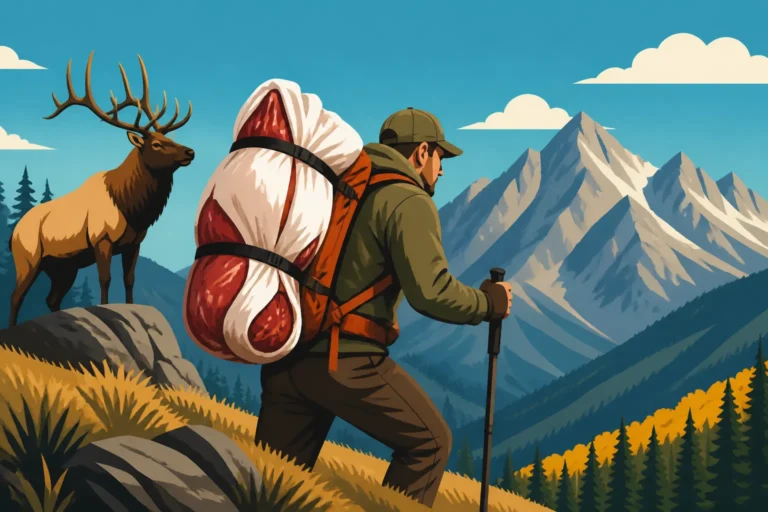
Packing out an elk, especially solo, is a monumental physical challenge. A mature bull elk can yield 150-250 pounds of boned-out meat, plus the hide and antlers. This will require multiple trips, even with a strong partner. Each quarter, along with the backstraps and other meat, will weigh 40-70 pounds. You'll need to carefully load these heavy, awkward loads into your strong internal or external frame pack.
Prepare for steep climbs, slippery descents, and hours of relentless effort. The physical training you did beforehand will pay dividends now. Stay hydrated, take breaks, and listen to your body. Don't attempt to carry more than you can safely manage, especially in technical terrain. Injuries during the pack-out are common, and in remote areas, they can be life-threatening. Break the pack-out into manageable sections. Focus on one load at a time, moving it to a more accessible spot, then returning for the next. Read up on How to Pack Out an Elk in Colorado for detailed strategies.
Legal Requirements and Tagging
Upon harvesting an elk, your Colorado hunting license and tag have very specific requirements. Immediately after the kill, you must validate your tag by signing it, dating it, and detaching the carcass tag. The carcass tag must be securely affixed to the animal. Typically, the tag needs to remain with the meat until it's processed and packaged. For antlers, if applicable, the tag must stay with the skull or antlers until they are processed into a finished product.
Understand the specific regulations regarding evidence of sex and species; often, a portion of the hide (with natural markings) or the head must remain with the meat until it reaches its final destination or is processed. Always double-check the current CPW regulations as these can change. Failure to properly tag and process your animal can result in fines and loss of hunting privileges. It's a small but critical detail that ensures your successful hunt remains legal.
Common DIY Mistakes and How to Avoid Them
Embarking on a DIY Colorado elk hunt is a journey of continuous learning. While every hunt offers unique lessons, many common pitfalls can be avoided with foresight and preparation. Being aware of these typical mistakes can save you a lot of grief and significantly improve your chances of success.
Underestimating the Mountains
This is arguably the most prevalent mistake among aspiring DIY elk hunters, especially those from lower elevations. The Colorado mountains are breathtakingly beautiful, but they are also relentlessly demanding. Many hunters, even those who consider themselves fit, find themselves quickly winded and exhausted by the altitude and steep terrain. You might be able to hike five miles at home, but that same distance at 10,000 feet with a 30-pound pack will feel like ten miles. The weather can change drastically and unexpectedly, turning a pleasant day into a survival situation.
To avoid this, commit to a serious, tailored fitness regimen well in advance, focusing on aerobic capacity and leg strength, including activities like Altitude Training for Colorado Hunting. Don't just plan for the hunt; plan for the pack-out. Acclimate to the elevation if possible by arriving a few days early and doing light activity. Respect the mountains, dress in layers, and carry emergency gear for all conditions. Never push yourself beyond safe limits for an animal; know when to turn back or call for help.
Poor Planning and Lack of Flexibility
Another significant pitfall is a lack of thorough planning or, conversely, being too rigid in your plans. While meticulous e-scouting and strategizing are crucial, elk are wild animals that don't always read the script. What looked like a perfect bedding area on a map might be barren, or heavy hunting pressure could push elk out of their usual haunts.
To counter this, always have backup plans. Scout multiple potential hunting areas in your chosen GMU. If elk aren't where you expected them to be, be willing to move camp, change drainages, or even relocate to an entirely different part of the unit. This flexibility extends to your hunting tactics; if calling isn't working, try still-hunting. If they're in the dark timber, adapt your approach. Over-reliance on a single strategy or a single "spot" can lead to a frustrating and unsuccessful hunt. Utilize a platform like GoHunt to research multiple areas and build contingency plans based on real-time conditions and observations. The ability to adapt and think on your feet is a hallmark of a successful DIY elk hunter.
Disclaimer
The information provided in this guide is for general informational purposes only and does not constitute professional advice. Hunting regulations and conditions can change rapidly. Always consult the official Colorado Parks and Wildlife (CPW) website and current hunting regulations brochure before planning or engaging in any hunting activities. Adhere to all local, state, and federal laws. Hunting is an inherently dangerous activity; proceed with caution and personal responsibility.