How to Hunt Migration-Season Mule Deer
Hunting mule deer in Colorado can be incredibly rewarding, but it often presents a unique challenge: just when you think you've patterned them in the early season, they seem to vanish into thin air. This disappearance isn't magic; it's migration, and understanding this seasonal shift is absolutely crucial for success. This guide will walk you through the complexities of hunting migration-season mule deer, helping you decode their movements and strategize for those later-season hunts.
Understanding Mule Deer Migration in Colorado
Mule deer in Colorado, especially those in the high country, are masters of seasonal movement. Their lives are dictated by the rhythm of the seasons, primarily driven by food availability and snow depth. During the pleasant summer months and early fall, these deer thrive in high-elevation basins and lush alpine meadows, enjoying abundant forage. But as the first heavy snows begin to dust the peaks and temperatures plummet, their internal compass points downhill, urging them to seek refuge in lower elevations where food is more accessible and snow cover less restrictive. This grand exodus from summer range to winter range is what we call migration, and it creates distinct opportunities for hunters.
The Seasonal Shift and Deer Movement
The shift isn't a sudden, synchronized event for every deer. Instead, it’s a gradual process, often triggered by a combination of factors. Some deer might start moving down with the first substantial cold front in late October, while others might hold out in higher elevations until deeper snow forces their hand, sometimes well into November or even December. This variability can be a real head-scratcher for hunters. You might find pockets of deer still clinging to high benches even as major migration routes below them are teeming with activity. It truly highlights the importance of understanding the specific nuances of the areas you plan to hunt.
For instance, in areas like the Flat Tops Wilderness or the San Juan Mountains, deer might drop thousands of feet in elevation, moving from expansive national forest lands to private agricultural fields or lower-elevation BLM parcels. This can concentrate deer into narrower corridors, making them easier to intercept, but also potentially pushing them onto private lands or areas with different hunting restrictions. It's a dynamic puzzle that requires flexibility and keen observation.
Why Mule Deer Migrate
The reasons behind mule deer migration are pretty straightforward: survival. Think about it – if you were a deer, would you want to be stuck knee-deep in snow with nothing to eat, exposed to the harsh mountain winds? Absolutely not.
- Food Availability: This is arguably the biggest driver. As winter approaches, the high-country vegetation becomes dormant, and deep snow covers what little forage remains. Lower elevations, often referred to as winter range, retain palatable browse and grasses for longer, providing the necessary calories to endure the lean months.
- Snow Depth: Deep snow not only buries food but also makes travel incredibly difficult and energy-intensive for deer. Moving to areas with shallower snow cover conserves precious energy, which is vital for survival.
- Predator Avoidance: While not the primary driver, migration can also offer some relief from predators. Mountain lions and coyotes follow deer, of course, but the shift to different terrain or areas with more cover can temporarily change the predator-prey dynamics.
- Historical Patterns: For generations, mule deer have followed specific migratory routes, often referred to as "migration corridors." These paths are ingrained in their behavior, passed down from doe to fawn, and they tend to utilize the same saddles, ridges, and drainages year after year. Understanding these historical patterns is key to predicting their movements.
Key Factors Influencing Migration Patterns
Predicting exactly when and where mule deer will migrate can feel like trying to guess the lottery numbers, but there are some consistent factors that play a huge role. Pay close attention to these, and you'll significantly improve your odds of being in the right place at the right time.
Weather Systems and Snowfall
Nothing gets mule deer moving quite like a good old-fashioned Colorado snowstorm. A dusting of snow might get them thinking, but a significant dump is often the catalyst for a full-scale migration.
- Early vs. Late Storms: An early, heavy snow in October can push deer down quickly, sometimes before rifle seasons even begin. Conversely, a mild fall with little snow might keep deer stubbornly high well into November, frustrating hunters expecting them lower.
- Temperature Drops: Beyond just snow, sustained drops in temperature, especially when combined with high winds, will send deer seeking thermal cover and warmer conditions at lower elevations. Cold alone can start the movement, even if snow isn't yet prohibitive.
- Snowpack Accumulation: It's not just the first storm, but the accumulation that really matters. Once snow depths reach a foot or more consistently at higher elevations, it signals to deer that it's time to vacate. Monitor local weather forecasts closely, especially for the high country in your chosen unit. Websites like NOAA and even local ski resort snow reports can be goldmines of information.
Food Sources and Forage Availability
The quality and accessibility of food are constant motivators for mule deer. As their preferred summer browse diminishes, they seek out areas where forage remains abundant and reachable.
- High-Country Depletion: Once the high-country grasses and forbs freeze and are buried under snow, deer quickly deplete remaining accessible browse. Their bodies need to switch from growth and fat storage to maintenance, and that requires consistent, accessible food.
- Winter Range Browse: Lower elevations typically offer a different suite of plant species, like bitterbrush, sagebrush, serviceberry, and various mountain shrubs that retain nutritional value well into winter. These become critical food sources. Identifying these crucial winter browse areas on a map and scouting them beforehand can give you a significant advantage. Tools like GoHunt's mapping features can help you identify vegetation types and potential winter range.
- Agricultural Influence: In some areas, particularly near the Eastern Plains or valleys bordering ranching country, mule deer will migrate towards agricultural fields. These fields, whether harvested or not, can offer a tempting buffet of grains, alfalfa, or even weeds that provide high-energy forage. However, this often means deer will be on private land, requiring permission to hunt.
Hunter Pressure and Sanctuary Areas
Let's be real, Colorado public lands see a lot of hunters, especially during rifle seasons. This pressure plays a significant, though often underestimated, role in migration patterns.
- Pushing Deer Downhill: During the early rifle seasons (First and Second Rifle), concentrated hunter activity in accessible high-country areas can literally push deer down the mountain, accelerating their migration even if snow or food isn't the primary driver yet. They'll seek refuge in thicker timber, steep north-facing slopes, or lower, less-pressured areas.
- Seeking Sanctuary: Deer that are pressured will seek out thick cover, steep canyon systems, or roadless areas where they feel safe. These can be bottlenecks or natural funnels that become highly productive if you know how to access them. Sometimes, these "sanctuary" areas are surprisingly close to roads but offer enough cover and topography to feel secure. This is where understanding how to hunt Colorado public land pressure becomes paramount.
- Migration Corridors: Deer often follow well-established routes or "corridors" during migration. These can be specific ridge lines, drainages, or benches that offer cover and efficient travel between their summer and winter ranges. Identifying these corridors is a critical piece of the puzzle. You can often see these on topographical maps as saddles or natural breaks in terrain that lead from high to low.
E-Scouting and On-the-Ground Preparation
Gone are the days when you could just show up and hope for the best. Modern hunting, especially for migration-season mule deer, demands thorough planning and leveraging available technology.
Utilizing Online Mapping and Data
Before you even step foot in the mountains, you should be glued to your computer screen, meticulously dissecting maps and data. This initial e-scouting phase is where you build your game plan.
- Topographic Maps: These are your best friend. Look for natural funnels, saddles, benches, and gradual slopes that connect high-elevation summer range to lower-elevation winter range. Pay close attention to north-facing slopes (which hold snow longer) and south-facing slopes (which melt off faster and often have more accessible forage). Identify potential escape routes and thick timber patches.
- Satellite Imagery: Switch between summer and winter satellite views if available. This can reveal subtle differences in vegetation, snow accumulation patterns, and even worn game trails. Look for transitions in habitat—where dark timber meets open sagebrush, or where steep slopes mellow out into accessible benches.
- Public Land Boundaries: Overlay public and private land layers. Migration corridors often traverse both, and knowing where public land ends and private begins is essential for legal hunting and for understanding where deer might seek refuge. Services like GoHunt are fantastic for this, providing detailed maps with property boundaries and a wealth of species-specific data. You can often use their filtering tools to research Colorado GMU data and understand herd movements.
- Historical Data: Research Colorado Parks and Wildlife (CPW) unit-specific data, especially herd objective plans or migration studies if available. Some units have extensive telemetry data that can give you insights into general migration timing and routes. Forums and local reports can also offer anecdotal evidence, but always verify it with your own research.
Pre-Season Scouting and Trail Camera Deployment
Nothing beats boots on the ground, but for migration-season hunting, pre-season scouting might look a little different.
- Identifying Funnels: During the summer or early fall, hike into areas you’ve identified as potential migration corridors. Look for heavily used game trails, rubs, and old sign. Even if deer aren't there then, these trails indicate historic movement. Find the pinch points—where a wide ridge narrows, or a steep canyon offers the only reasonable path down.
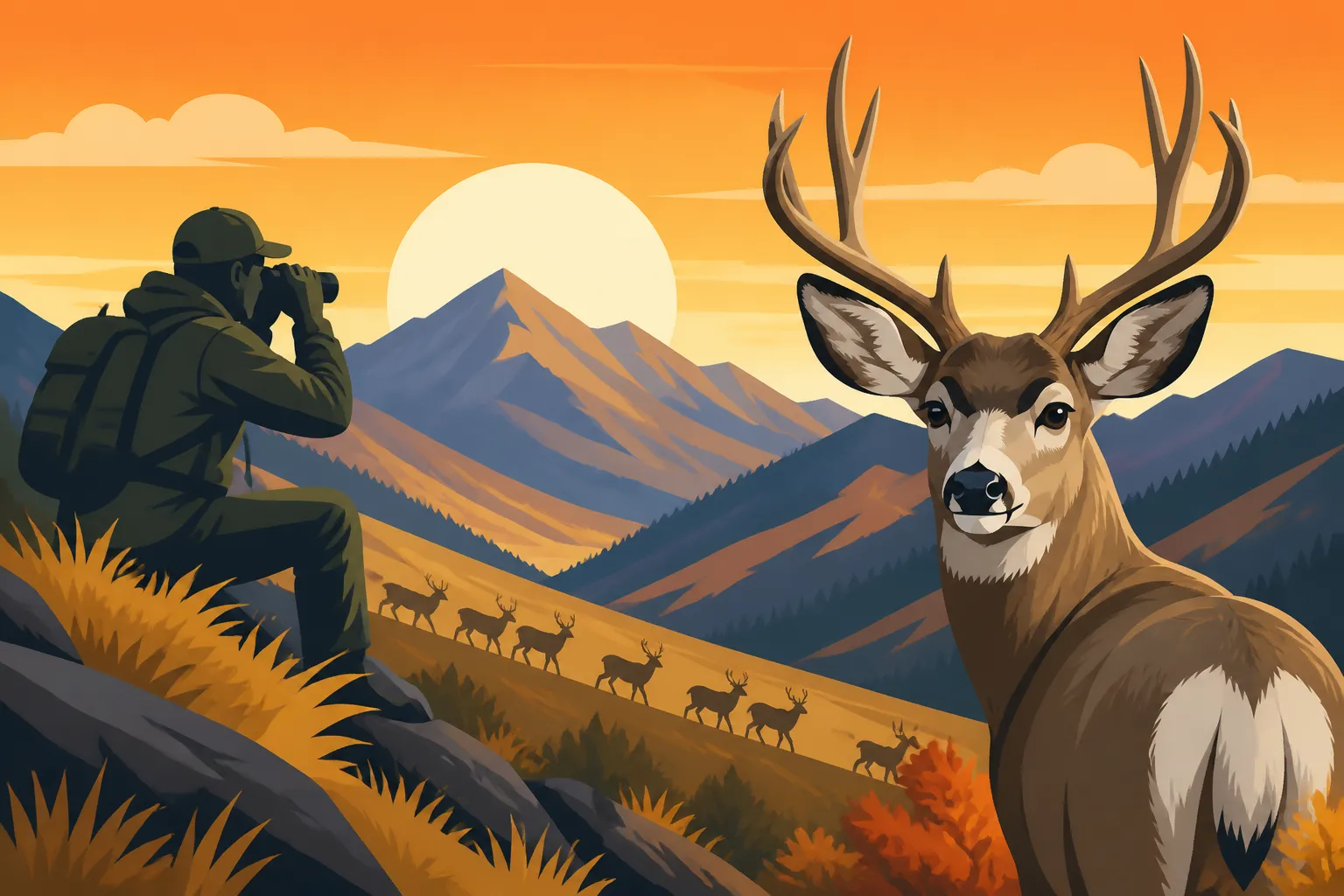
- Glassing Key Areas: Spend time glassing major basins and drainages from vantage points that offer wide views. While deer might be high during your summer scouting, you’re looking for the terrain they will use when they move. Knowing the landscape intimately will save you precious time and energy during the actual hunt. Learn how to glass big Colorado basins effectively.
- Trail Camera Strategies: Deploying trail cameras in strategic locations along suspected migration routes, especially on public land access points or saddle crossings, can provide invaluable real-time intelligence. You might not get photos every day, but even a few pictures of deer moving through a specific spot after a certain weather event can confirm a migration pattern. Remember to check regulations regarding trail camera use in your specific GMU.
Tactics for Hunting Migrating Mule Deer
Once you've done your homework and the deer are on the move, it's time to put your plan into action. Hunting migrating mule deer requires patience, adaptability, and an understanding of how they use the terrain.
Intercepting Deer in Migration Corridors
This is where your e-scouting and pre-season efforts truly pay off. You're trying to position yourself ahead of the deer, along their natural travel routes.
- Pinch Points and Bottlenecks: Focus on those narrow saddles, tight timbered ridges, and canyon bottoms that funnel deer movement. Set up early in the morning or late in the afternoon, positioning yourself with the wind in your favor, overlooking these travel corridors. Deer tend to move more during low light conditions.
- Timing is Everything: Pay close attention to the weather. If a big snowstorm is rolling in, try to be out there just before it hits, during the storm, or immediately after. This is when deer movement can be at its peak. They'll be driven by the changing conditions, making them more predictable.
- Patience and Persistence: These aren't always fast-paced hunts. You might spend hours or even days watching a single corridor. Be prepared to sit, wait, and observe. Often, a slow, methodical approach is more effective than constantly moving and risking spooking deer. If you're wondering how to hunt in deep timber, this often applies to migration corridors as well.
Spot-and-Stalk Tactics on Winter Range
Once deer have settled into their winter range or are moving slowly through transition zones, spot-and-stalk becomes a highly effective method.
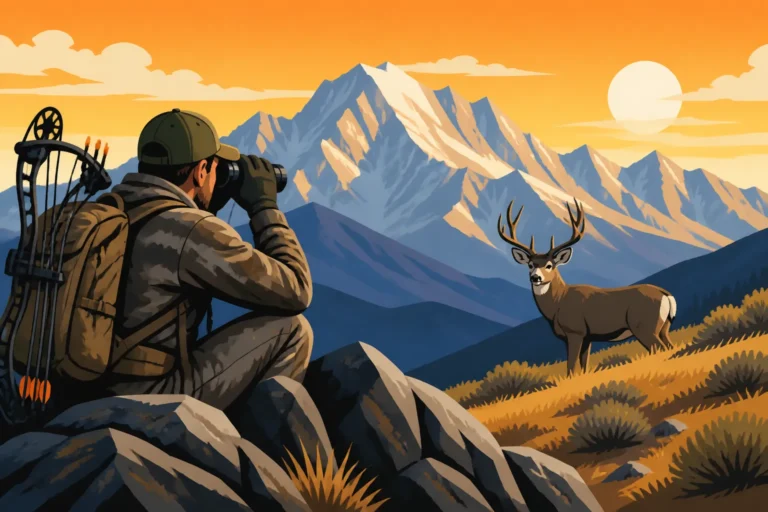
- Glass, Glass, Glass: Spend the majority of your time behind your optics. From a high vantage point, systematically glass south-facing slopes, open sagebrush hillsides, and transition areas where timber meets open country. These are often sunnier, warmer, and have more accessible forage. Quality binoculars and a spotting scope are indispensable here. This is also a fantastic approach for Colorado Mule Deer Hunting: Spot-and-Stalk Tactics.
- Use Thermals and Wind: As deer move from high to low, understanding mountain thermals becomes crucial. In the mornings, air currents typically flow downhill; in the afternoons, they rise. Combine this with prevailing winds to plan your approach. Always try to keep the wind in your face or quartering into it as you stalk. Learn how to use thermals in Colorado elk country, and apply those same principles to deer.
- Slow and Deliberate Stalks: Once you spot a deer, meticulously plan your stalk. Use terrain features for cover, move slowly, and be mindful of noise. The crisp, cold air of late season can carry sound surprisingly far. A successful stalk might take hours, covering just a few hundred yards.
- Focus on Edges and Transitions: Deer often hold on the edges of cover – where timber meets an open slope, or where a deep ravine offers security. These transition zones provide quick access to food and cover, making them prime spots to check.
Hunting Pressure and Deer Behavior
Migrating deer are often pressured deer, and their behavior reflects this. Understanding how they react to human presence is key to outsmarting them.
- Nocturnal Movement: Heavily pressured deer, especially in units with high hunter density, may become largely nocturnal, moving primarily under the cover of darkness. This doesn't mean you can't hunt them, but it means you need to be in position at legal shooting light and stay until the very last minute.
- Seeking Heavy Cover: Deer will abandon open areas for the thickest timber, steepest ravines, or darkest canyons available. Don't be afraid to get into these nasty spots. While it’s tough hunting, it's often where the biggest bucks are hiding. This is particularly true for how to find elk in deep timber, which often applies to deer as well.
- Utilize Mid-Day Lulls: While deer often move at dawn and dusk, don't write off the middle of the day during migration. A pushed deer might move throughout the day, trying to find a safe haven. Hunters who stay out, continue to glass, and slowly still-hunt through cover during these "lulls" often find success.
Here's a quick comparison of early season versus migration season hunting:
| Feature | Early Season Mule Deer | Migration Season Mule Deer |
|---|---|---|
| Typical Timing | Late August – Early October | Late October – December |
| Elevation | High-country, alpine basins, timberline | Transition zones, lower-elevation winter range |
| Primary Driver | Summer feed, rut (later in early season for rut) | Snow, cold, dwindling high-country forage |
| Movement Type | Dispersed, predictable feeding patterns (unless rut) | Concentrated movement along corridors, seeking sanctuary |
| Hunter Pressure | Moderate to high (archery), increasing (muzzleloader) | Often very high, especially in accessible corridors |
| Preferred Habitat | Open slopes, meadows, high timber | Thicker timber, brushy draws, south-facing slopes |
| Key Tactic | Spot-and-stalk, still-hunting | Intercepting corridors, careful spot-and-stalk |
| Gear Consideration | Lighter layers, rain gear | Heavy insulation, snow gear, traction devices |
By focusing on these key factors and adapting your strategies, you'll significantly increase your chances of finding success on your next migration-season mule deer hunt in Colorado. It's challenging, but incredibly rewarding when you finally connect with a monarch that has survived the high country and made the journey down.
Disclaimer
Please be aware that hunting regulations and season dates in Colorado can change. Always consult the most current Colorado Parks and Wildlife (CPW) regulations and season brochures before planning any hunt. This guide is for informational purposes only and does not supersede official state regulations.