Colorado Mule Deer Hunting: Backcountry Tactics
The majestic mule deer of Colorado’s backcountry offer an unparalleled hunting experience, but chasing these high-country ghosts is far from a walk in the park. Hunters often face grueling climbs, unpredictable weather, and the daunting task of packing out heavy meat from remote areas, leading to frustration and physical exhaustion if not properly prepared. This comprehensive guide is designed to equip you with the deep insights and practical backcountry tactics needed to successfully hunt Colorado mule deer, transforming those daunting challenges into rewarding opportunities.
The Allure and Reality of Colorado Backcountry Mule Deer Hunting
There’s something uniquely captivating about venturing deep into Colorado’s wilderness for mule deer. It’s a pursuit that strips away the superficial and connects you directly with the raw beauty and formidable challenges of the high country. But let’s be real – it’s not for the faint of heart, and understanding both the draw and the demands is your first step toward success.
Why Go Deep for Mule Deer
The appeal of backcountry mule deer hunting extends far beyond just bagging an animal; it’s about the journey, the solitude, and the quality of the experience.
Imagine waking up to a crisp alpine sunrise, surrounded by towering peaks, with not another human in sight. That's the kind of solitude the backcountry offers, a stark contrast to the often-pressured front-country units. Deeper in the wilderness, mule deer often exhibit more natural behavior, less wary of human presence, making for a more authentic hunting encounter. This undisturbed environment means you’re more likely to observe deer going about their daily routines, providing incredible insight into their patterns. For many, this quiet immersion in nature is the ultimate reward, offering a mental reset that few other activities can provide.
Beyond the experience, the potential for encountering mature, trophy-class mule deer often increases the further you venture from roads and trails. These older bucks are notoriously elusive and clever, often seeking out the most rugged, inaccessible terrain to avoid hunter pressure. They thrive in areas where the physical demands on a hunter are highest, areas most people aren’t willing or able to reach. By pushing into these remote sanctuaries, you’re not just chasing deer; you’re entering their domain on their terms, increasing your odds of finding a true high-country monarch. The feeling of earning a buck from such a remote setting is incredibly satisfying, a testament to your preparation, skill, and sheer grit.
The Unvarnished Truth: Challenges and Demands
While the rewards are immense, it’s crucial to be realistic about the significant challenges that come with backcountry mule deer hunting. This isn't a casual stroll; it's an expedition.
The physical exertion required is monumental. You’ll be navigating steep, rocky terrain, often at elevations exceeding 10,000 feet, with a heavy pack on your back. Thin air means every step feels like two, and sustained climbs can quickly deplete even the fittest individuals. Carrying enough water, food, and emergency gear adds significant weight, compounding the effort. This is why proper physical training, including specific Altitude Training for Colorado Hunting, is non-negotiable. Forget about hitting the gym for a few weeks before your trip; this requires months of dedicated conditioning to build the endurance and strength needed to perform day after day in such a demanding environment.
Unpredictable weather is another formidable foe. Colorado’s high country can dish out sunshine, torrential rain, hail, lightning, and even snow, sometimes all within the same day. Temperatures can swing dramatically from warm afternoons to freezing nights. Being caught unprepared can quickly turn a challenging hunt into a dangerous ordeal, risking hypothermia or exposure. You need to be ready for anything, with appropriate layering, waterproof gear, and a solid shelter plan. Navigation also becomes exponentially harder when visibility drops due to fog or storms, or when snow covers familiar landmarks. Then there’s the psychological toll. The sheer isolation, the constant physical demands, and the potential for long stretches without seeing deer can test your mental fortitude. You need resilience, patience, and the ability to make sound decisions under pressure, even when you’re utterly exhausted.
And, of course, the grand finale: packing out your harvest. If you’re lucky enough to tag a mule deer miles into the backcountry, the real work begins. Quartering an animal on a steep slope, then making multiple trips under immense weight, often through darkness or inclement weather, is arguably the hardest part of the entire hunt. This isn’t a task you can afford to underestimate, and having a solid How to Pack Out an Elk in Colorado plan (which translates well to mule deer) is crucial.
Essential Pre-Hunt Preparation for Backcountry Success
Success in Colorado's mule deer backcountry hinges almost entirely on the homework you do long before your boots hit the trail. This isn't just about packing your gear; it's about meticulous planning, physical conditioning, and acquiring the knowledge to navigate and thrive in challenging environments.
E-Scouting Like a Pro: Unlocking Hidden Gems
Gone are the days of blindly picking a spot on a map and hoping for the best. Modern e-scouting tools are revolutionary for backcountry hunters, allowing you to meticulously analyze terrain and identify potential hotspots from the comfort of your home. Platforms like GoHunt, along with mapping apps like onX Hunt, become your virtual binoculars, letting you pore over thousands of acres of public land. Your goal is to identify areas that offer the "big three" for mule deer: food, water, and security.
Start by looking for areas of transition. Where do dense timber stands meet open meadows or alpine basins? These edges are often mule deer highways. Identify north-facing slopes, which tend to hold snow longer in the spring, providing moisture and lush forage, and offering cooler bedding in early seasons. In contrast, south-facing slopes can be early season food magnets but turn barren quickly. Look for saddles, benches, and subtle topographical changes – these are natural travel corridors and bedding areas that often get overlooked. Water sources are critical; zoom in to find natural springs, seeps, and high-elevation lakes. Mule deer need water daily, so these areas will draw them in. When using tools like GoHunt, pay close attention to historical data, past hunt success rates, and topographical features that might indicate remote basins or high ridges that are difficult for most hunters to access. These are often the hidden gems that hold bigger, older bucks. Remember, the deeper and more rugged the terrain looks on the map, the higher the likelihood of reduced pressure and more relaxed deer. A detailed guide on How to E-Scout Before a Colorado Hunt will dive even deeper into specific techniques for using these powerful digital tools.
Physical and Mental Fortitude: More Than Just Legs
The physical demands of backcountry mule deer hunting are extreme, but the mental game is equally, if not more, important. Your body needs to be a machine, capable of sustained output in thin air, but your mind needs to be a fortress.
Months, not weeks, before your hunt, you need to implement a rigorous training regimen. Focus on exercises that mimic hunting conditions: steep uphill hiking with a weighted pack, stair climbing, and multi-day backpacking trips. Incorporate strength training for your legs, core, and back – you’ll be carrying significant weight up and down mountains, and then packing out even more. High-intensity interval training (HIIT) can also build the anaerobic capacity you’ll need for those quick, lung-busting climbs to cut off a deer. Beyond just being "fit," consider the importance of How to Physically Prepare for Colorado Elk, as the principles for high-country fitness are nearly identical for deer. This isn't about looking good; it's about functional strength and endurance.
Equally vital is your mental preparedness. The backcountry will test your patience, resilience, and problem-solving skills. You’ll experience setbacks: bad weather, missed opportunities, long days without seeing a single deer, and the sheer exhaustion that creeps in. Practicing mindfulness, setting small, achievable goals each day, and maintaining a positive attitude are crucial. Learn to push through discomfort and embrace the suck, knowing that perseverance often leads to reward. Understand that not every hunt will end with an animal, but every hunt will offer a profound experience. Having a strong, positive mental game can make the difference between giving up when things get tough and pushing on to find success.
Dialing in Your Gear: Every Ounce Counts
In the backcountry, every item you carry is a conscious decision. There's no room for "just in case" items that don't serve a critical purpose. Your gear needs to be lightweight, durable, versatile, and absolutely reliable.
Your sleep system – tent, sleeping bag, and pad – needs to balance warmth with minimal weight. Look for three-season shelters that can withstand wind and rain. A good quality sleeping bag rated for colder temperatures than you expect is a wise investment, especially when dealing with unpredictable alpine nights. A reliable water filtration system (like Sawyer or Katadyn) is non-negotiable, allowing you to hydrate from natural sources rather than carrying excessive amounts of water weight. Dehydrated, high-calorie meals are your friend, providing sustained energy without the bulk.
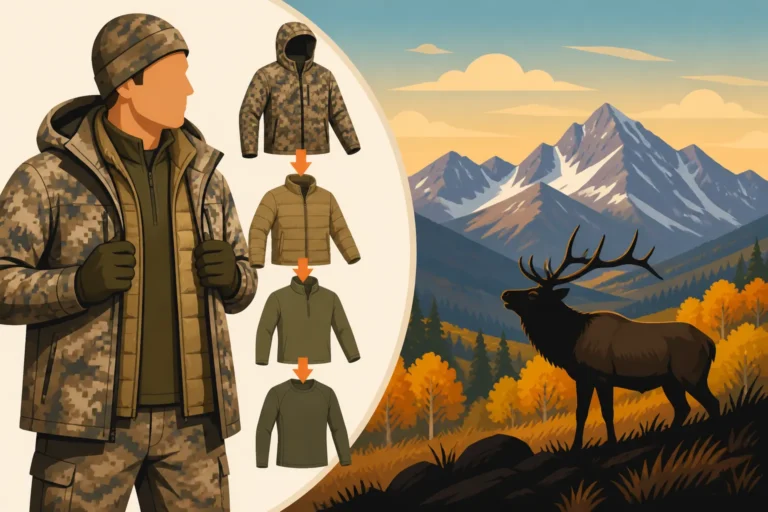
Optics are paramount for glassing vast expanses of mule deer habitat. A high-quality pair of binoculars (10×42 or 12×50) and a spotting scope with a sturdy tripod are essential for picking apart distant ridges and basins. Remember, good optics allow you to hunt with your eyes, not your feet, conserving precious energy. For detailed gear recommendations, check out a Colorado Backcountry Hunting Gear List. Your backpack is arguably the most important piece of gear; it needs to be comfortable, capable of carrying heavy loads, and well-organized. Consider a pack with an external frame or a robust internal frame that can handle meat hauling. For insights on choosing the right one, consult resources like Best Backpack for a Colorado Elk Hunt, as the functionality for hauling heavy loads is universal. When it comes to clothing, think layers: moisture-wicking base layers, insulating mid-layers, and a waterproof/windproof outer shell. Merino wool or synthetic blends are ideal for managing sweat and staying warm even when damp. Don’t forget a robust first-aid kit, emergency signaling devices, and a GPS unit or satellite messenger as a backup to your phone mapping app.
| Gear Category | Backcountry Hunting | Front-Country Hunting |
|---|---|---|
| Pack Weight | Minimalist, every ounce scrutinized | More flexibility, heavier gear tolerated |
| Shelter | Lightweight backpacking tent, tarp, or bivy | Wall tent, vehicle, cabin |
| Water | Filtration/purification systems, minimal carry | Often carry bottled water, vehicle resupply |
| Food | Dehydrated, high-calorie, compact meals | Cooler food, fresh ingredients, more variety |
| Optics | High-magnification binoculars, spotting scope & tripod | Binoculars only, less emphasis on spotting scope |
| Clothing | Layered, quick-drying, advanced synthetics/merino | More casual, less emphasis on ultra-light performance |
| Navigation | GPS device, satellite messenger, map & compass | Phone app primarily, less redundancy |
| Meat Care | Lightweight game bags, boning knife | Cooler access, butcher shop nearby |
On-the-Ground Tactics for Colorado Backcountry Mule Deer
Once you’ve done your exhaustive preparation, it’s time to put boots on the ground. The backcountry is where your strategies, skills, and patience will truly be tested. Knowing how to read the landscape, understand mule deer behavior, and execute a flawless plan are what separate successful hunters from those who just log miles.
Master the Art of Glassing and Spot-and-Stalk
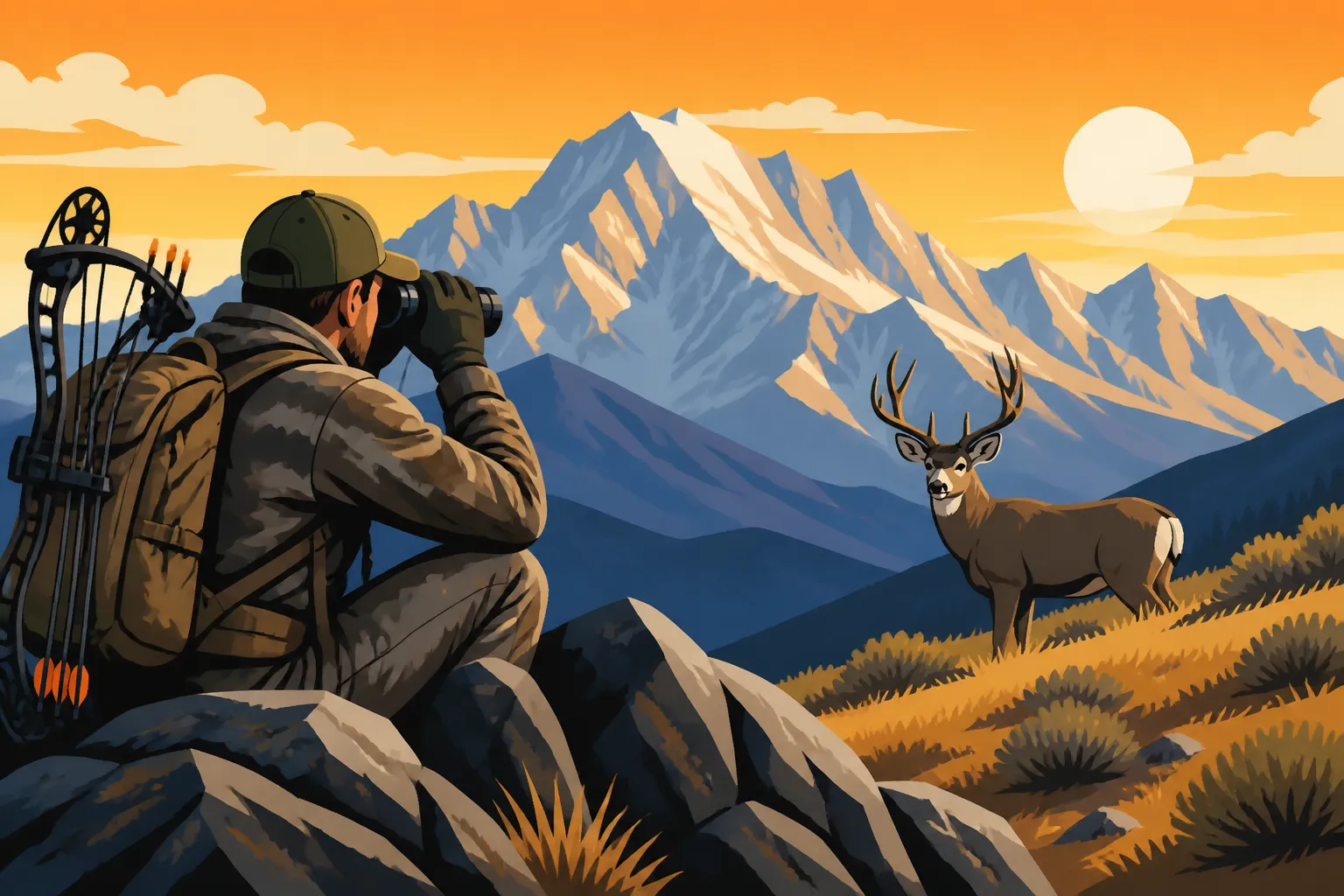
In the vast, open landscapes of Colorado's high country, your binoculars and spotting scope are your most crucial tools. Mule deer are often small specks against enormous backdrops, and finding them requires immense patience and a systematic approach to glassing.
Start your day early, often before first light, to be on a vantage point overlooking prime feeding or bedding areas. This is when deer are most active, moving between their nighttime feeding grounds and their daytime bedding sites. Use a grid pattern when glassing: systematically scan every inch of a basin, ridge, or timber edge, moving your optics slowly. Don’t just look for an entire deer; look for parts – an ear flicking, the horizontal line of a back amidst vertical trees, a patch of different color. Pay special attention to shaded areas, timber fringes, and areas near water, especially during warmer parts of the day. Utilize your spotting scope to confirm if those distant dots are indeed deer, and to judge their size. For a more in-depth look at this technique, check out How to Glass Big Colorado Basins.
Once you've spotted a deer, the real chess match begins: the spot-and-stalk. This is a critical skill for any western hunter, and a comprehensive guide like Spot-and-Stalk Hunting in Colorado is a great resource. First, calmly assess the situation. Where is the deer moving? What are the wind conditions? What natural features (ridges, timber, drainages) can you use for cover? Wind is your absolute boss in the backcountry; mule deer have an incredible sense of smell. Always approach from downwind, using thermals to your advantage. Early mornings, thermals generally fall downhill; in the afternoon, they rise. Plan your route meticulously, moving slowly and deliberately, taking advantage of every piece of cover. Mule deer vision is excellent, so avoid quick movements and break up your silhouette. It’s often a slow, arduous process that can take hours, even for a short distance. Your goal is to get within ethical shooting range without alerting the animal. For specific insights, delve into How to Spot-and-Stalk Colorado Mule Deer.
Understanding Mule Deer Behavior in High Country
Mule deer are creatures of habit, but their habits are deeply influenced by elevation, season, and pressure. To consistently find them, you need to think like a deer.
In the summer and early fall, particularly during archery seasons, many mature mule deer bucks will be in their high-country summer range, often above timberline or just below it in secluded pockets. Here, they take advantage of lush alpine vegetation, abundant water, and cooler temperatures. They'll often bed on north-facing slopes, catching a breeze and staying out of the direct sun. As hunting pressure increases and colder weather pushes in, they’ll start to move to lower elevations, following the snowline and seeking out more sheltered, south-facing slopes that warm up faster. Understanding these seasonal migrations is key to being in the right place at the right time. For more on this, explore Colorado Mule Deer Habitat and Elevation.
The rut, typically peaking in late October and November, is another prime time to hunt, as bucks become more focused on does and less cautious. During this period, you might find bucks in areas they wouldn't normally frequent, chasing does. Knowing Colorado Mule Deer Behavior in the Rut can provide a tactical advantage, as their predictable patterns during this time can be exploited. However, even during the rut, older bucks will often retreat to thick cover or rugged terrain to rest and avoid intense competition. Look for smaller pockets of timber or steep, broken country adjacent to doe-heavy areas. These high-country mule deer also learn quickly from pressure; if an area sees heavy hunting, they’ll become nocturnal or move into the thickest timber, making them incredibly difficult to find. Understanding these nuances of their behavior in relation to their environment will greatly enhance your ability to predict their movements and locate them.
Water Sources and Bedding Areas: Key to Finding Deer
Identifying reliable water sources and preferred bedding areas is like finding the secret map to mule deer activity. These two elements are fundamental to their daily survival and, consequently, your hunting success.
In the arid Colorado mountains, accessible water is often a limiting factor for deer distribution, making springs, seeps, and high-elevation lakes magnetic gathering points. These aren't always obvious; sometimes a spring is just a damp patch on a hillside or a series of small puddles in a rocky drainage. Look for game trails converging on these spots, especially in the early morning or late evening. Deer will often visit water daily, so setting up observation points nearby or tracking their access routes can be highly effective. During drier years or in more arid units, these water sources become even more critical, concentrating deer movement into predictable patterns. Don't forget to consider snowfields late into the season; melting snow can provide essential hydration.
Bedding areas are where mule deer spend a significant portion of their day, digesting, resting, and staying safe. For high-country bucks, these are typically on steep slopes, often with thick timber or broken terrain for concealment, and crucially, offering good visibility. They want to see danger before it sees them. Look for benches or small shelves on steep hillsides, usually below the crest of a ridge, providing a clear escape route over the top. North-facing slopes often provide cooler, shaded bedding in warmer weather, while south-facing slopes might be preferred in colder conditions for warmth. During windy days, deer will often bed on the leeward side of a ridge, seeking shelter. Always approach bedding areas with extreme caution, utilizing the wind and terrain to your advantage, as a bedded buck will be intensely aware of its surroundings. The goal isn’t to bust them out of their beds but to approach stealthily for a shot.
Execution and Extraction: Bringing It All Home
Finding and stalking a backcountry mule deer is only half the battle. The final steps – making an ethical shot, recovering your animal, and packing it out – are where physical and mental resilience are truly put to the test. This phase is grueling, messy, and absolutely critical to a successful hunt.
The Shot and Recovery: Precision and Persistence
After all your effort, the moment of truth arrives. In the backcountry, an ethical shot is not just paramount for animal welfare; it’s also crucial for a clean, swift recovery, minimizing tracking in difficult terrain.
When presented with a shot opportunity, take a deep breath, control your nerves, and execute a precise shot within your effective range. Practice shooting from various positions, including uphill and downhill angles, as these are common scenarios in mountainous terrain. Understanding How to Shoot Uphill and Downhill at Elk is an excellent resource that directly applies to mule deer, as bullet trajectory can be significantly affected by steep angles. Double-check your range, especially in open country where distances can be deceiving. A rangefinder is an indispensable tool here. If you make the shot, watch the deer's reaction and mark the exact spot where it was standing, and where you last saw it. Pay attention to any visual cues like a blood trail, broken branches, or disturbed ground.
Once the deer is out of sight, give it time, especially if the shot wasn't immediately fatal. For a lung shot, 30-60 minutes is often sufficient. For a gut shot, a few hours or even overnight (weather permitting) might be necessary to allow the animal to expire and stiffen up, making for an easier recovery. When tracking, move slowly and methodically, looking for any sign – blood, hair, disturbed earth. Use your binoculars to scan ahead for the deer. If you lose the trail, grid search the area systematically. A good tracking dog, where legal, can be invaluable. Remember, persistence is key; losing an animal is a hunter's worst nightmare, and every effort must be made to recover it.
Field Care and Packing Out: The Real Work Begins
You’ve got your deer down in a remote basin – congratulations! Now, the real backcountry challenge begins: turning that deer into meat and getting it off the mountain. This process is physically demanding and requires efficient field care to preserve the quality of the meat.
Immediately after the shot, field dress the animal to begin the cooling process. This involves removing the viscera, which helps dissipate body heat rapidly. Next, you'll need to quarter the deer. This means breaking the animal down into manageable pieces: four quarters, backstraps, tenderloins, neck meat, and any other desirable cuts. You’ll want to bone out the meat to reduce weight, leaving the bone in the field. This can save you a significant amount of weight, which is critical when you’re miles from the nearest trailhead. Using specialized game bags, like those from Allen Company or Kuiu, is crucial. These breathable, lightweight bags protect the meat from flies, dirt, and debris while allowing it to cool. Hang the meat in a shady, breezy spot, off the ground, to ensure maximum airflow. For a detailed, step-by-step guide, refer to How to Quarter an Elk in the Field, which covers the same principles and techniques for mule deer.
Planning your pack-out strategy is just as important as the hunt itself. Depending on the size of the deer and your physical condition, you might need to make multiple trips. Consider bringing a sturdy meat hauling frame or a specialized pack designed to carry heavy loads. If hunting with a partner, divide the load strategically. Having a clear path marked on your GPS or mapping app is vital, especially if you’re packing out in the dark. This is where your physical conditioning truly pays off. Remember, the journey back to the trailhead with a heavy pack is often harder than the hunt itself, but the reward of fresh, wild game meat makes every agonizing step worth it.
Contingency Planning and Safety in the Wild
The Colorado backcountry is unforgiving, and things can go wrong quickly. A well-thought-out contingency plan and a commitment to safety are non-negotiable for any backcountry hunter.
Before you even leave your vehicle, share your detailed hunt plan with a trusted friend or family member. Include your exact route, expected return time, and contingency plans. Carry multiple forms of communication: a fully charged cell phone (though service is often non-existent), a satellite messenger (like a Garmin inReach or Zoleo), and a whistle. These devices can be lifesavers in an emergency. Your first-aid kit should be comprehensive, tailored for wilderness injuries, and you should know how to use every item in it. Include pain relievers, blister treatment, wound care, and any personal medications.
Be acutely aware of changing weather conditions. Watch the sky, check forecasts (if you can get them), and don't hesitate to take shelter or abort a dangerous stalk if a storm rolls in. Lightning is a serious threat in the high country, as are sudden whiteouts. Always carry extra layers, even on a seemingly warm day. Navigation is another critical safety component. Always carry a physical map and compass in addition to your GPS device or phone app. Understand how to use them, even if you rely primarily on electronics. Batteries can die, and electronics can fail. Knowing your limits is also paramount. Don't push yourself or your hunting partners beyond a safe point. Recognize the signs of altitude sickness, hypothermia, or heat exhaustion, and take immediate action. The goal is to hunt hard and smart, but always return home safely. Setting up a comfortable and organized How to Set Up a Colorado Spike Camp also contributes greatly to overall safety and morale on multi-day hunts.
Disclaimer
Please remember that hunting regulations and seasons can change. Always consult the Colorado Parks and Wildlife (CPW) official regulations for the most current and accurate information before planning any hunt. This guide is for informational purposes only and should not replace official sources or responsible hunting practices.