How to Spot-and-Stalk Colorado Mule Deer
Hunting Colorado mule deer in the vast, unforgiving high country is a dream for many, but the reality of locating and getting within range of these elusive animals can be incredibly frustrating. They often live in challenging terrain, making a direct, head-on approach nearly impossible. This guide will walk you through the proven spot-and-stalk method, helping you understand how to efficiently find and approach Colorado mule deer, turning your mountain hunting dreams into a successful reality.
Understanding the Spot-and-Stalk Philosophy for Mule Deer
Spot-and-stalk hunting isn't just a tactic; it's a philosophy built on patience, observation, and calculated movement. For Colorado mule deer, which often inhabit wide-open, broken country and deep timber, this method is arguably one of the most effective ways to punch your tag. It’s a dynamic dance between you and the deer, requiring you to use your eyes and ears to locate an animal, then leverage the terrain, wind, and your stealth to get close enough for an ethical shot. Unlike still-hunting or stand hunting, where you wait for the deer to come to you, spot-and-stalk empowers you to go to the deer, on their terms.
The Mule Deer's World: Habitat and Behavior
Colorado's mule deer are creatures of diverse and often challenging environments, from the vast sagebrush flats of the Western Slope to the timbered slopes and alpine basins of the high mountains. Understanding their habitat and behavior is the first crucial step in mastering spot-and-stalk hunting. These deer are known for their large ears, keen eyesight, and incredible ability to navigate steep, rocky terrain. They thrive in areas with a mosaic of cover and open spaces, allowing them to browse and graze while always having an escape route or a place to bed down and feel secure. Knowing where to look for them, and during what times of day, is paramount. You can dive deeper into their preferred hangouts by exploring our guide on Colorado Mule Deer: Where to Find Them and gain further insights into their environment with Colorado Mule Deer Habitat Explained.
During the early morning and late evening, mule deer are often found actively feeding in more open areas, on south-facing slopes, or along the edges of clearings. As the sun climbs higher, they typically move into shaded timber, thick brush, or north-facing slopes to bed down, often in locations that offer a vantage point to spot danger. Spotting a bedded deer can be particularly challenging, as their natural camouflage is superb, and they often choose spots with maximum cover. Being aware of these patterns, often gleaned from detailed E-scouting on platforms like GoHunt, will drastically improve your odds of locating them before the stalk even begins.
Why Spot-and-Stalk Works for Mule Deer
The effectiveness of spot-and-stalk for mule deer in Colorado largely stems from their behavior and the landscape they call home. Unlike whitetails, which often prefer dense, continuous cover and can be incredibly skittish, mule deer often rely on their eyesight and the vastness of the terrain to evade predators. When spooked, they tend to bound away for a short distance, stop, and look back, giving a hunter another opportunity if they are quick and calm.
Furthermore, mule deer are less prone to "buck fever" style reactions where they bolt completely out of the county at the first sign of danger. If you can remain unseen during your initial approach, they are more likely to hold tight or move slowly, especially if they are bedded. This tendency to "hold" rather than instantly flee is what makes the deliberate, calculated approach of a spot-and-stalk so effective. By meticulously glassing expansive landscapes, you can often locate multiple animals, analyze their positions, and then plan an approach that takes advantage of terrain features and wind direction to close the distance without detection. This method offers a more active and engaging hunt than simply sitting and waiting, making it incredibly rewarding when executed successfully.
Essential Gear for Spot-and-Stalk Mule Deer Hunting
Success in the Colorado high country hinges not just on skill, but on having the right tools for the job. Spot-and-stalk hunting for mule deer is gear-intensive, primarily because your eyes are your most important hunting tool, followed closely by your feet. You'll need reliable optics to find your quarry, appropriate clothing to stay comfortable and concealed, and a solid pack to carry it all. Investing in quality gear isn't a luxury; it's a necessity that can make or break your hunt in Colorado's rugged terrain.
Optics: Your Eyes in the High Country
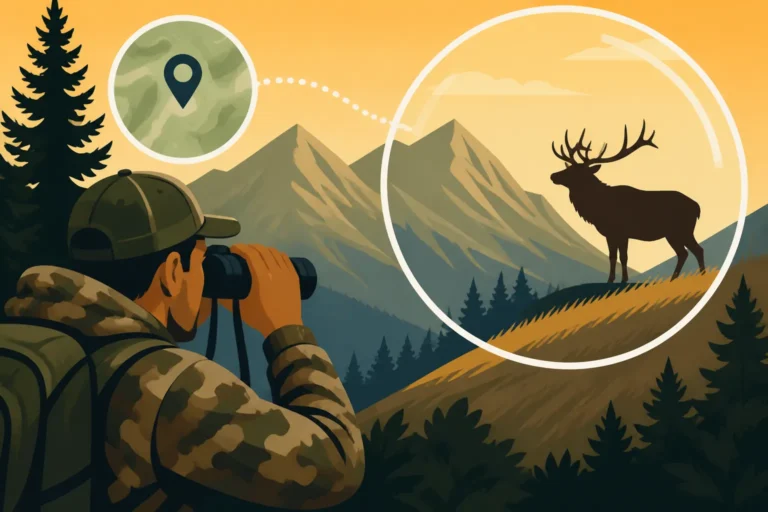
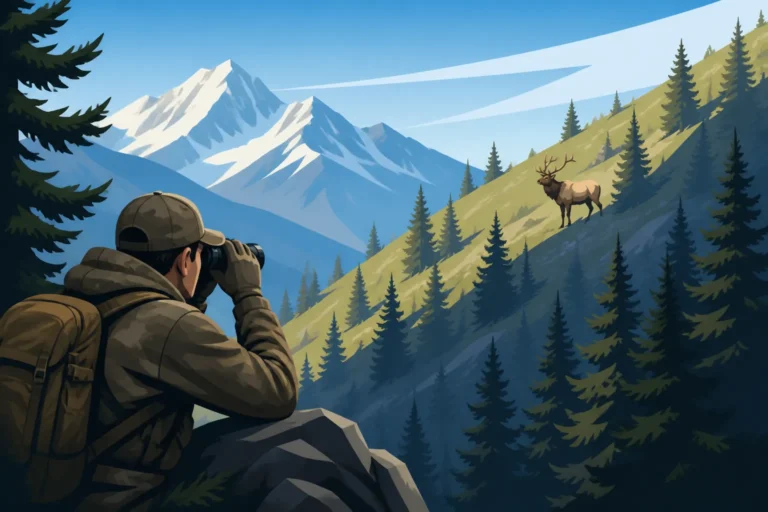
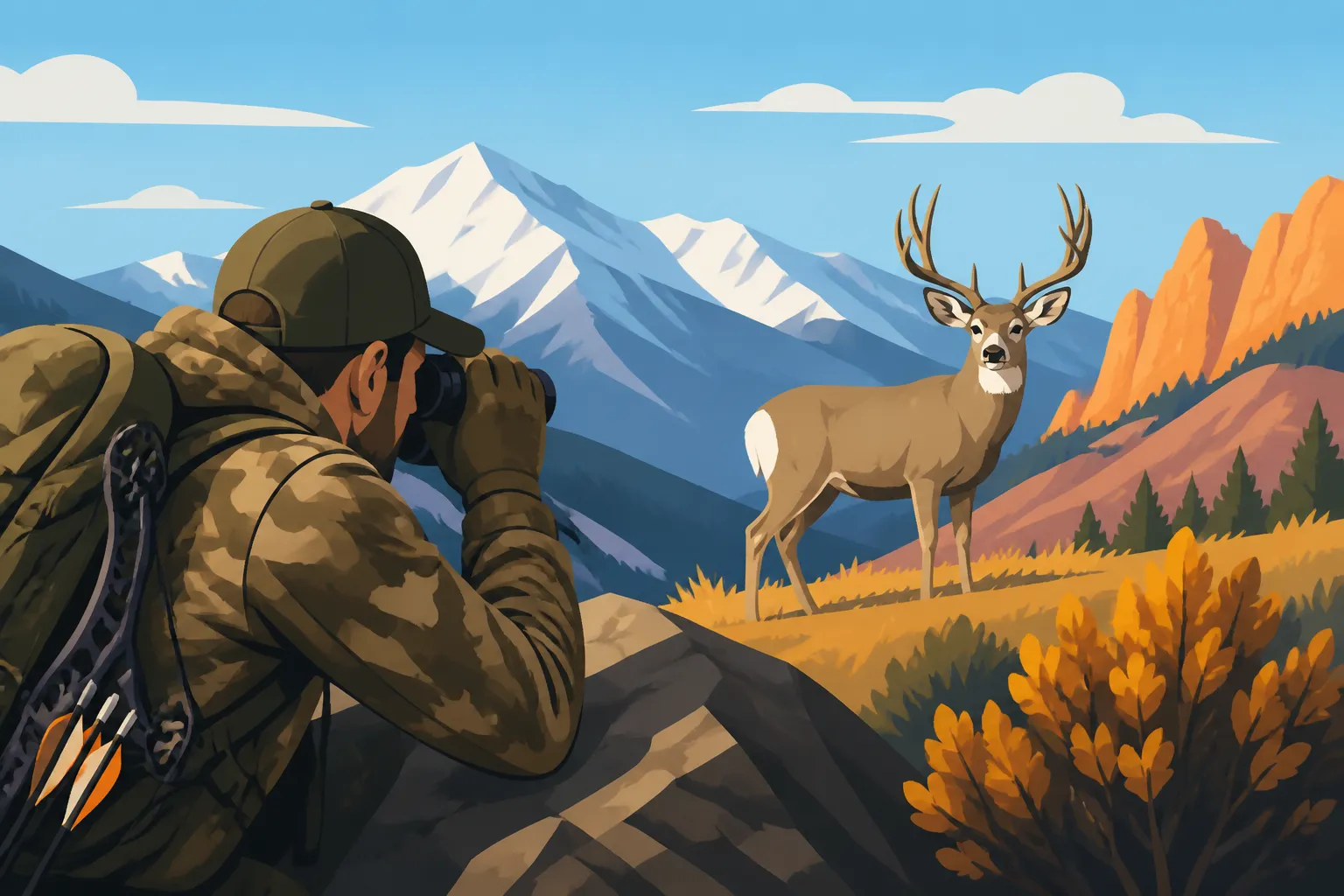
When it comes to spot-and-stalk, your optics are your primary hunting weapon. Forget your rifle or bow for a moment; if you can't find the deer, you can't hunt them. A good set of binoculars, a spotting scope, and a sturdy tripod are indispensable. You'll spend hours behind glass, meticulously picking apart distant hillsides and timber patches.
- Binoculars: A good pair of 10×42 or 12×50 binoculars are your everyday workhorses. They should be clear, bright, and comfortable for extended viewing. Brands like Swarovski, Zeiss, Leica, and Vortex offer excellent options across different price points. Many experienced hunters, often found discussing their setups on platforms like GoHunt, will argue that investing in the best binoculars you can afford is paramount.
- Spotting Scope: For truly dissecting distant slopes and confirming whether that speck is a rock or a buck, a quality spotting scope (typically 15-45x or 20-60x magnification) is essential. Coupled with a stable tripod, it allows you to evaluate antler size, assess the terrain, and confirm the animal's exact location before planning your stalk. Kowa and Athlon also produce excellent spotting scopes that are highly regarded.
- Tripod: This is non-negotiable for both your binoculars and spotting scope. Hand-holding optics for hours is tiring and leads to missed details. A sturdy, lightweight tripod like those from Outdoorsman's or a good carbon fiber photographic tripod provides the stability needed to spot animals that are otherwise invisible to the naked eye.
- Rangefinder: Once you've spotted a deer and are planning your stalk, a rangefinder becomes critical. Knowing the exact distance to the animal, as well as to various landmarks along your planned approach, will help you manage your stalk and ensure you can make an accurate shot when the moment arrives. Look for a model that compensates for angle, as you'll be shooting uphill and downhill frequently in Colorado.
You can gain more insights into choosing the right optical tools by checking out our guide on Best Optics for Colorado Big Game.
Clothing and Footwear: Blending In and Staying Comfortable
Colorado's mountains can throw every kind of weather at you, sometimes all in one day. Layering is key for comfort, and effective camouflage is critical for the stalk. Your clothing needs to be quiet, breathable, and able to protect you from wind, rain, and snow, while your footwear must be robust enough to handle miles of rugged terrain.
- Layered Clothing System: Start with a moisture-wicking base layer, add insulating mid-layers (fleece or synthetic puffy jacket), and top it off with a waterproof/windproof outer shell. This system allows you to adjust to changing temperatures and activity levels. Quiet fabrics are essential to prevent spooking deer during the final approach. Brands like Sitka, Kuiu, and First Lite are popular for their technical hunting apparel.
- High-Quality Footwear: Your boots are perhaps the most important piece of gear after your optics. You'll be covering miles of steep, rocky, uneven ground. Invest in durable, supportive, waterproof hiking boots with excellent ankle support and aggressive tread. Break them in well before your hunt to avoid blisters. Many hunters find success with boots from Crispi, Kenetrek, or Schnee's for their ruggedness and comfort. For more on selecting appropriate footwear, see our article on Best Boots for Colorado Elk Hunting, which applies equally to mule deer hunting in similar terrain.
- Backpack: A comfortable, well-fitting backpack is vital for carrying your optics, water, food, extra layers, first-aid kit, and eventually, game meat. For day hunts, a 30-45 liter pack is usually sufficient. Look for one with good load-bearing capabilities and easy access to optics. Many of the same brands that excel in clothing also make excellent packs. Learn more about choosing the right pack in our Best Backpack for a Colorado Elk Hunt guide.
- Other Essentials: Don't forget a wide-brimmed hat or ball cap, gloves, a headlamp, and a basic first-aid kit. A quality knife and game bags are also crucial for field dressing your animal.
Mastering the Art of Glassing for Colorado Mule Deer
The "spot" in spot-and-stalk is arguably the most critical and time-consuming phase of the hunt. You can't stalk what you can't see. In Colorado's expansive landscapes, mule deer blend in seamlessly, making methodical and patient glassing an art form that separates successful hunters from those who go home empty-handed. This isn't just about looking; it's about seeing.
Strategic Glassing Locations and Techniques
Effective glassing requires more than just pointing your binoculars at a hillside. It demands a systematic approach from a vantage point that offers the widest possible view while keeping you concealed.
- Choosing Your Vantage Point: Look for high points that allow you to see into multiple drainages, across large basins, and down into timber edges. These could be ridgelines, prominent knobs, or even just a subtle rise in terrain. Always consider the sun's position – ideally, you want the sun at your back or to your side, not shining directly into your optics or, worse, in your eyes.
- Systematic Gridding: Once you're set up with your tripod-mounted binoculars or spotting scope, don't randomly scan. Pick a section of terrain, divide it mentally into a grid, and slowly scan each square inch. Start at the nearest terrain features and work your way out to the farthest, then move your grid over. Don't rush. Spend 5-10 minutes on a small section, then move to the next. Look for anything that seems out of place: a horizontal line in a vertical world, an ear twitch, a darker patch of fur, or the gleam of an antler. GoHunt's mapping tools are fantastic for identifying these strategic vantage points before you even set foot in the field, helping you virtually scout and plan your glassing strategy. You can delve deeper into this critical pre-hunt work by reading our article on How to E-Scout Before a Colorado Hunt.
- Timing is Everything: Mule deer are most active and visible during the first few hours of daylight and the last few hours before dark. These are prime glassing times. Midday, they'll often be bedded, requiring even more meticulous searching in shaded areas and thick cover. You can greatly enhance your glassing skills by checking out How to Glass for Colorado Mule Deer.
Here's a quick comparison of popular optics for Colorado mule deer hunting:
| Optic Type | Ideal Magnification | Primary Use | Key Features to Look For |
|---|---|---|---|
| Binoculars | 10×42, 12×50 | Wide-field scanning, locating deer | Edge-to-edge clarity, low-light performance, ergonomic design |
| Spotting Scope | 15-45x, 20-60x | Detailed inspection, judging antlers, long-range spotting | High magnification, crisp resolution, reliable focus, eyepiece options |
| Rangefinder | N/A | Measuring distance to target and landmarks | Angle compensation, fast readings, reliable in various conditions |
Interpreting the Landscape: Finding the Bucks
Mule deer have a knack for disappearing into plain sight. Your goal is to learn to see beyond the obvious and pick out subtle clues the landscape offers.
- Focus on Edges: Deer love edges – where timber meets open sage, where a dark timber patch gives way to a rocky slide, or where a north-facing slope transitions to a south-facing one. These edges offer food, cover, and travel corridors.
- Look for Patches of Dark Timber: During midday, mature bucks often seek refuge in dense, dark timber. Don't ignore these areas. Mule deer won't always be out in the open. Use your spotting scope to peer into the shadows, looking for the tell-tale horizontal line of a deer's back or the pale muzzle against a dark background.
- Identify Bedding Areas: Deer will often bed on benches, saddles, or small knobs within larger slopes, typically where they have a view of their downwind side and an escape route. Look for areas with good cover (bushes, downed trees) that also offer a slight elevation advantage. These are prime spots to focus your glassing efforts.
- Recognize Body Parts, Not Whole Animals: Often, you won't see a whole deer. You'll see a small patch of hide, the flicker of an ear, the tines of an antler, or a patch of white rump. Train your eyes to identify these fragments. It takes practice, but the more you glass, the better you'll become at recognizing these subtle signs of life.
The Stalk: Getting Within Range of Colorado Bucks
Once you've spotted your mule deer, the real challenge begins: closing the distance. The stalk is a chess match against one of nature's most wary animals, where every step and decision can mean the difference between a successful shot and a vanishing opportunity. This phase requires meticulous planning, extreme stealth, and an unwavering focus on the wind and terrain.
Planning Your Approach: Wind, Thermals, and Cover
Before you even take your first step, a successful stalk is won or lost in the planning phase. This is where you leverage your understanding of the deer, the environment, and the tools at your disposal.
- Analyze the Terrain: Look for depressions, ridges, rock formations, or dense vegetation that can offer you cover. Your goal is to remain out of sight for as long as possible. Mark a mental path that maximizes cover and minimizes exposure. If you’re using an app like GoHunt, you can even trace your planned route directly on the map, marking waypoints for terrain features you intend to use for concealment.
- Understand Wind and Thermals: Wind direction is absolutely critical. Mule deer have an incredible sense of smell, and a slight shift in wind can instantly blow your cover. Always approach from downwind or crosswind. In mountainous terrain, thermals also play a significant role. In the morning, thermals typically rise (upslope), and in the evening, they fall (downslope). Plan your approach to use these air currents to your advantage, keeping your scent from drifting towards the deer. For more detailed insights, consider reading How to Use the Wind Hunting Colorado Elk and How to Use Thermals in Colorado Elk Country, as these principles are equally vital for mule deer.
- Identify a Last Known Location (LKL) and Stalking Lane: If the deer moves or disappears from view during your planning, mentally mark its LKL. As you stalk, always be aware of the "stalking lane" – the narrow window of opportunity you have to get to your shooting position without being seen. Think about where the deer might go and plan for those contingencies.
The Final Play: Closing the Distance and Taking the Shot
The closer you get, the more critical every movement becomes. This is where nerves of steel and careful execution pay off.
- Move Slow, Move Quiet: This cannot be emphasized enough. Take small, deliberate steps. Watch where you place your feet, avoiding snapping twigs or dislodging rocks. Stop frequently to glass ahead and reassess the deer's position. If the deer is bedded, it might be looking directly at where it expects danger.
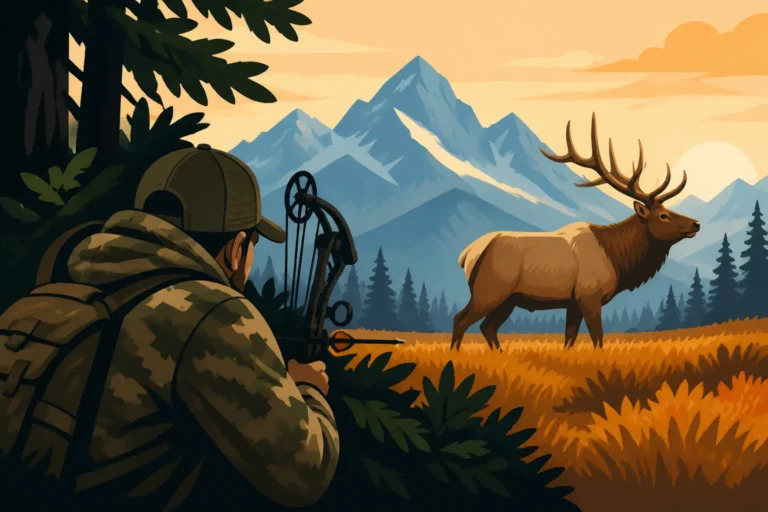
- Use Natural Cover: Stay in the shadows, behind ridges, or in thick brush. If you must cross open ground, do so when the deer's head is down feeding or looking in another direction. Freeze if it looks up. Sometimes, a slow, deliberate crawl might be necessary for the final yards.
- Patience is a Virtue: It might take hours to cover a few hundred yards. Don't rush. If the deer moves to a disadvantageous position, you might have to back out and try again later, or even abandon the stalk. A blown stalk is frustrating, but it's part of the game.
- Be Ready for the Shot: Once you're within your effective shooting range, find a stable shooting position. This might be prone, kneeling, or braced against a tree or rock. Range the animal one last time, account for angle (especially in steep terrain), and take a deep breath. Know your rifle's capabilities and practice shooting from various field positions before your hunt. Our article on How to Judge Distance in the Mountains will be a valuable resource for this critical skill.
- Field Judging: Before you pull the trigger, take a moment to confirm it's the buck you want. In Colorado, especially on general units, you might have antler point restrictions. Learn How to Judge a Colorado Mule Deer Buck in the field quickly and accurately. Once the shot is taken and the deer is down, celebrate your hard-earned success, then immediately begin the process of field dressing and packing out your animal.
Disclaimer
The information provided in this guide is for general educational purposes only and is not a substitute for official regulations. All hunters are responsible for reviewing and adhering to current Colorado Parks and Wildlife (CPW) hunting regulations and licensing requirements. Hunting carries inherent risks, and safety should always be your top priority.