How to Ambush Elk on Public Land
Hunting elk on public land in Colorado can feel like trying to find a needle in a mountain-sized haystack, especially when those wily critters seem to vanish at the first hint of human presence. Many hunters get frustrated constantly chasing ghosts or bumping elk they never even knew were there. This guide is all about equipping you with the knowledge and tactics to flip that script, focusing on how to successfully ambush elk on public land by understanding their habits and leveraging the terrain to your advantage.
Understanding Public Land Elk Behavior for Ambushes
Elk are incredibly intelligent and adaptable animals, and on heavily pressured public land, they become even more elusive. To successfully ambush them, you first need to understand their typical daily patterns and how hunting pressure influences these behaviors. It's not just about finding an elk, it's about finding the right place at the right time where an elk will come to you, often without even knowing you're there.
Decoding Daily Routines and Bedding Areas
Elk, at their core, are creatures of habit. They follow predictable routines moving between their three main necessities: bedding, feeding, and water. However, the catch on public land is that their definition of "bedding" often means the deepest, nastiest, steepest, darkest timber or canyon where humans are least likely to venture. You won't find them lounging in open parks unless it's deep wilderness or a very quiet area.
During the day, especially after the first few days of any rifle season, elk will seek out security cover. This usually means thick timber, dense dog-hair stands of pine, or the north-facing slopes of mountains where the shade is deep and the wind currents are stable. These areas offer thermal regulation, protection from predators (including two-legged ones), and often some residual forage. They'll bed down, chew their cud, and essentially lay low until the evening. Sometimes, you'll find them on high, remote benches overlooking vast drainages, giving them a commanding view to spot any approaching danger. The key here is not necessarily to bust into these bedding areas, which often leads to a quick bust out, but to predict when and where they’ll exit or enter them.
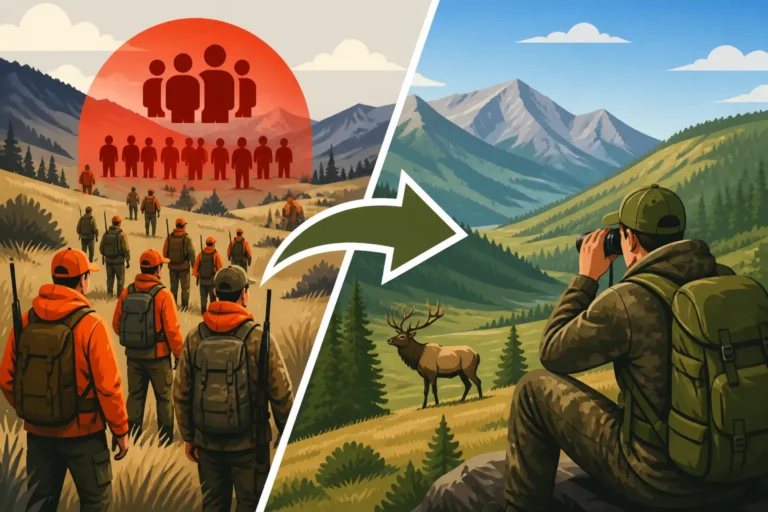
Hunting pressure plays a massive role in shifting these routines. Early season, elk might be more visible, lingering in open feeding areas longer. But once the orange army arrives, they often become almost entirely nocturnal, moving only under the cover of darkness. This means they'll travel from their deep bedding areas to feeding grounds and water holes in the last hour of daylight and the first hour of morning light. Your ambush points need to account for this compressed, low-light movement. Think about those tiny, forgotten pockets of timber or steep draws that offer just enough cover for a quick daylight sneak between two larger, more obvious areas.
Identifying Key Travel Corridors and Funnels
If you're going to ambush an elk, you need to know where they're most likely to travel. Elk don't just wander aimlessly; they use the terrain to their advantage, much like we do on a hiking trail. Identifying these travel corridors and natural funnels is paramount for a successful ambush.
Look for saddles between ridges, which act as natural shortcuts over high ground. Ridges themselves, particularly those with good cover, are often used as travel routes, especially when moving between different drainages or bedding to feeding areas. Creek bottoms, while often noisy, can provide excellent cover and access to water, making them frequent pathways. Old logging roads, even overgrown ones, or well-worn game trails are obvious highways for elk. These trails are often deeply cut into the earth and peppered with tracks and droppings.
But the real magic happens at choke points – those spots where the terrain forces animals into a narrow path. This could be a rocky outcropping that funnels them along a cliff edge, a narrow timbered strip between two open parks, or a saddle that's the only easy crossing between two steep canyons. These are your prime ambush locations. By using tools like GoHunt, or other detailed topographical maps, you can e-scout these areas from your couch. Look for contour lines that pinch together, changes in vegetation density, or natural breaks in the landscape that would concentrate animal movement. Overlapping your e-scouting with knowledge of general elk behavior, you can pinpoint likely avenues they'll use when moving from their security cover to their food or water sources. Imagine a narrow finger ridge leading out of a vast, dark timber basin to a sun-drenched, south-facing meadow – that ridge line is a potential superhighway.
Strategic Pre-Hunt Planning and On-the-Ground Scouting
You can’t just show up on opening day hoping for the best. Ambushing elk requires meticulous planning and a deep understanding of your chosen hunting area long before you ever step foot in it with your weapon. This combination of digital reconnaissance and physical legwork is what sets successful ambush hunters apart.
Scouting for Ambush Points in Advance
Pre-season scouting is your secret weapon. Before the season even begins, you need to be out in the field, putting boots on the ground, looking for concrete evidence of elk activity. This isn't just a leisurely hike; it's an investigative mission. You're looking for fresh tracks, piles of droppings (scat), rub lines on trees (where bulls have scraped their antlers), and active wallows (muddy depressions where elk roll to cool off and deter insects). These signs tell you where elk have been, which is a good indicator of where they might be when the season opens.
When you find these signs, don't just note them; try to piece together the narrative. Are the tracks heading into dark timber? Is there a rub line leading towards a bedding area? Is the wallow fresh and heavily used? This information helps confirm the travel corridors and bedding areas you identified during your e-scouting. When you're scouting, stealth is key. You don't want to alert elk to your presence or disrupt their natural patterns. Move slowly, quietly, and glass frequently from a distance. The goal is to observe, not to disturb. A common mistake is to push too deep into potential bedding areas during scouting, effectively educating the elk before the season even starts. Instead, focus on finding the edges, the travel routes, and the pinch points they'll use. Knowing How to Locate Elk Before Opening Day is invaluable here.
Considering Wind and Thermals for Your Setup
This might be the most critical element for any ambush hunter, especially for elk. Elk have an incredible sense of smell, and if your scent drifts into their path, your ambush is over before it even begins. You must understand how wind and thermals work in mountain terrain and How to Use the Wind Hunting Colorado Elk.
Wind direction is straightforward: you want it blowing from the elk to you, never the other way around. But mountains complicate things with thermals. Thermals are air currents driven by temperature changes. In the morning, as the sun heats the ground, air rises, creating an upslope thermal. Your scent will be carried up the mountain. In the evening, as the air cools, it sinks, creating a downslope thermal, carrying your scent down the mountain. Elk are masters of using these thermals to their advantage, often bedding high and moving down to feed in the evening, and vice-versa in the morning.
When choosing an ambush spot, you need to anticipate the wind and thermal patterns for the time of day you plan to hunt. If you're ambushing in the morning, set up below a travel route, allowing the rising thermal to carry your scent over the elk or away from their approach. In the evening, set up above their travel route, allowing the falling thermal to carry your scent down and away. Always have multiple ambush spots identified for different wind conditions. A spot that's perfect for a north wind is useless if the wind shifts to the south. Understanding How to Use Thermals in Colorado Elk Country is not just a good idea, it's essential for consistent success. This tactical awareness is where resources like GoHunt can shine, helping you analyze terrain features that influence these air currents.
Executing the Ambush: Timing and Setup
Once you've done your homework and found those promising ambush locations, the real test begins: executing a flawless setup. This involves not only impeccable timing but also becoming virtually invisible to the keen senses of an elk.
Perfecting Your Timing for Success
Timing is everything in an elk ambush. Generally, dawn and dusk are your prime windows. Elk are most active during these low-light periods as they transition between bedding and feeding areas. This means you need to be in your chosen ambush spot well before daylight breaks, and you need to stay until it's too dark to shoot safely.
For a morning ambush, this could mean hiking in during the dark, perhaps two hours before legal shooting light, to minimize disturbance and allow the woods to settle down before the elk start moving. You want to be a silent, unmoving part of the landscape. Similarly, for an evening ambush, you'll need to be in place hours before sunset, patiently waiting for the elk to stir from their bedding.
However, don't discount midday opportunities entirely. Elk occasionally visit wallows or water holes during the warmer parts of the day, especially if the rut is on or if it's unseasonably warm. Knowing How to Hunt Elk Wallows in Colorado can provide some rare, but highly effective, midday ambush chances. Also, if there’s heavy hunting pressure pushing elk around, sometimes they get bumped from a bedding area mid-morning and will attempt to find new security cover, offering a brief window for an ambush if you are in a key travel corridor. The principle remains: be there before them, be quiet, and be patient.
Camouflage, Cover, and Concealment
Being invisible isn't just about wearing camouflage; it's about blending into your surroundings, breaking up your outline, and remaining absolutely still. When setting up your ambush, always prioritize natural cover. This could be a cluster of dense pines, a large downed log, a rock outcropping, or a rise in the terrain. The goal is to obscure your human form.
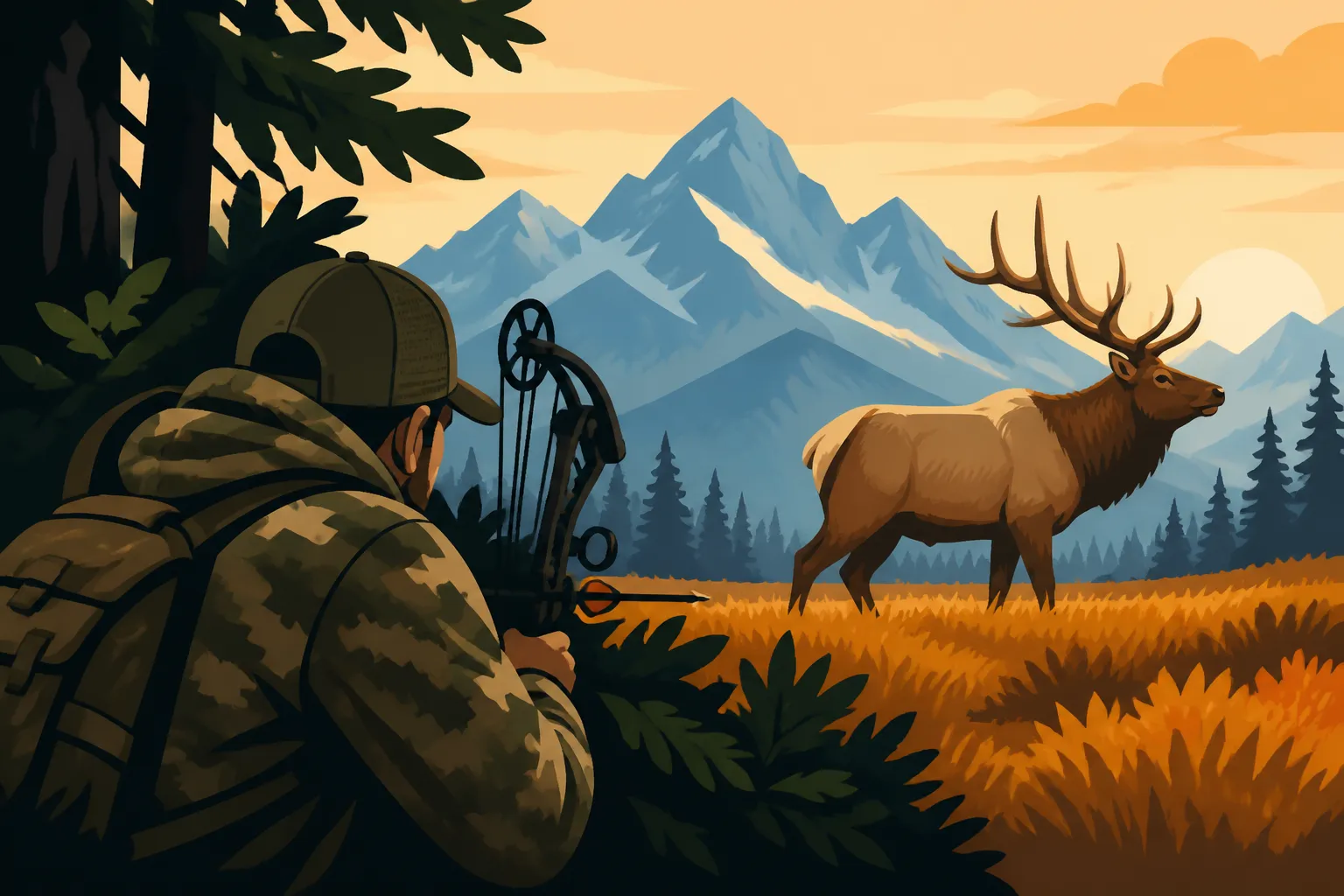
For bowhunters, this means selecting a spot that offers shooting lanes at the expected range, while still providing maximum cover. You'll need to be able to draw your bow undetected. For rifle hunters, the range is typically greater, but the need for concealment is just as high. Practice shooting from various positions (kneeling, sitting, prone) to ensure you're comfortable and steady when the moment comes. Make sure your backdrop is darker than you are, if possible, to further blend in. When elk are moving through How to Hunt Elk in the Dark Timber, their eyes are already straining, so good concealment makes you practically disappear.
Movement is the enemy of concealment. Elk have incredible eyesight, especially for detecting movement. Even a slight shift of your head can give you away. Minimize all unnecessary movements. If you need to turn, do it slowly, inch by inch. When an elk approaches, freeze. Wait for it to pass behind cover or lower its head before making any adjustments to your position or aiming your weapon. Sometimes, a subtle cow call or soft bugle can be used strategically to stop a bull in an opening or redirect a hesitant animal, but often, silence is your best tool in an ambush.
Adaptability and Persistence in Public Land Ambushes
Even with the best planning and setup, public land elk hunting is unpredictable. Success often hinges not just on initial strategy, but on your ability to adapt, learn, and maintain unwavering persistence.
Learning from the Land and Elk Behavior
Every hunt is a learning experience, especially when you're ambushing elk on public land. No two days are exactly alike. The weather changes, other hunters move in, and elk react accordingly. If an ambush doesn't pan out, don't just pack up and leave frustrated. Take the time to analyze what happened. Did the wind swirl unexpectedly? Did the elk use a different trail? Did you make too much noise on the approach? Was there a change in the weather that shifted their pattern? This constant evaluation is crucial for improving your future ambushes.
Elk behavior is also dynamic. During the rut, they might be more vocal and aggressive, potentially responding to calls. After the rut, they become more focused on feeding and regaining strength, often forming larger herds. Learning to "read" the land means not just seeing trails and sign, but interpreting what they tell you about current activity and likely next moves. Observing how elk react to pressure from other hunters is also vital. If you hear shots in a particular drainage, anticipate that elk might be moving out of that area and into an adjacent, quieter one. This gives you an opportunity to adjust your ambush site to intercept them. This continuous process of observation and adjustment is part of being a true Western hunter. Knowing How to Hunt Colorado 1st Rifle Season versus late season tactics requires understanding these shifts.
The Importance of Mental Toughness and Patience
Ambushing elk is often a game of patience and mental toughness. You might sit for hours, shivering in the pre-dawn cold, listening to the forest slowly wake up, with no elk appearing. It's easy to get discouraged, to start fidgeting, or to abandon your spot prematurely. But that one moment of impatience can cost you the entire hunt.
True ambush success often comes to those who can sit perfectly still, remain focused, and trust their chosen location. This means being prepared mentally for long periods of inactivity. Bring a comfortable cushion, a good book for slow moments (though always keep your head on a swivel), and plenty of snacks and water. Mentally rehearse the shot scenario so you're ready when an animal does appear. Visualize the elk walking into your shooting lane, picturing your breathing and follow-through.
And just as importantly, know when to make a move. Sitting in a spot that hasn't shown any new sign in days or where conditions have changed drastically (e.g., a strong wind shift) is not persistence; it's stubbornness. Persistence means constantly adapting, moving to a new ambush spot if the intel suggests a different location is better, or executing a silent, slow still-hunt between prime ambush points. It’s about staying vigilant and confident in your strategy, even when the mountains throw everything they have at you.
Here's a quick overview of potential ambush scenarios:
| Ambush Scenario | Ideal Time | Key Considerations | Setup Recommendations |
|---|---|---|---|
| Morning Travel Route | Pre-dawn | Elk moving from feeding to bedding. Upslope thermals. | Position above anticipated travel route, allowing rising thermals to carry your scent over. Use terrain to break line of sight. Be in place 2 hours before legal light. |
| Evening Travel Route | Late afternoon | Elk moving from bedding to feeding. Downslope thermals. | Position below anticipated travel route, allowing falling thermals to carry your scent down. Ensure shooting lanes are clear. Stay until dark. |
| Mid-Day Wallow/Water | Mid-day (warmer) | Less predictable, but high-value spots. Wind can be variable. | Position downwind, utilizing dense cover near the water source. Be extremely quiet and patient. Only attempt if signs are fresh and recent. |
| Security Cover Edge | Anytime (pressured) | Elk hugging thick timber/brush to avoid pressure. Wind is critical. | Find a pinch point or narrow opening on the downwind side of thick cover. Be ready for quick, stealthy shots. Minimize visibility from within the cover. This is a great time to learn How to Hunt Elk on Public Land Pressure. |
| Saddle/Ridge Crossing | Dawn/Dusk | Natural funnel between drainages. Thermals can swirl here. | Position for a cross-wind shot if possible. Have clear views on both sides of the saddle. Be aware of both rising and falling thermals in this transition zone. |
Ultimately, ambushing elk on public land in Colorado is a high-reward strategy that demands discipline, thorough preparation, and a deep respect for the animal and its environment. It's not always easy, but when a bull silently steps into your shooting lane, oblivious to your presence, all that hard work becomes incredibly worth it.
Disclaimer
Hunting is an inherently dangerous activity. Always prioritize safety, understand and follow all Colorado Parks and Wildlife regulations, and obtain proper licenses and tags. This guide is for informational purposes only and does not substitute for professional instruction or personal experience in the field. Conditions in the backcountry can change rapidly, and hunters should always be prepared for emergencies.