How to Hunt Elk in the Dark Timber
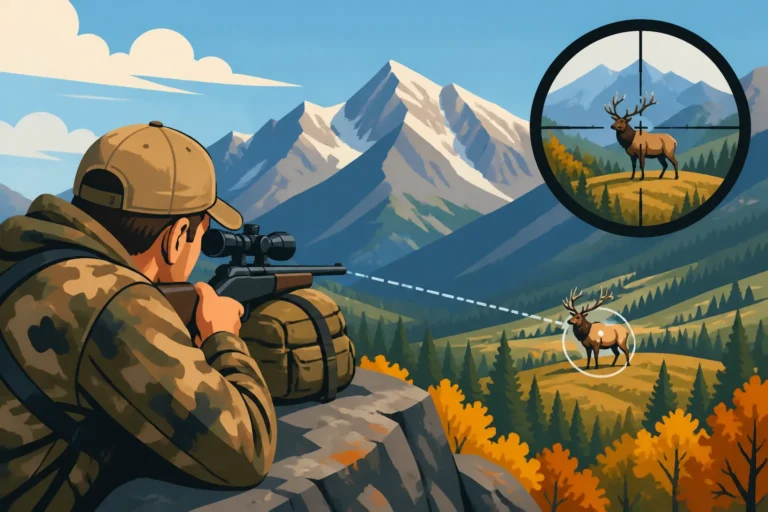
That moment when you've been working a ridge, calling your heart out, and you see a flicker of movement – then poof – that bull or cow just vanishes into the impenetrable depths of Colorado's dark timber. It's a scene every elk hunter knows, and it's frustrating. Elk are masters of disappearing, and when they choose to hole up in those dense, shadowy forests, they can feel impossible to find. This guide is all about demystifying the art of hunting elk in the dark timber, giving you the strategies and confidence to pursue them where they feel safest.
Understanding Dark Timber Habitat and Elk Preferences
Hunting elk in the dark timber isn't just about walking into a thick forest; it's about understanding why elk are there and what kind of timber they prefer. These aren't random hiding spots; they're strategic havens.
What Defines "Dark Timber" in Colorado?
When we talk about dark timber in Colorado, we're generally referring to those incredibly dense stands of conifer trees, primarily spruce, fir, and lodgepole pine, often found at higher elevations. These aren't your airy ponderosa forests. Imagine trees growing so close together that their branches interlock, forming a canopy that blocks out most of the sunlight, even at midday. The ground beneath is usually a thick carpet of pine needles, decaying logs, and deadfall, making travel quiet but incredibly arduous. The air often feels cooler, heavier, and sometimes carries the distinct scent of damp earth and pine resin.
Elk seek out these areas for a multitude of reasons, primarily thermal cover, security, and refuge. When the sun beats down on open ridges, the dark timber provides a cooler, shaded retreat. Conversely, during harsh winter winds, the dense canopy acts as a windbreak, offering critical shelter. It's their natural fortress, a place where they feel safe from predators, including hunters. The sheer density makes it difficult for anything to move through quietly or be seen from a distance. Because of this, mastering Colorado Backcountry Hunting Guide often means becoming proficient in these dense areas.
Preferred Elk Haunts Within the Timber
Not all dark timber is created equal in the eyes of an elk. They have distinct preferences that, once understood, can dramatically increase your chances of finding them.
North-facing slopes are often prime real estate. Because they receive less direct sunlight, these slopes remain cooler and hold moisture longer, which can mean more succulent forage later into the season. They also tend to hold snow longer, providing a consistent water source in some areas. Elk will bed on these slopes to stay cool, especially during warm archery seasons or early rifle seasons. You might find them just below a ridgetop on the north side, allowing them to catch rising thermals from below while keeping an eye (or nose) on anything approaching from above.
Another hotspot can be old logging cuts or areas of new growth within or adjacent to mature timber. While the densest, darkest stands are primarily for cover, elk still need to eat. Logging operations, even decades ago, can create pockets of young, succulent browse that elk love. The edges where new growth meets old growth are especially productive, offering food right next to security. Similarly, creek bottoms or areas around natural springs within the thick timber are obvious magnets. Elk need water daily, and finding a water source tucked away in dense cover provides them with both sustenance and security. Focus your efforts on these transitional zones and water sources, particularly during dry periods.
Elk Behavior and Patterns in Dense Forests
Elk aren't just hiding out in the dark timber; they're living there, and their behavior shifts to adapt to this unique environment. Understanding these patterns is key to unraveling their secrets.
Why Elk Seek Out Dark Timber
The primary draw of dark timber for elk boils down to a few critical needs: security, thermoregulation, and food. First and foremost, it's a sanctuary. The thick canopy and dense undergrowth provide unparalleled concealment from hunters and natural predators alike. An elk can literally stand 20 yards from you and vanish into the shadows, a truly humbling experience for any hunter. When you apply pressure in more open country or on well-traveled trails, elk instinctively retreat to the deepest, darkest sections of the timber. This is particularly true during rifle seasons when hunter activity is high. They’ll use this dense cover as an escape route and a bedding sanctuary, moving from more exposed feeding areas into the timber as the sun rises or hunter presence increases.
Beyond security, dark timber is a master climate controller for elk. In the scorching heat of late summer or early fall, the dense canopy creates a natural air conditioner, keeping them cool and preventing overheating. Conversely, when the bitter winds whip across the high country, the tightly packed trees provide a crucial windbreak, helping them conserve energy and stay warm. Even food plays a role; while not typically a primary feeding ground, certain types of browse, mushrooms, and lichens thrive in the shaded, moist environment of dark timber. Additionally, fallen timber often creates microhabitats for smaller plants that elk will browse on, even if it means picking through thickets.
Reading Elk Sign in the Shadows
Finding elk in the dark timber often feels like searching for a needle in a haystack, but diligent observation of their sign can guide you. Since visibility is so limited, you'll need to slow down and look for subtle clues.
Tracks are a great starting point, though they can be harder to spot on the soft, often uneven duff layer of the forest floor. Look for impressions in damp soil near springs or small clearings. Pay attention to the age and direction of the tracks to determine recent movement. Fresh tracks, especially those with dew or frost pushed aside, are a strong indicator of nearby elk. Scat, or elk droppings, is another critical clue. Fresh, moist piles tell you elk have been in the vicinity very recently. The size and shape can also give you an idea if it's a bull or a cow, though distinguishing can be tricky. Look for scat along game trails, near bedding areas, or around any water source.
If you're hunting during the rut or even just after, keep an eye out for rubs and wallows. Bull elk will rub their antlers on saplings and small trees, leaving distinct marks, to mark their territory and shed velvet. Wallows, muddy depressions where elk roll to cool off and spread their scent, are unmistakable. Fresh mud in a wallow means a bull has been there recently, and they often return to these spots. Finally, bedding areas are depressions in the forest floor where elk have rested, often indicated by flattened duff and a concentration of scat. Elk often choose sheltered spots within the timber that offer a clear line of sight or smell downwind, allowing them to detect approaching threats. Finding a fresh bed is a huge indicator that elk are actively using that section of timber.
Essential Gear and Pre-Hunt Scouting for Dark Timber
Successfully hunting dark timber isn't just about what you do in the moment; it's heavily influenced by the gear you carry and the preparation you put in beforehand. The right tools and knowledge can make all the difference when visibility drops and the going gets tough.
Specialized Gear for Navigating Dense Terrain
When you're slipping through the thick stuff, every piece of gear needs to earn its spot. Forget the super-powerful spotting scopes; they're just dead weight here. Instead, compact binoculars (8x or 10x) are your friends, useful for quickly identifying that dark blob behind a tree or confirming a shot opportunity in a tiny window. A rangefinder is absolutely crucial for close-quarters shots, where judging distance can be surprisingly difficult even at 40 yards, especially when you might only have a few seconds to react.
Your feet are your foundation in dark timber. Sturdy, waterproof boots with excellent ankle support are non-negotiable. You'll be navigating endless deadfall, slippery moss, and uneven terrain, often off-trail. Brands like Crispi or Kenetrek offer the kind of robust support and waterproof protection you'll need. A quality backpack is equally vital. Whether you're planning a day hunt or a multi-day Colorado Backcountry Hunting Guide, a pack that can comfortably carry your essentials and expand to handle a heavy load of meat is paramount. Look for something durable from a company like Kifaru or EXO Mtn Gear; checking out a Best Backpack for a Colorado Elk Hunt guide can provide specific recommendations. For weapons, think quick and agile. A short-barreled rifle is easier to maneuver through thick brush than a long magnum, and a compound bow is much more manageable than a longbow.
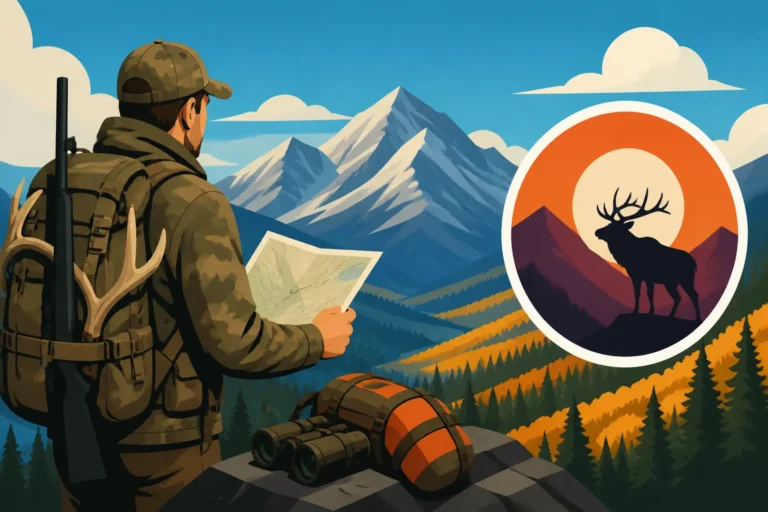
Finally, navigation is king. It's incredibly easy to get turned around in dense timber. A reliable GPS unit, like a Garmin InReach, or a robust mapping app on your phone (backed up with extra battery packs) is paramount. This is where tools like GoHunt's mapping capabilities truly shine. You can drop waypoints for significant sign, your vehicle, or even potential escape routes, ensuring you always know where you are.
E-Scouting and On-the-Ground Preparation
The hunt often starts long before you step foot in the woods. E-scouting is particularly effective for dark timber, allowing you to identify potential elk magnets from the comfort of your home.
Start with topographic maps to identify north-facing slopes, saddles, benches, and any potential water sources hidden within the timber. These features often act as funnels or bedding areas. Then, dive into high-resolution satellite imagery. Services like GoHunt provide exceptional detail, allowing you to discern variations in timber density, identify small clearings, old logging roads, or even subtle changes in vegetation that might indicate a productive feeding edge. Look for finger ridges extending into basins, as elk often travel these less dense corridors within the timber. Overlapping timbered areas with proximity to open parks or feeding grounds can reveal key transition zones where elk move from cover to feed. This type of pre-hunt analysis is crucial for narrowing down vast wilderness into manageable hunting blocks.
Once you have a few promising areas identified, nothing beats a pre-season scouting trip. Hike into these timber blocks, even if it's just for a day. Look for game trails, bedding areas, rubs, and scat. Pay attention to the topography on the ground – what looks flat on a map might be a series of steep benches or ravines. Identify potential access points, but also consider your egress. If you're lucky enough to punch a tag, how will you How to Pack Out an Elk in Colorado from that deep timber canyon? Thinking through these logistics beforehand can save you immense headache and heartache later.
Effective Hunting Tactics for Dark Timber Elk
Hunting dark timber requires a unique approach, often demanding more patience and stealth than chasing elk in open country. It's a game of inches and quiet movements, where quick reactions are often rewarded.
Still-Hunting and Stalking Strategies
The most effective method for hunting dark timber is often the slow, methodical art of still-hunting. This isn't about covering ground quickly; it's about covering it smartly. The rule of thumb is one step, then stop, look, and listen for several seconds, sometimes even a minute. Your eyes should constantly be scanning, not just for an entire elk, but for a horizontal line where there should be vertical trees, a flick of an ear, a patch of hide, or a glint of an antler. Elk are masters of camouflage in this environment, often holding tight, hoping you'll walk right by. Trust your nose as well; a strong musky scent of elk can be a dead giveaway.
The wind and thermals are your absolute best friends – or worst enemies. Always, always hunt into the wind, or with a crosswind that favors your approach. Understanding How to Use the Wind Hunting Colorado Elk and How to Use Thermals in Colorado Elk Country is not just helpful, it's mandatory in thick timber where air currents can swirl unpredictably. Thermals typically rise in the morning as the sun warms the earth and fall in the evening as it cools. Plan your approach to be below elk in the morning and above them in the evening. When you move, move deliberately and silently. Pick up your feet; don't drag them. Use the terrain and existing cover to break up your silhouette. This focused effort on How to Move Quietly Through Colorado Timber is paramount to success. Pausing frequently also gives you a chance to listen. You might hear the faint crunch of hooves on pine needles, the snap of a twig, or even the soft blowing sound of a contented elk.
Calling and Ambush Techniques
While bugling might be effective in open parks, aggressive calling can be counterproductive in dark timber. Here, subtlety is key. Soft cow calls, mews, and chirps are more likely to pique an elk's curiosity without putting them on high alert. If you do bugle, keep it light and questioning, like a single lost bull. Often, a "stop" call, a quick, sharp bark, can make a timber elk pause just long enough for a shot opportunity if you surprise them.
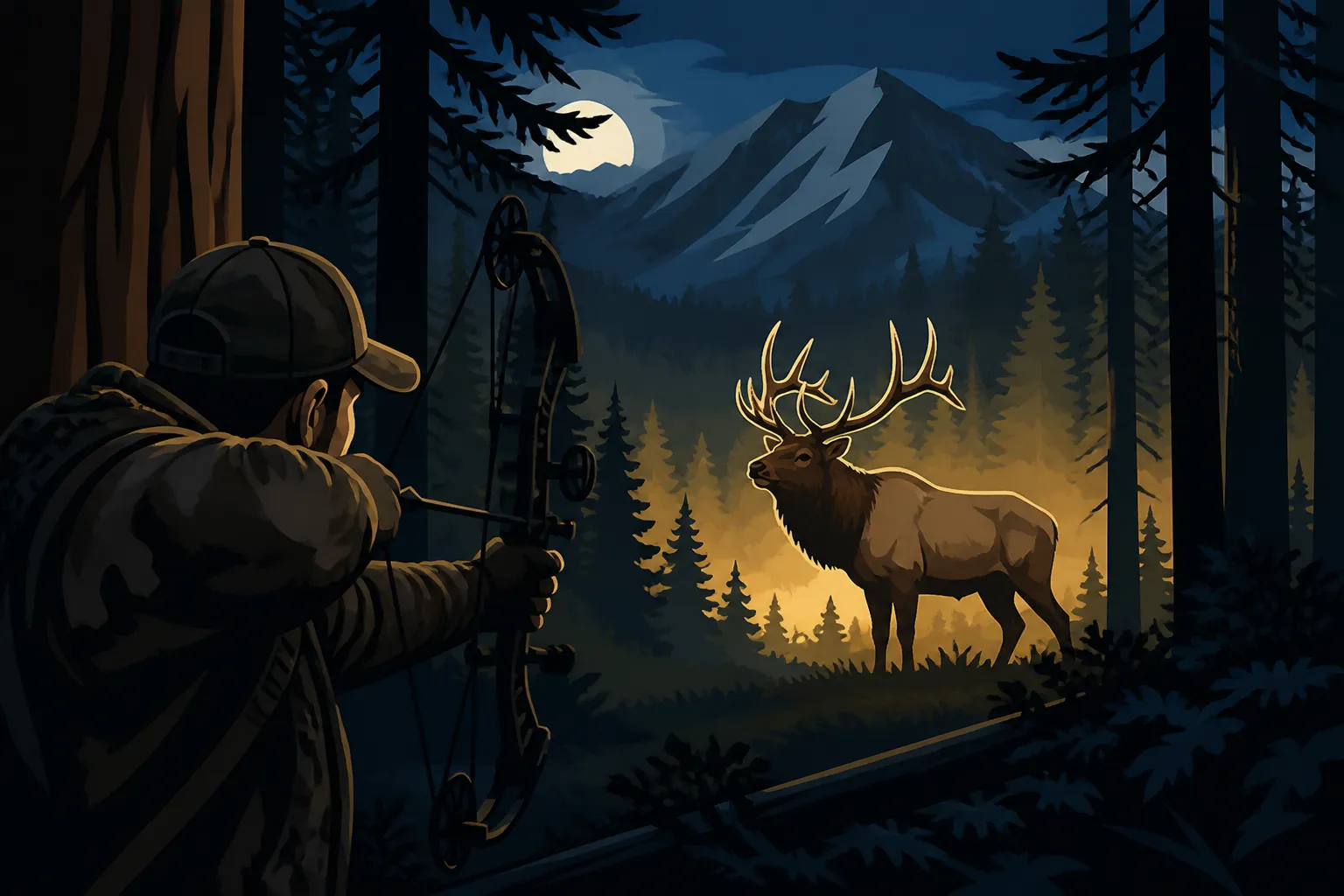
Setting up for a call in dark timber is also different. Instead of wide-open vistas, you're looking for small clearings, natural openings, or even just a slight thinning of trees that offers a shooting lane of 20-40 yards. One effective strategy is to have a caller positioned slightly behind the shooter. The caller initiates the soft calls, drawing the elk's attention, while the shooter remains silent and motionless, ready for the close-range shot. Elk will often circle downwind to try and scent you, so be ready for them to appear from unexpected directions.
Another tactic involves ambushing elk at specific features. Elk often use wallows or waterholes tucked deep in the timber, especially during drier periods or just after the rut when bulls are recovering. Setting up a ground blind or finding natural cover downwind of these spots can be highly effective. Similarly, benches, saddles, and small clearings within the timber can act as natural travel corridors or bedding areas. Identifying these choke points through careful scouting can allow you to set up an ambush along an elk's likely path. Whether you're hunting during How to Hunt Elk During the Peak Rut or transitioning into Late-Season Elk Hunting Tactics, understanding the subtleties of timber calling is a game-changer.
Overcoming Challenges and Ensuring Safety
Hunting in the dark timber is exhilarating, but it comes with its own set of unique challenges. Reduced visibility, difficult terrain, and the sheer remoteness can test even the most experienced hunter. Being prepared is half the battle.
Navigating Dense Cover and Reduced Visibility
The most immediate challenge in dark timber is the limited visibility. It's often difficult to see more than 30 or 40 yards, and in many places, it's far less. This drastically changes how you hunt. You can't rely on long-range glassing like you might in open country. Instead, your senses of hearing and smell become hyper-alert. However, it also means it's incredibly easy to get disoriented. Always have your GPS or mapping app open, and frequently check your position. Learn to recognize key landmarks, even subtle ones like a unique tree or rock formation. Dropping waypoints periodically as you move deeper into the timber is an excellent habit, especially when going off-trail.
Finding an ethical shot opportunity can also be tough. Elk can appear and disappear in an instant, and you often only get a small window through the trees. Practice quick target acquisition and ensure your shot lane is clear. You might have to make a split-second decision. Deadfall – crisscrossing logs and downed trees – is a constant obstacle. It slows you down, makes noise, and can lead to falls. Always watch your footing, and consider trekking poles for stability, especially when carrying a heavy pack. If you're hunting with a partner, maintaining contact is crucial. Radios are a good idea, but agree on pre-arranged signals (like a specific bird call) in case you lose radio contact or want to communicate silently.
Safety and Ethical Considerations in Dark Timber
Safety is paramount in any hunting situation, but the dark timber amplifies certain risks. Target identification is particularly challenging in low light and dense cover. Always be 100% positive of your target and what's beyond it. Never shoot at sound or movement alone. It's easy to mistake a branch for an antler or a dark shape for an animal in the shadows. Take an extra second to confirm.
Another major consideration is the pack-out. If you harvest an elk deep in the timber, you're in for a monumental task. The difficult terrain, distance, and lack of clear trails make packing out an elk a multi-hour, multi-trip, or even multi-day affair. Reviewing a guide on How to Pack Out an Elk in Colorado is essential before you ever head out. Make sure you have the right gear, including a sturdy frame pack, game bags, and enough food and water for an extended stay if necessary.
Weather can also turn quickly. Even if it's sunny on the ridge, the dark timber can be significantly colder and wetter due to the lack of sun penetration and increased moisture retention. Be prepared for sudden changes in temperature or precipitation. Layering your clothing, as discussed in How to Handle Cold-Weather Gear for Colorado, is always a smart strategy. Carry fire-starting supplies, a first-aid kit, and emergency shelter. The remoteness of many dark timber areas means help can be hours, or even a day, away.
Post-Shot Procedures in the Timber
Harvesting an elk in the dark timber is a significant achievement, but the work is far from over. The real challenge of tracking, recovery, and meat care often begins the moment the shot breaks.
Tracking and Recovery in Challenging Conditions
After a shot, the absolute first thing you should do is mark your exact shot location. Tie a piece of flagging tape to a branch, drop your pack, or use your GPS to drop a waypoint. This is incredibly important because once you take your eyes off that spot, everything looks the same in the dense timber. Next, resist the urge to immediately pursue. Unless the elk is visibly down, give it time – typically 30 minutes to an hour for a good shot, and much longer (several hours or overnight) for a marginal hit. Elk are incredibly tough, and giving them time to bed down and expire can prevent a long, grueling tracking job.
When you begin tracking, move slowly and methodically. Look for blood, broken branches, disturbed leaves, or even tracks. Blood can be scarce in the timber due to the thick duff, so look for small specks on leaves or bark. A systematic grid search can be effective if you lose the trail. If you're tracking in low light or darkness, a good blood-trailing light with a red or green filter can make blood stand out against the forest floor. If you're hunting with a partner, spread out slightly, communicating any sign found. Remember that elk often run downhill after a shot, seeking thick cover. Follow every lead, no matter how small, and be persistent. If you're having trouble locating an animal, referring to tactics like those in How to Find Elk When They Go Quiet can sometimes provide the needed insight, even for a downed animal.
Field Dressing and Meat Care in Remote Areas
Once you find your elk, the clock starts ticking, especially if temperatures are warm. In the dark timber, packing out a whole elk is usually impossible. Quartering the animal on the bone is almost always the most practical method. This involves breaking the animal down into its four quarters, backstraps, tenderloins, neck meat, and sometimes rib meat, leaving the heavy bone structure of the spine and skull (if you're not keeping the skull) behind. For a detailed walkthrough, check out How to Quarter an Elk in the Field. Having a sharp knife, a bone saw, and plenty of good quality game bags (like those from TAG Bags or Caribou Gear) is crucial.
Getting the meat cooled down quickly is paramount to prevent spoilage. Even in the relatively cooler dark timber, internal body heat needs to dissipate. Get the quarters off the ground and hang them from trees to allow air to circulate around them. If you're in a remote area for multiple days, consider setting up a makeshift meat pole. Keep the game bags clean and protect them from flies. If you anticipate warm weather, think about How to Keep Elk Meat Cool in Warm Weather, even when deep in the woods.
When it comes to the actual pack out, divide the weight among your hunting party. A strong frame pack is essential for carrying heavy, bulky quarters. You might need to make multiple trips, so having a plan for securing meat overnight or for subsequent trips is vital. This is where your pre-scouting and knowledge of the terrain really pays off. Remember, the harvest is only truly successful when that meat makes it home safely and ethically.
Disclaimer
Please remember that hunting regulations, seasons, and licensing requirements can change. Always consult the most current Colorado Parks and Wildlife (CPW) official regulations before planning any hunt. This guide is for informational purposes only and does not replace official wildlife agency resources.