How to Hunt Colorado Alpine Basins
Those vast, open Colorado alpine basins—they whisper promises of trophy elk and mule deer against a backdrop of breathtaking beauty. But let's be real, chasing game up there isn't like hunting the timber edges back home. The thin air, unpredictable weather, and sheer scale of the landscape can quickly turn a dream hunt into a grueling test of endurance and resolve. This guide is all about equipping you with the knowledge and strategies to not just survive, but truly thrive and find success when hunting Colorado's majestic high country.
Understanding the Allure and Challenges of Colorado Alpine Basins
Colorado's alpine basins are truly a world apart. Above treeline, where the last tenacious pines give way to tundra, rock, and ice, lies an ecosystem that both demands respect and offers unparalleled hunting experiences. For many hunters, the appeal is undeniable: the expansive views, the absence of dense timber, and the chance to spot animals from miles away. However, this same environment presents a unique set of challenges that can quickly overwhelm the unprepared. It's a place where meticulous planning isn't just a recommendation; it's an absolute necessity.
The Unique Environment of High-Altitude Basins
Imagine a landscape sculpted by ancient glaciers and fierce winds, where delicate wildflowers bloom briefly in summer and snow can fall any day of the year. That's the Colorado alpine basin. This isn't just "higher elevation"; we're talking about altitudes typically ranging from 10,000 to over 14,000 feet, often above the continuous timberline. The oxygen levels are significantly lower, the sun's intensity is amplified, and temperatures can swing wildly from scorching sun to freezing hail in mere hours. Water sources often come from snowmelt, creating lush green pockets amidst the rock and scree, which are magnets for foraging animals.
This extreme environment dictates what kind of life can survive and thrive. You'll find hardy plants, alpine grasses, and sparse patches of krummholz (stunted, wind-beaten trees). Elk and mule deer, the primary quarry in these regions, are incredibly adapted to this harshness. They often spend their summers in these high-country havens, escaping heat and hunting pressure found at lower elevations. Understanding their summer patterns and how they use the terrain—from sunning on south-facing slopes to bedding in rocky windbreaks—is crucial. They are masters of their domain, and you need to become a student of it to stand a chance.
Common Misconceptions and Why Alpine Hunting Isn't for Everyone
Many hunters dream of the "easy" spot-and-stalk opportunities in the wide-open alpine. The truth is, while you can see farther, the animals can see you too, and often from even greater distances. There's little cover for a close approach, meaning stalks are often miles long and require incredible stealth and patience. One common misconception is that the air is just "thinner." It's more than that; the lack of oxygen impacts everything from your physical exertion levels to your decision-making and even your appetite. Acute Mountain Sickness (AMS) is a real threat, even for physically fit individuals, and it can turn a hunt dangerous very quickly.
Beyond the physiological demands, the logistics are formidable. You're typically far from roads, often requiring multi-day pack-ins. This means carrying everything you need to survive for days—shelter, food, water, and specialized gear—all on your back, uphill, at high altitude. If you're not mentally tough and physically prepared, these conditions can break you. The sheer weight of your pack combined with the relentless climb can lead to exhaustion, frustration, and even critical safety errors. This isn't a casual weekend hunt; it's an expedition that demands respect, preparation, and a willingness to push your limits.
Essential Pre-Hunt Preparation for Alpine Success
Success in Colorado's alpine basins isn't found by chance; it's meticulously built through months of preparation before you ever set foot on the mountain. Your body, your gear, and your knowledge of the terrain are your most vital assets, and neglecting any one of them can turn a promising hunt into a perilous ordeal. Think of it as training for a marathon where the finish line might be a 700-pound animal carcass to pack out.
Physical Conditioning and Altitude Acclimation
Let's be blunt: if you're not in prime physical condition, an alpine hunt in Colorado will chew you up and spit you out. It's not just about being able to hike a few miles; it's about hiking steep grades for days on end with a heavy pack, then having enough left in the tank to execute a stalk and quarter an animal. Focus on exercises that build cardiovascular endurance, leg strength, and core stability. Running, cycling, and hiking, especially with a weighted pack, should be staples of your routine. Incorporate exercises like step-ups, lunges, and squats to mimic uphill climbing. For a deeper dive, check out our guide on How to Physically Prepare for Colorado Elk.
Beyond general fitness, understanding altitude acclimation is paramount. There's no magic bullet, but arriving a few days early to a higher elevation town (like Salida, Buena Vista, or Gunnison) before your hunt can make a huge difference. This allows your body to start producing more red blood cells and adapt to the lower oxygen levels. Hydration is also critical; start increasing your water intake weeks before your trip and continue throughout your hunt. Many seasoned hunters swear by supplements like cordyceps or rhodiola, though scientific evidence varies. The bottom line is to take altitude seriously. If you're curious about specific training, our article on Altitude Training for Colorado Hunting offers more detailed advice.
Gear Selection for Extreme Mountain Conditions
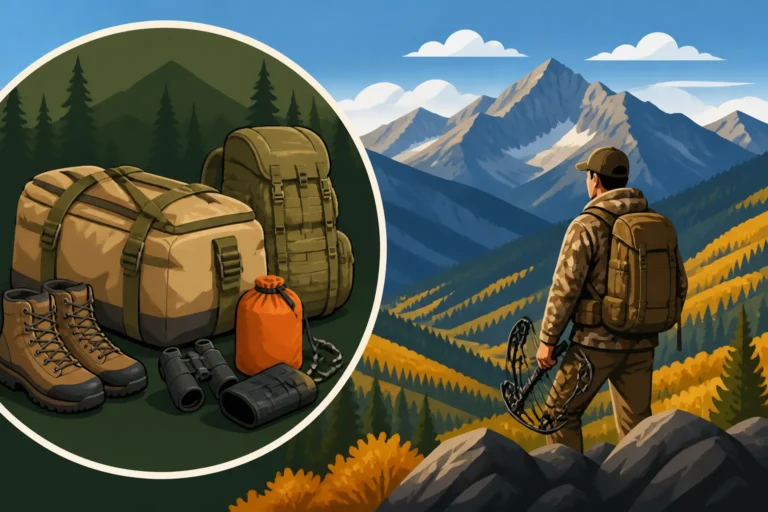
Your gear is your lifeline in the alpine. Every item needs to be lightweight, durable, and functional. Forget bulky cotton; think technical layers that manage moisture and provide warmth without excessive weight. A good layering system is non-negotiable: a moisture-wicking base layer, insulating mid-layers (fleece or puffy), and a bombproof waterproof/windproof outer shell. Your pack should be capable of carrying substantial weight comfortably, as you'll be packing in all your supplies and, hopefully, packing out meat. Reputable brands like Mystery Ranch or Kifaru are popular choices among serious backcountry hunters for their comfort and durability under heavy loads.
Optics are another area where you shouldn't skimp. High-quality binoculars (10×42 or 12×50) and a spotting scope (15-45x or 20-60x) are essential for dissecting distant terrain. A good rangefinder is also critical for ethical shot placement in wide-open country. Don't forget reliable navigation tools: a GPS device, a detailed topographic map, and a compass, even if you rely primarily on a smartphone app like onX Hunt. Headlamps, first-aid kits, water filtration systems, and emergency communication devices (like a satellite messenger) are also non-negotiable. For a comprehensive list, our Colorado Backcountry Hunting Gear List provides excellent guidance.
E-Scouting and Map Study: Pinpointing Promising Basins
Before your boots ever touch the Colorado dirt, your brain should be deeply immersed in maps and satellite imagery. This is where modern tools shine. Platforms like GoHunt allow you to dissect terrain, identify potential bedding areas, water sources, and travel corridors from the comfort of your home, saving you precious time and energy in the field. Look for north-facing slopes with residual snow patches or springs, as these often hold cooler temperatures and green feed throughout the summer. Identify distinct saddles, benches, and cirques—these are often natural funnels or bedding locations for elk and mule deer.
Beyond just identifying features, try to anticipate how animals will use these areas based on time of day, weather, and pressure. Mark potential glassing points, spike camp locations, and escape routes. Pay attention to changes in vegetation, which often indicate different microclimates or water availability. Satellite imagery in GoHunt can reveal hidden timber pockets above treeline, which are absolute gold for bedding animals seeking cover. Cross-reference satellite imagery with topographic maps to understand steepness and accessibility. Remember, the more you understand a basin before you get there, the more efficient and effective your hunt will be. It's about finding the needles in the haystack from your desk, so you don't waste precious hunting time doing it in person.
Locating and Patterning Game in the High Country
Finding animals in the vastness of an alpine basin can feel like an impossible task. They have an entire mountain range at their disposal, and their survival instincts are finely tuned. But elk and deer are creatures of habit, and understanding their preferences within the alpine environment is the key to narrowing down your search. It's less about luck and more about applying intelligent observation and a deep understanding of their biology.
Reading the Terrain: Where Elk and Deer Seek Refuge
Animals in the alpine, particularly elk, are looking for a few core things: food, water, security, and thermal regulation. During the summer and early fall, when many alpine hunts occur, these big game animals are often seeking cooler temperatures to avoid heat stress. This means north-facing slopes, dense pockets of timber (even stunted krummholz can provide surprising cover), and proximity to water sources like seeps or snowmelt. Look for small benches or shelves on steep terrain; these often serve as bedding areas where animals can rest while still having a commanding view of the basin below for security.
Thermal hubs are critical to identify. These are areas where air currents naturally converge or create favorable temperatures. In the mornings, animals might be found feeding on open slopes, but as the sun rises, they’ll move to shaded, cooler spots. In the evenings, they'll often move back out to feed. Understanding how wind and thermals work in the mountains is vital for an effective approach; for more on this, check out How to Use the Wind Hunting Colorado Elk and How to Use Thermals in Colorado Elk Country. Don't overlook the subtle signs either: game trails winding through scree fields, fresh droppings near a water source, or rubbed trees where bulls have been active. These small clues can tell a big story about animal movement.
Using Optics Effectively to Glass Vast Landscapes
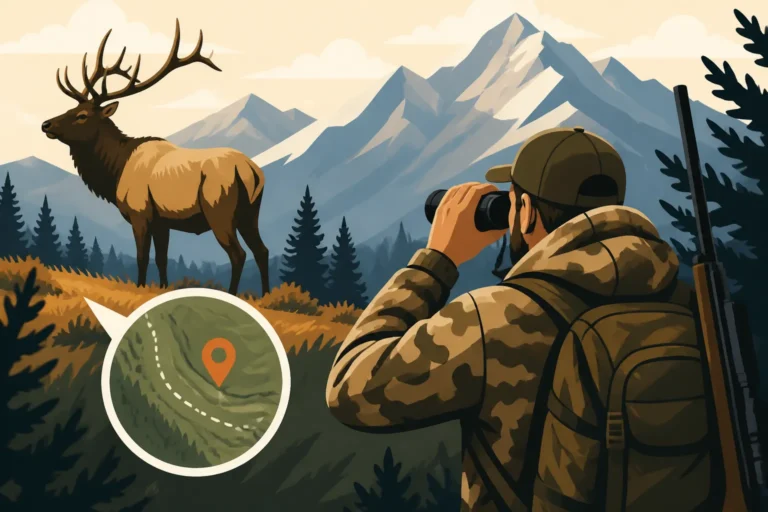
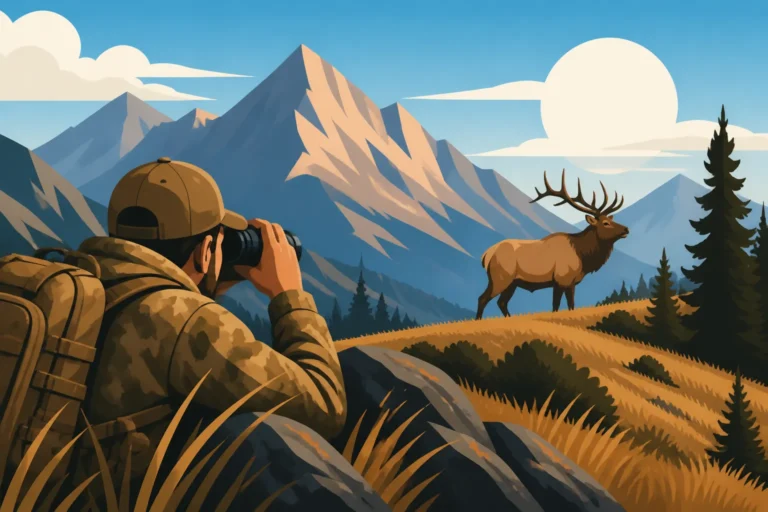
Glassing is not just looking through binoculars; it's an active, patient, and systematic search technique. In alpine basins, your optics are your most important tool, often more so than your rifle or bow. To effectively glass, find a high vantage point that offers a broad view of an entire basin or multiple basins. Set up comfortably, ideally with a tripod for your binoculars or spotting scope, as stability reduces eye strain and allows you to pick out subtle details. Start by breaking the landscape into smaller, manageable grids. Don't just scan; slowly and meticulously scrutinize every rock, every shadow, every patch of timber.
Look for anything that looks "out of place"—a horizontal line in a vertical world, a patch of color that doesn't match the rocks, or a flicker of movement. Pay special attention to areas with a mix of cover and feed: the edges of timber, small draws, and saddles. Often, you'll spot part of an animal—an ear, a leg, or the glint of an antler—before you see the whole thing. Be patient; good glassing often means sitting for hours, letting the landscape reveal its secrets. Our guide on How to Glass Big Colorado Basins offers even more strategies for maximizing your optics. High-quality glass, like that from trusted brands such as Swarovski or Vortex, can truly make a difference in these expansive environments.
Here's a quick comparison of popular optics for alpine hunting:
| Optic Type | Magnification Range | Best Use Case | Pros | Cons |
|---|---|---|---|---|
| Binoculars | 8x-12x | General scanning, close to mid-range viewing | Portable, wide field of view, good for spotting | Limited detail at extreme distances |
| Spotting Scope | 15x-60x | Detailed identification, long-range analysis | High magnification, excellent for judging | Heavier, bulky, narrow field of view |
| Rangefinder | N/A | Precise distance measurement | Critical for ethical shots, reduces guesswork | Only measures distance, not for spotting |
Understanding Animal Behavior in Alpine Environments
Elk and mule deer in alpine basins operate on a schedule dictated by safety, food, and weather. In early archery seasons (late August to early September), elk are often still in their summer patterns, frequently found higher up to escape heat and pressure. Bulls might be in bachelor groups, focused on feeding to build strength for the rut. As the rut approaches (mid-September for elk), you'll start to hear bugles, and bulls will become more vocal and active, sometimes dropping slightly in elevation to find cows, though many will stay high in accessible basins.
Mule deer, especially big bucks, also utilize the high country extensively during summer and early fall. They'll often be found in more open, rocky areas than elk, using broken terrain for cover. Their patterns are also dictated by thermals, feed, and water. Pressure from other hunters, especially in OTC (Over-The-Counter) units, can push animals into even more remote or difficult-to-access areas. They learn quickly and will seek sanctuary in the steepest, darkest timber or the most desolate scree fields. Understanding these nuances—how they react to pressure, how their feeding patterns change, and how the rut influences their movements—is critical for predicting where to find them.
Proven Hunting Tactics for Alpine Basins
Once you've located game in the vastness of the alpine, the real challenge begins: getting into a position for an ethical shot. The wide-open spaces that allow for expansive glassing also make closing the distance incredibly difficult. This demands a mastery of specific hunting tactics, patience, and often, an uncomfortable amount of crawling.
Spot-and-Stalk: The Dominant Alpine Strategy
The spot-and-stalk method is king in alpine basins, and for good reason. With vast sightlines, you'll often spot animals from a mile or more away. The art lies in turning that observation into an opportunity. Once an animal is located, the first step is a thorough analysis of the terrain between you and them, identifying potential cover, judging wind direction, and planning your approach. Wind is your absolute nemesis and ally; always, always, keep it in your face or quartering into it. Thermals will typically rise in the morning and fall in the evening, so plan your approach accordingly.
The stalk itself is a slow, methodical crawl or careful walk, often taking hours, sometimes half a day. Use every fold in the terrain, every rock, and every patch of krummholz to conceal your movement. If you're spotted, the game is usually over. This is where the physical conditioning pays off—being able to move quietly and deliberately while carrying your gear, sometimes on hands and knees, for extended periods. When you finally get into range, you need to be steady for the shot, often at steep angles or across long distances. Patience and perseverance are your best friends. For more detailed insights, check out Spot-and-Stalk Hunting in Colorado.
The Art of Still-Hunting High-Elevation Timber
While much of alpine hunting focuses on open basins, don't overlook the pockets of high-elevation timber, especially in early or late season, or during the mid-day hours when animals are seeking shade and security. This "dark timber," as it's often called, can hold surprisingly large animals that are escaping pressure. Still-hunting in these areas means moving incredibly slowly, pausing often to listen and observe. Every step must be deliberate, checking for snapping twigs or rustling leaves.
Use your senses: listen for the snap of a twig, the rustle of leaves, or the soft blowing of an animal. Your eyes should be constantly scanning for parts of an animal, not just the whole. Look for horizontal lines, patches of contrasting color, or the glint of an antler. The wind is still critical here, as it can carry your scent or the sound of your movement. Often, elk or deer will bed down in these timber pockets, especially on north-facing slopes or in dense stands of spruce and fir. These areas can be frustratingly thick and require intense focus, but they can be incredibly rewarding, often yielding close-range encounters with unpressured animals. Our guide on How to Hunt Elk in the Dark Timber delves deeper into this tactic.
Setting Up for Success: Ambush Points and Glassing Perches
Effective alpine hunting often involves a blend of active stalking and strategic waiting. Identifying key ambush points, especially during migration periods or when animals are transitioning between feeding and bedding areas, can be highly effective. Look for natural funnels like saddles between basins, narrow draws, or benches that animals use as travel corridors. Setting up early in these locations, before animals begin moving, can pay off big. This is particularly true during the rut when bulls might be actively cruising these areas looking for cows.
Similarly, choosing the right glassing perch is vital. A good perch offers a wide field of view, protection from the wind, and ideally, some cover for you to stay concealed. It should also be a spot that allows for a reasonable approach if you do spot an animal. Sometimes, this means packing up your bivy camp and moving to a new overlook to maximize your glassing time in a different basin. Think about what the animals are doing, where they're coming from, and where they're going. Predicting their movement patterns and setting up accordingly is a hallmark of successful alpine hunting. This requires patience, a strong understanding of animal behavior, and the ability to read the subtle cues of the landscape.
Logistics and Safety in Remote Colorado Alpine Basins
Hunting in Colorado's alpine basins is as much an exercise in logistics and risk management as it is in hunting skill. The remote nature of these areas means you are often days from help, and a small mistake can quickly escalate into a life-threatening situation. Being self-sufficient, prepared for the unexpected, and methodical in your planning is not optional—it's absolutely mandatory.
Planning Your Pack-In and Resupply Strategy
Packing into the alpine requires a finely tuned balance of carrying enough essentials without overloading yourself to the point of exhaustion. Every ounce counts. Before you even load your pack, create a detailed gear list and weigh everything. Prioritize shelter, water filtration, food, navigation, and first-aid. For a multi-day hunt, you'll need at least 2500-3000 calories per day, considering the extreme exertion. Freeze-dried meals are a common choice for their low weight. Water sources can be plentiful from snowmelt or high-country springs, but always carry a reliable filter like a Katadyn BeFree or Sawyer Squeeze, and consider backup purification tablets.
Your pack-in route should be carefully scouted on maps for elevation gain, distance, and potential campsites. Consider setting up a base camp just below treeline, or a more minimalist spike camp higher up, depending on the duration and intensity of your hunt. If your hunt is longer than 4-5 days, you might need a resupply strategy, either by packing in more food yourself or having a cache dropped. Remember, the goal isn't just to get in, but to have enough energy and supplies to hunt effectively and, critically, to pack out an animal. Our How to Pack Into the Colorado Backcountry guide offers more comprehensive advice on this challenging aspect.
Navigating Mountain Weather and Emergency Preparedness
Colorado mountain weather is notoriously fickle. A sunny morning can turn into a lightning-filled thunderstorm with hail and snow by afternoon, even in August. Always check multiple weather forecasts (NOAA is a good option) before your trip and have a satellite communication device (like a Garmin InReach or Zoleo) for emergency contact. Your rain gear needs to be top-notch—a truly waterproof jacket and pants are non-negotiable. Hypothermia is a constant threat in the alpine, even in summer, if you get wet and the temperatures drop. Carry extra layers, including a warm puffy jacket, even if the forecast looks clear.
Beyond weather, be prepared for injuries. A twisted ankle miles from the trailhead can be a serious problem. A well-stocked first-aid kit, including pain relievers, wound care, blister treatment, and any personal medications, is essential. Know how to use it. Consider taking a wilderness first aid course. Carrying a signaling mirror and an orange trash bag can be life-saving for signaling aircraft if you become truly stranded. Share your detailed itinerary with someone reliable back home, including your planned routes, check-in times, and emergency contacts. These are not just recommendations; they are vital safety protocols for anyone venturing into remote alpine environments.
Field Care and Packing Out Your Harvest
The moment of truth arrives when you finally harvest an animal in an alpine basin. This is where all your physical and logistical planning culminates. First, secure the animal ethically and humanely. Then, immediately begin field dressing and quartering. You're likely miles from any road, so packing the entire animal out is not an option. You'll need a sharp knife, a game bag for each quarter (synthetic breathable bags are best to protect meat from flies and dirt), and ideally, a small hatchet or bone saw for splitting the pelvis and sternum if you're taking bone-in cuts. Keeping the meat clean and cool is paramount to prevent spoilage.
Once quartered, get the meat into game bags and hung in a shaded, well-ventilated spot, away from predators, allowing it to cool. This can be tricky above treeline. If temperatures are warm, cooling the meat rapidly is critical. In some cases, especially with larger animals like elk, you might need to make multiple trips or call in a buddy to help. Having a strong, comfortable pack designed for heavy loads is essential here. The weight of an elk quarter, combined with your camp gear, can easily exceed 100 pounds per trip. Our guide on How to Pack Out an Elk in Colorado will provide specific step-by-step instructions for getting your hard-earned meat off the mountain. This is often the most physically demanding part of an alpine hunt, requiring immense grit and determination.
Maximizing Your Alpine Basin Hunting Experience
Hunting Colorado's alpine basins is more than just chasing game; it's about immersing yourself in one of the most wild and majestic landscapes on earth. To truly maximize this incredible experience, it's important to approach it with a mindset of respect, continuous learning, and an appreciation for the journey, not just the outcome.
Respecting the Wilderness and Ethical Hunting Practices
The alpine environment is incredibly fragile. High-altitude ecosystems are slow to recover from disturbance, and it's our responsibility as hunters to be stewards of these lands. Practice Leave No Trace principles rigorously: pack out everything you pack in (including all trash and food scraps), bury human waste properly, and avoid building large fires. Stick to existing trails when possible, and minimize your impact when off-trail. When you harvest an animal, make every effort to recover all edible meat and dispose of remains respectfully away from water sources or high-traffic areas.
Ethical hunting extends beyond just regulations; it's about treating the animals and the land with reverence. Take only clean, ethical shots within your effective range. Don't push animals just for the sake of getting a shot if the conditions aren't right. Be mindful of other recreationists; the alpine is popular with hikers, climbers, and photographers. Maintain a low profile and avoid disturbing others' experience. The privilege of hunting in these incredible landscapes comes with a profound responsibility to protect them for future generations.
Post-Hunt Analysis and Continuous Improvement
Every hunt, successful or not, is a learning experience. Once you're off the mountain, take the time to debrief your trip. What worked well? What could have been done differently? Did your e-scouting correctly identify key features? How did your gear perform? Was your physical conditioning sufficient, or do you need to adjust your training plan for next year? Consider tracking your movements with your GPS or phone app and reviewing the routes you took, where you spotted animals, and where you found sign. This data can be invaluable for future hunts.
Think about the animals' behavior. Were they where you expected them? How did they react to pressure or weather changes? What calling techniques, if any, were effective? (You can learn more about calling in our How to Call Elk in Colorado guide). By systematically analyzing each hunt, you build a deeper understanding of the alpine environment and the game that inhabits it. This continuous improvement mindset not only makes you a more effective hunter but also enhances your appreciation for the complex interplay between animal, land, and hunter. The goal is to learn something new every time you step into the high country, slowly building your expertise for sustained success.
Disclaimer
Hunting in Colorado's alpine basins involves inherent risks, including but not limited to extreme weather, rugged terrain, altitude sickness, wildlife encounters, and physical exertion. This guide provides general information and recommendations only. Hunters are solely responsible for their own safety, preparation, adherence to all Colorado Parks and Wildlife (CPW) regulations, and making informed decisions in the field. Always prioritize safety and be prepared for emergencies.