How to Use the Wind Hunting Colorado Elk
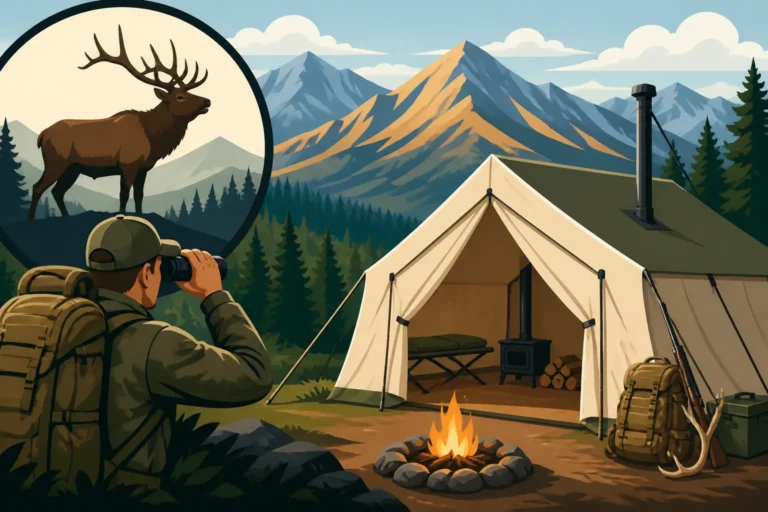
One of the most frustrating, hunt-ending moments in Colorado elk country is when a slight shift in wind direction carries your scent directly to a magnificent bull you’ve been stalking for hours, sending him crashing through the timber, never to be seen again. It’s a gut punch we’ve all experienced, and it highlights just how critical understanding and using the wind truly is for success. This guide will walk you through the nuances of mountain winds, how to read them, and how to use them to your advantage when pursuing elk in the rugged Colorado landscape.
Understanding the Basics of Mountain Wind
Hunting in the mountains is a whole different ballgame compared to flatland hunting, especially when it comes to the wind. The topography itself acts like a giant, ever-changing wind tunnel, creating microclimates and unpredictable air currents that can foil even the most seasoned hunter if not understood. It's not just about knowing which way the breeze is blowing; it's about anticipating how the terrain will manipulate that breeze throughout the day.
Thermal Air Movement
The single most important concept to grasp in mountain hunting is thermal air movement. This isn't just a weather phenomenon; it's the heartbeat of mountain winds, dictating how air moves up and down slopes with astonishing regularity. Imagine the mountain as a massive solar collector: as the sun rises, it warms the ground, and that warm air begins to ascend, creating an updraft. This is your "morning thermal" or "rising thermal." As evening approaches and the sun dips, the ground cools rapidly, causing the dense, cool air to sink down into the valleys and drainages, creating a "down draft" or "falling thermal."
These thermals are incredibly predictable, but their timing can vary based on cloud cover, direct sunlight, and the steepness of the terrain. Elk, being masters of their environment, are acutely aware of these thermal shifts. They often move with them, using the rising thermals in the morning to feed higher on slopes and then dropping into shaded, cooler timber as the day progresses, relying on falling thermals to carry their scent down and away from danger while they bed. To hunt effectively, you need to mirror this understanding, planning your approach routes to ensure your scent is always being carried away from where you expect elk to be. Approaching an elk bedding on a ridge in the morning with rising thermals puts your scent directly up to them, a recipe for disaster.
Prevailing Winds and Topography
While thermals are a local, daily phenomenon, prevailing winds are the larger, regional weather patterns. These are the winds you see on your weather app, typically driven by larger pressure systems. However, in the mountains, even a strong prevailing wind can be drastically altered by the landscape. A powerful west wind might be blowing at 10,000 feet, but down in a deep canyon, it could be a swirling mess, or even non-existent, replaced by the dominant thermal flow.
Canyons and ridgelines act like natural funnels and barriers. A strong prevailing wind hitting a major ridge will often be deflected upward or channeled down a drainage, intensifying in some areas and creating calm pockets in others. You might find a steady breeze on one side of a mountain, only for it to be completely different on the other. This is why paying attention to the terrain is so crucial. A saddle between two peaks, for instance, often becomes a natural wind tunnel, even if the general wind direction suggests otherwise. Learning to visualize how the wind will interact with the contours of the land is a skill that comes with experience, but it’s one that will drastically increase your success. Ignoring these topographical influences is like trying to navigate a river without understanding currents – you'll quickly be swept off course.
Swirling Winds and Microclimates
The most challenging aspect of mountain wind, and the one that causes the most frustration, is the dreaded "swirling wind." This happens when conflicting air currents, often a mix of thermals, prevailing winds, and localized eddies, collide in complex terrain. Think of a deep, narrow canyon with varying sun exposure or a dense patch of dark timber. In these areas, the wind can change direction not just every few minutes, but literally every few seconds. You'll see your wind checker puff in one direction, then immediately reverse, or even puff straight up.
These microclimates are particularly prevalent in shaded timber, north-facing slopes, and tight drainages where air movement is restricted and easily influenced by small changes in temperature or air pressure. Hunting in these conditions requires extreme patience and constant vigilance. You might need to pause frequently, re-check the wind, and adjust your route incrementally. Sometimes, the best strategy in swirling wind is to wait it out, or to change your approach entirely, opting for higher ground or a different aspect where the wind might be more consistent. It’s a frustrating reality, but recognizing these unpredictable zones can save you from blowing a stalk on a wise old bull that uses these very conditions to its advantage.
Reading the Wind in Real-Time During Your Elk Hunt
Knowing how thermals and prevailing winds should behave is one thing; understanding what the wind is actually doing in the moment is another. This is where your senses and simple tools become your best friends. Elk have an incredible sense of smell, far superior to ours, so your scent cone is a danger zone you must manage meticulously.
Visual Cues and Indicators
Before you even touch a wind checker, your eyes should be constantly scanning for visual cues. These are your first line of defense against being winded. Look at the trees – are the leaves rustling consistently in one direction, or are they dancing wildly? Watch the tops of tall pines; they often catch the prevailing wind that might not be felt lower down. Grasses, weeds, and even small branches can show subtle movements that indicate wind direction and strength. Pay attention to dust, especially on dry trails or exposed rock. If you see dust devils or rising dust, that's a clear sign of localized updrafts and potential swirling.
Even your own breath in cold air can be a good indicator, though it only shows the wind at your immediate location. Clouds, especially smaller, wispy ones, can sometimes give you a clue about upper-level air movement, which can influence how winds behave lower down. The goal is to develop a constant awareness, integrating wind assessment into every step you take. This constant observation will help you detect shifts before they become critical, giving you time to react.
Scent Checkers and Wind Powders
While visual cues are excellent, nothing beats a dedicated wind indicator for pinpoint accuracy. Scent checkers, usually small squeeze bottles filled with a super-fine powder, are indispensable tools for any serious elk hunter. Brands like those found through scouting resources like GoHunt often stock various options. The idea is simple: give a puff, and watch the powder drift. It will show you exactly which way the air is moving at that precise spot, and for how far.
I always carry at least two different types, often a fine dust and a slightly coarser powder, as they can reveal different air currents. The finer dust is fantastic for subtle thermals and light breezes, while the coarser powder can give you a better idea of how a stronger gust is being funneled. The key is to use them constantly. Before taking another step, before calling, before setting up for a shot – check the wind. Don't just check it once; check it multiple times in slightly different directions and at different heights if possible. If you're planning on moving through a patch of timber, check the wind at the entrance, in the middle, and again as you exit. This diligence might feel tedious, but it's the difference between success and a blown stalk.
Your Own Senses
Beyond visual cues and tools, don't underestimate your own body. You can often feel the wind on your face, neck, or ears. Close your eyes for a moment and focus on the sensation. Is it coming from the left or right? Is it steady or gusty? Listen to the sounds of the forest; the wind rustling leaves or whistling through branches can tell you a lot about its direction and intensity, even if you can't feel it directly on your skin.
Your ears can also tell you if the wind is swirling. If you hear sounds coming from multiple directions or an inconsistent rush, it's a good sign that the air currents are erratic. While your nose isn't as good as an elk's, a quick sniff can sometimes tell you if the air is stagnant or moving, especially if there are strong ground scents like pine needles or damp earth. Combining these sensory inputs with your visual observations and scent checker gives you the most comprehensive real-time understanding of the wind's behavior. This holistic approach is key, especially when you're moving quietly through dense cover, trying to maintain a favorable wind on a Colorado Backcountry Hunting Guide.
Tactical Approaches to Hunting Elk with the Wind
Knowing what the wind is doing is only half the battle; the other half is knowing how to use that information to execute a successful hunt. This means adapting your movements, your approach, and your setup to always keep the wind in your favor.
Approaching a Bedded or Feeding Elk
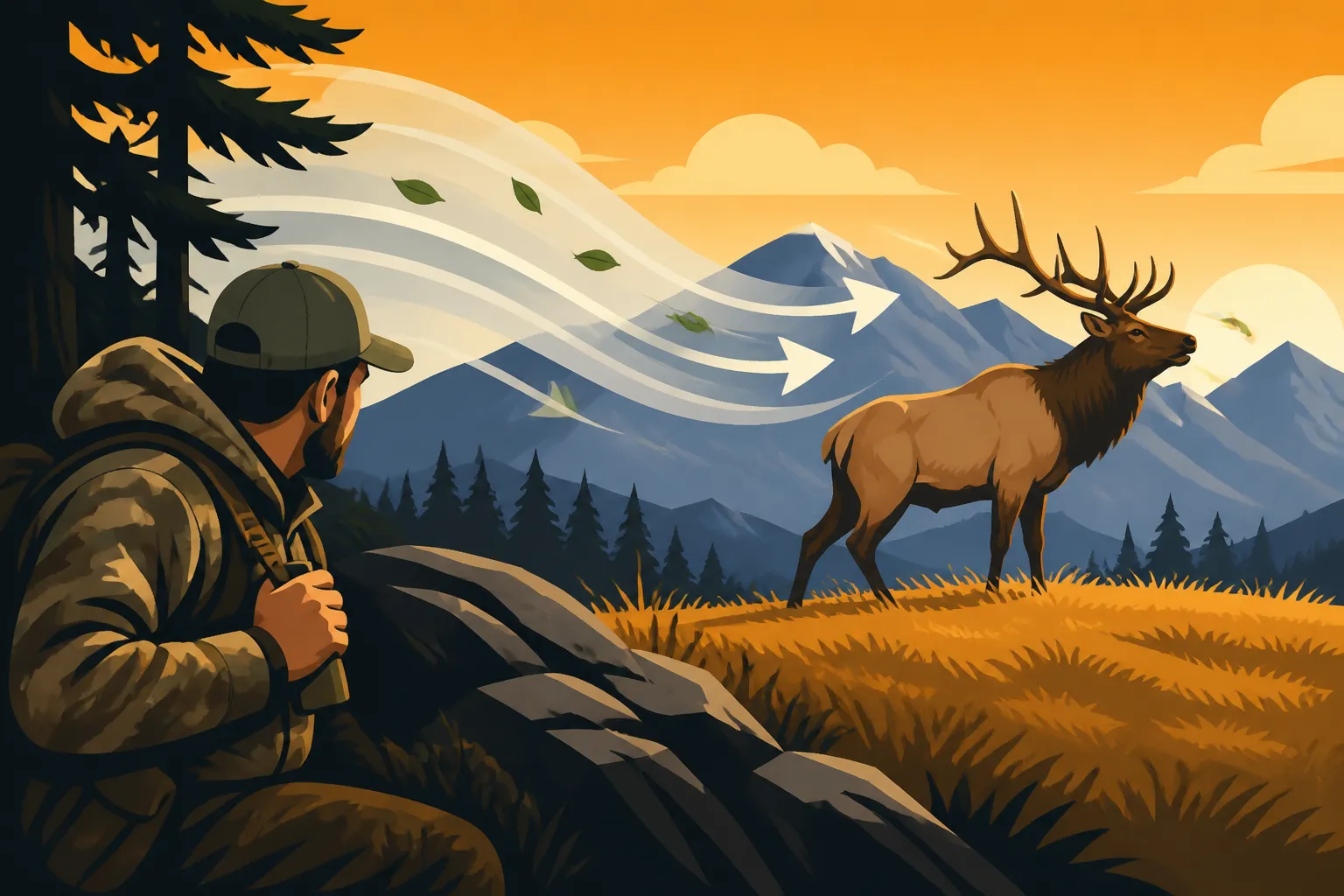
This is perhaps the most critical scenario for wind management. When you've spotted or heard an elk, your approach is everything. Your absolute golden rule is to always approach with the wind in your face or on a quartering crosswind that blows your scent away from the animal. Never, ever approach an elk from directly downwind. It's a guaranteed way to blow your chance. If the wind is wrong, you either need to circle around to get a favorable wind, or you need to wait for a thermal shift.
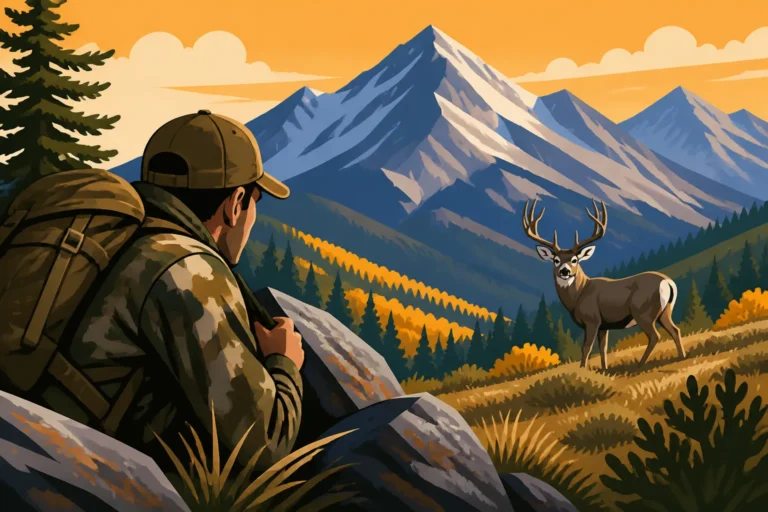
For example, if you spot a bull feeding on a hillside in the morning, and the thermals are still rising, your best bet might be to get above him and approach from a high crosswind angle. Your scent will be carried up and away, ideally passing above him or well to his side. If it's late afternoon and the thermals are falling, you'd want to stay below him, letting your scent get carried down into the drainage behind you. This requires patience and often a lot of extra walking, sometimes miles, to get into the right position. But that extra effort is what separates successful hunters from those who just bump elk. When doing a Spot-and-Stalk Hunting in Colorado approach, never compromise on your wind advantage.
Setting Up for Calling and Ambushing
Wind plays an equally crucial role when you're trying to call elk or set up an ambush. When calling, especially for archery, you want the elk to approach into the wind. This means your scent is blowing away from their approach path. If you're calling from a ridge, and the wind is blowing downhill, you want the elk to come up from below. If the wind is blowing uphill, you want them to come from above.
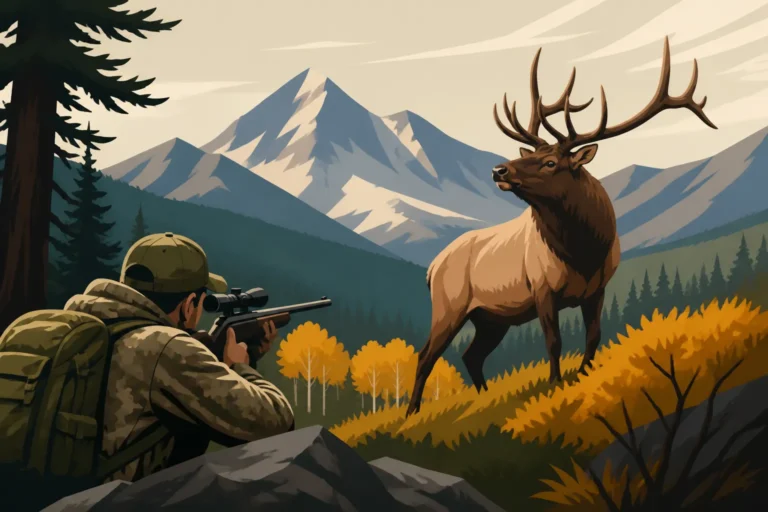
Here’s a common tactic: set up so that the wind is blowing from the direction you expect the elk to approach, towards your calling location, and then past your shooting lane. You, the shooter, should be positioned slightly downwind of your caller (if you have one), or if solo, slightly off to the side of your calling location, ensuring your scent is drifting away from the expected approach corridor. This forces the elk to travel into the wind, bringing their ears and eyes into play first, but keeping their nose from detecting you until they are within shooting range.
For ambushes, such as near a wallow or waterhole, you need to understand the thermals and prevailing winds for that specific spot. A wallow might be used predominantly in the evening as elk move to bed, meaning falling thermals will be the dominant factor. Your setup needs to account for this, placing you where your scent won't blow into the approach path or the wallow itself. Always consider how the elk will use the wind when they approach, and try to place yourself so that you're perpendicular to their typical travel route or at an angle that keeps your scent out of their nose. Being able to How to Call Elk in Colorado effectively is hugely impacted by your wind strategy.
Moving Through Elk Country
Every step you take in elk country needs to be a conscious decision influenced by the wind. When traversing steep terrain, always try to keep the wind in your favor, even if it means taking a less direct route. This often involves staying on the leeward side of ridges or using terrain features like benches and saddles to shield your movement and manage your scent. If you're moving uphill in the morning, the rising thermal will carry your scent up, so try to stay below the elevation where you expect elk to be. In the afternoon, as thermals fall, you can often move higher on the mountain with less risk of your scent blowing into low-lying areas where elk might be.
Navigating dense timber presents its own unique challenges. The wind can swirl unpredictably, and visibility is limited. When moving through How to Find Elk in Deep Timber, constant wind checks are absolutely essential. It might feel slow and cumbersome, but moving 50 yards, checking the wind, adjusting, and repeating is far more effective than barging through and blowing out an entire drainage. Sometimes, you'll need to skirt around particularly difficult sections or even sit tight and wait for a favorable wind shift. Remember, stillness and patience are often rewarded in the mountains. Your ability to How to Move Quietly Through Colorado Timber is meaningless if the wind betrays your presence.
| Time of Day | Thermal Movement | Ideal Approach | Notes & Considerations |
|---|---|---|---|
| Morning (Sunrise to Mid-morning) | Rising (Updrafts) | From above/side, letting scent rise above elk | Elk often feeding higher or moving to bed. Wind can be unpredictable early. |
| Mid-day (Late Morning to Early Afternoon) | Variable/Stagnant (least predictable) | High crosswind, or wait for clearer thermals | Elk usually bedded in dense cover. Difficult time for stalking. |
| Evening (Late Afternoon to Sunset) | Falling (Downdrafts) | From below/side, letting scent fall away from elk | Elk often moving to feed in lower elevations. Thermals typically stronger/more consistent. |
| Night | Strong Falling (Downdrafts) | N/A (generally not hunting) | Elk actively feeding, using thermals for security. |
Planning and E-Scouting with Wind in Mind
The best hunters don't just react to the wind; they anticipate it. Much of this anticipation comes from thorough planning and e-scouting, even before you set foot in Colorado's wilderness. You can learn a lot about how wind will behave in specific areas from the comfort of your home.
Utilizing Weather Forecasts and Apps
Before any hunt, I spend significant time poring over detailed weather forecasts. Don't just look at the general wind speed and direction; dig deeper. Many modern weather apps provide wind forecasts by elevation, which is incredibly valuable in the mountains. For instance, the wind might be predicted as 5-10 mph from the west at 9,000 feet, but at 11,000 feet, it could be 15-20 mph from the northwest. Knowing this helps you predict how the prevailing wind will interact with the higher peaks versus the lower drainages you plan to hunt.
Also, pay attention to predicted thermal activity. Are there high-pressure systems bringing clear, still days that will lead to strong, predictable thermals? Or is a low-pressure system bringing in cloud cover and higher winds, which can disrupt thermals and create more turbulent conditions? Understanding these larger patterns helps you prepare mentally and strategically for the type of wind conditions you're likely to encounter. This foresight, combined with detailed maps, is a powerful planning tool.
Mapping Wind Corridors and Thermals
This is where your e-scouting tools truly shine. Platforms like GoHunt and OnX Hunt allow you to analyze topography in incredible detail. Look at contour lines:
- Ridgelines: These often catch and funnel prevailing winds. They can also create wind shadows on their leeward side.
- Canyons and Drainages: These are prime thermal highways. Visualize how air will rise or fall through these natural funnels. North-facing slopes in canyons will stay cooler longer, potentially holding falling thermals later into the morning, while sun-exposed south-facing slopes will heat up fast and create rapid updrafts.
- Saddles and Passes: These are natural low points in ridgelines where wind will often be channeled and compressed, creating localized high-wind areas.
- Timberlines and Open Basins: Consider how dense timber will slow and swirl wind, while open basins might have more consistent prevailing winds, but also stronger thermals.
By mentally (or physically on your map) drawing arrows for predicted thermal flows and prevailing wind interactions, you can identify potential travel corridors for elk and, more importantly, plan your approach routes to remain undetectable. This is a crucial step in preparing for a Colorado DIY Elk Hunting Guide.
Adjusting Your Strategy on the Fly
Even with the best planning, Mother Nature loves a good curveball. The wind you predicted or scouted for might not be the wind you get. A sudden cold front, a shift in cloud cover, or even a local thunderstorm can completely alter wind patterns. This is why flexibility and adaptability are paramount. Don't get so locked into your plan that you ignore what the wind is telling you in real-time.
If you arrive at your planned hunting area and the wind is doing something completely unexpected, be willing to change your strategy. This might mean:
- Shifting Locations: Abandoning a planned approach route for another that offers a better wind advantage.
- Waiting it Out: Sometimes, the best move is no move at all. If the wind is swirling badly, or blowing from a terrible direction, finding a spot to sit tight for an hour or two might be the smartest play, waiting for thermals to stabilize or for the prevailing wind to become more consistent.
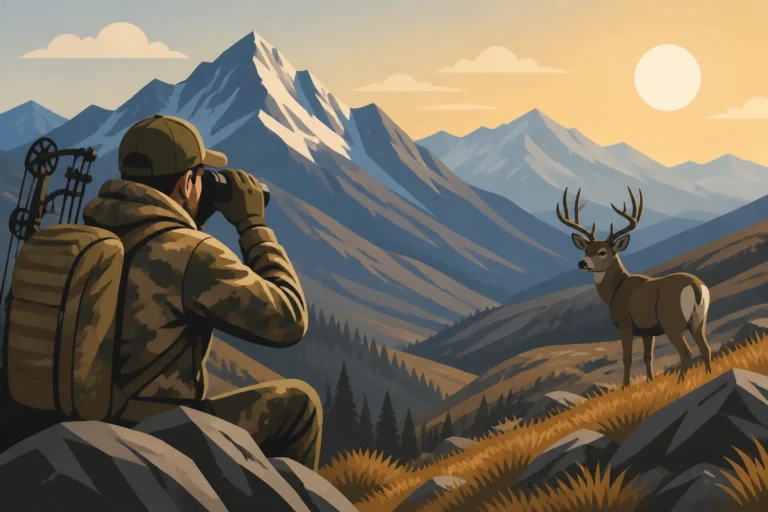
- Changing Species: If elk are being uncooperative due to challenging wind, perhaps a Colorado Mule Deer Hunting Guide might be an option if you have the tag.
- Embracing the Chaos (with caution): In some very rare instances, a truly unpredictable, gusty wind can actually work to your advantage by masking sound and creating confusion for the elk. However, this is a high-risk, high-reward strategy that should only be attempted by experienced hunters who understand its inherent dangers to scent control.
The ability to adapt quickly and effectively based on real-time wind conditions is a hallmark of a consistently successful Colorado elk hunter. Always remember that the elk's nose is their primary defense, and respecting the wind is the ultimate sign of respect for the animal you're pursuing. Don't forget to review guides like How to E-Scout Before a Colorado Hunt to make the most of your preparation.
Disclaimer
Hunting is an inherently dangerous activity. This guide provides information for educational purposes only and does not endorse unsafe practices. Always prioritize safety, understand and follow all Colorado Parks and Wildlife regulations, and be aware of your physical limits and environmental conditions. Always carry appropriate safety gear, inform others of your plans, and hunt ethically and responsibly.