How to Hunt Elk in Rifle Season Pressure
Oh, the Colorado rifle season. It's that time of year when the mountains echo with anticipation, but also with the distinct sound of human presence. You've scouted, you've waited, and then opening morning hits, and suddenly, the peaceful solitude you imagined is replaced by other hunters. Elk, being the incredibly smart creatures they are, don't just stand around waiting for a photo op when there's a stampede. They vanish, and finding them under such intense pressure can feel like looking for a needle in a haystack. This guide is here to walk you through exactly how to adapt your strategy, find those elusive elk, and still have a successful hunt, even when the pressure is on.
Understanding the Impact of Rifle Season Pressure on Elk
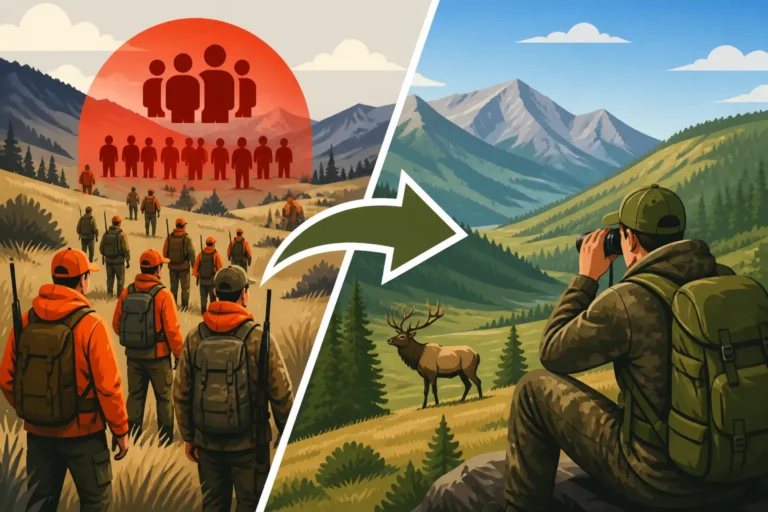
When the orange army descends on the mountains, elk don't just change their postal code; they fundamentally alter their daily routines, their travel patterns, and their chosen bedding areas. This isn't just a minor tweak; it's a complete shift in their survival strategy, and understanding it is your first step toward finding them.
Behavioral Shifts in Pressured Elk
Think about it from an elk's perspective. One day, life is cruising along, browsing on a tasty aspen grove, perhaps a gentle bugle from a distant bull. The next, there are gunshots, ATV noises, human scent, and visual disturbances everywhere. Their natural inclination for survival kicks in hard. They become nocturnal, moving primarily under the cover of darkness when hunters are less active. Their feeding patterns will shift from open meadows to dense, security cover. They become incredibly wary, using every sense to detect threats from much further distances. A twig snap that might not bother an unpressured elk will send a pressured herd sprinting. This heightened alertness means you need to be ten times quieter and more observant than usual.
Key Sanctuary Areas for Elusive Bulls
So, where do they go? They don't leave the mountains entirely; they just seek out the nastiest, most inhospitable places they can find. This usually means thick, dark timber, often on north-facing slopes where the sun doesn't penetrate easily, providing both cover and cooler temperatures. Steep canyons, often overlooked by less ambitious hunters, become ideal hideouts. Wilderness areas, which by definition limit mechanized travel, offer significant refuge. Any area that requires significant physical effort to access, like distant ridges or deep basins, will hold pressured elk. These are the places where most hunters won't venture, either because of the difficulty, the distance, or the sheer density of the vegetation. Knowing how to hunt elk in deep timber and how to hunt North-Facing Slopes for Elk becomes absolutely critical. They'll also often move into private land boundaries, using public land for travel at night and retreating to safety during the day.
Key Strategies for Locating Pressured Elk
Finding elk when they're actively trying to avoid you requires a different playbook than calling in a rutting bull in September. It's less about aggressive tactics and more about diligent detective work, patience, and often, covering serious ground.
E-Scouting and Map Reconnaissance
Before you even set foot in the woods, your best friend is a good mapping application like those offered by GoHunt. Use it to pour over topographical maps, looking for those overlooked pockets of habitat. Identify steep, north-facing slopes, deep canyons, designated wilderness areas, and areas with difficult access that might deter other hunters. Look for natural funnels, saddles, and benches that connect these security areas. Pay close attention to public land boundaries with private land – elk often use the private as a daytime sanctuary. Mark potential bedding areas, escape routes, and water sources within these zones. This detailed E-Scouting Before a Colorado Hunt can save you days of fruitless searching in the field. Don't just look for where elk should be, but where other hunters won't be. The Colorado Hunting Atlas Explained can be a powerful tool for this, revealing land ownership and restrictions.
Silent Still-Hunting and Glassing Tactics
Once you're in the field, your approach needs to be incredibly stealthy. Still-hunting becomes an art form. Move slowly, taking one careful step at a time, pausing often to listen and observe. Think like a predator, not a bulldozer. Use your binoculars or spotting scope to pick apart every shadow, every cluster of trees, especially on those thick, dark timbered slopes. Pressured elk often stand motionless, relying on their camouflage to remain undetected. You'd be amazed what you can pick out with patient glassing, even in dense cover. Focus on the transition zones between dense cover and slightly more open feeding areas. Remember, their senses are on high alert, so How to Move Quietly Through Colorado Timber is paramount. You can't just crash through the woods expecting to bump into them.
Reading Sign and Tracking Movements
When elk are pressured, fresh sign becomes your breadcrumb trail. Look for fresh tracks, droppings, and rubs. Pay attention to the age of the sign; you're looking for activity from the last 12-24 hours. If you find fresh sign in a high-pressure area, it's a good indicator that elk are still using that spot, likely under the cover of darkness. Follow these tracks slowly and carefully, paying meticulous attention to wind direction and thermals. Understanding How to Use the Wind Hunting Colorado Elk and How to Use Thermals in Colorado Elk Country is critical, as a misplaced scent cone will blow your stalk before it even begins. Often, pressured elk will only move a few hundred yards when disturbed, finding another patch of thick cover to hunker down in. If you jump them, don't give up; try to circle downwind and anticipate where they might stop to regain their composure.
Hunting Tactics for Navigating Pressured Terrain
Finding elk is one thing; successfully putting a stalk on them and getting a shot in pressured conditions is another challenge entirely. This is where your mountain savvy and patience truly pay off.
Targeting Steep and Difficult Access Areas
This is where the less determined hunters give up, and that's precisely where you need to go. If a canyon looks too steep, a ridge too far, or the timber too thick, those are the exact places where pressured elk will be. They know humans generally seek the path of least resistance. Be prepared for a grueling climb, a challenging descent, or a slow, arduous bushwhack. These are not "easy button" hunts, but they often yield results because the elk feel secure there. Consider a Colorado Backcountry Hunting Guide for more tips on venturing into these remote zones. You might need to consider a spike camp setup to penetrate deeper into these areas.
Utilizing Weather and Thermal Dynamics
Weather can be your best friend when hunting pressured elk. A fresh snowfall can quiet the woods, making it easier to move silently, and it reveals fresh tracks. A cold front or a light snow can also push elk into lower, more protected elevations. Rain can also help dampen sound and wash away your scent. Beyond general weather, understanding how thermals work in the mountains is non-negotiable. Early mornings, cold air drains downhill; in the afternoon, warm air rises. You must always hunt with the wind and thermals in your favor. Approach bedding areas from below in the morning and from above in the afternoon. A mistake in thermal management can alert elk from hundreds of yards away.
Patience and Persistence in the Face of Adversity
Hunting pressured elk is a grind, plain and simple. You might spend days hiking miles through thick timber, seeing little more than old sign and squirrel tracks. It's easy to get discouraged. But remember, the elk are there; they're just masters of evasion. You need to be more persistent than they are elusive. This often means sitting for hours, observing, and waiting for an elk to make a mistake or show itself. Sometimes, the best tactic is to find a high vantage point overlooking a likely bedding area in the morning, then still-hunt into it as the day progresses. The sheer mental fortitude required for a Colorado DIY Elk Hunting Guide is immense, and dealing with pressure is a huge part of it.
Table: Pressured vs. Unpressured Elk Behavior
Here's a quick look at how elk behavior shifts when they're feeling the heat:
| Behavior Trait | Unpressured Elk | Pressured Elk |
|---|---|---|
| Movement Timing | Primarily diurnal (daylight hours), predictable. | Primarily nocturnal, minimal daylight movement. |
| Habitat Choice | Open meadows, accessible timber, varied terrain. | Thickest timber, steepest slopes, deepest canyons, near wilderness boundaries. |
| Vigilance Level | Alert but less skittish, tolerate some noise. | Extremely wary, hyper-alert, bolt at slightest disturbance. |
| Feeding Patterns | Often feed in open areas at dawn/dusk. | Feed exclusively in dense cover, or at night in open areas. |
| Vocalization | More vocal, especially during the rut. | Very quiet, minimal calling, especially bulls. |
| Response to Humans | May tolerate distant presence, move slowly away. | Immediate flight, often travel long distances to secure cover. |
Essential Gear and Mindset for Challenging Rifle Hunts
Success in pressured elk hunting isn't just about tactics; it's also about being properly equipped and mentally prepared for the long haul.
Optimized Gear for Stealth and Endurance
First and foremost, your footwear matters. The Best Boots for Colorado Elk Hunting will give you the traction and support needed for steep, rugged terrain while minimizing noise. Invest in quiet clothing – fleece or wool are far better than noisy synthetics that can give you away with every step. High-quality optics are non-negotiable; a good pair of 10x binoculars and a spotting scope will help you pick apart distant hillsides. A reliable rangefinder is also essential for mountain hunting, where judging distance can be tricky. And don't forget a comfortable yet sturdy pack for packing out your game, especially if you're taking on a Colorado Rifle Elk Hunting Guide adventure that takes you deep into the backcountry. Think about how you'll handle Quartering an Elk in the Field and then packing it out.
Physical and Mental Fortitude
Hunting pressured elk is physically demanding. You'll be covering significant distances over challenging terrain, often at high altitudes. Being in top physical condition isn't just about comfort; it's about being able to perform when the opportunity arises. Beyond the physical, the mental game is huge. You'll face frustration, exhaustion, and perhaps days without seeing a single animal. You need to cultivate patience, resilience, and a stubborn refusal to give up. The moment you start cutting corners or losing focus is often the moment you miss an opportunity. Remind yourself why you're out there, and embrace the challenge.
Adaptability and Flexibility
Your meticulously laid plans will likely go awry when hunting pressured elk. Hunters will be where you least expect them, and elk will be where you thought they couldn't possibly be. The ability to adapt on the fly is crucial. If your planned bedding area is swarming with other hunters, have a backup. If the wind unexpectedly shifts, be ready to change your approach. Be flexible with your schedule, too; if you find fresh sign late in the day, sometimes an extra hour of hunting or an early start the next morning can make all the difference. Sometimes, the best approach is to simply set up and wait in a likely travel corridor between bedding and feeding areas, allowing the movement of other hunters to push elk past you.
Disclaimer
Hunting in Colorado involves inherent risks and requires adherence to all state and federal regulations. Always prioritize safety, understand local hunting laws, and obtain the necessary licenses and tags. This guide offers general advice and should not replace professional instruction or personal judgment. Be aware of weather conditions, terrain, and your physical limitations.