Colorado Mule Deer Hunting Guide
Hunting Colorado mule deer isn't just a pursuit; it's an obsession for many, steeped in challenges from the rugged terrain to the unpredictable nature of these incredible animals. Many hunters dream of glassing up a big muley buck in the high country, but the reality of steep ascents, thin air, and elusive deer can quickly turn that dream into a grueling test. This comprehensive guide will walk you through everything you need to know to increase your odds and enjoy a successful, realistic Colorado mule deer hunt, from understanding their habits to navigating regulations and mastering effective hunting strategies.
Understanding Colorado Mule Deer
Mule deer are truly creatures of the West, distinct from their whitetail cousins in both appearance and behavior. Knowing the ins and outs of their biology, preferred habitats, and seasonal patterns is your first step toward becoming a more effective hunter in the Centennial State.
Mule Deer Biology and Characteristics
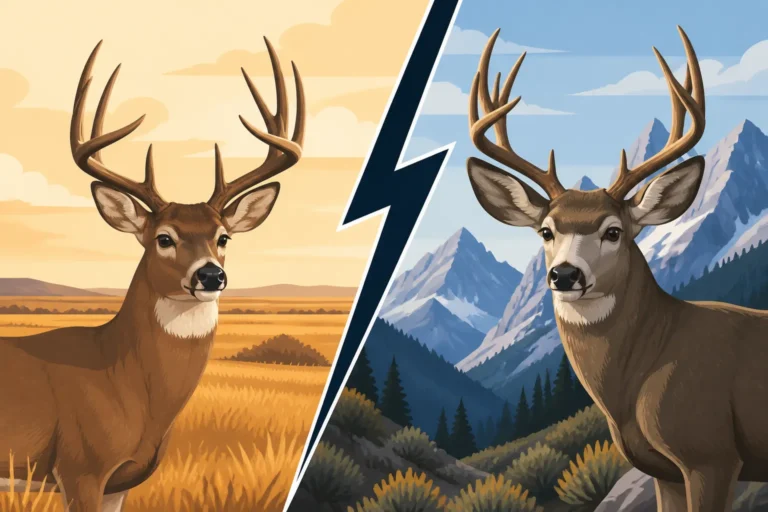
Unlike the often reddish-brown whitetail, mule deer typically sport a grayish-brown coat, especially noticeable in winter, and a distinctive rope-like tail tipped with black. The most obvious difference, of course, is their antlers. Mule deer antlers fork, and then fork again, giving them a "Y" shape, whereas whitetail antlers typically grow tines off a single main beam. A truly mature mule deer buck, often called a "high country monarch," can carry an impressive rack that many hunters spend years dreaming of. These deer are built for the mountains, with large ears that constantly swivel to pick up sounds, earning them their "mule" moniker. Their unique bounding gait, called "stotting," allows them to cover broken, uneven ground with surprising speed and agility, making them incredibly tough to pursue in steep terrain. Understanding these physiological traits helps you anticipate their movements and reactions in the field.
Habitat Preferences Across Colorado
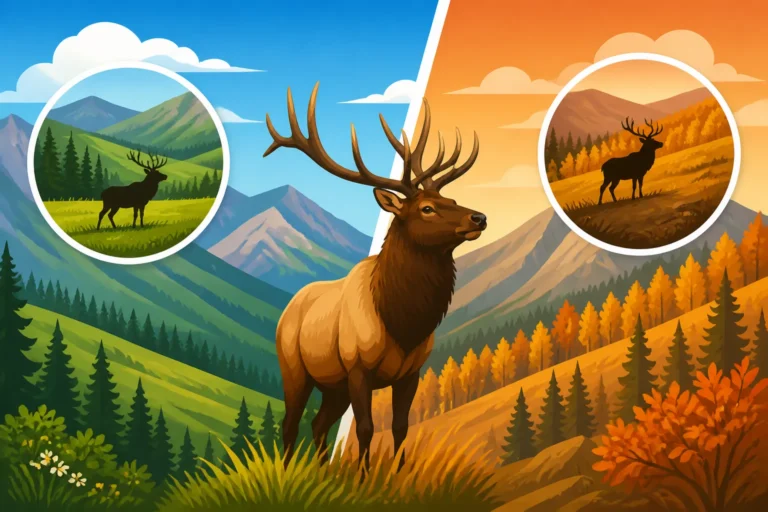
Colorado offers a vast array of habitats, and mule deer are masters of adapting to them. While many of us picture them in the high alpine basins, they actually inhabit a diverse range, from the sagebrush-filled plains of the eastern counties to the dense forests and aspen groves of the Rockies. In the summer, many bucks will retreat to higher elevations, often above timberline, seeking cooler temperatures and succulent forage. This is where you'll find them in the wide-open spaces, often mingling with elk in the high country. As fall approaches and temperatures drop, they begin to move down, following migration corridors to their wintering grounds at lower elevations. These wintering areas usually consist of south-facing slopes, pinyon-juniper breaks, or agricultural lands where snow isn't as deep and browse is more accessible. Knowing these general migration patterns is crucial, as deer can literally move miles in a short period as seasons change. For a deeper dive into herd movements, understanding the larger trends in Colorado Mule Deer Population Trends can provide valuable context.
Behavioral Patterns Through the Seasons
Mule deer behavior is heavily dictated by the season. During the spring and early summer, bucks are focused on growing their antlers, often staying in bachelor groups, feeding heavily, and trying to conserve energy. This is a great time for scouting if you can access their summer ranges. As fall approaches, their priorities shift. Early archery and muzzleloader seasons often find bucks still in their summer patterns or just starting to transition. The true magic happens during the rut, usually from mid-October through November. This is when bucks become far more active, chasing does, fighting rivals, and making themselves much more visible. It's a prime time for hunting, as their guard is often down. After the rut, bucks are exhausted and quickly return to feeding heavily to recover lost body mass before the deep winter snows set in. Later rifle seasons might find them congregated in lower-elevation winter range, often seeking shelter and forage, but they will be wary and focused on survival.
Colorado Mule Deer Seasons and Regulations
Navigating Colorado's hunting seasons and regulations can feel like tackling a calculus problem, especially for those new to the state. It's absolutely critical to understand the draw system, season dates, and specific rules to ensure you're hunting legally and effectively.
Overview of Hunting Seasons
Colorado offers several distinct seasons for mule deer, each with its own flavor and challenges.
- Archery Season: Typically runs from late August through September. This season offers a unique opportunity to hunt bucks in their summer patterns, often in velvet, before the rut kicks in. It's a challenging hunt, requiring close-range stalking and excellent stealth.
- Muzzleloader Season: Usually a shorter, specific window in mid-September. This season aligns with cooler temperatures and potentially some early pre-rut activity, but still requires the hunter to get close.
- Rifle Seasons: These are the most popular seasons for mule deer.
- 1st Rifle Season: Often a limited draw for specific units, usually in mid-October. It can offer good opportunities as deer are transitioning but before significant rut activity.
- 2nd and 3rd Rifle Seasons: These are the workhorses for many rifle hunters, occurring in late October and early November. The 3rd rifle season often coincides with the peak of the mule deer rut, making it a highly sought-after tag.
- 4th Rifle Season: Typically in mid-November, this season can be excellent if snow pushes deer down to their winter ranges, but it's often cold and can be brutally difficult.
Each season presents different conditions and deer behavior, so choose wisely based on your preferred hunting style and what you hope to experience. For a comprehensive overview of all big game seasons, check out our Colorado Hunting Seasons Explained guide.
Navigating the Colorado Draw System
Unlike many states where you can simply buy an Over-the-Counter (OTC) tag for mule deer, Colorado primarily uses a draw system for deer. This means you apply for specific hunt codes in specific units, hoping to draw a tag. The system relies heavily on "preference points." For every year you apply for a deer tag and are unsuccessful, you accrue a preference point. These points then increase your odds in subsequent draws. High-demand units, particularly those known for trophy bucks, can require many years, even a decade or more, to draw a tag. This can be a frustrating reality for many, as it requires long-term planning. You apply in the spring (usually April), find out results in early June, and if unsuccessful, you earn a point. Understanding the intricacies of the Colorado Draw System and Preference Points is absolutely essential before you even start looking at units. GoHunt's Insider tool is a fantastic resource here, providing detailed draw odds and point recommendations to help you make informed decisions.
Tag Types and Antler Point Restrictions
When applying for tags, you'll encounter various options:
- Buck/Antlered Deer Tags: These are the most common and sought-after for mule deer. They allow you to harvest a male deer with antlers.
- Doe/Antlerless Deer Tags: Less common and usually easier to draw, these tags are for female deer or deer without antlers. They are primarily used for herd management and meat hunting.
- Either-Sex Tags: These are rare for mule deer and are typically in units with very specific management goals.
Many units also have Antler Point Restrictions (APRs). For example, a unit might require a buck to have at least four points on one side, or an unbranched antler of at least five inches. These restrictions are in place to allow younger bucks to mature, enhancing the overall quality of the herd. Always check the current Colorado Parks and Wildlife (CPW) regulations brochure for the specific GMU you plan to hunt, as these rules can change year to year. Ignoring an APR can lead to severe penalties, so always be sure of your target before you pull the trigger.
Essential Gear for Colorado Mule Deer Hunting
Hunting mule deer in Colorado's diverse and often rugged terrain demands specific gear. Cutting corners here isn't just uncomfortable; it can be dangerous. Think of your gear as your lifeline and your toolset for success.
Optics: The Mule Deer Hunter's Best Friend
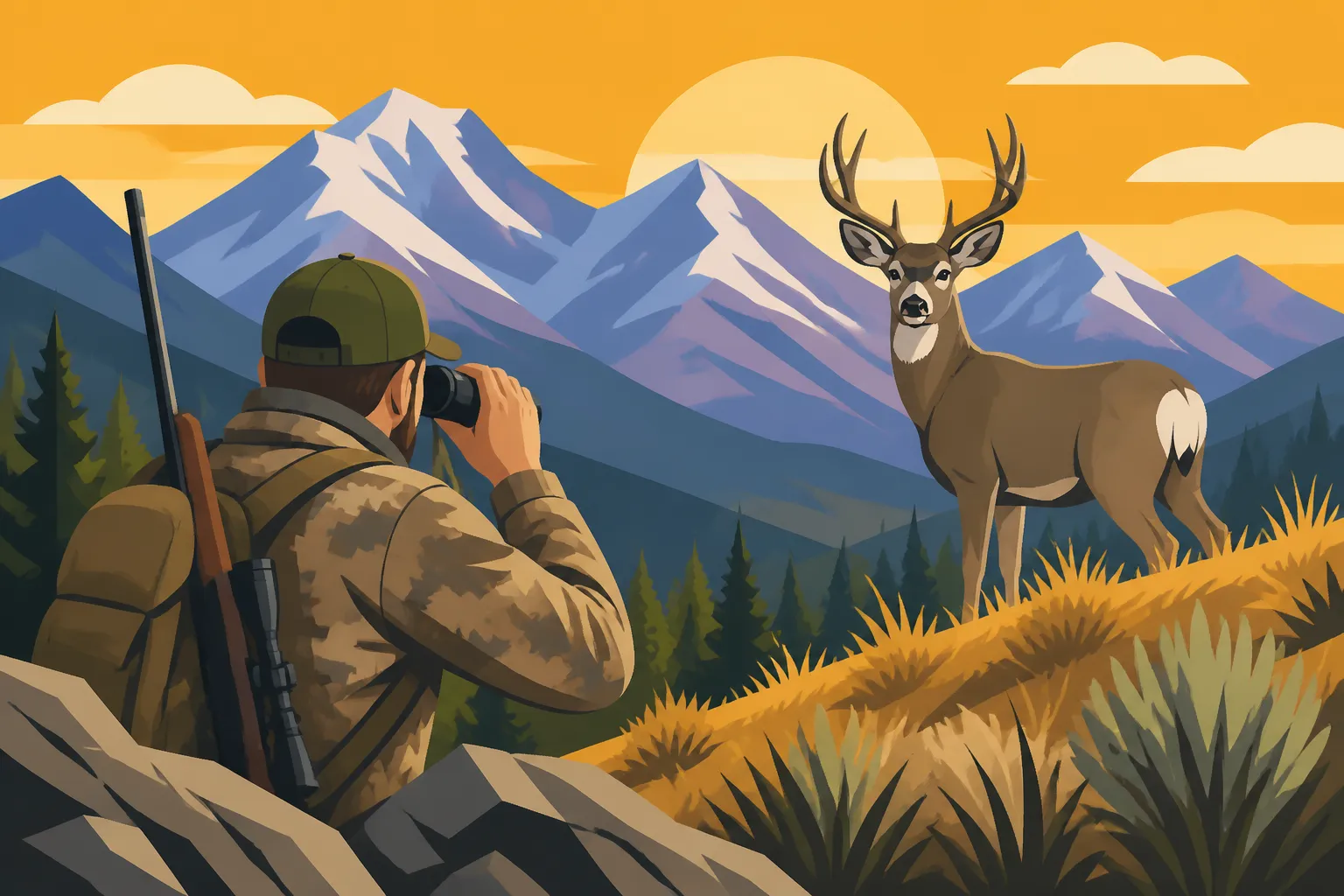
If there's one area where you shouldn't skimp, it's optics. Mule deer hunting, particularly in the high country, is a game of glassing. You'll spend far more time looking through binoculars or a spotting scope than you will actually walking or stalking.
- Binoculars: A good pair of 10×42 or 12×50 binoculars is your primary scouting tool. Look for clarity, light gathering capabilities, and rugged construction. Brands like Vortex, Maven, and Swarovski offer excellent options across different price points. You'll be using these for hours, so a comfortable neck strap or bino harness is a must. Attach them to a tripod adapter and a lightweight tripod for steady, fatigue-free glassing.
- Spotting Scope: For serious mule deer hunting, especially when hunting big, open country, a spotting scope (15-45x or 20-60x) is invaluable. This allows you to scrutinize distant ridges, confirm antler points, and judge the size of a buck without spooking it. Again, pair it with a sturdy tripod.
- Rangefinder: Critical for accurate shot placement in the mountains. Terrain can play tricks on your eyes, making an animal seem closer or farther than it actually is. An angle-compensating rangefinder is a non-negotiable item, as you'll often be shooting uphill or downhill.
Remember, the goal isn't just to see a deer, but to evaluate it from a distance. High-quality optics allow you to do just that, saving you countless miles of walking and ensuring you're targeting the right animal. Our guide on How to Glass for Colorado Mule Deer goes into much greater detail on specific techniques.
Footwear and Clothing for Variable Conditions
Colorado weather is notoriously fickle. You can experience all four seasons in a single day, especially in the mountains. Proper layering and durable footwear are non-negotiable.
- Boots: Your feet are your engine. Invest in high-quality, waterproof, sturdy, and well-broken-in hiking boots. Look for boots with good ankle support to navigate rocky, uneven terrain, and stiff soles for side-hilling. Merrell, Kenetrek, and Salomon are popular choices among mountain hunters. Don't forget several pairs of good wool or synthetic socks to prevent blisters. For more specific recommendations, check out our guide on the Best Boots for Colorado Elk Hunting, which applies equally well to mule deer.
- Layering System: Forget cotton. It holds moisture and will leave you cold. Embrace a synthetic or wool layering system:
- Base Layers: Moisture-wicking tops and bottoms to keep sweat off your skin.
- Mid-Layers: Fleece or puffy jackets for insulation.
- Outer Layers: A durable, waterproof, windproof shell jacket and pants to protect against rain, snow, and wind. Ensure your outer layers are quiet for stalking.
- Headwear and Gloves: A warm beanie or stocking cap is essential, as is a good pair of gloves for cold mornings. You might also want lighter gloves for hiking and a neck gaiter.
The key is to be able to add or shed layers quickly as your activity level and the weather change. Start cold when hiking uphill, knowing you'll warm up.
Backpacks and Camp Essentials
Even for day hunts, a well-equipped backpack is critical. For multi-day backcountry trips, it becomes your lifeline.
- Backpack: For day hunts, a 30-45 liter pack is usually sufficient to carry extra layers, water, snacks, optics, and emergency supplies. For backcountry hunts, you'll need a 60-80 liter pack, ideally one designed for hauling heavy loads, specifically meat. Look for packs with a good frame, comfortable suspension, and load lifters. Kifaru, Mystery Ranch, and Stone Glacier are top-tier choices for serious hunters. A good pack also allows you to How to Pack Out an Elk in Colorado, which is a similar process for mule deer.
- Hydration: Always carry more water than you think you'll need, or a reliable water filter/purifier. Dehydration is a serious concern at altitude.
- Navigation: A GPS device (like a Garmin inReach or a handheld GPS) and a physical map and compass are non-negotiable. Cell service is unreliable in the mountains. Apps like onX Hunt are excellent for e-scouting and in-field navigation but rely on battery power.
- First-Aid Kit: A comprehensive first-aid kit, including pain relievers, blister treatment, gauze, and any personal medications, is a must.
- Emergency Supplies: Fire starter, headlamp with extra batteries, an emergency shelter (like a bivy bag or lightweight tarp), and some emergency food are all crucial, even for a day hunt that goes awry.
- Knife and Game Bags: Essential for field dressing and protecting your meat. Lightweight, breathable game bags are paramount for keeping your harvest clean and cool.
Being prepared for anything the Colorado mountains throw at you will make your hunt safer and more enjoyable, even if you don't punch a tag.
Effective Hunting Methods for Mule Deer in Colorado
Mule deer are notoriously keen, with incredible eyesight, hearing, and a good nose. Successfully hunting them, especially the older, wiser bucks, requires a combination of patience, strategic movement, and an understanding of their habits.
The Art of Glassing Big Basins
Glassing is, without a doubt, the most effective method for hunting mule deer in the expansive landscapes of Colorado. It's about letting your optics do the walking. Instead of blindly hiking miles, you find a vantage point and systematically pick apart the terrain.
- Finding a Vantage Point: Look for high points that offer expansive views of multiple drainages, basins, and ridges. This could be a rocky outcrop, a treeline edge, or a saddle. Position yourself so the sun isn't directly in your eyes, especially during prime morning and evening hours.
- Grid System: Don't just scan randomly. Use a grid system. Start at the nearest point of a landscape, pick a line (like a ridgeline or a creek bed), and slowly work your way across, then move down and repeat. Focus on patches of timber, shaded areas, rocky breaks, and areas where cover meets open feeding grounds.
- Patience is Key: Mule deer often bed down during the day, becoming virtually invisible. You might glass the same hillside for hours and see nothing, only for a buck to stand up from a bed you've been looking at the whole time. Take your time, focus on distinct shapes, movements, and subtle color differences that don't belong. Pay attention to anything that looks "out of place," even if it's just a horizontal line in a vertical world. This patient approach is covered in depth in our How to Glass Big Colorado Basins guide.
- Thermals and Wind: Always be mindful of thermals and wind when selecting a glassing spot. In the mornings, thermals rise, carrying your scent uphill. In the evenings, they fall, carrying your scent downhill. Position yourself so your scent isn't blowing into prime deer habitat.
Once you spot a buck, the real work begins: planning your stalk.
Spot-and-Stalk Tactics in Varied Terrain
Spot-and-stalk is the classic mule deer hunting method, and it’s incredibly rewarding when executed correctly. It involves spotting a deer, planning a route to get within shooting range undetected, and then making the shot.
- Planning the Stalk: This is perhaps the most critical part. Once a buck is spotted and you've confirmed it's what you're after, take your time. Use your map (physical or digital like onX Hunt) to identify terrain features that offer cover: ridges, draws, timber patches, rock formations. Note wind direction and thermals meticulously. The ideal stalk will keep you out of sight and downwind of the deer for as long as possible. Remember to account for other deer in the area that might bust you.
- Slow and Steady: Once you begin your stalk, move slowly. Take one step at a time, looking for potential obstacles, broken branches, or loose rocks that could make noise. Use the terrain to your advantage – stay low, crawl if necessary, and pause frequently to check your position and the deer's behavior. If the deer looks up, freeze immediately.
- Closing the Distance: The goal is to get within your comfortable shooting range without being detected. This might be 20-60 yards for archery or 200-400 yards for rifle. Be prepared for changes in the deer's behavior – they might stand up, move, or even bed down again. Adapt your plan as needed. For more specific tactics on approaching bucks, you might find tips in our Colorado Mule Deer Hunting: Spot-and-Stalk Tactics article.
Still-Hunting and Ambush Strategies
While glassing and spot-and-stalk dominate, there are times when still-hunting or ambushing can be highly effective, particularly in timbered areas or during specific seasons.
- Still-Hunting Timber: When deer are in dense timber, thick aspen groves, or deep canyons, glassing becomes less effective. Still-hunting involves moving extremely slowly and deliberately through the woods, pausing frequently (5-10 minutes at a time) to scan for deer. Look for horizontal lines, flicking ears, or the subtle twitch of a tail. Use your binoculars to examine every shadow and thicket. This method requires immense patience and a keen eye. The goal is to see the deer before it sees you.
- Ambushing Travel Corridors: During the rut, or when deer are moving between feeding and bedding areas, ambushing can pay off. Identify natural travel corridors – saddles, ridge lines, creek bottoms, pinch points between thick cover and open areas. Set up quietly downwind before daylight or in the late afternoon, and wait for deer to move. This is a game of patience and knowing your terrain well. Early season bucks might also use specific water sources or wallows, offering other ambush opportunities.
Regardless of the method, remember that scent control, quiet movement, and understanding how mule deer use the terrain are paramount to success. Don't be afraid to experiment with different techniques until you find what works best for the specific conditions you're hunting.
Scouting and E-Scouting for Colorado Mule Deer
Successfully hunting a mature mule deer buck often boils down to preparation. You can't just show up on opening day and expect to find a trophy. Thorough scouting, both in the field and from your computer, is absolutely vital.
Pre-Season Physical Scouting
Nothing beats boots-on-the-ground scouting. If you have the luxury of living near your hunting unit or can make a dedicated trip, get out there before the season opens.
- Summer Range Reconnaissance: For high-country hunts, try to scout in late summer (July-August). This is when bucks are in their summer bachelor groups, usually at higher elevations, and are relatively predictable. Look for fresh tracks, droppings, rubs, and well-used trails. Pinpoint key bedding areas, feeding zones, and water sources.
- Migration Routes: Pay attention to how the terrain funnels deer. Where do saddles, deep canyons, or dense timber create natural travel corridors between summer and winter range? These areas can be goldmines during transitional periods or the rut.
- Access Points and Terrain Assessment: Scout potential access roads, parking spots, and hiking trails. Get a feel for the steepness and ruggedness of the terrain. This will inform your physical conditioning needs and route planning.
- Glassing Locations: Identify key vantage points from which you can effectively glass large areas. Test them out with your optics to ensure they offer good sightlines. Knowing these spots beforehand saves valuable hunting time. Remember, the more you understand the ground you'll be hunting, the better prepared you'll be when the season opens.
Leveraging E-Scouting Tools
For many, physical scouting isn't always possible due to distance or time constraints. This is where modern e-scouting tools become incredibly powerful.
- Mapping Software (e.g., onX Hunt, BaseMap): These apps are revolutionary. You can analyze topo maps for elevation changes, steepness, and terrain features like saddles, ridges, and basins. Identify areas of public land versus private land, wilderness boundaries, and even historical burn areas or logging cuts that can create prime mule deer habitat. Look for north-facing slopes with good cover for bedding, and south-facing slopes for feeding in colder weather.
- Satellite Imagery: Use satellite imagery to identify different vegetation types, dense timber, sparse areas, and open clearings. Look for "green-ups" in drier areas that might attract deer, or recent clear-cuts that offer new browse.
- Historical Data (GoHunt, CPW Draw Stats): Websites like GoHunt (which provides excellent detailed information for Colorado) and the Colorado Parks and Wildlife (CPW) draw statistics are invaluable. They offer insights into draw odds, success rates by unit, and sometimes even harvest data. GoHunt, in particular, excels at breaking down complex data, allowing you to filter units based on trophy potential, public land access, or ease of drawing a tag. This kind of research allows you to narrow down your focus to units that align with your hunting goals and preference point accumulation.
- Weather Patterns: Research historical weather patterns for your chosen unit. Understanding typical snow depths, temperature ranges, and precipitation can help you predict deer movement and prepare appropriately.
E-scouting allows you to virtually "walk" your unit, identifying potential hot spots and planning your approach long before you ever set foot on the mountain. It's an absolutely essential component of modern Western big game hunting, and our guide on How to E-Scout Before a Colorado Hunt can give you an even deeper dive.
Understanding Migration and Seasonal Movements
Mule deer are highly migratory in many parts of Colorado, moving between distinct summer and winter ranges. Understanding these movements is key to being in the right place at the right time.
- Summer Range: Typically higher elevation, providing lush forage and cooler temperatures. Bucks often congregate here in bachelor groups during antler growth.
- Winter Range: Lower elevations, often on south-facing slopes, pinyon-juniper zones, or agricultural fringes, where snow accumulation is less severe and browse is more accessible.
- Transitional/Migration Corridors: These are the paths deer take between their summer and winter grounds. These can be narrow canyons, ridge lines, or specific drainages. The timing of migration is often triggered by weather – the first significant snowfall at higher elevations will push deer down.
If you're hunting early season, focus on summer range. Mid-season hunts (especially 3rd rifle) can be phenomenal if they coincide with the rut on migration routes. Late season (4th rifle) often finds deer concentrated on winter ranges. Being aware of these patterns, which can vary year to year based on moisture and temperature, will significantly impact your success. Consulting with local CPW biologists or experienced hunters can also provide valuable insights into specific migration patterns within a unit.
Choosing the Right Hunting Unit (GMU) for Mule Deer
Colorado's system of Game Management Units (GMUs) is both a blessing and a curse. It provides specific regulation control but can be overwhelming to navigate. Choosing the right GMU is arguably the most critical decision you'll make, impacting everything from draw odds to the quality of your hunt.
Deciphering Colorado GMUs
Colorado is divided into hundreds of GMUs, each with its own set of regulations, draw odds, and herd dynamics. These units are often defined by natural boundaries like rivers, mountain ranges, and roads, but can sometimes feel arbitrary.
- CPW Hunting Atlas: Your best friend for understanding GMUs is the Colorado Parks and Wildlife (CPW) online hunting atlas. This interactive map allows you to overlay GMU boundaries with public and private land ownership, wilderness areas, and state wildlife areas. This is indispensable for visualizing the terrain and access.
- Draw Statistics: As mentioned earlier, draw statistics are paramount. You need to balance your desire for a quality hunt with your current preference point total. A unit known for monster bucks might require 10+ points, while a unit with good general hunting might be a 0-2 point draw. Be realistic about what you can draw.
- Unit-Specific Regulations: Every GMU has specific regulations regarding season dates, weapon types, and antler point restrictions. Double-check these for your chosen unit, as they can differ significantly from neighboring GMUs.
Navigating this system is complex, but tools like GoHunt provide streamlined data and analysis to help you make sense of it all, making the decision process far less daunting.
Public Land Access and Management
The vast majority of mule deer hunting in Colorado occurs on public land – National Forests, BLM land, and State Trust Lands. Understanding these land designations is crucial.
- National Forests: Generally offer the most extensive public access, often encompassing vast tracts of high-elevation mule deer habitat. These areas can be rugged, requiring significant physical effort to access prime spots.
- Bureau of Land Management (BLM) Land: Often found at lower to mid-elevations, frequently characterized by pinyon-juniper, sagebrush, and broken terrain. BLM lands can offer excellent hunting, especially during migration or on winter ranges.
- State Trust Lands (STL): These lands are managed to generate revenue for public schools. Access to STL for hunting typically requires a valid hunting license and a State Trust Land Public Access permit, which can be purchased annually. Always check the specific rules for individual STL parcels, as some may have restrictions.
- Wilderness Areas: These are vast, roadless areas offering incredible backcountry hunting opportunities, but they require significant physical exertion and often pack animals or extensive backpacking to access. Hunting in a wilderness area means leaving motorized vehicles behind, offering a true primitive hunting experience. For a deeper understanding of how these different public lands work, our Colorado Public Land Hunting Guide is an invaluable resource.
Finding Units with Good Mule Deer Potential
So, how do you actually pick a unit? It's a blend of research, personal preference, and sometimes, a little luck.
- Trophy Potential vs. General Harvest: Are you looking for a once-in-a-lifetime Boone and Crockett buck, or are you happy with a solid meat buck? Trophy units almost always require more preference points.
- Hunter Density: Some units, especially those with good road access or easily drawn tags, will experience high hunter pressure. If you crave solitude, look for units with significant wilderness components or difficult-to-access terrain. Remember, deer will often retreat to these refuge areas when pressure mounts.
- Habitat Diversity: A good mule deer unit will offer a mix of terrain and cover: open areas for feeding, dense timber or rocky slopes for bedding, and reliable water sources.
- Herd Numbers and Trends: While specific numbers by GMU can be hard to come by, general trends in Colorado Mule Deer Population Trends can offer clues. Look for units where deer populations are stable or increasing, and where harvest quotas align with healthy management practices.
- Your Personal Fitness Level: Be honest with yourself. Can you handle hunting at 10,000-12,000 feet for a week? If not, focus on units at lower elevations or those with less extreme topography. A miserable hunt in rough country because you weren't prepared won't be enjoyable.
Use tools like the CPW's Hunting Atlas to visualize the terrain, and leverage GoHunt's data to compare draw odds and unit reports. Don't be afraid to call CPW biologists with specific questions about units that interest you; they are a great resource.
| Colorado Mule Deer Season | General Dates (Approx.) | Primary Weapon | Pros | Cons | Draw Odds/Tag Availability |
|---|---|---|---|---|---|
| Archery | Late Aug – Sept | Archery | Less pressure, bucks in summer pattern | Requires close stalk, warm weather | OTC for some units (Bull/Either Sex) |
| Muzzleloader | Mid-Sept | Muzzleloader | Cooler temps, early pre-rut | Limited range, single shot, short season | Draw (usually 0-2 pts) |
| 1st Rifle | Mid-Oct | Rifle | Good weather, deer transitioning | Limited units, bucks still grouped | Draw (usually 2-5 pts) |
| 2nd Rifle | Late Oct | Rifle | Good rut potential, more units | Higher hunter pressure, fluctuating rut | Draw (usually 0-3 pts) |
| 3rd Rifle | Early Nov | Rifle | Peak rut potential, prime time | Very high pressure, can be tough draw | Draw (often 3-8+ pts) |
| 4th Rifle | Mid-Nov | Rifle | Snow pushes deer down, good numbers | Cold weather, physically demanding, deer wary | Draw (often 2-6 pts) |
Note: Preference point requirements are approximate and vary annually based on demand and unit quality.
Physical Preparation and Mountain Safety
Hunting mule deer in Colorado is not for the faint of heart. The rugged terrain and high altitudes demand a significant level of physical fitness and a strong understanding of mountain safety. Ignoring either can turn a dream hunt into a nightmare.
Fitness Training for Mountain Hunts
You don't need to be an Olympic athlete, but you do need to be able to climb mountains with a pack on, sometimes for days on end. Start your training months in advance, focusing on strength, endurance, and cardiovascular health.
- Cardiovascular Endurance: This is crucial for handling the thin air at elevation. Incorporate activities like running, cycling, swimming, or hiking with a weighted pack. Aim for sustained periods of elevated heart rate.
- Leg Strength: Hiking steep inclines and declines, especially with a heavy pack, will torch your legs. Lunges, squats, step-ups, and calf raises are excellent. Incorporate uphill hiking on trails or a stair climber/elliptical with inclines.
- Core Strength: A strong core helps with balance on uneven terrain and stabilizes your body when carrying a heavy pack. Planks, twists, and back extensions are beneficial.
- Hiking with Weight: This is perhaps the most important training. Start with a light pack and gradually increase the weight. Hike uphill, downhill, and across uneven ground. This simulates real-world hunting conditions and helps break in your boots. The better shape you're in, the more enjoyable and effective your hunt will be. For a dedicated training plan, our Colorado Elk Hunt Fitness Plan provides excellent general guidance that applies to deer hunting as well.
Altitude Acclimation and Awareness
Colorado's mountains can reach elevations well over 10,000 feet, where the air contains significantly less oxygen than at sea level. Altitude sickness is a real threat and can ruin a hunt or become life-threatening.
- Arrive Early: If possible, arrive in Colorado a few days before your hunt to allow your body time to acclimate. Stay at a slightly lower elevation (e.g., 6,000-8,000 feet) and do light activity.
- Stay Hydrated: Drink plenty of water before and during your hunt. Dehydration exacerbates altitude sickness. Avoid excessive alcohol and caffeine.
- Eat Properly: Focus on complex carbohydrates and maintain a steady intake of food.
- Recognize Symptoms: Be aware of the signs of Acute Mountain Sickness (AMS): headache, nausea, dizziness, fatigue, and shortness of breath. If symptoms worsen, descend to a lower elevation immediately. Ignoring AMS can lead to more severe and dangerous conditions like High Altitude Pulmonary Edema (HAPE) or High Altitude Cerebral Edema (HACE). Never push through severe symptoms. Your life is more important than a deer. Our guide on How to Acclimate to Colorado Elevation offers more detailed advice.
- Pace Yourself: Don't try to power hike up a mountain on your first day. Move slowly and steadily, taking frequent breaks.
Safety in Bear and Mountain Lion Country
Colorado is home to black bears and mountain lions, and while encounters are rare, it's wise to be prepared, especially if you're hunting alone or in remote areas.
- Bear Spray: Carry bear spray (and know how to use it) if you're in bear country. This is especially true if you are packing out meat, as the smell can attract predators.
- Food Storage: If camping, store all food, scented items, and trash in bear-resistant containers or hung from a tree well away from your camp.
- Make Noise: When hiking through dense cover, especially alone, make noise to avoid surprising an animal.
- Encounter Protocol: If you encounter a bear, make yourself look big, make noise, and slowly back away. If a mountain lion is encountered, do not run. Make eye contact, appear large, and back away slowly. If attacked, fight back aggressively. Always carry a sidearm or sturdy knife for emergencies if legal and you are proficient.
While mule deer hunting is generally safe, the mountains are wild places. Being prepared for the unexpected is part of being a responsible hunter.
Field Care and Pack Out
Harvesting a mule deer is just the beginning of the work. Proper field care is essential to preserve the meat and, if desired, the hide and antlers. The pack out, especially in rugged terrain, is often the most physically demanding part of the entire hunt.
Field Quartering and Caping
Getting the animal cooled down quickly is paramount to prevent meat spoilage, especially in warmer early-season hunts.
- Quick Field Dressing: As soon as you recover your deer, begin field dressing. Remove the guts immediately to allow the carcass to cool.
- Quartering: For mountain hunts, unless you're very close to a road, you'll likely need to quarter the animal. This means separating the deer into its four major muscle groups (front shoulders, hindquarters) and often removing the backstraps and tenderloins. This makes the meat manageable to carry. Our guide on How to Quarter an Elk in the Field provides a similar process that applies to mule deer, just on a smaller scale.
- Caping (if desired): If you plan to have the buck mounted, you'll need to cape it properly. This involves making precise cuts to separate the hide with the head and antlers attached from the rest of the carcass. Research proper caping techniques beforehand or consult with your taxidermist. Keep the hide cool and clean.
- Cleanliness: Always strive for cleanliness. Use clean game bags, a sharp knife, and avoid getting dirt, hair, or gut contents on the meat.
Keeping Meat Cool in the Mountains
Meat spoilage is a heartbreaking outcome after a successful hunt. Keeping the meat cool, especially in unpredictable mountain temperatures, is critical.
- Game Bags: Use lightweight, breathable, synthetic game bags. These protect the meat from flies and dirt while allowing air to circulate, which is crucial for cooling. Never use tarps or plastic bags, as they trap heat and moisture.
- Hang the Meat: If possible, hang the quarters in the shade, allowing air to circulate around them. Get them off the ground to prevent contact with dirt and small scavengers.
- Airflow: Even if you can't hang them, spread the quarters out on branches or rocks in the shade, away from direct sunlight. Prop them up to allow maximum airflow around all sides.
- Debone if Necessary: If temperatures are warm and you're packing out a long distance, deboning the meat can help it cool faster and reduces pack weight.
- Ice: Once you get the meat to your vehicle, get it on ice as quickly as possible. Use coolers with block ice, not just crushed ice, for longer cooling. Ensure the meat is not sitting directly in meltwater. Drain the coolers regularly.
Packing Out Your Mule Deer
The pack out is often the "second hunt" and can be a brutal test of endurance. Be prepared for multiple trips.
- Plan Your Loads: Distribute the weight evenly in your pack. Typically, a deer will require 2-3 trips for one person, or one trip for two people each carrying a substantial load. Don't overload yourself; fatigue can lead to accidents.
- Use Your Pack System: Properly adjust your pack's hip belt, shoulder straps, and load lifters to transfer weight to your hips, not just your shoulders.
- Pace Yourself: Take frequent breaks, hydrate, and maintain a steady pace. It's not a race. Focus on safe footing, especially when carrying a heavy, awkward load.
- Antlers: Decide how you'll carry the antlers. They can be strapped to the top or side of a pack, or carried separately. Be mindful of their size and sharp points when maneuvering through dense timber.
- Buddy System: If possible, hunt with a partner. A buddy makes the pack out significantly easier and safer, offering an extra set of hands and eyes.
- Know Your Limits: There's no shame in making multiple trips or calling for assistance if needed. Safety and preserving your hard-earned meat are the priorities. For strategies on managing heavy loads in the mountains, consider techniques from our How to Pack Into the Colorado Backcountry guide, adapting them for game animals.
Successfully harvesting a mule deer in Colorado is a monumental achievement, but completing the field care and pack out properly ensures that your efforts are truly rewarded.
Disclaimer
Please note that hunting regulations, season dates, and unit boundaries are subject to change annually by Colorado Parks and Wildlife (CPW). Always consult the current official CPW regulations brochure and their website before planning or engaging in any hunting activities. This guide is for informational purposes only and does not supersede official state regulations. It is the hunter's responsibility to know and follow all applicable laws.