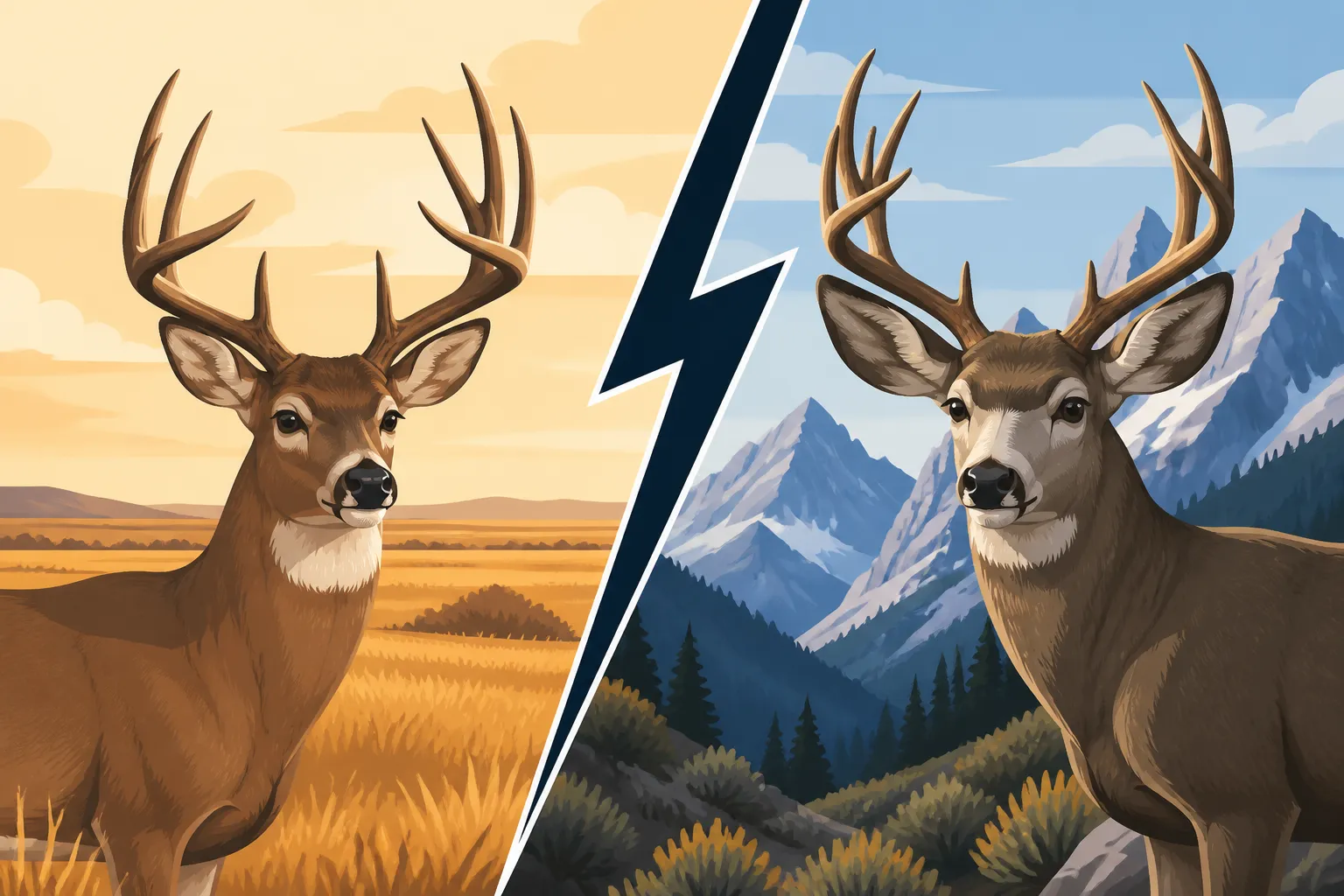
Colorado Plains Whitetail vs Mountain Mule Deer
A lot of hunters coming to Colorado, or even residents new to deer hunting here, face a unique dilemma: do you pursue the elusive whitetail on the eastern plains or trek into the high country for a majestic mule deer? It's not just about two different species; it's about two entirely different hunting experiences, often leading to confusion about where to even begin. This guide aims to clear up that confusion by diving deep into the distinct characteristics, habitats, and hunting approaches for Colorado Plains Whitetail versus Mountain Mule Deer, helping you choose your next adventure wisely.
Habitat and Geography: Where Each Deer Roams
Colorado is a state of incredible topographical diversity, and nowhere is that more evident than in the distinct ranges of its deer species. Understanding where whitetails and mule deer primarily live is the first crucial step in planning your hunt. It dictates everything from your scouting methods to the gear you'll need, truly setting the stage for your entire outdoor experience.
Colorado Plains Whitetail Terrain
When we talk about Colorado whitetails, we're almost exclusively talking about the eastern plains. Picture vast stretches of agricultural fields – corn, wheat, alfalfa – interspersed with river bottoms, creek drainages, and riparian zones. These areas, particularly along river systems like the South Platte, Republican, and Arkansas, provide the dense cover and consistent food sources whitetails absolutely thrive on. They are masters of using every ditch, every brushy draw, every thicket of cottonwoods for concealment. You'll find them living in surprisingly small pockets of cover, often right on the edge of private land where crops provide easy meals. These deer are adept at disappearing in what seems like minimal cover, making them incredibly challenging to spot until they're on the move.
Access to these plains areas can be tricky, as a significant portion is privately owned, meaning permission or utilizing programs like Colorado Parks and Wildlife's (CPW) Walk-In Access (WIA) program is often necessary. Hunters planning a trip to these regions should research the Colorado Plains Rifle Season Explained and understand the nuances of hunting these agricultural landscapes. It's a completely different feel than the vast public lands out west, demanding a more focused approach to property boundaries and landowner relations.
Colorado Mountain Mule Deer Terrain
Now, shift that mental image entirely. Colorado mountain mule deer call the rugged, high-elevation terrain of the Rockies home. Their habitat spans from the foothill areas, through sprawling national forests like the White River National Forest or the San Juan National Forest, all the way up into the alpine basins above timberline during summer months. They prefer open, broken country, often feeding on mountain shrubs, forbs, and grasses. You'll find them on steep slopes, in aspen groves, dark timber pockets, and sagebrush-covered hillsides. Mule deer are built for this vertical world, navigating rocky scree fields and dense timber with ease, their large ears constantly scanning for sounds and their sharp eyes for movement.
Their range extends across the Western Slope and into the higher elevations of the Front Range. Hunting these areas demands physical endurance, navigational skills, and often a willingness to venture deep into the backcountry, far from roads and easy access. The sheer scale of their habitat in units like those in the Flat Tops Wilderness can be overwhelming, but also incredibly rewarding for those who embrace the wilderness challenge. If you're considering this physically demanding and mentally exhilarating experience, our Colorado Mule Deer Hunting Guide is an invaluable resource to help you prepare.
Behavioral Patterns: The Hunt-Defining Differences
Beyond where they live, how whitetails and mule deer behave is perhaps the most significant differentiator for a hunter. Their instincts, feeding habits, and reactions to pressure are vastly different, demanding unique strategies and a different kind of patience from the hunter.
Whitetail's Sneaky Nature and Cover Reliance
Colorado plains whitetails are, by nature, incredibly secretive and often nocturnal. They are masters of evasion, utilizing any available cover to remain unseen, even when you're just a stone's throw away. During daylight hours, they often bed down in dense creek bottoms, thick cedar groves, or even standing cornfields, only emerging at dawn and dusk to feed. Their primary defense mechanism isn't typically running for miles across open country; it's melting into the landscape, using every ditch, every brushy draw, every thicket of willows and cottonwoods to their advantage. They are known for their "peek-a-boo" tactics, often watching you from cover, waiting for you to pass, or slipping away silently before you even know they were there.
Their travel patterns are often predictable, following established trails through thickets or along fence lines, which can be a key insight for hunters. This reliance on cover and predictable movement makes them prime targets for stand hunting or still-hunting through river bottoms, where you are often hunting close quarters, relying more on stealth and patience than covering vast distances. This deep understanding of their behavior is a crucial aspect when planning How to Hunt Whitetail Deer in Colorado, requiring a methodical and often static approach.
Mule Deer's Open Country Habits and "Muley Bounce"
Mountain mule deer, on the other hand, are creatures of open spaces. While they will use timber for bedding, especially during harsh weather or to escape pressure, they are much more comfortable in wide-open sage flats, aspen parks, and across expansive mountain slopes. Their primary defense is their incredible eyesight, which allows them to spot danger from afar, and their distinctive "muley bounce" or stotting gait. This unique bounding motion allows them to cover broken ground quickly and efficiently, often stopping to look back to assess the threat after a short burst of speed.
Unlike whitetails, which often flee in a direct line, mule deer will frequently run a short distance, stop, look, and then continue on if they still perceive danger. This behavior can be both frustrating and advantageous; frustrating because they can disappear quickly, but advantageous because they often offer a second shot opportunity if you're quick enough and can relocate them. They also tend to move more during daylight hours, especially in remote, low-pressure areas, making them excellent candidates for spot-and-stalk hunting. Their feeding patterns often involve grazing across large areas, moving from higher to lower elevations throughout the day, or shifting based on food availability and hunting pressure. For those who enjoy glassing vast landscapes, understanding How to Glass for Colorado Mule Deer is essential to locate these animals.
Hunting Strategies: Tailoring Your Approach
Given their distinct habitats and behaviors, the methods you employ to hunt these two species will be fundamentally different. Trying to apply a plains whitetail strategy to a mountain mule deer hunt, or vice-versa, is a recipe for frustration and likely an empty tag.
Whitetail Hunting Tactics for the Plains
Hunting Colorado plains whitetails is often about precision, patience, and access. Since much of their habitat is private, securing permission or hunting public lands enrolled in programs like the WIA is paramount. Stand hunting, either from a tree stand or a ground blind, over food plots, pinch points in river bottoms, or along well-used travel corridors, is a highly effective strategy. Given their nocturnal tendencies and reliance on cover, focusing on morning and evening movements near bedding and feeding areas is key. Still-hunting through creek bottoms or heavy cover, moving slowly and deliberately, can also be productive, but requires extreme stealth and the ability to detect deer before they detect you.
The wind is always a critical factor when hunting whitetails, as their sense of smell is legendary. Scent control becomes even more critical in these confined spaces where deer can be very close before you see them. E-scouting tools, like those offered by GoHunt, are invaluable for identifying potential travel corridors, bedding areas, and food sources on public or accessible private land, helping you pinpoint the best ambush locations. Additionally, a deeper dive into Colorado Whitetail Deer Hunting offers specific tactics tailored to these unique challenges.
Mule Deer Hunting Strategies for the Mountains
For mountain mule deer, the game changes dramatically. This is largely a spot-and-stalk affair, where covering ground and using high-quality optics are your main tools. You'll spend hours, sometimes days, glassing expansive basins, open hillsides, and distant timber edges from a high vantage point, patiently searching for the tell-tale flicker of an ear or the outline of an antler. Once a buck is spotted, the real work begins: planning a careful, often circuitous stalk to get within shooting range. This often involves navigating steep, rugged terrain, managing fickle thermals and swirling wind currents, and being physically prepared for sustained exertion at high altitudes.
Backpack hunting or strenuous day trips into remote, roadless areas are common methods, allowing you to get away from other hunters and into untouched mule deer territory. Long-range shooting skills can be a significant advantage, as shots often present themselves at greater distances than in the thick whitetail cover. Success hinges on being able to find the deer, assess the terrain accurately, and execute a flawless, silent approach. Knowing How to Spot-and-Stalk Colorado Mule Deer is the cornerstone of effective hunting for this species. When planning your trip, online mapping tools like those from GoHunt can help you identify potential glassing knobs and stalking routes, saving you precious time and energy in the field.
Tagging and Regulations: What You Need to Know
The regulatory landscape for hunting deer in Colorado is complex, and obtaining tags for whitetails versus mule deer often presents different challenges and opportunities. Understanding the draw system and tag availability is non-negotiable for a successful hunt and is a significant part of the pre-hunt planning process.
Whitetail Tag Availability and Draw Odds
Generally speaking, whitetail tags in Colorado, especially for plains units, tend to be easier to draw than mule deer tags. In some areas, particularly for archery seasons or for antlerless whitetails, over-the-counter (OTC) options may even exist. While trophy whitetail bucks on prime private land might require some preference points in the draw, many opportunities can be had with fewer or no points, particularly for does or general buck tags in certain plains GMUs. The tags are often specific to the Plains units (e.g., GMUs on the Eastern Plains) and might be labeled "Plains Deer" or "Whitetail Only." It's essential to meticulously check the specific hunt codes in the annual Colorado Big Game Brochure, as regulations and availability can change year to year.
For non-residents, these tags can offer a more accessible entry point into Colorado deer hunting compared to the often much more competitive mule deer draws. Utilizing resources like Colorado OTC Elk Tags Explained can provide a parallel understanding of accessible opportunities, even though it focuses on elk, the principles of OTC availability and unit-specific research share strong similarities. Often, hunters can find opportunities with very low or no preference point requirements.
Mule Deer Tag Challenges and Preference Points
Mule deer tags, particularly for mature bucks in desirable mountain units, are considerably more difficult to acquire. Most mule deer tags are issued through the primary draw, and many sought-after units (often referred to as "trophy units") require a significant number of Colorado Preference Points Explained. Hunters often spend years building up points to draw a coveted tag in a unit known for producing large bucks. Even general rifle seasons for mule deer can require 1-3 points for a buck tag in many western slope units, reflecting the high demand for these magnificent animals.
While some limited OTC options for archery mule deer might exist in certain areas, these are often for antlerless deer or in areas with very low success rates or extremely high hunter pressure. The most reliable way to hunt a quality buck mule deer in Colorado is through the draw system. Tools like the GoHunt Insider membership provide invaluable draw odds data and unit analyses, helping hunters strategize point accumulation and application choices. It's not uncommon for hunters to apply for a Colorado Mule Deer Hunting Guide tag through the draw, meticulously researching past success rates and point requirements. If you're serious about a trophy mountain mule deer, be prepared for a long-term strategy involving building up preference points over several years.
Key Differences at a Glance: Whitetail vs. Mule Deer
To summarize the core distinctions and help you visualize the contrasts, here's a handy table outlining the primary differences between Colorado Plains Whitetail and Mountain Mule Deer. This side-by-side comparison makes it easier to grasp the distinct characteristics that define each species and their associated hunting experiences.
| Feature | Colorado Plains Whitetail | Colorado Mountain Mule Deer |
|---|---|---|
| Primary Habitat | River bottoms, creek drainages, agricultural fields (Eastern Plains) | Steep mountains, aspen groves, sagebrush hillsides, alpine basins (Western Slope/Rockies) |
| Typical Behavior | Secretive, nocturnal, cover-dependent, sneaky, predictable travel routes | More open country, uses elevation, "muley bounce" when startled, often grazes |
| Antler Structure | Forward-curving main beam with tines branching off upwards | Bifurcated (forked) antlers on both main beam and tines |
| Ear Size | Smaller, proportionate to head | Very large, "mule-like" ears |
| Tail Appearance | Broad, brown with a white underside, flags white when alarmed | Thin, rope-like, white with a black tip |
| Hunting Method | Stand hunting, ground blinds, still-hunting, ambush tactics | Spot-and-stalk, glassing vast areas, high-country backpacking |
| Physical Demands | Generally moderate, but stealth and patience are key | High, requires physical fitness for elevation and rugged terrain |
| Tag Difficulty | Easier to draw, some OTC options for antlerless/archery; fewer points for bucks | Generally harder to draw, requires significant preference points for quality buck tags |
Choosing Your Colorado Deer Adventure
Deciding between a Colorado plains whitetail or a mountain mule deer hunt truly comes down to what kind of experience you're seeking and the type of hunting you prefer. Do you relish the quiet, intense anticipation of a tree stand hunt, waiting for a ghostly whitetail to materialize from the thick river bottom, relying on meticulous scouting and scent control? Or does the idea of physically challenging yourself in breathtaking high-country landscapes, glassing for miles and executing strategic spot-and-stalk maneuvers, appeal more to your adventurous spirit?
Both offer incredibly rewarding experiences, but they demand different skill sets, physical preparations, and knowledge of the terrain and animal behavior. If you're new to Colorado, hunting whitetails on the plains can be a fantastic way to experience deer hunting in the state without the strenuous physical demands or the multi-year wait for a coveted mule deer tag. It's often more about securing access and mastering close-range tactics and scent management.
On the flip side, the allure of the high country, the expansive views, and the challenge of pursuing a majestic mule deer buck in its natural, rugged habitat is undeniable. This type of hunt is a true test of endurance, mental fortitude, and patience. Many hunters spend years dreaming of and planning for that first big mule deer hunt. Consider what challenges you want to embrace, the scenery you want to immerse yourself in, and the time and resources you're willing to invest. Whether you're researching How to Hunt Elk at High Elevation or planning for a lowland whitetail, the principles of scouting and understanding your quarry remain the same, though the execution differs dramatically.
Ultimately, Colorado offers exceptional deer hunting for both species. By understanding the profound differences between plains whitetails and mountain mule deer, you're well-equipped to make an informed decision that aligns with your hunting goals and creates an unforgettable experience. Use trusted tools like GoHunt to deep dive into unit specifics, draw odds, and public land access points, ensuring your chosen adventure is well-planned and maximizes your chances of success.
Disclaimer
Hunting involves inherent risks, and conditions in Colorado's diverse landscapes can be challenging. This guide provides general information and recommendations. Always consult the most current Colorado Parks and Wildlife (CPW) regulations, legal statutes, and professional advice before undertaking any hunting activity. Safety should always be your top priority.