Colorado Elk Calling Sounds Explained
One of the most thrilling and often frustrating aspects of Colorado elk hunting is trying to understand and speak their language. You’ve probably spent countless hours in the timber, hearing a distant bugle or a soft mew, and wondered what exactly it meant and how you should respond. This guide is dedicated to demystifying the various sounds elk make, helping you interpret their vocalizations, and giving you practical insights into using calls effectively to bring those majestic animals within range in the rugged Colorado terrain.
The Intricate Language of Colorado Elk
Elk are incredibly vocal animals, and their calls are far more complex than just a simple bugle. Each sound serves a specific purpose, communicating everything from their location and mood to warnings and invitations. Understanding these nuances is critical for any hunter looking to effectively interact with elk, whether it's in the high-country basins or the dense dark timber of Colorado's national forests. Ignoring their vocalizations, or misinterpreting them, can lead to spooked animals or missed opportunities. It's truly like learning a foreign language where context, tone, and timing are everything.
Why Understanding Elk Sounds is Crucial for Hunters
Imagine trying to navigate a foreign country without knowing a single word of the local language. You might get by, but you’ll miss out on so much and likely make a few blunders along the way. Elk hunting is much the same. If you don't understand what a cow's soft mews or a bull's guttural growl signifies, you're essentially walking into their world deaf and mute. This understanding allows you to gauge the mood of a bull, confirm the presence of a herd, and even pinpoint their general location without revealing your own. It helps you decide whether to push harder, back off, or set up for a shot. For instance, knowing when a bull is simply "hot" and ready to fight versus when he's just cruising and less committed will dictate your next move. It also helps you differentiate between a curious elk and an alarmed one. A hunter who masters this skill dramatically increases their chances of success, especially when trying to fool wary elk on pressured public land.
The Role of Vocalizations in Elk Society
Elk rely heavily on vocal communication for almost every aspect of their social lives. From maintaining herd cohesion and warning of danger to breeding and asserting dominance, sounds are paramount. During the rut, the sound of a bugle can draw other bulls in for a challenge or attract cows looking for a mate. A cow's lost mew can bring her calf back to the herd. A sharp alarm bark tells every elk in earshot that danger is near. These vocalizations aren't just random noises; they are integral to the survival and reproduction of the herd. When you learn to mimic these calls, you're not just making sounds; you're attempting to insert yourself into their social structure, to become a perceived part of their world. This is why subtlety and realism are so important. A clumsy, unrealistic call can stick out like a sore thumb and send elk heading for the thickest cover in a hurry. You’ll find more insights on this in our comprehensive guide on How to Call Elk in Colorado.
Decoding Common Colorado Elk Calls
Let's dive into the specific sounds you'll most often encounter and attempt to replicate while hunting Colorado's majestic elk. Each call has its own meaning, optimal timing, and the right approach for a hunter to use it effectively. Learning these core sounds is the foundation of successful elk calling.
The Mighty Bugle
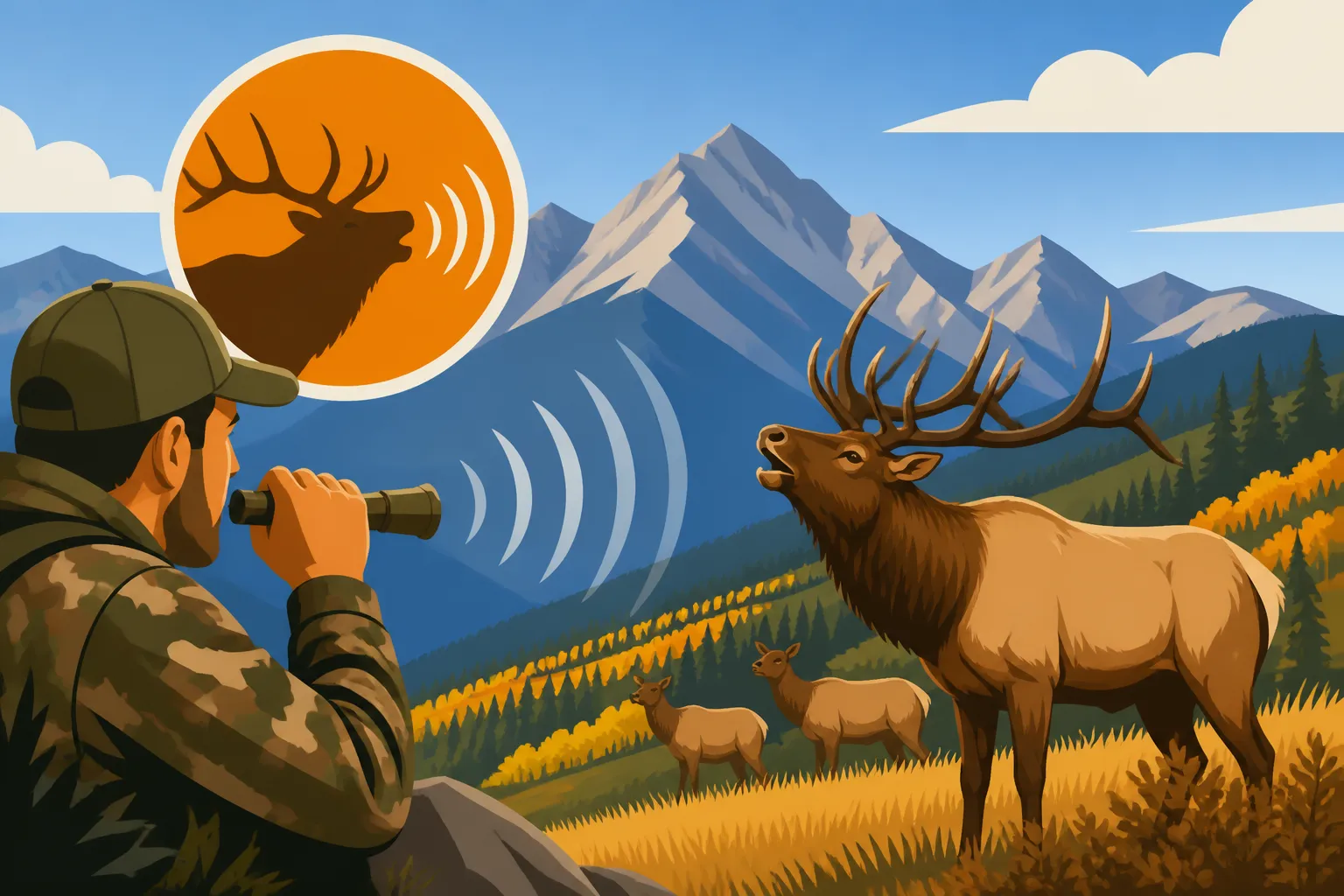
The bugle is, without a doubt, the most iconic sound of a bull elk. It's a loud, often piercing, multi-tonal vocalization that typically starts with a low rumble, rises to a high-pitched scream, and often finishes with a series of guttural grunts or chuckles. It's the bull's primary way of communicating his presence, his status, and his willingness to fight for cows during the rut.
Interpreting a Bugle's Message
A bull’s bugle isn't just one sound; it's a symphony of messages. The intensity, duration, and finish of a bugle can tell you a lot. A "challenge bugle" is usually long, loud, and ends with aggressive grunts, signaling a bull that's ready to defend his cows or test another bull's dominance. A "location bugle" might be shorter, less aggressive, and used to announce presence or find other elk. Bulls will also "chuckle" or "grunt" at the end of a bugle, which often indicates excitement, challenge, or simply trying to round up their cows.
- Loud, drawn-out bugle with aggressive grunts: This bull is likely dominant, has cows, and is challenging other bulls. He's probably ready to fight or at least intimidate.
- Softer, intermittent bugle without grunts: This could be a younger bull looking for cows, a bull traveling, or one simply checking his surroundings. He might be more vulnerable to a call-in.
- Bugle followed by immediate silence: Often indicates a bull that has moved or is listening intently for a response. He could be wary.
- "Cow-sounding" bugle: Sometimes, younger bulls or satellite bulls will make a less-than-perfect bugle, almost like a frustrated whimper-bugle. These can often be fooled with aggressive cow calling.
When and How Hunters Should Use a Bugle
A hunter's bugle is a powerful tool, but it must be used with caution, especially on public land where other hunters might mistake you for an elk. The primary use of a hunter's bugle is to locate bulls, challenge a bull that's already bugling, or sometimes, to act as a locator call at dawn or dusk.
- Locating: At first light or last light, let out a realistic bugle and listen intently. A bull might respond, giving away his position. This is especially effective in big country like the San Juan Mountains or the Flat Tops Wilderness.
- Challenging: If you hear a bull bugling aggressively, a well-timed, confident bugle from you can entice him to come closer, thinking another bull is invading his territory. This works best during the peak rut. Don't overdo it, though. A single, well-placed challenge is often more effective than continuous bugling. Try to match his intensity, or slightly exceed it to draw him in. Remember, you can also use your bugle to sound like a satellite bull trying to sneak in, or a dominant bull taking over.
You can learn more about specific techniques in How to Bugle for Colorado Elk.
The Subtle Cow Calls: Mews and Chirps
Cow calls are arguably the most versatile and important calls a hunter can master. They are the sounds of reassurance, communication, and often, invitation within the herd. Mastering a variety of cow sounds can make you irresistible to a bull.
The Gentle Mew
A mew is a soft, nasal, almost drawn-out sound that cows use frequently. It's a general contact call, indicating contentment, reassurance, or a desire to locate other elk.
- Soft, short mews: These are common within a herd, like saying "I'm here, you're there, all's good." Often used when feeding or moving casually.
- Longer, drawn-out mews (estrus mews): These are particularly potent during the rut. An estrus mew is a slightly higher-pitched, longer, and more pleading mew made by a cow in heat, specifically designed to attract bulls. It sounds like a "Mee-ee-eww" that trails off.
- Distress mews: These are sharper, more urgent mews, usually made when a calf is separated or a cow is slightly alarmed but not yet spooked.
The Sharp Chirp
Chirps are short, sharp, and high-pitched sounds, almost like a bird or a squeaky toy. They are often used by cows and calves to express curiosity, mild anxiety, or to pinpoint location.
- Single chirp: Can be a soft "hello" or a questioning sound.
- Series of chirps: Often indicates curiosity or a mild warning. If a bull chirps, it’s usually because he’s looking for cows or trying to get them to stay put.
When and How Hunters Should Use Mews and Chirps
Cow calls are your bread and butter in many situations. They are less aggressive than a bugle and can be used throughout the season, not just the rut.
- Locating: A soft mew can often get a response from a silent bull or cows that wouldn't respond to a bugle. It's a great "cold call" in thick timber or when elk are pressured.
- Attracting Bulls: During the rut, estrus mews are incredibly effective. Mimic a hot cow looking for a bull. Combine a few short mews with a longer, pleading estrus mew. You'll often hear bulls respond with a low chuckle or even a full bugle.
- Stopping a Moving Elk: If an elk is walking away, a sharp chirp or short mew can sometimes stop them momentarily, giving you a chance for a shot.
- Reassuring: If elk are nearby but hesitant, very soft, contented mews can reassure them that all is well. This is particularly useful in pressured areas like those around the White River National Forest where elk are used to hearing human voices.
A great way to get started with these is detailed in How to Cow Call Colorado Elk.
Alarm Barks and Warning Calls
These are calls you hope you don't hear often, as they usually mean you've been spotted or are too close. However, understanding them helps you react appropriately.
The Alarm Bark
An alarm bark is a sharp, distinct, almost dog-like bark that elk make when they sense danger. It's usually a single, loud "BARRRRK!" or a rapid series of barks. This call instantly puts every elk in the vicinity on high alert, and often sends them fleeing.
Interpreting an Alarm Bark
When an elk barks, it means one thing: danger is present, and they've likely seen, smelled, or heard something they don't like. If a cow barks, she's usually telling the herd to be aware. If a bull barks, he's typically been spooked and is warning his harem.
Hunter's Response
If you hear an alarm bark, your hunt in that immediate area is likely over for a while. The best response is usually to freeze, assess if you've been seen, and then slowly back out or reposition. Do not try to call back with a regular call, as the jig is up. Sometimes, if you're quick, you can still get a shot if the elk haven't bolted completely, but it's a long shot. The exception might be if you're very far away and hear a distant bark; it could be directed at a different threat, giving you a tiny window.
Growls, Chuckles, and Lip Bawls
These are the more aggressive, close-quarters vocalizations, primarily made by bulls during the rut to assert dominance or round up cows.
The Growl
A growl is a low, guttural, aggressive sound made by a bull. It's a warning, a threat, and a sign of intense displeasure or readiness to fight. It's often heard when bulls are sparring or trying to intimidate a satellite bull.
The Chuckle (or Grunt)
Often heard at the end of a bugle, or as a standalone sound, chuckles are shorter, lower-pitched grunts. They indicate excitement, dominance, or a bull trying to herd his cows. It's a classic "I'm the boss" sound.
The Lip Bawl (or Estrus Bellow)
This is a loud, drawn-out, almost roaring sound made by a bull, often mixed with a bugle or chase sequence. It's an excited, aggressive sound a bull makes when he's chasing cows or trying to keep them in his harem. It's a very high-energy vocalization.
When and How Hunters Should Use These Calls
These aggressive calls are primarily for the rut, to challenge a bull that’s already engaged.
- Growl: Use a growl sparingly and only if you're trying to intimidate a bull that's close and actively bugling or chuckling. It's a high-risk, high-reward call. You need to sound truly dominant.
- Chuckle: Adding chuckles to your bugle can make it sound more realistic and aggressive, especially if you're trying to challenge an active bull. You can also use soft chuckles to round up "imaginary" cows, signaling a bull that you have a harem.
- Lip Bawl: This is a great call to mimic a bull chasing his cows. If you've been cow calling and a bull is hanging up, a lip bawl can sometimes push him over the edge, making him think another bull is getting to his cows. It can also be very effective for sounding like a bull that's successfully rounded up a hot cow, which can infuriate other bulls into coming in for a challenge. This works exceptionally well in areas like the Gunnison Basin during the peak of the rut.
Calf Calls: Distress and Lost Calls
Calf calls are high-pitched, pleading sounds. They are less common for hunters to use to attract bulls directly, but they can be effective in specific scenarios, primarily to draw in cows, which might bring a bull with them.
Distress Calls
A calf distress call is a series of urgent, high-pitched mews and bleats, indicating the calf is in danger or seriously lost.
Lost Calls
A lost calf call is similar but less frantic, a series of pleading mews, often softer and more drawn out than a typical cow mew.
When and How Hunters Should Use Calf Calls
- Drawing Cows: A lost or distress calf call can sometimes draw in protective cows, especially if you're trying to locate a herd. If you know there are cows in the area, a subtle lost calf call can sometimes bring them to investigate, hoping to reunite with their young. Often, where there are cows, a bull isn't far behind.
- Drawing Curious Bulls: While not primary bull attractors, very occasionally a bull, especially a younger one, might come to investigate a lost calf call out of curiosity or to see if a cow is accompanying the calf. This is a tactic that can work well early in the archery season before the peak rut kicks in.
Mastering Elk Calling: Practice and Real-World Application
Learning to identify and mimic elk calls is only half the battle. The real mastery comes in applying these sounds effectively in the field, understanding the context, and reacting to the elk's responses. This takes practice, patience, and a deep understanding of elk behavior in Colorado's diverse landscapes.
Essential Practice Tips for Hunters
Just like any skill, elk calling requires dedicated practice. Don't wait until opening morning to try out your new calls.
- Listen Actively: The best way to learn to call like an elk is to listen to real elk. Spend time watching and listening to elk videos online. Better yet, get out into the field during the summer months or during the observation periods before your hunt. Pay attention to the nuances of their sounds – the pitch, duration, and cadence. Many hunters even use apps that have recordings of actual elk calls to practice against. GoHunt, for example, offers detailed unit information, and while not a calling app, it can help you plan scouting trips to areas where you can observe and listen to elk behavior.
- Record Yourself: It can be cringeworthy, but recording your own calling and playing it back is invaluable. You'll quickly identify what sounds off or where you need to improve. Are your mews too harsh? Is your bugle lacking the right inflection?
- Practice in Different Scenarios: Practice not just individual calls, but sequences. How would you respond if a bull bugles aggressively? What if he only soft-mews? Practice varying your volume and intensity. Use diaphragm calls, bite calls, and external bugle tubes so you’re proficient with all your tools.
- Combine Calls: Elk rarely make just one sound in isolation. Practice combining different mews, chirps, and even a soft bugle or grunt sequence. A common and effective combination is a few soft cow mews, followed by an estrus mew, then a soft chuckle from a bull. This creates the illusion of a small, happy harem, which can attract lone bulls.
Integrating Calling into Your Hunting Strategy
Calling is just one piece of the puzzle. It needs to be integrated seamlessly with your overall hunting strategy, whether you're spot-and-stalk hunting or trying to ambush them in their travel corridors.
Reading the Terrain and Wind
Always consider the terrain and wind direction when calling. Sound travels differently in open meadows compared to dense timber or through deep canyons. Wind can carry your scent or your sound away from the elk, or worse, directly to them. Always try to position yourself downwind of where you expect the elk to be. In steep Colorado mountains, thermals shift throughout the day, so understanding How to Use Thermals in Colorado Elk Country is paramount. A loud bugle in a wide-open basin might spook elk if they see you, but it could be perfect for locating them across a canyon. A soft mew in thick timber, however, might be your ticket to getting a bull to take those last few steps.
Understanding Elk Behavior by Season
Elk behavior, and therefore calling effectiveness, changes significantly throughout the season.
- Early Archery Season (Late August – Early September): Bulls are often still in bachelor groups and less vocal. Soft contact mews and chirps can work well to locate cows, and sometimes a soft bugle might get a response, but aggressive bugling is often premature.
- Peak Rut (Mid-September to Early October): This is prime time for aggressive bugling and estrus mews. Bulls are active, competitive, and highly responsive. This is when your challenge bugles and lip bawls shine. It's often the best time to try Archery Elk Tactics for the Rut.
- Late Season (Late October – November): After the rut, bulls are often exhausted, less vocal, and sometimes solitary. They may still respond to soft cow calls, but aggressive bugling is rarely effective. Focus on more subtle sounds and locating elk in their post-rut feeding areas, often in winter range. Check out Late-Season Elk Hunting Tactics for more.
Common Calling Mistakes to Avoid
Even experienced hunters can make mistakes. Being aware of these common pitfalls can save your hunt.
- Over-Calling: This is probably the most common mistake. Elk, especially pressured elk on public land, become wary of constant, unnatural calling. Less is often more. Let the elk respond, and then react to their communication. You want them to want to come to you, not feel pressured.
- Unrealistic Sounds: Your calls must sound like real elk. A bad bugle sounds like a dying saxophone. A bad mew sounds like a squeaky toy. Practice until your calls are consistently realistic.
- Calling from a Bad Position: Never call from an exposed position where elk can easily see you. Always have good cover and a clear shooting lane. Think about where the elk will come from and position yourself to intercept them.
- Not Setting Up Correctly: When you call, you need to be ready for the shot. Have your weapon up, safety off, and be able to move minimalistically. If you're solo, you might try a strategy like the "set up and wait" or use a decoy. If you have a partner, the shooter should be set up forward of the caller.
- Giving Up Too Soon: Elk sometimes take a while to respond or to commit. Be patient. Sometimes a bull will circle downwind to scent-check you, which means you need to be aware of the wind shift. Don't bugle, get no response, and immediately move on. Wait 15-20 minutes, then try again.
- Ignoring Elk Responses: Listen to how the elk respond. Are they bugling aggressively? Softly? Are they chuckling or growling? Their response should dictate your next call. If a bull hangs up, try a different call or tactic. Our article on How to Set Up on a Bugling Elk delves into these scenarios.
By understanding these various vocalizations and integrating them thoughtfully into your hunting strategy, you'll be well on your way to more successful elk hunts in Colorado. It's a journey of continuous learning, but every interaction with these magnificent animals in their element is a reward in itself.
Table: Common Colorado Elk Calls and Their Hunter Applications
To help summarize, here's a quick reference table for the most common elk calls and how you might apply them in the field.
| Elk Call Type | Primary Meaning | When Elk Make It | Hunter Application (When to Use) | Hunter Application (How to Use) |
|---|---|---|---|---|
| Bugle | Locator, challenge, dominance, herding cows | During rut, at dawn/dusk, when moving | Locate bulls, challenge bugling bulls | Match intensity or be slightly more aggressive. Mix with chuckles. |
| Soft Mew | Contact, contentment, reassurance | Within herd, feeding, casual travel | Locate silent elk, reassure wary elk | Gentle, short mews. Good "cold call" in timber. |
| Estrus Mew | Cow in heat, inviting bulls | Peak rut, seeking mate | Attract bulls during the rut | Longer, pleading "Mee-ee-eww." Combine with soft mews. |
| Chirp | Curiosity, mild alarm, location | By cows/calves, investigating sounds | Stop moving elk, express curiosity to nearby elk | Single, sharp chirp to stop. Series of soft chirps to gauge interest. |
| Alarm Bark | Danger detected, warning the herd | When spooked or sensing immediate threat | Rarely for calling; usually means hunt is over | Freeze. Back out slowly. Reposition. |
| Growl | Aggression, warning, challenge | Bulls sparring, intimidating rivals | Challenge close, aggressive bulls | Use sparingly, with extreme realism and confidence. High risk, high reward. |
| Chuckle (Grunt) | Excitement, dominance, herding | End of bugle, pushing cows, asserting presence | Add realism to bugles, imply a harem | Short, guttural grunts. Can use solo to imply a bull with cows. |
| Lip Bawl | High excitement, chasing cows, aggression | During rut when chasing or trying to keep cows | Provoke a bull, imply competition for cows | Loud, excited roar/bellow. Suggests another bull has found a hot cow. |
| Calf Distress | Lost or in danger | Calf separated from cow or threatened | Attract curious cows (and potential accompanying bull) | Urgent, high-pitched mews/bleats. Best used for drawing cows. |
Disclaimer
Hunting is an inherently dangerous activity. This guide provides information for educational purposes only. Always prioritize safety, adhere to all Colorado Parks and Wildlife (CPW) regulations, and respect wildlife and the environment. Ensure you have the proper licenses, tags, and hunter education required by the state of Colorado before participating in any hunting activities. Local conditions and elk behavior can vary greatly, so always scout your chosen unit and adapt your strategies accordingly.