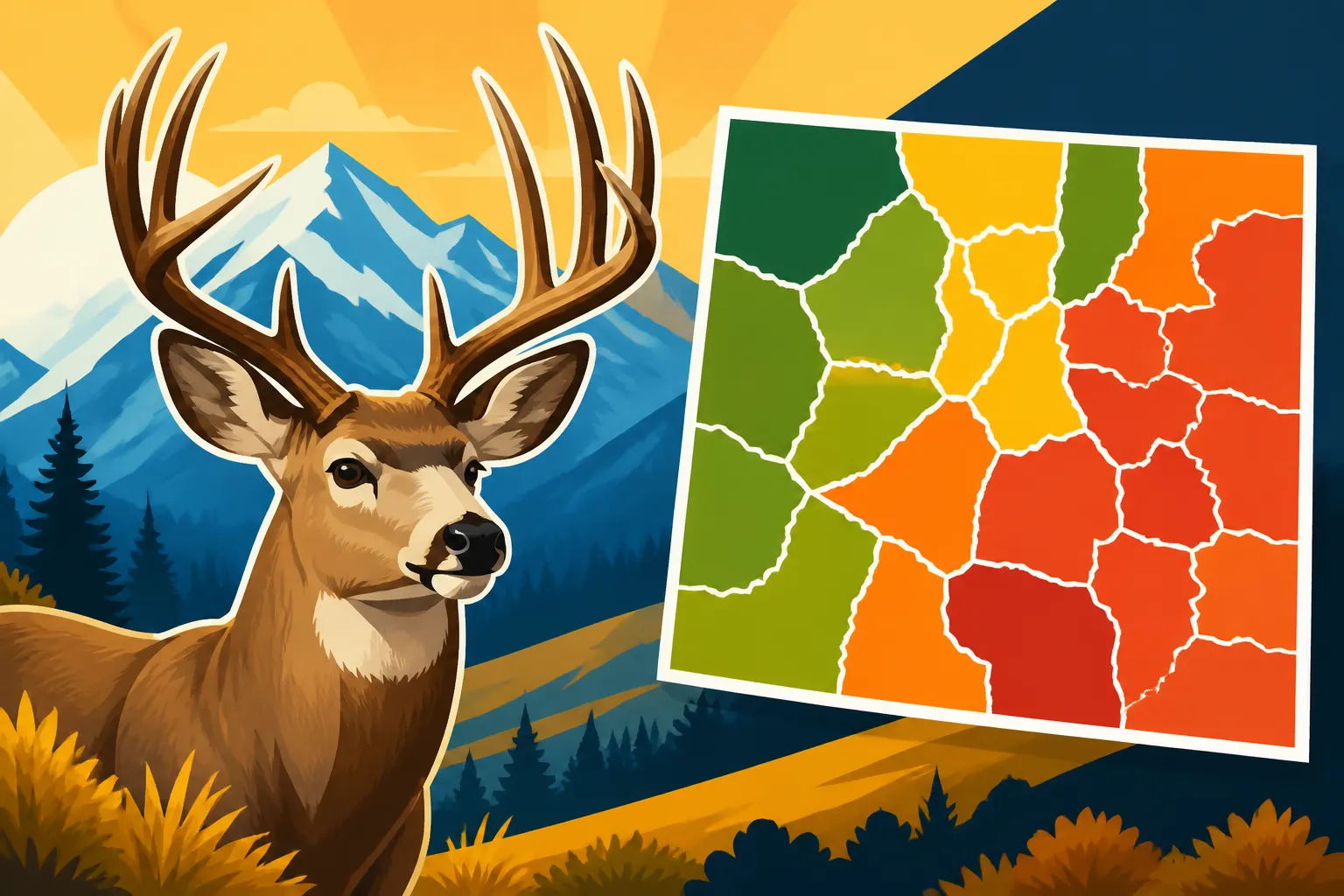
Colorado Mule Deer Trophy Potential by Unit
The dream of chasing a truly exceptional mule deer buck across the stunning Colorado landscape is a powerful one, but the sheer number of hunting units and the fluctuating quality of the herds can leave many hunters feeling overwhelmed and unsure where to focus their precious time and resources. It’s tough knowing where to start when you’re hoping to find a big, mature buck. This comprehensive guide is here to demystify Colorado’s mule deer trophy potential, offering unit-specific insights and strategies to help you narrow down your choices and increase your odds of tagging a buck of a lifetime.
Understanding Colorado's Trophy Mule Deer Landscape
Hunting mule deer in Colorado, especially when you're dreaming of a trophy, isn't just about showing up with a rifle or bow. It's about understanding the intricate dance between genetics, environment, and management that shapes these magnificent animals. Many factors contribute to a unit's ability to consistently produce big deer, and knowing these can significantly impact your hunt planning.
Defining Trophy in Colorado Mule Deer Hunting
When we talk about a "trophy" mule deer in Colorado, what does that really mean? For some, it’s about breaking into the Boone & Crockett or Pope & Young record books, which have specific antler measurements for typical and non-typical racks. For others, it’s about the sheer mass, width, or tine length that makes a buck stand out. And for many of us, a trophy is simply a mature, impressive animal that represents a challenging and rewarding hunt, regardless of its exact score. A big, old buck that has outsmarted countless hunters and battled through harsh winters is a trophy in its own right.
Ultimately, "trophy" can be a deeply personal definition. While the record books provide a benchmark, don't let them dictate your entire hunting experience. A well-earned 170-inch buck can be just as much of a trophy as a 200-inch monster if it came from a hard-fought hunt in truly wild country. What matters most is the experience, the challenge, and the connection to the landscape.
Key Factors Influencing Antler Growth
Antler growth in mule deer is a complex equation, but three primary components stand out: genetics, nutrition, and age. A buck needs good genetics to have the potential for large antlers, but without proper nutrition and the chance to live long enough to reach maturity, that potential will never be fully realized.
Genetics play a huge role. Some deer herds inherently have better genetics for antler growth than others. This isn’t something you can change, but it’s why certain areas or GMUs (Game Management Units) have a long-standing reputation for producing bigger deer. Nutrition is equally vital; bucks need a consistent supply of high-quality forage throughout the spring and summer antler-growing period. Units with diverse, fertile habitat and consistent rainfall often produce better antlers. Think about the rich, varied diets available in areas with abundant browse, forbs, and even agricultural interfaces.
Finally, and perhaps most critically for trophy potential, is age. A mule deer buck typically reaches its peak antler growth between 5.5 and 8.5 years old. This means that for a unit to consistently produce trophy-class bucks, it must have an older age structure within its buck population. Units with high hunting pressure or liberal harvest limits often see bucks harvested before they reach their full genetic potential. This is a common frustration for hunters, as you can put in all the effort, but if the management structure doesn't allow bucks to age, your odds of finding a true giant plummet.
Navigating Colorado's GMUs for Trophy Potential
Colorado boasts a vast and diverse landscape, from high alpine peaks to sprawling sagebrush flats, each offering different opportunities for mule deer hunters. Understanding how the state manages its GMUs and how to interpret available data is crucial for finding those elusive trophy bucks. This is where your homework really pays off, and it can feel like a part-time job just figuring it all out.
The Role of Preference Points and Draw Odds
Colorado’s draw system can be a head-scratcher, especially for non-residents or those new to Western hunting. For most of the premier mule deer units known for producing trophy bucks, you won't simply buy an Over-the-Counter (OTC) tag. These units are highly sought after and require accumulation of preference points over several years. Think of preference points as a loyalty program; the more points you have, the better your chances of drawing a tag in a limited-entry unit. This is especially true for coveted units like those in the northwest corner of the state, such as GMU 2 or GMU 10, which can demand a decade or more of points for a resident to draw, let alone a non-resident.
Units with high preference point requirements are usually managed for quality, meaning they have limited tags available, which in turn allows bucks to reach older age classes. This lower hunting pressure directly translates to a higher likelihood of encountering mature, trophy-sized animals. Tools like GoHunt's insider reports are invaluable for analyzing draw odds and understanding the point creep in these units, helping you decide where to invest your points. To dive deeper into how this system works, check out our guide on Colorado Draw System and Preference Points. It can feel like a game of chess, but understanding the strategy is key.
Identifying High-Potential Units
So, how do you actually identify these "high-potential" units? Beyond looking at preference point requirements, which are a strong indicator, you need to consider the unit's specific characteristics. Generally, units that are rugged, remote, and difficult to access tend to hold older, larger bucks simply because they are harder for hunters to reach. Areas with vast expanses of wilderness, thick timber, or deep canyons often provide the sanctuary a trophy buck needs to grow old.
Colorado Parks and Wildlife (CPW) harvest data, while not explicitly labeling "trophy units," provides vital clues. Look at success rates, buck-to-doe ratios, and average antler point restrictions (APRs) if applicable. A unit with a lower hunter success rate but a higher percentage of mature buck harvests, or one that consistently shows a strong buck-to-doe ratio, often indicates better trophy potential. Regions like the Flat Tops Wilderness, the San Juan Mountains, and specific high-country areas of the West Elk Wilderness are well-known for their challenging terrain and the potential for impressive deer. While I can't guarantee a trophy, these are the types of areas that often deliver the experience and opportunity. If you're looking for more general information on Colorado Mule Deer Hunting Guide, that's a great place to start.
Here’s a simplified overview of unit types and their general trophy potential:
Unit Type Preference Points Needed Typical Success Rate Trophy Potential (170"+) Access/Difficulty Notes to find out more about Colorado Elk Hunting Methods Explained and Colorado Archery Elk Hunting Guide to broaden your understanding of game behavior.
Researching and Planning Your Trophy Mule Deer Hunt
The digital age has revolutionized hunt planning, providing an unprecedented amount of data and tools at your fingertips. However, it's easy to get lost in the sea of information. The key is to know what to look for and how to interpret it effectively, and then how to combine that with real-world knowledge.
Utilizing Data and Scouting Tools
Before you even think about lacing up your boots, you should be deep into e-scouting. Start with the CPW's official resources. Their annual harvest reports provide crucial statistics on hunter success rates, harvest numbers, and even antler statistics for certain units. Look for units that consistently produce mature bucks, even if the overall success rate isn't sky-high. Sometimes a lower success rate in a limited-entry unit just means it's challenging, not that there aren't big deer. For more information, check out Colorado Mule Deer Draw Odds Explained.
Beyond official data, satellite imagery tools like Google Earth, Gaia GPS, and premium hunting apps such as onX Hunt or GoHunt are indispensable. These platforms allow you to virtually scout units, identifying potential bedding areas, travel corridors, water sources, and glassing points. Look for north-facing slopes with timber pockets, isolated benches, and areas with diverse vegetation that offer both food and cover. Identify remote areas away from roads and trails, as these often serve as sanctuaries for older bucks. Using these tools to understand the topography and plan your attack is a critical first step. For a comprehensive guide on this, read How to E-Scout Before a Colorado Hunt.
Ground Truthing and Field Scouting
No matter how many hours you spend behind a computer screen, nothing replaces boots on the ground. Field scouting in the off-season is arguably the most critical component of a successful trophy mule deer hunt. You need to verify what you saw on the map, understand the terrain in person, and look for fresh sign. Plan a trip during late spring or summer to the units you’re considering. This allows you to observe deer in their summer patterns, locate bachelor groups of bucks, and identify key resources they rely on before hunting pressure changes their behavior.
During your scouting trips, pay close attention to water sources, mineral licks, and preferred food sources. Look for shed antlers from previous seasons, which can give you an idea of the caliber of bucks in the area. Take photos, drop pins on your GPS, and make detailed notes. While deer behavior will change when hunting season arrives, understanding the general layout and identifying high-quality habitat will give you a significant advantage. This intense commitment to scouting is often what separates those who consistently find trophy bucks from those who just hope for a lucky encounter.
Tactics for Hunting Trophy Mule Deer in Colorado
Once you've done your research and possibly even scouted the unit, it's time to think about the actual hunt. Trophy mule deer are notoriously wary and intelligent, requiring a methodical and patient approach. You can't just wander around hoping to stumble onto a giant.
Spot and Stalk Mastery
For trophy mule deer in Colorado's vast and open landscapes, the spot-and-stalk method is king. This technique relies heavily on quality optics and immense patience. You’ll spend far more time glassing than walking, systematically dissecting mountainsides, basins, and timber edges from a vantage point. Invest in good binoculars (10x or 15x), a high-power spotting scope (20-60x or higher), and a sturdy tripod. These aren't just luxuries; they're essential tools that allow you to identify deer at extreme distances and, more importantly, determine if they are the caliber of buck you're after. For a deeper dive into this technique, our article on Colorado Mule Deer Hunting: Spot-and-Stalk Tactics is a must-read.
Once you spot a desirable buck, the real challenge begins: planning and executing the stalk. This involves carefully analyzing the terrain, wind direction, and the deer's behavior. You'll need to use every ripple and fold of the land for cover, move slowly and deliberately, and be prepared to wait for hours for the buck to move into a favorable position. The mountains often have tricky, swirling winds, so constantly monitoring conditions is crucial to prevent your scent from giving you away. This chess match between hunter and buck in vast, unforgiving terrain is what makes mule deer hunting so incredibly addictive.
Understanding Mule Deer Behavior and Habitat
To consistently find trophy mule deer, you need to understand their patterns and preferences. Mule deer thrive in broken, rugged country, utilizing a mosaic of sagebrush, bitterbrush, aspen groves, and conifer timber. They are masters of using topography to their advantage, often bedding on benches or in thick cover where they can see danger coming from below. Knowing their preferred habitat types and where to focus your glassing efforts can save you countless miles and hours. This is why our piece on Colorado Mule Deer Habitat Explained is so valuable.
Furthermore, paying attention to wind and thermals is non-negotiable in the mountains. Cold air sinks, and warm air rises, creating predictable air currents that change throughout the day. In the mornings, thermals often rise, carrying your scent uphill. In the evenings, they typically fall, pushing your scent downhill. You must plan your approach and ambush points around these natural air movements to avoid being detected. During the rut, typically in late November, buck behavior shifts dramatically as they become focused on does, often throwing caution to the wind. Understanding this behavioral change can present unique opportunities for a trophy buck, which we cover extensively in Colorado Mule Deer Rut Explained. Being adaptable and patient, and truly understanding the animals you're pursuing, is the hallmark of a successful trophy hunter.
Disclaimer
Please remember that hunting regulations, season dates, and unit boundaries are subject to change by Colorado Parks and Wildlife (CPW). Always consult the most current CPW regulations and official hunting brochures before planning any hunt. This guide is for informational purposes only and does not guarantee hunting success.