Colorado Mule Deer: Where to Find Them
Hunting mule deer in Colorado can feel like searching for a needle in a haystack, especially with the state's vast and varied landscapes. Many hunters, both seasoned and new, struggle to pinpoint reliable areas for these elusive creatures, often spending precious time in unproductive terrain. This comprehensive guide will break down where Colorado's magnificent mule deer typically reside, helping you understand their habitat preferences across different seasons and geographic regions so you can plan your next hunt with confidence.
Understanding Colorado Mule Deer Habitat Preferences
Mule deer are incredibly adaptable animals, but they certainly have their favorite stomping grounds, and these can shift dramatically throughout the year based on forage availability, weather, and hunting pressure. Knowing these preferences is the first step in narrowing down your search in such a vast state.
High-Country Summer Ranges
When the snow melts and the high country bursts with lush growth, mule deer, particularly bucks, will head for the cool, nutrient-rich alpine and subalpine environments. We're talking about elevations from 9,000 feet all the way up to timberline, sometimes even higher. During the summer, these deer are focused on packing on as much fat and growing those impressive antlers, and the high country provides abundant forage and cooler temperatures, which is crucial for their metabolism.
You’ll often find them tucked into north-facing timbered slopes where the snow lingers longer, keeping the ground moist and forage green. They’ll also frequent the edges of expansive alpine basins, feeding in meadows during the early morning and late evening, then retreating into the thick dark timber or aspen groves for bedding during the heat of the day. This is prime habitat before the hunting seasons kick into full swing, offering relative tranquility and a smorgasbord of forbs and grasses. For those adventurous souls looking for a true backcountry experience, understanding how to locate these areas is key, as highlighted in our guide on Colorado Backcountry Hunting Guide.
Mid-Elevation Fall and Winter Haunts
As autumn progresses and the first snows dust the high peaks, mule deer begin their annual migration from their lofty summer ranges down to lower elevations. This is a crucial period for hunters, as deer become more concentrated and their patterns become a bit more predictable, though still challenging. Their primary drivers are forage availability and snow depth. They need to find areas where they can easily access food and escape deep snow, which hinders their movement and exposes them to predators.
You’ll find them moving into the vast pinyon-juniper forests, oak brush thickets, and sagebrush benches that typically sit between 6,000 and 9,000 feet. South-facing slopes are gold in the fall and winter, as they receive more sunlight, melting snow faster and providing accessible browse. These areas offer both food and crucial thermal cover. River bottoms and drainages at these elevations also become important travel corridors and feeding zones. The timing of these migrations can vary year to year based on weather patterns, but generally, by the later rifle seasons, many deer will have started their downward trek. Our article on Colorado Mule Deer Migration delves deeper into this fascinating and critical aspect of mule deer behavior.
Eastern Plains and River Bottoms
While many envision Colorado mule deer as mountain dwellers, don’t overlook the Eastern Plains. Here, mule deer thrive in riparian corridors, especially along major river systems like the South Platte, Republican, and Arkansas rivers, and their various tributaries. These river bottoms often feature lush cottonwood groves, dense willow thickets, and agricultural fields that provide ample food and cover in an otherwise open landscape.
The habitat here is markedly different from the mountains, but the principles remain: deer need food, water, and cover. In these areas, they often stick close to the dense riverine habitat for security, venturing into adjacent crop fields or sagebrush flats to feed. This can present unique hunting challenges and opportunities, often requiring different tactics than those employed in the high country. For those considering hunting in these regions, our guide on Colorado Plains Rifle Season Explained offers valuable insights into the regulations and conditions you might encounter.
Key Geographic Regions for Mule Deer in Colorado
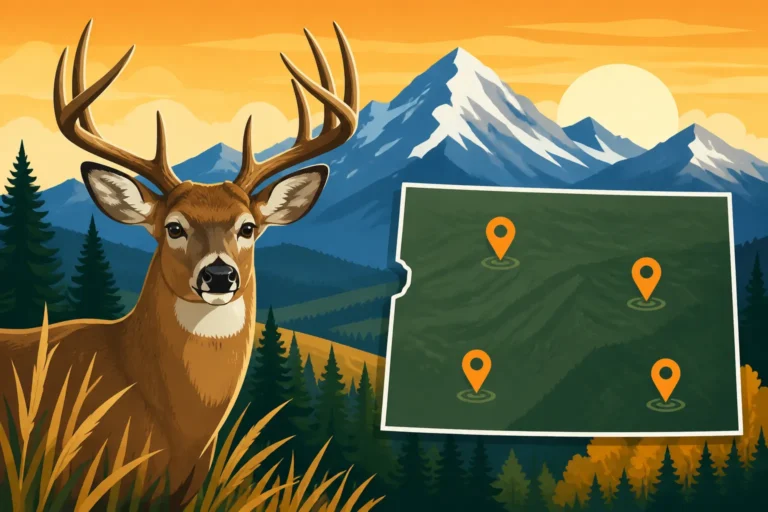
Colorado is a big state, and while mule deer are widely distributed, certain regions are particularly renowned for their populations and potential for a quality hunt. Understanding these broader regions can help you narrow down your focus when looking at specific game management units (GMUs).
Western Slope Giants: Piceance Basin, Flat Tops, and Surrounding Areas
When you talk about mule deer in Colorado, the Western Slope often comes up first, and for good reason. Areas like the Piceance Basin and the Flat Tops Wilderness are legendary. The Piceance Basin, located in northwest Colorado, is known for its vast expanses of sagebrush, pinyon-juniper, and draws that provide excellent habitat. It supports one of the largest mule deer herds in North America. These deer are often found in relatively open country, making glassing an essential skill here, as explored in our guide on How to Glass for Colorado Mule Deer.
Further east, the Flat Tops Wilderness Area and the surrounding national forest lands offer a mix of high alpine meadows, dark timber, and expansive aspen forests. During the summer and early fall, deer are spread throughout the high country, but as seasons progress, they concentrate in migration corridors and winter range lower down. The sheer size and ruggedness of these areas mean fewer hunters penetrate the remote reaches, offering opportunities for those willing to put in the effort. For a deeper dive, check out our Flat Tops Hunting Guide.
Southwest San Juans and Uncompahgre Plateau
Moving south, the San Juan Mountains and the Uncompahgre Plateau present another incredible landscape for mule deer. The San Juans are characterized by extremely rugged, high-elevation terrain, dense conifer forests, and beautiful alpine basins. Deer here are tough and often found in steep, unforgiving country. This region demands physical fitness and robust gear, perfect for those who enjoy a strenuous hunt.
The Uncompahgre Plateau, west of Montrose, is a massive uplift characterized by vast expanses of pinyon-juniper, ponderosa pine, and oak brush. It offers varied terrain from canyons to mesa tops and is a consistent producer of quality deer. Similar to the Piceance, glassing is paramount here. Both the San Juans and Uncompahgre are known for healthy mule deer populations, but success often hinges on scouting, physical conditioning, and adapting to the challenging mountain environment. Consider our tips on Colorado Elk Hunting: Backcountry Tactics for overlap in challenging terrain strategies.
Central Mountains and Front Range Foothills
Don't discount the Central Mountains, like the Sawatch Range, or even the foothills bordering the Front Range. While these areas often experience more human pressure due to proximity to population centers, they still hold significant numbers of mule deer. Here, you'll find deer in a mosaic of aspen groves, pine forests, and rocky outcrops. They often utilize thick cover and broken topography to evade detection.
Hunting these areas often means adapting to more fragmented public land access or focusing on smaller, overlooked pockets. It's not always about finding the largest bucks, but often about finding accessible hunting close to home that can still provide a rewarding experience. Successful hunters in these areas often prioritize understanding how deer react to pressure and find hidden pockets of habitat. This region can be a great place for beginners to gain experience without traveling too far, as discussed in our piece on Colorado Mule Deer Hunting for Beginners.
How to Pinpoint Productive Mule Deer Areas
Finding where mule deer are broadly is one thing; figuring out exactly where to hunt them is another entirely. This requires dedicated research and careful interpretation of data and on-the-ground sign.
Utilizing E-Scouting Tools
In this day and age, e-scouting has become an indispensable tool for hunters, allowing us to virtually explore vast landscapes from the comfort of our homes. Platforms like GoHunt, OnX Hunt, and Google Earth are game-changers. With GoHunt, for example, you can overlay public and private land boundaries, identify different vegetation types, pinpoint water sources, and even see terrain features like saddles, ridges, and north-facing slopes that mule deer favor.
Start by looking at the broader GMU data (which you can often find through GoHunt's detailed unit profiles) to understand historical success rates and population trends. Then, zoom in. Look for areas with a good mix of dense cover (like conifer forests or thick oak brush), open feeding areas (alpine meadows or sage flats), and reliable water sources. Identifying these key elements on a map before you ever set foot in the field can save you days of unproductive hiking. Our article on How to E-Scout Before a Colorado Hunt offers a more in-depth tutorial.
Decoding Migration Patterns and Seasonal Movements
Mule deer are highly influenced by the seasons, and understanding their movement patterns is critical for knowing where to find them at different times of the year. During the early archery seasons, many bucks will still be in their high-elevation summer ranges, often solitary or in small bachelor groups. As the temperatures drop and fall progresses into the rifle seasons, they begin their descent to winter range. This migration can be gradual or quite rapid, spurred by heavy snowfalls.
Knowing when and where deer migrate requires research into specific herd units and their historical migration routes. Colorado Parks and Wildlife (CPW) often publishes maps or data on critical winter range and migration corridors. These "pinch points" can be incredibly productive during migration seasons, as deer funnel through narrower bands of habitat. Pay close attention to south-facing slopes during late seasons, as these areas provide crucial forage once the high country is snow-bound.
Reading the Landscape for Sign
No amount of e-scouting can replace boots on the ground, but knowing what to look for when you're out there is vital. Mule deer leave plenty of clues about their presence and activities. Fresh tracks, especially those leading to and from bedding or feeding areas, are obvious indicators. Look for rubs on small trees or bushes, where bucks have scraped their antlers, signaling a buck's presence and activity. Scrapes, though less common than with whitetails, can also indicate a buck's territory, particularly as the rut approaches.
Droppings (pellets) can tell you about their diet and how recently deer have been in an area. Bedding areas, often found on sheltered benches or in dense thickets overlooking open areas, are also key. Mule deer often choose beds that offer good visibility downwind and thick cover to break up their outline. Finding these signs, especially when fresh, confirms that deer are actively using an area and helps you predict their movements.
Here's a quick reference for general mule deer locations and preferred habitats:
| Season | Typical Elevation Range | Preferred Habitat Types | Key Geographic Regions (Examples) | Common Deer Activity |
|---|---|---|---|---|
| Summer | 9,000 ft – Timberline | Alpine/Subalpine meadows, North-facing timber, Aspen | Flat Tops, San Juans, Sawatch | Feeding, Antler growth, Bachelor groups |
| Early Fall | 7,000 ft – 10,000 ft | Mixed conifer, Aspen, Oak brush, Pinyon-Juniper | Western Slope, Central Mountains | Feeding, Starting to migrate |
| Late Fall | 6,000 ft – 9,000 ft | Pinyon-Juniper, Sagebrush, Oak brush, South-facing | Piceance Basin, Uncompahgre Plateau | Migration, Rut activity, Seeking cover |
| Winter | 5,000 ft – 7,500 ft | Sagebrush flats, River bottoms, South-facing slopes | Eastern Plains, Lower Western Slope | Seeking food/cover, Conserving energy |
This table provides a general framework, but remember that local conditions and specific herd dynamics can always lead to variations. For more detailed information on specific units and their deer populations, sources like Colorado Parks and Wildlife and hunter-specific platforms like GoHunt are invaluable. Ultimately, combining robust e-scouting with on-the-ground reconnaissance and a deep understanding of mule deer biology will significantly increase your odds of finding these majestic animals in Colorado.
Disclaimer
Please be aware that hunting regulations and land access can change. Always consult the most current Colorado Parks and Wildlife regulations and verify land boundaries before any hunting activity. This guide is for informational purposes only and does not guarantee hunting success.