Flat Tops Hunting Guide
For many hunters, the very mention of the Flat Tops Wilderness Area evokes a mix of awe and apprehension. It's a place of legendary elk numbers and breathtaking vistas, but its sheer size and rugged, roadless nature can feel incredibly daunting, leaving you wondering where on earth to begin. This guide aims to peel back the layers of this magnificent Colorado hunting ground, offering practical advice, strategic insights, and a clear path to planning a successful and unforgettable hunt in the Flat Tops.
The Grandeur and Challenges of the Flat Tops Wilderness
The Flat Tops Wilderness, encompassing over 235,000 acres, is Colorado's second-largest wilderness area and a crown jewel for those seeking a true backcountry experience. It's a place where you can genuinely feel small, surrounded by immense landscapes and the quiet hum of nature. But with that grandeur comes unique challenges that every hunter needs to understand and respect.
A Landscape Unlike Any Other
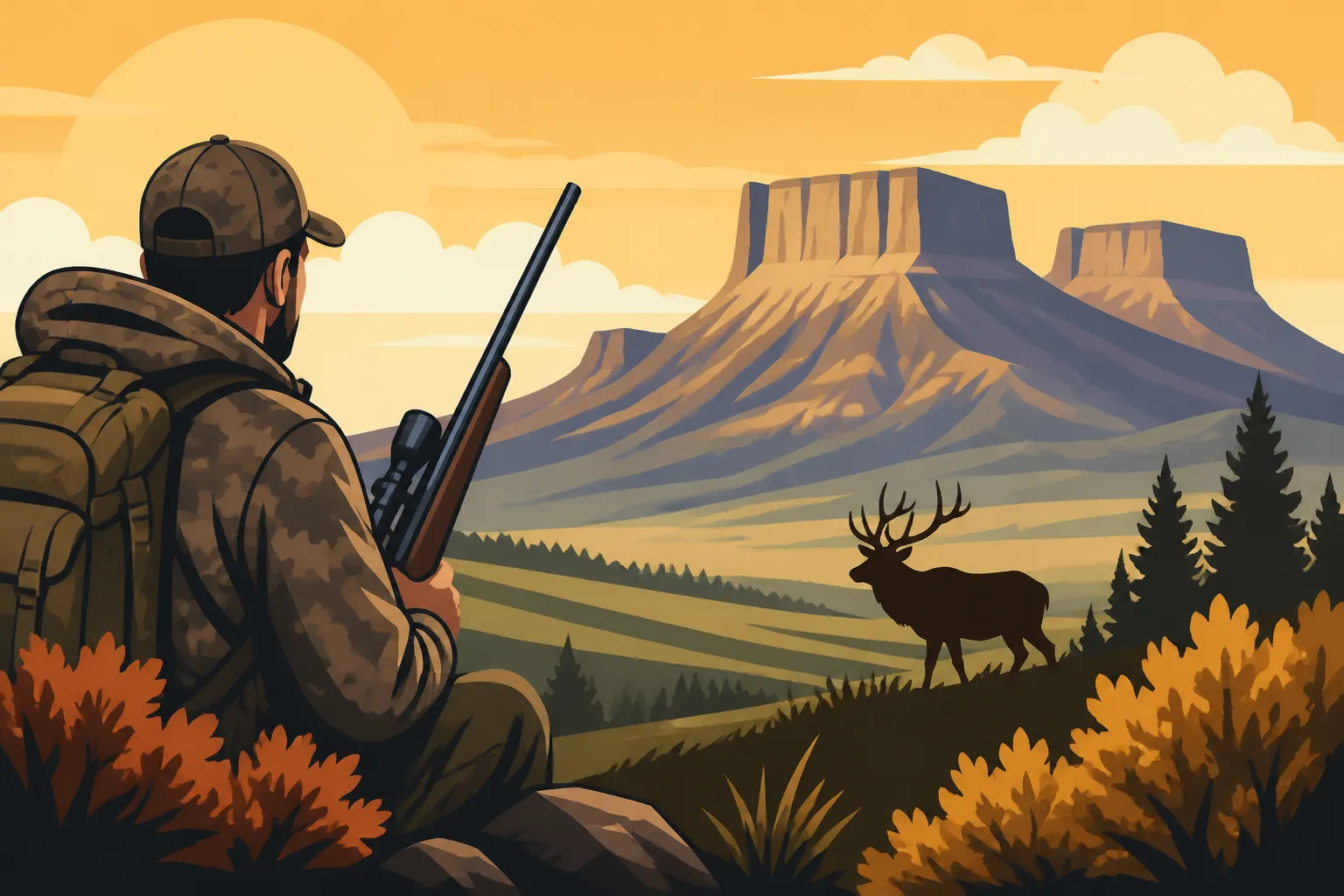
Unlike many of Colorado's jagged, distinct peaks, the Flat Tops are characterized by vast, undulating plateaus, ancient lava flows that solidified into immense, flat-topped mesas. These "flattops" are interspersed with deep, timbered drainages, open sagebrush parks, and a network of sparkling alpine lakes and streams. Imagine miles upon miles of high country, much of it above 10,000 feet, where the horizon seems to stretch on forever. This isn't your typical front-range hiking trail; this is truly wild country, a place where a compass and map, or a reliable GPS like onX Hunt, become indispensable tools, not just novelties.
The unique geology means that while the tops might be relatively flat, the edges plunge dramatically into canyons and basins, creating a complex, varied habitat. Thick stands of spruce and fir provide critical cover and thermal regulation for wildlife, especially during adverse weather, while the open parks offer prime feeding grounds. The sheer scale can be overwhelming, making it difficult to pinpoint where to even start looking for game, but it also means there's always new country to explore. This vastness is both the Flat Tops' greatest draw and its biggest hurdle.
Understanding the Terrain and Elevation
Hunting in the Flat Tops isn't just about finding animals; it's about mastering the vertical. The average elevation across the wilderness area hovers around 10,000 feet, with many plateaus and ridges pushing towards 11,000 to 12,000 feet. This isn't just a number on a map; it's a factor that will profoundly impact your physical exertion, your breathing, and even your decision-making. Acclimating to this altitude is crucial, and we can’t stress enough the importance of Altitude Training for Colorado Hunting before you even set foot on the trail.
The terrain itself varies from gentle slopes on the plateaus to incredibly steep, broken country in the drainages leading off the tops. Expect to navigate thick downfall, navigate slippery wet meadows, and traverse rocky scree fields. The "dark timber" – those dense stands of spruce and fir – can be incredibly difficult to move through quietly, especially when the ground is dry, but it's also where elk often seek refuge, particularly during hunting pressure. Understanding how animals utilize these different features – using the timber for bedding, the parks for feeding, and the breaks for travel – is key to developing a sound hunting strategy. You’ll spend a lot of time evaluating these features, even just in your e-scouting phase.
Prime Game Species of the Flat Tops
While the Flat Tops holds various species, two stand out as the undisputed kings of this domain for hunters: elk and mule deer. The area is renowned for its healthy populations, offering some of the best opportunities in Colorado.
Elk Hunting in the Flat Tops
The Flat Tops Wilderness Area is, without exaggeration, one of the premier elk hunting destinations in Colorado, if not the entire West. It boasts one of the largest elk herds in the world, with estimates often ranging well into the tens of thousands. This means you're not just hunting elk; you're hunting in elk country, where the chances of encountering these magnificent animals are significantly higher than in many other units.
During the archery and muzzleloader seasons, particularly during the rut, the Flat Tops comes alive with the sounds of bugling bulls echoing across the basins. This is a magical time, but it also requires specific tactics, as detailed in our Colorado Elk Hunting Methods Explained guide. Later, during the rifle seasons, elk often move into the thickest timber or down into lower elevations as pressure mounts and snow begins to fall. Hunting the Flat Tops during any season demands physical fitness, mental toughness, and a willingness to get away from the roads. While not necessarily a "trophy unit" in the same vein as some draw-only areas, the sheer number of elk means that opportunities for mature bulls exist for those willing to work for them. For many, a Flat Tops elk hunt is a quintessential Colorado experience, focusing on effort, immersion, and the thrill of the chase rather than just antler size.
Mule Deer and Other Big Game Opportunities
While elk often steal the spotlight, the Flat Tops also supports a robust mule deer population. These high-country deer are often found in different habitats than elk, favoring more open slopes, aspen groves, and rocky areas, though they will certainly share timbered areas. Spot-and-stalk hunting is often the most effective method for mule deer in this terrain, requiring keen glassing skills and patience. Finding a mature mule deer buck in the Flat Tops is a challenging but incredibly rewarding pursuit. Many hunters will target both species, hoping for a "combo" opportunity, which requires even more extensive scouting and adaptability.
Beyond elk and mule deer, black bears are also present throughout the Flat Tops. While not as numerous as elk, bear tags are often available OTC or with minimal points, offering an additional hunting opportunity, especially for those looking to round out a fall hunt. Moose sightings, while rare, do occur, particularly in the northern reaches of the wilderness, but these are typically draw-only tags with extremely long odds. Always check the current Colorado Parks and Wildlife (CPW) regulations for specific unit designations and tag availability before planning your hunt.
To give you a clearer picture of potential seasons and species in the Flat Tops, here's a brief overview:
| Season Type | Primary Species | Typical Experience | Tag Type (General) | Notes |
|---|---|---|---|---|
| Archery (Late Aug-Sept) | Elk, Mule Deer | Rut activity, bugling bulls, more spread out animals | OTC or Draw (depending on unit) | High physical demand, calling tactics essential. |
| Muzzleloader (Mid-Sept) | Elk, Mule Deer | Overlaps with archery rut, limited entry | Draw Only (often high points) | Specific weapon regulations, often good weather. |
| 1st Rifle (Mid-Oct) | Elk, Mule Deer | Often good weather, bulls still vocal early, less pressure | Draw Only (often high points) | Good for quality, but tags are harder to get. |
| 2nd Rifle (Late Oct) | Elk, Mule Deer | High pressure, migration starting, animals moving | OTC (for specific units) or Draw | Most popular season, can be very competitive. |
| 3rd Rifle (Early Nov) | Elk, Mule Deer | Cooler temps, snow likely, animals moving lower | OTC (for specific units) or Draw | Good opportunity as animals move towards winter range. |
| 4th Rifle (Mid Nov) | Elk, Mule Deer | Cold, snow, late migration, challenging conditions | Draw Only (often high points) | Fewer hunters, often bigger bulls if you can brave it. |
| Black Bear (Fall) | Black Bear | Spot and stalk in fall, often coincides with elk/deer | OTC (with qualifying elk/deer tag) | Good add-on opportunity, check specific dates. |
Disclaimer: This table provides general information. Always consult current Colorado Parks and Wildlife regulations for exact dates, hunt codes, and tag requirements.
Navigating and Accessing This Vast Wilderness
Accessing the Flat Tops isn't like pulling off an interstate and walking into the woods. This is serious backcountry, and getting there requires planning, appropriate vehicles, and a deep respect for the wilderness ethic.
Key Access Points and Trailheads
Most access to the Flat Tops Wilderness is via US Forest Service roads, many of which can be rough, especially after heavy rains or early snow. Common entry points are found from towns like Meeker to the west, Yampa and Phippsburg to the east, and Glenwood Springs to the south. Each side offers distinct entry points, like the popular Trapper's Lake, Marvine Lakes, and Ripple Creek areas. These areas serve as trailheads, but don't expect paved parking lots or visitor centers. You'll often find primitive campgrounds or designated parking areas where you'll leave your vehicle, sometimes for days or even a week.
The drive itself can be a significant part of the journey. For instance, getting to Trapper's Lake from the east involves traversing the scenic but sometimes challenging Flat Tops Trail Scenic Byway (FSR 16). Always check current road conditions, especially if you're planning a late-season hunt, as many of these roads close with the first significant snowfall. A good 4×4 vehicle with decent ground clearance is highly recommended, and always have a full-size spare and recovery gear. Remember, once you leave the trailhead, all mechanized travel (including mountain bikes and ATVs) is prohibited within the wilderness boundary. Your feet, or a trusty horse, are your only modes of transport. This makes Colorado Backcountry Hunting Guide an invaluable resource.
Wilderness Regulations and Restrictions
Hunting in a designated Wilderness Area comes with a specific set of rules designed to preserve its wild character. As mentioned, no motorized or mechanized travel is allowed beyond the wilderness boundary. This means you need to be prepared to pack everything you need in, and everything you take (including your game) out on your own power. This includes the challenging task of How to Pack Out an Elk in Colorado, which can take multiple trips and incredible effort.
"Leave No Trace" principles are paramount here. Pack out all trash, human waste should be buried properly, and campfires might be restricted during dry periods. Always check for current fire bans before heading out. Camping is generally allowed, but dispersed camping regulations apply, meaning you need to be a certain distance from water sources and trails. These regulations aren't just bureaucratic red tape; they are crucial for maintaining the pristine environment that makes the Flat Tops such an incredible hunting destination. Disregarding them not only harms the wilderness but can also result in hefty fines and a loss of hunting privileges.
The Role of E-Scouting and Physical Maps
Given the immense scale and remote nature of the Flat Tops, effective pre-hunt scouting, often called e-scouting, is not just helpful—it's essential. Tools like onX Hunt are game-changers for identifying potential hunting areas, understanding terrain features, locating water sources, and pinpointing wilderness boundaries and private land parcels that might be interspersed with public access. You can mark waypoints, measure distances, and visualize the topography from the comfort of your home. Services like GoHunt also provide invaluable data on draw odds, unit statistics, and harvest reports, helping you refine your initial unit selection even if you're pursuing an over-the-counter tag.
However, relying solely on electronic devices in the wilderness is a rookie mistake. Batteries die, signals get lost, and technology can fail. Always carry a physical map (like USGS topo maps or a quality national forest map) and a compass, and know how to use them. Mark your route, potential camp spots, and significant terrain features on your paper map. This combination of digital and analog navigation creates a robust, reliable system for navigating the Flat Tops. You can dive deeper into this topic with our guide on How to E-Scout Before a Colorado Hunt.
Effective Hunting Strategies in the Flat Tops
Hunting the Flat Tops successfully is a marathon, not a sprint. It demands careful planning, physical conditioning, and adaptable on-the-ground tactics to truly connect with game in such a vast and wild setting.
Backcountry Hunting and Spike Camps
The sheer size of the Flat Tops means that merely hunting from your truck at a trailhead is often a recipe for frustration. The animals, especially elk, quickly learn to retreat deep into the roadless country away from human pressure. To consistently find success, you need to be willing to get deep. This often necessitates a true backcountry hunt, where you pack in all your gear and establish a spike camp miles from the nearest road.
A spike camp isn't meant to be luxurious; it's functional. Think lightweight tent, sleeping bag, stove, dehydrated food, and essential hunting gear. The goal is to spend multiple days living and hunting within the game's core habitat, reducing travel time to and from a base camp and allowing you to be in the woods at first and last light. Planning for a spike camp involves meticulous gear selection, understanding what you truly need versus what's a luxury, and managing your water and food supply for the duration. Our guide on How to Set Up a Colorado Spike Camp can provide detailed insights into making this critical part of your hunt effective. This method, while demanding, significantly increases your chances of finding unpressured animals and gives you a much richer, more immersive hunting experience.
Still-Hunting the Dark Timber and Open Parks
The Flat Tops presents a blend of dense timber and expansive open parks, requiring hunters to be versatile in their tactics. Elk, particularly after initial hunting pressure, often seek refuge in the deep, dark timber, which can feel impenetrable. Still-hunting these areas – moving incredibly slowly, pausing to listen, glass, and scan for subtle signs – is a highly effective method. This involves covering ground quietly, utilizing the wind to your advantage, and carefully studying every patch of trees for a horizontal line that shouldn't be there, or a patch of hide. Success in the timber often comes down to patience, stealth, and a keen eye. Referencing How to Hunt Elk in the Dark Timber can give you a deeper understanding of this challenging but rewarding technique.
Conversely, the open parks and large basins that dot the plateau are prime areas for glassing. Early in the morning and late in the evening, elk and mule deer will often move into these areas to feed. Finding a vantage point that overlooks a large expanse of country, then systematically breaking it down with your binoculars and spotting scope, can reveal animals you would otherwise walk past. This tactic requires patience and good optics. You might spend hours glassing before spotting a distant herd, then initiating a carefully planned stalk. Blending these two approaches – methodical still-hunting through timber and patient glassing of open country – is often the key to unlocking the Flat Tops' secrets.
Water Sources and Migration Corridors
In any western hunting scenario, water is life, and the Flat Tops is no exception. Identifying reliable water sources like springs, small creeks, and wallows (muddy depressions where elk cool off and cover themselves in mud) can be a magnet for game, especially during dry years or periods of high heat. Pay close attention to these features during your e-scouting and on-the-ground reconnaissance. They often provide valuable clues about animal presence and movement patterns.
As the seasons progress and hunting pressure mounts, or as the first significant snows begin to fall, elk and deer will start to migrate from their high-country summer ranges to lower-elevation wintering grounds. Understanding these migration corridors – the natural pathways animals use to move between different habitats – can put you in a prime position. These corridors often follow ridge lines, saddles, and drainages. While it's nearly impossible to predict the exact timing of migration, knowing the general routes animals take can inform your hunting strategy, allowing you to intercept animals as they move. This is particularly true during the later rifle seasons when a major snowstorm can "push" animals out of the highest country. This knowledge of animal movement, combined with a good understanding of the terrain, is a powerful tool for Colorado DIY Elk Hunting Guide.
Disclaimer
Hunting is an inherently dangerous activity. This guide provides general information for educational purposes only and is not a substitute for professional instruction, thorough research, or adherence to all local, state, and federal hunting regulations. Always consult the most current Colorado Parks and Wildlife (CPW) regulations, secure appropriate licenses and tags, and prioritize safety above all else. Hunt ethically, responsibly, and be prepared for all potential hazards and emergencies in the backcountry.