Hunting the Colorado Flat Tops for Elk
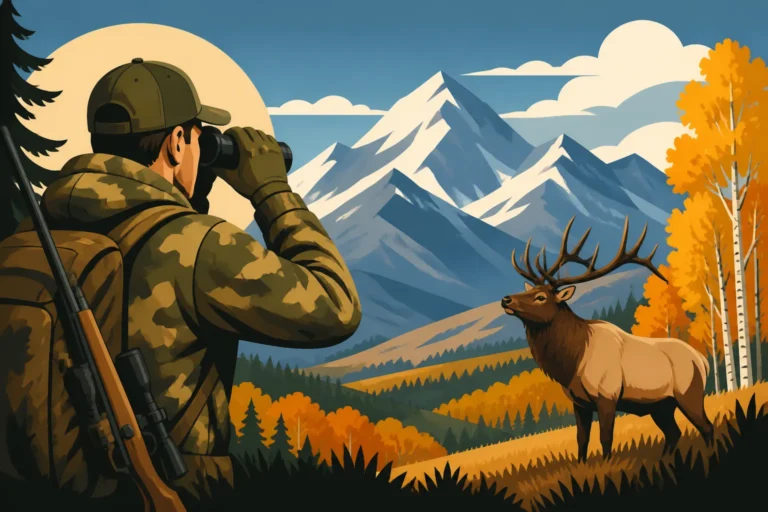
Dreaming of chasing elk in some of Colorado's most breathtaking, rugged, and truly wild country? The Flat Tops Wilderness Area calls to many, but its vastness and remote nature can feel incredibly overwhelming. This guide aims to demystify hunting the Colorado Flat Tops for elk, helping you understand its unique challenges and unlock its incredible potential, whether you're planning your first trip or looking to refine your approach.
Unveiling the Majesty and Challenges of the Flat Tops Wilderness
The Flat Tops Wilderness Area, spanning over 235,000 acres across the White River and Routt National Forests, is a crown jewel of Colorado's high country. It's the second-largest wilderness area in Colorado, renowned for its distinctive flat-topped mesas (remnants of an ancient volcanic plateau), interspersed with deep canyons, pristine alpine lakes, and vast timbered basins. This isn't just a place to hunt; it's an experience in true wilderness, where the trails often fade, and cell service is a distant memory. The sheer scale and remoteness are both its greatest allure and its most significant challenge.
The Unique Geography and Ecosystem
Imagine mile after mile of rolling, tundra-like plateaus that suddenly drop off into dark timber and steep canyons. This is the essence of the Flat Tops. Elevations typically range from 8,000 feet in the lower valleys to over 12,000 feet on the highest mesas, like Flat Top Mountain itself. This extreme vertical relief creates incredibly diverse habitats. You'll find expansive sagebrush flats transitioning into aspen groves, then dense spruce-fir forests, and finally reaching above timberline into the fragile alpine tundra. This diversity means elk can spread out widely, utilizing different elevations and cover types throughout the seasons and even within a single day. The numerous lakes and perennial streams, fed by snowmelt, provide critical water sources that also attract and hold elk. Understanding this layered ecosystem is paramount to understanding how elk move and behave within it.
Wilderness Area Regulations and Ethics
Hunting within a designated Wilderness Area carries specific rules and a heightened ethical responsibility. Motorized vehicles, including ATVs and even mountain bikes, are strictly prohibited. This means any access beyond the trailhead must be on foot or horseback. Drones are also not allowed. Minimum impact camping principles are paramount – pack it in, pack it out, bury human waste, and avoid cutting live trees for firewood. When you’re packing out your elk, you're doing it under your own power, often with pack animals or a heavy backpack. This commitment to self-reliance is a huge part of the Flat Tops experience, but it also demands meticulous planning and physical preparation. It's not just about adhering to regulations, but about respecting the untamed nature of the land and preserving it for future generations.
Elk Behavior and Movement Patterns in the Flat Tops
Elk are creatures of habit, but also incredibly adaptive, especially in a dynamic environment like the Flat Tops. Their movements are largely dictated by forage availability, water sources, cover, hunting pressure, and, of course, the changing seasons. Success here often hinges on your ability to predict these movements and position yourself accordingly.
Seasonal Migration and Habitat Use
The Flat Tops sees significant elk migration. In the early archery and muzzleloader seasons, often in late August and early September, elk are generally higher up. They're enjoying the lush summer forage in the alpine basins and timbered benches just below the plateaus. During this time, they're relatively undisturbed, focusing on feeding and building up fat reserves. As the rut approaches in mid-September, bulls become more vocal and aggressive, moving into traditional breeding grounds, often in or near timberline, where they can gather cows and still have escape cover.
As the rifle seasons progress, especially after the first snows start to fall, elk begin their descent to lower elevations. They'll utilize the dark timber for cover and warmth, seeking south-facing slopes that get more sun exposure to melt snow and expose forage. Later in the season, during the third and fourth rifle hunts, they might be found much lower, often near private land boundaries or in areas with less snow and more accessible browse. Knowing these broad patterns is your first step in narrowing down where to focus your efforts. A tool like GoHunt can be invaluable for looking at historical harvest data and public/private land ownership to identify these seasonal hotspots.
The Impact of Hunter Pressure
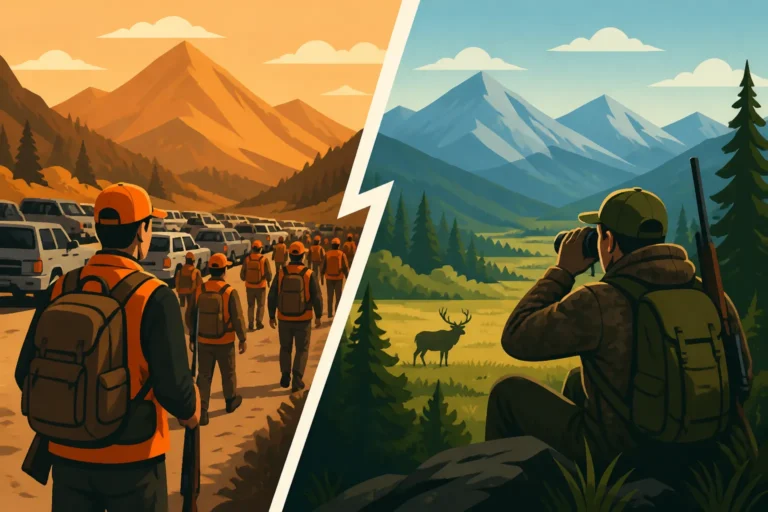
Let's be real: the Flat Tops, especially areas with easily accessible trailheads like those around Ripple Creek Pass or Trappers Lake, see significant hunter pressure. This isn't a secret, hidden gem anymore, but its sheer size means opportunities still abound for those willing to work. During the peak rifle seasons, elk will quickly adapt to human presence. They'll move into the thickest, darkest timber, especially north-facing slopes, or seek refuge in the deepest canyons and roadless areas. They become almost entirely nocturnal, feeding under the cover of darkness and bedding down in impenetrable cover during the day.
Your strategy must evolve with this pressure. Early in the season, you might find elk grazing more openly. Later, you'll need to focus on still-hunting the timber, checking saddles and benches between bedding and feeding areas, or even exploring the fringes of designated wilderness zones where fewer hunters venture. Understanding How to Hunt Elk on Public Land Pressure is a skill that will serve you well here, as it's a constant factor.
| Season | Typical Elk Location | Primary Strategy | Key Considerations |
|---|---|---|---|
| Early Archery/Muzzy | High alpine basins, timberline fringes | Spot-and-stalk, bugling | Elk are relaxed, good for calling; weather can be mild. |
| Peak Rut (Archery/1st Rifle) | Timbered canyons, benches, traditional rutting areas | Calling, covering ground to locate bulls | Bulls are vocal, but also pressured. |
| Mid-Season (2nd Rifle) | Deeper timber, north-facing slopes, transition zones | Still-hunting, glassing cuts, ambushing | Elk are pressured and seek cover; expect snow. |
| Late Season (3rd/4th Rifle) | Lower elevation winter range, south-facing slopes, heavy timber | Still-hunting, tracking, glassing migration routes | Cold weather, deep snow; elk are focused on food. |
Navigating and Accessing the Flat Tops Wilderness
Accessing the Flat Tops can be as simple as parking at a trailhead and walking in, or it can involve extensive planning, pack animals, and a significant physical commitment. It's crucial to know your limits and prepare accordingly.
Key Access Points and Trailheads
There are numerous entry points into the Flat Tops, each offering a different flavor of the wilderness experience.
- Northern Access (near Meeker/Yampa): Ripple Creek Pass is a popular spot, offering access to areas like the Marvine Lakes and Marvine Creek drainages. Trappers Lake, often called the "Cradle of Wilderness," is another renowned entry point, though access regulations can be stricter here due to its unique status. These areas are fantastic for hunters looking to get deep into the backcountry.
- Eastern Access (near Steamboat Springs/Oak Creek): The Morrison Creek Road and areas around the Sarvis Creek Wilderness (adjacent to the Flat Tops) provide access, though these tend to be a bit lower in elevation initially.
- Southern Access (near Glenwood Springs/Rifle): Access points like Deep Lake and Stillwater Reservoir lead into the southern reaches, with trails heading up into areas like the Chinese Wall. This side often means steeper initial climbs.
- Western Access (near Buford/Piceance Creek): This side generally offers fewer maintained trailheads directly into the core wilderness but can provide access to some less-pressured fringes.
Always check current road conditions and trailhead information, especially as hunting seasons approach, as some roads may be closed due to snow or maintenance. Many hunters choose to utilize these trailheads for a full Colorado Backcountry Hunting Guide, packing in for several days or even a week.
Horseback vs. Foot Travel
For many, the Flat Tops are synonymous with horseback hunting. The ability of horses or mules to carry heavy loads, cover significant distances, and navigate rough terrain makes them ideal for penetrating the wilderness's depths. They can transport camp, gear, and, most importantly, pack out elk quarters. This allows hunters to establish spike camps far from the trailheads and hunt fresh, less-pressured areas. If you're considering a horse pack trip, ensure your animals are fit and accustomed to mountain terrain. Many choose to hire an outfitter for a Colorado Drop Camp Hunts Explained setup, which can include horses and gear for getting into remote locations.
However, hunting on foot is absolutely doable and equally rewarding. It demands a higher level of physical fitness and a lighter pack list. Many successful hunters embrace the challenge of packing light and pushing deeper into roadless areas on foot. This often means relying on a quality backpacking setup and being prepared to make multiple trips to pack out an animal. If you plan to hike in, make sure your boots are broken in, and your legs are ready for significant elevation changes. Preparing with a solid How to Physically Prepare for Colorado Elk routine is non-negotiable.
Essential Navigation Tools
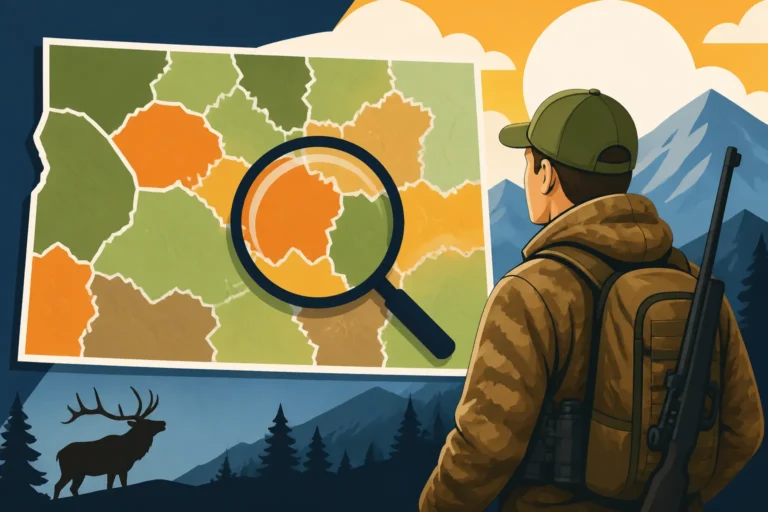
Given the vastness and often unmarked trails of the Flat Tops, reliable navigation is not just helpful—it's absolutely critical. Physical maps (USGS topo maps are excellent) and a compass should always be in your pack as a backup. However, digital mapping apps have revolutionized backcountry hunting. onX Hunt is practically indispensable for navigating the Flat Tops. It provides detailed satellite imagery, topo maps, private/public land boundaries, and even historical burn data, all downloadable for offline use. Before your trip, spend hours How to E-Scout Before a Colorado Hunt the area on onX Hunt, identifying potential elk bedding areas, travel corridors, water sources, and escape routes. Mark waypoints for your camp, potential kill zones, and exit routes. This foresight can literally save your hunt, or even your life, in such remote terrain.
Effective Hunting Strategies for Flat Tops Elk
Hunting elk in the Flat Tops requires a blend of traditional mountain hunting skills and a willingness to adapt to the specific conditions of the wilderness. It's rarely a "gimme" hunt; you'll earn every opportunity.
Mastering Glassing Techniques in Open Basins
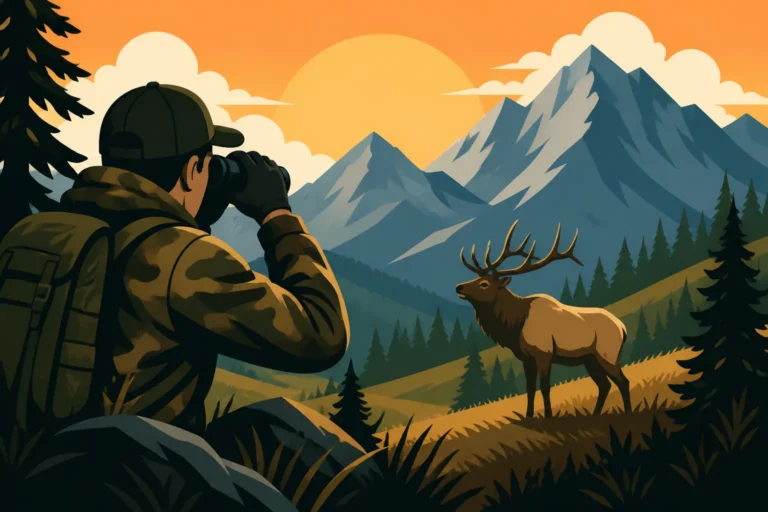
The high, open mesas and vast alpine basins of the Flat Tops are prime glassing country. Unlike dense timber, where you might only see glimpses of an animal, these open areas allow you to survey enormous swaths of terrain.
- Optimal Times: Early morning and late evening are usually best when elk are most active and out feeding. Before the sun hits the basins, you might catch them in the open before they retreat to cover.
- Equipment: High-quality binoculars (10×42 or 12×50) on a tripod are essential. A spotting scope (20-60x) is also highly recommended for identifying details and judging animals at extreme distances. Brands like Vortex, Leupold, or Swarovski are popular choices among serious Western hunters for their clarity and durability.
- Methodical Grid Search: Don't just casually scan. Break the landscape into grids and methodically search each section. Look for anything out of place: a horizontal line in a vertical world, a patch of different color, or the glint of an antler. Pay close attention to shaded areas, edges of timber, and benches where elk often bed. Learning How to Glass Big Colorado Basins effectively is a skill that takes practice but pays huge dividends here. Once you spot elk, plan your approach carefully, always using the wind and terrain to your advantage.
Still-Hunting the Dark Timber and Aspen Grooves
When elk get pressured or the weather turns, they'll often disappear into the dense, dark timber that covers much of the Flat Tops' slopes. This is where still-hunting becomes your most effective tactic.
- Slow and Deliberate: "Still-hunting" means moving extremely slowly, taking one or two steps, then stopping and observing for several minutes. Use your binoculars to pick apart the shadows and look for parts of an animal – an ear, a leg, a patch of hide.
- Wind and Thermals: Always hunt into the wind. In mountain terrain, thermals are critical. In the mornings, air flows downhill; in the evenings, it flows uphill. Understand these dynamics and use them to your advantage. You can learn more about How to Use Thermals in Colorado Elk Country to improve your chances significantly.
- Track Reading: Fresh tracks in the snow or mud, broken branches, and fresh droppings are all signs you're in elk country. Follow these signs methodically, always assuming an elk is just beyond the next tree.
- Aspen Pockets: Don't overlook aspen groves. These areas, especially those with thicker undergrowth, provide both food and cover. Elk love to feed on aspen leaves and bark, and the distinct light/shadow patterns can make them surprisingly difficult to spot.
Calling Strategies in the Wilderness
The Flat Tops is famous for its archery and muzzleloader seasons during the rut, making calling an exciting and effective strategy. However, rifle hunters shouldn't ignore calling either, especially early in the season or for locating silent bulls.
- Locating Calls: A loud bugle can help you locate a bull, especially in early morning or late evening. Once you get a response, you can begin to close the distance.
- Setups: If you get a bull to respond, get into a good calling setup quickly. Often, a shooter will position themselves 50-100 yards ahead of the caller, allowing the caller to draw the bull past the shooter. Ensure you have clear shooting lanes and that your wind is good.
- Cow Calls and Chirps: Even outside the peak rut, subtle cow calls, mews, and chirps can be effective. They convey contentment and can pique a bull's curiosity, or calm a nervous cow. In heavily pressured areas, soft calls might be more effective than aggressive bugles. More details on different techniques can be found in a comprehensive How to Call Elk in Colorado guide.
Dealing with Weather and Altitude
The Flat Tops weather is notoriously fickle. One day can be warm and sunny, the next can bring a blizzard. You must be prepared for anything.
- Layering: Dress in layers to adapt to rapidly changing temperatures. Quality rain gear is essential.
- Altitude: Much of the Flat Tops is above 10,000 feet. This means thinner air, colder temperatures, and a greater risk of altitude sickness. Acclimate slowly, stay hydrated, and recognize the symptoms of altitude sickness. Your physical conditioning plays a huge role in How to Hunt Elk at High Elevation.
- Snow: Even in early September, it can snow at high elevations. Later seasons almost guarantee snow. Be prepared for tracking in snow, as well as navigating snow-covered terrain. This can also make packing out an animal significantly harder.
Overcoming Challenges and Maximizing Success
Hunting in the Flat Tops is an epic endeavor, but it comes with its own set of unique hurdles. Being prepared for these can make or break your hunt.
The Physical Demands and Logistical Hurdles
Let's not sugarcoat it: Flat Tops hunting is physically demanding. Carrying a heavy pack at high elevation, often off-trail, is a serious workout. If you tag an elk deep in the wilderness, the real work begins. Quartering an elk, packing it out, and potentially making multiple trips can take days and push you to your physical limits. You'll want to review guides like How to Pack Out an Elk in Colorado well in advance. Consider carrying game bags, a good frame pack, and perhaps even a game cart if the terrain allows for part of your journey back to the vehicle.
Beyond the physical, logistics are key. You'll need to think about water filtration, food for several days, reliable shelter, and emergency communication (a satellite messenger like a Garmin inReach is highly recommended, as cell service is non-existent). Every item in your Colorado Backcountry Hunting Gear List needs to be well-considered for its weight and utility.
Mitigating Hunter Pressure and Finding Solitude
Despite the increasing popularity, the Flat Tops still offers opportunities for solitude if you're willing to work for it.
- Go Deeper: The further you get from main trailheads and popular roads, the less pressure you'll encounter. Most hunters won't venture more than a few miles from their vehicle.
- Off-Trail Travel: Don't be afraid to leave the maintained trails. Look for drainages, ridgelines, and benches that don't have obvious human sign.
- Target Less Popular Seasons/Units: While all seasons see pressure, certain rifle seasons can be incredibly busy. Researching less-pressured GMUs within or adjacent to the Flat Tops (like portions of GMU 24 or other surrounding units) can offer a better experience.
- Mid-Week Hunting: If possible, schedule your hunt to include weekdays, when pressure tends to be lighter than on weekends.
Respecting the Wildlife and the Land
Ultimately, hunting the Flat Tops is about more than just harvesting an animal. It's about immersing yourself in one of Colorado's most incredible wild places. Practice ethical hunting, clean your kills thoroughly, and pack out all your trash. Leave no trace. Be mindful of other users, whether they are hikers, campers, or other hunters. Your actions reflect on the entire hunting community. The vastness of the Flat Tops offers an unparalleled opportunity for a true wilderness hunt, demanding respect, preparation, and a deep appreciation for the landscape.
Disclaimer
Hunting is an inherently dangerous activity. This guide provides general information and recommendations. Always consult Colorado Parks and Wildlife (CPW) for the most current regulations, season dates, and license requirements. Hunt ethically, safely, and responsibly. The author and publisher are not liable for any incidents or accidents resulting from the use of this information.