Colorado GMU 85 Hunting Guide
Heading to a new Game Management Unit (GMU) in Colorado can feel like deciphering an ancient map, especially when you're trying to figure out where to focus your precious hunting time and energy. GMU 85, with its diverse landscapes and potential for big game, offers incredible opportunities, but it also presents unique challenges that can leave even seasoned hunters scratching their heads. This guide is designed to cut through the confusion, providing you with a detailed, realistic look at what it truly takes to hunt successfully in Colorado’s GMU 85.
GMU 85: The Lay of the Land and What to Expect
GMU 85 is nestled in the south-central part of Colorado, straddling the beautiful Sangre de Cristo Mountains and extending into the San Luis Valley. For many, the very mention of the Sangres conjures images of rugged, high-alpine peaks and deep timbered canyons, and GMU 85 certainly delivers on that front. But it’s also a unit of contrasts, dropping down into more open, sage-dotted landscapes, which means understanding its varied terrain is absolutely crucial before you even think about setting foot on a trail. It's not a unit you can generalize; you need to know the specific nooks and crannies.
Geographical Overview and Access Points
Geographically, GMU 85 encompasses a significant portion of the Rio Grande National Forest. This immediately tells you that you’re dealing with substantial public land access, which is a huge draw for many hunters, especially those of us who prioritize a DIY experience. The unit extends from the higher elevations of the Sangre de Cristo wilderness on its eastern flank, near towns like Fort Garland and La Veta, and then rolls westward into the foothills and plains around the San Luis Valley, bordering areas near Alamosa and Monte Vista.
Access into the higher, more rugged parts of GMU 85 often means utilizing forest service roads, some of which are well-maintained while others require a high-clearance 4×4, or even good old-fashioned foot travel. For those looking to dive deep into the wilderness, trailheads like those leading into the Sangre de Cristo Wilderness Area offer gateway access, but be prepared for steep climbs and remote conditions. Always double-check road conditions, especially after heavy rains or early snow, as many roads in the higher country can become impassable. Lower elevations typically offer easier vehicle access, but the hunting pressure can be significantly higher in these more accessible areas. Using a reliable mapping application like onX Hunt is non-negotiable here; it allows you to clearly identify public land boundaries, forest service roads, and trails, ensuring you don't inadvertently trespass or waste valuable time trying to figure out where you can go.
Key Terrain Features and Habitat Types
The terrain in GMU 85 is incredibly diverse, which is both a blessing and a curse. It means a variety of habitats, supporting different game species and offering different hunting scenarios, but it also means you can't rely on a single strategy. The eastern side, particularly as you climb into the Sangre de Cristo mountains, is characterized by dense conifer forests—spruce, fir, and Ponderosa pine—interspersed with beautiful aspen groves that burst into gold during the fall. These timbered areas are often very steep, with deep drainages and rocky outcroppings, providing ideal cover and thermal protection for elk and mule deer. Elevation here can easily reach 10,000 to 12,000 feet, which means fitness and acclimatization are paramount. If you're wondering How to Hunt Elk at High Elevation, this unit will certainly test your mettle.
As you move west and descend from the mountains, the landscape gradually transitions into foothill country, characterized by piñon-juniper woodlands, oak brush, and pockets of sagebrush. Further west, especially as you approach the San Luis Valley floor, the terrain flattens out into vast open sagebrush plains, agricultural fields, and riparian areas along creeks and rivers. This lower-elevation habitat, while less "mountainous" in feel, still holds deer and sometimes elk, particularly during late seasons or periods of heavy snow up high. Understanding these distinct habitat types is critical for patterning animal movement. Elk will often stick to the dense timber and high-country parks, while mule deer might be found throughout, adapting to the different vegetation zones. Black bears will also utilize these varied habitats, especially in areas with good food sources like berry patches in the oak brush.
Game Species and Hunting Opportunities in GMU 85
GMU 85 is primarily known for its elk and mule deer populations, making it a popular choice for big game hunters. However, the unit also offers opportunities for other species, adding to its appeal for a diverse hunting experience. Understanding the habits and preferred habitats of these animals within the GMU is key to developing a successful hunting plan.
Elk Hunting Prospects
Elk are the undisputed kings of the high country in GMU 85, particularly within the Rio Grande National Forest sections. These mountains provide the perfect blend of dense timber for cover, secluded aspen parks for feeding, and plenty of water sources. During the archery and early rifle seasons, expect to find elk anywhere from 8,000 to 11,000 feet, often higher, especially if hunting pressure pushes them into less accessible areas. The rut in September can be an exhilarating time to hunt, with bugles echoing through the timber, though calling in a bull requires skill and patience. Check out our guide on Colorado Elk Hunting: Calling Tactics for more detailed advice.
As the seasons progress into the later rifle seasons, colder temperatures and increasing snow cover will gradually push elk down from the highest elevations into lower, more protected winter ranges. These migration patterns can be a huge factor in late-season success, concentrating animals in specific drainages or transition zones. However, identifying these migration corridors requires thorough scouting and a good understanding of historical animal movement. While GMU 85 might not consistently produce "trophy" bulls like some of Colorado's highly sought-after units with 20+ preference points, it offers solid opportunities for a meat bull or a respectable five or six-point. Success rates can vary wildly based on season, hunting pressure, and hunter effort, but dedicated hunters often find good numbers of elk.
Mule Deer and Other Species
Mule deer are also prevalent throughout GMU 85, occupying a broader range of habitats than elk. While you'll find them in the same high-elevation timber and aspen as elk, they are often more comfortable in the piñon-juniper and oak brush zones of the foothills. These areas, particularly north-facing slopes with good cover, can hold significant numbers of deer. During the archery and early rifle seasons, bucks might be in bachelor groups in higher elevations, moving to lower, safer areas as pressure increases. The later rifle seasons, especially when coupled with snow, can bring mule deer into more accessible areas as they begin their migration to winter ranges and the rut approaches. Glassing open hillsides and saddle points, particularly at first and last light, is a highly effective tactic for mule deer in this unit. If you're specifically targeting deer, a deep dive into our Colorado Mule Deer Hunting Guide would be invaluable.
Beyond elk and mule deer, GMU 85 offers limited opportunities for other species. Black bears are present, often encountered opportunistically by elk hunters, particularly in areas with abundant oak brush and berry crops. They can be found from the high country down into the foothills. Pronghorn inhabit the vast, open plains of the San Luis Valley on the western edge of the unit, but these hunts are highly sought after and typically require significant preference points to draw a tag. Small game, like cottontail rabbits and various grouse species, can also provide additional hunting opportunities if you're looking to round out your experience.
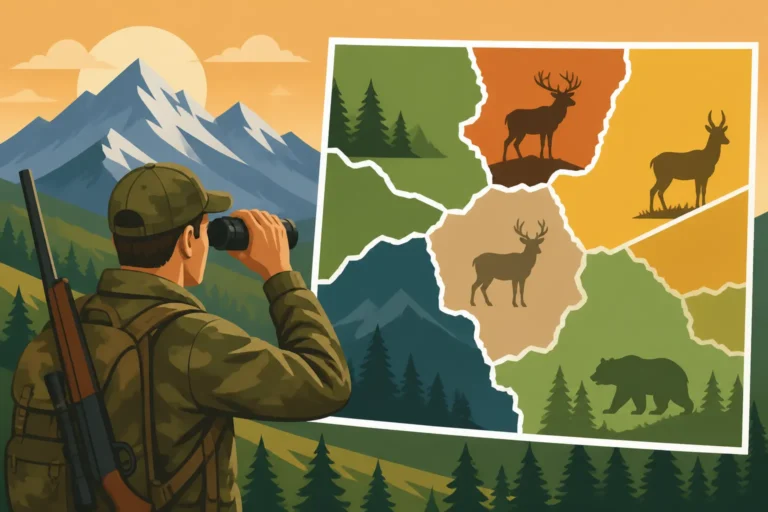
Here’s a quick overview of hunting prospects in GMU 85:
| Species | Primary Habitat Areas | Typical Season & Tactics | Draw Difficulty (General) | Notes |
|---|---|---|---|---|
| Elk | High-elevation conifer forests, aspen groves, mountain parks | Archery, Muzzleloader, Rifle; calling, spot-and-stalk, still-hunting | Moderate to High | Good numbers, requires physical fitness, potential for OTC in archery/some rifle. |
| Mule Deer | Forests, foothills (piñon-juniper, oak brush), sage flats | Archery, Muzzleloader, Rifle; spot-and-stalk, glassing | Moderate to High | Widely distributed, later seasons can be good during rut/migration. |
| Black Bear | Timbered areas, oak brush, berry patches | Fall seasons (often concurrent with elk/deer); opportunistic, spot-and-stalk | Low to Moderate | Requires a separate tag, good food sources key. |
| Pronghorn | Open plains of San Luis Valley | Archery, Rifle; spot-and-stalk, decoying | Very High | Limited draw tags, focus on the western, flatter portions of the GMU. |
Navigating Regulations and Draw Considerations for GMU 85
Understanding Colorado's complex draw system and specific GMU regulations is often the biggest hurdle for hunters. GMU 85 is no exception, and properly planning your tag acquisition is just as important as physical preparation and scouting. Don't let the paperwork intimidate you, but definitely pay attention to the details. This is where resources like GoHunt can be incredibly helpful for analyzing draw odds and historical data.
Tag Availability and Draw Odds
Colorado offers a mix of limited draw tags and over-the-counter (OTC) opportunities, and GMU 85 participates in both, depending on the species and weapon type. For elk, GMU 85 has historically offered OTC tags for archery season (either-sex) and often for certain rifle seasons (bull-only in the 2nd and 3rd rifle seasons, but always double-check current regulations as these can change, as seen with recent Colorado 2026 OTC Elk Changes). If you're a non-resident looking for a more accessible elk hunt, these OTC options are often your best bet, though they come with higher hunter pressure. For residents or hunters seeking higher quality bulls, draw tags (either-sex or specific bull tags) require preference points. Understanding How Many Preference Points for Colorado Elk is crucial if you're aiming for a limited entry hunt in this or any other unit.
Mule deer tags in GMU 85 are typically draw-only for all seasons. The number of points required can vary based on the specific hunt code (which designates season, weapon, and sex of animal) and current demand. Generally, expect to need some preference points for a decent mule deer buck tag, especially for the prime rut seasons. Pronghorn tags for the San Luis Valley portion of GMU 85 are extremely difficult to draw, often requiring many preference points. This is where a deep dive into the Colorado Draw System and Preference Points guide can provide clarity on building points and strategizing your applications. Always check the current year's Colorado Parks and Wildlife (CPW) big game brochure for the most up-to-date information on hunt codes, quotas, and draw odds, as these figures are subject to annual changes.
Important Regulations and Public Land Access
Beyond tag acquisition, a thorough understanding of hunting regulations is paramount to a legal and ethical hunt. This includes season dates, bag limits, and specific rules for public land use. For example, knowing the exact boundaries of the Rio Grande National Forest, BLM land, and any private land parcels is critical. This is where your onX Hunt app becomes an indispensable tool, overlaying property lines onto topographical maps. Ignoring these boundaries can lead to trespassing charges and ruin your hunt.
Colorado has specific rules regarding antler point restrictions (APR) in some units, but GMU 85 generally operates under a "four-point or better" rule for bull elk during certain limited draw seasons, while OTC seasons are often "any legal elk" (meaning any antlered bull). Always confirm the specific APR for your chosen hunt code. Additionally, familiar yourself with rules regarding ATVs and UTVs on public lands; motorized travel is typically restricted to designated roads and trails, especially within wilderness areas. Ethical considerations like leaving no trace, proper field dressing and meat care, and reporting your harvest are also vital aspects of hunting in Colorado. Ensuring you have a valid hunting license and a Colorado Habitat Stamp, as outlined in our Colorado Habitat Stamp Explained guide, is also a non-negotiable prerequisite before you even consider applying for a tag or heading into the field.
Strategies for a Successful Hunt in GMU 85
Hunting in GMU 85, like much of Colorado's rugged terrain, demands preparation, adaptability, and perseverance. It's not a unit where you can simply show up and expect success without a well-thought-out plan. From pre-season scouting to on-the-ground tactics, every step contributes to your chances of filling your tag.
E-Scouting and Boots-on-the-Ground Preparation
Before you even pack your bags, extensive e-scouting is your first and most critical step. Using online mapping tools, satellite imagery, and topographical maps, you can identify potential elk and deer habitat, access points, bedding areas, feeding zones, and water sources within GMU 85. Look for north-facing slopes with dense timber (good bedding), south-facing slopes with open parks or clearings (good feeding, especially in colder weather), and benches or saddles that act as travel corridors. Identify potential pinch points, drainages, and areas that are difficult for other hunters to access – these are often overlooked pockets where animals can find refuge. Our How to E-Scout Before a Colorado Hunt guide offers a complete breakdown of this process.
No amount of e-scouting can replace boots-on-the-ground scouting, however, if you have the opportunity. A pre-season trip allows you to verify what you saw on the maps, check road conditions, and identify fresh sign. If an in-person scouting trip isn't feasible, plan to arrive a few days before the season opener to scout. This time can be invaluable for locating current animal patterns, finding fresh tracks, rubs, and wallows, and adjusting your plans based on real-time conditions. Even if you don't find animals, you'll gain crucial knowledge of the terrain, which will give you a significant advantage when the season opens. You should also take time to physically prepare for Colorado's demanding terrain and high altitude, especially if you plan to hunt the higher elevations of GMU 85. Our guide on How to Physically Prepare for Colorado Elk can help you get ready for the challenges.
Effective Hunting Tactics for GMU 85
Given the varied terrain of GMU 85, a versatile approach to hunting tactics is your best bet. In the dense timbered areas, still-hunting and slow, deliberate movements are often more effective than trying to cover vast amounts of ground quickly. Elk and deer can melt into the trees, and your best chance might be to stumble upon them quietly. Paying close attention to wind direction and thermals is absolutely paramount when still-hunting. In the more open areas, particularly in the foothills or lower elevation sage flats, spot-and-stalk tactics come into their own. Find a good vantage point, set up your optics, and spend significant time glassing. Quality binoculars and a spotting scope are indispensable for picking apart distant hillsides and finding animals before they see you. Read our piece on How to Use Optics for Colorado Big Game for more pointers.
Calling can be highly effective, particularly for elk during the rut, but it requires practice and an understanding of elk vocalizations. Learning How to Bugle-Locate a Colorado Bull can help you find animals, but knowing when and how to set up for a shot after a response is crucial. For mule deer, subtle deer calls or rattling can sometimes draw a curious buck, especially during the pre-rut and rut phases. Always be mindful of other hunters, especially in OTC units; hunting pressure can significantly impact animal behavior, often pushing them into thicker cover or more remote areas. Being willing to hike further and get off the beaten path is often the key to finding undisturbed animals in GMU 85. Remember that you will eventually need to pack out your animal, so having a good strategy for How to Pack Out an Elk in Colorado is essential, especially if you're successful deep in the backcountry.
Disclaimer
Please be aware that hunting regulations, season dates, and unit boundaries are subject to change by Colorado Parks and Wildlife (CPW). Always consult the most current official CPW hunting regulations brochure for the specific year you plan to hunt before making any plans or heading into the field. This guide provides general information and recommendations but should not be considered a substitute for official sources.