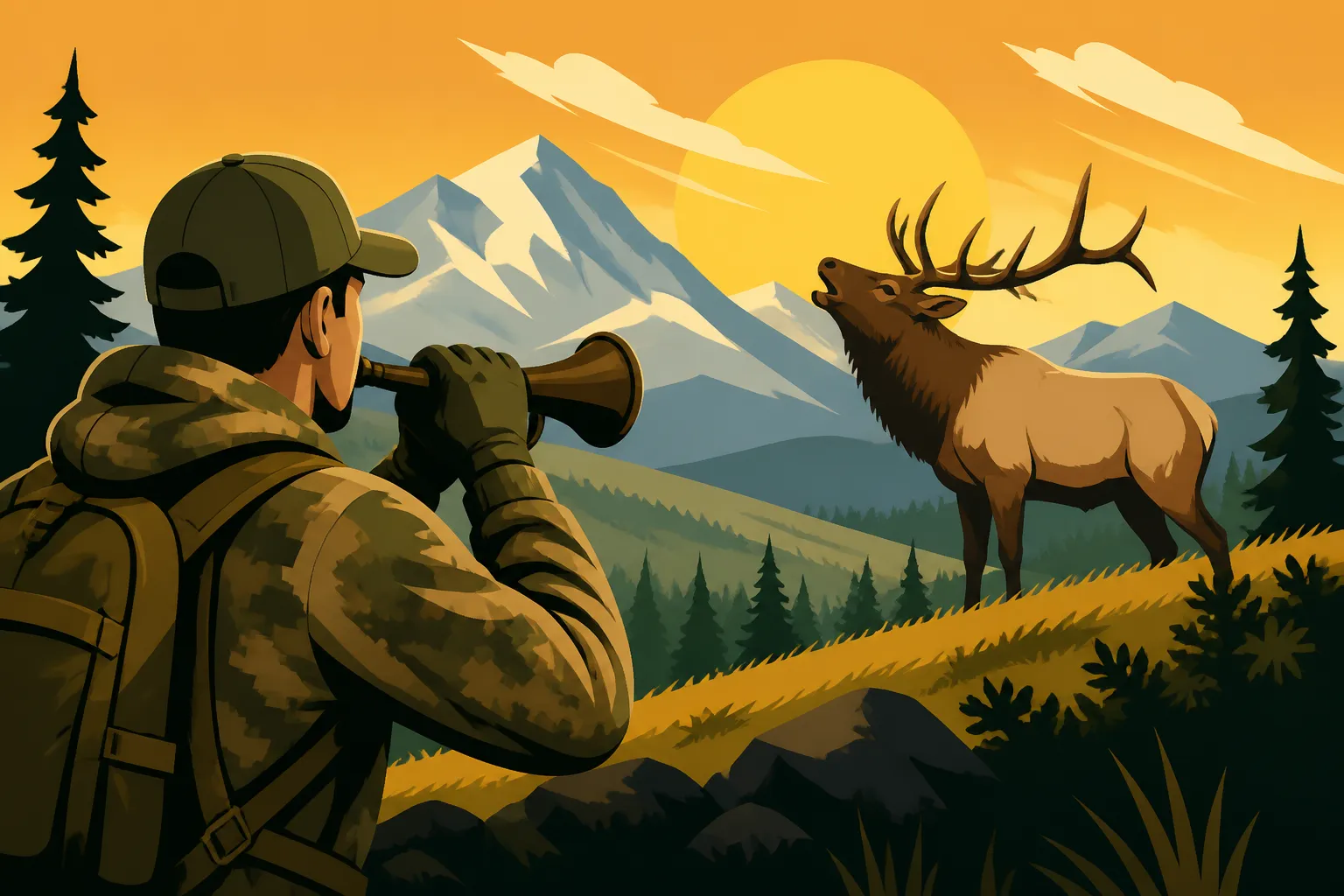
How to Bugle-Locate a Colorado Bull
There’s nothing quite like the silence of a vast Colorado mountainside, yet it can be utterly soul-crushing when you know a bull elk is holding tight in that timber and you just can't pinpoint his location. You’ve put in the miles, hiked the unforgiving terrain, and now you’re standing there, trying to decide where to go next, hoping for any sign. This guide is all about giving you the tools and confidence to break that silence, using the powerful technique of bugle-locating to find those elusive Colorado bulls and put yourself in a position for success.
Understanding the Art of Bugle-Locating
Bugle-locating isn't just about making noise; it's a strategic conversation you're trying to start with a bull elk. It's about figuring out who's home, where they are, and what their mood is, all by listening to their vocalizations.
Why Bugling Works for Locating
Elk are incredibly vocal animals, especially during the rut, but even outside of the peak breeding period, their calls serve a purpose. When a bull bugles, he's communicating his presence, his dominance, and his location to other elk in the area. Our goal as hunters is to tap into that communication network. We're essentially sending out a message, hoping to get a reply that tells us, "Hey, I'm over here!" It's a natural instinct for a bull to respond, whether it's out of curiosity, a challenge, or a simple acknowledgment of another elk in his territory. Understanding these motivations is key. A satellite bull might bugle back to test the waters, or a dominant herd bull might bugle a warning. Each response, or lack thereof, gives us valuable information about the animal's behavior and whereabouts. The mountainous terrain of Colorado often amplifies or distorts sounds, making it a powerful tool for covering ground acoustically, especially in dense timber where visual scouting is next to impossible. You can often learn a lot more about where elk are holding by listening than by purely relying on sight in thick areas.
When Bulls Are Most Responsive
Timing is everything when it comes to bugle-locating. You can stand on a ridge and bugle your lungs out all day, but if the conditions aren't right, you're just making noise. Generally, elk are most vocal during the early morning and late evening hours, right when the sun is coming up or going down. These are often periods of transition for elk—moving from feeding to bedding, or vice-versa. During the peak of the rut, roughly mid-September to early October in Colorado, bulls are much more aggressive and responsive to calls throughout the day, not just dawn and dusk. This is when their hormones are raging, and they’re actively seeking cows and defending their harems. However, even outside the peak rut, a well-timed, confident bugle can still elicit a response, especially from lone bulls or those less pressured. Weather also plays a huge role. Cold, crisp mornings with calm winds are ideal, as sound travels farther and clearer. A front moving in can also sometimes trigger increased activity. On the flip side, strong winds can make it incredibly difficult to hear a distant bugle, and hot, dry conditions tend to make elk much less vocal. If you’re trying to locate elk after the rut, for instance, you might need to adjust your approach significantly, as bulls often go quiet.
Mastering the Call Types for Location
Not all bugles are created equal, and using the right call at the right time is crucial for effective locating. You’re not trying to call a bull in initially; you’re just trying to get him to talk.
The "Challenge" Bugle
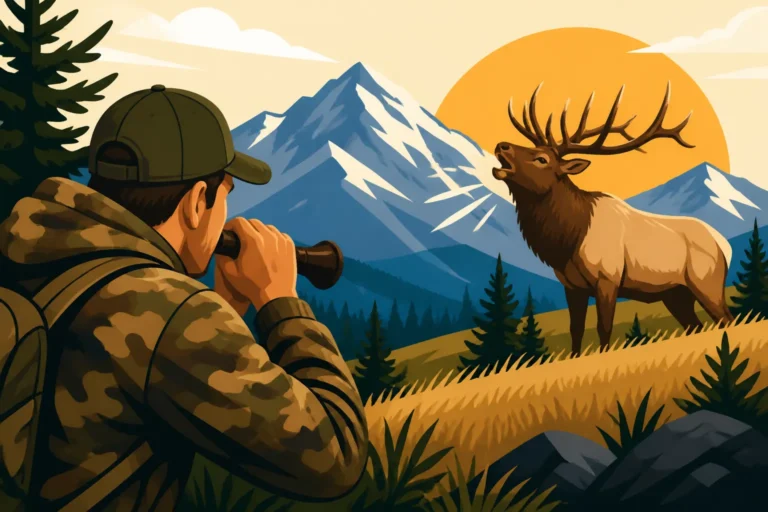
This is often what people think of when they imagine elk bugling—a loud, defiant roar. A challenge bugle is a full-throated, aggressive call typically used by a dominant bull to assert his presence and warn off rivals. When you're trying to locate a bull, a measured challenge bugle can be incredibly effective, but you need to understand the nuances. You're not necessarily trying to imitate a monster bull right off the bat. Sometimes, a "cow-muffled" bugle—a bugle that sounds like a bull with his nose buried in a cow's flank, or a more satellite-style bugle—can be less intimidating and more likely to get a response from a bull who might be hesitant to challenge a perceived dominant bull. The goal is to sound like another bull in the area, not necessarily the biggest, baddest bull around. Think of it as throwing a stone in a pond to see if anything jumps. If you get an immediate, aggressive response, you know exactly where that bull is and what his temperament is. If you get a more hesitant, distant bugle, it tells you something else entirely. Pay attention to the quality of your call too; ensure it sounds realistic. Practice different volumes and tones, from a softer, searching bugle to a more commanding, challenging tone. If you're new to bugling, starting with a medium-intensity bugle can often be a good compromise to avoid spooking a bull while still being loud enough to be heard.
The "Inquiry" Bugle and Cow Calls
Sometimes, a full-on challenge bugle is too much, especially if you suspect there might be a bull close by who is already wary, or if you're hunting public land pressure where every other hunter is blowing a bugle. This is where the more subtle calls come in. An "inquiry" bugle is a softer, often shorter bugle that sounds less aggressive and more curious. It’s like saying, "Is anyone out there?" rather than "Come at me, bro!" This can be particularly effective in areas where bulls might be a bit call-shy or less active.
Even more subtle, and often incredibly effective for locating, are cow calls. A series of soft, plaintive cow chirps and mews can often elicit a "contact" bugle from a bull who is looking for company but isn't in a challenging mood. Think about a lost cow trying to find the herd. A bull will often respond with a soft bugle or even a deep grunt to let her know he's there. The beauty of cow calls for locating is that they're far less likely to spook a bull than an aggressive bugle, and they can sometimes pull a quiet bull out of his hiding spot, especially if you’re trying to call in a silent bull. Using a variety of cow calls, from estrus mews to lost cow calls, can paint a more realistic picture and entice a bull to give up his location. When you're glassing big Colorado basins from a distance, don't be afraid to send out a few soft cow calls before a bugle; you might be surprised by what you hear back.
Strategic Execution and Reading the Response
Effective bugle-locating isn't just about calling; it's about the entire sequence: how you approach, how you call, how you listen, and how you react.
Positioning Yourself for Success
Before you even think about lifting that bugle tube to your lips, take a moment to consider your surroundings. Wind direction is absolutely paramount. Elk have an incredible sense of smell, and if your scent drifts towards them, your hunt is over before it begins. Always try to set up so the wind is in your favor, blowing your scent away from where you expect the elk to be. Thermals play a critical role in Colorado elk country, typically rising in the morning and falling in the evening. Understanding how to use thermals in Colorado elk country can give you a significant advantage.
Terrain is another major factor. Try to get to a high vantage point where sound can carry, but don’t expose yourself unnecessarily. Ridges, saddles, and open parks can be excellent locations to broadcast a bugle and listen for responses. If you're deep in the timber, you might need to move slowly and strategically to find small clearings or breaks in the trees to allow your call to travel. Use detailed mapping tools like GoHunt to analyze the topography of your chosen GMU, identifying natural travel corridors, benches, and potential bedding areas where a bull might be holding. This upfront scouting, even if it's just e-scouting, will help you choose better bugling locations. When you pick a spot to call from, make sure you have good cover. You don't want to be standing in the wide open if a bull decides to come investigate quickly.
Interpreting the Bull's Response
Once you’ve sent out your call, the most critical part begins: listening intently and interpreting the response. It’s not just if he bugles back, but how he bugles back.
- Loud, Aggressive Bugle, Close By: This is exciting! It means you've got a hot bull, likely a herd bull, who feels challenged or is gathering his cows. This indicates he’s close, and you should immediately be thinking about closing the distance or setting up for a shot, depending on the distance. Be ready for him to come in fast.
- Soft, Distant Bugle, or a "Hooch": This bull is likely interested but cautious, or he's a satellite bull who doesn't want to challenge a perceived dominant rival. He might be farther away, or he might be a little call-shy. This is a great indicator, but you'll need to work him more carefully.
- A "Chuckle" or "Growl" without a full bugle: This is a bull grunting or chuckling after his cows, a very good sign that he’s with cows and is feeling protective. He’s definitely there, but he might not want to bugle himself, letting his cows do the talking.
- No Immediate Response: Don’t despair! Sometimes a bull will just listen, or he might respond with a soft grunt you can’t hear. Wait 5-10 minutes, listen for faint sounds, and then try a different type of call – perhaps a series of soft cow mews. If still nothing, move quietly to another location. Remember to remain still and listen carefully for faint sounds, sometimes even footsteps or snapping twigs can give away a bull's position before he bugles.
When a bull responds, try to pinpoint his exact location and direction. If he bugles multiple times, you can triangulate his position. Note whether his bugle sounds like it’s coming from higher or lower elevation. This information is gold for planning your approach. Learning how to move quietly through Colorado timber is vital at this stage, as you'll want to get closer without alerting the bull to your specific position.
Here's a quick reference for common bugling scenarios:
| Bugle Type (Hunter) | Expected Bull Response | Interpretation & Next Steps |
|---|---|---|
| Soft Locator Bugle | Distant, soft bugle | Bull is curious, not highly aggressive. He's heard you but isn't running in. Good for initial contact. Try to close distance subtly, maybe with cow calls. |
| Challenge Bugle | Aggressive, close bugle | Bull is agitated, likely a dominant herd bull. He's nearby and ready to engage. Be prepared for a quick approach or stand your ground, ready for a shot. |
| Cow Mews/Chirps | Soft grunt, "hoocha," or a bugle | Bull is looking for cows or acknowledging your presence. He's interested but not feeling challenged. Excellent for bringing in call-shy bulls. Continue with light cow calls, ready for him to move in. |
| No Response | Silence | Bull is either not there, not vocal, or has moved away. Wait 5-10 min, try a different call type (e.g., cow calls). If still nothing, change positions and try again. |
What to Do When He Goes Silent
The most frustrating thing is when you get a bull to respond, you start moving, and then… silence. It happens to the best of us. Don't panic and certainly don't just sit there. If a bull goes silent after an initial response, he hasn't necessarily run off. He might be circling to get your wind, trying to move his cows, or simply being cautious. This is where your hunting strategy really needs to adapt.
First, stay put for a while – at least 15-20 minutes, maybe longer. Elk can be incredibly patient. If you're confident in the bull's general direction, you can try a very subtle, soft cow call or a single, soft grunt. Don't hit him with another loud bugle; that might confirm his suspicions that you're not a real elk. If he still doesn't respond, it might be time for a strategic move. Consider circling downwind if you can, always keeping the wind in your favor. This move allows you to get a better vantage point and potentially catch him off guard. If you’re unsure, an excellent strategy is to slowly and quietly still-hunt through the timber in the direction you last heard him. Use your optics to pick apart every shadow and patch of cover. Sometimes, a silent bull is just moving slowly, and you can catch up to him visually. If you've been working a bull and he totally clams up, it might be time to switch gears and focus on other hunting methods explained, such as a spot-and-stalk approach, especially if the terrain opens up, allowing you to glass more effectively. Remember, even a silent bull is often still in the vicinity.
Disclaimer
Hunting is an inherently dangerous activity. Always prioritize safety, understand and follow all Colorado Parks and Wildlife regulations, and respect wildlife and the environment. This guide provides general information and recommendations, but individual situations and conditions can vary. Always check current regulations and conditions before heading into the field.