How to Prepare for High-Altitude Hunting
Stepping out of your truck at 9,000 feet after driving from sea level is a brutal wake-up call for your lungs and legs. Many hunters spend months shooting their rifles or bows, only to watch their dream trip fall apart within forty-eight hours because pounding altitude headaches, severe nausea, and muscle fatigue overwhelm them. This comprehensive guide details step-by-step how to prepare your body, refine your gear, and structure your acclimatization timeline so you can thrive during a high-elevation Colorado hunt.
The Physiology of High-Altitude Hunting in Colorado
Hunting in the Rocky Mountains demands a deep respect for elevation. When you leave low-altitude plains and climb above 8,000 feet, the atmospheric pressure drops significantly. The air isn’t containing a lower percentage of oxygen—it still sits at roughly twenty-one percent—but the decreased barometric pressure makes it much harder for your lungs to push oxygen through your cell membranes and into your bloodstream. Every step carrying a heavy pack feels like twice the work, and your heart works overtime just to keep your muscles functioning.
Understanding these physical changes allows you to plan intelligent field tactics rather than fighting your environment. If you want to dive deeper into getting ready, check out our guide on How to Prepare for High-Altitude Hunting for complementary insight into mountain readiness.
What Elevation Does to the Human Body
Within hours of arriving at high elevation, your respiration rate increases naturally, even while sleeping. Your body attempts to compensate for oxygen deprivation by breathing faster and deeper. This hyperventilation causes you to exhale excessive amounts of carbon dioxide, altering your blood pH levels and triggering your kidneys to excrete more water to restore balance.
As a direct result, you dehydrate exponentially faster in the high country than you do back home. Your resting heart rate spikes, your sleep cycles become fragmented, and your muscles store less glycogen. Without adequate conditioning, even simple tasks like gathering firewood or climbing a gentle timber ridge can leave you gasping for air.
Recognizing and Preventing Altitude Sickness
Acute Mountain Sickness, commonly known as AMS, is the bane of non-resident hunters. It typically manifests six to twenty-four hours after arrival and feels remarkably like a severe hangover. Common symptoms include:
- A persistent, throbbing headache that worsens when bending over
- Loss of appetite and mild to severe nausea
- Dizziness, lightheadedness, and muscle weakness
- Insomnia or irregular breathing patterns during sleep
Preventing AMS requires a slow ascent and disciplined hydration. Taking an extra day or two to camp at an intermediate elevation—around 6,000 to 7,000 feet—before pushing up into subalpine wilderness basins gives your body vital time to produce additional red blood cells. You can learn more about managing this transition in our overview on How to Acclimate to Colorado Elevation.
Hydration and Nutrition Strategies Above 8,000 Feet
Because thin mountain air dries out your respiratory tract rapidly, you lose significant water simply by breathing. You must consume between four and five liters of water daily while hunting at high elevation. Plain water isn’t always enough; as your body flushes fluids, you lose essential electrolytes including sodium, potassium, and magnesium. Mix electrolyte powders into your hydration bladder every morning and afternoon.
Nutrition requires a deliberate shift as well. At high elevations, your digestion slows down, and your body struggles to break down heavy fats and complex proteins efficiently. Focus your trail diet on easily digestible carbohydrates like oatmeal, dried fruit, energy gels, and high-carb bars. Carbohydrate metabolism requires less oxygen per mole of ATP generated compared to fat metabolism, making carbs the most efficient fuel source for high-altitude endurance.
Physical Preparation and Fitness Routines for Mountain Elevation
You cannot completely simulate thin air at sea level without specialized oxygen-deprivation chambers, but you can build a cardiovascular engine and muscular structure that functions exceptionally well under high metabolic strain. Starting your training four to six months before your hunt ensures your body handles steep ascents without structural breakdown or premature exhaustion.
Cardiovascular Conditioning for Thin Air
Traditional long, slow distance running is fine for base cardio, but high-intensity interval training, also known as HIIT, provides far superior preparation for mountain terrain. Mountain hunting consists of intense bursts of effort—like chasing a bugling bull up a steep avalanche chute—followed by brief periods of glassing or waiting.
Incorporate stair climbing, incline treadmill sessions, and assault bike intervals into your routine three days a week. Focus on pushing your heart rate into high zones for two to three minutes, followed by a short recovery period. This conditions your cardiovascular system to clear lactic acid efficiently even when oxygen intake is constrained. Following a structured Colorado Elk Hunt Fitness Plan gives you the template necessary to build mountain-ready endurance.
Strength Training for Pack Weight and Steep Angles
Strong legs and a resilient core prevent injuries when traversing loose talus, deadfall timber, and steep side-hills. Focus heavily on compound, unilateral leg movements that replicate mountain step-ups. High-bar back squats, Bulgarian split squats, lunges, and weighted step-ups onto an eighteen-inch box are vital exercises.
Do not neglect your posterior chain. Romanian deadlifts and kettlebell swings build the glute and hamstring power required to drive you up multi-thousand-foot ascents. Combine these exercises with weighted pack training. Start four months out with twenty pounds in your backpack, walking three to four miles twice a week. Gradually increase the load to forty or fifty pounds as your departure date approaches. Detailed workouts are outlined in our article on Altitude Training for Colorado Hunting.
Simulated Elevation and Breathing Techniques
While elevation masks rarely alter physiological blood parameters effectively, they can train your mental tolerance for air restriction. Learning nasal breathing techniques under physical stress helps regulate your heart rate during long climbs. Practice slow, deep diaphragm breathing during weighted pack walks to prevent hyperventilation when steep inclines push your heart rate upward.
| Elevation Level | Oxygen Availability Relative to Sea Level | Common Physical Effects | Key Fitness & Mitigation Focus |
|---|---|---|---|
| 5,000 – 7,000 Feet | ~80% – 85% | Mild shortness of breath during exertion, increased urination. | Hydrate heavily; establish baseline camp; easy warm-up hikes. |
| 8,000 – 10,000 Feet | ~70% – 75% | Noticeable fatigue, elevated resting heart rate, mild sleep disruption. | Consume high carbs, use electrolyte mixes, pace ascents carefully. |
| 10,000 – 12,000+ Feet | ~60% – 65% | High risk of AMS headache, rapid breathlessness, slower muscle recovery. | Strict intermediate acclimatization, heavy zone-2/HIIT preparation. |
Gear, Logistics, and E-Scouting for High-Elevation Hunts
High-altitude environments are environmentally harsh and unpredictable. A mild September morning in an alpine basin can turn into a driving blizzard by mid-afternoon. Proper planning combines intelligent digital mapping with specialized, lightweight gear designed to withstand radical temperature swings.
E-Scouting High-Altitude Basins and Terrain
Before you ever step foot on the mountain, digital mapping tools are essential for identifying prime high-altitude habitat and mapping out realistic access routes. Utilize platforms like GoHunt to examine elevation layers, slope aspects, and water sources. Using GoHunt allows you to identify alpine benches located between 10,000 and 11,500 feet where big game seeks refuge from summer heat and lower-elevation pressure.
When reviewing terrain on GoHunt, pay close attention to contour line density. Areas where contour lines cluster tightly indicate cliffs or impassable chutes that will burn excessive energy to navigate. Identify gentler saddles and ridgelines that allow you to gain elevation efficiently without redlining your engine early in the morning.
Essential Gear for Unpredictable Alpine Weather
High-altitude gear must follow a strict layering philosophy. Heavy, single-piece winter coats are inefficient because they trap sweat during grueling climbs, which leads to hypothermia when you stop to glass. Focus on high-performance modular gear:
- Next-to-Skin Base Layers: Lightweight merino wool or synthetic tops that wick sweat away immediately.
- Active Mid-Layers: Breathable grid-fleece or lightweight synthetic jackets for regulated warmth while moving.
- Insulating Outer Layers: Compressible goose down or high-loft synthetic jackets for cold glassing sessions at glassing points exposed to alpine wind.
- Weatherproof Shells: High-end waterproof, windproof membrane jackets and pants. High winds quickly strip body heat in open basins.
Proper footwear is equally critical. High-top, stiff-shanked boots give your ankles necessary support when carrying heavy loads across broken shale and uneven slopes. Paired with quality merino wool socks, robust boots protect against debilitating blisters. To ensure your pack is optimized for extreme conditions, review our recommendations for the Best Backcountry Gear for Colorado Elk.
Acclimatization Timelines and Base Camp Setup
If you live at low elevation, build an acclimatization buffer into your hunting calendar. Plan to arrive in Colorado at least forty-eight to seventy-two hours before opening day. Spend your first night staying in a mountain town at 5,000 to 7,000 feet. Use this time to double-check gear, verify rifle zero, or practice range-estimation.
On day two, establish your base camp at a moderate elevation around 8,500 feet rather than immediately setting up a spike camp above timberline at 11,500 feet. Sleeping at a slightly lower elevation allows your body to recover during night-time sleep cycles while you hunt higher elevations during the day. Understanding how high-elevation terrain contrasts with low-country landscapes is detailed in our guide on Colorado High-Country vs Plains Hunting.
Field Tactics and Shot Execution in the Alpine
Navigating high country requires a complete shift in tactical mindset. Pushing too hard on day one often results in being bench-ridden by day three with severe exhaustion. Adapt your hunting tactics to working in thin air to remain effective throughout the entire trip.
Pacing Your Trek and Energy Management
The most common mistake flatland hunters make is maintaining their habitual walking pace when hitting mountain trails. Adopt the classic rest-step on steep inclines: lock your rear knee briefly with every step, transferring your body weight onto your skeletal structure rather than keeping your quadriceps constantly engaged.
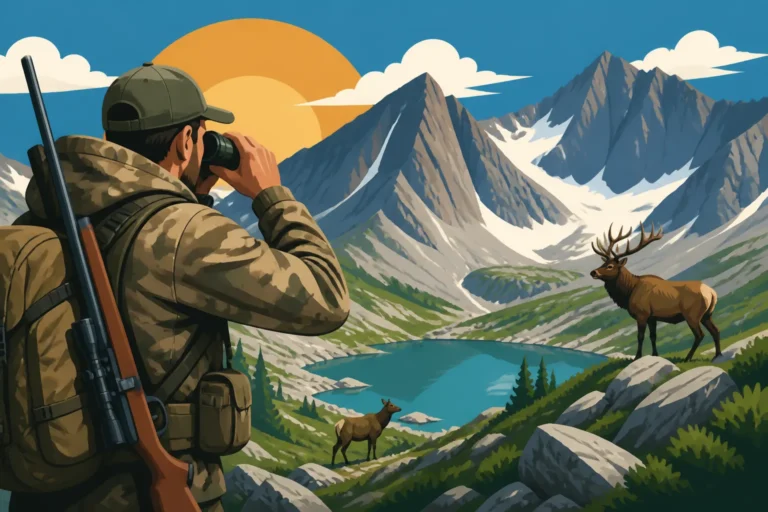
Stop for brief five-minute breaks every thirty to forty-five minutes rather than pushing continuously until absolute exhaustion. Pull your pack off during glassing sessions to allow your back to dry, drink water continuously, and keep energy chews or trail mix in your hip-belt pockets for easy access.
When hunting high-altitude mule deer, patience yields better results than pounding miles. Review our guide on How to Hunt High-Country Mule Deer for tactical advice on glassing alpine bowls systematically without burning through your physical reserves.
Shooting at Steep Angles and High Elevation
Thin air and severe terrain angles drastically alter projectile trajectories for both rifle hunters and bowhunters. In thin air, reduced aerodynamic drag causes bullets and arrows to retain velocity longer, resulting in slightly flatter trajectories at extreme distances.
More importantly, steep downhill or uphill shooting angles alter the effect of gravity on your projectile. Gravity only acts upon the horizontal distance between you and your target, not the line-of-sight distance measured by a standard rangefinder.
Always use an angle-compensating rangefinder when hunting alpine basins. If shooting steep angles, aim for the horizontal distance calculation. A bull positioned at a line-of-sight distance of 350 yards on a 30-degree incline may only require an aiming point for 303 horizontal yards. Failing to compensate will cause your shot to pass harmlessly over the animal’s spine. To master these complex shots, review our tactical guide on How to Shoot Uphill and Downhill at Elk.
By pairing rigorous physical conditioning with intelligent hydration, deliberate acclimatization, and strategic tool use like GoHunt, you can transform high elevation from an intimidating obstacle into your greatest hunting advantage.
Disclaimer
This article is for general informational purposes only and does not constitute professional advice. Laws, prices and regulations vary by location and change over time. Consult a qualified professional for guidance on your specific situation.