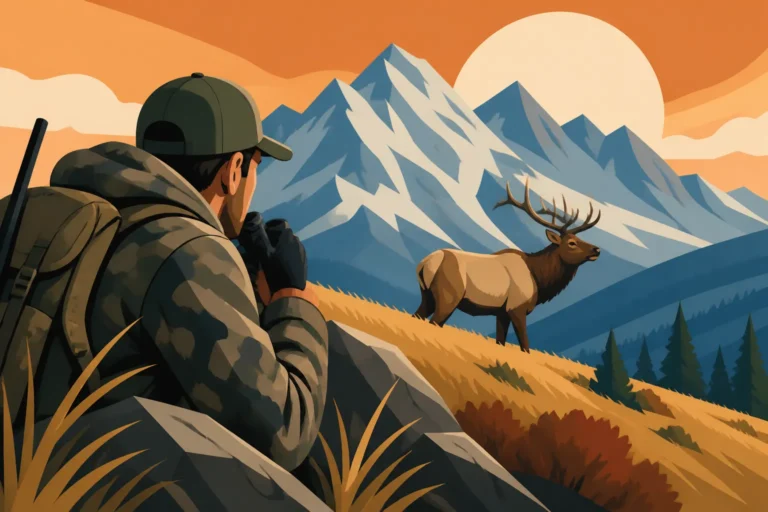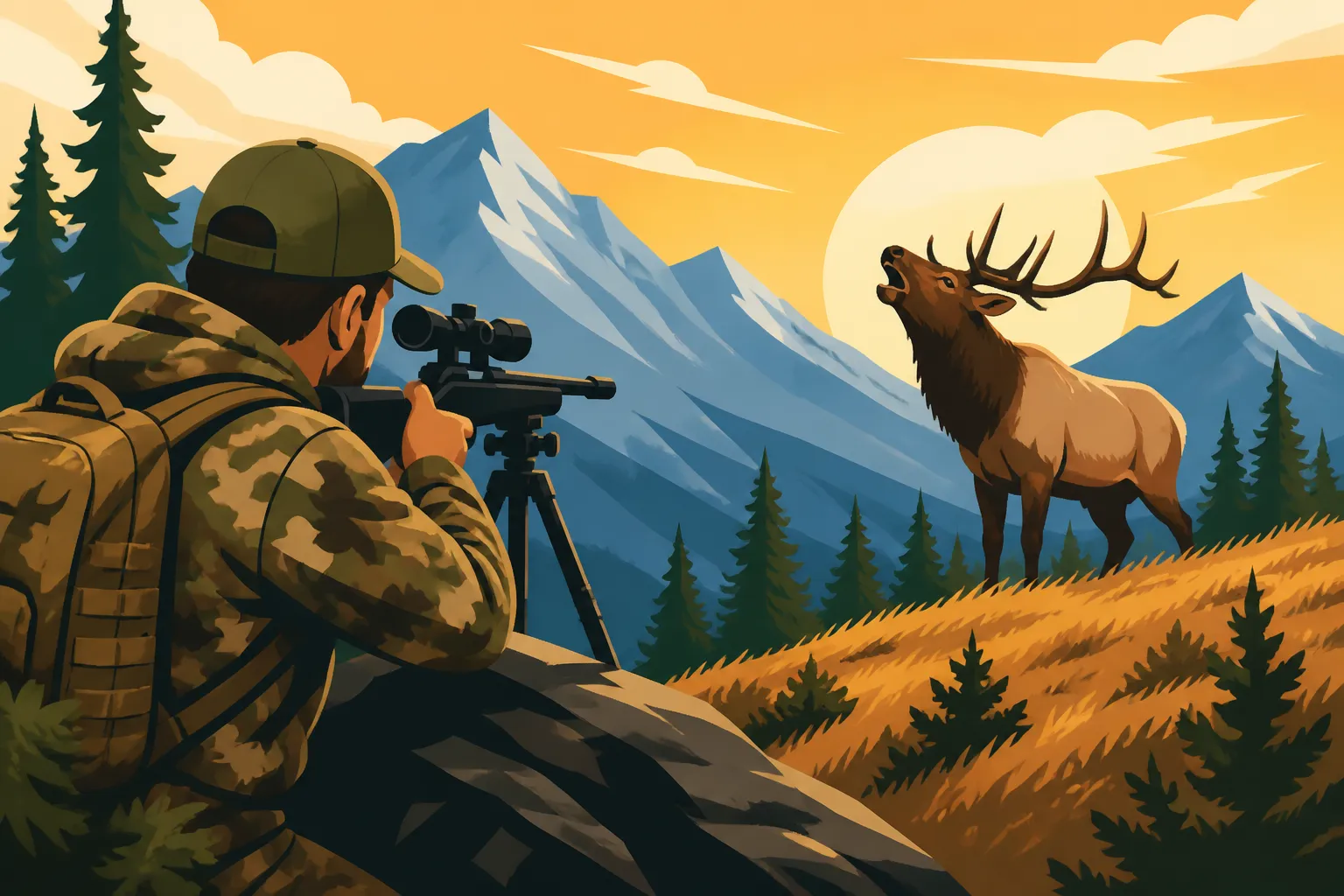
How to Set Up on a Bugling Elk
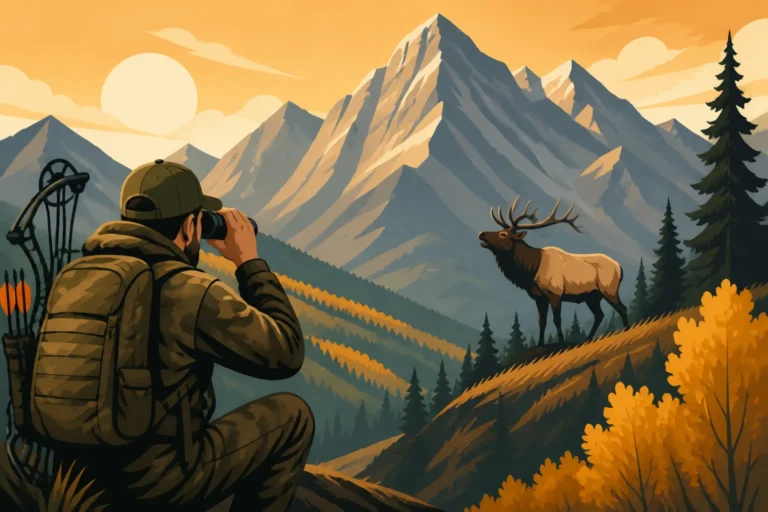
There’s nothing quite like it, is there? You’re deep in the Colorado backcountry, the crisp morning air bites at your face, and then… a bugle rips through the timber, vibrating through your chest. That adrenaline spike is instant. But then the panic sets in: Okay, it’s there. Now what? Many hunters freeze, unsure of the next move. This comprehensive guide is here to transform that uncertainty into a strategic, confident approach, showing you exactly how to set up on a bugling elk.
Deciphering the Language of the Bugle
Before you take a single step, you’ve got to understand what that bugle is actually telling you. Elk don't just bugle for fun; each vocalization has a purpose, and interpreting it is your first, most critical step in figuring out how to set up on a bugling elk. It’s like listening to a conversation – you need to grasp the tone and context before you jump in.
Understanding Different Bugle Types
Not all bugles are created equal, and knowing the difference can literally make or break your setup. Is it a lonely bull? A challenge to another bull? Or the dominant herd bull rounding up his cows?
- Locating or Contact Bugle: This is often a shorter, less aggressive bugle, sometimes with a few chirps or cow calls mixed in. A bull might let out one of these just to see if there are other elk around, or to announce his presence generally. When you hear this, it's typically a good sign the bull isn't locked down and might be responsive to calls or an approach. He's looking for company, or at least a chat. Your approach here can be a bit more subtle, focused on closing distance without being overly aggressive.
- Challenge Bugle: Oh, you'll know this one. It's usually longer, louder, and has a distinct, deep growl or chuckle at the end. This is a bull laying down the gauntlet, telling other bulls to back off or come face him. If you hear a challenge bugle, especially one that's consistent, you've likely found a bull with an attitude. This can be fantastic for archery hunters trying to draw him in, but requires a much more cautious and aggressive calling strategy to match his mood. You might need to sound like a rival bull moving in.
- Herd Bull Bugle: This one is often mixed with cow calls and glues, and it signifies a bull actively managing his harem. He's not usually looking for a fight as much as he's asserting dominance over his cows and telling other bulls to stay away. These can be tough to pull away from the herd, as he's preoccupied with his ladies. A successful setup here usually involves trying to lure him with cow calls, perhaps creating the illusion of a hot cow trying to leave his herd or another bull trying to cut into his territory.
| Bugle Type | Implied Bull Behavior | Suggested Setup Approach |
|---|---|---|
| Locating / Contact | Curious, somewhat alone, checking surroundings | Subtle approach, light calling, close distance cautiously |
| Challenge | Assertive, ready to fight or intimidate | Aggressive calling (bull or cow), strategic positioning for a fight |
| Herd Bull (with cows) | Focused on his harem, protective | Heavy cow calling, flanking to intercept, creating "rival bull" illusion |
| Muffled / Distant | Likely bedded, or moving away | Aggressive closing of distance, careful wind management |
Reading the Bull's Mood and Location Cues
Beyond the type of bugle, listen to its intensity, direction, and how frequently it occurs. Is it getting louder or softer? Is it always from the same spot, or does it seem to move? If it's consistently from one area and accompanied by glues and chirps, he might be bedded with his cows. If it's moving, he's on the move, and you'll need to intercept him.
Also, pay attention to any other sounds. Are there branches breaking? Cows chirping? These all give you clues. A bull that's constantly bugling is easier to pinpoint, but also likely to be more cautious or already engaged. A bull that bugles once every 15-20 minutes might be harder to locate but could be less pressured and more willing to investigate. For more on this, check out our guide on how to bugle-locate a Colorado bull.
Initial Assessment and Strategic Approach Planning
Okay, you've heard the bugle, and you think you have an idea of what that bull is up to. Now comes the hard part: deciding how to get to him. This isn't just about walking in a straight line; it's about making a calculated, stealthy move that leverages every advantage the terrain and conditions offer. This is where your pre-scouting and understanding of the area really pay off.
The Unforgiving Wind and Thermals
In Colorado, the wind and thermals are your master. Ignore them at your peril. Elk have an incredible sense of smell, and one whiff of human scent will send them packing faster than you can say "missed opportunity." Always, and I mean always, approach from a downwind or crosswind position.
- Morning Thermals: In the mornings, air generally flows downhill as the colder, denser air sinks. If a bull is bugling up a ridge from you, the thermals will be carrying your scent downhill. You might need to circle wide and approach from an adjacent ridge or wait for the thermals to shift.
- Evening Thermals: As the day warms and the sun hits the slopes, thermals reverse and start to flow uphill. This means an evening approach often needs to come from below the elk.
- Mid-day & Confused Thermals: Around midday, or in areas with complex topography, thermals can be unpredictable. They might swirl, or be affected by dense timber. This is where careful observation of swirling dust or vegetation can give you clues. Sometimes, sitting tight and waiting for more stable conditions is the smartest play. Our articles on How to Use the Wind Hunting Colorado Elk and How to Use Thermals in Colorado Elk Country dive much deeper into these crucial elements. Remember, if the wind isn't right, you don't go. It's that simple.
Terrain, Cover, and Concealment
Once the wind is handled, the terrain dictates your path. Elk country in Colorado is rarely flat, and those hills and valleys are your best friends for concealment.
- Using Ridges and Drainages: Instead of walking directly at the bugle, utilize natural features like ridges, draws, and drainages to shield your movement. You can often climb an adjacent ridge, then drop into a drainage to approach unseen. This also helps mask the sound of your footsteps.
- Dense Timber and Brush: Dark timber, thick aspen groves, and dense brush are perfect for breaking up your silhouette and muffling sound. Move slowly, deliberately, and always scan ahead for obstacles and open patches. Knowing how to move quietly through Colorado timber is a skill that takes practice but is invaluable here.
- Elevation Advantage: Sometimes, getting above the elk slightly can give you a better vantage point for glassing and a quieter approach as sound tends to travel up. However, this also means you need to be acutely aware of your scent carrying downhill. Use mapping tools like GoHunt to analyze the elevation changes and plan your approach with contour lines in mind. This foresight can help you identify those crucial benches and saddles that elk frequent, offering natural ambush points.
Hunter Pressure and Other Elk
Even if you're alone in the wilderness, consider the possibility of other hunters. If you hear a bugle that sounds too good to be true, it might be another hunter. On public land, especially during popular seasons like the Colorado Rifle Elk Hunting Guide periods, you might be competing with others. This means sometimes a more aggressive, faster approach is necessary to get in front of the competition, but always with safety as your number one priority.
Also, don't just focus on the bugling bull. Are there other elk nearby? Cows or satellite bulls could bust you if you're not careful. Use your optics to scan the area as you move, looking for any movement or shapes that could indicate more eyes and ears. Every pair of eyes and ears is a potential alarm system for that bull.
Executing the Setup: Moving Into Position
With your plan laid out, it's time to put boots on the ground. This phase is all about stealth, patience, and adapting on the fly. You're trying to sneak into the bull's living room without him knowing you're there.
Stealth and Slow Movement
Movement is the enemy of silence. You need to move agonizingly slow. Think "ninja."
- Stop, Look, Listen: Every 10-15 yards, or whenever the terrain changes, stop. Look around carefully, listening for any sounds from the elk – a twig snap, a grunt, a shuffle. This isn't just about not being seen; it's about gathering fresh intelligence. The bull's position or mood might have changed.
- Heel-to-Toe Steps: Practice placing your foot down heel first, then slowly rolling to your toe, feeling for any twigs or loose rocks. This distributes your weight and allows you to abort a noisy step. Incline walking with this method will prepare you for the real deal.
- Utilize Natural Sounds: Wind in the trees, a babbling creek, even a distant airplane can mask your movement. Time your steps with these natural cover noises. If it's dead calm, you'll need to move even slower.
Integrating Calling into Your Approach
This is often the trickiest part. When do you call, and what do you say?
- Initial Calls to Gauge Response: If you're a fair distance out, a soft cow call or a modest bugle (if you're trying to sound like a satellite bull) can help you gauge the bull's interest. If he bugles back immediately and aggressively, he might be easier to draw in. If he goes silent, he might be getting cautious or moving away. Knowing how to call elk in Colorado is a vital skill here.
- Calling While Approaching: As you get closer, your calling strategy needs to evolve.
- Cow Calls: Often, subtle cow calls are your best bet. A single, soft estrus whine can pique a bull's curiosity without making him feel threatened. You want to sound like an available cow.
- Raking: If you're trying to emulate a satellite bull, raking a tree with a stick or a real antler can be incredibly effective. It simulates a bull rubbing his antlers, which can challenge a dominant bull or attract a curious one.
- Distance Deception: Sometimes, calling slightly away from your actual position can make the bull think you're farther off, drawing him in closer to your hidden spot.
- The Silent Bull: What if he goes quiet after your calls? This is a common frustration. He might be circling, coming in silently, or he might have just moved off. This is where patience is key. Stay put for a good 15-20 minutes, intently listening and scanning. He might be trying to sneak in and smell you. Sometimes, a soft, subtle cow call after a period of silence can make him reveal himself. Our guide on How to Call in a Silent Bull offers more advanced strategies for this scenario.
Setting Up for the Shot
As you get closer, you need to transition from stealthy approach to setting up for the shot. This means finding cover, clearing your shooting lanes, and preparing your weapon.
- Identify Natural Lanes: Look for openings in the timber, natural clearings, or game trails where an elk is likely to pass. You want to position yourself so you have a clear, ethical shot opportunity.
- Backdrop and Concealment: Always try to have a solid backdrop (like a tree trunk or a rise in the ground) that breaks up your outline. Never silhouette yourself on a ridge. Use the natural vegetation to your advantage. A small pine tree can make all the difference.
- Anticipate His Path: Based on the terrain and the direction of the bugle, try to predict where the bull will emerge. Is he coming down a drainage? Crossing a saddle? Setting up near a natural travel corridor, as discussed in our article on How to Hunt Colorado Elk Travel Corridors, can be highly effective. If he's a herd bull, he might try to circle downwind to smell the "new cow," so position yourself to intercept that move. Using a tool like GoHunt's map overlays can help you identify these paths even before you step foot in the woods, allowing for more strategic pre-hunt planning.
The Final Play: When the Bull is in Close
The moment of truth. You’ve put in all the hard work, the planning, the stealthy approach. Now the bull is close – perhaps within archery range, or just a few hundred yards for rifle hunters. This is where composure and precise execution are paramount.
Reading Body Language and Deciding When to Draw
Elk are incredibly perceptive. Their body language will tell you a lot about their intent and current mood.
- Head Down, Sneaking In: If a bull is coming in quietly, head down, taking slow steps, he’s often trying to scent check the area. He’s cautious. This is a prime opportunity to draw your bow or shoulder your rifle when his head is behind cover or he's focused on something else.
- Bugling and Pacing: A bull that’s still bugling and pacing back and forth, especially if he’s challenging, might be trying to intimidate. He’s fired up. He might present a quicker shot opportunity, but also be more prone to bolt if he detects you.
- Hung Up Bulls: Sometimes a bull will "hang up" just out of range, bugling but refusing to commit further. This is maddening! He's likely trying to get a visual or smell of what he's hearing. This is where subtle cow calls can sometimes coax him those last few yards. A light rake, or even letting another hunter in your party make a soft call from behind you, can make him think the cow is moving away, often pushing him forward. Remember to stay hidden; any movement on your part will likely send him running. For more on ambushing elk, check out How to Ambush Elk on Public Land.
Ethical Shot Placement
Once he presents a shot, take it ethically. Know your limits and your weapon's capabilities.
- Broadside is Best: Aim for the "pocket" behind the shoulder for the best lung shot.
- Quartering Away: A quartering away shot can be effective, aiming to exit through the opposite shoulder.
- Quartering To or Head-On: These are generally low-percentage, unethical shots and should be avoided unless absolutely necessary and you are highly proficient. Wait for a better angle.
- Steep Angles: Hunting in Colorado means dealing with steep terrain. If you’re shooting uphill or downhill, remember that the angle changes your point of aim relative to the animal's vitals. Our guide on How to Shoot Uphill and Downhill at Elk offers critical advice on this. Practice shooting at these angles before your hunt!
Post-Shot Protocol
After the shot, stay calm.
- Watch and Listen: Observe the elk's reaction. Did it mule-kick? Did it stumble? Note the direction it ran. Listen for crashing sounds. If you hit it well, it likely won't go far.
- Wait: Resist the urge to immediately run after it. Give the elk time to lay down and expire. For a solid hit, 30 minutes to an hour is a good minimum wait time. If it was a questionable hit, wait much longer, even several hours or overnight if conditions allow.
- Track: Once you begin tracking, do it methodically. Look for blood, broken branches, disturbed ground, and other signs. Even if you're sure of your shot, tracking can be challenging in dense timber. Using a tool like GoHunt's map with your marked location and the direction the elk ran can be invaluable for organizing your search. Once you find your bull, the real work begins, but it’s a rewarding feeling that makes all the preparation worth it. And when you do find him, knowing how to field judge a Colorado bull elk will come in handy as you admire your trophy.
No matter how many times you do it, setting up on a bugling elk is an exhilarating experience. It’s a chess match played in the wild, requiring patience, knowledge, and quick thinking. With these strategies, you’re well on your way to punching your Colorado elk tag.
Disclaimer
Hunting is an inherently dangerous activity. This guide provides general information for educational purposes only and should not be considered a substitute for professional instruction, local regulations, or personal judgment. Always prioritize safety, adhere to all Colorado Parks and Wildlife (CPW) regulations, and respect wildlife and the environment. Ensure you have the proper licenses, tags, and hunter education required for legal hunting in Colorado.