Colorado Elk Hunting: Backcountry Tactics
The call of the Colorado high country is undeniable for elk hunters, but heading deep into the wilderness requires more than just a strong desire; it demands a specific set of tactics and a robust mindset to succeed. Many hunters dream of escaping the crowds and finding untouched elk, only to realize the sheer scale of the mountains and the unique challenges they present. This guide will walk you through the essential backcountry tactics you need to understand and implement for a successful and safe elk hunt in Colorado's remote landscapes.
Understanding the Backcountry Mindset for Colorado Elk
Stepping into the Colorado backcountry for an elk hunt isn't just a physical endeavor; it's a profound mental shift. You're leaving behind the comforts and conveniences of front-country hunting, exchanging easy access for unparalleled solitude and the potential for a truly wild experience. This mental preparation is as crucial as any gear you pack.
Why Go Deep? The Allure and the Challenges
The primary allure of backcountry elk hunting is simple: escape the pressure. In heavily hunted areas closer to roads, elk quickly become nocturnal or move into thick, inaccessible timber. By venturing deep into designated wilderness areas, vast national forests, or roadless units, you dramatically increase your chances of encountering less pressured animals. These elk often exhibit more natural behaviors, are more responsive to calling, and can be found in predictable patterns. Imagine a crisp fall morning, a bull bugling his guts out across an alpine basin, and knowing you're likely the only human within miles. That's the dream.
However, this allure comes with significant challenges. The physical demands are immense; you'll be covering miles over steep, rugged terrain at high altitudes, often carrying heavy loads. Logistics become complex, requiring meticulous planning for food, water, shelter, and emergency preparedness. The weather can change in an instant, turning a sunny day into a blizzard. And, perhaps the most daunting challenge, is the thought of packing out hundreds of pounds of elk meat from miles deep in the wilderness. It's not for the faint of heart, but for those who embrace it, the rewards are immeasurable. For a broader overview of this commitment, check out our Colorado Backcountry Hunting Guide.
Essential Mental Fortitude and Realistic Expectations
Success in the backcountry often hinges on mental toughness. There will be moments of doubt, exhaustion, and frustration. You might hike all day without seeing an animal, battle a sudden storm, or face a difficult decision alone. A resilient mindset is key. You need to be able to push through discomfort, maintain focus, and make sound judgments when fatigue sets in. Self-reliance is paramount; there's no quick bailout when you're 10 miles from the nearest trailhead.
Setting realistic expectations is equally important. While the potential for success might be higher, it's never guaranteed. Backcountry hunting is often a game of attrition. You might not fill your tag, but the experience itself — the solitude, the challenge, the immersion in nature — is often the true trophy. Understand that even experienced hunters have tough years. Focus on the process, enjoy the journey, and celebrate every small victory, whether it's finding fresh sign or simply enduring a challenging day. Remember that your personal safety and ethical hunting practices always come first.
Strategic Planning and E-Scouting Your Backcountry Hunt
Before you ever set foot in the Rockies, the most critical part of your backcountry elk hunt begins: detailed planning and e-scouting. This phase can make or break your trip, helping you narrow down vast landscapes to manageable, high-potential areas.
Decoding Topography and Elk Sign from Afar
Modern mapping tools are a game-changer for backcountry hunters. Platforms like GoHunt allow you to meticulously scout potential areas from your home, analyzing topography, vegetation, water sources, and access points. Start by identifying large roadless areas within your chosen GMU. Look for features that attract and hold elk, such as:
- North-facing slopes and dark timber: These areas offer shade, thermal cover, and often hold snow later in the season, providing cooler bedding and security. Elk will often bed in these areas during warmer parts of the day.
- Water sources: Springs, seeps, small streams, and wallows are magnets for elk, especially during dry periods or early archery season. Mark every potential water source. How to Hunt Elk Wallows in Colorado is a great resource here.
- Ridges, saddles, and benches: These are natural travel corridors and congregation points. Elk will use saddles to cross from one drainage to another, and benches offer flat or gently sloping ground for bedding.
- Aspen groves and clearings: Aspen groves provide excellent forage, and the edges of clearings are prime feeding areas. Look for transition zones where timber meets open parks.
- Elevation changes: Elk often move up and down in elevation throughout the day and as seasons progress. Understand how thermals will affect their movement and your scent. Consider how to hunt elk at various elevations by reading our guide on How to Hunt Elk at High Elevation.
By layering different map views (topo, satellite, public land ownership), you can identify subtle nuances that might be invisible on the ground. Look for areas with a mix of these features, indicating diverse habitat that can support elk year-round.
Leveraging Technology for Backcountry Success
While nothing replaces boots on the ground, technology significantly enhances your ability to plan and execute a backcountry hunt. Beyond GoHunt, apps like onX Hunt, Gaia GPS, and BaseMap are indispensable. Download offline maps for your entire hunting area, as cell service will be non-existent in much of the Colorado backcountry. These apps allow you to:
- Pin waypoints: Mark potential campsites, water sources, natural funnels, fresh sign, and anything else noteworthy.
- Track your movement: Monitor your progress, calculate distances, and avoid getting lost in unfamiliar terrain.
- Understand land ownership: Crucial for staying on public land, especially when boundaries are not clearly marked on the ground.
- Analyze game migrations: Some platforms provide overlays showing historical migration routes or seasonal ranges, giving you an edge on elk movement.
It's wise to have a backup, like a physical map and compass, and know how to use them. Electronics can fail, batteries can die, and a traditional map will always work. Preparing thoroughly with tools like these is part of a comprehensive How to E-Scout Before a Colorado Hunt.
Physical Preparation and Altitude Acclimation
Backcountry elk hunting is not a casual stroll; it's an extreme athletic event. You'll be climbing thousands of vertical feet, often with a heavy pack, at elevations where oxygen is scarce. Beginning a rigorous fitness regimen months before your hunt is non-negotiable. Focus on:
- Cardiovascular endurance: Trail running, hiking with a weighted pack, stair climbing, and cycling are excellent for building lung capacity and leg strength.
- Strength training: Compound movements like squats, deadlifts, and lunges, along with core work, will prepare your body for carrying heavy loads and navigating steep terrain.
- Hiking with your hunting pack: Practice hiking with the same pack you’ll use for your hunt, loaded with increasing weight. This helps condition your shoulders and hips and identifies any hot spots for blisters.
Even the fittest individuals from sea level will feel the effects of Colorado's high altitude. Acclimation is vital to avoid altitude sickness and perform effectively. Ideally, arrive in Colorado several days before your hunt to allow your body to adjust. Stay hydrated, avoid alcohol, and take it easy for the first 24-48 hours. Consider a short hike at moderate elevation before heading deep into the high country. For more in-depth advice, check out Altitude Training for Colorado Hunting.
On-the-Ground Backcountry Elk Hunting Tactics
Once you've done your homework and hit the trailhead, the real game begins. Backcountry elk hunting demands a blend of patience, persistence, and intelligent application of core hunting tactics, often magnified by the rugged environment.
Silent Movement and Reading the Wind
In the quiet of the backcountry, every misplaced footstep or rustle of gear can alert an elk. Prioritize silent movement. This means comfortable, well-broken-in boots, carefully managed clothing layers that don't make excessive noise, and a pack cinched down tight to prevent rattles and squeaks. When moving through timber, take deliberate steps, picking your footing, and using natural contours to break up your silhouette. Practice still-hunting slowly, pausing frequently to listen and scan. Our guide on How to Move Quietly Through Colorado Timber offers specific techniques for this.
Understanding and using the wind is paramount. Elk have an incredible sense of smell, and a single puff of your scent carried on the breeze can instantly ruin a hunt. In the mountains, thermals play a significant role. Air flows downhill in the mornings and evenings (down-drafts) and uphill during the mid-day (up-drafts). Plan your approach routes based on these predictable wind patterns, always striving to stay downwind or crosswind of where you expect elk to be. Carry a small wind indicator (like milkweed fluff or a powder bottle) to constantly monitor changing conditions. Read our full breakdown on How to Use the Wind Hunting Colorado Elk.
Glassing Techniques for Expansive Basins
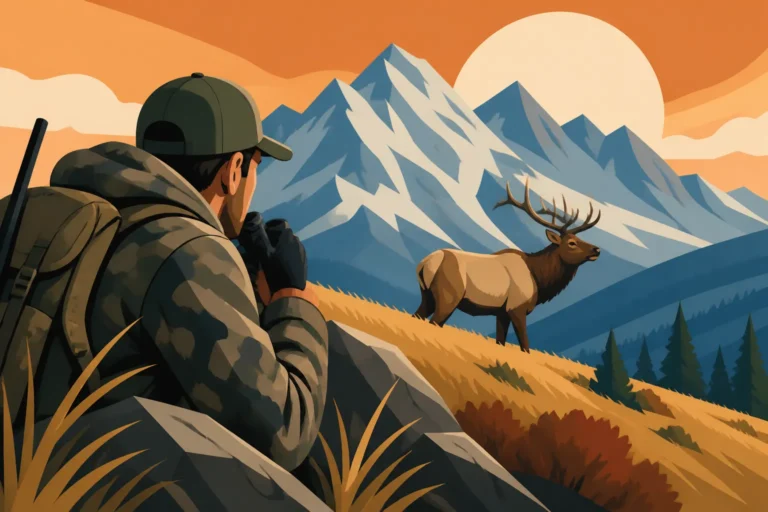
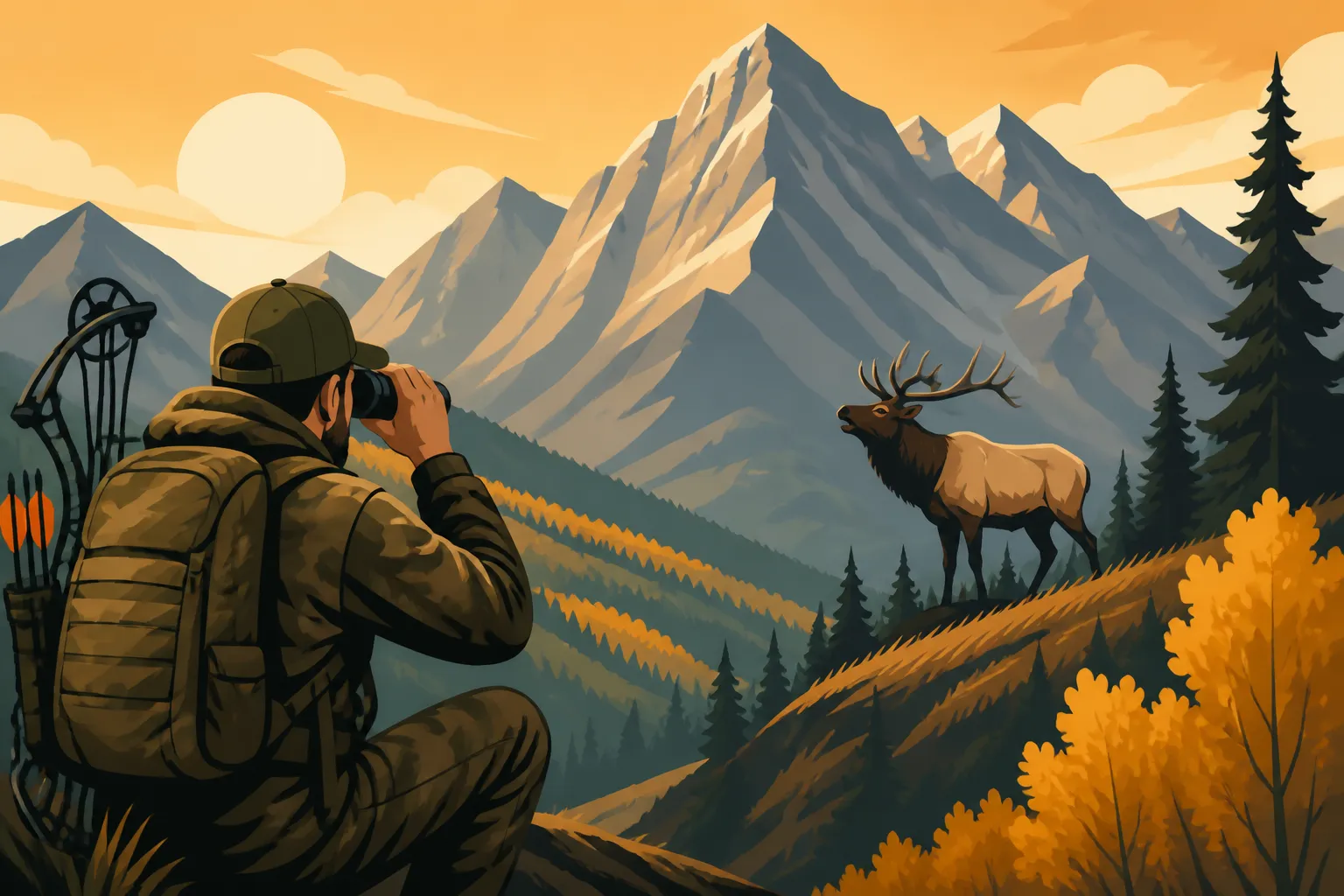
The vastness of Colorado's backcountry can be overwhelming, but effective glassing allows you to efficiently cover immense areas. Find a vantage point that offers wide-ranging views of drainages, clearings, and timber edges. Use high-quality binoculars (10x or 12x are common) or a spotting scope on a tripod for detailed examination. The process is systematic:
- Grid an area: Break the landscape into smaller, manageable sections. Start at the nearest terrain and slowly work your way out, section by section.
- Focus on "high-percentage" areas: Pay extra attention to timber edges, where dark timber meets aspen groves, around water sources, and along game trails.
- Look for pieces, not whole animals: Often, you'll spot an ear, a patch of hide, or an antler tip before you see the entire elk. Look for anything that seems out of place or unnatural.
- Be patient: Spend significant time behind glass. Elk often move, feed, or stand up after hours of bedding. Mornings and evenings are prime times, but never stop glassing.
This technique is a cornerstone of Spot-and-Stalk Hunting in Colorado and will save you countless miles of walking. For more details on effective glassing, especially for vast areas, see How to Glass Big Colorado Basins.
Calling Strategies in Remote Terrain
Calling for elk in the backcountry can be incredibly effective, especially if you've found less pressured animals. Unlike heavily hunted areas where elk might be call-shy, remote bulls can be more aggressive and curious.
- Locating calls: Start your day with a soft cow call or a distant bugle to locate animals without being overly aggressive. Listen for responses, trying to pinpoint the bull's location. For more on locating, refer to How to Bugle-Locate a Colorado Bull.
- Aggressive vs. passive: Once you locate an elk, assess its mood. A hot bull might respond aggressively to a challenging bugle, while a more timid one might require soft cow calls and raking to draw him in. Don't be afraid to experiment. Our guide on How to Call Elk in Colorado covers a range of techniques.
- Calling setup: Always call from a position of advantage. Set up so that the elk has to come to you, preferably into an opening or a shooting lane. Use terrain features like ridges or thick cover to conceal your movement. If hunting with a partner, have the caller stay 50-100 yards behind the shooter, mimicking a cow or satellite bull, which draws the bull's attention away from the approaching hunter.
Remember that discretion is often the better part of valor. If a bull is unresponsive or seems to be moving away, consider changing tactics to a spot-and-stalk rather than over-calling him.
Field Processing and Packing Out an Elk in Colorado
This is where the backcountry hunt truly earns its reputation for toughness. Down an elk miles from the trailhead, and the real work begins. Proper field processing is crucial to preserve the meat and lighten your load.
- Quartering: The most efficient method for backcountry removal is the gutless method. This involves skinning one side, removing the front and hindquarters, the backstraps, and the tenderloins, then flipping the animal and repeating on the other side. You can leave the gut pile in place.
- Meat care: Get the meat off the bone and out of the hide as quickly as possible to allow it to cool. Place meat in breathable game bags (synthetic or cotton blend, not plastic garbage bags) to protect it from dirt and flies. Hang bags in the shade, allowing air circulation. If conditions are warm, consider packing out immediately. Our guide on How to Keep Elk Meat Cool in Warm Weather has more tips.
- Packing out: This will require multiple trips or a single, extremely heavy trip. Expect to carry 70-100+ pounds per load. A good internal or external frame pack is essential. Distribute weight evenly and adjust your pack for comfort. Take frequent breaks, hydrate, and maintain a steady pace. This is where your physical preparation truly pays off. For detailed instructions on this grueling but rewarding task, see How to Pack Out an Elk in Colorado.
Gear Essentials for a Successful Backcountry Elk Hunt
The backcountry is no place for cheap, unreliable gear. Every item in your pack needs to be meticulously chosen for its function, durability, and weight. Your life, and the success of your hunt, literally depends on it. For a complete list, our Colorado Backcountry Hunting Gear List is a must-read.
Lightweight and Durable Gear Choices
The mantra for backcountry gear is "lightweight, durable, and reliable." Here’s a breakdown of key categories:
| Gear Category | Essential Items | Why It's Crucial | Weight Consideration |
|---|---|---|---|
| Shelter | Lightweight tent/tarp, sleeping bag, sleeping pad | Protection from elements, critical for rest and recovery | Every ounce counts; look for 3-season, compact options. |
| Backpack | Internal or external frame pack (60-80L) | Hauling gear in, hauling meat out. Needs to be comfortable with heavy loads. | Choose a pack that fits well and can handle 100+ lbs. |
| Navigation | GPS device/smartphone with mapping app, compass | Staying found is non-negotiable, especially off-trail. | Redundancy is key; bring a physical map and compass as backup. |
| Clothing | Layering system (base, mid, outer), rain gear | Adapt to rapidly changing mountain weather, stay warm when wet. | Wool or synthetic for moisture-wicking; durable outer layers. |
| Optics | Binoculars (10x-12x), spotting scope (optional) | Locating game efficiently, especially in vast terrain. | Balance clarity with weight; a good harness makes carrying easy. |
| Kill Kit | Game bags, sharp knives, sharpening tool, gloves | Proper meat care is vital for preservation and hygiene. | Compact and lightweight; essential for post-kill tasks. |
| Cooking/Water | Water filter/purifier, fuel stove, lightweight pot | Hydration is paramount; hot food and drinks boost morale and energy. | Water filter is lighter than carrying all water; efficient stove. |
| Emergency | First-aid kit, fire starter, headlamp, satellite messenger | Self-reliance for unexpected situations, safety in remote areas. | Don't skimp on safety items; often worth the extra weight. |
Remember, your gear is an investment. High-quality items from brands like Kuiu, Sitka, Mystery Ranch, and Stone Glacier are popular among serious backcountry hunters for a reason – they hold up to abuse and perform when it matters most. For specific footwear, our guide on Best Boots for Colorado Elk Hunting can provide valuable insights.
Navigation and Communication in Remote Areas
In the vastness of the Colorado backcountry, it's incredibly easy to get turned around, especially when chasing an elk or traversing unfamiliar timber. A reliable navigation system is your lifeline. As mentioned, a GPS device with pre-loaded maps or a smartphone app like onX Hunt is crucial. Learn to use them proficiently before your hunt. Understand how to mark waypoints, follow tracks, and measure distances.
Equally important is a means of communication, as traditional cell service is largely absent. A satellite messenger or satellite phone is highly recommended for emergencies. Devices like the Garmin inReach or Zoleo allow you to send and receive text messages and, critically, send an SOS signal if you find yourself in a life-threatening situation. Even if you're hunting with a partner, these devices provide an essential safety net and allow loved ones at home to track your progress and know you're safe. Never venture into remote Colorado wilderness without a plan for navigation and emergency communication.
Disclaimer
Hunting is an inherently dangerous activity. The information provided in this guide is for informational purposes only and should not be taken as a substitute for professional guidance, extensive personal research, or adherence to all local, state, and federal hunting regulations. Always prioritize safety, ethical practices, and respect for wildlife and the environment.