Best Method to Hunt Colorado Pronghorn
Hunting Colorado pronghorn can feel like an exercise in futility. You drive for miles across the vast eastern plains, spot a buck a few ridges over, and before you even get out of the truck, he's somehow already looking your way, twitching his ears, and then, in a blink, he's gone. Their incredible eyesight and blistering speed make them seem almost unhuntable to the uninitiated. This guide will cut through the frustration and reveal the most effective methods to successfully hunt pronghorn in Colorado, helping you put that elusive "speed goat" in your truck.
The Unique Challenges of Colorado Pronghorn Hunting
Before we even talk about tactics, it’s crucial to understand what makes hunting pronghorn in Colorado so distinct from chasing elk in the mountains or whitetails in the timber. These animals are built for their open, expansive environment, and understanding their adaptations is the first step to overcoming the challenges they present.
Masters of the Plains and Their Keen Senses
Pronghorn are often called "speed goats" for a reason. They are the fastest land mammal in North America, capable of hitting speeds up to 60 miles per hour, but it's not just their speed that makes them so challenging. Their eyesight is legendary, often cited as being equivalent to 8-10x magnification for humans. Imagine trying to sneak up on an animal that can spot a flicker of movement a mile or more away on flat ground! This phenomenal vision, combined with their tendency to inhabit wide-open, treeless prairies, means they truly see you coming from what feels like an impossible distance. There's no dark timber to hide in, no deep canyons to use for cover like when you're pursuing a bull elk. Every stalk, every approach, is a game of millimeters and meticulous planning against an animal that seems to have eyes in the back of its head. This is one of the biggest frustrations for new pronghorn hunters – you feel like you’re doing everything right, only to be busted before you even get within range.
Habitat, Behavior, and Their Open World
Colorado's Eastern Plains, particularly the shortgrass prairie and sagebrush country, are the primary domain of pronghorn. Unlike deer or elk, which rely on dense cover for security, pronghorn thrive in an environment where they can see danger coming from miles away. They form herds, often with a dominant buck, and are constantly on the move, grazing on forbs, grasses, and sagebrush. Their daily routine usually involves feeding, bedding down in shallow depressions for a few hours, and moving to water. Because their world is so open, their behavior patterns are often more predictable in terms of general movement, but incredibly difficult to exploit if you don't account for their senses. Understanding these habits is key; for example, knowing that they need to drink regularly, especially in dry conditions, can sometimes offer a unique advantage that other methods don't. While they don't migrate like mountain big game, they will certainly shift territories to find better forage or escape pressure.
Deciphering the Best Pronghorn Hunting Methods
When it comes to the "best" method for hunting Colorado pronghorn, it's not a one-size-fits-all answer. Each tactic has its time and place, its pros and cons, and often, success comes down to reading the situation and having a diverse toolkit of approaches. However, most experienced hunters would agree that spot-and-stalk is the most versatile and often the most rewarding method, with decoying and water hole hunting offering fantastic alternatives under the right circumstances.
Spot-and-Stalk: The Classic Western Approach
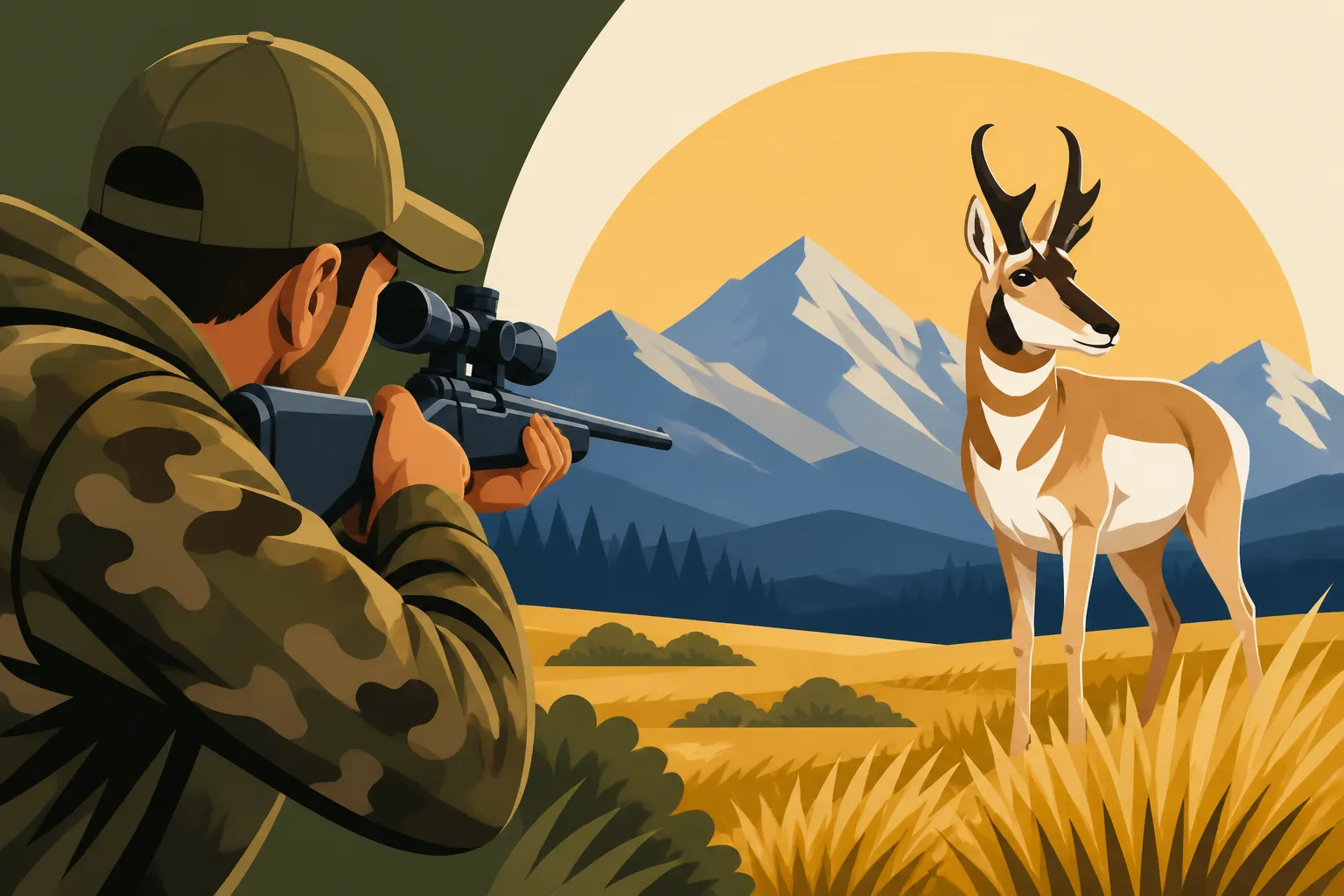
Spot-and-stalk is arguably the most challenging, yet often the most successful, method for hunting pronghorn. It demands patience, physical fitness, and an intimate understanding of the terrain. The core principle is simple: use high-quality optics to locate a buck from a significant distance, plan an approach using natural cover, and then execute a stealthy stalk to get within shooting range.
The biggest frustration here is usually the execution of the stalk itself. You might glass a beautiful buck at two miles, spend an hour planning your route, only to get within 500 yards and realize the last 100 yards are completely devoid of cover. Or worse, another hunter spooks them, or they simply decide to move while you're crawling through a drainage. Success hinges on exploiting every subtle undulation in the landscape – every small rise, every dry creek bed, every stand of taller sagebrush or even a lonely hay bale. Often, the final approach involves extensive crawling on hands and knees, sometimes for hundreds of yards, keeping your profile as low as possible. This is where fitness and mental fortitude really come into play. It's not uncommon to spend hours on a single stalk, only for the wind to shift or a curious doe to blow your cover. For detailed strategies on how to Glass Big Colorado Basins, the principles learned can often be adapted to the vastness of the plains, albeit with different types of "basins."
Decoying: A High-Adrenaline Option
Decoying pronghorn, especially during the rut (typically late August to mid-September for archery, sometimes extending into early rifle seasons), can be one of the most exciting and adrenaline-pumping methods. The idea is to exploit the territorial and aggressive nature of a mature buck by presenting a silhouette of another buck or even a doe. This works best when a buck is already tending a herd of does or feels challenged by a perceived intruder.
To effectively decoy, you typically set up a decoy (usually a full-sized buck decoy, though doe decoys can also work) and then hide behind it, moving slowly towards an unsuspecting buck. The key is to draw him in, often provoking a charge or a cautious approach. The challenge? Pronghorn are incredibly perceptive. If the decoy looks unnatural, or if the buck senses something is off, he’ll often circle downwind, trying to catch your scent before committing. If he gets your scent, the game is usually over, and he’ll bolt. The wind is paramount; you must have the wind in your favor. This method is incredibly rewarding when it works, bringing a wary buck within bow or rifle range in a matter of minutes, but it can also lead to heartbreaking close calls where the buck hangs up just out of range. Learning how to hunt Colorado Pronghorn Decoying is a skill that takes practice and patience.
Hunting Water Holes: Patience Pays Off
In arid regions, particularly during dry seasons, water becomes a critical resource, and pronghorn will often visit specific water sources at predictable times. This makes hunting water holes a viable and often less physically demanding method, relying more on patience and observation than aggressive stalking.
The strategy involves identifying active water sources (stock tanks, small ponds, or guzzlers) and setting up a blind or concealed position nearby. This requires careful consideration of the wind and sun, ensuring you remain undetected. You'll often need to arrive well before daylight and be prepared to sit for hours, waiting for the pronghorn to come in. The biggest frustration here is the waiting game. You can spend an entire day in a blind, only to see no pronghorn, or have them come to a different, less accessible water source you didn’t know about. However, when it works, it can provide close, ethical shot opportunities without the grueling miles of crawling. This method is particularly effective if you’ve done your research using mapping applications like GoHunt to pinpoint likely water sources on public land, and it pairs well with scouting. For those looking for a lower impact hunt, learning how to Hunt Elk Water Holes provides transferable knowledge regarding setting up and waiting.
Comparing Pronghorn Hunting Methods
To help you decide which method might suit your hunting style and the conditions you face, here's a quick comparison of the three primary tactics:
| Method | Difficulty | Excitement Factor | Success Rate (Variable) | Best Conditions | Key Gear |
|---|---|---|---|---|---|
| Spot-and-Stalk | High (Physical & Mental) | Moderate to High | High (with skill) | Open terrain, ample cover features, low wind | Optics (binos, spotter), rangefinder, good boots, knee pads, accurate rifle/bow |
| Decoying | Moderate (Timing & Wind) | Very High | Moderate (situational) | Rut season, territorial bucks, favorable wind | Pronghorn decoy, accurate rifle/bow, scent control |
| Water Hole | Low (Physical) | Low to Moderate | Moderate (dry conditions) | Arid areas, hot/dry weather, limited water | Blind (pop-up or natural), comfortable seat, accurate rifle/bow |
Remember, the "best" method often involves a combination of these. You might spot-and-stalk to a certain point, then use a decoy for the final approach, or pivot to a water hole hunt if conditions turn dry. Flexibility is key to success on the plains.
Essential Strategies for Pronghorn Success
Beyond choosing a specific method, there are overarching strategies and preparations that will significantly increase your odds of success when pursuing Colorado pronghorn. These elements are non-negotiable for a well-rounded and effective hunt.
E-Scouting and On-the-Ground Reconnaissance
In the vastness of the Colorado plains, e-scouting isn't just helpful; it's absolutely crucial. Tools like GoHunt are absolute game-changers for identifying public lands (such as BLM, State Trust Land, or State Wildlife Areas), locating historical animal movements, and most importantly, finding those subtle terrain features that can make or break a stalk. Before you even set foot on the ground, fire up your GoHunt mapping platform and pour over the satellite imagery. Look for drainages, small hills, rock formations, stands of taller vegetation, or even lone trees or abandoned structures that could offer cover. Pay close attention to land ownership overlays; a sliver of public land bordered by private often holds less pressured animals. You can also research the specific Game Management Units (GMUs) you plan to hunt to understand their general access and pronghorn populations.
Once you’ve done your digital homework, nothing beats on-the-ground reconnaissance. Drive the area, even if it’s weeks before the season. Verify public access points, look for recent sign like tracks or droppings near water sources, and confirm that the terrain features you identified on the map actually provide cover. This is also a great time to check wind patterns and gauge where animals might be bedding or feeding. A quick drive-through can save you days of futile hunting later. Understanding how to E-Scout Before a Colorado Hunt will be invaluable, applying the same principles to the specific terrain of the plains.
Wind, Thermals, and Scent Control
While thermals play a massive role in mountain hunting (like when you're learning how to Use Thermals in Colorado Elk Country), their impact on the mostly flat plains for pronghorn is less pronounced but still important. Wind, however, is your constant companion and biggest concern. Pronghorn have a fantastic sense of smell, and a single gust carrying your scent can send them scattering faster than you can blink. Always, always hunt the wind. Whether you're stalking, decoying, or sitting a water hole, position yourself so your scent is blowing away from where you expect the animals to be.
For stalking, this means often making circuitous routes that add significant distance to your approach but keep you downwind. When decoying, the buck will almost certainly try to circle downwind to get a sniff, so anticipating this and having an exit strategy or a quick shot opportunity is vital. Scent control measures, while perhaps not as critical as for deer that live in dense cover, are still a good idea. Wear clean hunting clothes, use scent-eliminating sprays, and avoid strong odors like gasoline or cologne. The goal is to give the pronghorn one less sense to bust you with.
Ethical Shot Placement and Distance Limitations
Pronghorn are not large animals, typically weighing between 90-150 pounds. This means their vital zone is relatively small compared to an elk or even a mule deer. Ethical shot placement is paramount. Aim for the heart-lung area, just behind the front shoulder, to ensure a quick and humane kill. Because pronghorn often hold up in open country, shots can be long. It's not uncommon to take shots out to 300, 400, or even 500 yards. This is where meticulous practice and knowing your rifle's capabilities are non-negotiable.
Before your hunt, spend significant time at the shooting range. Practice shooting from various positions (prone is often best for plains hunting) and at different distances. Familiarize yourself with your rifle's ballistic trajectory and how wind drift affects your bullet at longer ranges. A rangefinder is an absolute must-have piece of gear. Never guess the distance. If you're uncomfortable with a long shot, pass on it. There's no shame in waiting for a better opportunity, or even going home empty-handed, rather than risking an unethical shot. If you're using a bow, your limitations will be much closer, generally within 60 yards, making stalking even more challenging and decoying a preferred method. Regardless of your weapon, understanding how to Judge Distance in the Mountains, while slightly different terrain, provides excellent context for ranging and making ethical decisions in the field.
Disclaimer
Hunting is an inherently dangerous activity. Always prioritize safety, adhere to all Colorado Parks and Wildlife regulations, and be aware of your surroundings and hunting partners. This guide is for informational purposes only and does not replace official hunting education or professional guidance.