Colorado Elk Hunting: Tree Stand Tactics
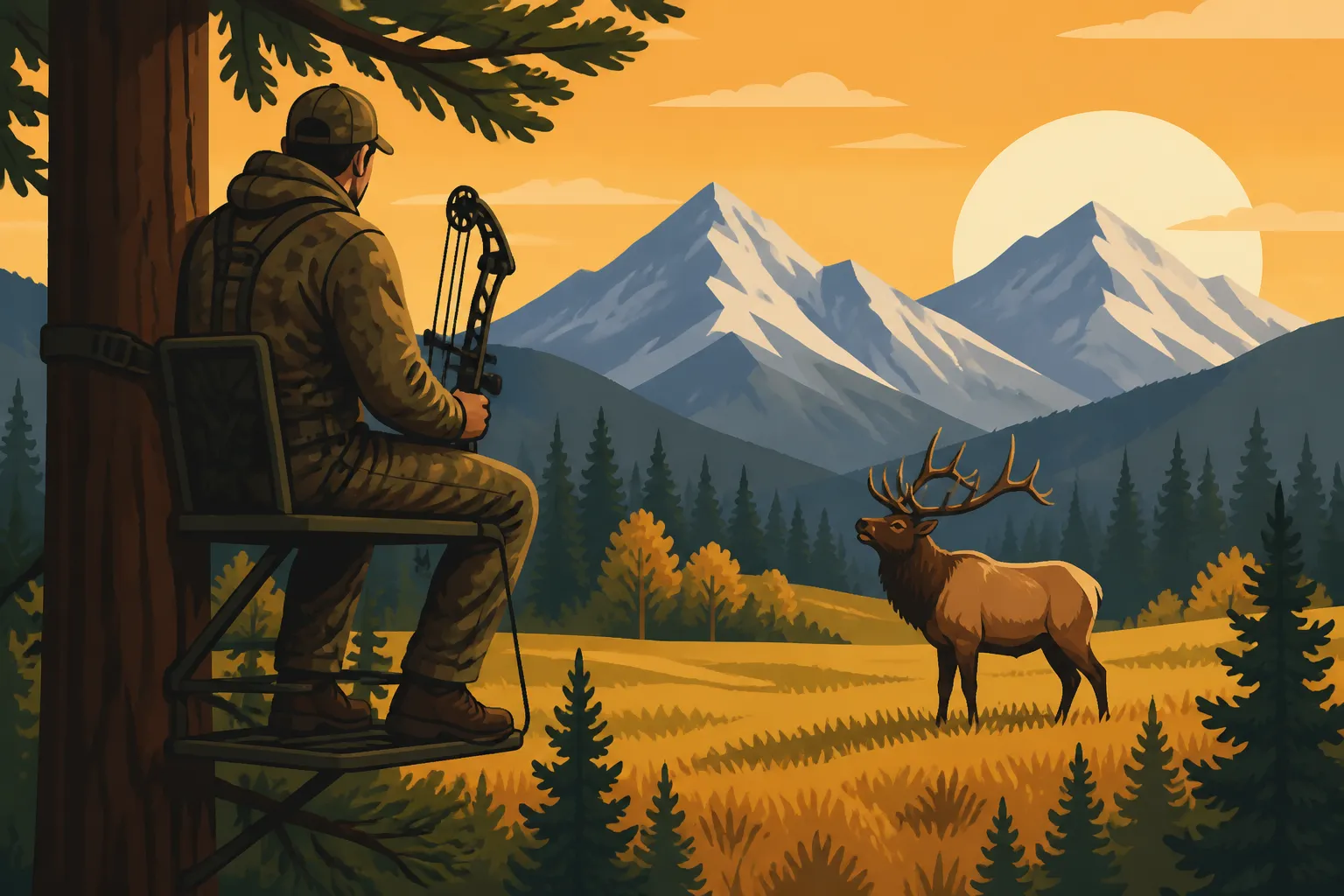
Hunting elk in Colorado from a tree stand might sound a little unconventional to many seasoned Western hunters. You’re likely picturing vast, rugged mountains, deep timber, and elk covering miles in a day, which can make the idea of sitting still in a tree seem, well, a bit futile. But don't write off tree stands entirely! While certainly not the primary method for most elk hunters in the Centennial State, there are specific situations and tactics where an elevated ambush can absolutely be a game-changer, especially when you understand the nuances of elk behavior and the unique Colorado landscape. This guide will walk you through how to effectively integrate tree stand tactics into your Colorado elk hunting strategy, addressing the challenges and revealing the opportunities.
The Niche for Tree Stands in Colorado Elk Hunting
When you think of Colorado elk hunting, images of strenuous hikes, bugling duels, and glassing vast open basins often come to mind. And for good reason – these are the hallmarks of pursuing these magnificent animals in their natural, wild environment. So, why would anyone even consider a tree stand? The truth is, while it's not a tactic for every scenario or every hunter, there are specific situations where a tree stand can offer a significant advantage, particularly for hunters looking to capitalize on predictable elk movement or those with physical limitations. The key is understanding when and where these opportunities arise, rather than trying to force a static tactic into a dynamic landscape.
Capitalizing on Predictable Elk Movement
Elk are creatures of habit, just like any other animal, especially when undisturbed or during certain times of the year. While they might cover immense distances, they often use specific travel corridors, water sources, or feeding areas consistently. This predictability is where a tree stand shines. During the early archery season, before heavy hunting pressure scatters them, elk will often frequent the same wallows and waterholes. If you can locate these high-traffic areas, often found in dense timber where cooler temperatures prevail, a well-placed stand can offer an excellent ambush opportunity. Similarly, late-season elk, especially cows and calves, might settle into lower elevation winter range, hitting specific feed fields or benches as the snow deepens. If you can pinpoint these natural funnels or consistent food sources, a tree stand offers a quiet, scent-controlled vantage point. It’s all about putting in the pre-season work to identify these predictable patterns.
Unique Advantages Over Other Methods
While you might be a dedicated proponent of methods like Spot-and-Stalk Hunting in Colorado or prefer the adrenaline of How to Call Elk in Colorado, a tree stand offers a distinct set of benefits. The most obvious is elevation, which significantly aids in scent control. In the mountains, swirling thermals can betray your presence to an elk in an instant, but being elevated helps to carry your scent over their noses, at least for a while. It also provides a better vantage point for observing game movement without being spotted, and in dense timber, it opens up shooting lanes that would be impossible from the ground. For hunters who might not be able to cover miles of rugged terrain daily, a carefully chosen tree stand location can minimize physical exertion while maximizing hunt time in a high-potential area. It shifts the emphasis from relentless pursuit to patient, strategic waiting, which can be a welcome change for some.
Strategic Placement and E-Scouting for Tree Stand Success
The biggest mistake you can make with a tree stand in Colorado elk country is picking a spot based on a whim. Unlike whitetail hunting in the Midwest, where deer sign is abundant and predictable, elk sign can be vast and misleading. Success with a tree stand in Colorado hinges entirely on strategic placement, backed by meticulous e-scouting and boots-on-the-ground reconnaissance. You’re looking for those rare choke points or resources that funnel elk into a small, defined area, making a static ambush truly effective.
Identifying Prime Locations with Technology
Before you even think about lacing up your boots, fire up your mapping software. Tools like GoHunt are invaluable for identifying potential tree stand locations. Start by looking for water sources – How to Hunt Elk Water Holes and How to Hunt Elk Wallows in Colorado are consistently high-traffic areas, especially during dry periods or early season. Use satellite imagery to pinpoint secluded ponds, springs, or creek crossings within heavy timber. Next, look for natural funnels: saddles between ridges, narrow benches, or areas where thick timber bottlenecks into a smaller opening. Elk often prefer to travel the path of least resistance or through cover. Pay close attention to north-facing slopes, which tend to hold snow longer and offer cooler bedding in warmer weather, making them attractive. Overlaying historical public land hunting pressure data can also help you find those forgotten pockets where elk might feel safer pausing for a drink or a rub. Identify these spots on your map, mark waypoints, and create a scouting plan.
Understanding Elk Patterns and Behavior
E-scouting is just the beginning. The real magic happens when you combine that digital intelligence with an understanding of elk behavior and physical scouting. Elk patterns can vary dramatically by season. During the rut (mid-September to early October), bulls are active, bugling, and less cautious, but also highly mobile. Finding a tree stand location near a wallow actively being used by a bull can be deadly. Later in the season, as hunting pressure increases and food sources dwindle, elk move into thicker cover and often migrate to lower elevations. This is when trails leading to specific feeding areas or through dense timber become crucial. You need to identify not just where elk are, but where they want to be and how they get there. Look for heavily used game trails, fresh rubs on trees, and recent droppings. These are undeniable signs of active elk movement. Spend time observing an area before you commit to a stand. Watch thermals, understand wind direction, and try to visualize how an elk would approach or leave a particular spot. This intelligence will inform your exact stand setup, ensuring you’re positioned correctly for a shot.
Mastering Wind and Thermals in Mountain Terrain
This is arguably the most critical factor for tree stand hunting, especially in the mountains. Colorado’s rugged terrain creates complex and often unpredictable wind patterns and thermals. Thermals are air currents that rise as the ground heats up during the day (updrafts) and fall as it cools in the evening (downdrafts). You absolutely must position your stand to account for these. Generally, in the mornings, thermals will draw your scent uphill, while in the evenings, they will carry it downhill. The goal is to always be above the animals you expect to encounter.
A good strategy is to set up your stand on a bench or ridge where you expect elk to pass below you, utilizing the prevailing winds and thermals to your advantage. Mornings often see elk moving up to bed, so a stand on a lower bench overlooking a travel corridor heading uphill can be effective. Evenings, conversely, have elk moving down to feed or water, making a stand higher up, overlooking downhill travel routes, ideal. Always carry a wind checker (talcum powder, milkweed seeds) and use it religiously. Before you even climb into your stand, check the wind. If it's wrong, your hunt is over before it even begins. Remember, elk have an incredible sense of smell, so every precaution, from scent-control clothing to keeping your gear free of foreign odors, is paramount. Learning How to Use the Wind Hunting Colorado Elk and How to Use Thermals in Colorado Elk Country is non-negotiable for success with a tree stand.
Essential Gear and Setup for a Colorado Tree Stand Hunt
Committing to a tree stand hunt in Colorado means you need to be prepared with the right equipment and a thoughtful setup. The mountains demand durability, adaptability, and safety above all else. You can't just throw up any old stand; you need gear that can handle the elevation, weather, and the sheer effort of getting it into position.
Selecting the Right Tree Stand and Safety Equipment
For Colorado elk hunting, you’re almost certainly looking at a climbing stand or a lightweight hang-on stand with climbing sticks. Ladder stands are generally too cumbersome and noisy for the remote, rugged terrain where you’d consider an elk stand.
- Climbing Stands: These are excellent for versatility if you find a suitable tree (straight, limbless) and need to be mobile. Brands like Summit or Lone Wolf offer models known for their portability and ease of setup. The main advantage is that you're self-contained. The disadvantage is finding the perfect tree can be challenging in certain timber types.
- Hang-on Stands with Climbing Sticks: This setup offers the most flexibility. You can use almost any tree with climbing sticks, allowing you to access more strategic locations. Look for lightweight aluminum models. Millennium, XOP, and Lone Wolf are popular choices. Remember, you'll be packing this in, potentially miles, so every ounce counts.
Regardless of the stand type, safety is non-negotiable. Always use a full-body harness, and be tethered to the tree from the moment your feet leave the ground until they touch it again. Falls from tree stands are a leading cause of hunting accidents. Invest in a high-quality harness and practice using it at ground level before your hunt. It’s also wise to have a lifeline or rope system to raise and lower your bow or rifle safely, preventing accidental discharges or damage to your equipment.
Scent Control, Layering, and Silent Movement
As emphasized earlier, an elk's nose is its primary defense. Rigorous scent control is critical. This means washing your hunting clothes in scent-free detergent, storing them in airtight bags, and showering with scent-free soap before your hunt. Consider scent-eliminating sprays or ozone-generating devices. While no method is foolproof against a mountain thermal, every little bit helps.
Layering your clothing is also vital. Colorado weather can change rapidly from warm mornings to freezing nights, or a sudden snow squall. You'll sweat hiking in, then cool rapidly while sitting still. A good layering system allows you to add or shed clothes to regulate your body temperature, keeping you comfortable and quiet. Look for quiet fabrics that won't rustle when you move. Merino wool is a fantastic option as it wicks moisture, regulates temperature, and remains relatively quiet.
Finally, movement in and out of your stand must be as silent as possible. Minimize metal-on-metal contact with your gear. Wrap noisy items with athletic tape or moleskin. Practice your entry and exit routes, ensuring you can climb in and out without breaking branches or spooking nearby animals. Learning How to Move Quietly Through Colorado Timber is an invaluable skill for stand hunting.
Optics, Shooting Lanes, and Patient Observation
While a tree stand might limit your overall visibility compared to glassing a big basin, it provides a focused view of a high-probability area. Good optics are still essential. A quality pair of binoculars (10×42 or 12×50) like those offered by GoHunt's recommended gear partners can help you pick apart dense cover, identify elk at a distance, and assess shooting lanes. A rangefinder is also a must-have, allowing you to pre-range key landmarks around your stand (e.g., that distinct pine tree at 30 yards, the downed log at 45). This eliminates guesswork when an elk steps into view, giving you confidence for the shot.
Before you even hang your stand, take the time to clear shooting lanes. Use a small saw or clippers to remove any branches that might impede an arrow or bullet path, ensuring you have clear lines of sight to all your pre-ranged spots. Do this discreetly and minimally to avoid alerting animals to your presence. Once in the stand, your primary job is patient observation. Scan your surroundings slowly and methodically. Use your binoculars to check every dark shadow, every cluster of trees. Elk can materialize silently, and often the first sign of their presence is a flick of an ear or the gleam of an antler.
| Feature | Tree Stand Hunting (Colorado Elk) | Spot-and-Stalk Hunting (Colorado Elk) |
|---|---|---|
| Scent Control | Enhanced due to elevation, but still critical with thermals. | Extremely challenging, requires constant wind monitoring. |
| Visibility | Limited to prepared shooting lanes and immediate area. | Broad, panoramic views from high vantage points. |
| Stealth | High once in stand, quiet entry/exit paramount. | Constant challenge, requires meticulous movement. |
| Mobility | Static, tied to one location. | Highly mobile, covers vast ground. |
| Physical Demand | Moderate for setup/pack-in, low during actual hunt. | Very High, covers miles of rugged terrain. |
| Patience | Absolute requirement, long waits are common. | Requires bursts of patience during glassing, then action. |
| Success Rate | Dependent on precise location and elk predictability. | Highly dependent on hunter skill, fitness, and luck. |
| Best Used When | At specific waterholes, wallows, pinch points, late-season feed. | For actively bugling elk, open terrain, or tracking. |
Overcoming Challenges and Maximizing Your Chances
Tree stand hunting for Colorado elk presents unique challenges that differ from more conventional methods. The mountains themselves are an obstacle, as is the behavior of the elk. However, by understanding these hurdles and implementing specific strategies, you can significantly increase your odds of success.
Dealing with Public Land Pressure and Educated Elk
Colorado's public lands can get crowded, especially during rifle seasons. How to Hunt Elk on Public Land Pressure is a real concern, and it applies even to tree stand hunting. Educated elk quickly learn to avoid roads, trails, and popular hunting areas. This means your tree stand locations need to be off the beaten path, often in those overlooked pockets that other hunters aren’t willing to access. Use your mapping tools to identify areas with minimal roads and challenging terrain—these are often sanctuaries for elk seeking refuge from pressure.
Consider hunting during the week or later in the season when fewer hunters are afield. If you’re hunting a heavily pressured area, think about how the pressure moves elk. Often, hunters pushing through drainages will push elk to the opposite side or up to higher benches. Setting up a stand along a natural escape route or a remote saddle they might use to evade pressure could be highly effective. The key is to think like an elk trying to avoid hunters, and position yourself accordingly.
Patience, Commitment, and Knowing When to Move
Tree stand hunting is an exercise in patience. Unlike spot-and-stalk, where you’re actively pursuing game, with a tree stand, you’re letting the game come to you. This requires immense mental fortitude. You might sit for hours, even days, without seeing an elk. Don't get discouraged. Trust your scouting and commit to your chosen spot for a solid block of time. If you’ve scouted thoroughly and know elk are in the area, stick with it. Often, a big bull will appear when you least expect it.
However, there's a fine line between patience and stubbornness. If after several consecutive sits in a well-scouted spot, you're seeing no fresh sign, no activity, and certainly no elk, it might be time to move. Elk move constantly, and their patterns can shift due to weather, new pressure, or changes in food/water availability. Don't be afraid to pull your stand and redeploy to a new high-potential area. This is where the portability of modern tree stands and climbing sticks becomes a huge asset. Flexibility, even with a static setup, can be the difference between success and going home empty-handed. Remember that even the best laid plans need to adapt to changing conditions in the field.
Ethical Shots and Follow-Up from an Elevated Position
Shooting from an elevated position introduces new considerations. The angle of your shot changes significantly, particularly on steep terrain. When shooting at a deer or elk from a tree stand, your arrow or bullet will enter higher on the animal's back and exit lower, following a downward trajectory. This means you need to adjust your aim point to hit the vitals. Instead of aiming for the center of the shoulder or just behind it as you would from the ground, you'll want to aim a bit lower on the body to ensure a clean pass-through through the lungs and heart. Practice shooting from an elevated platform before your hunt to truly understand these trajectory changes. Many hunters build a simple platform in their backyard to simulate this.
After the shot, patience is critical. Even with a seemingly good hit, give the animal time, especially with archery equipment. Elk are incredibly tough, and a little time can allow the animal to expire nearby, making for an easier track and recovery. Mark the precise spot of the shot, identify a landmark where the animal was standing, and another where you last saw it. Then, quietly and methodically, begin your How to Pack Out an Elk in Colorado journey. It's often helpful to sit in your stand for 30 minutes to an hour after a shot, collecting your thoughts and allowing the animal to bed down. If tracking becomes difficult, consider coming back in the morning with fresh eyes and potentially more tracking partners.
Tree stand hunting for Colorado elk is not for everyone, nor is it the primary tactic for most. But for those willing to put in the immense amount of strategic scouting, meticulous setup, and unwavering patience, it offers a truly unique and deeply rewarding way to connect with the wilderness and potentially punch an elk tag in the rugged beauty of Colorado. It’s an effective addition to the comprehensive suite of Colorado Elk Hunting Methods Explained.
Disclaimer
Please be aware that hunting regulations and season dates for Colorado big game can change annually. It is your responsibility to review the current Colorado Parks and Wildlife (CPW) regulations before planning any hunt. This guide is for informational purposes only and does not supersede official CPW guidelines. Always prioritize safety, ethical hunting practices, and respect for wildlife and the land.