Colorado Cottontail and Jackrabbit Hunting
It’s easy to get caught up in the allure of big game hunting in Colorado – the majestic elk, the elusive mule deer, the imposing moose. But sometimes, we overlook the incredible opportunities right under our noses, the hunts that build fundamental skills, provide delicious table fare, and offer endless hours of enjoyment without the intense pressure or high costs of a draw tag. If you’ve ever felt the itch to hunt but were intimidated by the mountain of preparation for a trophy animal, this guide is for you. We’re diving deep into the world of cottontail and jackrabbit hunting in Colorado, an often-underestimated pursuit that offers fantastic experiences for seasoned hunters and newcomers alike.
The Undeniable Appeal of Colorado Small Game Hunting
Let’s be honest, not every hunt needs to be a grueling, week-long backcountry epic. Sometimes, the most rewarding experiences come from simpler, more accessible pursuits. Cottontail and jackrabbit hunting in Colorado offers just that – a chance to get out, hone your skills, and fill your freezer without breaking the bank or dedicating months to e-scouting. It’s the perfect antidote to cabin fever and an excellent way to introduce new hunters to the sport.
Accessibility and Skill Development
One of the biggest frustrations for aspiring hunters in Colorado is the steep barrier to entry for big game. Draw odds can be tough, preference points take years to accumulate, and the financial investment for gear can be substantial. Small game, however, offers a welcoming alternative. Cottontail and jackrabbit tags are often over-the-counter, inexpensive, and seasons are long, sometimes even year-round in certain areas for jackrabbits. This means less planning and more actual hunting time.
Beyond accessibility, these hunts are phenomenal for developing core hunting skills. You’ll practice everything from tracking and reading sign to marksmanship, stealthy movement, and field dressing. Imagine walking through a sagebrush flat, keenly observing every movement, listening for the tell-tale rustle of a rabbit. You learn patience, how to use cover, and how to make quick, ethical shots. These are all transferable skills that will make you a better elk hunter or deer hunter down the line. It's truly a masterclass in the fundamentals, without the pressure of a once-in-a-lifetime tag on the line.
Delicious Table Fare and Sustainable Harvesting
Another aspect often overlooked is just how incredibly tasty cottontail and jackrabbit can be. Forget any preconceived notions; when properly prepared, rabbit meat is lean, mild, and versatile. It's a fantastic source of protein that’s readily available and often free for the taking (after licensing, of course!). Plus, harvesting small game is a highly sustainable practice. Both cottontail and jackrabbit populations are robust across much of Colorado, and hunting helps manage their numbers, ensuring healthy ecosystems.
Think about it: a successful rabbit hunt means you’re bringing home organic, free-range meat that you harvested yourself. It’s a profound connection to your food source. From stews and roasts to fried rabbit and grilled backstraps, the culinary possibilities are endless. Sharing a meal of wild rabbit with family or friends, knowing you put in the effort to procure it, is an incredibly satisfying experience that often rivals the pride of a big game harvest.
Getting to Know Your Quarry: Cottontails and Jackrabbits
While both are often lumped together as "rabbits," cottontails and jackrabbits are distinct species with different behaviors, habitats, and even legal classifications in Colorado. Understanding these differences is key to successful hunting.
Colorado Cottontail Rabbits
Cottontails are true rabbits, smaller in stature, with fluffy white tails that give them their name. In Colorado, you'll primarily encounter the Eastern Cottontail and the Mountain Cottontail. They prefer brushy cover, often found in draws, along creek bottoms, at the edges of agricultural fields, and in rocky outcroppings. They are more likely to "freeze" or bolt for thick cover when spooked, making them a challenge to spot and shoot. Their diet mainly consists of grasses, forbs, and twigs.
You'll find cottontails from the eastern plains all the way up into the foothills and lower mountain elevations. They thrive in areas with a good mix of open feeding grounds and dense escape cover. A typical cottontail hunt involves slowly still-hunting through prime habitat, flushing rabbits from cover, or sitting patiently near known feeding areas, especially during dawn and dusk. Their smaller size also means they offer a slightly different shooting challenge, often requiring quicker reflexes and accurate close-range shots with a shotgun or small-caliber rifle.
Colorado Jackrabbits
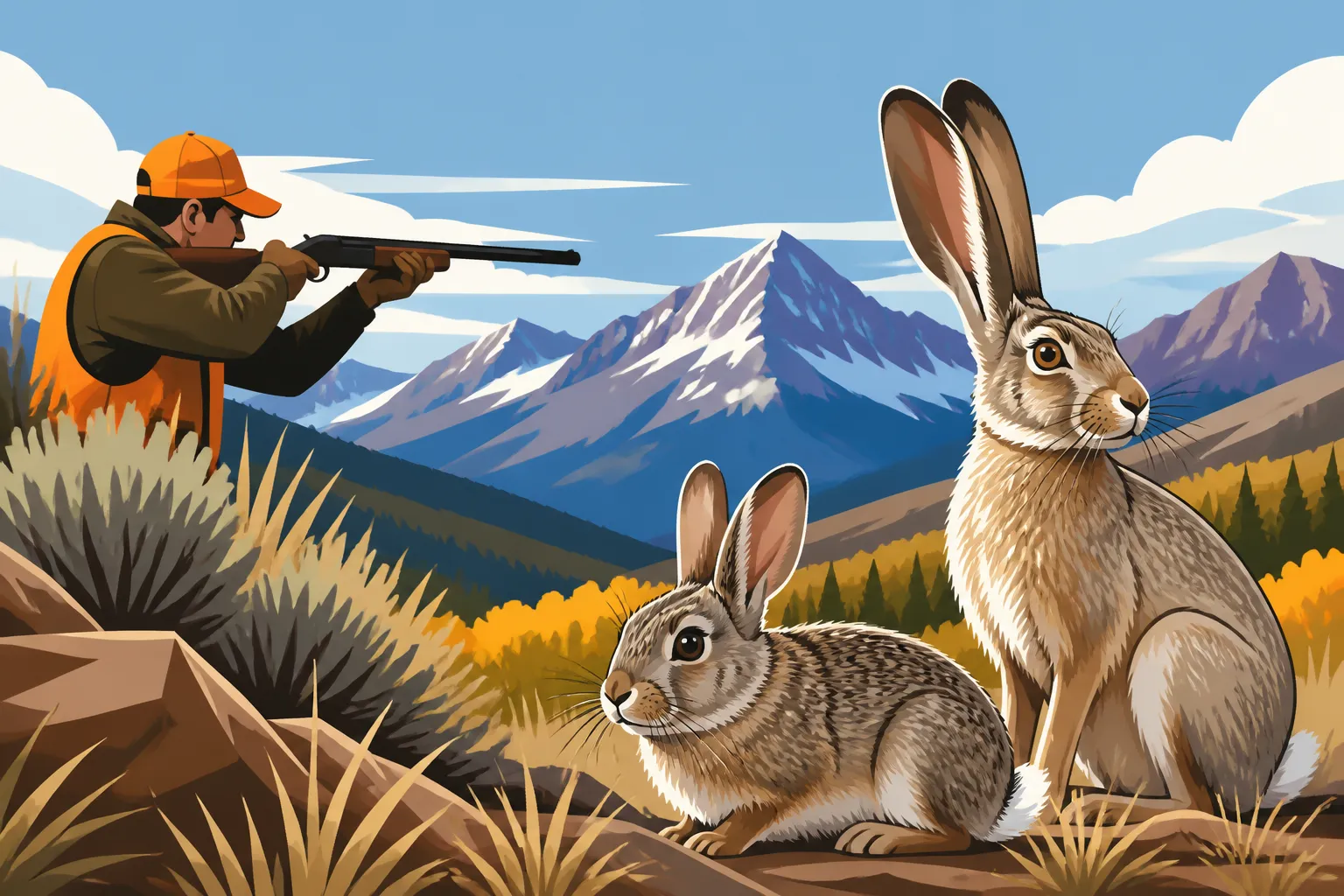
Despite their name, jackrabbits are actually hares, characterized by their longer ears, larger size, and powerful hind legs built for speed. Colorado is home to the White-tailed Jackrabbit and the Black-tailed Jackrabbit. Unlike cottontails, hares don't burrow. Instead, they typically rest in shallow depressions (known as "forms") in open country, relying on camouflage and their incredible speed to escape predators.
Black-tailed jackrabbits are common on Colorado's eastern plains and in sagebrush country across the western slope, preferring open grasslands and desert shrublands. White-tailed jackrabbits are found in higher elevations, often in alpine tundra or subalpine meadows, and are known for their seasonal coat changes to blend with snow. When spooked, a jackrabbit will burst into an incredible sprint, often covering ground in leaps and bounds at speeds up to 35-40 mph. This makes them a challenging target for rifle hunters, requiring longer shots and excellent lead judgment, or fast swinging with a shotgun. Their larger size also means more meat for the freezer!
Here’s a quick comparison of these two popular small game animals in Colorado:
| Feature | Cottontail Rabbit (Genus: Sylvilagus) | Jackrabbit (Genus: Lepus – actually a hare) |
|---|---|---|
| Size | Smaller (2-4 lbs), shorter legs, compact body | Larger (4-9 lbs), longer legs, leaner body |
| Ears | Shorter, proportionate to head | Very long, prominent ears |
| Tail | Short, fluffy, white "cotton" tail | Longer, often black-tipped on top |
| Behavior | Freezes, darts for thick cover, often burrows | Relies on speed, bursts into open sprints, no burrows |
| Habitat | Brushy areas, creek bottoms, rocky areas, field edges | Open grasslands, sagebrush flats, prairies, alpine tundra |
| Diet | Grasses, forbs, leaves, twigs | Grasses, forbs, shrubs, cactus |
| Speed | Fast over short distances, agile | Extremely fast, built for sustained sprints |
| Legal Status | Small game animal | Small game animal |
| Typical Range | Statewide, lower to mid-elevations | Statewide, but distinct species by elevation/habitat |
Essential Gear for a Successful Small Game Hunt
You don't need a fortune to get started with small game hunting, but having the right gear certainly makes the experience more enjoyable and effective. This isn't like a full-blown Colorado Backcountry Hunting Guide, but a smart setup is still important.
Firearms and Ammunition Choices
The beauty of small game hunting is the versatility of your firearm options. For cottontails, a .22 caliber rimfire rifle is a classic choice. It’s quiet, accurate, and the ammunition is inexpensive, allowing for plenty of practice. A good quality .22LR like a Ruger 10/22 or a bolt-action Savage will serve you well. For jackrabbits, especially in open country, a .22 magnum or even a .17 HMR can extend your effective range, offering a flatter trajectory for those longer shots. Shotguns are also incredibly effective, particularly for flushing rabbits from dense cover. A 12-gauge or 20-gauge shotgun with #4, #5, or #6 shot is ideal.
When selecting ammunition, consider your environment. For dense brush, a shotgun spread is often superior for quick-flushing targets. If you're picking off rabbits in open fields or among sagebrush, a rimfire rifle offers precision. Always carry enough ammunition for your hunt, but don't overdo it. A box of .22LR or a dozen shotgun shells should be more than sufficient for a day afield. Remember to zero your rifle before heading out, especially if you'll be taking shots beyond 25-50 yards.
Optics and Essential Field Tools
While you might not need a massive 15x bino setup like you would for glassing a big Colorado basin for elk, a good pair of binoculars is still incredibly useful for small game. A compact 8×32 or 10×42 pair of binos can help you spot rabbits tucked into cover, identify movement, or scan open fields for jackrabbits. This is particularly helpful when you're How to Glass for Colorado Mule Deer (or small game) in open country, as their camouflage can make them blend in perfectly. A rangefinder is also a smart addition for rifle hunters, helping you confirm distances for accurate shots on wary jackrabbits.
Beyond optics, a few other tools are indispensable. A good knife for field dressing, game shears (they make processing so much easier!), and a few game bags or a cooler with ice to keep your harvest cool are crucial. A comfortable daypack will carry your gear, snacks, water, and anything you harvest. Consider a small first-aid kit, a headlamp for early morning starts or late finishes, and navigation tools like a GPS or a phone with a reliable hunting app like GoHunt to pinpoint your location and identify public land boundaries. Don’t forget sturdy gloves to protect your hands, especially when dealing with thorny brush or field dressing.
Appropriate Clothing and Footwear
Colorado weather can be notoriously fickle, even during small game seasons. Layering is always the key, even for a short hunt. Start with a moisture-wicking base layer, add an insulating mid-layer, and finish with a windproof and water-resistant outer shell. You might start your hunt in frosty conditions and find yourself shedding layers by midday. Camouflage isn't strictly necessary for small game, but earth tones or muted greens and browns are certainly advisable to help you blend into the surroundings.
For footwear, comfortable, broken-in hiking boots are paramount. You’ll be doing a lot of walking, often over uneven terrain, through sagebrush, or across rocky patches. Waterproof boots are a plus, especially if you anticipate morning dew or crossing small creeks. Gaiters can also be a game-changer, preventing seeds, dirt, and even snow from getting into your boots and keeping your pant legs dry. A good hat and gloves are also essential for comfort and protection from the elements.
Locating Your Quarry: Best Times and Locations
Finding cottontails and jackrabbits in Colorado isn’t rocket science, but understanding their habits and preferred habitats will significantly increase your success rate. This involves knowing when to hunt and where to look.
Prime Seasons and Time of Day
For cottontails, the seasons are generally long, typically from September 1 to the end of February, but always double-check the current Colorado Parks and Wildlife (CPW) regulations for specific dates and bag limits. Jackrabbits often have a year-round season, which is fantastic for hunters looking to get out during the off-season for big game. While you can hunt them anytime, winter is often preferred. The lack of foliage makes spotting rabbits much easier, and a fresh blanket of snow can reveal tracks, allowing you to effectively How to Still-Hunt Colorado Timber or brushy areas. Plus, cold weather usually means rabbits are less likely to spoil quickly in the field.
Regarding the time of day, rabbits and hares are most active during dawn and dusk. These crepuscular periods are when they move from their bedding areas to feed. Hunting during these windows increases your chances of encountering them out in the open. Midday hunting can still be productive, especially in cooler weather or if you're actively flushing them from dense cover, but expect them to be more hunkered down. On cloudy or overcast days, their activity can sometimes extend further into the day.
Public Land Hotspots and E-Scouting
Colorado boasts an incredible amount of public land managed by the Bureau of Land Management (BLM) and the U.S. Forest Service. These are prime areas for small game hunting. On the eastern plains, look for areas with rolling hills, sagebrush, native grasslands, and especially draws or creek beds with thicker vegetation. State Trust Lands, accessible with a specific permit, can also offer excellent opportunities. On the western slope and in the foothills, focus on the edges of pine forests, areas regenerating after wildfires (which often create thick, brushy cover), and agricultural fields bordered by natural vegetation. A great resource to help you find these spots is the Colorado Hunting Atlas Explained.
Before you even leave home, use tools like GoHunt, onX Hunt, or the CPW’s online interactive maps to e-scout potential areas. Look for features like:
- Habitat Transition Lines: Where open fields meet dense brush, or where forests transition to meadows. These "edge" habitats are magnets for small game.
- Water Sources: Creeks, rivers, and even dry wash beds can hold moisture and provide denser cover.
- South-Facing Slopes: Especially in winter, these slopes catch more sun, melt snow faster, and often have more accessible forage, drawing in rabbits.
- Rocky Outcroppings and Canyon Rims: These provide excellent cover and lookouts for both cottontails and jackrabbits.
Don't be afraid to pull up satellite imagery and zoom in on small details. Sometimes, a tiny strip of dense brush along a fence line or a cluster of rocks can be a rabbit haven. Cross-reference property boundaries to ensure you’re always on public land or have permission for private land access. This careful pre-scouting can save you hours of aimless wandering and put you directly into productive areas.
Mastering Hunting Methods and Strategies
Successfully hunting cottontails and jackrabbits involves a blend of stealth, observation, and quick reflexes. While the approach can vary depending on the species and terrain, a few core strategies consistently produce results.
Spot and Stalk Techniques
This method is particularly effective for jackrabbits in open country and can be used for cottontails if they're feeding in less dense cover. The idea is to slowly scan the terrain with your naked eye and binoculars, looking for any subtle signs of movement or the tell-tale shape of a rabbit or hare. Their camouflage is excellent, so look for anything that seems "out of place" – a patch of fur, a long ear twitching, or the black tip of a jackrabbit’s tail.
Once you spot a rabbit, the real challenge begins: a quiet, deliberate stalk. Use available cover, whether it's rolling terrain, sagebrush, or even a fence line, to break up your silhouette and close the distance for an ethical shot. Move slowly, deliberately, and stop often to scan again. Rabbits have excellent hearing and vision, so any sudden movements or loud noises can send them bolting. Pay attention to the wind direction; while small game might not rely on scent as heavily as big game, keeping the wind in your favor can help muffle your sounds and prevent them from smelling your approach. This patient, methodical approach is also excellent for Spot-and-Stalk Hunting in Colorado larger game.
Still-Hunting and Driving Strategies
Still-hunting is perhaps the most common and effective method for cottontails in brushy terrain. This involves moving slowly and deliberately through prime habitat, taking a few steps, then pausing for several seconds (or even a minute) to scan, listen, and let your eyes adjust. Many rabbits will hold tight in cover, only flushing when you're almost on top of them. The "stop-and-go" motion often causes rabbits to break cover, as they interpret your pause as a predator leaving.
For groups of hunters, a "drive" can be incredibly effective, especially in larger patches of dense brush or along creek beds. One or two hunters act as "drivers," slowly walking through the cover, pushing rabbits towards "blockers" positioned at the other end. The blockers remain stationary and ready, anticipating rabbits attempting to escape the drive. Communication is key during a drive to ensure safety and coordinate movements. This method is often done with shotguns, as rabbits will often burst out quickly, offering fast-moving targets. Remember to always know where your hunting partners are and maintain a safe zone of fire.
Calling and Decoying
While not as common as for larger game, some hunters do experiment with calling for rabbits. Distress calls, mimicking a wounded rabbit, can sometimes draw in curious cottontails, especially if they believe another rabbit is in danger or if a predator is nearby. Electronic callers can be quite effective for this, especially when targeting more wary animals.
Decoying is less prevalent for rabbits but can be used for jackrabbits in very open country. A simple silhouette of a feeding jackrabbit can sometimes pique the curiosity of others, causing them to approach within shooting range. This is an advanced technique, but it can add an interesting dimension to your hunt, much like How to Hunt Colorado Pronghorn Decoying on the plains. It often works best when combined with a well-concealed ground blind or careful use of natural cover.
Understanding Colorado Regulations and Ethical Considerations
Hunting in Colorado means playing by the rules, and small game is no exception. While regulations are generally less complex than for big game, it’s crucial to know the specifics to ensure a legal and ethical hunt.
Colorado Parks and Wildlife Regulations
Always, always consult the current Colorado Parks and Wildlife (CPW) Small Game and Waterfowl brochure. This is your bible for specific season dates, bag limits, possession limits, and any special restrictions for cottontails and jackrabbits. Regulations can change annually, so don't rely on last year's information. For example, while jackrabbits often have a year-round season, cottontails usually have specific start and end dates.
You'll need a valid Colorado Small Game Hunting License to pursue these animals. Non-residents will pay a different price than residents, so check the Colorado Hunting License Costs page. Additionally, always be aware of the specific GMU (Game Management Unit) you are hunting in, as regulations can sometimes vary by unit or region. For example, some areas might have specific restrictions regarding shooting distances near roads or residences. Hunter orange requirements are often relaxed for small game, but wearing some visible orange is always a smart safety practice, especially when hunting with others.
Ethical Hunting and Conservation
Ethical hunting goes beyond just following the rules; it's about respecting the animal, the land, and the hunting tradition. For small game, this means taking clean, ethical shots that result in a quick, humane kill. Practice your marksmanship regularly to ensure you can consistently hit your target. Avoid taking "Hail Mary" shots at running rabbits if you're not confident in your ability to connect cleanly. It's better to let an animal go than to wound it.
Conservation is also paramount. Only take what you can reasonably use and consume, respecting bag and possession limits. Proper field dressing and meat care are essential to ensure the harvest doesn’t go to waste. Pack out all your trash, including spent shell casings, and leave the area cleaner than you found it. Be a good steward of the land and a respectful representative of the hunting community. Being mindful of public land pressure, especially in easily accessible areas, is also key to a positive experience, much like understanding How to Hunt Elk on Public Land Pressure for big game.
Safety First in the Field
Small game hunting might seem less dangerous than big game, but safety should always be your top priority.
- Firearms Safety: Treat every firearm as if it's loaded. Keep the muzzle pointed in a safe direction. Keep your finger off the trigger until you are ready to shoot. Be sure of your target and what is beyond it.
- Identify Your Target: Always positively identify your target as a legal game animal before pulling the trigger. Avoid shooting at movement or sounds.
- Know Your Backstop: Be aware of what lies behind your target. Bullets, even from a .22, can travel a significant distance and pose a danger to people, livestock, or property.
- Hunting with Partners: If hunting with others, communicate constantly, establish safe zones of fire, and wear hunter orange.
- Terrain Awareness: Be mindful of slippery rocks, hidden holes, fences, and other obstacles that could lead to a fall.
- Dehydration and Exposure: Even on short trips, carry enough water. Colorado's high altitude and dry climate can quickly lead to dehydration. Dress in layers to protect against sudden weather changes.
By adhering to these principles, you ensure a safe, enjoyable, and rewarding small game hunting experience in Colorado. It’s a fantastic way to immerse yourself in the outdoors, sharpen your hunting prowess, and enjoy the bounty of Colorado’s diverse wildlife.
Disclaimer
Hunting is an inherently risky activity. This guide provides general information and recommendations but does not replace the need for individual research, adherence to all applicable laws and regulations, and personal responsibility for safety and ethical conduct. Always consult the most current Colorado Parks and Wildlife regulations and consider taking a hunter education course.