Colorado Waterfowl Hunting
For many, Colorado conjures images of majestic elk bugling in golden aspens or bighorn sheep perched precariously on rocky outcrops. But what often gets overlooked, much to the frustration of eager wingshooters, is the incredible, albeit sometimes challenging, waterfowl hunting opportunities tucked away across the state. It can feel daunting to switch gears from big game to understanding migration patterns, decoy spreads, and obscure regulations for ducks and geese, but this guide is here to walk you through everything you need to know to pursue waterfowl in the Centennial State.
Understanding Colorado's Waterfowl Landscape
Colorado might be known for its mountains, but the plains and river bottoms are bustling with feathered action. Waterfowl hunting here is a unique experience, often demanding adaptability and a keen understanding of both geology and ornithology. It's not always easy, but when you hit it right, it's absolutely unforgettable.
Key Flyways and Migration Patterns
Colorado sits squarely within the Central Flyway, a massive migratory corridor stretching from the Canadian prairies all the way down to the Gulf of Mexico. This means that depending on the time of year and the weather patterns, we see an incredible diversity of ducks and geese passing through. Early season might bring in local birds and early migrants, but as winter bites further north, our wetlands, rivers, and agricultural fields become crucial staging and wintering grounds for hundreds of thousands of birds. Understanding these patterns is critical; what works in September on the South Platte might be completely different from what works in December near a large reservoir like Jumbo.
The primary migration pushes usually occur with strong cold fronts moving down from Canada and the Dakotas. These fronts literally push birds south, and when they hit Colorado, they often congregate on large bodies of water before spreading out to feed. Monitoring weather forecasts from states north of Colorado can give you a crucial heads-up on when new birds might be arriving. Tools like the Colorado Hunting Atlas Explained or detailed scouting maps from platforms like GoHunt can help you identify key water sources and agricultural fields that align with these flight paths. Knowing when birds are likely to be present is just as important as knowing where they're going.
Common Waterfowl Species You'll Encounter
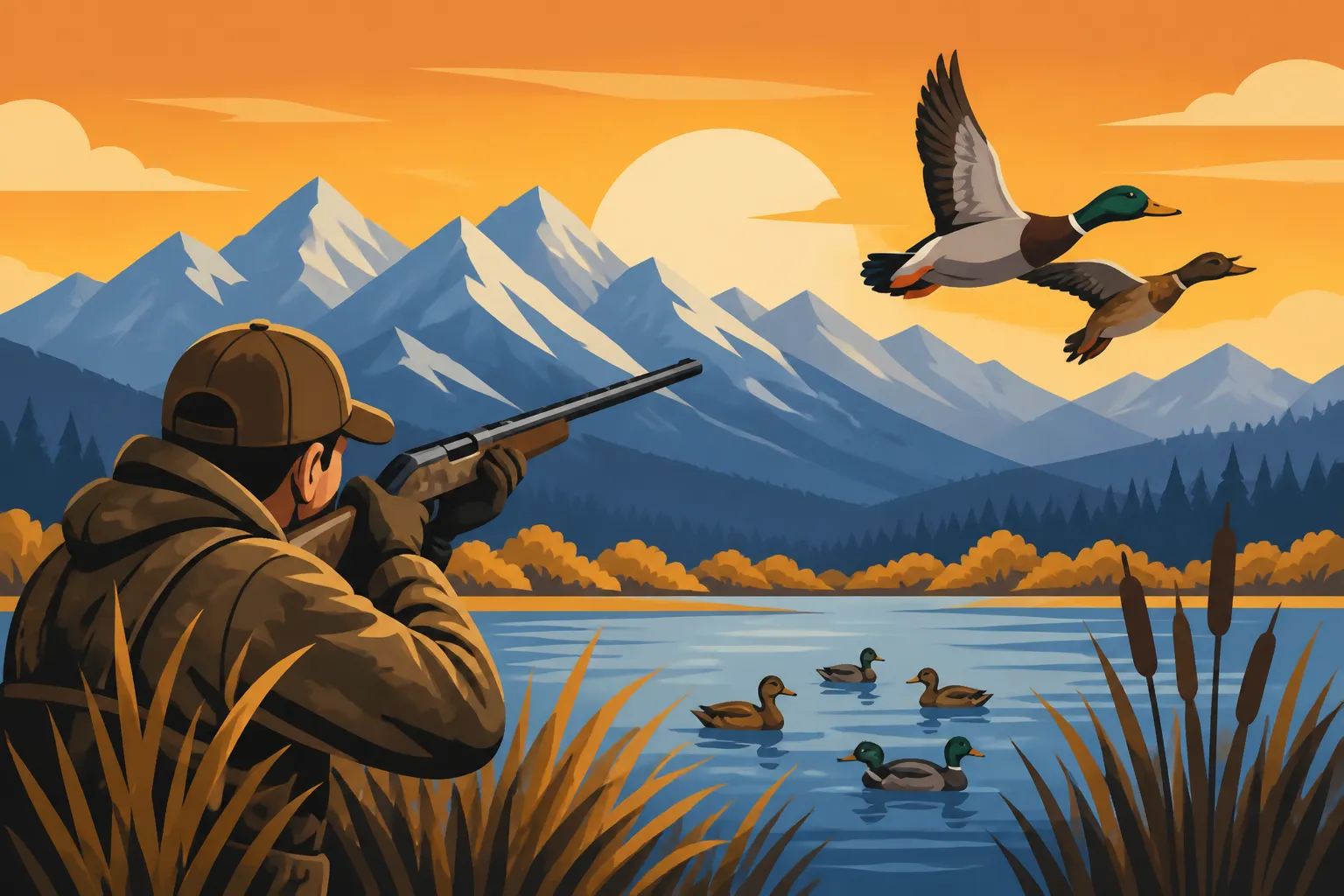
When you hit the blinds in Colorado, you're likely to see a rich mix of species. Ducks are often dominated by dabblers, particularly the iconic mallard. These greenheads are a staple and are found across the state in various habitats, from small ponds to large rivers. Pintails, wigeon, gadwall, and various teal species (blue-winged, green-winged, and cinnamon) are also very common, especially during the early and mid-season migrations. Each species has slightly different habitat preferences, with some preferring shallow marshes and others open water.
Geese are another major draw, with giant Canada geese being the most prevalent. These birds are often year-round residents or winter migrants that can be found in massive flocks, frequently feeding in agricultural fields like corn and winter wheat, or resting on large reservoirs. Snow geese and Ross's geese also pass through, sometimes in spectacular numbers, typically during the spring and fall migrations. Sandhill cranes, while less frequently pursued, also offer a unique hunting opportunity in specific areas of the state. Understanding the specific behaviors and calling techniques for each of these Colorado Waterfowl Species and Flyways is key to tailoring your hunt effectively.
Here's a quick overview of some common waterfowl species and their general characteristics in Colorado:
| Species | Primary Habitat | Feeding Preference | Key Identifiers (Males) | Hunting Tips |
|---|---|---|---|---|
| Mallard | Ponds, marshes, rivers, agricultural fields | Grains, seeds, aquatic vegetation | Green head, white neck ring, grey body | Versatile, respond well to calling, diverse decoys |
| Northern Pintail | Shallow wetlands, large open water, fields | Seeds, aquatic insects | Long pointed tail, chocolate head, white stripe | Require realistic decoys, sensitive to pressure |
| American Wigeon | Shallow marshes, lakes, wet meadows | Aquatic vegetation, grasses | White patch on wing, green eye stripe | Feed in open areas, decoy with confidence birds |
| Gadwall | Marshes, ponds, slow rivers | Aquatic plants, insects | Black rump, white speculum | Often found in mixed flocks, subtle calling |
| Teal (Green/Blue) | Small ponds, shallow marshes, flooded fields | Seeds, insects, small invertebrates | Small, fast flyers, distinct wing patches | Fast action, need quick shooting, small spreads |
| Canada Goose | Large lakes, reservoirs, agricultural fields | Grains, grasses | Black neck, white chin strap | Field hunting common, large decoy spreads, loud calling |
| Snow Goose | Large open fields, coastal marshes | Roots, tubers, grains | White body, black wing tips | Require massive spreads, e-callers can be effective |
Essential Gear and Setup for Colorado Waterfowl
Unlike big game hunting where a rifle and good boots might suffice, waterfowl hunting is a gear-intensive endeavor. Don't let that intimidate you, though! Investing in the right equipment can make all the difference between a frustrating day and a successful, comfortable hunt.
Decoys, Blinds, and Calling Strategies
Decoys are your bread and butter in waterfowl hunting. For ducks, a mix of mallards, pintails, and maybe some gadwall or wigeon can be effective. A typical spread might include a dozen to two dozen decoys, arranged in a "J" or "U" pattern to create a landing zone. Motion decoys, like spinning wing models or jerk cords, can dramatically increase realism and attract distant birds. For geese, especially Canada geese, you'll need larger, more robust decoys. Full-body field decoys or silhouette blinds are popular for field hunting, and a spread of several dozen can be necessary to convince wary birds. Remember that placement is key; study how birds land and take off in relation to the wind.
Blinds are essential for concealment. You'll often find yourself hunting in open fields, along shorelines, or in shallow water, so breaking up your silhouette is crucial. Layout blinds are excellent for field hunting, allowing you to lie prone and pop up when birds are in range. Panel blinds or natural vegetation blinds work well along water edges. For boat hunting, boat blinds are a must. The trick is to make your blind disappear into the natural surroundings, using local grasses, corn stalks, or cattails to brush it in. A truly effective blind will make you invisible.
Calling is an art form, and mastering it takes practice. For ducks, a good mallard call is indispensable. Learn basic quacks, feeding chuckles, and greeting calls. For geese, a short-reed Canada goose call can be very effective, mimicking honks, clucks, and moans. There are also specific calls for snow geese. The goal isn't necessarily to call loudly constantly, but to call effectively and realistically, mimicking the sounds of contented birds on the ground. Less is often more with calling; don't overdo it, especially with wary late-season birds. Practice truly makes perfect, so don't be afraid to listen to real birds and mimic their cadence.
Shotguns, Ammunition, and Waders
Your shotgun is your primary tool in the duck blind. A 12-gauge is by far the most popular choice, offering a great balance of recoil, payload, and versatility. Many hunters prefer a semi-automatic shotgun for quick follow-up shots, but pump-action models are also highly effective and reliable. Regardless of the action, ensure your shotgun is chambered for 3-inch or even 3.5-inch shells to handle heavy loads for larger birds like geese or for longer shots. Regular maintenance is crucial, especially when hunting in wet, muddy, or sandy conditions. Brands like Browning, Benelli, and Winchester are popular among waterfowl hunters for their reliability and performance.
Ammunition choice is critical. Federal law mandates the use of non-toxic shot for waterfowl hunting. This means steel, bismuth, or tungsten-based shot. Steel shot is the most common and affordable, but it's lighter than lead, so you often need to go up a shot size or two (e.g., #2 steel instead of #4 lead) to get equivalent energy. Bismuth and tungsten are denser and perform more like lead, but they come at a higher cost. For ducks, #2 or #3 steel is a good all-around choice. For geese, B or BB steel, or even larger, is often preferred. Always match your choke tube to your shot type and the range you expect to shoot.
Waders are non-negotiable for most Colorado waterfowl hunts. You'll be wading into marshes, sloughs, and shallow rivers to set decoys, retrieve birds, and position blinds. Neoprene waders offer excellent insulation for cold weather, while breathable waders are more comfortable for warmer early-season hunts. Ensure they fit well, are durable, and have good boots for traction in mud. A good quality pair of waders, combined with appropriate layering underneath, will keep you dry and comfortable, which is paramount for enjoying long hours in potentially frigid conditions. Without them, you'll be wet, cold, and miserable—and probably going home early.
Navigating Colorado's Waterfowl Seasons and Regulations
Colorado Parks and Wildlife (CPW) governs all hunting in the state, and their regulations for waterfowl can be complex, with specific zones, split seasons, and varying bag limits. It’s absolutely essential to stay on top of the current rules every single year. Ignoring these details can lead to fines and loss of hunting privileges, something no one wants. Checking the current year’s waterfowl brochure is an absolute must before you even think about heading out.
Season Dates and Bag Limits
Colorado's waterfowl seasons are typically divided into several zones (e.g., Central Flyway — Ducks, Geese, and Light Goose Conservation Order) and often feature "split seasons." This means there might be an early season, a closure period, and then a later season. These splits are designed to optimize hunting opportunities while protecting bird populations during sensitive times, like migration peaks or periods of heavy pressure. For instance, the duck season usually opens in late September or early October and may run through January, with a potential break in between. Goose seasons generally open a bit later and extend further into January or even early February. You absolutely must consult the current CPW waterfowl hunting regulations brochure for precise dates and zone boundaries, as these can shift annually based on federal frameworks and local bird population data. Don't rely on last year's knowledge; things change!
Bag limits also vary significantly by species and can be complex. For ducks, there's often a total daily bag limit (e.g., 6 ducks per day), but within that, there are species-specific limits (e.g., no more than 4 mallards, 2 hen mallards, 2 pintails, 2 redheads, etc.). Goose limits are usually simpler but still require attention. Light geese (snow and Ross's) often have much more liberal bag limits, especially during the Light Goose Conservation Order, which is a special season designed to help manage overpopulated snow goose numbers. Familiarize yourself with the visual identification of each species, especially distinguishing between male and female mallards, to ensure you stay within legal limits. Always count your birds carefully and know your species before you pull the trigger.
License, Stamps, and Hunter Education Requirements
Before you even think about setting foot in a marsh, you need to be properly licensed. First and foremost, you'll need a valid Colorado hunting license, which you can purchase online through the CPW website or from authorized vendors. Non-residents will pay a higher fee, but it's worth it for the opportunity. Details on costs can be found in the Colorado Hunting License Costs guide. Additionally, everyone 16 years of age or older must purchase a Federal Duck Stamp, which contributes to wetland conservation efforts nationwide. This stamp must be signed across its face and carried with you while hunting.
In addition to the Federal Duck Stamp, Colorado requires hunters 16 years and older to purchase a Colorado State Waterfowl Stamp. This stamp also contributes directly to waterfowl habitat conservation within the state. Furthermore, if you plan to hunt migratory birds, you must register for the Harvest Information Program (HIP). This is a free registration that collects data on hunter effort and harvest, which is crucial for managing migratory bird populations. Simply put, no HIP registration, no legal migratory bird hunting.
Finally, hunter education is a must for most hunters. If you were born on or after January 1, 1949, you must possess a valid hunter education card or certificate to hunt in Colorado. There are some exemptions for active military and those with proof of hunter education from another state, but it's always best to check. If you're a new hunter or unsure, completing the Colorado Hunter Education Requirement course is a valuable step, not just for compliance but for safety and ethical hunting practices. Always carry all required licenses, stamps, and certifications with you in the field.
Prime Waterfowl Hunting Locations in Colorado
Colorado offers a surprising variety of landscapes for waterfowl hunters, from high-plains reservoirs to winding river bottoms. Finding the right spot is often the biggest challenge, but with a bit of scouting and local knowledge, success is well within reach. This isn't just about pointing to a map; it's about understanding why certain areas hold birds.
Public Land Hotspots and Reservoirs
Colorado boasts a substantial amount of public land managed by various agencies, including Colorado Parks and Wildlife (CPW), the Bureau of Land Management (BLM), and the U.S. Forest Service. Many State Wildlife Areas (SWAs) and State Parks are specifically managed with waterfowl in mind, often featuring designated hunting areas, managed impoundments, and access points. Locations like the St. Vrain State Park, Barr Lake State Park, Two Ponds National Wildlife Refuge, and portions of the South Platte River corridor are well-known hotspots. However, these areas can also experience significant hunting pressure, especially on weekends and during peak migration. Check the Colorado Public Land Hunting Guide for general information on public access.
Large reservoirs across the state are also magnets for waterfowl, particularly during migration and wintering periods. These expansive bodies of water offer safe roosting areas, and birds will fly out to feed in surrounding agricultural fields. Reservoirs such as Jumbo Reservoir, Prewitt Reservoir, Adobe Creek Reservoir (Blue Lake), and John Martin Reservoir are legendary for their goose hunting, and often have designated hunting zones or boat access opportunities. Utilizing resources like the CPW's interactive Colorado Hunting Atlas Explained is invaluable for identifying public access points, SWA boundaries, and potential walk-in areas. Remember that conditions on these reservoirs can change rapidly with weather, so always prioritize safety, especially when using a boat.
Utilizing Private Land and Access Programs
While public lands offer great opportunities, private land can hold some of the most consistent waterfowl hunting, especially when it comes to field hunting for geese. Many large agricultural operations, particularly in the eastern plains and along major river systems like the South Platte, attract thousands of birds. Gaining access to private land usually requires permission from the landowner, which can be challenging to secure without existing connections. It often involves knocking on doors well in advance of the season, being respectful, and offering to help landowners with other tasks. Building a good relationship based on trust and respect is crucial.
Alternatively, Colorado has some excellent programs that help hunters access private land. The Walk-In Access (WIA) program, for example, leases private land for public hunting access, often for species like waterfowl. The specific properties enrolled in WIA can change yearly, so always consult the latest CPW information. Some outfitters also offer guided hunts on private land for a fee, providing access to prime areas without the hassle of securing permission yourself. These services can be especially beneficial for non-residents or those with limited time for scouting. Always respect private property boundaries, whether hunting with permission or on WIA lands. For detailed information on specific state-managed areas, check out the Colorado State Wildlife Areas Hunting guide.
Effective Strategies for a Successful Hunt
Waterfowl hunting is often described as a chess match against nature and incredibly intelligent birds. To consistently succeed, you need more than just good gear; you need strategic thinking, relentless effort, and the ability to adapt.
Scouting and Weather Considerations
Scouting is, arguably, the most crucial component of waterfowl hunting success. Birds are creatures of habit, but those habits can change daily based on food sources, weather, and pressure. You need to know where the birds are feeding, where they're loafing, and what their flight paths are. This means spending time before the season, and even between hunts, driving backroads, using optics to glass fields and water bodies, and observing bird behavior. Pay attention to cornfields that have been cut, winter wheat that's coming up, and any changes in water levels or ice cover. Tools like GoHunt can provide satellite imagery and land ownership overlays, which are invaluable for e-scouting and identifying potential hunting spots from home, but boots-on-the-ground scouting can't be fully replaced.
Weather is the ultimate dictator of waterfowl movement. Cold fronts, snow, and strong winds can push new birds into the area and concentrate existing ones. A bluebird, calm day might mean birds are scattered and wary. Pay close attention to wind direction and speed. Waterfowl almost always land into the wind, so your blind and decoy spread need to be positioned accordingly. A steady 10-15 mph wind can be a waterfowl hunter's best friend, giving your decoys lifelike movement and making birds commit. Conversely, a dead calm day makes birds incredibly wary and difficult to decoy. Learning How to E-Scout Before a Colorado Hunt can give you a significant advantage in understanding these environmental factors.
Dog Training and Ethical Hunting Practices
A well-trained retriever is not just a luxury; it's an ethical imperative in waterfowl hunting. A good dog can retrieve birds from thick cover or open water that would otherwise be lost, ensuring that every bird you shoot is recovered. Training takes dedication, starting with basic obedience and progressing to retrieving drills, working with decoys, and tolerating gunfire. Introducing your dog to water and various types of cover early on is key. Brands like Garmin offer excellent GPS tracking collars that can be invaluable for keeping tabs on your dog in dense cover or large fields. A dog's enthusiasm and dedication make the hunting experience richer and significantly increase your chances of recovering downed birds.
Ethical hunting practices are paramount. This includes knowing your effective shooting range and only taking shots at birds within that range to minimize wounding. For most hunters, this means keeping shots within 30-40 yards, especially with steel shot. Passing up a long shot is always better than wounding a bird you can't retrieve. Furthermore, respecting landowners, other hunters, and wildlife is fundamental. Clean up your spent shells, leave no trace, and ensure you're aware of all regulations, including those pertaining to specific Colorado GMUs Explained you might be hunting in. Be a good ambassador for hunters, demonstrating respect for the land, the animals, and the privilege of being outdoors.
Overcoming Common Challenges in Colorado Waterfowl Hunting
Colorado waterfowl hunting can present some unique hurdles. From crowded public lands to rapidly changing weather, success often comes down to how well you anticipate and react to these challenges. Don't get discouraged; instead, learn to adapt!
Dealing with Hunting Pressure
Public land waterfowl hunting in Colorado can, at times, feel like a competitive sport, especially during peak season or on easily accessible areas. Hunter pressure is a real frustration, pushing birds into refuge areas, making them wary, and forcing them to change their routines. The key to mitigating pressure is often to do what others won't: walk farther, scout harder, and hunt weekdays if possible. Being willing to hike into more remote areas, or even use a kayak or small boat to access less-pressured sloughs and backwaters, can pay huge dividends.
Another strategy is to identify obscure public access points or lesser-known Colorado State Wildlife Areas Hunting that might not be on everyone's radar. Tools like GoHunt can help you overlay public land boundaries with satellite imagery to spot these hidden gems. Learning to hunt "the edges" – the areas just outside of known hotspots – can also be effective. Birds often stage or feed in these transition zones when the main areas are too busy. Finally, being courteous and communicating with other hunters in shared spaces is crucial. A simple conversation can prevent conflicts and sometimes even lead to sharing information that benefits everyone.
Adapting to Changing Conditions
Colorado's weather is notoriously fickle, and this directly impacts waterfowl hunting. One day it might be mild and sunny, and the next you could be facing a blizzard. Snow and extreme cold can freeze over smaller water bodies, pushing birds to larger, deeper reservoirs and rivers that remain open. This requires hunters to be flexible with their target locations. What worked last week might be completely ineffective this week. Staying prepared for all conditions means having appropriate layers, including waterproof and windproof outerwear, warm hats, gloves, and reliable insulated boots.
Water levels can also fluctuate dramatically, especially on rivers and reservoirs that are managed for irrigation or flood control. A prime marsh one week might be bone dry or flooded beyond recognition the next. Continuously scouting and monitoring water levels, even checking online resources if available for specific reservoirs, is important. Adapting your strategy could mean switching from marsh hunting to field hunting for geese, or seeking out smaller, less obvious pockets of water that might be holding birds. Being versatile and having multiple game plans based on the prevailing conditions is the mark of a seasoned Colorado waterfowl hunter. It's not about forcing your plan onto the birds; it's about letting the birds and the weather dictate your plan.
Disclaimer
Please remember that hunting regulations, season dates, and license requirements are subject to change annually. Always consult the most current Colorado Parks and Wildlife (CPW) official regulations brochure and relevant federal guidelines before planning any hunting trip. This guide is for informational purposes only and does not replace official regulatory documents.