Best Time to Hunt Mule Deer in Colorado
Trying to pin down the absolute best time to hunt mule deer in Colorado can feel like a puzzle with a million moving pieces—seasons, weather, rut, migration, public land pressure—it's enough to make your head spin. You’ve likely heard stories of giant bucks taken in the early archery season, or seen pictures of late-season monsters in the snow, leaving you wondering if there’s a secret window you’re missing. This guide is here to break down the complexities, helping you understand the different opportunities each season presents so you can strategically plan your next Colorado mule deer adventure for maximum success.
Understanding Mule Deer Seasons in Colorado
Colorado offers a diverse range of hunting seasons for mule deer, each with its own unique challenges and rewards. Unlike some other states, Colorado’s system for deer tags primarily relies on a draw, meaning you'll need to plan well in advance and understand the intricacies of the Colorado Draw System and Preference Points. Knowing when and how to apply for Colorado Mule Deer Season Dates and Tags is just the first step; truly understanding what each season offers is key to picking the "best" time for your hunt.
Colorado's General Mule Deer Season Structure
The mule deer hunting landscape in Colorado is broadly divided into three main weapon types, each with specific dates and characteristics:
- Archery Season: Typically running from late August through September, this season coincides with the deer still being in their summer patterns, often in higher elevations and bachelor groups. The archery season generally overlaps with the early part of the elk rut, which can be both a blessing and a curse. You might find less overall hunter pressure specific to deer, but more general backcountry users. Success often hinges on locating bucks in velvet or hard horn before they shed their summer coats and patterns. Bowhunters will need to be proficient in their stealth and close-range tactics, as mature bucks are incredibly wary.
- Muzzleloader Season: This is a shorter, specialized season, usually falling in mid-September. It's often seen as a bridge between archery and rifle seasons, offering a unique opportunity to hunt when bucks are transitioning from summer to fall patterns. The advantage here is often lower hunter numbers compared to rifle seasons, and the chance to hunt bucks that are just beginning to show signs of pre-rut behavior. However, the limited range and single-shot nature of muzzleloaders add a layer of challenge that requires precision and patience.
- Rifle Seasons: Colorado has four distinct rifle seasons for big game, usually running from late October through mid-November. These seasons are the most popular and often require the most preference points to draw a desirable tag. The early rifle seasons (1st and 2nd) can see bucks still in their general fall ranges, while the later seasons (3rd and 4th) often coincide with the peak of the rut and the beginning of migration, making them highly sought after. Hunter density tends to be highest during these periods, especially in accessible public land units.
Key Factors Influencing Season Choice
Beyond just the weapon, several environmental and biological factors heavily dictate the "best" time to hunt mule deer. Understanding these can help you pick the season that aligns with your hunting style and goals for your Colorado Mule Deer Hunting Guide.
- Weather: Colorado mountain weather is notoriously unpredictable. Early seasons can be hot and dry, leading to deer seeking shade and water, often making them nocturnal. Mid-season hunts can bring crisp fall days, but also sudden blizzards that push deer to lower elevations. Late-season hunts are often defined by snow and bitter cold, which can drive deer into predictable migration corridors but also make human access difficult and dangerous. Monitoring long-range forecasts, especially for high-country hunts, is absolutely critical.
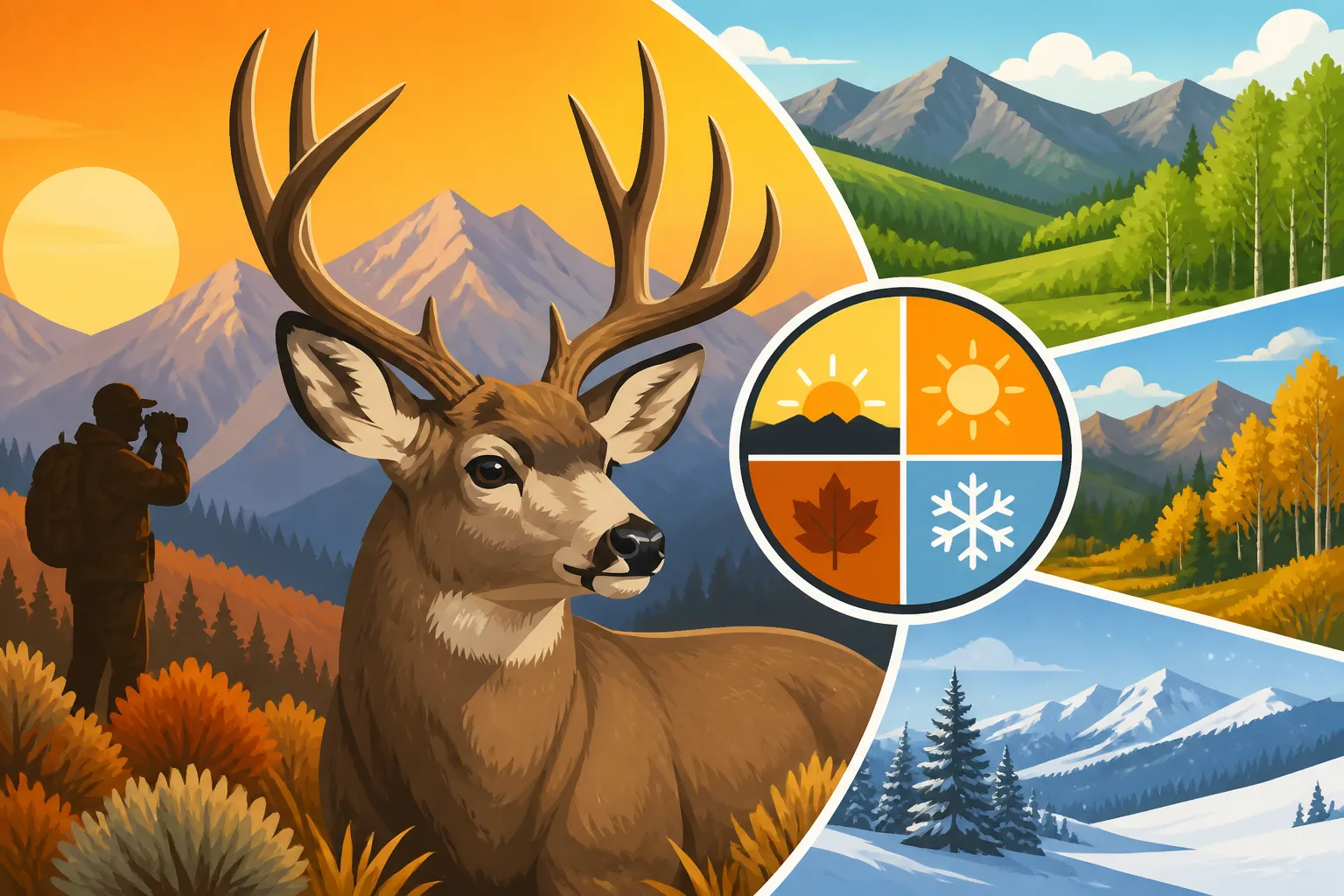
- The Rut: This is arguably the most coveted factor for many mule deer hunters. The mule deer rut typically peaks in mid-to-late November in Colorado, coinciding perfectly with the later rifle seasons. During the rut, bucks become more active, less cautious, and more focused on finding does, making them more visible and vulnerable. They are often seen traveling in the open, chasing does, or scent-checking areas. For a hunter seeking a trophy buck, timing your hunt with the rut can significantly increase your chances, though it also means competing with more hunters. The Colorado Mule Deer Rut Explained is a deep dive into this crucial period.
- Migration: As winter approaches and snow depths increase in the high country, mule deer begin their annual migration from summer ranges to lower-elevation wintering grounds. This movement can concentrate deer into specific drainages, saddles, and travel corridors, offering unique hunting opportunities. Hunting during migration can be highly productive, but it requires diligent scouting and often a good understanding of local deer movement patterns. Knowing when and where deer migrate can be a game-changer, especially for late-season rifle hunters.
Breaking Down Specific Seasons for Mule Deer
Each hunting period in Colorado offers a distinct experience for mule deer hunters. Understanding these nuances can help you decide which window aligns best with your hunting style, physical capabilities, and trophy aspirations. Whether you're a patient bowhunter or a rifle enthusiast looking for that migration push, there's a season tailored to you.
Early Season Archery & Muzzleloader Opportunities
The early seasons, primarily archery and muzzleloader, run from late August through September. This is a time of transition for mule deer, and it offers some incredible opportunities, often with less hunter pressure than the rifle seasons, if you're prepared for the challenges.
- Archery (Late August – September): This season is all about finding bucks in their summer patterns. Many bucks will still be in velvet in late August, grouped in bachelor herds, and often found in high-elevation alpine basins or shady timber pockets. The foliage is still thick, and temperatures can be quite warm, especially at lower elevations. Success in the early archery season often relies on extensive pre-season scouting, excellent glassing skills, and a commitment to spot-and-stalk tactics. Hunters often use optics to locate bucks feeding in open parks or bedding in timber, then plan a careful approach. The key challenge is getting within bow range without spooking these keen-sensed animals. For those looking to dive deeper, you might explore Colorado Mule Deer Hunting: Archery Tactics.
- Muzzleloader (Mid-September): Falling just after the archery season, the muzzleloader season is a short but often productive window. Bucks are typically hard-horned by this point and may have started to break up from their summer bachelor groups, becoming a bit more solitary or moving to slightly lower, more accessible elevations as the weather cools. The landscape is changing, with aspens beginning to turn golden, and the air is crisp. This season can offer a fantastic opportunity to hunt before the full-blown rifle seasons kick in, often with fewer hunters than the later dates. The challenge, of course, is the inherent limitation of a muzzleloader – a single shot, slower reloading, and often less range. Precision in shot placement and stalk planning is paramount.
Mid-Season Rifle Considerations
The first two rifle seasons, typically in late October, represent a significant shift in hunting dynamics. These are popular times to be in the field, and success often hinges on adapting to changing deer behavior and increased hunter activity.
- 1st and 2nd Rifle Seasons (Late October): These seasons occur before the peak of the rut, but deer are actively feeding and establishing their fall ranges. Depending on the weather, deer might still be at higher elevations or have begun to move towards their wintering grounds. Temperatures are usually cooler, and the foliage has largely dropped, which can improve visibility in timbered areas. Hunter pressure starts to increase dramatically during these seasons, especially on readily accessible public lands. This means hunters need to be prepared to hike further, hunt smarter, and consider areas with less road access. Often, finding secluded pockets of habitat that receive less pressure can yield good results. Patience, thorough glassing, and a willingness to move are crucial. Understanding How to Rifle Hunt Colorado Mule Deer can be incredibly beneficial during this period.
- Challenges: The biggest challenge during mid-season rifle hunts is often hunter density. With more people in the woods, deer become warier and can go completely nocturnal or move into thick cover, making them harder to find. You might need to adjust your strategy and focus on overlooked terrain, or units known for carrying deer that are less susceptible to pressure. Using advanced e-scouting tools, such as those offered by GoHunt, can help identify potential low-pressure areas and productive habitat well before you ever set foot in the field.
Late Season Rifle and the Winter Migration
For many, the late rifle seasons in November are the "best" time to hunt mule deer in Colorado, primarily due to the rut and the onset of winter migration. These seasons offer the highest potential for encountering mature bucks that might be elusive at other times of the year.
- 3rd and 4th Rifle Seasons (Early to Mid-November): These seasons often align with the peak of the mule deer rut. Bucks, driven by the urge to breed, are far more active during daylight hours, traveling widely in search of does. They are less cautious and can make mistakes they wouldn't normally. This is when you'll see bucks chasing does across open slopes, sparring with rivals, and generally putting on a show. The weather during these seasons can be highly variable – from mild fall days to full-blown winter blizzards. Heavy snow can push deer down from higher elevations, concentrating them in migration corridors and winter range. Hunting the rut means focusing on areas with high doe populations, as bucks will be drawn to them. This can include anything from lower-elevation aspen forests to sagebrush hills adjacent to agricultural fields. For an in-depth look, check out Colorado Mule Deer Rut Explained.
- Hunting the Migration: As significant snow falls and temperatures drop, deer begin their annual migrations to winter range. This can create predictable movement patterns, as deer funnel through specific saddles, valleys, and benches. If you can identify these migratory routes, you might intercept large numbers of deer, including mature bucks. However, timing the migration perfectly is tricky; it’s largely dependent on weather, particularly snow depth and duration. Scouting beforehand, using tools like GoHunt’s detailed maps to identify historical migration corridors and winter range, is invaluable. This is an exciting but challenging time to hunt, often requiring resilience in cold weather and a good understanding of how deer use the landscape during harsh conditions. Consider reading How to Hunt Migration-Season Mule Deer for more specific tactics.
- Increased Competition: Naturally, because of the rut and migration, these late rifle seasons also draw the most hunter interest. Expect more competition, especially in prime units known for big bucks. This means being prepared to go deeper, work harder, and possibly hunt during less desirable weather conditions to find success.
Here’s a quick overview of the characteristics of each season:
| Season Type | Dates (Approx.) | Key Characteristics | Pros | Cons |
|---|---|---|---|---|
| Archery | Late Aug – Late Sep | Summer patterns, velvet bucks, high country | Lower hunter pressure, unique challenge, potential for velvet buck | Warm weather, thick cover, deer often nocturnal, difficult stalks |
| Muzzleloader | Mid-Sep | Bucks hard-horned, transitioning, pre-rut beginning | Lower hunter pressure than rifle, good weather often | Limited range, single shot, short season, deer still scattered |
| 1st & 2nd Rifle | Late Oct | Fall patterns, post-velvet, pre-rut | Cooler weather, improved visibility | Increasing hunter pressure, deer can be pressured, less rut activity |
| 3rd & 4th Rifle | Early – Mid-Nov | Peak Rut, winter migration, snow often present | Highest potential for trophy bucks, deer more active | Highest hunter pressure, unpredictable severe weather, draw odds tougher |
Strategic Considerations for Timing Your Hunt
Choosing the "best" time isn't just about looking at a calendar; it's about a holistic approach that integrates scouting, understanding natural phenomena, and managing hunter pressure. A well-timed hunt is a well-planned hunt, and that planning begins long before you ever set foot in the field.
Scouting and E-Scouting for Optimal Timing
Successful mule deer hunting, regardless of the season, starts with thorough preparation. This means both boots-on-the-ground scouting and extensive e-scouting from home.
- Pre-Season Field Scouting: If you have the luxury of time and proximity, nothing beats physically being in your chosen unit before the season opens. Look for deer sign—tracks, scat, rubs, and beds. Identify key food sources, water, and bedding areas. Note how deer use terrain features like ridges, saddles, and drainages. Observe travel corridors between different habitat types. Pay attention to how deer react to pressure or lack thereof. This firsthand knowledge is invaluable, especially for early season hunts when deer are in their summer patterns and you're trying to figure out where Colorado Mule Deer: Where to Find Them.
- E-Scouting with Technology: For most hunters, especially non-residents or those with limited time, e-scouting is a game-changer. Tools like onX Hunt or GoHunt provide detailed satellite imagery, topo maps, public/private land boundaries, and historical weather data. You can identify potential bedding areas on north-facing slopes, south-facing feeding areas, escape routes, and migration corridors. Pay attention to elevation changes, water sources, and vegetation types. Many hunters use GoHunt to analyze draw odds and identify units that align with their point totals, but it's equally powerful for drilling down into the habitat of specific GMUs. E-scouting allows you to virtually "walk" the terrain, saving precious time and energy once you’re actually in the mountains. This is a critical step in How to E-Scout Before a Colorado Hunt.
Leveraging Weather Patterns and Migration Corridors
Weather isn't just an inconvenience; it's a powerful tool that can work for or against you. Understanding its influence, especially on migration, can be the difference between an empty tag and a successful hunt.
- Understanding Weather's Impact: Early season heat can push deer to higher elevations, into dense timber, or make them more active at night. A sudden cold front or an early snowfall can trigger localized deer movement. For late-season hunts, heavy, persistent snow at higher elevations is often the primary driver of mule deer migration. Tracking these weather events and knowing how they typically affect deer movement in your chosen unit can help you adjust your strategy on the fly. Don't be afraid to hunt during a light snow or just after a cold snap, as deer often become more active.
- Identifying Migration Corridors: As winter sets in, mule deer will often move along traditional routes from summer range to winter range. These corridors can be narrow, funneling deer through specific areas. Look for natural funnels like saddles between mountains, creek bottoms, benches along steep slopes, or areas where dense timber gives way to open sagebrush. By identifying these funnels through e-scouting and verifying them with historical data or local knowledge, you can position yourself to intercept deer during their journey. This is a tactic often employed during the 3rd and 4th rifle seasons, when deer are pushed by snow. Learning more about Colorado Mule Deer Migration will help you target these movements.
Public Land Pressure and Avoiding the Crowds
Colorado has vast amounts of public land, but it also draws a significant number of hunters. Managing and mitigating hunter pressure is a crucial aspect of timing and executing a successful mule deer hunt.
- Timing to Avoid Pressure: Early archery and muzzleloader seasons generally see less hunter pressure than the rifle seasons. If you prefer solitude and are up for the challenge of hunting wary bucks with primitive weapons, these seasons can be excellent choices. Within the rifle seasons, the 1st season usually has fewer hunters than the 2nd and 3rd, but the 4th season can also be less crowded due to its late timing and the likelihood of severe weather.
- Hunting Smarter on Public Land: Even during peak pressure, there are ways to find unpressured deer. Focus on areas that are hard to access—deep canyons, roadless areas, or places that require significant uphill climbs. Most hunters won't venture more than a mile or two from a road or trail. If you're willing to put in the physical effort to go further, you'll significantly increase your chances of finding deer that haven't been harassed. Look for areas away from popular trailheads or developed campgrounds. Utilizing tools like GoHunt's mapping features can help identify areas with minimal roads or trails, indicating potential low-pressure zones. Techniques like How to Glass for Colorado Mule Deer from a distance can also help you locate deer without disturbing them or alerting other hunters to your presence. Remember, the goal is to get into areas where other hunters aren't willing to go, and that often means a longer, tougher pack in to set up a camp or a spike camp, or utilizing specific tactics from a Colorado DIY Elk Hunting Guide.
Disclaimer
Please remember that hunting regulations, season dates, and unit boundaries can change. Always consult the most current Colorado Parks and Wildlife (CPW) regulations and maps before planning any hunting trip. This guide is for informational purposes only and does not constitute legal advice or guarantee hunting success.