Colorado Mountain Goat Hunting for Beginners
Dreaming of chasing elusive white ghosts above treeline in Colorado? It's a truly spectacular aspiration, but for many, the reality of mountain goat hunting feels like an impossible quest, shrouded in mystery and incredibly tough odds. You're probably wondering where to even begin with understanding their alpine world, let alone how to navigate the complex draw system or prepare for such a physically demanding hunt. This comprehensive guide is designed to demystify Colorado mountain goat hunting for beginners, walking you through everything from understanding these incredible animals to preparing for a once-in-a-lifetime opportunity.
Understanding Colorado's Mountain Goats and Their Habitat
Colorado's mountain goats are one of the most iconic and sought-after big game species, living in some of the state's most rugged and breathtaking terrain. They embody the spirit of the high country, and understanding their natural tendencies is the first step toward a successful hunt.
A Glimpse into Mountain Goat Biology and Behavior
Mountain goats (Oreamnos americanus) are not actually true goats but rather members of the antelope family, though their appearance and habitat certainly suggest otherwise. They are immediately recognizable by their brilliant white coats, shaggy beards, and short, sharp black horns that curve backward. Both males (billies) and females (nannies) have horns, though billies generally have thicker horns with more pronounced bases and a greater curve. Their coats are incredibly dense, providing insulation against the brutal alpine cold and wind, making them perfectly adapted to their extreme environment.
These animals are primarily grazers and browsers, feeding on a variety of grasses, forbs, lichens, and shrubs found in the alpine and subalpine zones. They are social animals, often seen in small herds, though older billies might be more solitary, especially outside of the rut. The rut typically occurs in late fall, around November, which is well past most hunting seasons. Their incredible agility and balance on treacherous rocky cliffs and steep slopes are legendary, making them incredibly difficult to pursue. When startled, they can navigate seemingly impossible terrain with ease, disappearing quickly over a ridge or into a rockslide. Understanding these traits is crucial because it informs every aspect of how you'll approach hunting them, from glassing techniques to potential shot angles.
Where to Find Them: High-Altitude Strongholds
If you want to find mountain goats in Colorado, you need to look up – way up. Their preferred habitat is typically above 10,000 feet, often extending well into the true alpine tundra above treeline, even reaching over 14,000 feet on some peaks. They thrive in rugged, rocky areas with steep slopes, cliffs, and sparse vegetation, where they can find both forage and protection from predators. These vertical landscapes offer them an unparalleled advantage, as few predators (or hunters) can follow them into their most secure sanctuaries.
In Colorado, you'll find healthy populations in several major mountain ranges. The Sangre de Cristo Mountains, Elk Mountains, and Sawatch Range are well-known strongholds. Specific areas within national forests, like the White River National Forest or the San Juan National Forest, also host significant populations. You might find them in the Collegiate Peaks Wilderness, near the iconic Mount Elbert, or within the Gore Range. Their presence is a testament to the raw beauty and untamed nature of Colorado's highest peaks. This preference for high, steep terrain means that any hunter venturing after them must be prepared for extreme physical exertion and navigation challenges. When you're glassing a big Colorado basin, remember that those white specks high on the rock faces aren't just snow patches – they could be your target. If you're looking for more general information on their preferred range, our guide on Colorado Mountain Goat Range provides additional details, or you can delve deeper into Colorado Mountain Goat Habitat specifics.
Navigating the Colorado Mountain Goat Draw System
Hunting mountain goats in Colorado is not an over-the-counter (OTC) affair; it's a highly coveted, limited-entry draw that requires patience, strategy, and a healthy dose of luck. For many, just drawing a tag is the hunt itself.
The Elusive Tag: Understanding the Odds
Let's be brutally honest: drawing a Colorado mountain goat tag is one of the hardest draws in the entire country, possibly in all of North American big game hunting. Unlike elk or deer, there are no preference points for mountain goats in Colorado. Instead, it operates on a "weighted point" system for resident hunters (and a totally random lottery for non-residents). This means that every time you apply and are unsuccessful, you accrue an additional weighted point, theoretically increasing your odds slightly each year. However, it's not a cumulative system like preference points where you eventually guarantee a tag. You could apply for 20 years and still never draw. The number of tags issued each year is extremely limited, often just a handful per unit, to maintain healthy populations and ensure the wilderness experience. This scarcity makes drawing a tag a truly once-in-a-lifetime event for most hunters.
For non-residents, the odds are even slimmer. A very small percentage of tags are allocated to non-residents (usually 10% of the total issued tags for a species), and these are purely random. There's no weighted point system for non-residents, so every year is like applying for the very first time, regardless of how many times you've applied before. This reality can be frustrating, but it also underscores the unique value of a Colorado mountain goat tag. For more detailed insights into the draw, you might find our article on Colorado Mountain Goat Draw Explained helpful.
Application Strategies and Hunt Codes for Beginners
Even with long odds, you still have to play to win, right? When it comes to applying, the first step is obtaining a Colorado hunting license, which is a prerequisite for any big game application. The application period typically runs from early March to early April each year. You'll need to research specific hunt codes, which designate the species, sex, unit, and season. This is where research becomes your best friend. While weighted points do help residents over time, focusing on units that might have slightly better odds (even if only marginally) can be part of your strategy.
Consider using tools like GoHunt's Insiders platform. They compile historical draw odds, harvest data, and unit information that can give you a better understanding of where to focus your efforts. While no tool can guarantee a goat tag, platforms like GoHunt can help you make an informed decision based on past performance. For non-residents, the strategy is simpler: apply every year and hope for a miracle! For residents, you might consider applying for units with higher tag quotas if your goal is any goat tag, or hold out for a truly prime unit if you're patient and willing to wait decades. Just remember, a mountain goat hunt often takes many years to draw, so patience is key. It's often asked, How Many Preference Points for Colorado Mountain Goat? The short answer is zero, but the weighted point system for residents is what you'll build over time.
Essential Gear and Physical Preparation for Mountain Goat Hunting
Once you've secured that coveted tag (or are simply dreaming of it), the next hurdle is preparing yourself and your gear for the rigors of the alpine environment. This isn't your average whitetail deer hunt; this is extreme country.
Gear Up for the Alpine: What You'll Absolutely Need
Hunting mountain goats demands specialized gear built for high-altitude, cold, and often unpredictable conditions. Your life, or at least your comfort and success, will depend on it.
- Layered Clothing System: This is non-negotiable. Think merino wool base layers, a fleece mid-layer, a puffy insulated jacket (down or synthetic), and a bomb-proof waterproof/windproof shell. Weather changes rapidly above treeline, going from sunny to snowy blizzard in minutes. Brands like KUIU, Sitka Gear, and First Lite offer excellent options designed for mountain hunting.
- High-Quality Boots: Invest in stiff, mountaineering-style boots with excellent ankle support and waterproof membranes (like Gore-Tex). You'll be side-hilling, climbing loose rock, and crossing scree fields. Lowa, Scarpa, and Kenetrek are popular choices. Don't skimp here; bad boots will ruin your hunt.
- Backpack: You need a sturdy internal or external frame pack that can comfortably carry 50-80 pounds for multiple days. This will accommodate your gear, food, water, and potentially goat meat and cape. Mystery Ranch, Kifaru, and Stone Glacier are top-tier options. Our guide on the Best Backpack for a Colorado Elk Hunt has transferable advice.
- Optics: This is critical for spotting goats from a distance and evaluating them. A high-quality spotting scope (20-60x or 27-60x) and a solid tripod are essential. Combine this with 10x or 12x binoculars. Leica, Swarovski, and Vortex are common choices. You'll spend hours, if not days, glassing. Check out our recommendations for Best Optics for Colorado Big Game.
- Shelter and Sleep System: If you plan on a multi-day backcountry hunt (which is often necessary for goats), you'll need a lightweight, four-season tent or bivvy, a sleeping bag rated for at least 0-15°F, and an insulated sleeping pad.
- Navigation Tools: A reliable GPS device with pre-loaded maps (like a Garmin inReach or a smartphone with Gaia GPS or OnX Hunt), a physical map, and a compass are indispensable. The terrain is disorienting, and weather can obscure landmarks.
- Water Filtration/Treatment: Access to clean water can be limited or require filtering. A Katadyn BeFree or Sawyer Squeeze filter is a must.
- First-Aid Kit & Emergency Gear: Be prepared for anything from blisters to broken bones. Include pain relievers, athletic tape, a headlamp, fire starter, emergency blanket, and signaling device.
Here's a quick look at some key gear categories:
| Gear Category | Essential Items | Key Considerations |
|---|---|---|
| Footwear | Mountaineering Boots, Gaiters, Wool Socks | Stiff sole, ankle support, waterproof, broken-in |
| Clothing | Merino Base Layers, Fleece Mid-Layer, Puffy Jacket, Hardshell Rain Gear | Layering, warmth-to-weight, weather protection, moisture-wicking |
| Optics | Spotting Scope (20-60x), Tripod, 10-12x Binoculars, Rangefinder | Clarity, light gathering, stability, distance ranging (crucial for steep shots) |
| Backpack | 60-80 Liter Internal/External Frame Pack | Comfort, capacity, durability, load-carrying ability |
| Navigation | GPS Device, Phone with Mapping App (e.g., OnX), Physical Map, Compass | Redundancy, battery life, understanding topography |
| Shelter/Sleep | 4-Season Tent/Bivvy, 0-15°F Sleeping Bag, Insulated Sleeping Pad | Weight, warmth, wind/snow resistance, quick setup |
| Food & Water | High-Calorie Packaged Food, Water Filter, Water Bottles/Bladder | Lightweight, energy-dense, reliable filtration |
| Emergency Gear | First-Aid Kit, Headlamp, Fire Starter, Whistle, Satellite Communicator | Comprehensive, accessible, functional in extreme conditions |
Getting Your Body Ready: The Mountain Athlete Mentality
A mountain goat hunt is as much an athletic endeavor as it is a hunting challenge. The terrain is brutal, the air is thin, and the physical demands are relentless. You cannot underestimate the importance of being in peak physical condition.
Start your training months, if not a year, in advance. Focus on building endurance, strength, and cardiovascular fitness. This means consistent cardio workouts like running, hiking, or cycling. Emphasize leg strength through exercises like squats, lunges, and step-ups, especially with weight. Hiking with a loaded pack, gradually increasing both weight and distance, is one of the best ways to simulate actual hunting conditions. Try to find local trails with significant elevation gain. If you don't live in the mountains, use a stair climber or find stadium steps. Our guide on How to Physically Prepare for Colorado Elk offers excellent advice that directly applies to mountain goat hunting.
Altitude is another significant factor. If you're coming from sea level, arriving a few days early to acclimate can make a huge difference. Even then, expect to feel the effects of reduced oxygen. Hydration is key at elevation, and be mindful of symptoms of altitude sickness. Incorporating altitude training for Colorado hunting into your regimen, if possible, can be beneficial, but consistent cardio and strength are paramount. Mental toughness is equally important; the hunt will push your limits, both physically and emotionally. Be prepared for discomfort, fatigue, and moments of doubt, and have the resolve to push through.
Mountain Goat Hunting Tactics for Success
With your tag in hand and your body and gear ready, it's time to think about tactics. Mountain goat hunting is often a game of patience, glassing, and calculated moves in truly difficult terrain.
Spotting and Stalking in Vertical Terrain
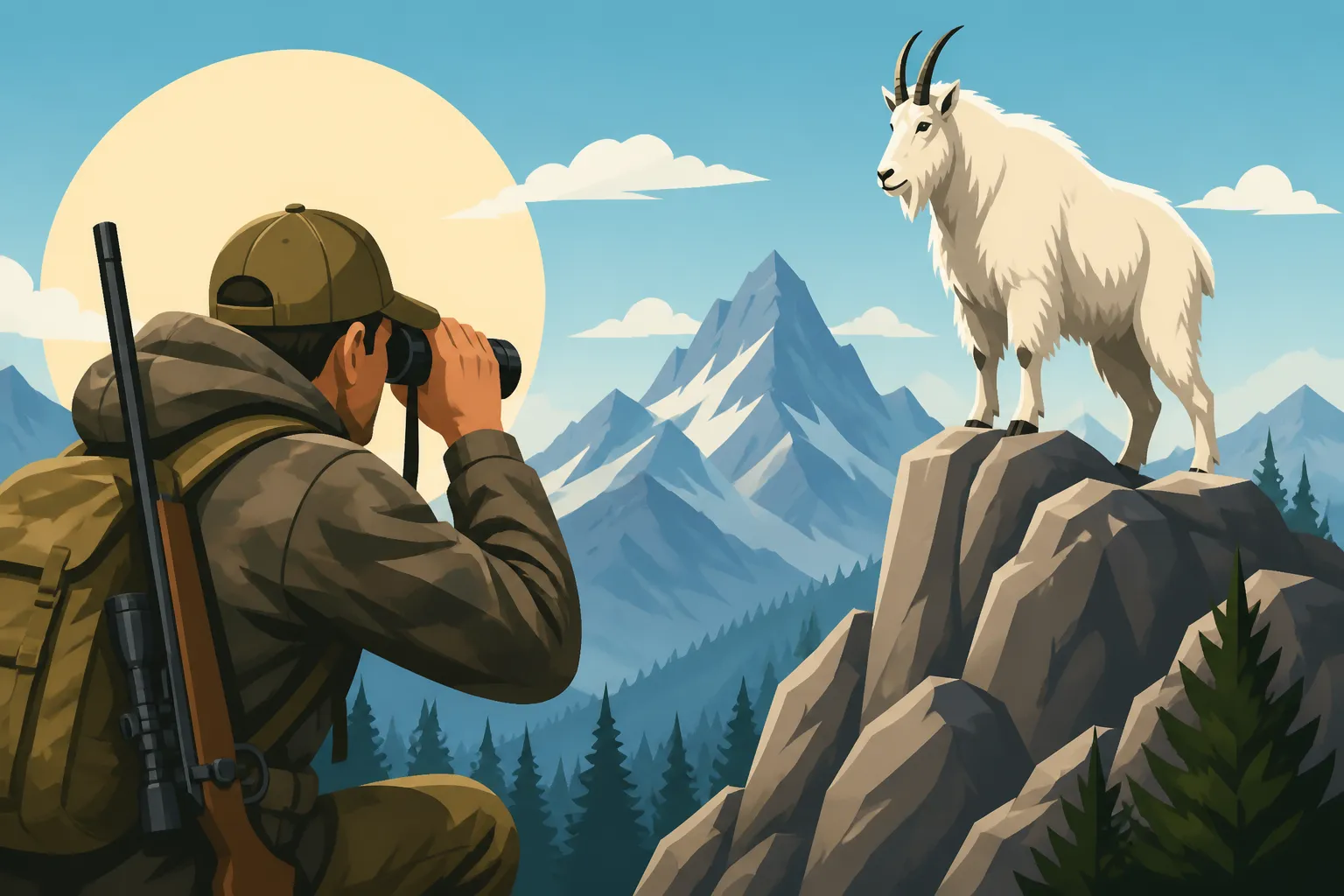
Mountain goat hunting is almost exclusively a spot-and-stalk endeavor. They live in wide-open, high-elevation landscapes where cover is scarce. This means your optics are your primary tool for finding them. You'll spend hours, if not days, behind your spotting scope, meticulously scanning every rock face, snowfield, and basin. Start early in the morning when goats are often feeding and more active. They blend surprisingly well into their rocky, snowy surroundings despite their white coats, so look for anything that seems "out of place" – a slight movement, a distinct shape, or a cluster of white dots that aren't snow. Our article on How to Glass Big Colorado Basins is highly relevant here, offering strategies for effective glassing in expansive mountain environments.
Once you spot a goat, the real challenge begins: planning an approach. This involves evaluating the terrain for possible routes, considering the wind direction (which is often swirling and unpredictable in the mountains), and looking for any available cover. A stalk on a mountain goat can take hours, even an entire day, involving significant elevation changes and navigating treacherous footing. You might climb thousands of feet only to have the goat move, forcing you to adjust or start over. Always consider your exit strategy and what happens if you successfully harvest an animal; packing one out of these locations is an immense undertaking. Use thermals to your advantage; generally, thermals rise in the morning as the sun heats the ground and fall in the evening as it cools.
Ethical Considerations and Shot Placement
Harvesting a mountain goat is a privilege, and doing so ethically is paramount. Due to the extreme terrain, shot placement is critical. A misplaced shot can easily result in a wounded animal falling down cliffs or disappearing into inaccessible areas, leading to a lost animal and a wasted tag. Aim for a high shoulder shot, focusing on breaking both shoulders to anchor the animal. Be prepared to wait for the goat to be in a stable, broadside position where it won't immediately tumble off a cliff. Practice shooting at steep angles, both uphill and downhill, as this is a common scenario in goat country. Know your rifle's ballistics intimately, especially at longer ranges common in mountain hunting, and practice shooting off your backpack or from kneeling/sitting positions that you're likely to encounter.
Beyond the shot, consider the pack-out. It's often said that the real hunt begins after the shot. Quartering an animal on a steep slope can be dangerous and difficult. Ensure you have the necessary tools (sharp knife, game bags) and the physical capacity (or a strong hunting partner) to pack out all the meat and cape, which is a significant undertaking. The unique difficulty and physical demands of this hunt amplify the importance of ethical practices and thorough preparation.
Disclaimer
Please note: Hunting regulations and season dates in Colorado can change. Always consult the official Colorado Parks and Wildlife (CPW) website or their current hunting brochures for the most up-to-date and accurate information before planning any hunt. This guide is for informational purposes only and does not replace official CPW resources.