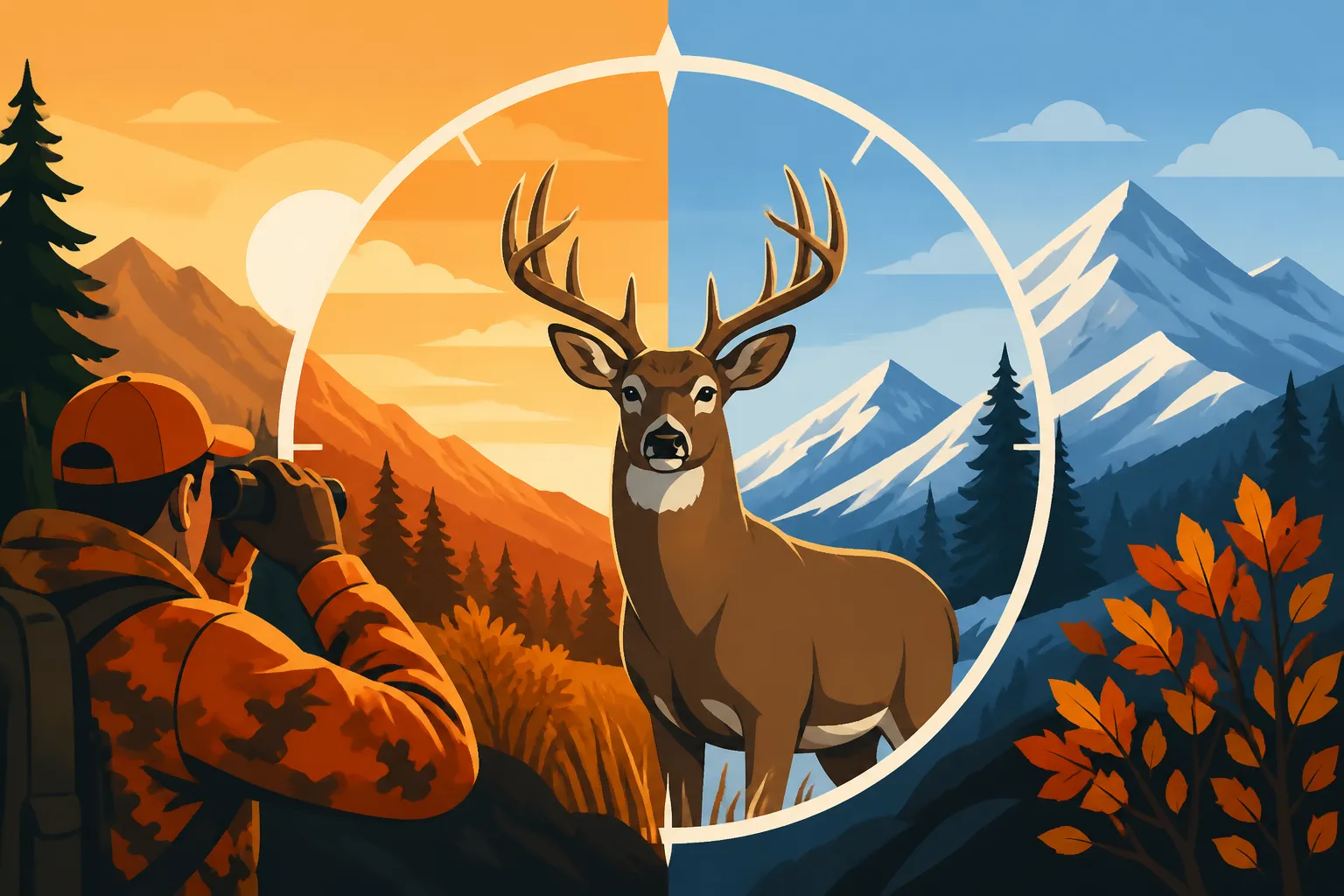
Best Time to Hunt Whitetail Deer in Colorado
It’s easy to get swept up in the dream of hunting elk or mule deer when you think about Colorado. Everyone pictures those majestic animals in the high country, and for good reason! But for those of us who love the challenge and cunning of a Whitetail, it can sometimes feel like Colorado’s Eastern Plains get overlooked, leaving many wondering when is truly the best time to pursue these elusive deer. This comprehensive guide is here to cut through the noise, helping you pinpoint the prime windows and strategies for successful Whitetail deer hunting in the Centennial State.
The Uniqueness of Colorado Whitetail Hunting
When most folks imagine hunting in Colorado, their minds immediately jump to rugged mountains, crisp alpine air, and the pursuit of a magnificent bull elk or a massive mule deer buck. And while those iconic hunts certainly define a significant part of the Colorado hunting experience, it often leaves Whitetail deer hunters feeling a bit on the sidelines. The reality is, Colorado does offer excellent Whitetail hunting, but it's a completely different game than chasing its mountain cousins, and understanding this distinction is the first step to success. You won't find them browsing on subalpine forbs at 10,000 feet, that's for sure.
Where Colorado Whitetails Roam
Unlike the wide-ranging mule deer that traverse diverse landscapes from sagebrush flats to timbered ridges, Colorado's Whitetail deer are much more particular about their home. They are creatures of dense cover and riparian zones, almost exclusively found along the major river systems and their tributaries, particularly as you head east into the plains. Think about the South Platte, the Republican, and the Arkansas River drainages – these are the lifelines for Whitetail in a state largely dominated by open landscapes or high mountains. They cling to the pockets of cottonwood trees, willow thickets, and dense brush that line these waterways, offering them critical shelter, water, and often, proximity to agricultural fields.
Imagine driving across the flat expanse of eastern Colorado; suddenly, you dip down into a river bottom, and the landscape transforms. Towering cottonwoods, tangled undergrowth, and perhaps a cornfield or alfalfa patch stretching out from the river's edge. This is Whitetail country. They utilize these areas not just for cover from predators and hunters, but also for thermal regulation, escaping the heat of summer and the biting winds of winter. Understanding this "habitat specificity" is paramount; you're not going to stumble into Whitetails in a Ponderosa pine forest or on a vast, open mesa. You need to focus your efforts on these narrow, yet incredibly productive, corridors.
Many of these prime Whitetail areas are intertwined with private land, which can present a challenge for public land hunters. However, Colorado Parks and Wildlife (CPW) offers various programs like the Walk-In Access Program and some State Wildlife Areas (SWAs) that provide crucial public hunting opportunities in these river bottoms. Researching specific Colorado Hunting Units (GMUs) Explained that encompass these river systems on the Eastern Plains will be critical to finding your hunting grounds. Utilizing e-scouting tools like GoHunt to identify suitable public land parcels within these river corridors, especially those adjacent to agricultural fields, can save you countless hours of unproductive boots-on-the-ground scouting.
Managing Expectations for Colorado Whitetail
Let's be realistic here: Colorado is not the Midwest when it comes to Whitetail deer. You won't typically find the sheer density of deer or the consistent genetic potential for Boone and Crockett monsters that you might in states like Iowa, Kansas, or Illinois. This isn't to say big Whitetails don't exist in Colorado – they absolutely do, and many hunters have taken impressive bucks here. But the general expectation should be for a quality hunt for a mature animal, rather than an endless parade of giant racks. The populations are smaller, more concentrated, and often more pressured due to their limited habitat.
This unique environment means Colorado Whitetails can be incredibly wary. They live in relatively confined spaces and are highly attuned to human presence. Hunting them requires a level of stealth, patience, and attention to wind and thermals that can rival a tough elk hunt. You'll likely encounter more private land hurdles, which means that securing access, even if just for permission to retrieve a downed animal, is often part of the planning. It's a different kind of challenge, one that tests your woodsmanship and adaptability rather than your ability to hike miles at high altitude.
The reward, however, is immense. Harvesting a mature Colorado Whitetail is a truly earned accomplishment. It signifies a successful adaptation to a unique hunting landscape and a deeper understanding of a species often overshadowed by the state’s more famous big game. It’s also an excellent way to get valuable venison for the freezer. For those who embrace the specific demands of hunting Whitetails in this context, the experience can be incredibly fulfilling, offering a quiet, intense pursuit away from the often-crowded mountain units. If you're wondering how this compares to other species, our guide on Colorado Mule Deer vs Whitetail Differences can offer some further perspective.
Navigating Colorado's Whitetail Deer Seasons
Understanding the specific hunting seasons for Whitetail deer in Colorado is crucial for planning your hunt. Colorado Parks and Wildlife (CPW) offers various seasons, each with its own advantages and challenges, dictated by weapon type and timing within the deer's annual cycle. While the general structure might seem familiar, the nuances of how these seasons align with Whitetail behavior in their distinct habitat can make all the difference. Make sure to check the current CPW Big Game brochure for the most up-to-date Colorado Whitetail Deer Season Dates and Tags.
Early Archery Season Opportunities
The early archery season typically kicks off in late August and runs through most of September. This can be a fantastic, albeit challenging, time to pursue Whitetails. During these early weeks, bucks are still often in their summer patterns, focusing heavily on food and water sources, and are usually still sporting hard-antlers. Their routines can be somewhat predictable as they haven't experienced significant hunting pressure yet, making them vulnerable to well-placed stand or ground blind setups.
However, early archery comes with its own set of hurdles. The weather can still be quite warm, which means you'll need to pay extra attention to meat care immediately after a harvest. Mosquitoes and other biting insects can also be a real nuisance in the humid river bottoms. Your strategy will revolve around identifying key food sources – think lush alfalfa fields, irrigated cornfields, or even specific pockets of browse within the river bottom itself – and locating bedding areas. Setting up an ambush point between bedding and feeding, or near a well-used water source, is often the most effective tactic. Stealth, scent control, and patience are paramount when deer are still in their relaxed summer mode.
For instance, imagine finding a small, secluded cornfield tucked against a dense cottonwood thicket along the South Platte River. Through early season scouting, you've identified a consistent trail bucks are using to enter the field just before dusk. A carefully positioned tree stand or ground blind, accounting for prevailing winds, could put you in a prime position. This early window provides a unique opportunity to catch bucks before they become completely nocturnal under increasing pressure and pre-rut activity.
Muzzleloader and Mid-Season Rifle Hunts
The muzzleloader season usually falls in mid-September, a brief but exciting window that often bridges the gap between early archery and the rifle seasons. For Whitetail hunters, this season offers a unique challenge with primitive weapon limitations but benefits from cooler weather and bucks that are just starting to feel the stirrings of the pre-rut. They might begin to make early scrapes and rubs, and their movements can become a bit less predictable as they start cruising for does.
As the general rifle seasons (often 1st and 2nd rifle seasons) arrive, usually starting in October, Whitetail behavior shifts dramatically. This period can be tough. The bucks are increasingly nocturnal, especially the older, wiser ones, as they transition into the pre-rut phase and encounter heightened human activity. While the 1st rifle season in the mountains might offer good elk opportunities, the Colorado Plains Rifle Season Explained for deer typically sees Whitetails hunkering down during daylight hours, making them notoriously difficult to pattern. They'll often move from dense cover only under the cloak of darkness, making ambush hunting challenging.
During this mid-season timeframe, focusing on fresh sign like rubs and scrapes becomes more important, indicating where bucks might be scent-checking for does. Understanding local thermal patterns and wind direction in these river bottoms is absolutely critical for successful still-hunting or stand placement. This is a period where persistence, intimate knowledge of a specific area, and adaptability to deer behavior are key. Don’t expect the same easy patterning you might have had in early archery; these bucks are becoming ghosts.
Hunting the Colorado Whitetail Rut: Peak Action
If there's one time that most Whitetail hunters eagerly anticipate, it's the rut. This is when bucks throw caution to the wind, driven by the primal urge to breed, making them more visible and vulnerable during daylight hours. In Colorado, just like everywhere else, the rut is the prime window for encountering mature Whitetail bucks.
Understanding the Whitetail Rut Timeline in Colorado
For Colorado Whitetails, the rut typically kicks into high gear from late October through mid-November. This timeframe is generally consistent across the Eastern Plains and the localized Whitetail populations along river systems further west. However, it's not a single, continuous event; the rut unfolds in distinct phases, each offering unique hunting opportunities.
- Pre-Rut (Early to Mid-October): This is the buildup. Bucks are feeling their oats, testosterone levels are rising, and they become more aggressive. You'll see increased rubbing of antlers on trees and creation of scrapes, as bucks begin to establish dominance and communicate their presence to does. They're still somewhat focused on feeding but will start to cruise more, scent-checking doe bedding areas. This is a great time to be in the woods, as mature bucks are starting to move more in daylight, but are not yet completely distracted by does.
- Peak Rut (Late October to Mid-November): This is the window everyone dreams of. Does are entering estrus, and bucks go into full-on chase mode. They'll be actively pursuing does, often ignoring food or safety concerns in their frantic search for breeding opportunities. This is when you're most likely to see bucks moving throughout the day, sometimes even in open areas they'd normally avoid. Bucks that are "locked down" with a doe might be harder to find, but other bucks will be tirelessly searching.
- Post-Rut (Mid-November into December): As the peak breeding tapers off, bucks are exhausted and have lost significant body weight. Their primary focus shifts back to recovery and finding high-energy food sources. While some late-cycling does might still bring out a buck, the frantic daytime activity largely subsides. This transitions into late-season hunting, which demands a different set of strategies.
Rut Hunting Strategies and Tactics
During the peak rut, your hunting approach needs to capitalize on the buck's breeding-driven behavior. Gone are the days of strictly patterning food sources; now, it's about intercepting bucks as they search for or pursue does. This means focusing on travel corridors, pinch points, and funnel areas between known bedding and feeding locations, or between different pockets of dense cover where does are likely to congregate. Consider areas where a narrow strip of timber runs between two agricultural fields, or where a dense creek bottom forces deer to cross a specific open patch.
Calling and rattling can be incredibly effective during the rut. Grunts, estrus bleats, and even aggressive rattling sequences can pique a buck's curiosity or challenge, often drawing them into shooting range. Many experienced Whitetail hunters swear by a combination of tactics: a rattling sequence followed by some tending grunts, mimicking a buck actively breeding. When using calls, remember the highly pressured nature of Colorado Whitetails; subtle and realistic is often better than loud and aggressive, especially on public land.
Sitting long hours on a stand or in a ground blind becomes a viable and often necessary strategy during the rut. Bucks can appear at any time of day, driven by their instincts. You're no longer just hunting dawn and dusk. This is where diligent scouting, both pre-season and in-season, pays off immensely. Using tools like GoHunt to analyze aerial imagery and topographic maps to identify these key travel corridors, dense bedding areas, and potential pinch points before you even step foot in the woods can give you a significant advantage, helping you determine optimal stand locations for prevailing winds. For those looking to do some pre-season work, our guide on How to E-Scout Before a Colorado Hunt offers invaluable tips that apply directly to Whitetail as well.
Post-Rut and Late Season Whitetail Strategies
Even after the main event of the rut winds down, Colorado Whitetail deer hunting opportunities aren't over. In fact, for many seasoned hunters, the post-rut and late season periods offer unique advantages, particularly when deer behavior becomes highly predictable and concentrated. This is when deer are thinking with their stomachs and seeking shelter, making them vulnerable to different tactics.
Adapting to Post-Rut Behavior
Immediately following the peak rut, Whitetail bucks are often shadows of their former selves. They've spent weeks chasing does, fighting, and neglecting their nutritional needs, resulting in significant weight loss and exhaustion. Their priority shifts dramatically from breeding to survival: replenishing lost energy reserves and finding sanctuary. This means their movements will once again become highly food-driven, making late-season food sources your primary focus.
You'll need to locate high-energy food sources that are still available. This often means waste grain in agricultural fields, like corn or soybean stubble. Alfalfa fields, if they haven't been grazed down, can still be attractive. In areas without agriculture, deer will heavily browse on woody vegetation within their thick riparian habitat. Bucks will also seek out areas with dense cover that offer thermal protection, especially on north-facing slopes or in thick cedar breaks that can hold warmth. They will often bed down in these areas, emerging primarily during the warmest parts of the day, or just before dark, to feed.
This period requires a shift in your hunting tactics. Still-hunting through dense cover, moving slowly and deliberately with the wind in your face, can be effective. Alternatively, setting up ground blinds or tree stands on the edges of known, late-season food plots or natural browse areas, particularly during the warmest hours of the day, can yield results. Persistence is key, as deer might not move until later in the morning or early afternoon. This is a great time to apply some of the same principles you might use when still-hunting the timber for elk.
Late Season Hunting in Cold Weather
As December rolls into January (depending on specific unit dates), Colorado's Eastern Plains can experience genuinely cold weather, often accompanied by snow. This extreme weather can actually be a boon for late-season Whitetail hunters, as it concentrates deer and forces them into more predictable patterns. Snow cover, in particular, makes deer more visible, highlights fresh tracks, and muffles human footsteps, aiding stealth.
In bitter cold and deep snow, deer prioritize two things: finding food and finding thermal cover. They will seek out dense pockets of vegetation – think thick stands of cottonwoods, junipers, or willow thickets – that offer protection from wind and help them retain body heat. They will also congregate around the most accessible and high-calorie food sources. If there's a standing cornfield, or an unharvested section of a field, that will become a magnet. You can often locate these concentrations by carefully glassing river bottoms from a distance, or by identifying heavy track concentrations in the snow.
Hunting late season can be physically demanding, requiring appropriate cold-weather gear to stay comfortable and focused for extended periods. However, the rewards can be significant. By carefully scouting for fresh tracks, understanding where deer are finding thermal cover, and focusing your efforts on these limited, yet critical, food sources, you can often find large groups of deer, including mature bucks, taking advantage of the reduced pressure and predictable winter patterns. It’s a completely different hunt than the frenzy of the rut, demanding a different kind of patience and grit, but it can be incredibly rewarding.
Here's a quick overview of Whitetail season phases and their characteristics:
| Season Phase | Typical Dates | Whitetail Behavior | Key Hunting Strategy |
|---|---|---|---|
| Early Archery | Late Aug – Mid-Sep | Patterned movement, focused on food/water, less pressured | Stand hunting food/water, stealth, scent control |
| Muzzleloader/Pre-Rut | Mid-Sep – Early Oct | Increasing testosterone, rubs/scrapes appear, nocturnal | Scouting, ambushing travel routes, some calling |
| Peak Rut | Late Oct – Mid-Nov | Actively chasing does, breeding, less cautious | Calling, rattling, stand hunting pinch points, observation |
| Post-Rut/Late Season | Late Nov – Dec (into Jan) | Exhausted, seeking high-energy food, thermal cover | Targeting primary food sources, glassing, still-hunting |
Disclaimer
Please remember that hunting regulations, season dates, and unit boundaries can change annually. Always consult the most current Colorado Parks and Wildlife (CPW) Big Game Hunting Brochure and any relevant updates before planning and executing your hunt. It is your responsibility to know and follow all applicable laws and regulations.