Colorado Grouse and Upland Bird Species
If you've ever felt overwhelmed trying to figure out where to even start with Colorado's incredibly diverse upland bird hunting opportunities, you're not alone. It can seem like the world of elk and mule deer hunting gets all the spotlight, leaving many of us wondering about the smaller, yet equally thrilling, pursuits available. This guide aims to pull back the curtain on Colorado's fantastic grouse and upland bird species, helping you understand what to hunt, where to find them, and how to gear up for a truly memorable experience.
The Appeal of Upland Bird Hunting in Colorado
Colorado is, without a doubt, a big game mecca, and rightfully so. The thought of chasing a screaming bull elk or a giant mule deer buck across a high mountain basin is what draws many to our state. But to overlook the incredible upland bird hunting opportunities here would be a real shame. There's a different kind of magic in working a dog through golden aspen groves for grouse or busting through CRP fields on the eastern plains for pheasants. It's a faster-paced, often more interactive hunt that offers a completely different challenge and immense satisfaction.
Why Colorado is a Upland Bird Hunter's Paradise
For starters, the sheer variety of habitats Colorado offers is a dream for upland hunters. From the sprawling sagebrush flats of the western slope to the high alpine tundra of the Continental Divide, and the fertile agricultural fields of the eastern plains, there's a niche for multiple species. This means that within a few hours' drive, you can often transition from chasing forest grouse in dense timber to trekking through open country for ptarmigan. It's an adventure that constantly keeps you on your toes and forces you to adapt your tactics to the terrain and the birds you're pursuing. Many hunters find that the ability to target different species throughout the fall adds a wonderful dimension to their overall hunting season, allowing them to extend their time in the field even if big game tags are elusive.
Beyond Elk and Deer: A Different Kind of Challenge
Let's be honest, elk and deer hunting in Colorado can be grueling. The physical demands, the emotional roller coaster of the draw system, and the often-solitary nature of the pursuit aren't for everyone, every year. Upland bird hunting offers a refreshing change of pace. It's often more social, perfect for hunting with friends, family, or your trusty bird dog. The shooting opportunities can be more frequent, and the action, when you find birds, is fast and exhilarating. It’s also incredibly accessible, with many excellent public land opportunities for grouse, ptarmigan, and pheasants, often requiring little to no preference points for tags (or even over-the-counter sales). This makes it a fantastic option for new hunters, youth hunters, or those simply looking for a less intense, but equally rewarding, outdoor experience.
Understanding Colorado's Key Upland Species
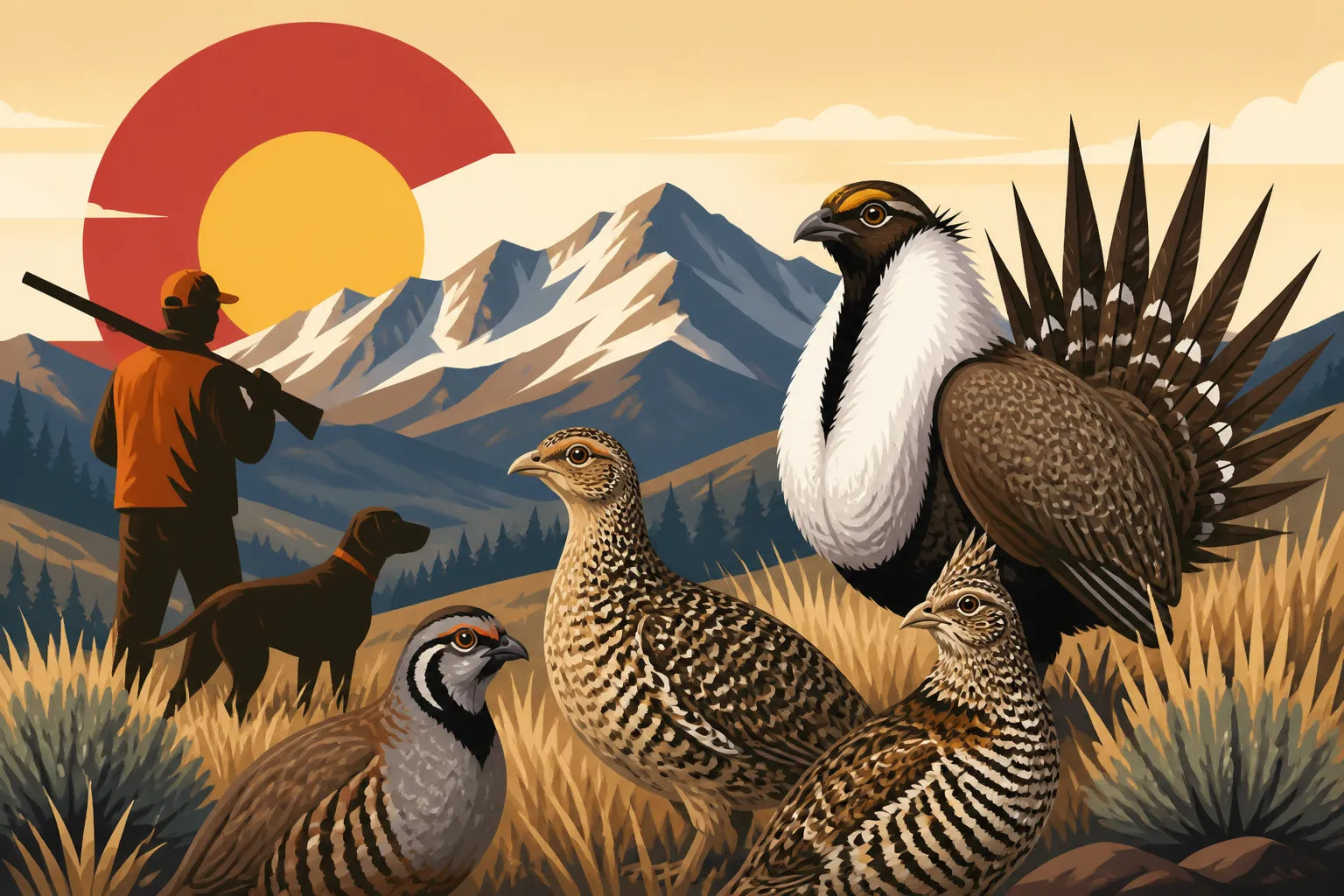
Colorado is home to a fantastic array of upland birds, each with its own unique habitat, behaviors, and hunting challenges. Knowing your quarry is the first step to a successful hunt.
Dusky Grouse (Blue Grouse)
Often affectionately called "blue grouse," the dusky grouse is probably the most commonly pursued forest grouse in Colorado. These birds are found throughout the mountainous regions, typically inhabiting mixed conifer and aspen forests at elevations ranging from 7,000 to 11,000 feet. You'll often find them along logging roads, creek bottoms, and on north-facing slopes early in the season, moving to higher, denser timber as the season progresses and pressure increases. They're known for their impressive camouflage, often holding tight until you're almost on top of them before bursting into flight with a thundering wingbeat. A common frustration is walking right past them without ever knowing they were there! Their diet consists mainly of conifer needles, especially Douglas fir and ponderosa pine, as well as berries and insects. Hunting them often involves covering a lot of ground, especially areas with good berry crops like currants or huckleberries in early fall. When scouting or using a tool like GoHunt's mapping system, look for areas with varied forest cover and access roads, particularly if you're not planning a deep backcountry hunt.
White-tailed Ptarmigan
For those who love a true high-country challenge, the white-tailed ptarmigan is your bird. These hardy grouse are the only ptarmigan species found in Colorado and are year-round residents of the alpine tundra, typically above 11,000 feet. They're masters of camouflage, changing their plumage from mottled brown in summer to pure white in winter, allowing them to blend seamlessly with their rocky, snowy environment. This makes them incredibly difficult to spot, even when you're looking right at them! Hunting ptarmigan is as much about the physical challenge of navigating steep, rocky terrain at high altitude as it is about finding the birds themselves. They prefer areas with willow patches, krummholz spruce, and rocky outcrops, often feeding on willow buds, seeds, and insects. A clear day with minimal wind is ideal for hunting these birds, as their natural instincts make them want to stay hidden rather than fly. Remember to prepare for high-altitude hunting when pursuing these resilient birds.
Sharp-tailed Grouse
The sharp-tailed grouse is a bird of the plains and foothills, found primarily in northeastern and northwestern Colorado. They inhabit grasslands, sagebrush-steppe, and areas with native tall grasses, often near agricultural fields. Unlike the forest grouse, sharp-tails are more prone to flushing wild, often offering exhilarating long-range flushes. Their distinctive pointed tail feathers are a dead giveaway. You'll often find them in coveys, especially in the mornings and evenings when they're feeding on seeds, grains, and insects. Hunting sharp-tails often involves covering large expanses of grassland, either on foot with a good pointing dog or by utilizing ATVs or trucks for access if regulations allow. Look for areas with a mix of cover—tall grass for hiding, shorter grass for feeding, and scattered shrubs or trees for roosting. These birds can be incredibly rewarding, but prepare for some serious walking!
Sage Grouse (Greater Sage-Grouse)
The Greater Sage-Grouse is an iconic species of the Western landscape, and Colorado is home to several populations, primarily in the northwestern and south-central parts of the state. These magnificent birds are highly dependent on healthy sagebrush ecosystems for their survival, feeding almost exclusively on sagebrush leaves. Hunting seasons for sage grouse are highly regulated and often very short, sometimes just a few days, due to conservation concerns and declining populations. Access to hunting areas can be limited, and permits are often by draw. They are large birds, and when they flush, it's an impressive sight. Their habitat is vast, open sagebrush country, making them a challenge to locate, but the reward of seeing these unique birds in their natural environment is unmatched. Due to their conservation status, it's absolutely critical to understand all regulations and only hunt in designated areas.
Ring-necked Pheasant
For many, pheasant hunting on the eastern plains of Colorado is the quintessential upland bird experience. These introduced birds thrive in agricultural landscapes, particularly corn and wheat fields, creek bottoms, and dense cover like cattails and shelterbelts. They are brilliant, colorful, and famously tough birds that hold tight in cover, making them ideal for hunting with flushing dogs. Pheasants offer fast, powerful flights, challenging even experienced shooters. The eastern plains, particularly areas around Sterling, Yuma, and Burlington, are prime pheasant country. Hunting pheasants often involves coordinating with landowners for private land access or utilizing Colorado's Walk-In Access (WIA) program, which provides public hunting opportunities on enrolled private lands. Expect to walk many miles, work your dogs hard, and celebrate every bird you put in the bag.
Chukar and Hungarian Partridge
While not as widespread or abundant as some other species, Colorado does offer limited opportunities for chukar and Hungarian (Huns) partridge.
Chukar partridge are primarily found in western Colorado, in arid, rocky, steep canyon country with sparse vegetation, often near water sources. They are incredibly athletic birds and will run uphill rather than fly, making them notoriously challenging to hunt. If you find them, be prepared for a serious workout and some impressive dog work in unforgiving terrain. Their distinctive call, "chuk-chuk-chukar," is a good locator.
Hungarian partridge are much rarer in Colorado, with scattered populations in northern and northwestern parts of the state, often in agricultural areas mixed with grasslands, similar to pheasants but preferring higher elevations and cooler temperatures. They are smaller than pheasants and often flush in tight coveys. Finding a huntable population of Huns is a true prize for any upland enthusiast in Colorado.
Here's a quick overview of these species:
| Species | Primary Habitat | Typical Elevation | Hunting Challenge | Special Notes |
|---|---|---|---|---|
| Dusky Grouse | Mixed conifer/aspen forests | 7,000-11,000 ft | Hold tight, burst flush | Common, good starter bird |
| White-tailed Ptarmigan | Alpine tundra (above treeline) | 11,000-14,000 ft | Extreme camouflage, high alt. | Physically demanding, beautiful winter plumage |
| Sharp-tailed Grouse | Grasslands, sagebrush-steppe | 4,000-8,000 ft | Wild flushes, open country | Eastern/Northwestern CO, often in coveys |
| Sage Grouse | Healthy sagebrush ecosystems | 5,000-9,000 ft | Highly regulated, specific habitat | Conservation focus, draw only, short seasons |
| Ring-necked Pheasant | Agricultural fields, dense cover | 3,500-6,000 ft | Holds tight, strong flyer | Eastern Plains, private land often required |
| Chukar Partridge | Arid, rocky, steep canyons | 4,000-8,000 ft | Runs uphill, tough terrain | Limited western CO, very challenging |
| Hungarian Partridge | Grasslands/agricultural fringe | 5,000-9,000 ft | Small, tight coveys | Very rare, northern CO, bonus bird |
Essential Tactics and Gear for Colorado Upland Birds
Successful upland bird hunting in Colorado requires a blend of preparation, understanding bird behavior, and having the right equipment. It's not just about walking around and hoping for the best; it's about strategizing and adapting.
Locating Upland Birds: Habitat and Behaviors
The key to finding upland birds is understanding their habitat preferences and daily routines. Early season, when berries and insects are plentiful, grouse can be found in a wider range of areas. As fall progresses and temperatures drop, they often move to areas with more protective cover or switch to winter diets. For dusky grouse, focus on areas with dense pockets of aspens and conifers, especially north-facing slopes where moisture is retained longer, providing lusher undergrowth. Creeks and draws can also be hotspots. Ptarmigan will be found exclusively in the alpine, often in bowls and saddles with scattered willows, using rocky terrain for protection. Consider scouting remotely using mapping tools from GoHunt to identify potential areas before you even hit the trail. Look for changes in vegetation types, elevation contours, and proximity to water.
For pheasants and sharp-tailed grouse on the plains, concentrate your efforts during prime feeding times – early morning and late afternoon – near food sources like grain fields, but always remember to check surrounding dense cover such as cattails, shelterbelts, or CRP (Conservation Reserve Program) fields where birds retreat for protection and roosting. Wind is also a huge factor; birds will often hold tight on the leeward side of cover to escape the elements. Learning to read the land and understand how birds utilize different features is an ongoing process, but it’s what makes upland hunting so engaging.
Shotgun Selection and Ammunition
When it comes to shotguns, a 12-gauge or 20-gauge are by far the most popular choices for upland hunting. The 20-gauge offers a lighter carry, which is a significant advantage when you're covering miles in the mountains or through thick cover, while still delivering plenty of punch for most upland birds. For ammunition, consider the species you're pursuing. For smaller birds like ptarmigan, sharp-tails, and dusky grouse, lighter loads of 7.5 or 6 shot are typically sufficient. For the tougher-feathered pheasant, many hunters opt for 5 or even 4 shot, especially later in the season when birds are fully feathered and flying strong.
Chokes are another important consideration. Modified or improved cylinder chokes are versatile choices, providing a good pattern for flushing birds at varied distances. If you're hunting in very dense cover where shots will be close, an open choke like cylinder or skeet can be beneficial. Always pattern your shotgun with your chosen ammunition and choke to understand its effective range and shot dispersion. And of course, practice your snap shooting! Upland birds rarely offer slow, deliberate targets.
Canine Companions: The Role of Bird Dogs
For many, upland bird hunting isn't complete without a loyal bird dog. Whether you prefer pointers like German Shorthaired Pointers, English Setters, or Brittanys, or flushers like Labrador Retrievers or Springer Spaniels, a well-trained dog dramatically increases your success and enjoyment. Pointers excel at finding birds, locking up, and allowing you to move into position for a shot. Flushers are fantastic for pushing birds out of dense cover, especially pheasants and sharp-tails.
A good bird dog isn't just about finding birds; they also significantly reduce the number of lost birds, especially in thick cover or on large tracts of land. Their noses are infinitely better than ours! However, hunting with a dog requires its own set of skills and considerations. Ensure your dog is in excellent physical condition, especially for mountain hunts where altitude and rugged terrain can take a toll. Always carry plenty of water for your dog, and be mindful of paw protection. A remote E-collar can be invaluable for communication and control in the field, keeping your dog safe and within range. Finding areas with good public land hunting opportunities for upland birds is also easier with a dog, as they can cover ground more effectively.
Navigating Regulations and Access for Upland Hunting
Understanding the rules and where you can hunt is crucial for a legal and ethical upland bird season in Colorado. The Colorado Parks and Wildlife (CPW) website is your go-to resource for all official information.
Licenses, Stamps, and Season Dates
To hunt any small game or upland bird in Colorado, you'll need a valid small game license. Additionally, if you're 18 years or older, you must purchase a Habitat Stamp. These funds go directly towards conserving critical wildlife habitat across the state. Migratory bird hunters, like those pursuing doves or ducks (though not the focus here), will also need a Colorado Migratory Bird Stamp and a Harvest Information Program (HIP) number.
Season dates for upland birds vary by species and often by Game Management Unit (GMU). Grouse seasons typically open in late summer/early fall and run for several months, while pheasant and quail seasons usually open later in the fall and extend into winter. Sage grouse seasons are highly restrictive and often require a limited draw license, with very specific, short windows for hunting. Always check the current year's CPW Big Game and Small Game Brochures for the most up-to-date and specific regulations for the units you plan to hunt. Don't rely on last year's dates; they change!
Public Land Access and Regulations
Colorado boasts an incredible amount of public land accessible for hunting, including National Forests, BLM land, and State Trust Lands. Tools like GoHunt or OnX Hunt can be invaluable for identifying public land boundaries and distinguishing them from private property. For species like dusky grouse, ptarmigan, and sharp-tailed grouse, public lands offer abundant opportunities. For pheasants and some sharp-tails, especially on the eastern plains, private land often holds the highest densities.
Colorado's Walk-In Access (WIA) Program is a fantastic resource for pheasant and quail hunters, providing access to private land parcels through agreements with landowners. These lands are marked with specific signage, and rules for their use are clearly outlined. Always respect private property, secure permission if hunting outside of WIA areas, and know the boundaries of the GMU you are hunting in to ensure compliance with specific regulations. Be aware of any special restrictions, such as firearm type or shooting hour limitations, that might apply to certain areas, especially near urban interfaces or designated wildlife closures. Knowing how to hunt Colorado public land pressure is also a key skill, as popular areas can see a lot of foot traffic.
Common Challenges and Overcoming Them
Upland bird hunting in Colorado isn't without its hurdles, but with preparation and a realistic mindset, you can overcome many of them.
High Altitude and Physical Demands
Chasing dusky grouse in the Flat Tops or ptarmigan above treeline in the San Juan Mountains will test your lungs and legs. Elevations often exceed 9,000 feet, and the thin air can quickly deplete your energy, especially if you're coming from sea level. Altitude sickness is a real concern. To combat this, give yourself a day or two to acclimate before your hunt if possible. Stay hydrated by drinking plenty of water, and avoid excessive alcohol consumption. Conditioning yourself physically months before the hunt is paramount. Focus on cardiovascular fitness and leg strength; hiking with a loaded pack is excellent preparation. Always carry essentials like extra layers, water, snacks, and a first-aid kit, as conditions can change rapidly in the mountains. Understanding How to Physically Prepare for Colorado Elk can offer great insights, as much of that advice applies to high-altitude upland hunting too.
Hunting Pressure and Finding Solitude
Just like with big game, popular upland hunting areas can see a fair amount of pressure, especially on opening weekends. This can make birds wary and harder to find. However, unlike big game, upland birds tend to flush, offering quick shots even when pressured. The trick to finding solitude and less pressured birds often involves going where others won't – walking further, climbing higher, or targeting lesser-known public land parcels.
If hunting the eastern plains for pheasants, arrive early to WIA sites, or focus on mid-week hunts if your schedule allows. For grouse and ptarmigan, consider heading into wilderness areas or roadless country where hunters are fewer. A good e-scouting session can help you identify remote areas or pockets of public land that might be overlooked. Don't be afraid to put in the miles; often, the birds are just beyond the reach of the casual hunter. Using mapping tools like those offered by GoHunt to identify overlooked corners or difficult-to-access public land segments can give you a significant advantage in finding birds that haven't been harassed. Learning How to Find Elk Refuge Areas can provide inspiration for finding similar unpressured spots for birds.
Disclaimer
Hunting is an inherently dangerous activity. Always prioritize safety, understand and follow all Colorado Parks and Wildlife regulations, and respect private property. This guide is for informational purposes only and does not replace official hunting regulations or hunter education. Ensure you have the proper licenses and knowledge before heading into the field.