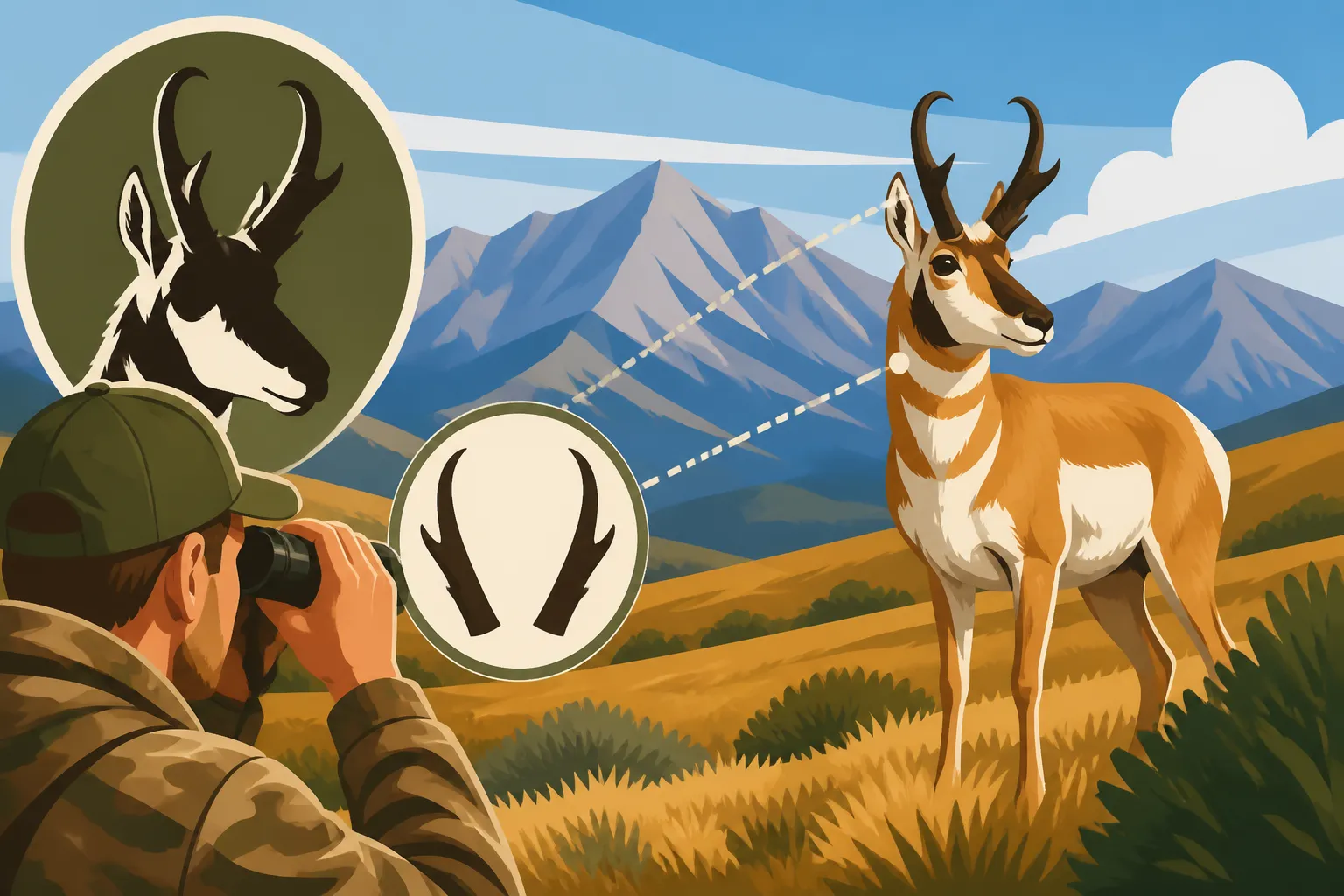
Colorado Pronghorn Field Judging Tips
Trying to field judge a pronghorn in the vast Colorado plains can feel like a guessing game, especially when they're a quarter-mile out and twitchy. You're trying to quickly assess if that buck is a shooter, but the heat shimmering off the prairie or the sheer distance makes it tough to make a definitive call. This guide is here to cut through that uncertainty, offering practical tips and criteria to help you accurately size up a pronghorn buck in the field, increasing your confidence before you decide to make a move.
Understanding Pronghorn Anatomy for Better Field Judging
Before you can accurately judge a pronghorn buck, it helps to understand a bit about their unique anatomy, especially their horns. Unlike deer or elk, pronghorn possess true horns, but they're not quite like the permanent horns of a bighorn sheep. A pronghorn's horns have a bony core that remains permanently attached to the skull, but the outer sheath, made of keratinized hair, is shed annually after the rut, usually in late fall or early winter. This unique growth cycle directly impacts what you're looking for when field judging.
The Structure of a Pronghorn's Horn
When you're glassing a buck, focus on the distinct parts of its horn. Each horn consists of a main beam, which grows upwards and slightly backwards, and then a forward-projecting "prong" or "cutter." The length of the main beam, the thickness (or mass) of the horn, and the length and placement of that forward prong are your primary scoring components. Young bucks often have horns that look like simple spikes or might have very small prongs, while mature bucks will display well-developed characteristics in all these areas. Understanding how these features contribute to overall score is crucial for making an educated judgment call in the field.
Distinguishing Bucks from Does
While this guide focuses on judging trophy quality in bucks, a fundamental first step is always confirming it's a buck. Does can sometimes grow small horns, often just nubs or short spikes, but they rarely have the distinctive forward-pointing prong that bucks possess. Always look for that clear, forward projection. If you're seeing a prominent horn structure with a distinct prong, you're almost certainly looking at a buck. Pay close attention, especially with younger animals, as their horns might not be as robust, but the prong is the key differentiator.
Key Scoring Criteria and Visual Cues
Field judging pronghorn isn't just about looking at one feature; it's about evaluating several components and how they interact. The "Boone & Crockett" scoring system, often used for pronghorn, emphasizes length, mass, and prong development. Knowing these criteria will help you break down what you're seeing through your optics.
Assessing Horn Length
Horn length is arguably the most significant contributor to a buck's overall score. You want to look for horns that appear long and tall relative to the buck's head and ears. A good rule of thumb is to compare the horn length to the ear length. A mature buck's horns should extend significantly past the tips of its ears when they are alert and pointed forward. A truly impressive buck will have horns that look like they're reaching for the sky, perhaps twice the length of its ear. Many hunters on platforms like GoHunt compare success photos from specific units to get a feel for what a "long" horn looks like in that area, which can really help calibrate your eye before the season.
Evaluating Horn Mass
Mass refers to the thickness or circumference of the horn. This is another crucial scoring component that's often harder to judge from a distance. Look for horns that are thick, especially at the base, and carry that thickness well up the horn. Skinny, spindly horns don't score as well, even if they're long. Imagine a soda can versus a pencil – you want that soda can thickness! Try to find a buck that maintains good mass all the way up to where the prong begins, and even past it. This characteristic can be really challenging to discern in varying light conditions or when the animal is facing away, so always try to get multiple angles.
Judging Prong and Cutter Length
The distinct forward-pointing prong is what gives the pronghorn its name and adds critical inches to its score. You want to see a well-defined, robust prong that extends a good distance forward. Generally, a prong that's 4-6 inches long is considered excellent. Related to this are the "cutters," which are often subtle, sharp points that project forward, usually lower down on the main beam than the main prong. Many hunters overlook cutters, but these small projections can add unexpected inches to the score sheet. When glassing, try to identify both the main prong and any cutters. A buck with long, well-defined prongs and visible cutters will always be a better candidate.
Horn Shape and Symmetry
While not a direct scoring measurement like length or mass, the overall shape and symmetry of a buck's horns play a huge role in its aesthetic appeal and can give you a gut feeling about its trophy potential. You want to see horns that are well-balanced, matching in length, mass, and prong development. A buck with perfectly symmetrical, sweeping horns is a sight to behold. Sometimes, a buck might have one impressive horn and one broken or stunted horn. While it might still be a respectable animal, the lack of symmetry will impact its overall score significantly.
Here's a quick reference table for what to prioritize when you're making that split-second decision:
| Pronghorn Horn Characteristic | What to Look For | Visual Reference (Comparison) | Importance for Score |
|---|---|---|---|
| Overall Length | Horns extending significantly past ear tips | 1.5-2x length of ear | High |
| Mass (Thickness) | Thick bases, carrying thickness well up the horn | Width of eye or larger at base | High |
| Prong Length | Distinct, forward-pointing projection | At least half the length of an ear | Medium |
| Cutter Length | Smaller, distinct forward projection below main prong | Visible point, even if short | Medium |
| Symmetry & Shape | Well-balanced horns, good overall aesthetic | Mirror image from side to side | Aesthetic/Overall |
Practical Field Judging Techniques and Tips
Putting these criteria into practice in the field requires good optics, patience, and a bit of mental calibration. The plains can be deceptive, making everything look farther or smaller than it is.
Utilizing Your Optics Effectively
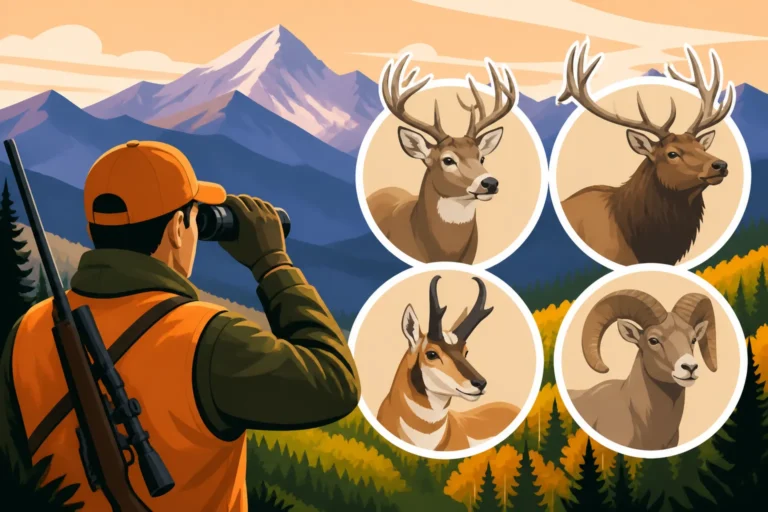
A good quality spotting scope and binoculars are your best friends when field judging pronghorn. Instead of just a quick glance, settle in and use your optics to really study the animal. A spotting scope, especially one with higher magnification (like 20-60x or even 27-80x), will allow you to pick out the finer details of horn mass, prong length, and the presence of cutters that you might miss with binoculars alone. When I'm trying to decide if a buck is a shooter, I spend at least 5-10 minutes looking through the spotting scope, waiting for him to turn his head, graze, or interact with other pronghorn to get different angles. For more tips on glassing, check out our guide on How to Glass Big Colorado Basins.
Compensating for Distance and Angles
Distance is a killer for accurate field judging. What looks like a monster at 800 yards might shrink considerably at 300 yards. Always try to get as close as safely possible or use known distances to help calibrate your eye. A laser rangefinder is invaluable here. If you know a fence post is 500 yards away and the pronghorn is beyond it, that helps put its size into perspective.
Angles are another tricky element. A buck facing directly away from you might make its horns look shorter, while a buck facing directly towards you can make its horns appear thicker than they are. Try to observe the buck from different angles if possible, allowing it to move naturally or using terrain to your advantage to get a broadside view. Patience is key.
Comparing to Body Parts and Surroundings
One of the oldest tricks in the book is using the animal's own body parts as reference points. As mentioned earlier, ear length is a fantastic baseline for horn length. Also, look at the width of the buck's eye or the diameter of its neck at the base to get a feel for horn mass. If the horn base is significantly wider than its eye, you're on to something good.
Beyond the animal itself, use environmental cues. A known fence post height, a specific rock, or even a sagebrush plant can serve as a reference. If the buck's horns are taller than a knee-high sagebrush that you know, that gives you a tangible comparison. Many hunters use digital mapping tools like GoHunt to mark such natural reference points during their e-scouting phase, which can be invaluable when you're actually in the field. This kind of preparation can also help when you're trying to figure out Colorado Pronghorn: Where to Find Them in general.
Learning from Experience and Photos
There's no substitute for experience when it comes to field judging. The more pronghorn you see, the better your eye will become. If you're new to pronghorn hunting, consider going on a scouting trip specifically to glass and judge animals without the pressure of a tag in your pocket. Take photos through your spotting scope if you can, and then compare them to official score sheets or known trophy photos. This practice will build your confidence. You can also learn a lot by looking at harvest photos and draw statistics for specific Game Management Units (GMUs) on platforms like GoHunt, which can indicate the trophy potential you might encounter. Understanding Colorado Pronghorn Draw Odds Explained for a unit can give you an idea of what kind of animals are typically harvested there.
Common Field Judging Mistakes and How to Avoid Them
Even seasoned hunters make mistakes, especially with pronghorn. They're fast, live in open country, and can be frustratingly hard to get a good read on.
The "Ground Shrinkage" Phenomenon
This is perhaps the most common and disheartening mistake. You see a buck in the distance, it looks enormous, you make the shot, walk up to it, and suddenly it seems to have shrunk by 20%. This happens for several reasons: excitement, poor light, heat shimmer, and a lack of comparative references. To combat ground shrinkage, make a conscious effort to critically evaluate all scoring criteria before you commit. Don't let excitement rush your judgment. Spend that extra time glassing. If you have a friend with you, get a second opinion. Remember the tips on How to Use the Wind Hunting Colorado Elk – these principles of patience and observation apply equally to pronghorn.
Rushing the Shot Decision
Pronghorn are often on the move, and good shooting opportunities can be fleeting. This can lead to rushing your field judging. You see a buck, he's only going to be in that spot for another minute, and you feel pressured to make a quick call. This is when mistakes happen. It’s better to pass on a buck you're unsure about than to take an animal that doesn't meet your personal trophy standards or, worse, isn't legal for your tag. Always prioritize an ethical shot over a hasty judgment. Learning about Colorado Pronghorn Behavior and Biology can also help you anticipate their movements and give you more time for judging.
Over-Reliance on a Single Factor
Some hunters focus solely on length, others only on mass. A truly well-scoring pronghorn combines all the elements: good length, excellent mass carried well up the horn, and distinct, long prongs and cutters. Don't let one outstanding feature overshadow weaknesses in others. For example, a buck with super long horns but no mass or prongs might not score as well as a slightly shorter-horned buck with incredible mass and prominent prongs. You need to consider the whole package. This holistic approach is similar to how you'd judge a big mule deer, where factors like width, tine length, and mass all contribute to the overall impression, as explored in articles like Colorado Mule Deer Hunting Guide.
Misjudging the "Cutter"
The cutter is a small detail that can really add up, and it's frequently overlooked or misjudged. It's that small, sharp point projecting forward from the lower part of the main horn. From a distance, it can be hard to see or might blend into the main horn. Make sure you're actively looking for this feature through your high-powered optics. A buck with solid length, mass, and a good prong can become truly exceptional with well-developed cutters. Even a half-inch or inch on those cutters adds vital points to the final tally. For further insights into maximizing your hunting preparation, consider consulting resources like How to E-Scout Before a Colorado Hunt to familiarize yourself with the terrain where you might find these animals.
Learning to accurately field judge pronghorn takes time and practice, but by focusing on the key anatomical features and using your optics wisely, you'll gain the confidence needed to make informed decisions in the field.
Disclaimer
Please remember that hunting regulations, season dates, and specific unit rules can change. Always consult the most current Colorado Parks and Wildlife (CPW) regulations before planning any hunt. This guide is for informational purposes only and should not replace official sources.