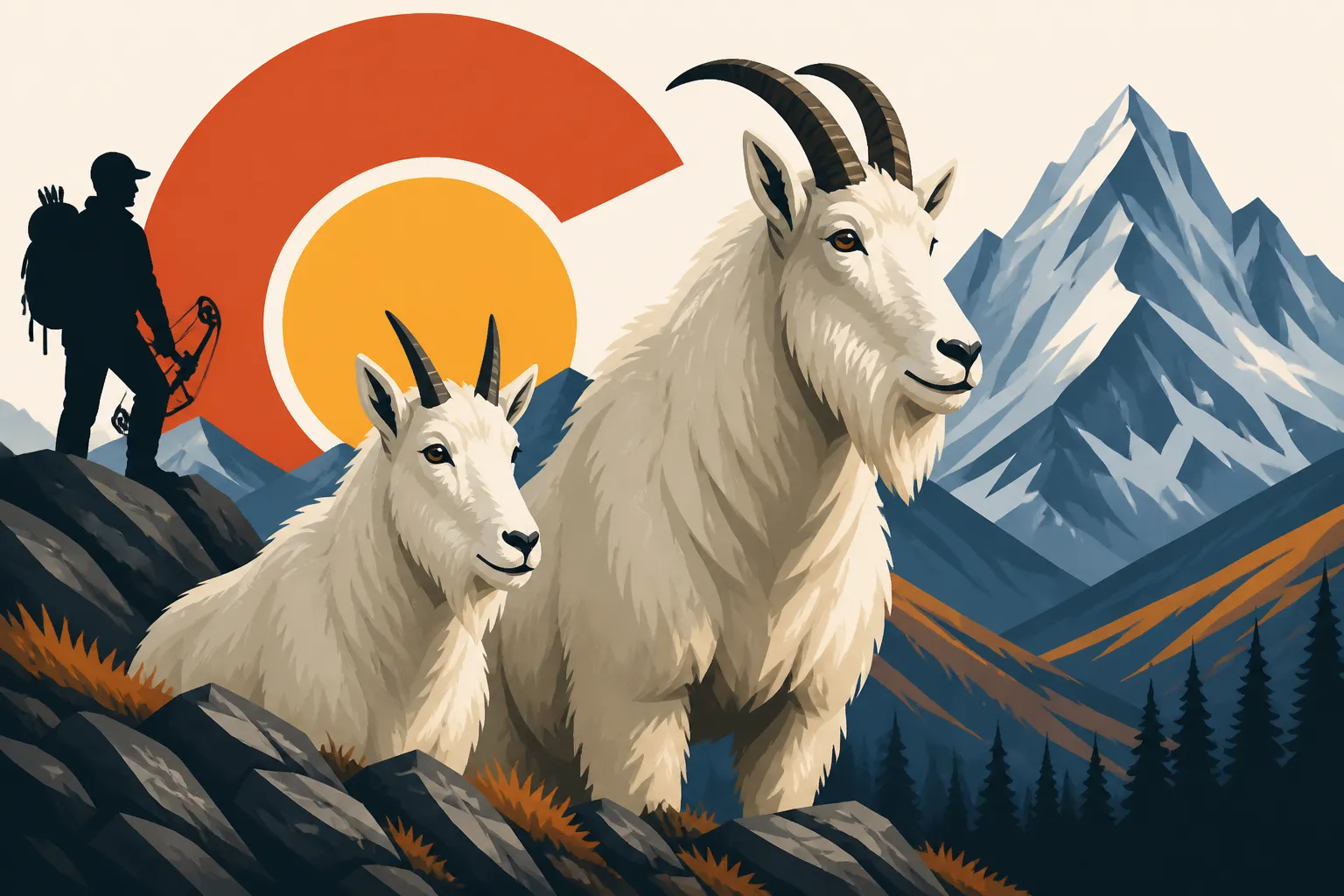
Colorado Mountain Goat Billies and Nannies
Drawing a coveted Colorado mountain goat tag is a dream come true for many hunters, but the challenge often begins long before the hunt itself, especially when it comes to confidently telling the difference between a billy (male) and a nanny (female) in the rugged, high-alpine environment. This distinction isn't just academic; it's critical for ethical hunting, adherence to specific tag requirements, and ensuring the long-term health of Colorado's incredible goat herds. This guide is here to walk you through the subtle, yet distinct, characteristics that will help you identify mountain goat billies and nannies in the field, making your once-in-a-lifetime hunt a success.
Understanding Colorado Mountain Goat Biology and Behavior
Before we dive into the nitty-gritty of visual identification, it helps to understand a bit about mountain goat behavior and biology in Colorado. These majestic animals are uniquely adapted to the harsh, unforgiving alpine and subalpine environments, thriving in elevations where most other big game species simply can't survive year-round. They call the craggy peaks, steep cliffs, and rocky basins of ranges like the Collegiate Peaks, the San Juan Mountains, and the Flat Tops home. Their white coats offer excellent camouflage against snow and rock, but also make it tough to discern details at a distance.
Mountain goats are generally social animals, though their group dynamics can vary. Nannies are often found in smaller groups, sometimes with their kids and yearlings, creating what’s called a nursery group. Billies, especially mature ones, tend to be more solitary or found in small bachelor groups, particularly outside of the breeding season (rut), which typically occurs from late October through early December. Knowing these general behavioral patterns can give you a clue, but it’s never a definitive identification. Understanding the general habitat and movements is also key; you can learn more by exploring topics like Colorado Mountain Goat Range.
Key Visual Distinctions Between Billies and Nannies
When you're glassing from a mile away, or even up close, the subtle differences between a billy and a nanny can be incredibly challenging to spot. It takes patience, good optics, and a trained eye. Here's a breakdown of the most reliable characteristics to look for.
Overall Body Size and Build
The most immediate, though often deceiving, indicator is overall body size. Billies are generally larger, heavier, and more muscled than nannies. Think of a thick, stocky frame versus a more slender, athletic build. A mature billy can weigh anywhere from 180 to 300 pounds, sometimes even more, while a nanny typically ranges from 120 to 180 pounds.
However, judging size in the vast, vertical landscape of the high country can be incredibly tricky. Without another goat nearby for comparison, or familiar landmarks, everything can look the same size. Don't fall into the trap of assuming a lone, large-looking goat is automatically a billy. A lone nanny can appear quite robust, especially if you're comparing it to nothing else. Look for a thick neck and a deep chest on a billy, indicating more muscle mass. Nannies, while still powerful, will usually have a more refined, delicate appearance.
Horn Characteristics: Thickness and Shape
This is often the most critical and reliable characteristic for distinguishing between sexes. Both male and female mountain goats have black, dagger-like horns that grow throughout their lives, adding annual rings that can be used to age them. However, their appearance differs significantly.
- Billies: A billy's horns are typically thicker at the base, with a noticeable taper towards the tip. They often have pronounced annulations (growth rings) that give them a rugged, ridged appearance. The curve of a billy's horn tends to be more gradual, often sweeping back in a more impressive arc. Imagine a sturdy, stout weapon.
- Nannies: Nanny horns, while sometimes appearing longer due to their straightness, are generally thinner at the base and have a more slender, needle-like appearance. The annulations are less pronounced, and their curve is often sharper or more upright, almost like a slender ice pick.
When you're looking through your Best Optics for Colorado Big Game, focus intently on the base of the horns. Mass is key. If you can only see the tips, it's virtually impossible to tell. Get a clear view of where the horns emerge from the skull. A great resource like GoHunt can provide detailed photos and comparisons that help train your eye before you even hit the mountains.
Urination Stance
This is perhaps the most definitive and foolproof identifier, but it requires patience. Mountain goats, like most mammals, have distinct urination postures based on their sex.
- Billies: A billy will stand with all four legs planted, often splaying their back legs slightly, and urinate forward between their front legs, or just slightly out to the side. It's a very clear, standing posture.
- Nannies: A nanny will squat down, bending their back legs significantly, much like a domestic dog, to urinate.
This behavior, while requiring you to observe the goat for a decent amount of time, is a biological constant and will almost always give you a conclusive answer. It’s not uncommon for hunters to spend hours watching a single goat just for this tell-tale sign. Always carry a spotting scope with you when mountain goat hunting, as it will be invaluable for making these detailed observations from a safe distance.
Facial Features and Hair Growth
While more subtle, there can be some differences in facial structure and hair. Billies sometimes have a blockier, more robust head profile, whereas nannies might appear more refined. During the rut, some billies can develop a stained, yellowish appearance around their shoulders and chest from their urine and scent glands, though this isn't always reliable and can be seasonal. Both sexes grow incredibly thick, shaggy coats for winter, so coat appearance isn't usually a differentiator.
Practical Field Identification Techniques
Successfully identifying a billy from a nanny in the field comes down to a combination of knowledge, the right gear, and a whole lot of patience.
Utilizing Quality Optics and Steady Rests
You simply cannot hunt mountain goats effectively without top-tier optics. A high-magnification spotting scope (20-60x or higher) is non-negotiable, along with a stable tripod. Binoculars (10×42 or 15×56) are great for initial scanning and locating, but to make a definitive ID, you’ll need the power of a scope. Always use a steady rest—a tripod, trekking poles, or even your pack—to eliminate shake and get the clearest image possible. The clarity offered by quality optics allows you to pick out those fine details on the horns and observe behavior like the urination stance. This is where investing in top-tier brands like Swarovski, Zeiss, or Kowa truly pays off.
The Power of Patience and Multiple Observations
Never rush an identification. Mountain goats live in extremely rugged terrain, and getting a second chance after a mistaken shot is highly unlikely, not to mention unethical. Dedicate ample time to observe the animal. Watch it feed, move, and interact (if it's with other goats). Wait for the animal to present multiple angles, and if possible, observe it long enough to witness it urinate. If you're on a draw hunt, resources like GoHunt can help you analyze draw odds for Colorado Mountain Goat Draw Point Requirements or even Colorado Draw Application Step by Step, allowing you to plan ahead and ensure you have the best possible chance at success once you draw a tag.
Environmental Factors Affecting ID
The environment itself plays a huge role in how you perceive mountain goats. The glaring sun on snow can create significant mirage and distort images. Harsh winds can make it difficult to hold your optics steady. The sheer scale of the mountains can make a large animal seem small, or vice versa, especially when you're judging distance for a shot. Always consider the light, weather, and distance when making your assessment. Hunting at high elevations also presents unique challenges; you might find it helpful to review advice on How to Hunt Elk at High Elevation as many of the same principles apply to goat hunting.
Here's a quick comparison table to keep handy:
| Characteristic | Billy (Male) | Nanny (Female) |
|---|---|---|
| Overall Size | Larger, heavier build, thicker neck, deeper chest | Smaller, more slender, refined appearance |
| Horn Base | Thicker, more mass, often ridged | Thinner, more delicate |
| Horn Curve | More gradual, sweeping arc backward | Often straighter, sharper curve, sometimes more upright |
| Urination Stance | Stands with all four legs planted, urinates forward | Squats down, bending hind legs to urinate |
| Facial Profile | Can appear blockier, more robust | Can appear more refined |
| Group Dynamics | Often solitary or in small bachelor groups | Often with kids/yearlings in nursery groups |
Ethical Hunting and Tag Compliance
The importance of correctly identifying a billy from a nanny cannot be overstated. Colorado Parks and Wildlife (CPW) issues very limited mountain goat tags, and these tags are often highly specific, requiring you to harvest an "either-sex" or sometimes a "billy-only" animal. Mistaking a nanny for a billy can have serious consequences, from losing your hunting privileges to significant fines, not to mention the immense ethical dilemma.
Conservation is at the heart of responsible hunting. Nannies are the reproductive engine of the herd, and their unintended harvest can have a disproportionately negative impact on the population, especially in a species with a relatively slow reproductive rate like mountain goats. Every hunter has a responsibility to ensure they know their target beyond a shadow of a doubt. Utilize all available resources, including information on Colorado Hunting Seasons Explained and official CPW regulations, to prepare thoroughly.
Always re-confirm your target before taking a shot. If there's any doubt in your mind, let the animal walk. The memory of a difficult, ethical decision is always better than the regret of a mistake. Your preparation, including e-scouting and understanding your hunting unit, is also crucial, and tools like GoHunt can be invaluable in these preparatory stages, helping you explore units and understand animal behavior. Before you even apply for a tag, it's wise to study How to Draw a Colorado Mountain Goat Tag to understand the commitment involved in pursuing these incredible animals.
Successfully harvesting a Colorado mountain goat is an experience few hunters ever get to enjoy. By diligently learning the distinctions between billies and nannies, practicing your glassing techniques, and prioritizing ethical decision-making, you'll be well-prepared for this challenging and rewarding hunt. Good luck out there!
Disclaimer
This guide provides general information for educational purposes only. Hunting regulations, seasons, and requirements can change frequently. Always consult the official Colorado Parks and Wildlife (CPW) regulations and proclamations for the most current and accurate information before planning any hunt.