Colorado Goat Draw Point Requirements
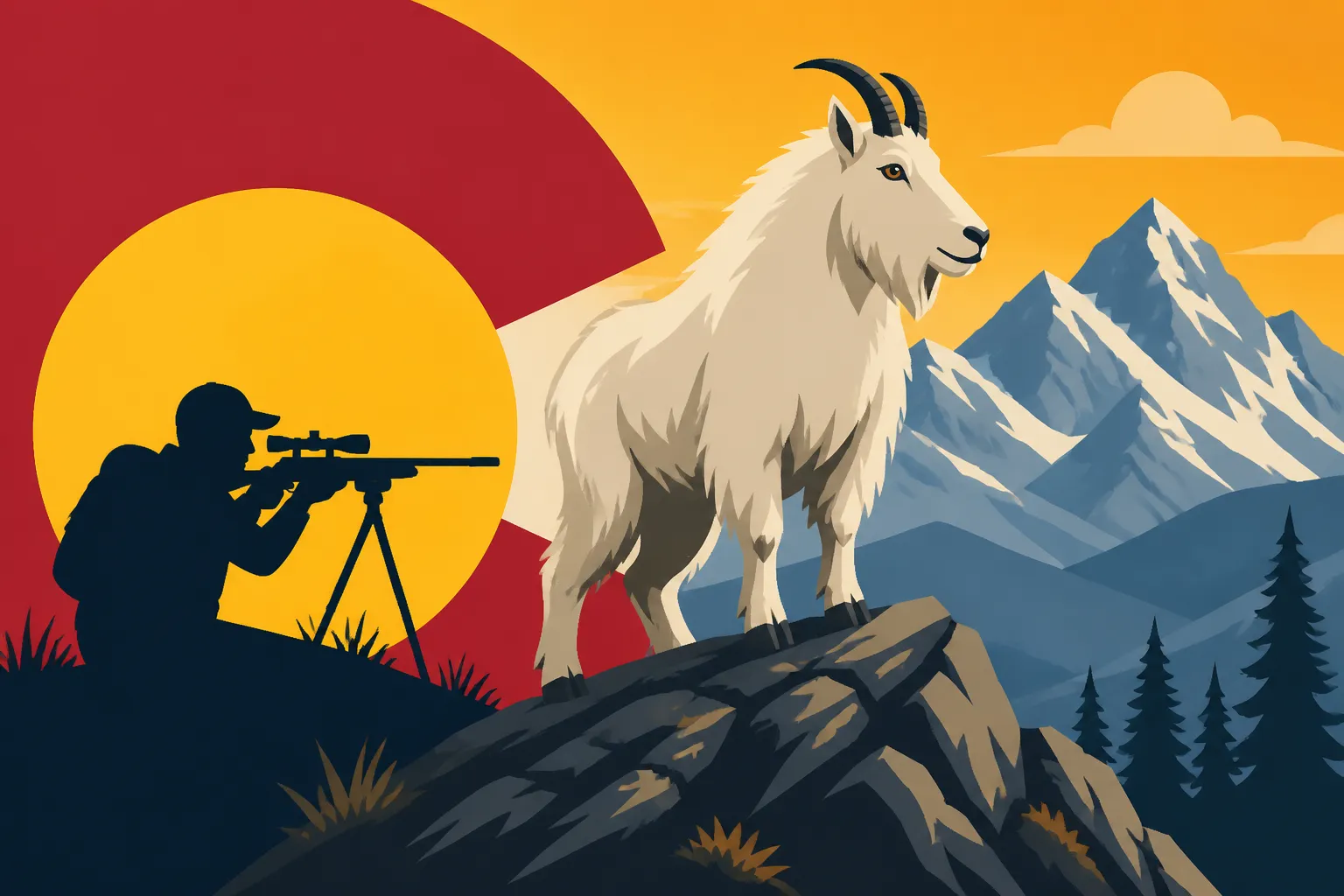
If you've ever dreamt of scaling the majestic peaks of Colorado, breathing in that thin, crisp air, and pursuing one of the most iconic big game animals on the continent – the mountain goat – then you know the draw system can feel like an insurmountable puzzle. It’s a frustrating reality that simply accumulating preference points like you would for elk or deer isn't quite how it works for these elusive, high-country dwellers. This comprehensive guide is here to demystify the Colorado mountain goat draw, explain the unique point requirements (or lack thereof), and help you understand what it really takes to secure one of these coveted tags.
Understanding Colorado's Mountain Goat Draw System
Drawing a Colorado mountain goat tag is truly a hunt of a lifetime, but getting that tag is often the hardest part. Unlike many other species, mountain goats in Colorado operate under a highly specific and often misunderstood draw system. It's not just about who has the most points; it's a game of chance influenced by your accumulated applications.
The Extreme Rarity of Mountain Goat Tags
Let's be blunt: mountain goat tags are exceptionally rare in Colorado. We're talking about a limited number of tags distributed across a handful of Game Management Units (GMUs) each year. The Colorado Parks and Wildlife (CPW) meticulously manages these populations to ensure their health and sustainability, which means very few animals are harvested annually. This scarcity creates immense competition among hunters, transforming the draw into what feels like a pure lottery for many.
Consider the sheer vastness of suitable goat habitat compared to the tiny allocation of tags. You might have thousands of hopeful applicants vying for just a handful of tags in a specific unit. This isn't like an OTC elk tag situation; every single mountain goat tag in Colorado is allocated through the primary draw. The dream of a Colorado Mountain Goat Hunting adventure starts and often ends right here, in the application process.
Preference Points vs. Weighted Points for Goats
Here's where the Colorado goat draw significantly differs from elk or deer. For mountain goats, bighorn sheep, and moose, Colorado utilizes a weighted point system, not a traditional preference point system. This distinction is crucial to grasp because it changes your strategy entirely.
In a standard preference point system, like the one used for most limited elk and deer units, the applicant with the most points gets the tag. Simple as that. You accumulate a point each year you apply and don't draw, and eventually, if you have enough, you draw.
The weighted point system, however, works differently. When you apply for a mountain goat tag and are unsuccessful, you accrue a "weighted point." Each weighted point you possess essentially squares your entry into the draw. For example, if you have 3 weighted points, your name is entered 3×3=9 times into the drawing. If you have 10 points, your name is entered 10×10=100 times. This system means that technically, someone with zero points can draw a tag, though their chances are minuscule (1×1=1 entry). Conversely, someone with many points has a significantly better chance, but it’s still never a guarantee. It's about increasing your odds in a random lottery, not guaranteeing a tag based on seniority. This can be a tough pill to swallow for hunters who meticulously build points, only to see a new applicant draw the tag. For a deeper dive into how this all works, check out How Colorado Preference Points Work and Colorado Bonus vs Preference Points 2028.
How Many Points Do You Really Need for a Colorado Goat Tag?
Given the weighted point system, there isn't a hard-and-fast "minimum number of points" you need to draw a Colorado goat tag. It's more about improving your statistical probability. However, by analyzing past draw results, we can identify trends and understand the typical point ranges of successful applicants.
Analyzing Draw Odds and Point Creep
The term "point creep" is often used in the context of preference points, where the number of points required to draw a particular tag slowly increases each year as more people apply. While the weighted system doesn't have a direct "point creep" in the same way, the average number of points held by successful applicants tends to rise over time simply because more people are accumulating points and thus increasing their squared entries.
To truly understand your chances, you need to pore over historical draw data provided by Colorado Parks and Wildlife. Many hunters use specialized tools and platforms, like those offered by GoHunt, to analyze unit-specific draw odds, success rates, and the point totals of past successful applicants. These resources can show you, for instance, that while 0-point draws happen every year, the majority of successful applicants for a specific unit might have 10, 15, or even 20+ weighted points. This data becomes your best friend in a system where direct point requirements don't exist.
Let's look at a hypothetical example:
| GMU (Unit) | Tags Offered (Annual Avg.) | Average Weighted Points of Successful Applicants (Last 5 Years) | Min. Weighted Points to Draw (Last 5 Years) | Max. Weighted Points to Draw (Last 5 Years) | Total Applicants (Annual Avg.) |
|---|---|---|---|---|---|
| G1 (San Juans) | 2 | 18.5 | 0 | 25 | 1,200 |
| G5 (Collegiate) | 3 | 15.2 | 0 | 22 | 950 |
| G10 (Sangre) | 1 | 21.0 | 7 | 28 | 800 |
| G12 (Flat Tops) | 4 | 12.8 | 0 | 19 | 1,500 |
Note: This table uses hypothetical data for illustrative purposes. Actual draw data varies significantly by year and unit.
What this table demonstrates is that while a 0-point applicant can draw (as shown by "Min. Weighted Points to Draw"), the average successful applicant has a significant number of weighted points. This means consistent application over many years is generally the path to increasing your probability.
Strategies for Building or Burning Points
Since the goat draw is a long game, your strategy really revolves around patience and consistency.
- Consistent Application: The most straightforward strategy is to apply every single year for the mountain goat draw. Each year you apply and are unsuccessful, you accrue another weighted point, which significantly multiplies your entries in future draws. It's a marathon, not a sprint.
- Analyzing Unit Trends: Don't just blindly apply to the same unit. Use resources like GoHunt to look at historical draw success for different units. Some units might consistently require slightly fewer points on average, or have a higher tag allocation, giving you marginally better odds. While no unit is "easy," some might be "less impossible." For instance, a unit with 4 tags annually will, statistically, be easier to draw than a unit with only 1 tag, even if demand is also higher.
- "Burning" Points (or trying to): Since you can technically draw with 0 points, there's no real concept of "burning" points in the traditional sense. You're always just trying to maximize your odds in the lottery. If you have a significant number of weighted points, you might feel a stronger urge to apply for a unit that historically has slightly better odds, hoping your accumulated entries finally pay off.
Remember, every year that passes without drawing a tag adds another weighted point to your tally, slowly (but surely) improving your chances in the next draw. This waiting game is a shared experience among hopeful goat hunters, reinforcing the idea that securing one of these tags is truly a once-in-a-lifetime opportunity. Don't forget the Colorado Big Game Draw Deadlines to ensure your application is in on time each year.
Important Considerations Beyond Just Points
While weighted points are central to the mountain goat draw, several other factors play a significant role in your chances and the overall experience. Understanding these nuances can help you refine your application strategy and manage expectations.
Unit-Specific Demand and Tag Quotas
Colorado is home to several distinct mountain goat herds, each managed independently, leading to varying tag quotas across different GMUs. Some units might be incredibly difficult to draw due to low tag numbers and high demand, while others, though still challenging, might offer a slightly better statistical chance.
For instance, units in the Raggeds Wilderness or the Maroon Bells area, known for their stunning scenery and robust goat populations, might have incredibly low tag numbers, leading to astronomically high point averages for successful applicants. Conversely, units with a bit more difficult access or less famed populations might see a marginal decrease in applicant numbers, thus slightly improving your odds. This is where researching individual unit statistics is paramount. Platforms like GoHunt consolidate this kind of specific, detailed information, allowing you to compare units and make an informed decision based on your accumulated points and risk tolerance. This level of detail isn't something you get with general guides like a Colorado Elk Hunting Guide, but it's essential for species like goats.
The Role of Non-Resident Quotas
If you're an out-of-state hunter, the challenge of drawing a Colorado mountain goat tag is compounded by non-resident quotas. Colorado Parks and Wildlife allocates a certain percentage of tags to non-residents, typically a maximum of 25% for most big game species. For extremely limited draws like mountain goats, this can mean only one or two non-resident tags, if any, are available in a given unit.
This quota system significantly reduces the number of available tags for non-residents, making the draw even more competitive. A non-resident might need a truly exceptional number of weighted points, or simply an incredible stroke of luck, to beat the odds. It emphasizes the need for non-residents to apply consistently for many, many years, fully embracing the weighted point system's long-term gamble. Understanding the non-resident allocation is critical when you consider How to Apply for a Colorado Hunting License as a non-resident.
Preparing for Your Once-in-a-Lifetime Mountain Goat Hunt
While the draw process is undoubtedly the hardest part, drawing a mountain goat tag is only the beginning. The hunt itself presents some of Colorado’s most extreme challenges, requiring serious physical and mental preparation.
Physical Conditioning for High-Altitude Hunting
Mountain goats live in incredibly rugged, steep, and high-altitude terrain, often above 11,000 or 12,000 feet. This isn't just a casual hike; it's an extreme physical test. Even if you're in good shape at sea level, the thin air of the Colorado high country can quickly drain your energy and exacerbate any underlying physical issues.
Expect to spend days gaining and losing thousands of feet of elevation, often scrambling over loose rock, through boulder fields, and up steep, unforgiving slopes. Your cardiovascular endurance needs to be top-tier, and you'll benefit immensely from strength training focused on your legs and core. Training should involve hiking with a weighted pack, stair climbing, and spending time at elevation beforehand if at all possible. This kind of preparation is even more intense than what you'd typically undertake for a Colorado DIY Elk Hunting Guide adventure, because the terrain is so much more demanding. Consider serious Altitude Training for Colorado Hunting in the months leading up to your potential hunt.
Essential Gear for a Colorado Mountain Goat Hunt
Hunting mountain goats demands specialized gear built for extreme alpine conditions. Your standard deer hunting setup simply won't cut it when you're navigating vertical terrain in unpredictable mountain weather.
- Optics: Top-tier optics are non-negotiable. Quality binoculars (10x or 12x) and a high-power spotting scope (20-60x or higher) are essential for finding goats on vast, distant rock faces and judging their sex and size. You'll spend countless hours glassing.
- Layered Clothing System: Weather in the high country can change in minutes, swinging from warm sunshine to freezing rain, snow, or even hail. A comprehensive layering system, including a waterproof/breathable outer shell, insulating layers (puffy jacket, fleece), and moisture-wicking base layers, is critical for staying comfortable and safe.
- Footwear: Stiff, mountaineering-style boots with excellent ankle support and aggressive tread are a must. You'll be side-hilling on steep slopes and crossing treacherous terrain. Don't skimp here.
- Backpack: A capable backpacking pack, ideally 60-80 liters, will be needed to carry all your gear for multi-day excursions and, hopefully, to pack out a goat. This is a far cry from a day pack.
- Navigation: GPS devices, satellite communicators (like a Garmin inReach), and physical maps are vital. Cell service is often non-existent in goat country.
- Shelter: If you're backpacking in, a lightweight, durable tent built for alpine conditions is essential.
- Weapon: Whether rifle or bow, ensure it's sighted in for potential long-range shots at steep angles. Goats are tough animals, and precise shot placement is paramount.
This demanding environment underscores why drawing a goat tag, while statistically improbable, is a prize worthy of the extreme effort required, both in the draw and in the field. Don't overlook details like finding good quality Best Boots for Colorado Elk Hunting, which also applies to goat hunting given the terrain.
Disclaimer
Please remember that hunting regulations, season dates, and draw odds can change annually. Always consult the official Colorado Parks and Wildlife (CPW) website and their most current Big Game Brochure for the most accurate and up-to-date information before applying or planning any hunt. This guide provides general advice and insights based on common practices and experiences.