Late-Season Elk Hunting Tactics
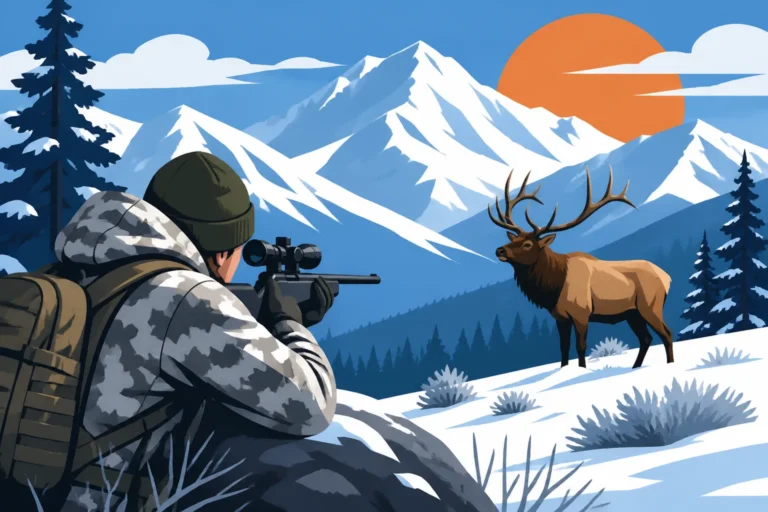
The brutal reality of late-season elk hunting in Colorado often hits hard. You're facing freezing temperatures, deep snow, and elk that have gone quiet and often elusive, hunkered down in their winter range. Gone are the bugles of the rut, replaced by a profound silence that can make you wonder if any elk are even left in the mountains. This comprehensive guide will arm you with the specific tactics, gear considerations, and mindset you need to navigate these challenging conditions and find success when other hunters have packed up and gone home.
Understanding the Colorado Late Season Landscape
The late season isn't just a continuation of earlier hunts; it's an entirely different beast. Elk behavior, their preferred habitat, and even the type of tag you hold can change dramatically. Understanding these fundamental shifts is the first step to putting late-season antlers or meat in your pack.
Shifting Elk Behavior and Habitat
As winter truly sets in, usually after the primary rifle seasons, elk undergo a significant transformation in their daily lives. Their primary focus shifts from breeding to pure survival. Food becomes paramount, especially as snow depths increase and colder temperatures demand more calories to simply stay warm. This means they're looking for areas that offer the best combination of accessible forage, thermal cover, and minimal snow accumulation.
You'll often find elk migrating from their high-elevation summer and rutting grounds down to lower, often more accessible, winter ranges. These wintering areas are typically characterized by south-facing slopes, which catch more sunlight and melt snow faster, exposing grass and browse. Dark timber stands on these slopes also provide crucial thermal cover, shielding them from bitter winds and heavy snowfall. Don't be surprised to find them concentrated in areas you wouldn't have even considered earlier in the fall, sometimes even on private land or within proximity to human activity if it offers safety and food. Knowing how weather moves Colorado elk is critical. They'll also be less active during the day, often feeding during twilight hours or at night, then bedding down in thick cover for warmth and security.
Key Dates and Season Structure
Colorado's late season typically encompasses the latter rifle seasons, particularly the 4th rifle season, and then extends into specific late-season hunts, which can include both rifle and archery opportunities. These hunts often target cow elk or antlerless deer, but there are also late-season bull tags available, especially in certain Game Management Units (GMUs). The specific dates vary year to year, so always check the current Colorado Parks and Wildlife (CPW) regulations. Generally, late rifle seasons can run from mid-November into early December, with some extended cow or private land hunts stretching even further into December or January.
These late tags are often draw-only or available as leftover licenses. It's not uncommon to find over-the-counter (OTC) archery elk tags in designated units for the entire archery season, which runs into late September, but true late-season winter archery opportunities are less common and typically unit-specific draw tags. For a deeper dive into the overall schedule, explore the guide on Colorado Hunting Seasons Explained. The critical takeaway is that by late season, hunter pressure is usually lower than during the rut, but the elk are also far more wary and concentrated.
Locating Elk in Winter Conditions
Finding elk when they're not bugling and are actively trying to conserve energy and stay hidden is a puzzle. Your success will hinge on diligent scouting, both from your computer screen and with boots on the ground.
E-Scouting for Wintering Grounds
This is where modern technology truly shines in late-season elk hunting. Before you even set foot in the mountains, you should spend hours poring over satellite imagery and topographical maps. Tools like GoHunt's mapping platform or OnX Hunt become indispensable. You're looking for specific features:
- South-Facing Slopes: Identify aspects that receive maximum sunlight. These will be the first areas to shed snow, making forage more accessible. Look for slopes with gentler grades where elk can move easily.
- Thermal Cover: Dark timber stands (dense conifer forests) adjacent to these south-facing feeding areas are prime bedding locations. They break the wind and trap heat.
- Low Elevation Access: While elk might be higher in some areas, the heaviest snow will push them down. Focus on the transition zones between mid-elevation and low-elevation forest or agricultural areas.
- Historical Data: If you use a tool like GoHunt, you can often cross-reference your findings with historical harvest data, winter range overlays, and even past snowpack maps to predict where elk might be concentrated.
- Water Sources: Even in winter, elk need water. Identify springs or open water sources that won't freeze solid. Often, snow itself provides enough moisture, but an open spring can be a magnet.
The goal of e-scouting is to narrow down vast areas into smaller, high-probability zones. Look for benches, saddles, and travel corridors connecting feeding and bedding areas within these winter ranges. Understanding how to e-scout before a Colorado hunt is a huge advantage.
On-the-Ground Reconnaissance
Once you have your e-scouting done, it's time to hit the field. This isn't necessarily about hunting yet; it's about confirming your suspicions and finding fresh sign. This type of scouting is physically demanding, so prepare for high-altitude hunting if your chosen area is still up there.
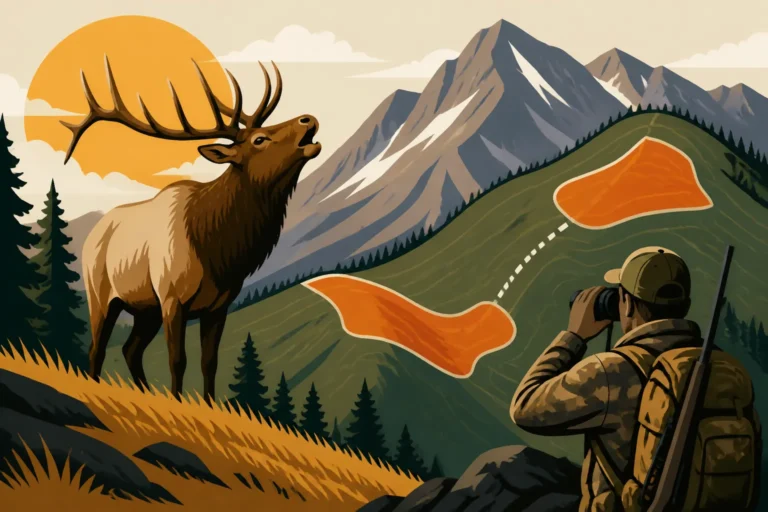
- Glassing: This is your most powerful tool. Find a vantage point that allows you to observe vast swaths of potential winter range. Use high-quality binoculars or a spotting scope (like those from GoHunt's gear shop, which often feature brands like Vortex or Swarovski) to meticulously pick apart south-facing slopes, timber edges, and open clearings. Look for any horizontal lines, movement, or contrasting colors that might indicate an elk. This is particularly effective in the early mornings and late afternoons when elk are most likely to be moving or feeding. Knowing how to glass big Colorado basins is a key skill.
- Tracking and Sign Reading: With snow on the ground, elk sign becomes incredibly obvious. Look for fresh tracks, especially larger, deeper tracks indicating mature animals. Pay attention to how fresh the tracks are, indicated by crisp edges and lack of snow accumulation within them. Follow tracks to learn their travel patterns between bedding and feeding. Look for fresh scat and browse – areas where they've been eating shrubs or pawing through snow for grass. These signs tell you exactly where elk have been recently and how many.
- Silent Movement: When you're in an area with fresh sign, switch to still-hunting mode. The snow can be noisy, but it can also muffle your steps if you're careful. Moving slowly, using the wind, and pausing frequently to scan and listen is crucial. Elk will be on high alert. Learn how to move quietly through Colorado timber.
Effective Late-Season Hunting Strategies
Once you've located elk, the challenge shifts to making a successful approach. Late-season elk are educated and hyper-aware, meaning your strategy needs to be precise and patient.
Spot-and-Stalk in Open Terrain
Many late-season elk, especially in areas with moderate snow, will be found feeding in open parks, clearings, or on south-facing slopes. This makes spot-and-stalk hunting a highly effective method.
- Initial Spotting: As discussed, use your optics to find elk from a distance. The farther away you spot them, the more time you have to plan.
- Strategic Approach: Once spotted, spend considerable time planning your route. Analyze the terrain for cover (ridges, drainages, timber patches), paying close attention to wind direction and thermals. In cold weather, thermals often drop in the evening and rise in the morning. A good approach minimizes exposure and keeps your scent away from the animals.
- Patience is Key: This isn't a race. A successful stalk might take hours, crawling hundreds of yards. Move only when elk are looking away or have their heads down feeding. Use natural pauses in their movement to advance. If they bed down, you might need to wait them out for hours, using the time to get into a prime ambush position. Remember, judging shooting distance in the mountains is critical, especially when stalking.
- Shot Placement: When the moment comes, ensure you have a solid rest and a clean shot. These animals are often larger and tougher in winter, and a clean kill is paramount.
Still-Hunting Timber and Cover
When snow is deep or elk are consistently holding in thick timber for thermal cover, still-hunting becomes the primary tactic. This is a game of extreme patience and heightened senses.
- Slow and Steady: Imagine you're moving in slow motion. Take a single step, then pause for several minutes. Scan every shadow, every cluster of trees, every fallen log. Look for horizontal lines (an elk's back or belly) in a vertical world. Listen for the crunch of snow, the snapping of a twig, or the soft blowing of an elk's breath.
- Wind Management: The wind is your best friend or worst enemy. Always hunt into or across the wind. In timber, wind can swirl unpredictably, so paying attention to even the slightest breath of air is vital. Consider using a small puff bottle to test the wind often.
- Elk Sign: Continue to read the sign as you go. Fresh tracks, rubs, or droppings indicate you're in an active area. These signs aren't just for locating elk; they help you predict their direction of travel and recent activity.
- Pinch Points: Elk often use the same travel routes through dense timber. Look for saddles, narrow ridges, or areas where thickets funnel into a smaller opening. These make for excellent ambush opportunities. This directly relates to how to find elk in deep timber.
Ambush Points and Travel Corridors
Another highly effective late-season strategy is to identify specific locations where elk are forced to travel or congregate, and then set up an ambush. This takes advantage of their predictable winter movements.
- Food to Bedding Corridors: Once you've identified feeding areas (south-facing slopes, clearings) and bedding areas (dense timber on north or east faces, or steep sheltered areas), look for the trails and corridors connecting them. Elk will use the path of least resistance. Set up downwind of these trails.
- Water Sources: If open water is scarce, a reliable spring or unfrozen creek can be a magnet. Position yourself discreetly overlooking these areas.
- Wallows/Mineral Licks: While less active than during the rut, some elk may still visit wallows or mineral licks. Check these areas for fresh sign.
- Thermals and Wind: Always choose an ambush spot that gives you the advantage with wind and thermals. If elk are moving uphill in the morning, position yourself above them, with the rising thermal carrying your scent upwards. If they're moving downhill in the evening, be below them. You can read more about how to use thermals in Colorado elk country for greater insight.
- Patience and Stealth: Once set up, remain absolutely still and quiet. Dress in layers to stay comfortable, as you'll be sitting for extended periods in potentially frigid conditions.
| Strategy | Best Conditions | Key Advantage | Primary Challenge |
|---|---|---|---|
| Spot-and-Stalk | Moderate snow, open terrain | Cover large areas, precise approach | Requires great visibility & patience |
| Still-Hunting | Deep snow, thick timber | Finds hidden elk, close encounters | Very slow, noisy snow, limited visibility |
| Ambush/Corridors | Predictable travel patterns | Capitalizes on routine | Requires prior scouting, long waits |
Essential Gear and Preparation for the Cold
The late season in Colorado is no joke when it comes to weather. Neglecting your gear or physical preparation can quickly turn a hunt into a survival situation.
Specialized Cold Weather Clothing
Layering is not just a suggestion; it's a lifeline. You need a system that allows you to regulate your body temperature effectively, moving from strenuous activity (stalking, packing out) to static periods (glassing, waiting on stand) without getting too hot or too cold.
- Base Layers: Start with synthetic or merino wool base layers. These wick moisture away from your skin, which is crucial because wet skin equals cold skin. Avoid cotton at all costs. Consider thicker weights for late season, such as 250-300 weight merino.
- Mid-Layers: These provide insulation. Fleece jackets, synthetic puffy jackets, or down sweaters are excellent choices. Bring multiple mid-layers so you can add or subtract as needed. A common setup might be a heavy fleece over a base layer, with a packable puffy jacket ready for static periods.
- Outer Shell: Your outermost layer needs to be completely waterproof and windproof. Gore-Tex or similar proprietary membranes are ideal. This shell protects your insulation from snow, rain, and biting winds. Make sure it's durable enough to withstand brush and scrambling. You’ll want robust rain gear in addition to a warm shell.
- Head, Hands, and Feet: These extremities lose heat quickly. Invest in a warm merino wool or fleece beanie, insulated gloves or mittens (with a thinner liner glove for dexterity), and high-quality, insulated, waterproof boots. Pair your boots with thick merino wool socks. You might even consider heated socks or hand warmers for added comfort. Learn more about how to layer for a Colorado elk hunt and how to handle cold-weather gear for Colorado.
Winter-Specific Gear Considerations
Beyond clothing, several other items become critical for a successful and safe late-season hunt. Many of these would be on any Colorado backcountry hunting gear list, but their importance is magnified in winter.
- Footwear and Traction: Insulated, waterproof boots are non-negotiable. Look for boots rated for below-freezing temperatures. Depending on snow depth, you might need gaiters to keep snow out of your boots, microspikes for icy conditions, or even snowshoes or cross-country skis for deep powder.
- Navigation and Communication: A reliable GPS device (like a Garmin inReach or a phone app like OnX) is essential. Carry spare batteries or a power bank. In remote areas, a satellite messenger is a wise investment for emergencies, as cell service will be nonexistent.
- Emergency Supplies: Always carry a fire-starting kit, a space blanket, extra high-calorie food, and plenty of water (or a way to melt snow and filter it). Remember that water bottles can freeze, so carry them insulated or close to your body.
- Optics: High-quality binoculars and a spotting scope are indispensable for glassing distant slopes, especially when elk are bedded down and still.
- Weapon Care: Keep your rifle or bow protected from moisture. Snow and ice can affect rifle scopes, mechanisms, and bow strings. Consider a scope cover and wipe down your weapon regularly.
- Pack: A comfortable, durable backpack is vital, not just for carrying your gear, but also for packing out meat. Look for packs with good load-hauling capabilities, like those from Kifaru or Mystery Ranch, capable of handling a heavy, awkward load.
Overcoming Late-Season Challenges
Late-season elk hunting presents unique obstacles that can quickly derail an unprepared hunter. Acknowledging and planning for these challenges is crucial for success.
Dealing with Deep Snow and Access
Heavy snowfall can transform even familiar terrain into an entirely new landscape, creating significant access issues and dramatically affecting elk movement.
- Vehicle Access: Forest Service roads or county roads that were open in September might be completely impassable by November or December due to snow. Check road closures with the local Forest Service or BLM office before you go. A good 4×4 vehicle with aggressive snow tires is often a minimum requirement, and sometimes even snowmobiles are needed to reach trailheads.
- Physical Exertion: Hiking in deep snow is incredibly demanding. Every step becomes a workout. If you're post-holing, even short distances can be exhausting and painfully slow. This is where snowshoes or cross-country skis can be game-changers, allowing you to cover ground more efficiently and conserve energy. Consider your physical preparation for Colorado hunting carefully.
- Elk Movement: Deep, crusty snow can make it difficult for elk to move, pushing them to lower elevations, south-facing slopes, or established game trails where snow is packed down. Conversely, fresh, light snow can be very quiet for stalking. Understanding how to hunt elk in the snow involves interpreting these conditions. They might yard up in dense timber where snow is less deep. Pay attention to how the snow conditions influence their travel corridors and feeding areas.
- Finding Refuge Areas: When pressured or facing extreme cold, elk will seek out areas with significant thermal cover and minimal human disturbance. These can be pockets of dark timber, steep canyon bottoms, or areas with thick draws that act as natural windbreaks. Identifying these potential refuge areas through e-scouting and on-the-ground reconnaissance is key to finding concentrated animals.
Managing Meat in Cold Temperatures
While bitterly cold temperatures can make hunting uncomfortable, they offer a distinct advantage for meat preservation. You generally don't have to worry about meat spoiling quickly, but you still need a plan for proper handling.
- Field Quartering and Cooling: As soon as an elk is down, get to work. Quarter the animal, removing all four quarters, backstraps, and tenderloins. If possible, bone out the meat to reduce weight and cool it faster. Spread the meat out on a tarp or hang it in a tree to allow air to circulate and cool it down rapidly. The cold air acts as a natural refrigerator, but you still want to ensure heat is out of the muscle mass. Learn how to quarter an elk in the field for efficiency.
- Protection from Scavengers: Even in cold weather, coyotes, mountain lions, and bears (if still active) can be a threat to your meat. Hang quarters high in trees if possible, or cover them securely. If leaving meat overnight, consider setting up a light or a radio to deter scavengers.
- Packing Out: The cold means you have more time, but packing out an elk in deep snow or icy conditions is incredibly difficult. You’ll be layering and delayering frequently. A heavy-duty backpack with a meat shelf is essential. If you have a partner, using a game cart might be an option on packed trails, but in true backcountry, it’s often one quarter at a time on your back. Read more about how to pack out an elk in Colorado. Remember that even though it's cold, the physical exertion of packing will generate a lot of heat, so dress accordingly and stay hydrated.
Disclaimer
Hunting in Colorado involves inherent risks, including but not limited to adverse weather conditions, dangerous terrain, wildlife encounters, and physical exertion. This guide provides general information and recommendations. Always consult the official Colorado Parks and Wildlife regulations for the most current rules, season dates, and tag requirements. Prioritize safety, be prepared for emergencies, and consider taking a hunter education course or hiring a licensed guide if you are new to hunting in challenging Western environments.