How to Hunt Colorado 1st Rifle Season
If you've ever dreamt of heading into the crisp, high-country air of Colorado with a rifle in hand, ready for elk, you've likely contemplated the 1st Rifle Season. It's a truly unique beast, often presenting a mix of early fall weather, potentially vocal bulls still lingering from the rut's tail end, and distinct challenges that can leave a hunter feeling overwhelmed. This comprehensive guide is here to cut through the confusion, helping you understand the intricacies of hunting elk during Colorado's 1st Rifle Season so you can strategize effectively and increase your chances of success.
Understanding Colorado's 1st Rifle Season
The 1st Rifle Season in Colorado is a special time, kicking off the main rifle seasons in early to mid-October. It's often highly anticipated by hunters, but it comes with its own set of rules, expectations, and elk behaviors that differ significantly from later seasons. Don't go into it thinking it's just another rifle hunt; this period demands a tailored approach.
What Makes it Unique?
Unlike the later rifle seasons, which are typically longer and often have over-the-counter (OTC) tag opportunities for elk, the 1st Rifle Season is a short, four-to-five-day affair and is almost exclusively a limited draw season. This means you won't be picking up a tag at the sporting goods store the week before. You'll need to apply months in advance through the Colorado Parks and Wildlife (CPW) draw system. The limited nature of these tags also means that hunter densities are generally lower than in some of the later seasons, particularly the 2nd and 3rd rifle seasons, which can sometimes feel like a public land rodeo.
The short duration of the season means you need to be efficient and have a solid plan from the moment you step foot in the woods. Weather can be a wild card; you might experience glorious, warm Indian summer days, or you could be greeted by a foot of fresh snow and freezing temperatures. It's an interesting transition period for elk, too. While the peak of the rut is generally over by early October, residual rutting activity can still occur, especially with younger bulls or in areas where the rut peaked later. This means you might still hear some bugling, which can be a huge advantage if you know how to leverage it.
The Draw System and Tag Acquisition
Securing a 1st Rifle Season elk tag is primarily done through the Colorado big game draw. This isn't a simple lottery; it operates on a preference point system for residents and non-residents alike. Essentially, the more preference points you accumulate by applying and not drawing, the better your odds become in subsequent years. Many of the most desirable units for 1st Rifle will require a significant number of points, sometimes five, ten, or even more, to draw a bull or either-sex tag. Cow tags in the 1st Rifle are often even harder to come by, as they tend to be fewer and targeted for specific herd management.
The application period typically opens in early March and closes in early April, so planning well in advance is critical. Researching unit-specific draw odds is paramount. Tools like those offered by GoHunt, for instance, can be incredibly valuable for analyzing past draw data, success rates, and public land percentages within various Game Management Units (GMUs). This kind of intel allows you to make informed decisions about where to apply, balancing your point accumulation with your desire to hunt sooner rather than later. Understanding the nuances of Colorado Preference Points Explained is vital for any serious elk hunter looking to participate in these limited seasons. Don't just pick a unit because you've heard good things; dive deep into the data to see what it realistically takes to draw.
Key Characteristics of Early Rifle Hunts
Hunting Colorado's 1st Rifle Season means stepping into a unique set of environmental conditions and elk behaviors. Being prepared for these specifics is what separates successful hunters from those who go home empty-handed. It's not just about showing up with a rifle; it's about understanding the nuances of early October in the high country.
Weather Patterns and Their Impact
Early to mid-October in Colorado can be a meteorological roller coaster. You might start your hunt with crisp, cool mornings that give way to surprisingly warm, sunny afternoons, sometimes reaching into the 60s or even 70s Fahrenheit in sheltered areas. This creates strong thermal currents, where warm air rises during the day and cool air descends into valleys and drainages in the evening and morning. Understanding How to Use Thermals in Colorado Elk Country is absolutely critical, as a swirling or unpredictable wind can quickly betray your presence to keen-nosed elk.
Conversely, it's not uncommon for the first significant snowfalls of the season to hit during the 1st Rifle. A sudden cold front can drop temperatures drastically and dump several inches, or even feet, of snow, especially at higher elevations. This can be a game-changer. Fresh snow helps track elk, quiets your footsteps, and can push elk down to lower elevations or into more sheltered, thicker timber. However, it also makes travel more arduous, complicates navigation, and increases the risk of hypothermia if you're not properly equipped. Always pack for all four seasons, no matter what the forecast predicts for a Colorado October.
Elk Behavior in Early October
By the time the 1st Rifle Season rolls around, the chaotic peak of the elk rut is typically winding down, but it's not entirely over. Bulls are often exhausted from weeks of fighting and breeding. You might still hear sporadic bugles, especially from satellite bulls trying to round up stray cows, or a dominant bull responding to a challenger. This lingering vocalization offers a unique advantage for rifle hunters, as it can help you locate animals that might otherwise be quiet later in the season. However, you're more likely to encounter smaller groups or single bulls rather than large, boisterous herds.
Elk are transitioning from their rutting patterns to a focus on feeding and regaining strength for the winter. They'll be found in areas with good forage, often shifting from wide-open meadows to more sheltered slopes or dark timber as hunting pressure builds. Water sources remain important, especially during warmer spells. Bedding areas will be strategically chosen for security, often on benches, ridge saddles, or north-facing slopes that offer cooler temperatures and denser cover. Understanding these changing behaviors is key to finding them; they're less predictable than during the peak rut, but also less pressured than in later seasons. Knowing How to Find Elk in Deep Timber can be a game-changer here.
Hunting Pressure Considerations
While 1st Rifle Season tags are limited, leading to generally lower hunter numbers compared to the 2nd and 3rd seasons, it doesn't mean you'll have the mountains to yourself. Certain popular units or easily accessible public land areas will still see significant pressure. The key is to understand where this pressure will concentrate and plan to move beyond it. Hunters often stick close to roads or well-established trails, especially in the first day or two of the season.
This pressure, even if lighter, will impact elk behavior. Animals quickly learn to avoid areas with human activity. They'll shift into thicker cover, move deeper into roadless areas, or become largely nocturnal. Your strategy needs to account for this. Don't be afraid to hike farther, gain more elevation, or explore less obvious routes. The hunters who are willing to put in the extra effort often find the unpressured animals. Utilizing detailed mapping resources, like those available on GoHunt, can help you identify areas with limited access or those that require a significant hike, often leading to better hunting experiences away from the crowds.
| Feature / Season | 1st Rifle Season (Early Oct) | 2nd Rifle Season (Late Oct) | 3rd Rifle Season (Early Nov) |
|---|---|---|---|
| Duration | ~5 Days | ~9 Days | ~9 Days |
| Tag Type | Mostly Limited Draw | Limited Draw / OTC | Limited Draw / OTC |
| Hunter Pressure | Moderate (Unit Dependent) | High (OTC Units) | Moderate (Post-Migration) |
| Elk Behavior | Post-rut/Transition; Feeding | Feeding; Migration begins | Deep winter patterns |
| Vocalizations | Sporadic bugles possible | Minimal calling | Minimal calling |
| Weather | Variable; Mild to Snow | Cold; Snow likely | Cold; Heavy Snow likely |
| Crowd Avoidance | Easier with effort | Difficult in OTC areas | Moderate; Migration changes |
Effective Strategies for 1st Rifle Season
Success during the 1st Rifle Season isn't just about luck; it's about meticulous planning and executing the right strategies for the unique conditions. Elk aren't going to walk up to you and offer themselves up; you need to go out and find them, often leveraging specific tactics that match their early October behavior.
Locating Elk Pre-Season
Your hunt for 1st Rifle Season elk begins long before you ever set foot in the field. Effective pre-season scouting, both from your computer and with boots on the ground, is non-negotiable. Start with digital reconnaissance. Use online mapping tools, satellite imagery, and topographical maps to identify potential bedding areas, feeding grounds, water sources, and travel corridors. Look for north-facing slopes with dense timber for bedding, south-facing slopes for early season feeding, and saddles or benches that connect these areas. GoHunt's mapping features, for example, allow you to layer different data, such as public land boundaries, historical fire data, and even steepness of terrain, which is invaluable for narrowing down your search.
If at all possible, try to get out into your chosen GMU a few weeks before the season, even if just for a day or two. This "boots on the ground" scouting allows you to verify what you've seen on the maps. Look for fresh tracks, droppings, rubs, and wallows. Set up trail cameras in key funnels or near water sources. Pay attention to game trails and how they connect different types of terrain. Understanding How to E-Scout Before a Colorado Hunt can save you countless hours and ensure you're focusing your physical efforts on the most promising areas. Remember, elk are creatures of habit until hunting pressure makes them change, so finding those pre-season patterns is golden.
Hunting Methods and Tactics
Given the post-rut/transition phase, a blend of tactics often works best. While some calling might still be effective, especially soft cow calls or a subtle challenge bugle, the primary method for 1st Rifle Season often revolves around covering ground and being stealthy. This means employing techniques like spot-and-stalk or still hunting.
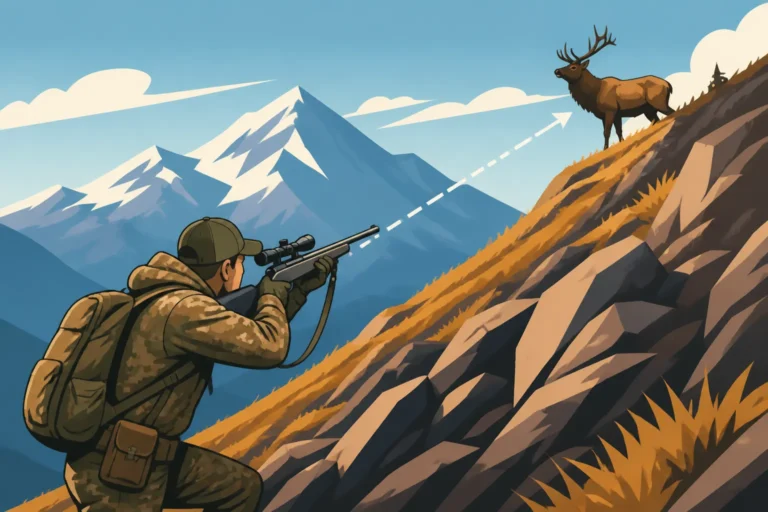
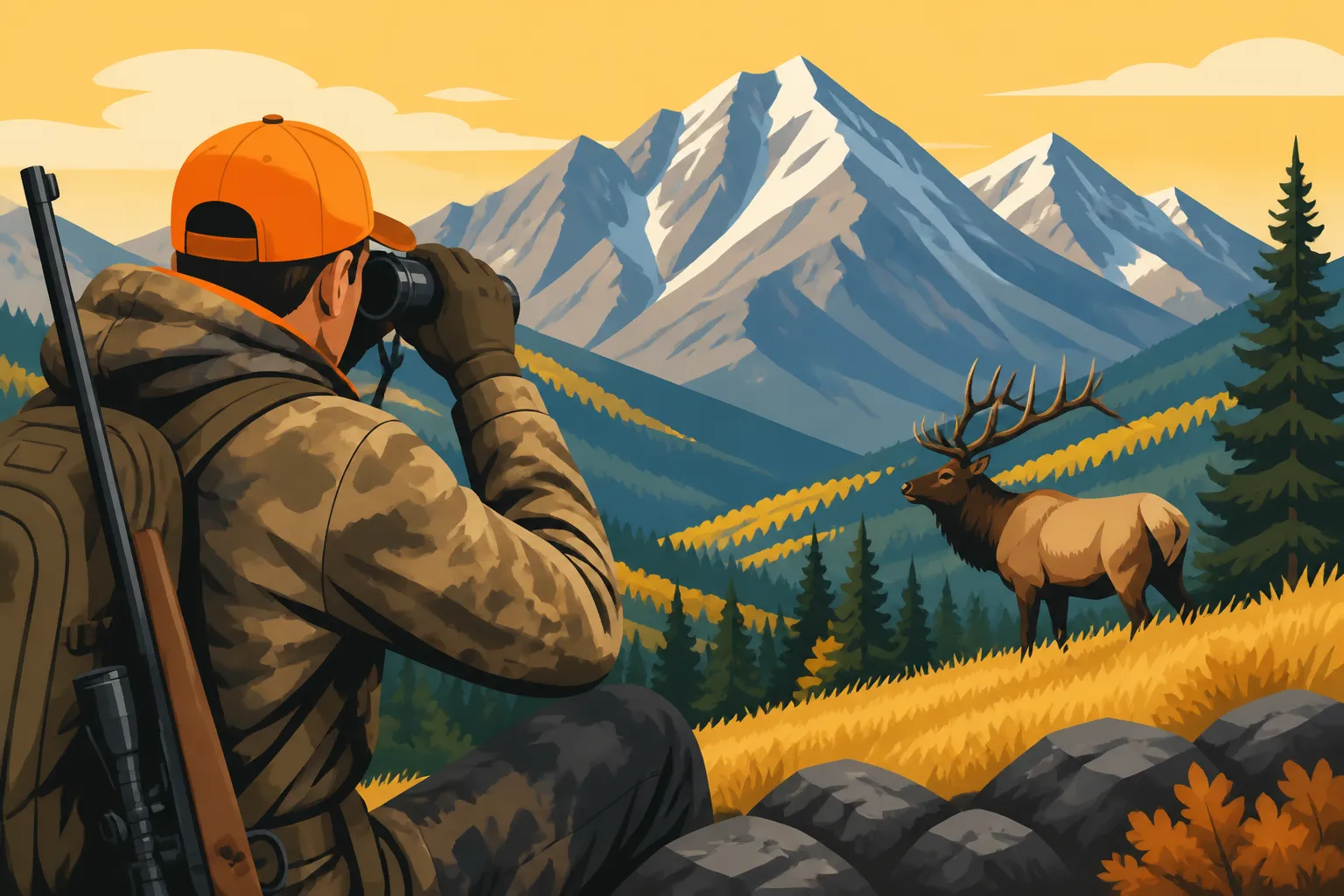
Spot-and-Stalk: This is a classic Western hunting method and incredibly effective for the more open terrain found in parts of Colorado. It involves finding a good vantage point, often at a high elevation overlooking basins, drainages, or large meadows, and using high-quality optics to meticulously glass for elk. Once an animal or herd is spotted, a careful and patient stalk is initiated, using terrain and wind to get within shooting range. This requires excellent physical conditioning and precise navigation skills. Mastering this technique, as detailed in a guide on Spot-and-Stalk Hunting in Colorado, can be your most potent weapon.
Still Hunting: When elk are in thicker timber, especially dark timber, spot-and-stalk becomes less viable. This is where still hunting shines. It involves moving incredibly slowly and deliberately through the woods, taking a few steps, then pausing for several minutes to glass and listen. You're trying to see the elk before it sees you. Pay attention to every detail – a flick of an ear, a patch of brown hide that looks out of place, or the sound of a distant twig snapping. This method requires immense patience and a deep understanding of elk habits and terrain, often being most effective when elk are transitioning between feeding and bedding areas. Don't rush; silence and observation are your allies.
Ambush Points: Identifying natural funnels, pinch points, or well-used travel corridors can set you up for an ambush, especially if you know elk are moving through a specific area, perhaps from a bedding area to a water source or feeding ground. This strategy involves finding a spot with good cover and clear shooting lanes, then waiting patiently during prime movement times (dawn and dusk). This can be particularly effective near wallows or natural springs, or along ridge lines that elk use to navigate.
Calling Strategies
While the roaring bugles of the peak rut might be fading, don't dismiss calling entirely during 1st Rifle Season. The key is to adjust your approach. Forget aggressive, challenging bugles unless you're absolutely certain a bull is responsive and looking for a fight. Instead, focus on softer, more subtle cow and calf sounds. A few plaintive mews or chirps can often pique the curiosity of a bull or a small herd, making them pause or even come investigate. This is especially true if you are still hunting and think elk might be just ahead of you in thick timber.
You might also consider a "distress" call or a lost calf call, which can sometimes bring in a protective cow or a curious bull. A guide on How to Call Elk in Colorado can provide more specific techniques. Remember, at this point in the season, elk are less concerned with breeding and more focused on survival, so calls that mimic common herd sounds or evoke a sense of curiosity or urgency tend to work better than outright aggression. Use calling sparingly and strategically, always being aware of your surroundings and any potential other hunters.
Gear and Preparation Specifics
A successful 1st Rifle Season hunt isn't just about finding the elk; it's also about being properly equipped and physically ready for the challenges that Colorado's high country throws at you in early October. The right gear can make or break your hunt, and personal preparation is non-negotiable.
Clothing and Layering for Variable Weather
As we've discussed, early October weather in Colorado is notoriously unpredictable. You might start your day in sub-freezing temperatures, experience a warm, sunny afternoon, and then get hit with a rain or snow squall by evening. This demands a versatile layering system for your clothing. Start with a good base layer that wicks moisture away from your skin, such as merino wool or synthetic fabrics. Avoid cotton at all costs, as it retains moisture and loses its insulating properties when wet, a fast track to hypothermia.
Your mid-layers should provide insulation, like a fleece jacket or a puffy vest. Your outer layer needs to be waterproof and windproof, capable of shedding rain, snow, and blocking biting winds. Pack a lightweight puffy jacket for glassing sessions or when temperatures drop rapidly. Don't forget a warm hat, gloves, and a neck gaiter. Having options allows you to adjust to changing conditions throughout the day without having to return to camp. A detailed guide on How to Layer for a Colorado Elk Hunt will be invaluable for planning your wardrobe.
Footwear is also critical. Invest in high-quality, waterproof, broken-in hunting boots with good ankle support. You'll be covering miles of rugged, uneven terrain, possibly in wet or snowy conditions. Pair them with moisture-wicking wool socks, and consider bringing multiple pairs to change them out daily to prevent blisters and maintain foot health.
Optics and Rifles
For 1st Rifle Season, top-tier optics are not a luxury; they are an essential tool. You'll spend countless hours glassing, trying to pick out an elk from miles away or in dense timber. A good pair of 10×42 or 12×50 binoculars, often mounted on a tripod for stability, will be your best friend. A spotting scope (20-60x range) can also be incredibly useful for evaluating animals from a distance, saving you unnecessary hiking. Rangefinders are also critical for ethical shot placement in mountain terrain, where judging distance can be deceptive, especially with uphill or downhill shots.
When it comes to your rifle, reliability and accuracy are paramount. Popular calibers for Colorado elk include .30-06 Springfield, .300 Win Mag, 7mm Rem Mag, and .308 Winchester, but many others are perfectly suitable. The key is to choose a caliber you can shoot accurately and confidently. Practice extensively at various distances, including uphill and downhill shots, and from different shooting positions you might encounter in the field. Understand your rifle's capabilities and limitations. Familiarize yourself with ballistics at altitude, as thinner air affects bullet trajectory slightly. A comprehensive review of Best Rifle Calibers for Colorado Elk can help you make an informed decision and ensure you're ready for the shot when it counts.
Physical Fitness and Altitude Acclimation
Colorado elk hunting is physically demanding, especially in early October when you might be covering significant elevation changes. You'll be hiking at altitudes ranging from 8,000 to over 11,000 feet, often with a heavy pack. If you're not accustomed to these elevations, the reduced oxygen can lead to altitude sickness, fatigue, and impaired performance. Begin a rigorous physical fitness regimen months before your hunt, focusing on cardiovascular endurance, strength training (especially legs and core), and hiking with a weighted pack.
For non-residents or those coming from lower elevations, arriving in Colorado a few days early to allow your body to acclimate to the altitude can make a huge difference. Take it easy the first day or two, stay hydrated, and avoid strenuous activity. Even small efforts to prepare can significantly improve your enjoyment and success on the hunt. Our guide on How to Physically Prepare for Colorado Elk offers excellent tips to get you ready for the mountains. Without proper fitness and acclimation, even the most perfect strategy will fall short if you can't physically execute it.
Navigating Public Land Challenges
Hunting Colorado's 1st Rifle Season often means navigating vast expanses of public land. While this offers incredible opportunities, it also presents unique challenges, particularly when it comes to finding undisturbed animals and managing the logistics of a successful hunt in rugged terrain.
Finding Undisturbed Areas
Even though 1st Rifle is a limited draw season, public land still sees its share of hunters. The key to success often lies in finding the areas where elk feel safe, away from human disturbance. This typically means getting off the beaten path. Look for roadless areas, wilderness areas, or sections of public land that require a significant hike or topographical barrier to access. These areas inherently receive less pressure, and elk are more likely to exhibit natural behaviors.
Utilize your mapping tools, like GoHunt's detailed map layers, to identify these harder-to-reach pockets. Look for vast stretches of National Forest or BLM land that are a few miles from the nearest trailhead or forest road. Consider areas with steep, broken terrain, thick timber, or deep canyons that deter many hunters. While these spots are challenging to access, they often hold unpressured elk that haven't been pushed around as much. A thorough understanding of the Colorado Public Land Hunting Guide will equip you with the knowledge to effectively identify and navigate these areas. Don't be afraid to put in the miles; your effort is often directly proportional to your chances of finding an undisturbed bull or cow.
Minimizing Hunter Interference
One of the frustrating realities of public land hunting is dealing with other hunters. While 1st Rifle Season generally sees less pressure than later seasons, you will still encounter others. Your strategy should include ways to minimize interference and, ideally, use other hunters to your advantage. Getting an early start each day is critical. Be on the ridge at first light, not hiking into it. This allows you to potentially intercept elk that are moving from feeding to bedding areas before other hunters have pushed them.
Consider moving deeper into the backcountry, away from popular access points. If you do encounter other hunters, especially those walking up a drainage, you can sometimes set up ahead of them, knowing that elk they spook might be pushed in your direction. However, always be mindful of safe shooting lanes and identify your target clearly. Communication, when possible, can also be helpful. A friendly wave or a quick chat to understand their general direction of travel can help everyone stay safe and avoid unnecessary conflicts. The goal is to move quietly and efficiently, making yourself as invisible as possible to both elk and other hunters.
Dealing with Pack-Out Logistics
Successfully killing an elk is only half the battle; getting it out of the backcountry is the other, often more difficult, half. Early October means less chance of deep snow to help with sledding an animal out, so you'll be relying primarily on quartering the animal and packing it out on your back, or with pack animals if you've planned for that.
Before you even start hunting, have a plan for how you'll get an animal out. This includes knowing how to quarter an elk efficiently in the field to allow for cooling and easier transport. Consider bringing game bags to protect the meat from dirt and flies. If hunting solo, plan for multiple trips. If hunting with a partner or a group, divide the labor. The warmer early October temperatures mean quick field dressing and cooling are critical to prevent meat spoilage. Know your route out, and understand the terrain you'll be traversing with a heavy pack. A solid understanding of How to Pack Out an Elk in Colorado is non-negotiable for anyone venturing into the backcountry during this season. It's a grueling task, but knowing you've earned that freezer full of organic, wild game meat makes every step worth it.
Disclaimer
Hunting is an inherently dangerous activity. This guide provides general information and strategies, but conditions and regulations can change. Always consult the official Colorado Parks and Wildlife (CPW) regulations and local land management rules before planning and executing any hunt. Prioritize safety, ethical hunting practices, and respect for wildlife and the environment.