Colorado Whitetail Deer Hunting
It's easy to get caught up in the allure of Colorado's majestic mountains, dreaming of bugling elk or high-country mule deer. But for many hunters, the thought of pursuing whitetail deer here often gets overlooked, largely because this species is so synonymous with the Midwest or Southeast. However, Colorado offers a unique and often underestimated whitetail deer hunting experience, particularly on its eastern plains and river bottoms, providing a fantastic opportunity for those willing to look beyond the peaks. This comprehensive guide will illuminate the world of Colorado whitetail deer hunting, helping you understand where to find them, how to hunt them, and what it takes to punch your tag.
Understanding Colorado Whitetail: A Unique Opportunity
When most people picture deer hunting in Colorado, their minds immediately go to the towering mule deer of the high country or the elusive elk herds. But Colorado is also home to a thriving population of whitetail deer, a fact that often surprises hunters new to the state or those who haven't ventured beyond the Front Range. Hunting these deer offers a distinctly different challenge and experience compared to their mountain-dwelling cousins.
Colorado's Whitetail Landscape: Beyond the Mountains
Forget the alpine basins and dark timber. Colorado's whitetail population largely thrives in the riparian zones and agricultural lands of the eastern plains and along major river systems. Think cottonwood-lined creeks, dense river bottom thickets, and cornfields – classic whitetail habitat, just with a stunning Rocky Mountain backdrop occasionally visible in the distance. This isn't the vast, open country you might associate with other Colorado big game; it's often tight, brushy, and requires a different set of hunting skills.
The Arkansas, South Platte, and Republican River drainages are prime examples of where these deer make their homes. These river systems provide the essential water, cover, and food sources that whitetails need to flourish. While their numbers might not be as widespread as mule deer, the populations in these specific niches can be incredibly robust, offering hunters fantastic opportunities close to major population centers.
Whitetail Population and Habitat: Eastern Plains Focus
Colorado Parks and Wildlife (CPW) actively manages whitetail populations, recognizing their value as a game species. These deer are typically found at lower elevations, rarely venturing into the higher mountain terrains where mule deer dominate. Their habitat preferences lean heavily towards dense cover, often within a short distance of agricultural fields or other reliable food sources. This means you'll spend less time climbing peaks and more time navigating thickets, creek beds, and tree lines.
The eastern plains, particularly in the GMUs adjacent to Nebraska and Kansas, represent the heart of Colorado's whitetail country. Here, the landscape transitions from rolling hills and shortgrass prairie into agricultural mosaics, interspersed with vital river corridors. It's a landscape that rewards careful scouting and an understanding of whitetail behavior in this unique setting. Their ability to seemingly disappear in what looks like sparse cover is truly remarkable and a testament to their survival instincts.
Differences Between Colorado Whitetail and Mountain Mule Deer
For hunters accustomed to mule deer, transitioning to whitetail hunting in Colorado requires a mental shift. These are two very different animals, in terms of both their physical characteristics and their behavior. Mule deer are known for their large ears, their distinctive bounding gait (known as "muling"), and their tendency to live in more open, broken country where they often rely on their eyesight and incredible ability to cover ground.
Whitetails, on the other hand, are smaller, more compact, and possess an uncanny ability to "ghost" through thick cover. Their primary defense mechanism is concealment, often freezing in place or using a quick, quiet dash through brush to escape detection. Their iconic white flag tail, typically flashed when alarmed, is a stark contrast to a mule deer's smaller, rope-like tail. Understanding these fundamental differences is crucial for successful hunting, influencing everything from your scouting methods to your shot placement considerations.
Prime Whitetail Hunting Areas and GMUs
Choosing the right hunting unit for whitetail deer in Colorado is less about finding the highest peaks and more about identifying the prime river bottoms and agricultural interfaces on the eastern side of the state. While whitetails can be found in pockets throughout Colorado, certain areas consistently offer better opportunities due to habitat and population density.
Key Regions for Whitetail Success
When you start looking at a map of Colorado with whitetails in mind, your eyes should be drawn eastward. The main river systems like the South Platte River, the Arkansas River, and the Republican River offer the most consistent whitetail hunting. These aren't vast, sprawling wilderness areas; instead, they are ribbons of life-giving water and dense vegetation cutting through otherwise arid or agricultural landscapes.
Along the South Platte, particularly from Denver eastward towards the Nebraska border, you'll find numerous State Wildlife Areas (SWAs) and stretches of private land that harbor healthy whitetail populations. Similarly, the Arkansas River valley, especially east of Pueblo, provides similar prime habitat. The Republican River basin in the far eastern plains is another hotspot, often with a mix of public and private access that demands diligent research. These regions tend to have a strong local hunting culture and sometimes require more legwork to gain access or find unpressured spots.
Specific GMUs Known for Whitetail
While I can't guarantee a trophy, some Game Management Units (GMUs) are consistently mentioned for their whitetail potential. For instance, GMUs along the South Platte River, such as portions of GMU 94, 95, 96, 99, 100, and 101, often hold good numbers of whitetail. These units offer a mix of public access points, primarily through SWAs, and private land where permission is essential. In the Arkansas River drainage, units like GMU 110, 111, and 112 can also be productive. Further east, GMU 106 and 107 in the Republican River drainage are worth exploring for those seeking a plains whitetail adventure.
Researching these specific GMUs is crucial, and tools like the Colorado Hunting Atlas can be incredibly helpful for identifying public land access points, land boundaries, and habitat types. Don't underestimate the power of e-scouting before a Colorado hunt, especially when trying to pinpoint the often-patchy whitetail habitat. Paying attention to historical harvest data, if available through CPW reports, can also give you insights into consistent producers.
Public Land vs. Private Land Access
Hunting Colorado whitetail often comes down to a careful balance of public and private land. Many of the best whitetail habitats are on private agricultural land, making landowner permission paramount. This can be a challenge, requiring polite persistence and respectful communication with landowners, but the rewards can be significant. Offering to help with chores, offering to share meat, or simply building a relationship over time can open doors.
However, Colorado also offers excellent public land opportunities for whitetails, primarily through the numerous State Wildlife Areas (SWAs) and some Bureau of Land Management (BLM) tracts along river corridors. These public lands can receive significant pressure, especially during rifle seasons. To find success on public land, you'll need to work harder, scout deeper, and be willing to walk further than most. Learning how to move quietly through Colorado timber and understanding how to read terrain features for ambush points become invaluable skills. Additionally, some hunting units participate in Colorado's Walk-In Access Program, providing short-term public hunting access on enrolled private lands, which can be a fantastic resource for whitetail hunters.
Colorado Whitetail Seasons and Tag Acquisition
Navigating the various seasons and the tag acquisition process for Colorado whitetail deer can feel a bit like cracking a code, especially if you're used to different systems in other states. Colorado uses a draw system for most big game, but there are also over-the-counter (OTC) opportunities that whitetail hunters might find appealing, particularly for archery season.
Archery, Muzzleloader, and Rifle Seasons for Whitetail
Colorado offers distinct seasons for whitetail deer, each with its own advantages and challenges.
- Archery Season: Typically, archery season for deer opens in late August/early September and runs through the end of September. This is often an OTC opportunity for whitetail in specific units, particularly on the eastern plains. Hunting during this time can be warm, but it offers a chance to catch deer in their summer patterns, often still somewhat predictable around food and water sources. Stealth is paramount, as deer are often still in their bachelor groups or small family units and less pressured. For those interested in the full archery experience, a comprehensive guide like Colorado Archery Elk Hunting Guide, while focused on elk, can provide foundational knowledge on bowhunting ethics and techniques.
- Muzzleloader Season: This short, focused season usually takes place in mid-September, often overlapping with the archery rut for elk. Muzzleloader hunts are typically draw-only, meaning you'll need to apply for a tag. The weather can be pleasant, and deer are still in relatively consistent patterns. The single-shot, primitive weapon challenge adds an extra layer of difficulty and satisfaction. If you're interested in muzzleloading, our guide on Colorado Muzzleloader Hunting Guide covers general principles that apply to deer as well.
- Rifle Seasons: Colorado has several rifle seasons for deer, often running concurrently with the four limited elk rifle seasons.
- 1st Rifle Season: Often draw-only and early in October, this season can be excellent if you draw a tag, as deer usually haven't been heavily pressured by rifle hunters yet.
- 2nd and 3rd Rifle Seasons: These are the most popular and often include OTC opportunities for whitetail in certain plains units, usually "Plains Whitetail" tags. They typically fall in late October and early November. This timeframe often coincides with the early to peak stages of the whitetail rut, making it a very exciting time to hunt. Deer are more active and less cautious, often moving in daylight in search of does. However, hunter pressure can be significant on public lands. For specific dates, you'll need to consult the Colorado Parks and Wildlife (CPW) big game brochure annually.
- 4th Rifle Season: This is a later, draw-only season, usually in mid-November. The weather can be cold and snowy, but if you've drawn a tag, you're hitting the tail end of the rut and deer might be focused on winter feeding areas.
Understanding the Draw System and OTC Opportunities
Colorado's draw system and preference points are a beast to understand, but essential for planning your hunt. For many sought-after whitetail tags, particularly for specific antlered buck hunts, you'll need to apply through the primary draw in April. This involves accumulating preference points over several years for high-demand units or simply getting lucky for lower-point units. You can learn more about this complex system in our comprehensive guide, Colorado Draw System and Preference Points.
However, a fantastic advantage for whitetail hunters, especially non-residents, is the availability of over-the-counter (OTC) licenses for archery seasons and some rifle seasons, primarily for antlerless or "Plains Whitetail" tags. These tags allow you to purchase a license without going through the draw, making last-minute trips or introductory hunts much more feasible. Always check the current CPW big game brochure for the most up-to-date information on OTC availability and specific unit regulations, as these can change.
Here's a simplified look at typical whitetail tag acquisition:
| Season | Tag Type | Acquisition Method | Notes |
|---|---|---|---|
| Archery | Either-sex, Doe | OTC (most units) | Purchase outright, check specific GMU regulations. |
| Muzzleloader | Either-sex, Doe | Draw-only | Requires application in primary draw. |
| 1st Rifle | Either-sex, Doe | Draw-only | Good for low-pressure hunt if drawn. |
| 2nd/3rd Rifle | Plains Whitetail | OTC (specific units) | Often coincides with rut, higher hunter pressure on public land. |
| 4th Rifle | Either-sex, Doe | Draw-only | Late-season opportunities, cold weather. |
When planning your hunt, platforms like GoHunt can be an invaluable resource for researching draw odds, unit statistics, and understanding the nuances of the Colorado draw system. They provide detailed data and maps that help you make informed decisions about which tags to apply for or which OTC options might best suit your hunting goals.
License Costs and Requirements
Hunting in Colorado involves several costs beyond just your tag. All hunters, resident and non-resident, must purchase a Habitat Stamp in addition to their license. Non-residents will find that Colorado non-resident hunting license guide outlines higher license fees compared to residents, which is standard across most states. A qualifying license, typically a small game or fishing license, is also required before you can apply for or purchase a big game tag if you don't already hold one.
Before heading afield, make sure you meet the hunter education requirements. If you were born on or after January 1, 1949, you must have a valid hunter education certificate from Colorado or any other state, province, or country. Always carry proof of your hunter education with you, along with your hunting license and any required permits.
Effective Whitetail Hunting Tactics in Colorado
Whitetail deer in Colorado, particularly on the eastern plains, demand specific hunting tactics that differ significantly from chasing elk in the high country or mule deer across open sagebrush. Their preference for thick cover and their acute senses mean you need to be strategic, patient, and adaptable.
Scouting and E-Scouting for Whitetail
Scouting is, arguably, the most critical phase of a successful Colorado whitetail hunt. Since these deer thrive in specific riparian corridors and agricultural zones, pinpointing their preferred bedding areas, travel routes, and feeding locations before the season opens is key.
- E-Scouting: Before you even set foot in the field, use tools like OnX Hunt, BaseMap, or the Colorado Hunting Atlas to identify potential whitetail habitat. Look for dense river bottoms, creek drainages, treelines adjacent to agricultural fields (corn, alfalfa, wheat), and areas with a mix of cover and open spaces. Pay close attention to public land boundaries and access points. Platforms like GoHunt offer detailed mapping and data layers that can reveal historical harvest data or access information for specific units. This initial E-scouting can save you countless hours of unproductive walking. Our guide on How to E-Scout Before a Colorado Hunt can provide more in-depth techniques applicable to whitetails.
- In-Season Scouting: Once you're on the ground, look for fresh sign: tracks, rubs, scrapes, and droppings. Whitetails are creatures of habit, often using the same trails and bedding areas. Walk the edges of cover, but avoid directly busting into bedding areas unless you're planning an active push. Pay attention to how deer move between cover and food sources, especially at dawn and dusk. Setting up trail cameras can also be incredibly effective for patterning whitetails without disturbing them.
Still-Hunting and Stand Hunting Strategies
Given the dense nature of whitetail habitat, two primary hunting methods often prove most effective:
- Still-Hunting: This involves moving incredibly slowly and deliberately through the deer's habitat, pausing frequently to glass ahead and observe your surroundings. Imagine yourself as part of the landscape, taking a step or two, then stopping for several minutes to scan for deer. This is particularly effective in river bottoms, timber blocks, or brushy areas where deer might be bedded. You're essentially combining hunting and scouting simultaneously, covering ground while actively looking for deer that might be trying to hold tight or sneak away. Our guide on How to Still-Hunt Colorado Timber, though focused on elk, shares principles of quiet movement and observation that are perfectly applicable to whitetail.
- Stand Hunting (Tree Stands and Ground Blinds): For whitetail, hunting from a stationary position, either an elevated tree stand or a well-concealed ground blind, can be incredibly productive. Identify key travel corridors, pinch points, funnels between bedding and feeding areas, or active scrapes and rubs. Set up your stand or blind downwind of these spots, giving careful consideration to wind direction and thermals. The beauty of stand hunting is that you can be scent-controlled and still, letting the deer come to you. This strategy works well on both public and private lands, although private land often provides more control over stand placement and less competition.
Decoying and Calling Tactics
Whitetail deer, especially during the rut, are highly susceptible to both decoying and calling, adding exciting dimensions to your hunt.
- Decoying: A single buck decoy, placed strategically to simulate a rival buck or a receptive doe, can be incredibly effective during the pre-rut and rut phases. Bucks are often curious or aggressive and might approach a decoy within shooting range. Always position your decoy so that an approaching buck presents a broadside shot to you, and ensure your scent is minimized. Be incredibly aware of other hunters when using a decoy on public land to avoid dangerous situations.
- Calling: Various calls can entice whitetails.
- Grunt calls: These mimic the sounds of other deer and can pique a buck's curiosity, drawing them in for a closer look. Short, soft grunts are often best.
- Doe bleats: These can attract both bucks (looking for a receptive doe) and does (responding to a social call).
- Rattling antlers: Simulating a buck fight can be incredibly potent, especially during the peak rut. Aggressive rattling sequences followed by periods of silence can draw in dominant bucks eager to assert their territory. The key to successful calling is timing and knowing when to be aggressive and when to be subtle.
Essential Gear and Preparation for Whitetail Hunts
While the gear list for a Colorado whitetail hunt might not be as extensive or specialized as a high-altitude elk expedition, it's still crucial to be well-prepared. The plains can present their own challenges, from fluctuating temperatures to thorny brush and unexpected weather changes.
Recommended Firearms and Archery Setups
Your choice of weapon should be suited to the typical shooting distances and cover you'll encounter.
- Rifles: For rifle hunting, common deer calibers like .243, 6.5 Creedmoor, .270, 7mm-08, and .308 are excellent choices. Shots on the plains can range from close-quarters in thick brush to longer distances across open fields, so a versatile caliber is ideal. Ensure your rifle is sighted in accurately for various ranges. Our guide to Colorado Rifle Elk Hunting Guide, while focusing on elk, provides valuable insights into rifle ballistics and shooting techniques relevant to any big game.
- Muzzleloaders: If you're going the muzzleloader route, a .50 caliber muzzleloader is standard and highly effective. Practice extensively with your chosen load and bullet combination to understand its trajectory and capabilities.
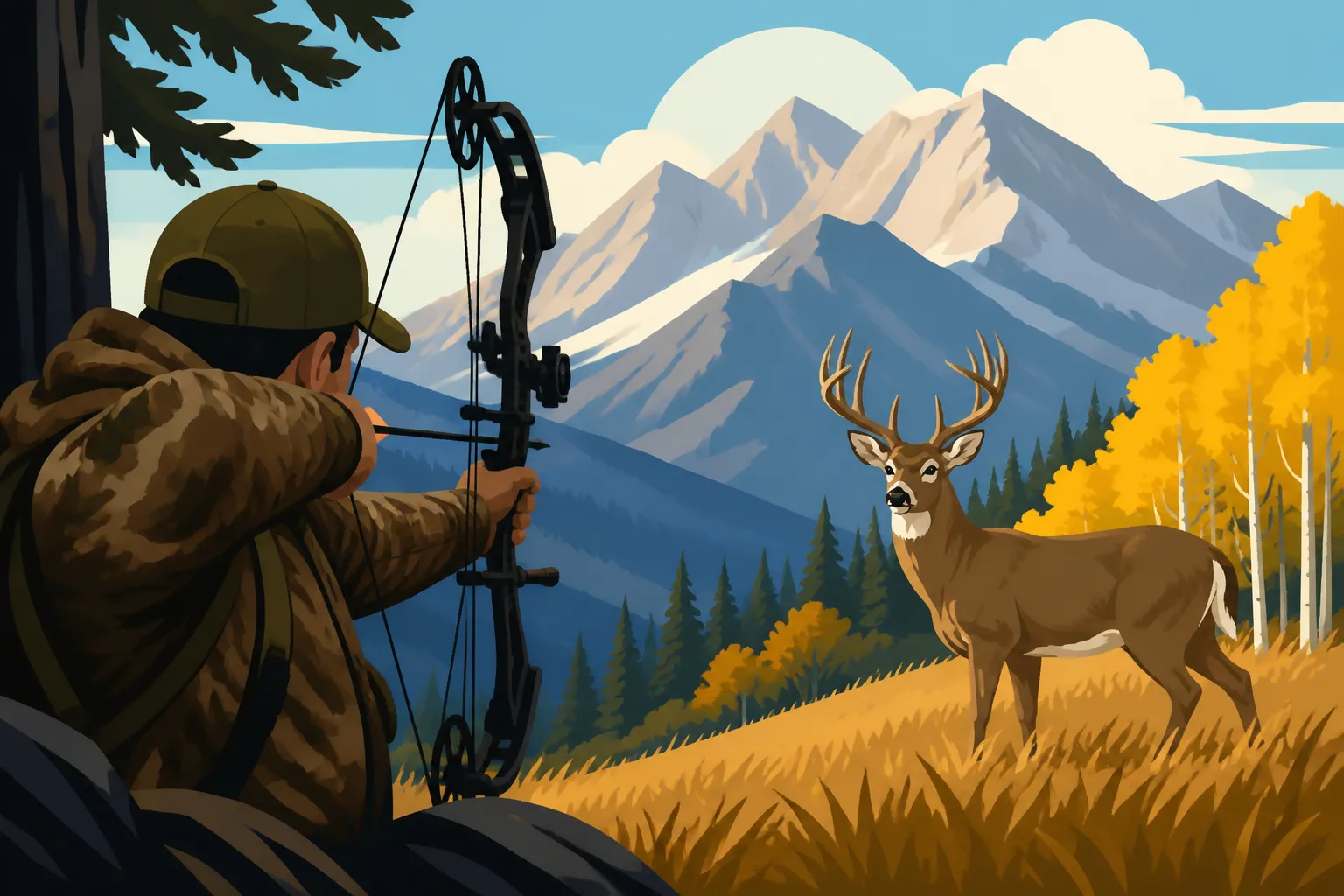
- Archery: For bowhunters, a compound bow with a draw weight you can comfortably and accurately shoot is paramount. Fixed-blade or mechanical broadheads that are legal in Colorado and have a track record of performance on deer are essential. Accuracy is key, as most archery shots will be within 40 yards, often closer in thick cover. Consider a good rangefinder for precise distance estimation. Best Archery Setups for Colorado Elk offers general archery advice that translates well to deer.
Clothing and Optics for Plains Hunting
Comfort and adaptability are key for plains hunting.
- Clothing: Layering is always smart in Colorado, even on the plains. Days can start cold and warm up significantly, only to drop again after sunset. Durable, brush-resistant outer layers are a must for navigating thorny thickets. Blaze orange requirements vary by season and weapon type, so check the CPW regulations. Good quality waterproof boots are essential for crossing wet creek beds or dealing with morning dew.
- Optics: While not as demanding as high-country glassing, quality optics are still very important. A good pair of 8x or 10x binoculars will help you pick apart distant treelines, spot subtle deer movement, and identify bucks. A spotting scope might be useful for longer-range scouting if you have wide-open areas to cover. A rangefinder is indispensable for precise shot placement, regardless of your weapon. Best Optics for Colorado Big Game offers advice that certainly applies here.
Physical Preparation and Safety Considerations
Hunting whitetails in Colorado's river bottoms can be physically demanding in its own unique way, requiring stamina for walking long distances, navigating dense cover, and potentially packing out a deer over rugged ground.
- Physical Preparation: Don't underestimate the physical exertion. Even on "flat" ground, traversing rough terrain, pushing through brush, and packing out a deer can be exhausting. Regular exercise, including walking with a loaded pack, will serve you well. Our Colorado Elk Hunt Fitness Plan offers excellent preparation tips that can be adapted for any big game hunt.
- Safety: Always be aware of your surroundings, especially when hunting on public land during popular rifle seasons. Other hunters might be present. Clearly identify your target and what's beyond it before taking any shot. Practice safe firearm handling, wear appropriate blaze orange when required, and let someone know your hunting plan, including your location and expected return time. Be prepared for changing weather conditions, carrying extra layers, water, and emergency supplies.
Hunting Colorado whitetail deer is a truly distinct experience that challenges hunters to adapt their strategies and embrace a different side of the state's diverse landscape. With thorough preparation, the right tactics, and a good understanding of their unique habits, you can enjoy a rewarding hunt for these resilient and often overlooked deer.
Disclaimer
Please remember that hunting regulations and seasons are subject to change. Always consult the most current Colorado Parks and Wildlife (CPW) regulations and brochures before planning and embarking on any hunt. This guide is for informational purposes only and does not supersede official state regulations.