Colorado Elk Hunting: Spot-and-Stalk Tactics
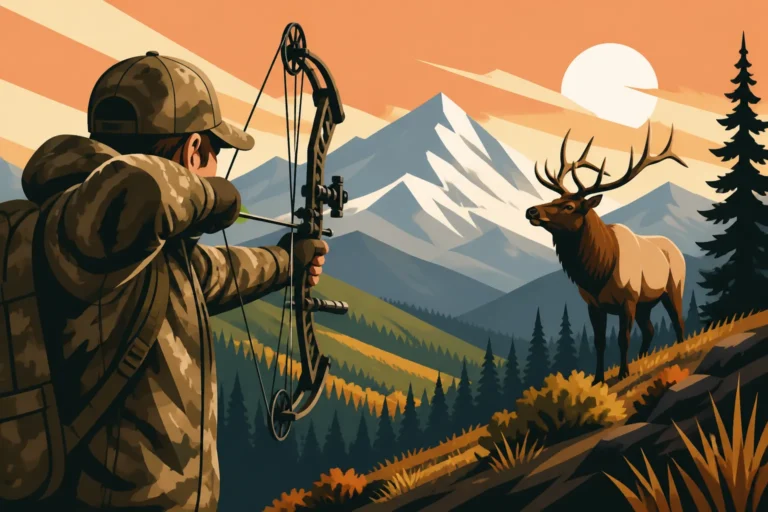
Many elk hunters feel utterly overwhelmed by the vastness of Colorado's mountains, especially when trying to pinpoint these elusive animals. The idea of "spot-and-stalk" sounds simple, but actually pulling it off in rugged, high-pressure terrain can feel like finding a needle in a haystack. This guide is dedicated to breaking down effective spot-and-stalk tactics for Colorado elk, giving you the knowledge and confidence to make your next hunt a success, even when the odds feel stacked against you.
Understanding the Fundamentals of Colorado Spot-and-Stalk Elk Hunting
This method isn't just about seeing an animal and walking towards it; it's a chess match played across vast landscapes. In Colorado, with its diverse terrain ranging from dark timber to expansive alpine basins, mastering the art of spot-and-stalk is one of the most rewarding and effective ways to punch your tag. It demands patience, keen observation, and a deep understanding of elk behavior and the environment. It's a method that truly allows you to immerse yourself in the landscape and engage with the animals on their terms.
Why Spot-and-Stalk Excels in Colorado's Varied Terrain
Colorado offers a unique blend of habitats perfect for spot-and-stalk. Unlike dense, flat timberland where sightlines are minimal, our mountains provide incredible vantage points. From a high ridge, you might be able to glass an entire drainage, picking apart distant elk herds feeding in meadows, bedded on open slopes, or moving through sparse timber. This isn't just for open country either; effective spot-and-stalk can also be employed on the fringes of timber, using openings and terrain features to close the distance. The undulating topography, interspersed with dark timber and open parks, creates a dynamic environment where a hunter's ability to see and then move undetected is highly advantageous.
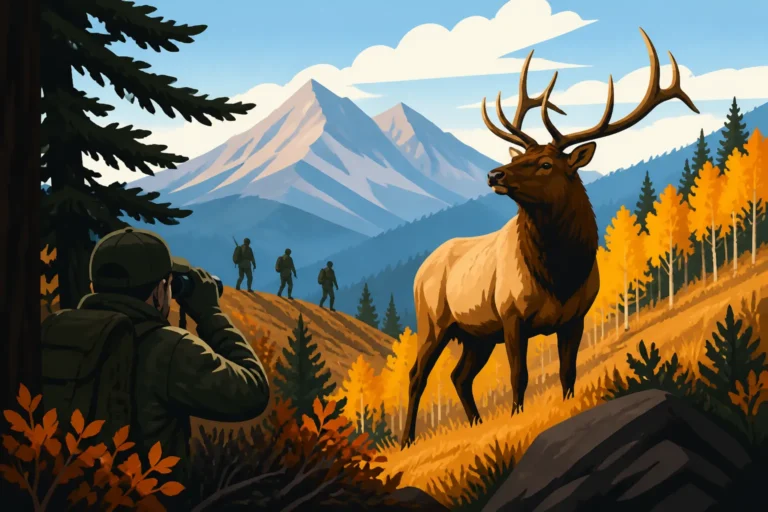
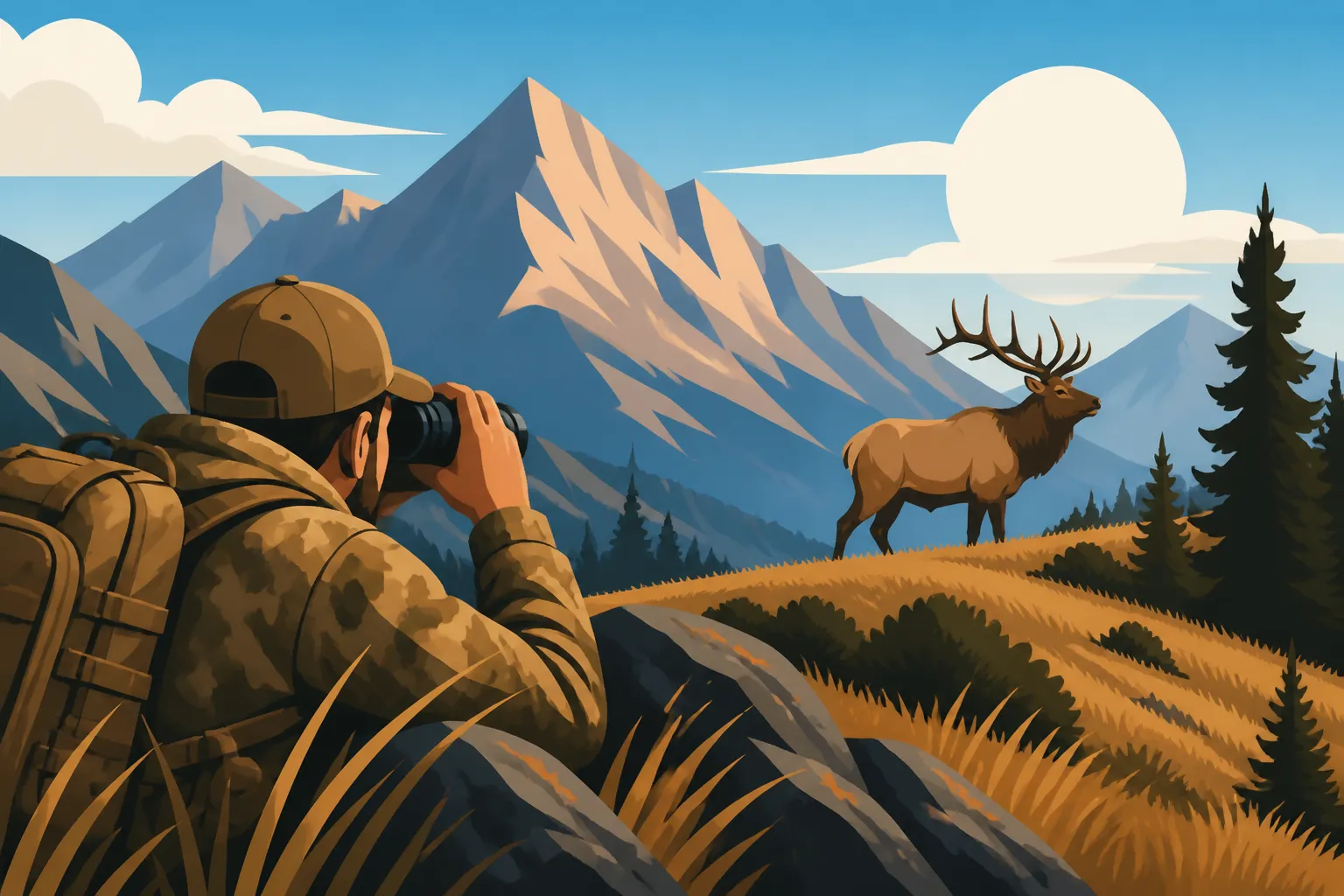
The success of this method often hinges on your ability to find elk before they find you. This means utilizing optics to meticulously scan terrain and identify animals or their sign from a distance. Once an animal is located, the real work begins: analyzing the wind, topography, and potential cover to formulate a plan to get within shooting range undetected. It’s a dynamic approach that rewards adaptability and careful planning, making it a prime tactic for hunters chasing elk in the diverse landscapes of the Rocky Mountains. Many veteran hunters will tell you that the mental game involved in a long, arduous stalk is as challenging as the physical exertion.
Key Principles for Effective Spot-and-Stalk
The bedrock of successful spot-and-stalk hunting involves three main pillars: locating, planning, and executing. First, you need to dedicate significant time to locating elk. This isn't just about blind wandering; it's about systematically glassing high-probability areas during peak feeding times – early morning and late evening. Understanding the different Colorado Elk Habitat and Elevation is crucial for narrowing down your search, as elk will utilize different elevations and aspects depending on the season, weather, and hunting pressure. You might find them in high alpine basins in early archery season, but tucked into south-facing timber pockets when the snow flies later in the year.
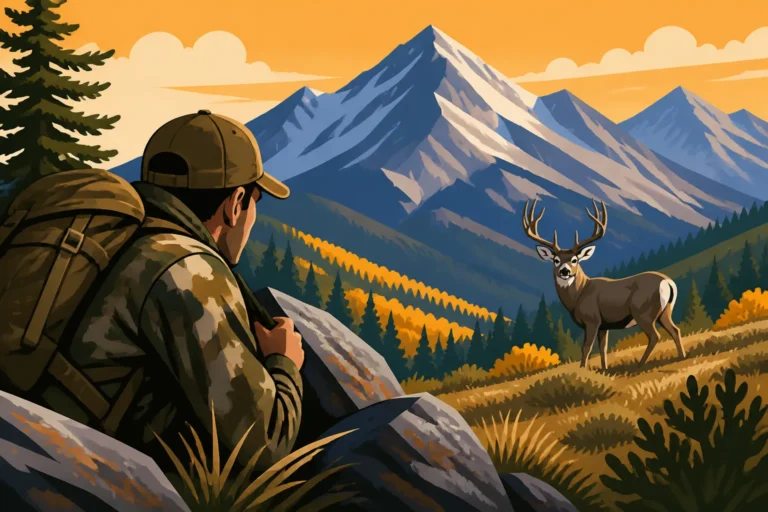
Second, once an elk or a group of elk is spotted, do not rush. Take your time. Pull out your maps – physical or digital (like those on GoHunt's platform) – and meticulously plan your route. Consider the wind, sun, thermals, and every single contour that might offer cover or expose you. Think about where the elk are likely to move and what escape routes they might take. This planning phase can often take longer than the stalk itself, but it's where most stalks are won or lost. I've spent hours watching an elk bedded, mapping out a route that took me far out of the way, only to get within range because of that patience.
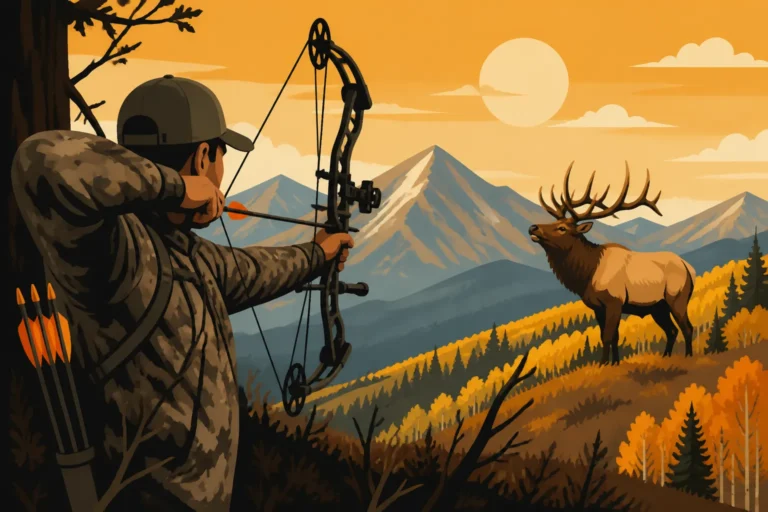
Finally, the execution demands stealth, discipline, and often, an immense amount of physical stamina. Moving slowly, deliberately, and using every bit of available cover is paramount. Anticipate changes in wind direction, especially with shifting thermals as the day progresses or weather patterns change. It's a method that requires mental toughness and the ability to remain patient, sometimes for hours, for the right opportunity to present itself. This methodical approach is a cornerstone of Colorado Elk Hunting Methods Explained.
Essential Gear and Pre-Hunt Preparation for Spot-and-Stalk
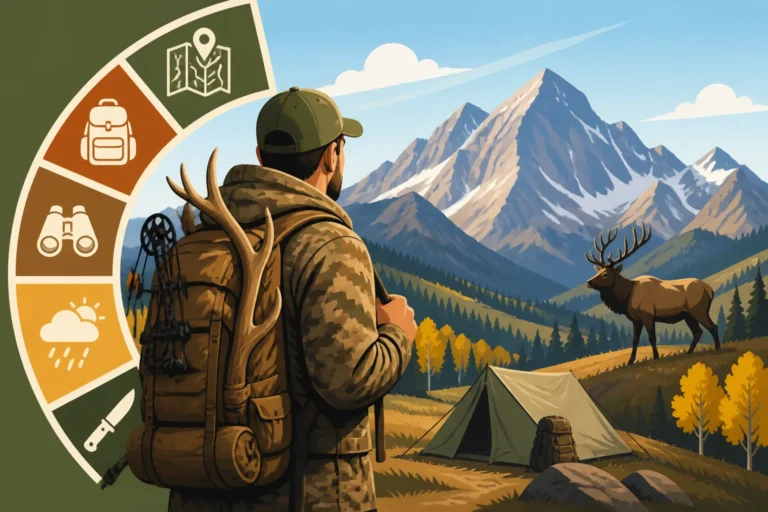
Alright, let's talk gear. You're not just going for a hike here; you're gearing up for a dynamic, often physically demanding, and mentally taxing hunt. Having the right tools won't guarantee success, but it sure makes the process a whole lot more manageable and enjoyable. And before you even step foot on Colorado soil, a good chunk of your success will be decided by how well you prepare from home. Trust me, overlooking these details can turn a dream hunt into a frustrating ordeal.
Optics: Your Eyes in the Mountains
For spot-and-stalk, your optics are arguably more important than your weapon. You need quality glass that can resolve details at long distances, helping you pick out an antler tip from a fallen branch or a flicking ear in the shadows. A good pair of 10×42 or 12×50 binoculars are a must, paired with a reliable tripod to eliminate shake and reduce eye strain. Seriously, don't skimp here. Spend hours behind them to train your eyes. This consistent practice will sharpen your ability to distinguish game from non-game objects, which is crucial when picking apart distant mountainsides.
Even more critical is a high-quality spotting scope, especially if you're hunting wide-open basins or glassing from several miles away. A 65mm or 85mm objective lens will provide enough light gathering for those crucial dawn and dusk hours. Brands like Vortex, Swarovski, and Kowa are popular choices for their clarity and durability in rugged conditions. Using your binos and spotting scope on a tripod allows you to truly pick apart terrain features, locate elk, and then study their movements without spooking them. Learn How to Glass Big Colorado Basins effectively to maximize your spotting potential, identifying subtle movements or colors that give away an elk's position. Investing in top-tier glass is often the single best gear decision a spot-and-stalk hunter can make. For more ideas on what to bring, check out the Colorado Backcountry Hunting Gear List.
E-Scouting and Physical Conditioning
Before you ever hit the trail, the hunt begins at home. E-scouting is non-negotiable for spot-and-stalk. Tools like onX Hunt, BaseMap, and particularly the mapping capabilities of GoHunt, are invaluable. They let you pore over satellite imagery, topo maps, and public/private land boundaries to identify potential glassing knobs, likely travel corridors, bedding areas, and water sources. You can mark waypoints for approach routes, escape routes, and potential stalk lines. This virtual reconnaissance saves precious time and energy in the field. Using these tools to identify key terrain features and potential elk hangouts is the first step in successful spot-and-stalk. This thorough preparation is covered in detail in How to E-Scout Before a Colorado Hunt.
Beyond the maps, physical fitness is absolutely critical. You'll be covering miles of steep, uneven terrain, often at high altitudes, carrying a heavy pack, and potentially needing to move quickly and quietly during a stalk. This isn't a casual stroll. Training for your hunt by hiking with a weighted pack, doing cardio, and strengthening your core will pay dividends. Consider a dedicated Colorado Elk Hunt Fitness Plan to prepare your body for the rigors of mountain hunting. Many hunters underestimate the toll that high elevation and difficult terrain take, leading to exhaustion and compromised judgment when it matters most. Getting your body ready means you can focus on the hunt, not just surviving the hike.
| Gear Category | Essential Items | Purpose in Spot-and-Stalk |
|---|---|---|
| Optics | Binoculars (10x-12x), Spotting Scope (65mm-85mm), Tripod, Phone Adapter | Locating distant elk, confirming species/sex, studying behavior, making precise judgments. |
| Navigation | GPS device or Smartphone with hunting app (GoHunt is great!), Printed Topo Maps, Compass | Identifying terrain features, planning stalk routes, staying on public land, emergency navigation. |
| Stealth | Quiet Clothing (wool/fleece), Knee Pads, Gaiters, Soft-soled Boots | Minimizing noise during the stalk, protecting knees, preventing debris in boots, silent movement. |
| Weapon | Rifle, Bow, or Muzzleloader, Rangefinder, Ammunition/Arrows | Delivering a lethal shot, accurately judging distance in varied terrain. |
| Survival | Water Filter, First-Aid Kit, Fire Starter, Headlamp, Emergency Shelter, Communication Device (Garmin inReach, Zoleo) | Handling unexpected emergencies, staying safe in remote areas. |
| Comfort | Lightweight Pack, Trekking Poles, Layers of Clothing, High-Energy Snacks | Managing fatigue, maintaining body temperature, sustaining energy levels over long days. |
Executing the Stalk: Reading Terrain, Wind, and Elk Behavior
This is where the rubber meets the road. You've spotted an elk, you've planned your route, now it's time to become part of the landscape. A successful stalk is a delicate dance between calculated aggression and extreme caution, all while battling the elements and the elk's superior senses. Every step must be intentional, every observation critical, because the slightest mistake can mean the difference between punching your tag and heading home empty-handed.
Mastering Wind and Thermals
The wind is your biggest ally and your most dangerous enemy. Elk have an incredible sense of smell, far superior to their eyesight. Always, always keep the wind in your favor. This means it should be blowing from the elk to you, or at least crosswind, carrying your scent away from them. This is easier said than done in the mountains, where thermals play a huge role. Early in the morning, cold air sinks, causing thermals to pull scent downhill. As the sun warms the slopes, warm air rises, pushing thermals uphill. These shifts can happen rapidly and unexpectedly, especially in broken terrain.
You need to understand these thermal shifts and anticipate them. If you start a morning stalk going uphill, the thermals might be with you initially, but as the day warms up, they could switch, blowing your scent directly to the elk. Planning your stalk to align with predictable thermal patterns is critical. Sometimes, you'll have to wait hours for the wind to shift or for the thermals to stabilize before making your move. It’s an integral part of How to Use the Wind Hunting Colorado Elk and can truly make or break a stalk. Don't be afraid to pull back and reset if the wind isn't right; patience here will save you from spooking animals you've worked so hard to find.
Utilizing Topography and Cover
The mountains themselves are your best friend. Every ridge, draw, clump of timber, rock outcropping, or fold in the terrain is an opportunity for concealment. When planning your stalk, look for routes that keep you out of sight, even if it means taking a longer, more circuitous path. Avoid skylining yourself on ridges, and use the dead ground between rises to advance undetected. This often means walking much further than a direct path, but it keeps you hidden.
Moving through timber requires extreme caution and a keen eye for what's ahead. Don't just walk; hunt. Look for soft ground, fallen logs to step over quietly, and avoid crunchy leaves or dry branches. Sometimes, the slowest pace is the fastest way to get where you need to be. Knowing How to Move Quietly Through Colorado Timber is a skill honed over many frustrating encounters, but it's vital. Use your binoculars during the stalk to constantly check the elk's position and identify any potential sentries or changes in their behavior. Elk can disappear in seconds, so maintaining visual contact whenever safely possible is important, even if it means taking a few extra seconds to re-evaluate.
Reading Elk Body Language During the Stalk
Elk are incredibly perceptive. Even if they don't smell you, they might pick up on subtle visual cues or sounds. Pay close attention to their body language. Are their ears swiveling? Are they looking intently in a particular direction? Are their heads up, scanning the surroundings? These are all signs they might be agitated or sensing something amiss. If you see an elk start to get nervous, freeze. Drop to a knee, or even prone, and remain motionless until they calm down. This is where those hours of physical training pay off, allowing you to hold still in uncomfortable positions.
Sometimes, a herd bull might bugle in your direction during the rut. While this can be exciting, it also means he knows something is there. You might have to adjust your approach or use calling to distract or entice them. Understanding How to Call in a Silent Bull can be a game-changer if your visual stalk gets compromised by a suspicious bull. Always anticipate their next move. Are they feeding towards thicker cover? Heading to a wallow or water source? Planning for these eventualities can put you in a better position for a shot. Even if they don't see you, the rustle of leaves or a misplaced step can quickly alert their keen ears.
Overcoming Common Spot-and-Stalk Challenges
Let's be real, spot-and-stalk hunting for elk in Colorado isn't easy. If it were, everyone would do it. There are numerous hurdles that can turn a promising stalk into a frustrating bust. Understanding these common pitfalls and having a plan to navigate them is key to increasing your success rate. It's about adapting on the fly and learning from every experience, good or bad.
Dealing with Multiple Eyes and Ears
The biggest challenge with spot-and-stalk is often not a single elk, but an entire herd. Elk are herd animals, and they rely on each other for security. This means you're trying to sneak past dozens of eyes, ears, and noses. A single calf's nervous twitch or a cow's sudden stare can blow your entire setup. It's incredibly disheartening to spend hours on a stalk only to be busted by an animal you never even saw.
When approaching a herd, identify the most alert animals – often older cows or a dominant bull. Use them to your advantage. If they're looking away, that's your window to move. If they're staring intently in your general direction, even if they haven't pinpointed you, stop. Wait them out. Sometimes, this means being completely still for 30 minutes or more, sometimes even longer. Imagine you're playing a real-life game of "Red Light, Green Light" with a very high-stakes prize. Patience is paramount, and if you get busted, it's usually better to back out and try again later, rather than push into a desperate, low-percentage shot. Often, the best course of action is to try to get above them, as elk are generally less vigilant looking uphill.
Unpredictable Wind and Rapidly Changing Conditions
Colorado weather is notoriously fickle. You can start a stalk with a perfect steady breeze, only for it to swirl, gust, or completely die, leaving your scent hanging in the air. This is a constant frustration for elk hunters. One moment you're confident, the next you're cussing at an invisible enemy. Mountain thermals are tricky, changing with the sun's position, cloud cover, and even the type of terrain you're in. A north-facing slope might have different thermals than a south-facing one, even at the same elevation.
The best defense here is hyper-awareness. Continuously check the wind using a wind indicator powder or thread. Watch how vegetation moves, observe campfire smoke (if applicable), or even a thrown blade of grass. Be ready to abort or significantly alter your stalk if the wind turns against you. Sometimes, you just can't make it work that day. It's better to live to hunt another day than to spook a whole herd and educate them to your presence. These conditions can often lead elk to go quiet, making it harder to locate them without visual contact. This is when knowing How to Find Elk When They Go Quiet becomes invaluable, often requiring a shift back to persistent glassing from a safe distance, often with the superior clarity of your Best Optics for Colorado Big Game.
The Physical and Mental Toll
Spot-and-stalk hunting for Colorado elk is physically exhausting and mentally draining. You're often moving at high elevations, carrying a substantial pack, dealing with steep inclines, and pushing your body to its limits. Then, you might spend hours slowly crawling on your hands and knees through brush, only for a single misstep or a sudden breeze to send the elk scattering. The mental game can be brutal, leading to frustration, self-doubt, and the urge to give up. This is where your resolve is truly tested, and many hunters succumb to the psychological pressure before the physical one.
To combat this, remember your physical preparation. You trained for this. Break the stalk into small, manageable segments. Focus on putting one foot in front of the other, quietly, deliberately. Celebrate small victories, like getting behind that next ridge or moving past a tricky patch of noisy ground. It’s also important to acknowledge that not every stalk will end in a shot. Some of the most memorable hunts are the ones where you learn the most, even if you don't pull the trigger. Embrace the process, enjoy the challenge, and recognize that every failed stalk is a lesson learned for the next one. This persistent, analytical approach will not only improve your odds but also deepen your appreciation for the entire hunting experience.
Disclaimer
Please remember that hunting regulations, seasons, and access can change. Always consult the official Colorado Parks and Wildlife (CPW) regulations before planning any hunt. Safety should always be your top priority in the field.