Best Hunting Method for Colorado Elk
Trying to figure out the "best" way to hunt elk in Colorado can feel like staring at a complex map without a compass. With vast public lands, diverse terrain, and multiple seasons, it’s easy to get overwhelmed by the sheer number of choices and conflicting advice out there. This comprehensive guide will break down the most effective and popular hunting methods for Colorado elk, helping you understand their nuances so you can pick the strategy that truly aligns with your skills, resources, and hunting aspirations.
The Foundation of Elk Hunting: Understanding Elk Behavior
Before we dive into specific methods, it's crucial to understand that elk are creatures of habit, driven by a few primary needs: food, water, cover, and security. Their behavior shifts throughout the year and even within a single day, influenced by weather, hunting pressure, and their biological clock. A method that works brilliantly in the early archery rut might be completely ineffective during a late-season rifle hunt in deep snow.
Seasonal Shifts and Elk Habits
Elk behavior is highly dictated by the calendar. In early archery season, the primary driver is the pre-rut and rut, with bulls becoming vocal and more visible. As rifle seasons open, elk shift their focus to feeding and conserving energy, often moving to thicker cover to escape pressure. Late seasons, especially after significant snowfall, trigger migration to lower elevations, making food sources and thermal cover paramount. Understanding these broad patterns is your first step in choosing the right method. For a deeper dive into these seasonal shifts, you might find our guide on How to Hunt the Colorado Rut particularly enlightening.
The Impact of Hunting Pressure
Colorado's elk herds are a huge draw, and public lands, especially those accessible by roads, see significant hunter pressure. This pressure dramatically alters elk behavior. They quickly learn to avoid open areas, become more nocturnal, and seek refuge in dark timber, remote wilderness, or on private land. The "best" method often involves adapting to these pressured conditions, whether it's by going deeper, hunting smarter, or changing your approach entirely. Ignoring pressure is a surefire way to come home empty-handed.
Archery Elk Hunting: The Ultimate Challenge and Reward
Archery hunting for elk in Colorado is an immersive, demanding, and incredibly rewarding experience. It typically coincides with the peak of the rut, offering the thrilling opportunity to call in a bull to mere yards. However, it requires a high degree of skill, patience, and physical fitness.
The Adrenaline of Calling in Bulls
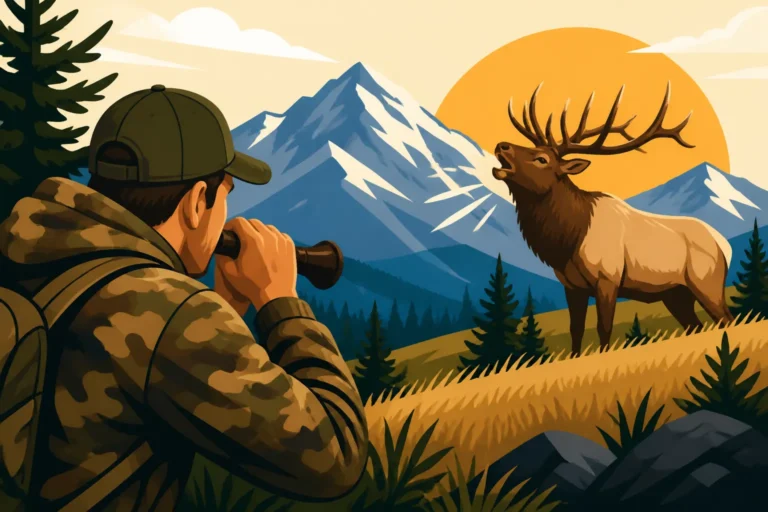
There's nothing quite like the heart-pounding experience of a bull elk bugling back at your calls, steadily closing the distance, and then appearing through the timber. Archery season is prime time for calling, as bulls are actively seeking cows and challenging other bulls. This method involves imitating cow calls, chirps, and even aggressive bugles to draw a bull into shooting range. Often, a "caller" (buddy) stays behind the shooter, drawing the bull's attention away just enough for the archer to get a clear shot. We’ve covered this extensively in our Colorado Archery Elk Hunting Guide.
However, calling isn't a silver bullet. Over-calling can make bulls wary, especially in areas with heavy pressure. Knowing when to be aggressive and when to go silent is an art form that develops with experience. Sometimes, a soft cow chirp is all it takes; other times, a screaming challenge bugle is needed to stir a bull from his bed. Patience is key – it's not uncommon to spend hours working a bull, only for him to hang up just out of range. That’s the nature of archery elk.
Still-Hunting and Ambush Tactics
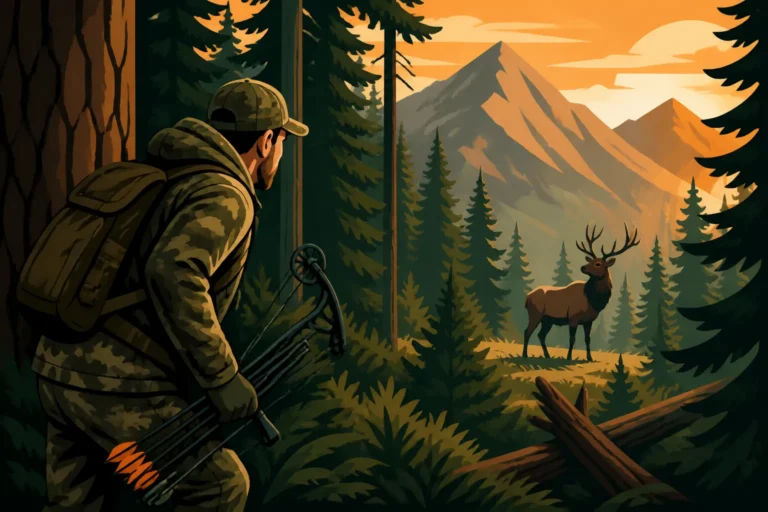
While calling dominates the discussions around archery elk, still-hunting and setting ambushes are equally vital. Still-hunting involves moving incredibly slowly and deliberately through timber, pausing frequently to listen, look, and scan for elk. It's about blending into the forest, using the wind, and moving with the stealth of a predator. This method is particularly effective when bulls go quiet or when targeting bedding areas.
Ambush tactics often revolve around known elk travel corridors, water sources, or wallows. Identifying these high-traffic areas through scouting (both e-scouting with tools like GoHunt and boots-on-the-ground recon) allows you to set up strategically. You might sit near a secluded waterhole in the late afternoon or position yourself along a game trail connecting bedding and feeding areas. This requires patience, a good understanding of elk movement patterns, and careful consideration of wind direction. It's less about active pursuit and more about letting the elk come to you, which can be a relief after days of chasing bugles.
Rifle Elk Hunting: Accessibility and Strategic Planning
Rifle season in Colorado accounts for a significant portion of the elk harvest, largely due to its longer range, varied seasons, and the increased margin for error compared to archery. However, "easier" is a relative term, as rifle hunting presents its own unique challenges, particularly the often heavy hunter pressure.
Navigating Multiple Rifle Seasons
Colorado's rifle seasons are typically staggered, from early to late, each offering different conditions and elk behavior.
- First Rifle Season: This season often falls before significant snowfall and before elk are heavily pressured. Success here can depend on finding elk in their high-country summer ranges or early migration patterns. Hunters might still encounter some residual bugling.
- Second and Third Rifle Seasons: These are often the busiest seasons, with peak pressure pushing elk into dense timber or remote drainages. Success hinges on finding unpressured pockets, understanding how elk react to human presence, and being willing to work harder than the average hunter. This is where a good understanding of How to Hunt Elk in Rifle Season Pressure becomes invaluable.
- Fourth Rifle Season: This is typically a late-season hunt, often characterized by colder weather and significant snow. Elk are usually migrating to lower elevations and winter range, making travel corridors and food sources crucial. This can be one of the most productive seasons if you hit the migration right, but it requires cold-weather gear and tenacity.
Each season demands a slightly different approach, making strategic planning and adaptability vital. Don't go into a second rifle hunt with a first rifle mindset; the elk will have already adjusted.
The Role of Spot-and-Stalk
Spot-and-stalk is a cornerstone of effective rifle hunting, especially in more open terrain or timbered slopes where visibility allows. This method involves using high-quality optics to locate elk from a distance, then carefully planning and executing an approach to get into shooting range. It requires meticulous attention to wind, terrain features for cover, and silent movement.
In Colorado, effective spot-and-stalk often means covering vast expanses with binoculars and a spotting scope, particularly in large basins or across drainages. Once elk are spotted, the real work begins: analyzing the wind, identifying potential approach routes, and making sure you don't spook any unseen animals along the way. This can involve hours of hiking, crawling, and waiting for the perfect moment. For detailed tactics, check out our guide on Colorado Rifle Elk Hunting Guide.
Muzzleloader Hunting: A Blend of Old and New
Muzzleloader season in Colorado is a unique experience, offering a limited window of opportunity that often falls between archery and the general rifle seasons. This primitive weapons hunt demands a different level of proficiency and often presents a less crowded hunting environment than general rifle seasons.
The Primitive Weapon Advantage
Hunting with a muzzleloader forces you to get closer to your quarry, much like archery, but with the added punch of a rifle projectile. The single-shot nature of the weapon means you have to make that first shot count, adding a layer of intensity to the hunt. Colorado’s muzzleloader regulations are specific, often requiring open sights or certain types of optics, further emphasizing the primitive aspect. This generally means your effective range is significantly reduced compared to a modern rifle.
Muzzleloader season often occurs when elk are still vocal from the rut or just beginning to settle into their post-rut patterns. This can mean a combination of calling and strategic still-hunting can be effective. If you're passionate about the challenge and the historical connection to hunting, this method offers a truly memorable experience.
Tactics for Muzzleloader Success
Since muzzleloader seasons are often in that sweet spot after the peak rut but before heavy rifle pressure, elk can sometimes be found in more predictable patterns. Targeting water sources and wallows, especially if conditions are dry, can be effective. Elk still need to drink daily, and a well-placed ambush near a reliable water source can pay off. Our post on How to Hunt Elk Water Holes delves into this strategy further.
Still-hunting through timber and working drainages where elk seek cover is another strong tactic. Because you need to get closer, moving slowly, using the wind, and being acutely aware of your surroundings are paramount. It’s a hunt that demands patience and a keen eye, often rewarding those who are willing to put in the quiet, methodical work. For specific tips on preparing for this unique season, our Colorado Muzzleloader Hunting Guide has you covered.
The Art of Spot-and-Stalk: Stealth in the Mountains
Regardless of your weapon choice, the spot-and-stalk method is an indispensable tool in the Colorado elk hunter's arsenal. It's about using your eyes and ears to find elk, then using your brain and body to close the distance undetected.
Glassing Effectively
Glassing is arguably the most important skill in spot-and-stalk hunting. It's not just casually scanning the landscape; it's a systematic, patient process of using high-quality binoculars and a spotting scope to dissect every inch of a mountain face, a timberline, or a distant drainage. Many hunters make the mistake of glassing too quickly or only looking for whole animals. Instead, train your eyes to look for horizontal lines (an elk's back or belly) in a vertical world, patches of off-color fur, or the flick of an ear.
Consider using a tripod for your binoculars or spotting scope, even if it adds a little weight. The stability it provides is crucial for reducing eye fatigue and discerning subtle details at long distances. Early morning and late evening are prime glassing times when elk are often more active and in more open areas. Tools like those available from GoHunt can help you identify prime glassing points and potential elk habitat even before you set foot in the field.
Executing the Stalk
Once an elk is spotted, the real chess match begins. The stalk is a careful dance of navigating terrain, managing the wind, and staying out of sight.
- Wind: The wind is your ultimate guide and biggest adversary. Elk have an incredible sense of smell. Always approach from downwind, or at least crosswind. Mountain thermals can be tricky, shifting from uphill in the morning to downhill in the evening. Understanding How to Use Thermals in Colorado Elk Country is critical.
- Cover: Use every fold in the terrain, every cluster of trees, and every rock outcropping to conceal your movement. Avoid skylining yourself on ridges.
- Noise: Move slowly and deliberately. Every step should be silent. Pay attention to crunchy leaves, dry branches, or loose rocks. This is where soft-soled boots and careful foot placement come into play.
- Patience: A stalk can take hours, sometimes covering miles, only to be foiled by a wind shift or an unexpected movement by the elk. Don't rush it. Sometimes, waiting for the elk to move into a more favorable position is the best strategy.
Spot-and-stalk hunting, especially in the vastness of Colorado, is physically and mentally taxing, but when executed successfully, it's one of the most rewarding methods.
Calling Elk: The Art of Conversation
Calling elk is probably the most iconic method, synonymous with the rut's electrifying atmosphere. It's a conversation with nature, where your ability to mimic elk vocalizations can bring a massive bull right into your lap.
Mastering Elk Vocalizations
There's a wide range of elk calls, and understanding when and how to use them is key.
- Cow Calls and Chirps: These are often the safest and most versatile calls. They can locate elk, calm a nervous animal, or entice a bull seeking companionship. Soft, subtle chirps can be very effective in dense timber or when trying to draw in a wary bull.
- Bugles: The iconic sound of a bull elk. Bugles can be used as locator calls, challenge calls to aggro bulls, or assertion calls to keep a herd together. Be careful with aggressive bugles in high-pressure areas; they can scare off more elk than they attract. A screaming bugle might bring a bull charging, but it also broadcasts your presence to every hunter within earshot. For specific techniques, check out How to Bugle for Colorado Elk.
- Growls and Chuckles: These are often associated with aggressive behavior or a bull working a wallow. They're usually used in close-quarters calling scenarios to add realism or to challenge a bull.
Practice your calls year-round. Get comfortable with various mouth reeds, diaphragms, and external calls. Listen to real elk vocalizations online and try to imitate them. The more realistic you sound, the better your chances.
Situational Calling Strategies
Calling isn't just about sounding like an elk; it's about understanding the context.
- Locator Calling: A sharp bugle or series of cow calls to elicit a response from distant elk, telling you where they are. Do this sparingly, especially in pressured areas.
- Blind Calling: Setting up in an area you believe holds elk and periodically calling, hoping to pique their interest. This works well in dense timber or during periods of low activity.
- Decoy Calling (with a partner): This is highly effective during the rut. One hunter (the caller) stays behind, drawing the bull's attention, while the other (the shooter) moves ahead to get into position. The bull often focuses on the caller, presenting a broadside shot to the concealed shooter.
- Interception Calling: Anticipating an elk's travel path (e.g., from bedding to feeding) and setting up to call them as they pass through. This requires excellent e-scouting and understanding of elk movement.
Remember, wind is crucial when calling. A bull might be coming in hot, but if he catches your scent, he'll disappear instantly. Always position yourself with the wind in your favor.
Ambush and Sit Hunting: Patience Rewarded
While active pursuit is thrilling, sometimes the best method is simply to sit and wait. Ambush and sit hunting involves identifying key locations that elk frequent and setting up to intercept them. This method demands immense patience but can be incredibly effective, especially during times when elk are less vocal or under heavy pressure.
Hunting Water Sources and Wallows
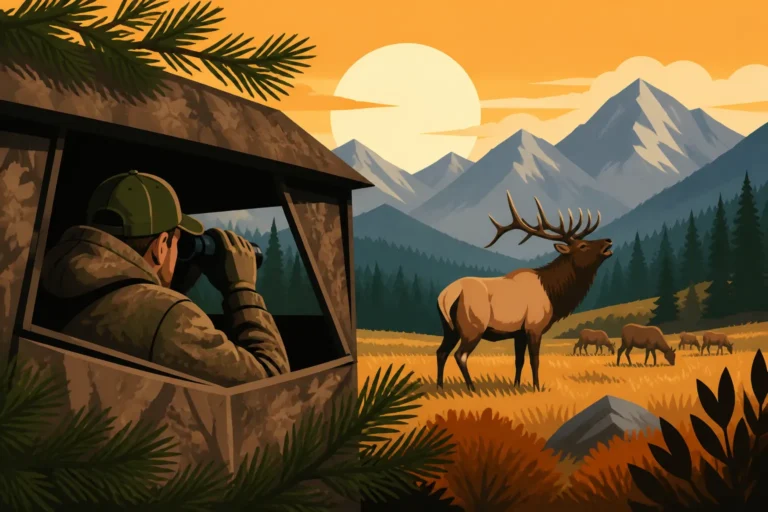
Elk need water daily, and in dry conditions or during early season when natural water sources are limited, waterholes and wallows become magnets. A wallow is an area where bulls dig out muddy depressions, urinate in them, and then roll around, coating themselves in mud and scent to attract cows and assert dominance. Hunting these areas can be highly productive.
Setting up a ground blind or finding natural cover downwind of a water source or active wallow requires stealth and a thorough understanding of prevailing winds and thermal currents. Arrive well before daylight or in the early afternoon, settle in, and be prepared to wait for hours. Elk often visit water in the middle of the day or late evening. For more specific insights, you can refer to our guide on How to Hunt Elk Wallows in Colorado.
Identifying Travel Corridors and Transition Zones
Elk are creatures of habit and often use the same travel corridors to move between bedding areas (where they rest and feel secure) and feeding areas (where they eat). These corridors can be saddles between ridges, benches along a mountainside, or drainages that provide cover. Transition zones, where one type of habitat meets another (e.g., dense timber meeting an open meadow), are also prime ambush spots, as elk often pause and feed along these edges.
E-scouting with mapping tools like GoHunt is invaluable for identifying these potential pinch points and travel routes. Look for consistent topographical features that would naturally funnel elk. Once identified, a strategic setup downwind, with clear shooting lanes, can result in a close-range encounter. This requires patience and the ability to sit still for extended periods, but the reward of intercepting a traveling herd can be immense.
Backcountry vs. Accessible Public Land Hunting
Colorado offers both remote wilderness and vast, accessible public lands. The "best" method often depends on your willingness and capability to venture into these different environments.
Deep Wilderness Pursuits
Hunting in Colorado's backcountry and designated wilderness areas is the ultimate test of self-reliance and physical endurance. These areas, like sections of the Flat Tops Wilderness or the San Juan Mountains, are often roadless, requiring you to pack in all your gear, set up spike camps, and be completely self-sufficient for days or even weeks.
The primary advantage of wilderness hunting is significantly reduced human pressure. Elk in these areas are often less wary, maintain more natural patterns, and can be found in more open terrain during daylight hours. However, the challenges are formidable:
- Physical Demands: You need to be in top physical condition to navigate steep terrain, high altitudes, and carry heavy loads. Our How to Physically Prepare for Colorado Elk guide is a must-read if you’re considering this.
- Navigation: Excellent navigation skills are crucial, as cell service is often nonexistent. GPS devices, detailed maps, and a compass are your lifeline.
- Logistics: Planning for food, water, shelter, and packing out an animal is complex. Our How to Pack Into the Colorado Backcountry article offers practical advice.
The reward, however, is an unparalleled hunting experience, a true communion with nature, and often the chance at a less pressured, larger bull.
Hunting Accessible Public Lands
For many, accessible public lands — areas closer to roads or with designated trailheads — are the reality of hunting. These areas often see significant hunter pressure, especially during rifle seasons. The "best" method here isn't about escaping pressure entirely, but intelligently dealing with it.
- Go Deeper (even on accessible lands): Even on easily accessible public lands, most hunters stick within a mile or two of roads or popular trails. The willingness to hike just a little further, to climb that extra ridge, or to drop into a nasty drainage can put you in unpressured elk habitat.
- Hunt Smarter: This involves understanding elk behavior under pressure. They will move to thick cover (dark timber), become more nocturnal, and utilize thermal pockets or benches where they feel safe. Hunting these areas requires slow, methodical still-hunting or carefully planned ambushes.
- Timing: Hunt midday when many hunters are back at camp. Elk often move between bedding and feeding areas during these quieter periods.
- E-scouting and OnX: Use digital mapping tools like GoHunt to identify small pockets of public land, isolated timber patches, or steep, overlooked drainages that might hold elk seeking refuge. These resources can give you a significant advantage in areas with high pressure.
Success on accessible public lands is a testament to perseverance, meticulous scouting, and the ability to adapt your tactics to highly pressured animals.
Guided Hunts vs. Do-It-Yourself (DIY)
The choice between a guided hunt and a DIY adventure is perhaps the most fundamental decision for a Colorado elk hunter, significantly impacting both your methods and the overall experience.
The Assisted Experience: Guided Hunts
A guided hunt offers a distinct advantage, especially for first-time elk hunters, those new to Colorado's terrain, or anyone with limited time for scouting.
- Expert Knowledge: Guides have intimate knowledge of their hunting areas, including elk patterns, historical success spots, and how to react to changing conditions. They often have access to private lands or know specific public land honey holes.
- Logistics Handled: Outfitters typically handle lodging, food, transportation within the hunting area, and even field dressing and packing out meat. This removes a huge logistical burden.
- Increased Success Rates: While never guaranteed, guided hunts often boast higher success rates due to the guide's expertise and the time they've invested in scouting and understanding the local elk herd.
- Safety: Guides are experienced in navigating challenging terrain and high altitudes, and they know what to do in emergencies.
However, guided hunts come with a significant financial investment. Our Colorado Guided Elk Hunt Cost guide breaks down what to expect. While a guide provides a tremendous amount of support, it's still your hunt, and you'll need to be physically prepared and proficient with your weapon.
The Self-Reliant Journey: DIY Hunting
The Do-It-Yourself (DIY) hunt is the epitome of self-reliance and the dream for many hunters. It allows for complete control over your hunt, from planning to execution.
- Cost-Effective: While not "cheap," a DIY hunt is generally more affordable than a fully guided trip, as you save on guide fees.
- Personal Achievement: There's an unparalleled sense of accomplishment that comes from planning, executing, and succeeding on a DIY hunt.
- Flexibility: You set your own schedule, choose your own areas, and adapt your plans on the fly without needing to consult a guide.
- In-Depth Learning: DIY hunting forces you to learn everything about elk, their habitat, navigation, and survival in the mountains. This deep learning builds invaluable hunting skills.
The challenges of DIY hunting are substantial. It requires extensive planning, often months of e-scouting, physical conditioning, and a willingness to learn from mistakes. You are responsible for all logistics, from gear to game retrieval. But for many, the freedom and the profound satisfaction of a hard-earned DIY elk make it the only way to hunt. Our Colorado DIY Elk Hunting Guide offers a comprehensive roadmap for those venturing out on their own.
Combining Methods for Optimal Success
The "best" hunting method for Colorado elk is rarely a single, isolated tactic. Instead, it's a dynamic blend of several approaches, adapted to the specific conditions of your hunt, the terrain, the season, and the behavior of the elk.
Adapting to Elk Behavior
Elk are constantly responding to their environment, and you need to be just as adaptable.
- Early Season (Archery/Muzzleloader): Focus on calling and ambushing near water or wallows. If calling goes cold, transition to quiet still-hunting through known bedding areas.
- Mid-Season (Rifle): Spot-and-stalk becomes crucial in more open areas, coupled with patient ambush tactics in dark timber or along transition zones where pressured elk might be hiding. If elk are moving during migration, focus on their travel corridors.
- Late Season (Rifle): Heavy emphasis on finding migration routes, south-facing slopes (for warmth), and consistent food sources like aspens or creek bottoms. Spot-and-stalk combined with strategic ambushes will be key.
Leveraging Technology
Modern hunting tools can significantly enhance your chosen methods.
- Digital Mapping (e.g., GoHunt): Essential for e-scouting, identifying public vs. private land, finding water sources, spotting saddles and benches, and planning routes. It allows you to "hunt" from home before you ever step foot in Colorado.
- Weather Apps: Crucial for tracking incoming storms, temperature changes, and wind direction shifts. A dropping barometer can trigger increased elk activity.
- Rangefinders: Indispensable for ethical shooting, especially in the mountains where judging distance can be challenging. Our guide on How to Judge Distance in the Mountains might be helpful.
- High-Quality Optics: From binoculars to spotting scopes, clear glass is non-negotiable for effective spot-and-stalk and locating distant elk.
| Hunting Method | Primary Weapon(s) | Key Season(s) | Ideal Terrain | Pros | Cons |
|---|---|---|---|---|---|
| Archery Calling | Bow | Archery (Rut) | Timber, varied | Thrilling close encounters, less pressure, vocal bulls | Extreme physical demands, high skill ceiling, short range, often low success rate |
| Rifle Spot-and-Stalk | Rifle | All Rifle Seasons | Open basins, timber edges | Longer range, higher success potential, can cover large areas | Heavy hunter pressure, requires excellent optics & patience, steep learning curve for stalking |
| Muzzleloader | Muzzleloader | Muzzleloader | Varied, often transition zones | Unique challenge, often less crowded than rifle, good for pre/early rut | Limited range, single shot, specific regulations, niche season |
| Ambush/Sit | Any | All Seasons (esp. dry) | Waterholes, wallows, corridors | Less physical, good for pressured elk, high payoff if elk are patterned | Requires immense patience, can be boring, elk might not show up |
| Backcountry Hunt | Any | All Seasons | Wilderness, remote areas | Lower pressure, natural elk behavior, ultimate challenge | Extreme physical demands, extensive logistics, high risk, long pack-outs |
| Frontcountry DIY | Any | All Seasons | Accessible public land | Cost-effective, self-reliant, flexible, great learning experience | Heavy hunter pressure, requires intense scouting, less consistent success without hard work |
Ultimately, the best method for hunting Colorado elk isn't a fixed formula but a dynamic strategy born from understanding elk, your own abilities, and the specific conditions of your hunt. It's about being prepared to adapt, to switch tactics, and to remain persistent no matter what the mountain throws at you.
Disclaimer
Hunting is a challenging and potentially dangerous activity. This guide provides general information and recommendations for hunting methods in Colorado. Always prioritize safety, understand and follow all Colorado Parks and Wildlife regulations, and respect wildlife and the environment. Ensure you have the necessary licenses, permits, and hunter education certificates before heading into the field. Conditions in the backcountry can change rapidly; be prepared for all weather eventualities and emergencies.