How to Hunt Elk in First Rifle Season
Hunting elk in Colorado's first rifle season can feel like a mad dash, often characterized by intense pressure, unpredictable weather, and elk that seem to vanish into thin air right after opening morning. Many hunters, especially those new to the mountains, struggle to navigate the chaos and locate animals effectively when everyone else is out there too. This comprehensive guide is designed to help you understand the unique dynamics of the first rifle season, from elk behavior to tactical approaches, so you can increase your chances of success and make the most of your limited time in the field.
Understanding Colorado's First Rifle Season Dynamics
Colorado's first rifle season is a unique beast, presenting both incredible opportunities and significant challenges. Unlike later seasons, it often falls during a transitional period for elk, and it comes with specific rules and high hunter density that you absolutely need to factor into your strategy.
Season Dates and Regulations
First rifle season typically kicks off in late October, usually the second week, and runs for about five days. These dates can shift slightly year to year, so always check the current Colorado Parks and Wildlife (CPW) big game brochure for the precise schedule. This season is entirely limited-entry, meaning you must draw a tag to participate. There are no Over-The-Counter (OTC) options for first rifle season elk. This significantly reduces hunter numbers compared to the second and third rifle seasons, but it certainly doesn't mean you'll have the woods to yourself.
The draw system means you'll need to apply for your tag months in advance, usually by early April. It's a preference point system for residents and non-residents alike, and depending on the unit you're eyeing, it can take anywhere from zero to many points to draw. For more detailed information on specific dates, make sure to check out our guide on Colorado 1st Rifle Season Dates. Furthermore, antler point restrictions might apply in certain units, so always know your hunt code and the specific regulations for your GMU. Ignoring these details can lead to disappointment or, worse, legal trouble.
Why First Rifle Season is Unique
What truly sets first rifle apart is its timing and the inherent challenges it brings. You're usually hitting the mountains right as the weather starts to turn colder, but often before significant snow has pushed elk down to lower elevations. This means elk can still be spread out across vast tracts of public land, from high alpine basins to dense timber.
Another critical factor is hunter pressure. While it’s a limited draw, the concentration of hunters trying to fill a tag in just five days can be intense. Roads and popular trailheads often see a rush of vehicles on opening morning. This pressure, combined with the often-unpredictable weather, causes elk to quickly change their patterns. They become more nocturnal, seeking out thick cover and remote areas to escape the constant human presence. You can find strategies for dealing with this pressure in our article on How to Hunt Elk on Public Land Pressure.
| Aspect | Description | Implications for Hunters |
|---|---|---|
| Timing | Late October; often a transition period between fall and early winter. | Elk may still be in summer/fall range or just beginning migratory movements. Weather can vary wildly from mild to harsh. |
| Tag Type | Limited Entry (Draw Only); no OTC tags. | Fewer hunters than later seasons, but those present are often serious and concentrated. Requires planning far in advance. |
| Hunter Pressure | High initial pressure on opening day, especially in accessible areas. Elk quickly become educated and nocturnal. | Focus on getting away from roads and trails, hunting thick cover, and being stealthy. Consider hunting refuge areas. |
| Elk Behavior | Bulls are generally done with the peak rut and are focused on feeding and recovering. They are more likely to be in bachelor groups or solitary. | Calling is less effective than during the rut. Focus shifts to glassing, still-hunting, and ambushing feeding/bedding patterns. |
| Weather | Highly variable; can range from warm, sunny days to heavy snow and extreme cold. | Be prepared for all conditions with proper layering and gear. Snow can aid in tracking but also make travel difficult. |
Key Elk Behavior and Locations During First Rifle Season
Understanding where elk are likely to be and what they're doing is paramount to success during the first rifle season. The end of the rut means a shift in priorities for bulls, and increasing hunter presence dictates where all elk will seek refuge.
Migration Patterns and Elevation Changes
By late October, the peak of the rut is generally over, and bulls are no longer solely focused on breeding. Their primary drivers become food, safety, and recovery from the exhaustive rut. Depending on the weather and snow levels, elk may begin their migration from higher summer ranges down to wintering grounds. However, this migration isn't a flip of a switch; it's a gradual process heavily influenced by factors like snow accumulation and cold temperatures.
In many areas, especially those without significant early snow, elk can still be found at higher elevations, sometimes even above 10,000 feet, particularly if pressure is light. They’ll be trying to pack on calories, so south-facing slopes, which get more sun and might hold residual green-up, become attractive. As hunters push into these higher areas, elk will often drop down into thick timber or north-facing slopes, especially during the day, where they feel secure. It's crucial to scout for these transition areas and understand the typical migration corridors in your chosen unit. Utilizing tools like GoHunt can help you e-scout and identify potential bedding and feeding areas, as well as migration routes based on historical data and terrain features.
Bedding, Feeding, and Water Sources
During first rifle season, elk are hyper-focused on security. This means they'll seek out the thickest, nastiest cover they can find for bedding during daylight hours, often on north-facing slopes or in dense dark timber. Think about areas with a lot of downed timber, dense spruce-fir forests, or deep canyons where human intrusion is minimal. When pushed, elk will move into these sanctuaries immediately. Our article on How to Find Elk in Deep Timber provides some excellent insights into this.
Feeding patterns revolve around calorie intake. Aspen stands, oak brush, and open parks bordering dark timber are prime feeding areas. Elk will often feed heavily in the hours before dawn and after dusk, minimizing their exposure during daylight. They’ll then move into their bedding cover as the sun rises. Your job is to intercept them during these movements or to sneak into their bedding areas.
Water is always a necessity for elk, and while they can get some moisture from forage, reliable water sources like springs, seeps, and small mountain ponds will always attract them. These spots can be excellent ambush points, especially if they are secluded and tucked away from common travel routes. Don't overlook the importance of these smaller water sources, as major rivers or lakes might see too much human activity.
The Impact of Hunter Pressure
This cannot be overstated: hunter pressure is the single biggest factor influencing elk behavior during the first rifle season. On opening morning, especially in easily accessible areas, elk are often on the move, pushed by the influx of hunters. They will quickly learn where the safe zones are and retreat to them. These "safe zones" are almost always characterized by extreme ruggedness, dense cover, or sheer distance from roads and trails.
You'll often find elk moving to adjacent private land, into wilderness areas, or simply hunkering down in the thickest, steepest timber they can find. If you’re hunting public land, assume the elk have been educated. Your strategy needs to revolve around getting away from the crowds. This might mean hiking deeper, climbing higher, or navigating through terrain most hunters are unwilling to tackle. Think like an elk: where would you go to feel safe if everyone around you was making noise and trying to find you? That's likely where the elk are.
Tactical Approaches for Success in First Rifle
With the unique challenges of Colorado's first rifle season, your tactics need to be precise, patient, and often physically demanding. Forget aggressive rut-style calling; this season demands a different playbook.
Spot-and-Stalk and Still-Hunting
These two methods are arguably your most potent weapons during the first rifle season. With elk being less vocal and more wary, covering ground stealthily and using your optics effectively is crucial.
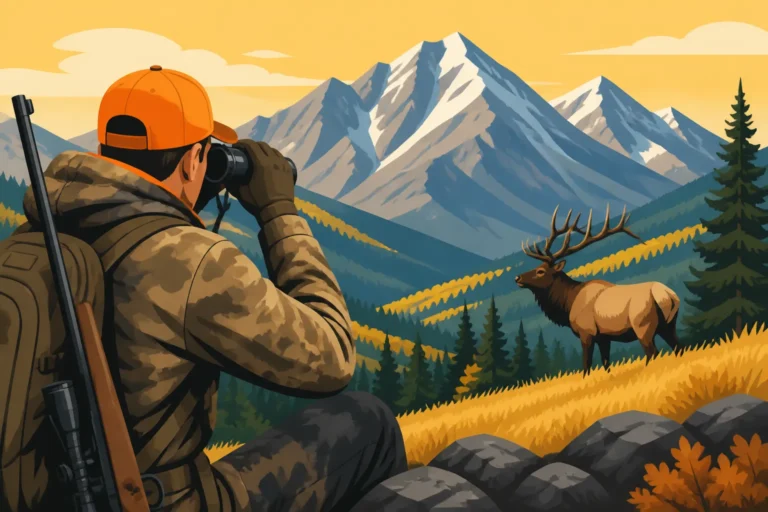
Spot-and-Stalk: This involves finding elk from a distance and then meticulously planning and executing a stalk to get within shooting range. Good glass is essential here. Spend a lot of time on high vantage points, especially at first light and last light, picking apart opposing hillsides and timber fringes. Look for movement, a flick of an ear, a patch of hide, or even just a horizontal line that breaks up the vertical lines of trees. A high-quality spotting scope and binoculars are non-negotiable. Once you spot an elk, use your mapping tools (like GoHunt's map layers) to identify terrain features, wind direction, and potential cover that will allow you to approach undetected. The mountains are unforgiving, so pay close attention to things like How to Judge Distance in the Mountains and How to Shoot Uphill and Downhill at Elk. This is often a slower, more deliberate process, but it allows you to hunt intelligently without expending unnecessary energy blindly hiking through timber.
Still-Hunting: This is essentially slow-motion stalking through timber or other dense cover. You’re moving incredibly slowly, taking a few steps, then stopping for several minutes to glass, listen, and observe. Your eyes should be scanning for parts of an animal, not the whole thing. Look for the glint of an antler, a dark mass against lighter timber, or even the way vegetation is bent or disturbed. Use the wind to your advantage, always trying to move into it, or crosswind. Thermals also play a huge role in the mountains; learn How to Use Thermals in Colorado Elk Country to keep your scent from giving you away. This method is exhausting, mentally and physically, but it allows you to surprise elk in their bedding areas, which is often where they are during daylight hours in this season. Remember, silence is golden. Every crunch of a leaf, every snap of a twig, can alert a wary elk.
Glassing and Optics Usage
As mentioned, optics are your best friend. In the expansive Colorado landscape, your eyes are simply not enough.
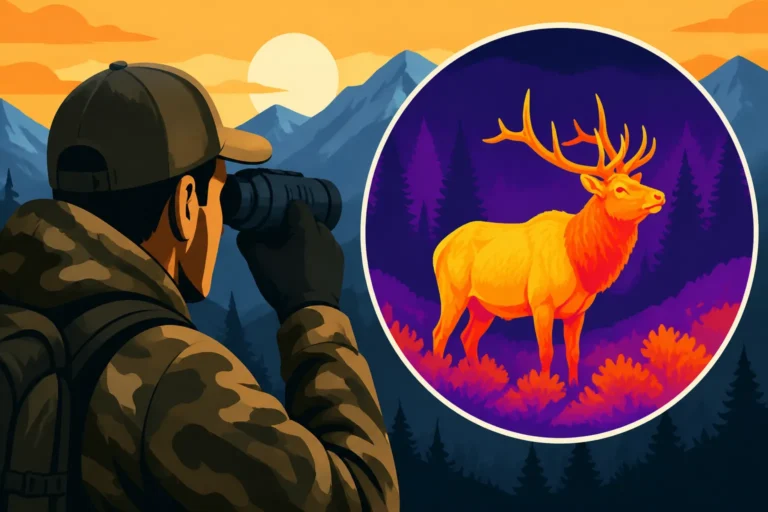
Proper Glassing Techniques: Don't just scan casually. Break down a landscape into grids. Start from left to right, then move down and repeat. Pay extra attention to areas with good feed, dense cover, benches, saddles, and edges where two types of cover meet. Look for anomalies: a color that doesn't quite match, a horizontal line in a vertical world, or movement. Dawn and dusk are prime times, but don't discount midday glassing. Elk often reposition or stand up to stretch, offering a brief window for detection. Use a sturdy tripod for your binoculars and spotting scope to eliminate shake and reduce eye fatigue.
Choosing the Right Optics: For a comprehensive elk hunt, you’ll want a good pair of 10x or 12x binoculars, and ideally, a quality spotting scope (20-60x or 20-70x power) with a tripod. Brands like Vortex, Swarovski, and Kowa offer excellent options across various price points. Your rifle scope should also be reliable and sighted in for various distances, as shots can be long in the mountains. For more insights on selecting appropriate gear, check out our guide on Best Optics for Colorado Big Game. Having clear, high-performing glass can mean the difference between seeing a distant bull and walking right past it.
Calling Considerations
Let's be realistic: the peak of the rut is over. Aggressive bugling is usually not your best bet in the first rifle season. Bulls are less interested in fighting and more concerned with recovering and surviving. That said, calling can still play a role, but it needs to be used judiciously and defensively.
Cow and Calf Calls: Soft cow mews and calf chirps can sometimes pique a bull's curiosity, especially if he's alone or with a small group of cows that might be drawn to another "herd." It's a non-threatening call that mimics the sounds of contented elk. Use it sparingly, and be ready, as a bull might silently approach to investigate. This can be particularly effective when trying to locate elk in thick timber, as it might elicit a soft response without directly challenging an already recovering bull.
Defensive Bugles: If you hear a distant bugle, a soft, questioning bugle back might work. However, avoid aggressive, challenging bugles unless you’ve already located a bull and are trying to gauge his temperament or pull him out of cover. More often than not, a loud, aggressive bugle will simply push wary bulls further into their sanctuary. The goal isn't to start a fight, but to sound like another elk that isn't a threat. Understanding How to Call in a Silent Bull might be more relevant for this period than trying to recreate peak rut chaos.
Essential Gear and Preparation for First Rifle Hunts
Being prepared physically and having the right gear is non-negotiable for a successful first rifle elk hunt in Colorado. The mountains are beautiful but unforgiving.
Physical Conditioning and Altitude Acclimation
Colorado elk hunting is strenuous. You'll be covering steep, uneven terrain, often at high altitudes, and potentially packing out a heavy load. Your physical fitness directly impacts your safety, endurance, and ability to hunt effectively.
Training Regimen: Start your physical preparation months in advance. Focus on cardiovascular endurance (hiking with a weighted pack, running, stair climbing), strength training (especially legs, core, and back), and flexibility. Simulate hunting conditions as much as possible. If you live at sea level, hiking with a 40-50 lb pack on steep inclines is a great way to prepare. Don't forget to practice shooting your rifle from hunting positions while out of breath. For a structured approach, check out our Colorado Elk Hunt Fitness Plan.
Altitude Sickness Prevention: Many prime elk hunting areas in Colorado are above 8,000 feet, with some reaching over 12,000 feet. Altitude sickness is a real concern. Give yourself time to acclimate. Arrive a few days early if possible and spend time at a moderate elevation (6,000-8,000 feet) before heading higher. Stay hydrated, avoid alcohol, and eat light, carb-rich meals. If you feel symptoms like headache, nausea, or dizziness, descend immediately. Read up on How to Acclimate to Colorado Elevation to properly prepare your body.
Clothing, Footwear, and Shelter
Layering is key in Colorado's variable autumn weather. You can experience all four seasons in a single day.
Layering System: Think in terms of a base layer (moisture-wicking, synthetic or merino wool), a mid-layer (insulation, fleece or puffy jacket), and an outer shell (waterproof and windproof). Having multiple lighter layers allows you to add or shed clothing as activity levels and temperatures change, preventing both overheating and chilling. Avoid cotton at all costs; it holds moisture and loses its insulating properties when wet.
Boots and Socks: Your feet are your most important asset. Invest in high-quality, broken-in, waterproof hiking boots with good ankle support. Brands like Kenetrek, Crispi, and Schnee's are popular for a reason. Pair them with moisture-wicking merino wool socks, and consider bringing multiple pairs to change them out daily to prevent blisters and maintain foot health. For more specific recommendations, our guide on Best Boots for Colorado Elk Hunting can help.
Shelter and Sleep System: Even if you're staying in a lodge or hotel, always have emergency shelter basics. For backcountry hunters, a reliable tent, a warm sleeping bag rated for below-freezing temperatures, and an insulated sleeping pad are crucial. Remember that temperatures can drop well into the teens or single digits at night during late October.
Navigation, Safety, and Meat Care
Being self-sufficient and prepared for emergencies is critical.
Navigation: Don't rely solely on your phone. Bring a reliable GPS device (Garmin InReach or similar) and a physical map and compass, and know how to use them. Mapping apps like onX Hunt or GoHunt are incredibly valuable for showing property boundaries, public land, and topographical features, but always have a backup. Cell service is often non-existent in the high country.
Safety Essentials: A well-stocked first-aid kit, a headlamp with extra batteries, fire-starting materials, a water filter or purification tablets, and a signaling device (whistle, mirror) are minimum requirements. Let someone know your hunt plan and expected return time. Carrying a satellite communication device is highly recommended for emergencies.
Meat Care: Once you've harvested an elk, the work truly begins. Temperatures can still be warm enough in late October to spoil meat quickly if not handled properly. You'll need game bags, a sharp knife, a bone saw, and potentially a good hunting backpack to pack out quarters. Learn How to Pack Out an Elk in Colorado beforehand. Plan your packing strategy, and be prepared to quarter the animal in the field immediately. Keeping the meat clean, cool, and dry is paramount to ensuring delicious table fare.
Disclaimer
The information provided in this guide is for general informational purposes only and does not constitute professional advice. Hunting regulations and conditions can change rapidly. Always consult the most current Colorado Parks and Wildlife regulations and hunt brochures before planning any hunting trip. Hunter safety and ethical practices should always be your top priority.