Colorado Walk-In Access Program
For many hunters dreaming of chasing big game or even small game across Colorado’s vast landscapes, one of the biggest headaches isn't the physical challenge or the harsh weather—it's simply finding a place to hunt. With vast tracts of private land and public land often locked behind it, figuring out where you can legally and ethically pursue game can be incredibly frustrating. This comprehensive guide will deep-dive into the Colorado Walk-In Access Program (WIA), explaining how this fantastic initiative opens up thousands of acres for public hunting and fishing, transforming your hunt planning and offering exciting new opportunities.
Understanding the Colorado Walk-In Access Program
The Colorado Walk-In Access Program, often simply called WIA, is a voluntary program managed by Colorado Parks and Wildlife (CPW) that partners with private landowners to open up their property for public hunting and sometimes fishing. Think of it as a bridge between private land and public opportunity. Instead of navigating confusing property lines or trying to get permission from dozens of landowners, the WIA program provides clear, designated access to land that would otherwise be off-limits. It's a real game-changer for folks who don't own thousands of acres or have deep pockets for private leases.
How WIA Operates for Hunters
At its core, WIA works by offering financial incentives to private landowners who agree to allow public access for hunting and fishing on their property. CPW identifies suitable private lands, often those that border existing public land or provide critical habitat and travel corridors for wildlife. They then enter into agreements with willing landowners. These agreements specify the access points, allowed activities (hunting, fishing), species that can be hunted, and specific dates when the land is open. For the hunter, it means clear signage, designated parking, and often, a map of the accessible areas, taking the guesswork out of private land navigation.
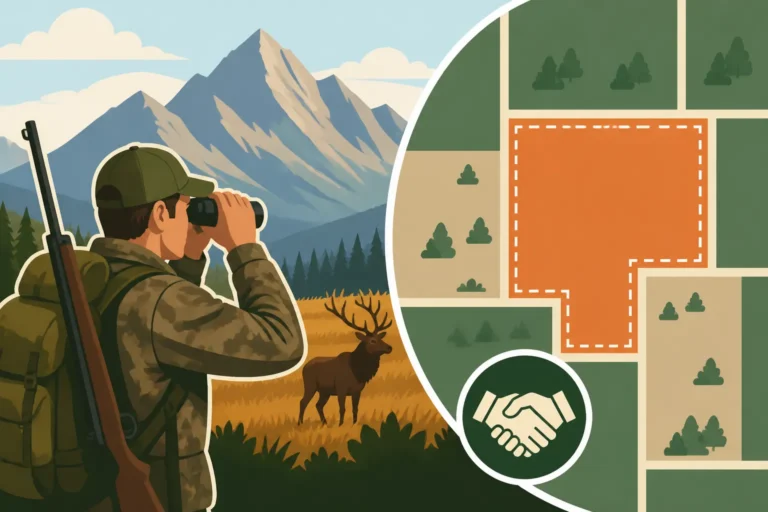
For instance, imagine you're looking at a map and see a large tract of private land nestled between two national forests. Traditionally, that land would be a no-go zone without direct permission, which as we all know, can be incredibly difficult to secure. Through WIA, that very same private parcel might suddenly become accessible, allowing you to traverse what was once a barrier and potentially access untouched corners of public land beyond it, or hunt the private land itself. It's a fantastic way to spread out hunter pressure and get away from the more heavily used public land areas.
The Role of Private Landowners in WIA
Landowners are truly the unsung heroes of the WIA program. Their participation is completely voluntary, and they agree to open their private property for public recreational access in exchange for annual payments from CPW. These payments can help offset property taxes, manage wildlife impacts, or simply provide an additional revenue stream. The agreements are highly customized, allowing landowners to specify the types of access, hunting methods (e.g., archery only), and specific seasons or dates when access is permitted. They maintain the right to enforce their rules and can even revoke access if the terms are violated by hunters.
This flexibility is crucial, as it ensures landowners feel comfortable and respected. For example, a rancher might open their land for archery elk hunting in September but close it to rifle hunting later in the fall to protect their cattle or for other agricultural operations. Or they might only allow access for small game and waterfowl, but not big game. This collaborative approach makes the program sustainable and beneficial for both the public and the private sector. It's not just about opening gates; it's about fostering a relationship that benefits wildlife and the hunting community at large.
Finding and Accessing WIA Lands
One of the biggest hurdles with programs like WIA is simply knowing where these opportunities exist. Fortunately, CPW and modern mapping technologies have made this much easier than it used to be. Gone are the days of driving around hoping to spot a small sign – now, a wealth of information is at your fingertips.
Utilizing the CPW Walk-In Access Atlas
The first and most official place to find WIA properties is through the Colorado Parks and Wildlife (CPW) website. They maintain an interactive online atlas that is updated frequently. This atlas displays all current WIA properties across the state, complete with detailed maps, specific boundaries, species available, dates of access, and any special restrictions. It's your foundational tool for identifying potential WIA spots.
When you navigate the CPW Walk-In Access Atlas, you'll be able to filter by Game Management Unit (GMU), county, and even species. For example, if you're planning a trip to the Gunnison Basin, you can zoom in on that area and see all the WIA parcels available. Each parcel will have a clickable link that provides more specific details: whether it's open for elk, deer, pronghorn, or waterfowl, what dates it's accessible, and any particular rules the landowner might have established. Taking the time to study this atlas before your hunt can reveal some incredible hidden gems.
Leveraging Mapping Apps and E-Scouting Tools
While the CPW atlas is great, integrating that information with robust e-scouting tools like onX Hunt can take your planning to the next level. Apps like onX Hunt often integrate CPW's WIA layer directly, allowing you to see these access points overlaid on topographic maps, satellite imagery, and private/public land ownership data. This gives you a much better understanding of the terrain, potential bedding areas, water sources, and how WIA land connects to larger public land blocks.
For example, I've used onX Hunt countless times to identify WIA parcels that create a critical access corridor to public land that would otherwise be landlocked. You can visually see how a WIA parcel might give you a direct route to a remote ridge on national forest land, bypassing a long, arduous hike around private property. This ability to layer information is invaluable. You can mark waypoints, measure distances, and even identify potential pinch points or funnels that elk or deer might use on their way to or from WIA land. Combining the official CPW data with the powerful analytics of onX Hunt lets you truly maximize your time and effort in the field.
On-the-Ground Reconnaissance and Signage
Even with all the digital tools, nothing beats good old-fashioned boots-on-the-ground reconnaissance, or at least a thorough understanding of the physical signs. When you arrive at a WIA property, you'll find specific signage that clearly marks the access points, parking areas, and boundaries of the accessible land. These signs are often bright yellow or orange and will explicitly state "Walk-In Access" or "Public Access." It’s absolutely critical to respect these signs and never venture onto private land that isn't designated as WIA.
Always look for these official CPW signs. They usually include a map of the specific property, outlining the boundaries and any areas that are still off-limits (like around residences or livestock operations). Pay close attention to these maps. Deviating from the marked access areas or ignoring posted restrictions can jeopardize the entire program and landowner participation. We want these opportunities to continue, so always be a responsible and respectful user of these lands. Sometimes the most promising-looking area might be just outside the WIA boundary, and it's essential to stick to what's legal.
Benefits and Challenges of WIA Hunting
The Colorado Walk-In Access Program offers a wealth of benefits, particularly for the DIY hunter, but it also comes with its own unique set of challenges that savvy hunters need to anticipate and navigate. It’s not a magic bullet, but it's an incredibly powerful tool when used correctly.
Advantages of Hunting WIA Properties
One of the most significant advantages of WIA is the sheer increase in accessible hunting ground, especially in areas dominated by private land. This program can unlock fantastic opportunities for hunting various species, from big game like elk and mule deer to small game, waterfowl, and even turkeys, depending on the specific property agreement. For hunters who don't have private land connections or the budget for expensive outfitter services, WIA can be a godsend. It truly democratizes access to some prime hunting real estate.
Another huge benefit is the potential for reduced hunter pressure. While popular public land areas might be crawling with hunters, WIA properties, especially those a bit off the beaten path or requiring a decent walk, often see less traffic. This can lead to a more enjoyable hunting experience and potentially increase your chances of success. It also provides crucial winter range or migratory corridors for big game, meaning you might find animals moving through or holding up on these properties when they're hard to locate elsewhere. Many WIA areas are also fantastic for Colorado Archery Elk Hunting Guide or Colorado Rifle Elk Hunting Guide, offering diverse terrain and less competition.
Finally, WIA often fills in critical gaps between larger tracts of public land. This creates more contiguous areas for wildlife movement and, consequently, more expansive hunting opportunities for you. Instead of being confined to fragmented public parcels, WIA allows for longer pushes and more effective still-hunting tactics as you can follow game across broader landscapes.
Common Challenges and Considerations
While the benefits are clear, WIA hunting isn't without its challenges. The most common issue is the transient nature of these properties. WIA agreements are typically renewed annually, meaning a prime spot you hunted one year might not be available the next. This requires hunters to stay vigilant, regularly checking the CPW WIA Atlas for updates and changes. This can be frustrating, especially if you've done extensive scouting only to find the property is no longer enrolled.
Another challenge can be the specific, sometimes restrictive, rules set by individual landowners. Some WIA properties might be open for only certain species, during specific seasons, or with particular weapon restrictions (e.g., archery only). Hunters need to meticulously review the rules for each property they intend to hunt to avoid any misunderstandings or violations. For example, a property might be open for elk and deer but explicitly prohibit hunting bears or mountain lions. Always know before you go.
Lastly, WIA properties can sometimes be small or oddly shaped, making it challenging to hunt effectively, especially for big game that require larger ranges. You might find a WIA parcel that's essentially a narrow corridor, which can be great for quick access but not ideal for a full day's hunt. Also, because they are private land, you may encounter more signs of human activity, like fences, farm equipment, or domestic animals, which require careful navigation. Always be aware of your surroundings and prioritize safety for yourself, other hunters, and the landowner's property.
Planning Your Hunt on WIA Lands
Effective planning is paramount when it comes to successfully hunting WIA properties. It’s not just about showing up; it’s about strategic preparation that maximizes your chances and ensures you’re a responsible hunter.
Researching Specific WIA Parcels
Before you even think about packing your gear, dive deep into the research for specific WIA parcels that interest you. Start with the CPW WIA Atlas and then cross-reference with e-scouting tools like onX Hunt or even services like GoHunt for broader unit information. Pay close attention to the species available, the specific dates the property is open, and any unique rules or restrictions.
For example, if you're targeting early-season elk, you'll want to filter for WIA properties open during Colorado Archery Season Dates. Look at the satellite imagery on onX Hunt to identify potential bedding areas, water sources, and travel corridors within the WIA boundaries and on adjacent public land. Does the WIA property contain a north-facing slope with dense timber, perfect for elk during warmer weather? Or perhaps it has a secluded waterhole that might draw thirsty animals? Understanding these details before you ever set foot on the ground is what separates successful hunters from those who just wander aimlessly.
Connecting WIA with Adjacent Public Land
Often, the true power of WIA properties isn't just hunting the private land itself, but how they unlock access to otherwise inaccessible public land. Many WIA parcels act as crucial access points or travel corridors, allowing hunters to bypass landlocked sections of national forests, BLM land, or state trust lands. This is where your e-scouting truly shines.
Imagine a large block of BLM land that's entirely surrounded by private property. Without WIA, reaching that BLM land might be impossible or require an incredibly long and circuitous route. But if a WIA parcel provides a walk-in easement through a narrow strip of private ground, suddenly that remote public land is within reach. Use your mapping apps to trace these connections. Identify the public land beyond the WIA parcel and start scouting it for signs of game. This strategy can significantly reduce hunter pressure, as many hunters won't invest the time to find or walk into these harder-to-reach public sections. This is a common tactic for Colorado Backcountry Hunting Guide and provides essential access.
| Feature | WIA Land | General Public Land (e.g., National Forest) | Private Leased Land |
|---|---|---|---|
| Access | Walk-in public access by agreement | Open public access (may have access restrictions) | Exclusive access for paying leaseholders/guests |
| Cost | Free (requires valid hunting license/tag) | Free (requires valid hunting license/tag) | Significant fees per hunter/season |
| Management | CPW/Landowner agreement | Federal/State agencies (USFS, BLM, CPW) | Landowner/Leaseholder discretion |
| Rules | Specific to each WIA parcel and landowner | General state & federal hunting regulations | Landowner rules + state/federal regulations |
| Pressure | Varies, often lower than popular public | Can be very high in accessible areas | Very low, managed exclusively |
| Availability | Changes annually, check CPW Atlas | Generally stable, check for closures | Stable for leaseholders, rare for others |
| Species | Dependent on landowner agreement | All legal species for the unit | All legal species for the unit |
Respecting Boundaries and Regulations
This cannot be stressed enough: respecting WIA boundaries and regulations is non-negotiable. The WIA program operates on the goodwill and cooperation of private landowners. Any violation, no matter how small, risks that landowner pulling out of the program, potentially costing countless other hunters access to valuable ground. Always know where you are. Use your GPS with a reliable mapping application like onX Hunt to constantly verify your position relative to WIA and adjacent private property lines.
If the WIA map shows a no-go zone around a ranch house or specific agricultural fields, respect it without question. If the agreement specifies "foot traffic only," leave your ATV or e-bike at home. Park only in designated areas. Pack out everything you pack in, and leave no trace. If you encounter livestock, give them a wide berth and do not disturb them. Remember, you are a guest on private property. Your actions reflect not just on you, but on the entire hunting community. A positive relationship between hunters and landowners is the foundation of continued WIA opportunities, and programs like Colorado Walk-In Access Program depend on it.
Best Practices for WIA Hunting Success
To truly make the most of Colorado's Walk-In Access Program, you need more than just knowledge of the rules; you need a strategic approach. These best practices will help you maximize your chances of success and ensure a responsible, enjoyable hunt.
E-Scouting Like a Pro
Effective e-scouting is your secret weapon for WIA lands. Don't just look at the WIA boundaries; analyze the terrain, vegetation, and proximity to other game-rich areas. Use satellite imagery to identify different types of cover: dark timber, aspen groves, open meadows, and brushy draws. Look for elevation changes that might indicate thermals or natural funnels for game. Pay attention to water sources—ponds, creeks, or springs—which are always magnets for wildlife.
With tools like onX Hunt, you can spend hours analyzing a WIA parcel before you ever leave your couch. Plot potential routes in and out, mark areas of interest like old logging roads or benches that might hold elk, and identify escape routes for game. Consider how animals might move between the WIA parcel and adjacent public or private lands, especially during different times of the day or phases of the season. For instance, elk might feed in open WIA meadows at night but retreat to dense public timber during the day. Understanding these patterns is key to successful How to Find Elk When They Go Quiet or figuring out How to Hunt Elk in the Dark Timber.
Timing Your Hunt Strategically
The "when" you hunt a WIA property can be just as important as the "where." Consider the hunting pressure and the specific species you're pursuing. Early in the season, during archery or muzzleloader hunts, WIA properties might offer less pressure than highly accessible public lands. As rifle seasons progress, some WIA areas might experience increased pressure, especially if they are close to towns or main roads.
Also, think about the time of day. Many WIA properties are near agricultural fields or low-elevation winter range. This means dawn and dusk can be prime times as animals move between feeding and bedding areas. A WIA parcel that provides evening access to a stubble field might be a hotspot for deer coming out to feed, while during midday, they might be bedded down in an adjacent timber block. Always check the specific access times, if any, that the landowner has set. Don't be "that hunter" who enters before legal hours or stays past sunset if restrictions are in place.
Minimizing Your Impact and Practicing Stealth
Since WIA properties are private land, it's paramount to minimize your footprint and practice exemplary outdoor ethics. Walk-in access means you'll be on foot, which is already a good start for stealth, but consider your approach. If there's a designated parking area, use it. Close all gates you open, even if you find them open. Avoid creating new trails or disturbing sensitive areas.
Moving quietly is always crucial in hunting, but especially so on WIA lands where animals might be accustomed to less human disturbance than on heavily pressured public ground. This might involve slow, deliberate still-hunting through timber or careful stalking across open ground. Use the wind to your advantage, just as you would on any other hunt, making sure your scent doesn't carry to where game might be. Remember, you're trying to integrate into the landscape without leaving a trace, increasing the chances of the landowner continuing their participation and allowing you to return year after year. Learning How to Move Quietly Through Colorado Timber is an essential skill here.
Expanding Your Colorado Hunting Horizons with WIA
The Colorado Walk-In Access Program isn't just a convenience; it's a vital component of diverse and equitable hunting opportunities in the state. For many, it's the bridge that connects their hunting aspirations with tangible access.
Opportunities for Various Species
The beauty of the WIA program is its versatility across different game species. While many hunters immediately think of elk or deer, WIA properties frequently offer excellent opportunities for small game, waterfowl, and even spring and fall turkey seasons. This diversity makes it a year-round resource for the avid hunter. You might find a WIA parcel that's perfect for chasing cottontails with a .22 in the winter, or a riparian area that hosts migrating ducks and geese in the fall.
Imagine wanting to hunt Colorado Pronghorn Hunting Guide but finding most plains units dominated by private ranches. A well-placed WIA parcel could provide the crucial access you need for a spot-and-stalk opportunity. Or perhaps you're looking for a low-pressure area for Colorado Turkey Hunting Guide. Several WIA properties are specifically designated for these species, giving you unique chances you might not find elsewhere. Always check the CPW atlas for specific species available on each WIA property.
Enhancing DIY Hunting Adventures
For the dedicated do-it-yourself hunter, the WIA program is an invaluable resource. It empowers you to explore new areas, develop your e-scouting and field skills, and experience a genuine Western hunting adventure without the financial burden of guided hunts or private leases. It aligns perfectly with the spirit of DIY, where preparation, grit, and knowledge are your most important assets. If you're planning a Colorado DIY Elk Hunting Guide, WIA parcels can be key strategic points in your overall hunting plan.
By integrating WIA lands into your hunt planning, you open up more options and increase your chances of finding unpressured game. It means more time spent in the field and less time worrying about trespass lines. This can be especially beneficial for hunters who are new to Colorado or even new to hunting big game entirely, offering a stepping stone to understanding different landscapes and animal behaviors.
Supporting Wildlife Conservation through WIA
Ultimately, the WIA program is a win-win for both hunters and wildlife conservation. By providing incentives to landowners to maintain wildlife-friendly habitats and allow public access, the program contributes directly to habitat preservation and connectivity. These private lands often serve as critical winter range, calving grounds, or migratory corridors for big game, making their protection and accessible management incredibly important.
When you responsibly utilize WIA lands, you're not just getting a place to hunt; you're supporting a program that fosters cooperation between private landowners and public resource agencies. This cooperation is vital for the long-term health of Colorado's wildlife populations and ensures that future generations of hunters will continue to have diverse and plentiful opportunities. Every time you respect the rules and leave a WIA parcel better than you found it, you reinforce the value of this program and help secure its future.
Disclaimer
The information provided in this guide is for general informational purposes only and is not intended as legal advice. Hunting regulations, season dates, and specific Walk-In Access property availability and rules can change frequently. It is the hunter's sole responsibility to verify all regulations, obtain necessary licenses and tags, and confirm property access details with Colorado Parks and Wildlife (CPW) before engaging in any hunting activities. Always consult the most current CPW regulations and property-specific information.