Hunting the Routt National Forest
Hunting the vast, wild expanse of the Routt National Forest can feel overwhelming, like trying to navigate a puzzle with a thousand pieces. From understanding its diverse terrain to pinpointing prime game habitat and deciphering access points, many hunters struggle to even begin planning. This comprehensive guide will peel back the layers of the Routt, offering you a detailed look into its hunting opportunities, species, navigation challenges, and the essential strategies you'll need for a successful and rewarding experience.
Unveiling the Routt National Forest for Hunters
The Routt National Forest, nestled in the scenic Yampa River Valley and extending into Wyoming, represents a significant portion of public land available to hunters in Colorado. Its sheer size and varied ecosystems make it a truly unique and often challenging destination. When you're dreaming of big game hunting in Colorado, places like the Routt are often at the top of the list, but understanding its specific nuances is key to turning those dreams into reality.
A Hunter's Paradise in Northwest Colorado
Imagine towering peaks, deep canyons carved by ancient rivers, and sprawling timber stands that stretch for miles. That's a glimpse into the Routt. Located primarily in northwest Colorado, with significant portions in Routt, Jackson, Grand, and Moffat counties, this forest is part of the larger Routt-Medicine Bow National Forest. It's renowned for its incredible wildlife populations, particularly elk, making it a magnet for hunters from across the country. But it's not just about the numbers; it's about the experience of hunting in a truly wild and expansive landscape, far from the concrete jungle. The opportunities here are immense, from remote backcountry pursuits to more accessible areas near established trailheads. This is a place where you can truly immerse yourself in the hunt, feeling the quiet solitude that only vast wilderness can offer.
Understanding the Landscape and Ecosystem
The topography of the Routt National Forest is nothing short of spectacular, but it also presents significant challenges. Elevations range dramatically, from around 6,000 feet in some lower river valleys to over 12,000 feet on peaks like Mount Zirkel. This vast elevation range creates a diverse array of habitats, from sagebrush flats and aspen groves to dark timber and alpine tundra. You'll find dense spruce-fir forests, often referred to as "dark timber," which elk absolutely love for bedding and security, especially during hunting season pressure. There are also expansive high-country basins and open parks that offer incredible glassing opportunities. Understanding these different ecosystems is crucial for predicting game movement and choosing your hunting strategy. For example, elk will often use north-facing slopes for bedding to escape midday sun, while south-facing slopes melt out faster in early season and offer forage. Knowing these subtle shifts in habitat can make all the difference when you're on the ground, trying to pinpoint where the animals are holding.
Key Game Species and Seasons in the Routt
While the Routt National Forest is synonymous with elk, it offers a diverse range of hunting opportunities for various big game species. Knowing what to expect and when to hunt for each species is paramount to drawing a tag and making the most of your time in the field. Colorado Parks and Wildlife (CPW) manages these populations meticulously, balancing hunter opportunity with herd health.
Elk: The Crown Jewel of the Routt
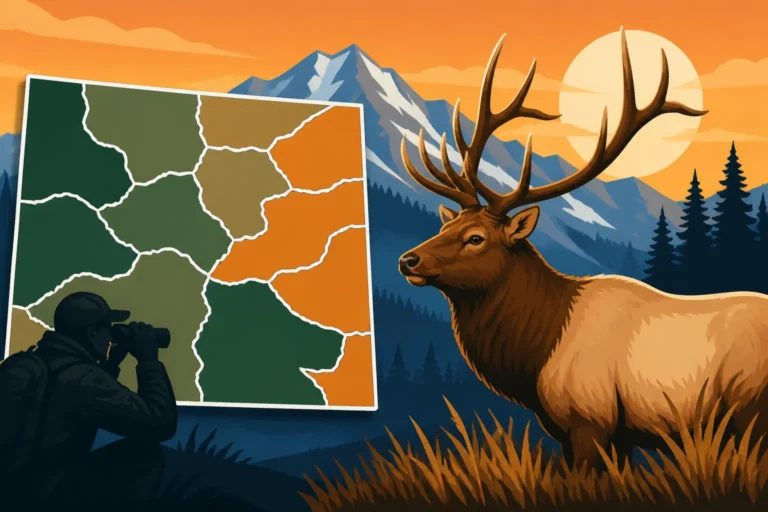
Elk hunting in the Routt National Forest is, for many, the ultimate prize. The Routt boasts a robust elk population, making it one of the most productive elk hunting regions in Colorado. These majestic animals thrive in the mixed conifer and aspen forests, especially where food sources like mountain forbs and grasses are abundant. You'll find elk across various Game Management Units (GMUs) within the forest, each offering unique challenges and opportunities.
For those pursuing elk, the seasons are varied. Archery season, typically in September, offers the thrilling chance to hunt during the peak of the rut, when bulls are bugling fiercely. However, getting close to a rutting bull with a bow requires immense patience, skill, and stealth, as highlighted in our guide on Archery Elk Tactics for the Rut. Muzzleloader season follows, offering a challenging primitive weapon hunt. Rifle seasons are split into multiple "limited" and "over-the-counter" (OTC) periods from October through November. OTC tags, while increasingly difficult to find, have historically been available in certain GMUs within the Routt for the second and third rifle seasons, primarily for antlerless elk or sometimes either-sex tags in specific areas. However, keep an eye on CPW's evolving regulations, as Colorado's OTC elk tag options are always subject to change. Understanding Colorado Elk Season Dates Guide is essential for planning. For non-residents, drawing a limited bull tag in a premier Routt GMU can take many preference points, so exploring Colorado OTC Elk Tags Explained is vital if you're not point-rich.
Mule Deer and Other Big Game Opportunities
While elk steal much of the spotlight, the Routt National Forest also offers excellent opportunities for mule deer. These iconic Western deer prefer more open, broken country, often frequenting the edges of timber and brushy hillsides. Mule deer hunting often requires more glassing and patience, especially when they move into thicker cover to escape pressure. The forest provides ideal habitat, particularly in GMUs that feature a mix of aspens, oak brush, and scattered pines, which offer both forage and cover. Learning How to Glass for Colorado Mule Deer will significantly increase your success rates.
Beyond elk and mule deer, hunters might also pursue black bear in the Routt. Bear seasons often overlap with deer and elk seasons, and taking a bear often happens opportunistically while pursuing other game. Moose populations are also present in certain areas, particularly around willow bottoms and high-elevation drainages. However, moose tags are extremely limited and require a significant number of preference points to draw. Other species include mountain lion, though these hunts are highly specialized and often require hounds. For small game enthusiasts, grouse hunting in the aspen stands can be a delightful way to spend a fall day, adding another dimension to the Routt's diverse offerings.
Navigating the Routt: Access, Terrain, and Tools
Successfully hunting the Routt National Forest isn't just about finding game; it's about effectively navigating its vastness, respecting its challenging terrain, and utilizing the right tools to keep you safe and on track. The sheer scale can be daunting, but with proper planning, it becomes an exhilarating challenge.
Access Points and Wilderness Areas
The Routt National Forest is crisscrossed by a network of forest service roads, providing various access points for hunters. However, many of these roads are seasonal, closing in late fall due to snow, which significantly impacts late-season hunts. Key access corridors often run off major highways like US-40 near Steamboat Springs or State Highway 14 through North Park. Small towns like Steamboat Springs, Walden, Kremmling, and Craig serve as excellent jumping-off points for resupply and lodging.
Within the Routt are several designated Wilderness Areas, such as the Mount Zirkel Wilderness and the Sarvis Creek Wilderness. These areas are roadless, meaning motorized vehicles and mechanized transport (like mountain bikes) are prohibited. Hunting in these wilderness areas requires a commitment to backpacking in, packing out, and being entirely self-sufficient. This type of hunting, often referred to as Colorado Backcountry Hunting Guide, demands a higher level of physical fitness and preparation but can reward you with unparalleled solitude and less pressured game. Knowing the boundaries of these wilderness areas is critical, as regulations and access methods change once you cross into them. Always check current forest service maps and regulations before heading out.
Essential Scouting and Navigation Tools
The Routt's vastness and ruggedness necessitate reliable navigation tools. Gone are the days of relying solely on paper maps, though a physical map and compass should always be part of your kit as a backup. Modern technology, like GPS units and smartphone apps, has revolutionized how we navigate in the backcountry. Brands like onX Hunt offer invaluable digital mapping solutions, allowing you to clearly see public and private land boundaries, topo lines, forest service roads, trail systems, and even satellite imagery. With onX Hunt, you can mark waypoints for game sign, water sources, and potential bedding areas, making pre-season scouting or in-the-field navigation much more efficient.
Another excellent resource for comprehensive hunt planning is GoHunt. While GoHunt isn't a direct navigation app, it provides detailed information on draw odds, unit data, and species reports that can help you select the best GMU within the Routt for your specific hunting goals, informing where you'll ultimately need to navigate. Before you even set foot in the forest, these digital tools allow for extensive e-scouting, helping you identify potential pinch points, travel corridors, and bedding areas. It's also crucial to understand how to read a topographic map, interpret contour lines for elevation changes, and identify water sources. Given the variable cell service in remote areas, downloading offline maps for your chosen hunting unit is non-negotiable for safety and successful navigation.
| GMU | Primary Access Points | Dominant Terrain Features | Key Game Species | Typical Hunting Pressure |
|---|---|---|---|---|
| GMU 12 | CO-131, Forest Roads off US-40 | Dense timber, steep drainages, high plateaus | Elk, Mule Deer, Bear | Moderate to High (especially rifle) |
| GMU 13 | CO-129, Forest Roads near Steamboat | Mixed timber, open parks, moderate slopes | Elk, Mule Deer | Moderate |
| GMU 15 | CO-125, Forest Roads near Rand | Willow bottoms, lodgepole pine, lower elevation | Moose, Elk, Mule Deer | Low to Moderate |
| GMath Zirkel Wilderness (parts of 18, 17, 161, etc.) | Various trailheads | Rugged alpine, dark timber, high elevation | Elk, Mule Deer | Low (backpacking required) |
| GMU 214 | Forest Roads west of Walden | Rolling hills, aspen groves, sagebrush | Elk, Mule Deer | Moderate |
Strategies for a Successful Routt National Forest Hunt
Hunting in the Routt National Forest is a marathon, not a sprint. Success often hinges on your ability to adapt, persevere, and employ sound strategies tailored to this specific environment. It's a place that will test your physical and mental limits, but the rewards are immeasurable.
Adapting to Pressure and Terrain
One of the biggest challenges in the Routt, especially during rifle seasons, is hunter pressure. This is a popular forest, and animals quickly learn to avoid roads and human activity. Your strategy must evolve beyond simply hoping to stumble upon game. Elk, particularly, will retreat into the thickest, darkest timber on north-facing slopes, often high up, or deep into wilderness areas where hunters are less willing to go. To combat this, consider hunting during the weekdays if possible, when pressure tends to be lower. Also, focus on areas at least a mile or two off the main roads and trails. This means getting comfortable with navigating off-trail, using your GPS and mapping apps like onX Hunt to keep your bearings.
The terrain itself dictates much of your approach. Steep hillsides mean you need to be physically fit and mentally prepared for strenuous climbs. Utilizing thermals, which are predictable air currents, is critical. In the mornings, cold air sinks down the drainages; in the evenings, warm air rises. Positioning yourself accordingly, especially when calling, can give you a significant advantage. Learning How to Use Thermals in Colorado Elk Country is not just helpful, it's essential for success and for preventing game from winding you. Think about ambushing elk on benches and saddles where they travel, rather than trying to chase them through dense timber.
Planning Your Backcountry Excursion
For those seeking truly unpressured game and a profound wilderness experience, a backcountry hunt in the Routt National Forest is the answer. This isn't just a day trip; it's a multi-day commitment to living and hunting deep within the wilderness. A key component of this is knowing How to Pack Into the Colorado Backcountry. You'll need to carry all your gear, food, water, and emergency supplies on your back, which means every ounce counts. Investing in lightweight, durable gear is crucial. Planning your route to water sources is critical, as carrying enough water for several days is often impractical. A reliable water filter or purification system is a must-have.
When you're deep in the Routt's backcountry, establishing a spike camp or a small, mobile camp allows you to hunt farther from the trailheads and stay with the game. This requires a different set of skills than day hunting, including proper food storage to deter bears and effective cold-weather gear to manage the unpredictable mountain weather. Our guide on Colorado Backcountry Hunting Gear List offers a detailed breakdown of what you'll need. Furthermore, understanding How to Pack Out an Elk in Colorado is absolutely critical before you even pull the trigger, as getting hundreds of pounds of meat out of remote country requires a solid plan and often multiple trips. A successful backcountry hunt in the Routt is a true test of preparedness, skill, and grit, but it offers an unparalleled connection to the wild.
Disclaimer
Please note that hunting regulations, season dates, and unit boundaries are subject to change by Colorado Parks and Wildlife (CPW). Always consult the official CPW hunting regulations brochure for the current year before planning any hunt. This guide is for informational purposes only and does not supersede official regulations.