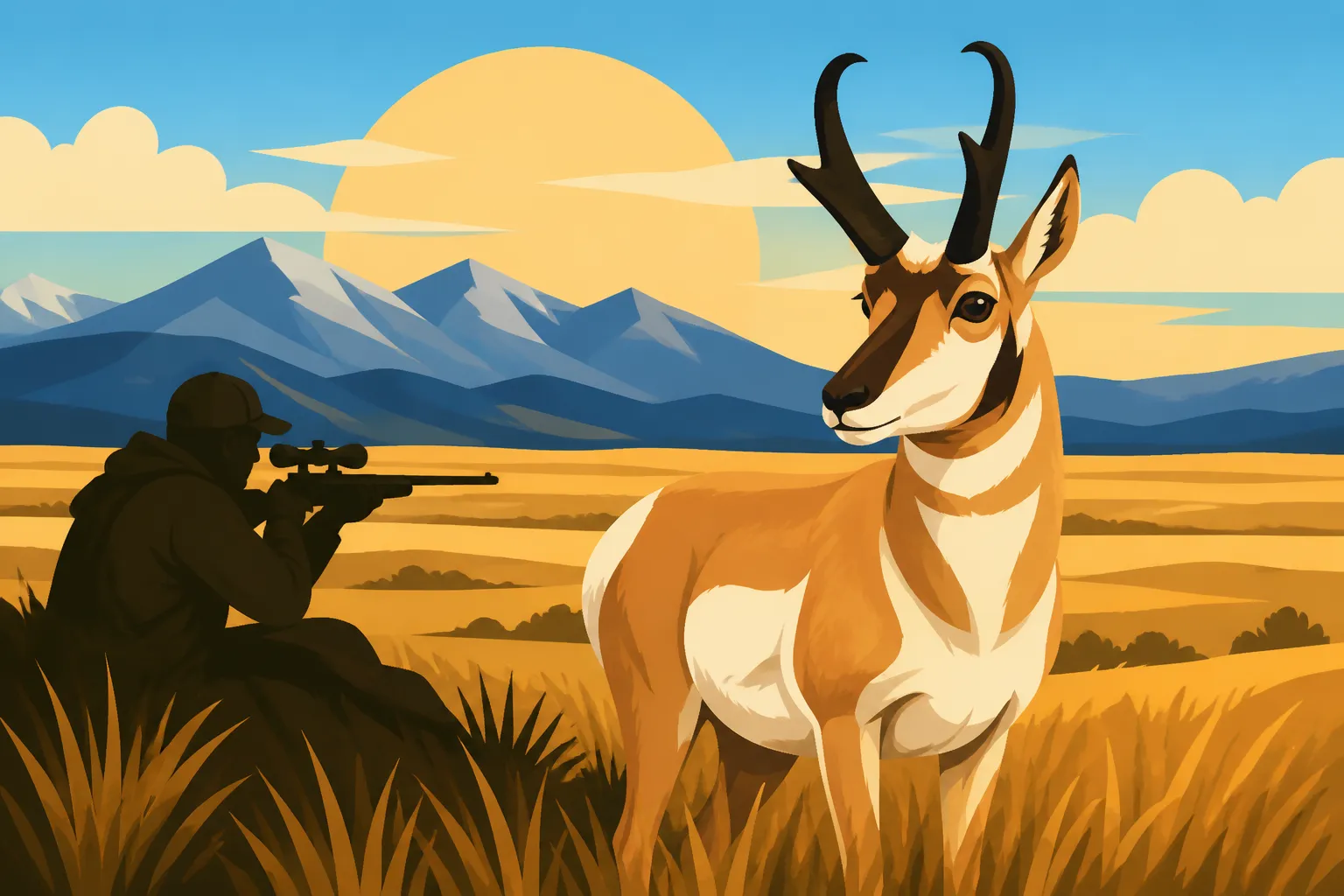
Colorado Pronghorn on the Eastern Plains
Hunting pronghorn on Colorado's Eastern Plains is a completely different ballgame than chasing elk in the high country, and it comes with its own set of unique challenges – namely, finding accessible land and outsmarting an animal known for its incredible eyesight and speed. If you've ever felt overwhelmed by endless flatlands with "No Trespassing" signs or struggled to get within range of these wary speedsters, you're not alone. This guide will walk you through everything you need to know to successfully hunt pronghorn on Colorado's vast Eastern Plains, from understanding their habits to mastering the tactics that actually work.
The Unique World of Eastern Plains Pronghorn
Hunting pronghorn in Colorado, especially on the Eastern Plains, is an experience unlike any other. You're trading rugged mountains for sprawling grasslands and sagebrush flats, and the game itself is a creature of incredible adaptations perfectly suited to this open country. It's not just a change of scenery; it's a fundamental shift in hunting strategy and mindset.
Why the Eastern Plains are Different for Pronghorn
The Eastern Plains of Colorado are a mosaic of private ranchland, agricultural fields, and scattered pockets of public land, often in the form of Bureau of Land Management (BLM) holdings or State Trust Lands. Unlike the vast National Forests in the mountains, public access can be fragmented, making scouting and planning crucial. Pronghorn thrive here, not just because of the open terrain that favors their keen eyesight, but also because the landscape provides a diverse diet of forbs, grasses, and even some agricultural crops. This often translates to healthier, larger animals, but also means they have immense visibility and can spot you from miles away. The terrain offers very little cover, forcing hunters to become masters of concealment and long-range observation. You won't be still-hunting dark timber here; you'll be crawling through sparse sagebrush or utilizing the subtle dips and rolls of the prairie.
The Appeal and Challenges of Plains Pronghorn Hunting
The appeal of hunting pronghorn on the Eastern Plains is undeniable. The sheer speed and grace of these animals, often called "speed goats," are captivating. Successfully executing a stalk on a plains pronghorn is one of the most rewarding achievements in Western hunting. Plus, the tags are often more accessible through the draw than coveted elk or trophy deer tags, and sometimes, you can even find leftover tags for cow pronghorn if you're quick.
However, the challenges are significant. The lack of cover makes getting close extremely difficult. These animals possess 8x magnification vision, meaning they effectively see you eight times larger than you actually are, and can spot movement from incredible distances. Wind is almost always a factor, either helping mask your approach or swirling to give away your scent. Temperatures can swing wildly, from scorching early season days to bitter cold late in the year. Furthermore, the checkerboard nature of public and private land can be a logistical nightmare. Knowing where you can legally hunt is paramount, and a tool like the Colorado Hunting Atlas Explained becomes indispensable. You need to be prepared for long walks, minimal shade, and the mental fortitude required for repeated failed stalks.
Understanding Pronghorn Behavior and Biology on the Plains
To consistently fill a tag on the Eastern Plains, you need to think like a pronghorn. Their biology and behavior are finely tuned to survive and thrive in their wide-open habitat, and understanding these aspects is your first step towards success.
Pronghorn Senses and How They Dictate Movement
Pronghorn have evolved for survival in open country, and their senses are nothing short of incredible. Their most famous attribute is their eyesight, often touted as comparable to an 8x binocular. This isn't just a myth; they truly can spot predators, including hunters, from astonishing distances, often several miles away. This keen vision means they prefer open areas where they can see danger approaching from any direction. You'll rarely find them lingering in dense cover, simply because they don't need it for security.
Beyond sight, their sense of smell is excellent, though perhaps not as legendary as their eyesight. The constant winds on the plains mean they often rely on their noses to detect subtle changes in scent, especially for predators moving upwind. Their hearing is also sharp, allowing them to pick up the faintest sounds of an approaching threat. Because of these senses, pronghorn are almost always on high alert. They are rarely static for long periods, constantly scanning their surroundings, often feeding for a few minutes, then lifting their heads to survey the horizon. This constant vigilance is why a successful stalk requires meticulous planning and execution. If you want a deeper dive, check out Colorado Pronghorn Speed and Senses.
Social Structures and Rutting Behavior
Pronghorn social structures can vary throughout the year. During much of the year, females and their young form herds, while males often form bachelor groups or are solitary. As the late summer and early fall rut approaches, typically from late August through September, things change dramatically. Dominant bucks will establish territories and gather harems of does. This is an exciting time to hunt, as bucks become more preoccupied with defending their does and chasing off rivals, often making them slightly less cautious. They'll be seen running, sparring, and bugling (though it's more of a snort-wheeze than an elk bugle) across the plains.
Observing these interactions can give you an edge, as a buck focused on breeding might present a brief window of opportunity. However, the presence of multiple eyes within a harem means even more animals are watching for danger. Post-rut, bucks can be exhausted and might seek out solitary areas to recover, making them a bit harder to pattern but sometimes less wary. For more on this, you might find Colorado Pronghorn During the Rut helpful.
Seasonal Movements and Feeding Patterns
Pronghorn are primarily grazers and browsers, and their feeding patterns are heavily influenced by the availability of forage and water. On the Eastern Plains, this often means they'll frequent areas with fresh green growth, which can appear after summer rains or near agricultural fields. They are also highly dependent on water, especially during hot periods, making waterholes a prime ambush location. How to Hunt Colorado Pronghorn Water Holes can give you some great tips here.
While they don't typically undertake the massive migrations of mountain elk, pronghorn on the plains will still make localized movements based on food availability, weather, and hunting pressure. A severe winter might push them to lower elevations or areas with less snow cover. During hunting season, they'll quickly learn to avoid areas with heavy human activity, often retreating to remote sections of private land or vast tracts of public land that see less pressure. Their pattern of feeding during cooler parts of the day – early morning and late evening – and bedding down during the heat of midday is a crucial behavioral aspect to understand for planning your hunts.
Key Hunting Methods and Strategies for Eastern Plains Pronghorn
Hunting pronghorn on the Eastern Plains demands a unique blend of patience, persistence, and strategic thinking. Forget crashing through timber; here, it's all about playing the wind, using what little cover exists, and having the right equipment for long-range observation and shooting.
Spot and Stalk Mastery
The spot and stalk is the quintessential method for hunting pronghorn on the Eastern Plains. Their incredible eyesight makes ambushing them nearly impossible without significant topographical features or tall vegetation, which are often lacking. This method involves extensive glassing to locate animals, then carefully planning and executing an approach to get within shooting range.
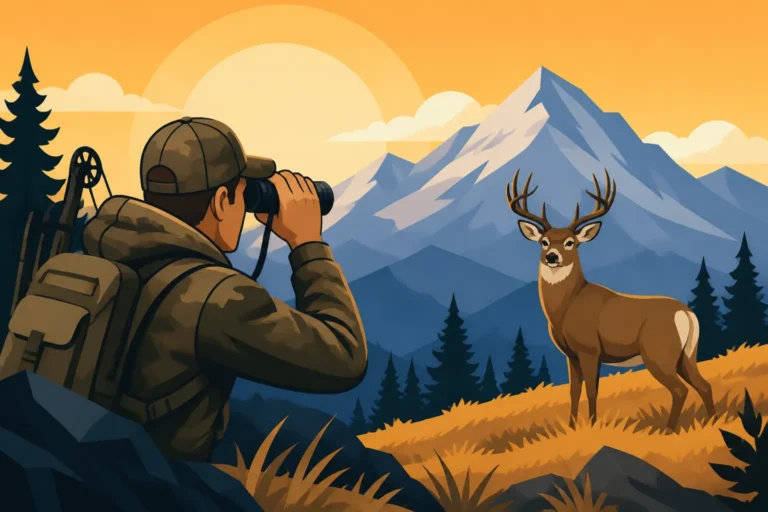
You'll need quality optics – a good pair of 10x binoculars and a spotting scope (20-60x or higher) are essential. Spend hours on high points, using your binos on a tripod to systematically glass every inch of the landscape. Once you spot a buck, assess the terrain between you and the animal. Look for any folds in the ground, dry creek beds, brush lines, or even large clumps of sagebrush that can offer concealment. Plan your route meticulously, paying close attention to the wind direction. A slight shift in wind can blow your cover. Be prepared for long, slow crawls, often on your hands and knees or even belly-crawling, sometimes for hundreds of yards. It's grueling work, but it's often the only way to beat their eyes. For more detail, consider reviewing Spot-and-Stalk Pronghorn Tactics.
Decoying and Ambush Tactics
While spot-and-stalk is king, decoying can be incredibly effective, especially during the rut. A life-sized buck decoy, or even a simple silhouette, can draw in curious or aggressive bucks who are looking to defend their territory. This tactic works best when a buck is already aware of your general presence (perhaps from a failed stalk) but hasn't fully identified you as a threat. One hunter can hold the decoy while another crawls up behind it. When the buck commits and comes into range, the decoy hunter drops it, and the shooter takes the shot.
Ambush tactics can also be effective near water sources during hot, dry periods, or along fence lines or washes that pronghorn frequently travel. This requires extensive pre-scouting to identify these key travel corridors or waterholes. Digging a small pit blind or setting up a ground blind camouflaged with natural vegetation can provide the necessary concealment. Remember, pronghorn are creatures of habit regarding water, so if you find a frequented waterhole, waiting patiently can pay off. How to Hunt Colorado Pronghorn Decoying offers more specific advice on this dynamic strategy.
E-Scouting and Public Land Navigation
The Eastern Plains are a patchwork of public and private land, making E-scouting an absolutely critical part of your preparation. Tools like GoHunt's mapping features or OnX Hunt are indispensable. Before you even set foot in the field, you should be poring over satellite imagery, identifying potential public land access points (BLM, State Trust Lands, State Wildlife Areas, or Walk-In Access properties), and looking for terrain features that could offer an advantage.
Specifically, look for subtle elevation changes, washouts, riverbeds, or areas with denser vegetation that could provide cover for a stalk. Identify adjacent private lands to understand potential escape routes for pronghorn under pressure. Use land ownership layers religiously to ensure you're always on public land or land you have explicit permission to hunt. The Colorado Walk-In Access Program is a fantastic resource for accessing private land specifically for hunting, often for pronghorn. Marking waypoints for public/private boundaries, potential glassing knobs, and water sources will save you immense time and frustration in the field. This detailed pre-hunt planning will significantly increase your odds of success. Learning How to E-Scout Colorado Units can be a game-changer for plains hunting.
Essential Gear for a Successful Eastern Plains Pronghorn Hunt
Hunting pronghorn on the Eastern Plains often means long days in exposed terrain. Your gear choices can make or break your hunt, impacting your comfort, effectiveness, and ultimately, your success. This isn't just about bringing a rifle; it's about having the right tools for the job.
Optics and Rangefinding
When hunting pronghorn, your eyes are your most important tool, and high-quality optics are an extension of those eyes. As mentioned, their vision is legendary, so you need to be able to spot them before they spot you, and often from a greater distance.
- Binoculars: A good pair of 10×42 or 12×50 binoculars are non-negotiable. Invest in the best you can afford. Brands like Vortex, Leupold, and Zeiss offer excellent clarity and low-light performance, which are crucial during those early morning and late evening hours. Having them mounted on a tripod adapter dramatically increases stability and reduces eye fatigue during extended glassing sessions.
- Spotting Scope: A 20-60x or 25-75x spotting scope is incredibly useful for identifying if an animal is a shooter buck, assessing horn length, and evaluating the terrain from a distance without disturbing the animals. A steady tripod is essential for using a spotting scope effectively.
- Rangefinder: With the open terrain and often lack of easily quantifiable landmarks, accurately judging distance can be challenging. A reliable rangefinder with a maximum range of at least 1,000 yards is a must-have, allowing you to confirm distances before taking a shot and preventing those frustrating "just missed" scenarios. Many modern rangefinders, like those from Sig Sauer or Leica, also offer angle compensation, which can be useful even on subtle plains inclines.
Clothing and Footwear Considerations
The Eastern Plains can be brutally hot in early seasons and surprisingly cold and windy in later seasons. Layering is key, regardless of the time of year.
- Clothing: Start with a good moisture-wicking base layer to manage sweat. For outer layers, durable, breathable, and quiet fabrics in camouflage patterns suited to prairie environments (tans, browns, sage greens) are ideal. Sun protection is critical: wide-brimmed hats, sunglasses, and lightweight long-sleeved shirts are a must. In colder weather, add insulating layers like a fleece jacket and a windproof, waterproof outer shell. Remember, you'll be doing a lot of crawling, so consider knee pads or durable pants that can withstand abrasion.
- Footwear: Comfortable, broken-in hiking boots with good ankle support are paramount. You'll be covering a lot of ground, often on uneven, rocky, or thorn-covered terrain. Waterproof boots are a good idea, as you might encounter dew-soaked grass or unexpected creek crossings. Many hunters also bring a pair of gaiters to protect their lower legs and keep debris out of their boots during crawls.
Firearms and Ammunition for Long Shots
Pronghorn are not large animals, but their open habitat often dictates longer shots than you might be used to in timber. Selecting the right rifle and ammunition is crucial for ethical and successful hunting.
- Rifle Caliber: While many calibers can take a pronghorn, cartridges known for flat trajectories and good ballistic coefficients are favored. Popular choices include .243 Winchester, 6.5 Creedmoor, .270 Winchester, .25-06 Remington, and .308 Winchester. These calibers offer a good balance of accuracy, manageable recoil, and sufficient energy for pronghorn-sized game at extended ranges.
- Ammunition: Choose high-quality hunting ammunition designed for accuracy and reliable expansion. Look for bullets with a good ballistic coefficient to minimize wind drift, which is a constant factor on the plains. Practice shooting from various positions, including prone, and at longer distances than you anticipate shooting in the field. Knowing your rifle's capabilities and your personal limitations is key. Carrying a bipod is highly recommended for stable shots from the prone position, which you'll frequently use.
Navigating Licenses, Seasons, and Access on the Eastern Plains
Understanding the regulatory landscape of pronghorn hunting in Colorado, especially on the Eastern Plains, is just as important as knowing how to stalk. From draw odds to public land access, there are several key factors to consider to ensure a legal and successful hunt.
Colorado Draw System and Preference Points for Pronghorn
Unlike OTC elk tags in some mountain units, pronghorn tags in Colorado are generally managed through a limited draw system. This means you'll need to apply for a tag in a specific Game Management Unit (GMU) during the annual application period, typically in April. Success in the draw depends on your preference points, the number of tags available, and the demand for that particular unit.
For many Eastern Plains units, especially those with good buck quality or abundant public land, you'll likely need some preference points to draw a buck tag. However, some units might offer decent draw odds for buck tags with fewer points, or even the possibility of drawing a doe tag with zero or one point. It's crucial to research past draw statistics, often available through Colorado Parks and Wildlife (CPW) and third-party services like GoHunt, to understand what it takes to draw in your desired GMUs. This research will help you strategize whether to build points or try for a low-point unit. More information can be found in Colorado Pronghorn Draw Explained.
Key Seasons and Regulations
Colorado offers various pronghorn seasons, primarily archery, muzzleloader, and rifle. Each season presents unique challenges and opportunities:
- Archery Season: Typically runs from late August through September, coinciding with the rut. This is a thrilling time to hunt as bucks are active and sometimes susceptible to decoying. However, getting within bow range (often 40-60 yards) on the open plains is extremely difficult and requires exceptional stalking skills. Many archers utilize decoys or ground blinds near water.
- Muzzleloader Season: Often a short window in late September or early October, right after the rut. This can be a great time as bucks are still active but not quite as wary as they will become with rifle pressure. Muzzleloaders generally have a shorter effective range than rifles, adding to the challenge of plains hunting.
- Rifle Seasons: Typically occur in October, sometimes with multiple staggered seasons. This is generally the most popular time to hunt due to the increased effective range of modern rifles. However, it also means more hunter pressure. Later seasons might see pronghorn grouped up more, but they will be highly educated.
Always consult the current Colorado Big Game Brochure from CPW for exact season dates, unit-specific regulations, and any antler point restrictions. Pay close attention to unit boundaries, as a slight misstep can lead to a violation.
Public Land Access and Walk-In Areas
Securing access is arguably the biggest hurdle for hunting pronghorn on the Eastern Plains. The vast majority of the plains are privately owned. However, there are still significant opportunities on public lands and through specific access programs.
- BLM and State Trust Lands: These are your primary public land targets. BLM lands are often vast but can be isolated or landlocked, requiring careful E-scouting to identify legal access routes. State Trust Lands (STLs) are leased for various purposes, including grazing, but often allow public hunting access, though special rules may apply (e.g., foot access only). Always check current GoHunt maps or CPW resources for specific STL access regulations.
- State Wildlife Areas (SWAs): Colorado has numerous SWAs on the plains, some of which hold good numbers of pronghorn. These are often smaller than BLM tracts but can provide consistent hunting opportunities.
- Colorado Walk-In Access Program (WIA): This is a fantastic program that leases hunting access on private lands for public use. Many WIA properties are on the Eastern Plains and are specifically managed for pronghorn. These lands are generally open during specified seasons and often require only foot access. You'll need to check the WIA atlas annually, as properties can change. This program is a lifeline for many plains hunters, and you should definitely explore the available properties.
Navigating these different land designations and access rules requires diligent research using CPW's online resources and reliable mapping apps. Always respect private property boundaries and seek permission if you wish to hunt private land that isn't enrolled in a public access program. This is paramount for maintaining good hunter-landowner relations. You'll find a wealth of information regarding this topic in our Eastern Plains Hunting Access guide.
| Resource Type | Description | Best Use Case |
|---|---|---|
| CPW Big Game Brochure | Official annual publication with season dates, regulations, draw codes, hunt units, and antler point restrictions. | Mandatory for legal compliance and understanding all rules. |
| Colorado Hunting Atlas | Online interactive map showing public/private land ownership, GMU boundaries, WIA properties, State Trust Lands, and SWAs. | Essential for E-scouting and identifying legal hunting access. |
| GoHunt/OnX Hunt | Subscription-based mapping apps providing detailed land ownership layers, topographical maps, satellite imagery, and GPS functionality, often with more user-friendly interfaces than the CPW atlas. | Advanced E-scouting, in-field navigation, and real-time boundary verification. |
| CPW Draw Recap Reports | Annual reports detailing draw odds, preference points required, and tag numbers for specific units, helping hunters strategize future applications. | Planning draw strategies and estimating point requirements for desired units. |
| Colorado Walk-In Access | Program website and interactive map showing specific private land parcels available for public hunting, primarily for foot access. | Finding accessible private land, particularly for pronghorn, on the Eastern Plains. |
Common Challenges and How to Overcome Them on the Eastern Plains
Hunting pronghorn on the Eastern Plains is rewarding precisely because it's challenging. Understanding the common roadblocks you'll face and having strategies to overcome them will significantly boost your success rate.
Dealing with Extreme Weather and Open Exposure
The Eastern Plains are infamous for their unpredictable and often extreme weather. From blistering heat and intense sun in early archery season to frigid winds and sudden snow in late rifle seasons, you need to be prepared for everything. The lack of natural cover also means you're constantly exposed to the elements.
- Sun and Heat: In late August and early September, temperatures can easily soar into the 90s or even 100s. Hydration is non-negotiable. Carry more water than you think you'll need, and consider electrolyte supplements. Dress in lightweight, breathable, light-colored clothing to reflect heat, and use a wide-brimmed hat and sunscreen religiously. Plan your hunts around the coolest parts of the day – dawn and dusk – and be prepared for pronghorn to bed down during midday heat.
- Wind: Wind is a constant companion on the plains, and it cuts both ways. It can be a blessing, helping to mask your sound and scent during a stalk. However, it can also make shooting challenging, drastically affecting bullet trajectory. Practice shooting in windy conditions and understand your rifle's windage adjustments. Wind can also be bitterly cold, so even on mild days, a windproof layer is essential.
- Cold and Snow: Later seasons can bring significant cold snaps and snow. Layering becomes critical, as does having waterproof and windproof outer layers. Pack extra gloves, hats, and warm socks. Snow can sometimes make tracking easier, but it also makes visibility higher for pronghorn, and can make travel difficult. Always check the forecast and pack accordingly, assuming conditions can change rapidly.
Overcoming Hunter Pressure and Wary Animals
Public land on the Eastern Plains, especially during rifle seasons, can see significant hunter pressure. Pronghorn, being incredibly intelligent and wary, quickly adapt to this pressure, making them even harder to approach.
- Finding Unpressured Areas: This is where your E-scouting and knowledge of specific GMUs come into play. Look for public land parcels that are harder to access, such as those requiring a longer walk, or those that are small and often overlooked. Sometimes, the best spots are those just off the beaten path, a mile or two from the nearest road. Using tools like GoHunt's public land layers can help identify these hidden gems. You might also find less pressure in specific Best Colorado Units with Low Hunter Pressure.
- Hunting Smart: When animals are pressured, they become more nocturnal or seek refuge on private land. Focus your hunting efforts during the low-light hours of dawn and dusk, and be prepared to put in the effort to get away from roads and other hunters. Sometimes, sitting and glassing for an extended period, waiting for animals to return to a public area from private land, can be effective.
- Patience and Persistence: These are your greatest virtues. Don't get discouraged by failed stalks or seeing pronghorn vanish over the horizon. Every attempt is a learning experience. Observe how they react, how the wind plays, and what types of cover (or lack thereof) actually work. It often takes multiple stalks and a bit of luck to finally get within range of a trophy buck. Remember, these animals are highly evolved to evade detection in their environment.
Managing Long Shot Opportunities
Given the open terrain, you'll inevitably encounter situations where your best, or only, shot opportunity is at an extended range. Being prepared for these ethical challenges is crucial.
- Practice, Practice, Practice: This cannot be stressed enough. Know your rifle, know your ammunition, and know your personal maximum ethical shooting range. Practice regularly from field positions (prone with a bipod, kneeling, sitting) at 200, 300, 400 yards, and even further if you intend to shoot beyond that. Understand bullet drop and wind drift for your specific caliber and load.
- Positional Shooting: On the plains, you'll rarely have a tree to brace against. A bipod is almost mandatory for a stable prone shot. Many hunters also carry shooting sticks for stable kneeling or standing shots, which can be critical if you need to shoot quickly over a rise.
- Wind Calculation: Wind is the nemesis of long-range shooting on the plains. Learn to read wind flags, vegetation, and mirage to estimate wind speed and direction across your bullet's path. Tools like ballistic calculators (often integrated into rangefinders or available as smartphone apps) can help, but nothing replaces real-world experience. If the wind is too strong or unpredictable for an ethical shot, don't take it. Walk away and try again another day, or on another animal. Ethical hunting means knowing when not to shoot.
Disclaimer
Please be aware that hunting regulations, season dates, and land access rules can change frequently. Always consult the most current Colorado Parks and Wildlife (CPW) regulations and maps before planning and executing any hunt. This guide is for informational purposes only and should not replace official sources or responsible hunting practices.