Colorado Pronghorn Speed and Senses
If you've ever spent a morning glassing the vast, open plains of Colorado for pronghorn, you know the frustration: one minute you see a buck, the next it's a speck on the horizon, seemingly vanishing into thin air. It’s not magic; it’s a testament to the incredible speed and unparalleled senses that make these animals one of the most challenging and rewarding hunts in the state. This guide will take a deep dive into what makes Colorado pronghorn such masters of their open-country domain, exploring their physical prowess and sensory capabilities, and, most importantly, how understanding these traits can sharpen your hunting strategy.
Unpacking the Incredible Speed of Colorado Pronghorn
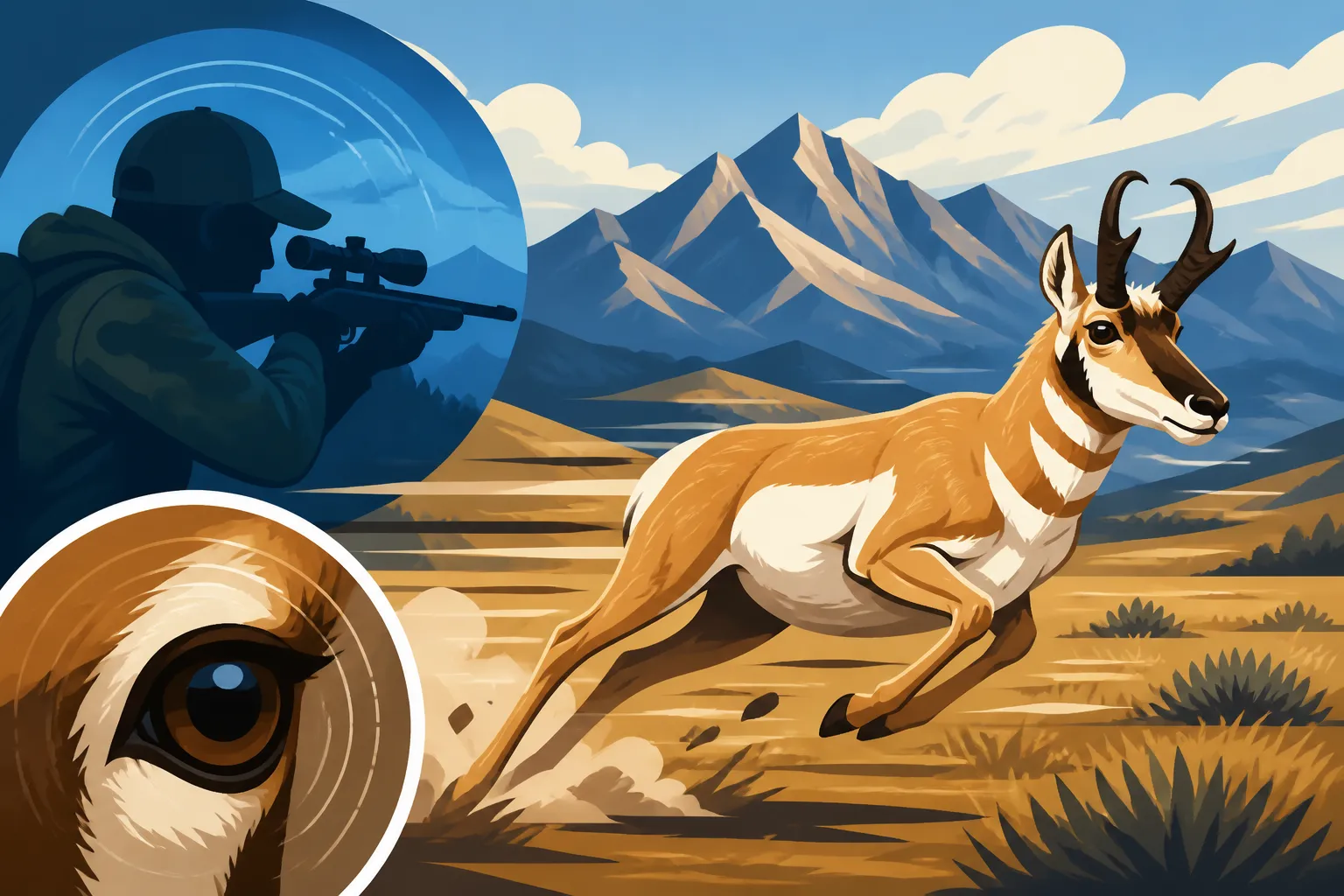
When people think of speed in the animal kingdom, they often picture cheetahs. But the pronghorn, often mistakenly called an antelope, is the fastest land animal in North America, and it's an absolute marvel to witness on the Colorado plains. Their entire physiology is a finely tuned machine built for blistering speed and remarkable endurance.
Built for Burst and Sustained Speed
Pronghorn are not just fast in short bursts; they can maintain incredible speeds over long distances. While a cheetah can hit close to 70 mph, it tires quickly. A pronghorn, however, can reportedly reach speeds of up to 60 miles per hour over short distances and comfortably cruise at 30-40 mph for miles without showing signs of fatigue. This sustained speed is truly what sets them apart. Imagine trying to keep up with that pace!
Their bodies are perfectly adapted for this. They have unusually large hearts and lungs for their body size, allowing for exceptional oxygen uptake. Their leg bones are light but strong, and their hooves are cushioned for high-impact running on hard, unforgiving terrain. Unlike deer or elk, which might use dense timber or steep mountainsides for escape, pronghorn rely on open space and sheer velocity. This evolutionary advantage developed in response to ancient predators like the American cheetah, which are now extinct. Today, their primary predators, coyotes and bobcats, don't stand a chance in a straight chase across the plains. This makes the vast, flat expanses of Colorado's Eastern Plains and basins like North Park ideal habitat for them. If you’re interested in their habitat, you might want to read our full guide on Colorado Pronghorn Habitat by Elevation.
The Dynamics of the Chase: Outrunning Danger
When a pronghorn senses danger, it doesn't just run; it executes a calculated escape. They often utilize subtle dips, swales, or even just tall sagebrush to break a predator's line of sight, even while running at full tilt. Their running style is characterized by a fluid, almost bouncing gait, which helps them cover ground efficiently and navigate uneven terrain without losing momentum.
For a hunter, this means that even if you think you’ve got them pinned, a pronghorn can put multiple miles between you and them in a matter of minutes. They don't just run away; they run to a new vantage point, often stopping to observe their pursuer from a safe distance, making a continuous, direct chase a futile effort. Understanding this behavior is crucial for anyone planning to hunt them, as outlined in our How to Hunt Colorado Plains for Pronghorn guide. You need to anticipate their escape routes and cutting them off is often more effective than simply pushing them.
The Unrivaled Senses of the Pronghorn
While their speed is legendary, it's the pronghorn's senses, particularly their vision, that truly makes them a formidable opponent in the open country. They are nature's ultimate sentinels, perfectly equipped to detect the slightest threat across vast distances.
Vision: The Ultimate Lookout
A pronghorn’s eyes are absolutely massive in proportion to its skull, almost the size of a horse's eyes. These incredible optical instruments provide them with a staggering field of view, estimated to be around 300 degrees. This means they can see nearly all around them without turning their heads, making it incredibly difficult to approach undetected from any angle.
More impressively, their vision is often likened to looking through a pair of powerful binoculars. They can reportedly detect movement and distinguish objects up to four or five miles away, and some experts suggest even further. Imagine trying to stalk an animal that can spot you from five miles out! This superior eyesight allows them to identify threats long before they ever get close enough to be a danger. For a hunter, this is the primary obstacle. Spot-and-stalk hunting for pronghorn becomes an exercise in extreme patience, meticulous planning, and leveraging every tiny piece of cover. Before you even head out, utilizing platforms like GoHunt for E-scouting can help you identify subtle terrain features that might offer a concealment advantage, or perhaps areas where you can leverage How to Glass Big Colorado Basins effectively.
Hearing and Smell: Secondary but Crucial
While vision is undoubtedly their most acute sense in the wide-open spaces, a pronghorn’s hearing and sense of smell are still highly developed and play critical roles in their survival.
Their large, mobile ears can swivel independently, allowing them to pinpoint sounds from various directions without giving away their position. While they might not hear a whisper from miles away, a misplaced crunch of a boot on dry grass, the clink of gear, or a voice carried on the wind can instantly alert them. In an environment where visual detection is paramount, auditory cues often serve as confirmation or a final alarm for a perceived threat that their eyes might have already registered. When you're trying to sneak within range, absolute silence is paramount.
Similarly, their sense of smell, though perhaps less relied upon than their sight in truly open country, is excellent. Like most ungulates, they can detect human scent from a considerable distance. If the wind shifts and carries your scent toward a pronghorn, they will pick it up, often leading to them fleeing before you even know they detected you. This makes playing the wind absolutely non-negotiable, even when stalking. On the vast Colorado plains, winds can be notoriously unpredictable, swirling and changing direction without much warning. Always positioning yourself downwind, or at least crosswind, is essential. This is particularly true if you’re planning to hunt Colorado Pronghorn Water Holes, where your scent can linger.
Strategies for Overcoming Pronghorn Advantages
Hunting pronghorn is a chess match against a master opponent. You can't outrun them, and you can rarely out-see them in their domain. Success hinges on understanding their strengths and exploiting their weaknesses.
Leveraging Terrain, Wind, and Patience
Given their incredible vision, the most effective strategy for getting close to a pronghorn is to eliminate their ability to see you. This means using every available piece of cover, no matter how small. A two-foot high sagebrush, a subtle depression in the landscape, or even just a slight rise in elevation can be your best friend.
A successful stalk often involves long crawls on your hands and knees, sometimes for hundreds of yards, to stay below their line of sight. It requires immense patience and meticulous planning. Before starting a stalk, observe the animals' behavior, feeding patterns, and direction of travel. Use your binoculars or spotting scope from a distance to plan your route, identifying every potential piece of cover. GoHunt's detailed topographic maps are invaluable for this pre-hunt scouting, allowing you to identify drainages, cuts, and ridges that might provide concealment.
Furthermore, always pay close attention to the wind. Even if you're crawling, your scent can give you away. Wind indicators like milkweed fluff or a small puff bottle are essential. If the wind isn't right for a stalk, be patient and wait for a change, or move to a different location where the wind is in your favor. Never compromise on scent control; it's a critical, though often secondary, defense for the pronghorn.
Decoying and Ambush Tactics
Sometimes, going head-to-head with their senses isn't the only option. Decoying is a highly effective tactic, especially during the rut. Pronghorn are incredibly territorial, and a life-size buck decoy can often provoke an aggressive response from a dominant buck. You can either use a stationary decoy to lure a buck into range, or, more dynamically, use a "stalker" decoy where one hunter carries the decoy to draw the buck's attention while another hunter (or the decoy holder themselves) moves into a shooting position behind it. This tactic effectively leverages their visual acuity against them by presenting a challenge they feel compelled to confront. Learn more about this in our Colorado Pronghorn Decoying guide.
Ambush tactics can also be effective, particularly near water sources or along established travel corridors. Pronghorn need to drink, and while they can go for extended periods without water, especially if foraging on succulent plants, they will eventually visit water holes. Setting up a ground blind or finding natural cover near a known water source, especially in drier parts of the season, can be a viable strategy. Similarly, identifying funnels or pinch points in the terrain that pronghorn frequently use to move between feeding and bedding areas can provide ambush opportunities. This strategy requires extensive pre-scouting, often with tools like GoHunt, to identify these critical locations and understand typical movement patterns.
Understanding Pronghorn for a Successful Colorado Hunt
When you're chasing Colorado pronghorn, you're engaging with an animal that is literally built for survival in wide-open, predator-filled landscapes. Their exceptional speed and unparalleled vision are not just interesting facts; they are the core elements of their existence and the biggest challenges for any hunter.
The Pronghorn's Psychological Edge
Beyond their physical and sensory gifts, pronghorn possess a keen awareness and wariness that is almost psychological. They live their lives constantly on alert, scanning the horizon, assessing threats. This constant vigilance means they often react to the slightest deviation in their environment. A truck parked a little too close, an unfamiliar sound, or even a change in the silhouette of a distant object can trigger their alarm system.
This awareness means that "getting away with it" is rarely an option. They are not forgiving of mistakes. Every step, every movement, every breath needs to be calculated. Their behavior, such as their tendency to run a short distance and then stop to look back, is an ingrained survival mechanism. This characteristic can sometimes be used by a patient hunter, allowing them to gain a little more ground after an initial spook, but it's a risky game.
Learning from the Landscape
The best pronghorn hunters learn to read the landscape like a book, understanding how subtle changes in elevation, vegetation, and wind direction will influence the animals. The vastness of the Colorado plains, while daunting, also offers unique opportunities. A seemingly flat plain might have a shallow drainage invisible to the naked eye from a distance, but perfect for a low crawl. A patch of tall prairie grass might offer the only chance for a final approach.
It's a continuous process of observation, adaptation, and patience. Tools like GoHunt can give you a bird's-eye view, but there’s no substitute for boots on the ground, learning the nuances of a specific unit, and understanding how these magnificent animals utilize their speed and senses to thrive in their domain. For a more general overview of these animals, check out our Colorado Pronghorn Behavior and Biology guide.
Ultimately, hunting Colorado pronghorn is a deeply rewarding experience precisely because of how challenging they are. It’s a hunt that tests your stalking skills, your patience, and your respect for an animal that is a true icon of the American West. By deeply understanding their speed and senses, you're not just a better hunter; you're a more appreciative observer of one of nature's most incredible creations.
| Sensory Attribute | Pronghorn Capability | Hunting Implication |
|---|---|---|
| Top Speed | 60+ mph | Impossible to outrun; direct chases are futile. Must anticipate routes or use ambush/decoy tactics. |
| Sustained Speed | 30-40 mph (for miles) | Can cover vast distances quickly and easily evade prolonged pursuit. Requires patient, calculated stalks, or strategic positioning. |
| Vision Range | Detects up to 4-5+ miles | Spots hunters from extreme distances. Requires meticulous low-profile stalks, extensive use of terrain for concealment, and careful scouting. |
| Field of View | Approximately 300 degrees | Difficult to sneak up from any angle. Must use extreme caution for any movement, even peripheral. Cover is essential for all approach angles. |
| Hearing | Acute | Detects subtle sounds. Minimal noise is critical during a stalk. Avoid snapping twigs, clinking gear, or loud whispers. |
| Smell | Excellent | Always be downwind or at least crosswind. Essential to use scent control measures. Wind direction changes must be monitored constantly. |
Disclaimer
Always consult the most current Colorado Parks and Wildlife (CPW) regulations before planning any hunting trip. Seasons, regulations, and unit boundaries can change, and it is the hunter's responsibility to know and follow all applicable laws. This guide provides general information and should not be considered a substitute for official CPW resources.