Colorado Small Game Hunting
Many folks dreaming of hunting in Colorado immediately picture majestic bull elk bugling in the high country or massive mule deer bucks silently slipping through the timber. And while those big game pursuits are undeniably a huge part of the allure, it's easy to overlook an incredible, often more accessible, and equally rewarding adventure: Colorado small game hunting. Many hunters, especially those new to the state or new to hunting altogether, feel overwhelmed by the complexity of big game draws and the physical demands. This comprehensive guide aims to demystify small game hunting in Colorado, showing you just how many fantastic opportunities await, helping you understand the regulations, and equipping you with the knowledge to get out there and enjoy the vast wilds, no matter the season.
Demystifying Colorado's Small Game Landscape
When you hear "small game," what comes to mind? For many, it's just rabbits and squirrels. But here in Colorado, our small game landscape is incredibly diverse, offering a wide array of species that can challenge even the most seasoned hunter. It’s a wonderful way to experience the state's varied habitats, from the plains to the alpine.
Defining Small Game Species in Colorado
Colorado Parks and Wildlife (CPW) categorizes small game broadly, and it includes quite a few animals you might not immediately think of. Beyond the obvious, like cottontail rabbits and various squirrel species, our mountains hold unique treasures like snowshoe hares, elusive grouse, and the incredible white-phased ptarmigan. These species are often found in distinct habitats, requiring different hunting approaches, which makes the pursuit all the more engaging.
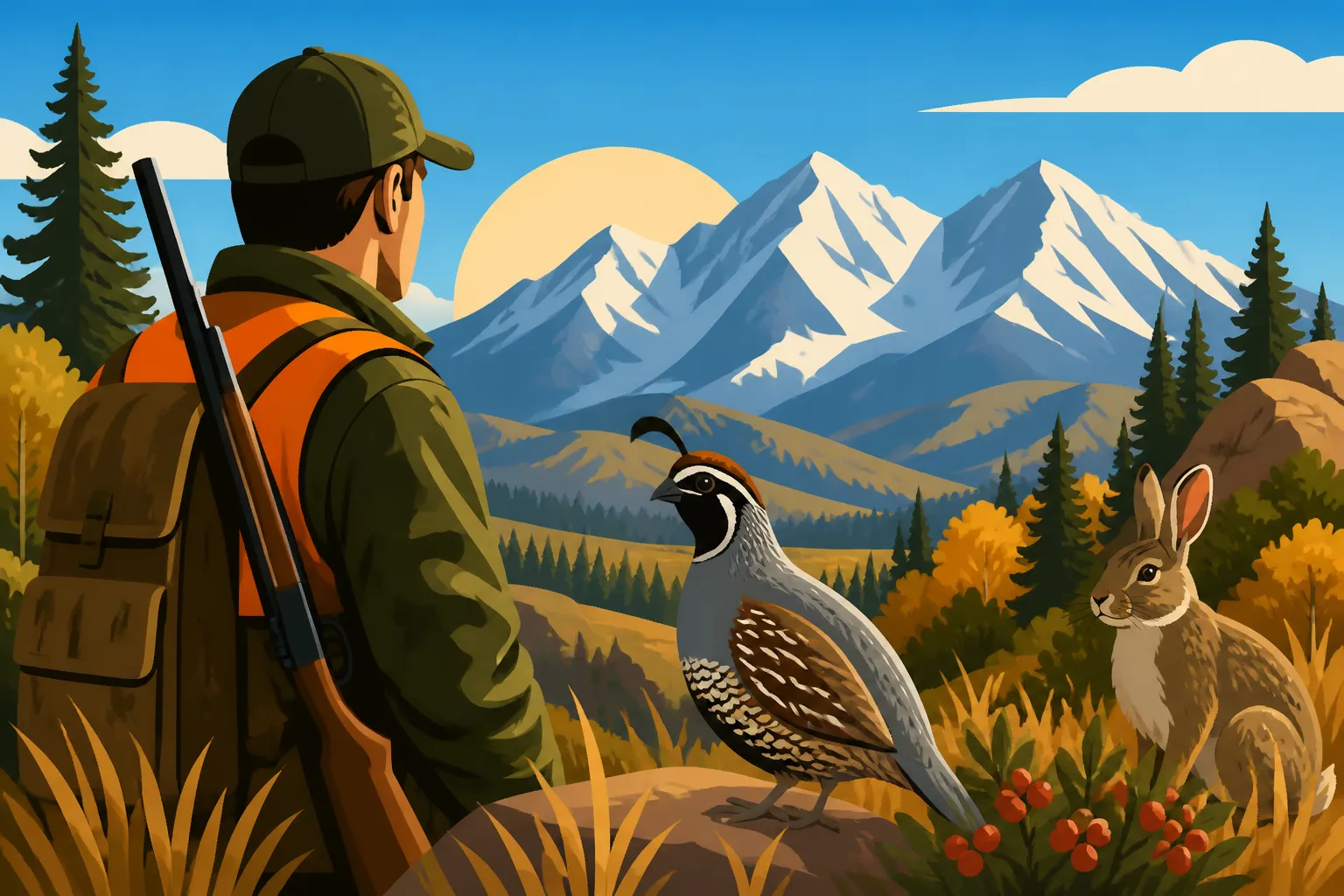
Take the cottontail rabbit, for example. These prolific little dynamos are found throughout the state, from sagebrush flats to river bottoms, and offer a fantastic opportunity for new hunters to learn basic tracking and shooting skills. Their season is long, and they're relatively forgiving targets. Then there are squirrels – Abert's, fox, pine, and rock squirrels each occupy their own niches, providing fun, fast-paced action. Abert's squirrels, with their distinctive tufted ears, are often found in ponderosa pine forests, while the smaller pine squirrels (red squirrels) dominate the lodgepole and spruce-fir stands higher up. As you ascend in elevation, especially in dense conifer forests, you might encounter snowshoe hares. These masters of camouflage turn white in winter, making them a true challenge to spot against the snow, but also providing a fantastic winter hunting opportunity. And for those willing to trek into the high country, the pursuit of dusky grouse and white-tailed ptarmigan offers an unforgettable experience. Dusky grouse (often called blue grouse) are typically found in spruce-fir forests, while ptarmigan are truly alpine birds, living above treeline. Successfully hunting these birds requires physical exertion and keen eyesight, making them a true trophy for any small game hunter.
Exploring Predator and Furbearer Opportunities
While not always grouped under the "small game" umbrella in the same way as rabbits or grouse, Colorado offers robust opportunities for hunting predators and furbearers, which often fall into a similar hunting style category and can be pursued with similar gear. These hunts can be incredibly exciting and contribute to wildlife management efforts by helping control populations of certain species.
Coyotes are perhaps the most popular predator to pursue, found everywhere from the eastern plains to the deep mountain valleys. Their keen senses and wariness make them a significant challenge, often requiring advanced calling techniques and patience. Hunters can use various calls, from distress sounds to territorial barks, to try and bring these intelligent canids into range. Fox, including red and gray species, also offer exciting hunting opportunities, often found in similar habitats to coyotes but can be a bit more elusive. Bobcat hunting is another thrilling option, requiring careful scouting and often the use of hounds, although calling can be effective in certain situations. Raccoons, known for their nocturnal habits, provide a unique challenge, often hunted with dogs at night or during the day near water sources. These hunts aren't just about the thrill; they also offer a chance to learn about animal behavior and hone your woodsmanship in ways that translate directly to big game hunting. The seasons for these species are often quite generous, allowing for extended hunting opportunities throughout the year, especially outside of the primary big game seasons.
Waterfowl and Upland Bird Diversity
Beyond the furry critters, Colorado boasts exceptional waterfowl and upland bird hunting. If you've never experienced the thrill of ducks cupping their wings into your decoys or the explosive flush of a pheasant, you're missing out on some truly incredible experiences. The state is uniquely positioned on the Central Flyway, making it a prime destination for various duck and goose species.
From mallards and pintails to Canada geese and snow geese, the opportunities for waterfowl are abundant, particularly along major river systems like the South Platte, Arkansas, and Colorado Rivers, and in agricultural areas with accessible ponds and reservoirs. This type of hunting often involves decoys, blinds, and skilled calling, creating a social and engaging experience. For detailed insights into these pursuits, check out our guide on Colorado Waterfowl Hunting. Upland birds add another layer of excitement. Pheasants thrive in the agricultural fields of the eastern plains, offering fast-paced action, especially with a good bird dog. Quail, including both bobwhite and scaled varieties, are also found in these areas, providing a different challenge with their covey behavior. Sharptail grouse, typically found in native grasslands, are another exciting upland option. And for those willing to put in the miles, the mountain grouse species mentioned earlier – dusky, ruffed, and ptarmigan – offer a truly wild bird hunting experience in stunning high-country settings. Each of these species demands different tactics, from walking cornfields to traversing rocky slopes, ensuring that every hunt is a fresh adventure.
Why Small Game Hunting is a Colorado Gem
Many hunters overlook small game, often seeing it as secondary to big game. But trust me, as someone who’s spent countless hours chasing everything from rabbits to elk, small game hunting in Colorado is far more than just a consolation prize. It’s an invaluable, enriching, and often delicious pursuit that offers unique advantages for hunters of all experience levels.
Accessibility and Entry Point for New Hunters
One of the biggest hurdles for new hunters, or even those new to a state like Colorado, is the sheer complexity and effort involved in drawing a big game tag. Preference points, draw odds, unit selection – it can feel like you need a Ph.D. in statistics just to get started. Small game hunting, however, largely bypasses this frustration. Many small game species have over-the-counter (OTC) licenses, meaning you can buy them directly without going through a draw. This drastically lowers the barrier to entry and makes getting out into the field much simpler.
For example, a small game license, combined with a Habitat Stamp, is often all you need for rabbits, squirrels, and many upland bird species. There's no agonizing wait for draw results, no building points for years. You can decide to go hunting on a whim, pick up your license, and hit the field, often the very same day. This accessibility makes it an ideal starting point for beginners, allowing them to focus on fundamental hunting skills like safe firearm handling, tracking, reading terrain, and ethical shooting, without the added pressure of a once-in-a-lifetime big game tag. It's also less physically demanding than, say, a Colorado Backcountry Hunting Guide for elk, making it a great option for families or those with mobility limitations. You can often hunt small game closer to home, on public lands that are easily accessible by vehicle, eliminating the need for extensive packing and arduous hikes.
Year-Round Opportunity and Meat for the Table
Unlike big game seasons which are often limited to specific, short windows, small game seasons in Colorado are generally much longer, with some species open for nearly half the year, and others, like coyotes, open year-round. This extended accessibility means you can keep your skills sharp and enjoy time afield throughout much of the year, providing a fantastic way to beat the off-season blues.
Imagine enjoying fresh wild game well into winter, long after the last rifle season for elk has closed. Cottontails, snowshoe hares, and various upland birds offer excellent table fare, providing lean, organic meat for your freezer. There’s a profound satisfaction that comes from putting wild food on your family’s table, and small game provides a consistent opportunity to do just that. A single rabbit or a few grouse can make a delicious meal, and because they are often more numerous than big game, you have a better chance of bringing home dinner. Plus, the sheer variety means you can experiment with different cooking methods and flavors. From rabbit stew to roasted grouse, these animals are not only fun to hunt but incredibly tasty too. The opportunity to provide for yourself and your family is a core tenet of hunting, and small game delivers on this promise reliably.
Sharpening Skills for Big Game Pursuits
While it might seem like a different world, small game hunting is an incredible training ground for big game pursuits. The skills you hone chasing rabbits and grouse directly translate to success when you’re after elk or mule deer. Think about it: patience, stealth, keen observation, understanding wind direction, and shot placement are critical whether you’re targeting a squirrel or a bull elk.
For instance, still-hunting through timber for grouse teaches you how to move quietly and scan ahead, picking apart cover for subtle signs of game – skills that are absolutely vital when you're trying to How to Still-Hunt Colorado Timber for deer or elk. Following rabbit tracks in the snow helps you understand animal movement patterns and how they utilize cover, which is invaluable for predicting how larger game will react to changes in terrain or pressure. Learning to estimate distances and make quick, accurate shots on fast-moving birds improves your proficiency with a firearm, building confidence for that critical shot on a trophy animal. Even the art of "reading the landscape" and identifying promising habitat translates directly. A hunter who understands why a cottontail might prefer a particular brush pile is better equipped to understand why an elk might bed on a specific north-facing slope. Small game hunting allows for more repetitions in these fundamental skills, making you a more effective and ethical hunter across the board.
Navigating Regulations and Seasons for Small Game
Understanding Colorado's hunting regulations can feel like deciphering ancient hieroglyphs sometimes, especially with all the various licenses, stamps, and season dates. But don't let that deter you from the fantastic opportunities that Colorado small game hunting presents. It's crucial to do your homework every year, as regulations can change. Always consult the current Colorado Parks and Wildlife (CPW) small game and waterfowl brochures, available online or at license agents.
Understanding Licensing and Required Stamps
Before you even step foot in the field, you need the proper paperwork. For most small game species in Colorado, you'll need a valid small game hunting license. This isn't usually something you draw for; it's an over-the-counter purchase. However, it's not the only thing you'll need, and missing a critical stamp could land you in hot water.
In addition to your small game license, you'll almost certainly need a Colorado Habitat Stamp. This stamp is required for anyone ages 18-64 purchasing an annual hunting or fishing license, and its proceeds go directly to preserving wildlife habitat across the state. It’s a small price to pay for the incredible conservation efforts that benefit all hunters and wildlife enthusiasts. For a deeper dive into this, check out our article on the Colorado Habitat Stamp Explained. If you plan on hunting migratory birds like ducks, geese, doves, or snipe, you’ll also need to purchase a Colorado Migratory Bird Stamp and obtain a Harvest Information Program (HIP) number. The HIP number is free and simply requires you to answer a few questions about your hunting success from the previous year, helping wildlife agencies gather vital data. For specific rules regarding hunter education, especially if you're new to hunting, make sure you understand the Colorado Hunter Education Requirement. Young hunters often have specific regulations and opportunities, so keep an eye out for youth-specific seasons or mentored hunting programs.
Species-Specific Season Dates and Bag Limits
This is where the detailed planning comes in. While the small game license covers many species, the season dates and bag limits vary significantly by animal. You can't just assume what applies to rabbits also applies to grouse or ducks. Failing to adhere to these specifics can result in serious penalties, so meticulous attention to the annual regulations is paramount.
For cottontail rabbits, the season is typically long, often running from early fall well into late winter or early spring, with generous daily bag limits. Squirrels also enjoy extended seasons. Snowshoe hares generally have a season that aligns with colder months, making them a true winter pursuit. Upland birds like pheasants and quail have specific, shorter seasons, usually in the late fall, often tied to habitat conditions and breeding cycles. Mountain grouse (dusky and ruffed) typically open in early September and run through the general rifle seasons. White-tailed ptarmigan usually share similar early-season dates but might close earlier, requiring a separate tag that can be drawn or purchased OTC depending on the unit. Waterfowl seasons are set federally and then adapted by the state, usually having early and late splits, with varying bag limits for different duck and goose species. It's also important to note that certain units or State Wildlife Areas might have specific restrictions or closures, so always double-check the details for your chosen hunting location. A quick example would be the season dates for Colorado Cottontail and Jackrabbit Hunting, which are often quite generous compared to specific bird seasons like for Colorado Dusky Grouse Hunting or Colorado Ptarmigan Hunting.
Public Land Access and Regulations
Colorado boasts an incredible amount of public land – National Forests, BLM lands, and State Wildlife Areas (SWAs) – all offering fantastic opportunities for small game hunters. However, just because it's public doesn't mean there aren't rules, and understanding these is key to a successful and legal hunt.
Our state's vast Colorado Public Land Hunting Guide includes millions of acres managed by the Bureau of Land Management (BLM) and the U.S. Forest Service, often referred to as Colorado National Forest Hunting Guide. These lands are generally open to hunting, but it’s critical to verify boundaries. Using a reliable mapping app like GoHunt or onX Hunt can be incredibly helpful for identifying public land boundaries, private land inholdings, and even landlocked public parcels. Remember that many public lands have specific rules regarding vehicular access, camping, and even discharge of firearms near developed areas or roads. State Wildlife Areas, or Colorado State Wildlife Areas Hunting, are another fantastic resource. These areas are specifically managed for wildlife and often offer prime habitat for small game and birds. However, SWAs often have unique regulations, such as walk-in only access, restrictions on dog use, specific shooting hours, or even closures during certain times of the year to protect nesting birds or migrating waterfowl. Always check the SWA-specific regulations, which are usually posted at entrance points and detailed in the CPW brochures. Respecting private land boundaries is paramount. Even if a rabbit hops onto private land, you cannot pursue it without permission. Always err on the side of caution and know exactly where you are.
Essential Gear and Proven Tactics for Small Game Success
Hunting small game in Colorado isn't just about bagging dinner; it's about connecting with the land, understanding animal behavior, and constantly refining your skills. Having the right gear and knowing how to employ effective tactics will dramatically increase your enjoyment and success rate.
Firearms and Ammunition Choices
The beauty of small game hunting is its versatility in firearm choice. Depending on your target species and personal preference, you have a wide array of options, each with its own advantages.
For feathered game like grouse, pheasants, and waterfowl, a shotgun is king. A 12-gauge is perhaps the most versatile, capable of handling everything from doves to geese with various shot sizes. A 20-gauge offers a lighter carry and less recoil, perfect for smaller hunters or those who prefer a quicker swing. For upland birds, smaller shot sizes like 6 or 7.5 are common, while for larger waterfowl, 2 or BB steel shot (lead is prohibited for waterfowl) is more appropriate. For furry critters like rabbits and squirrels, a .22 caliber rimfire rifle is a classic choice. Its light recoil, accuracy, and quiet report make it ideal for precise shots without excessive meat damage. Many hunters also opt for air rifles in .22 or .25 caliber for small game, especially where firearm discharge might be restricted or noise is a concern. For predators like coyotes, a centerfire rifle such as a .223 Remington or a .22-250 Remington is more suitable, offering the range and power needed for these wary animals. Always ensure your chosen firearm is sighted in and you're comfortable with its operation. When selecting ammunition, match it to your target – small shot for small birds, larger shot for waterfowl, and appropriate bullet types for various mammals.
Optics, Apparel, and Beyond
Beyond your primary firearm, a few key pieces of gear will make your small game hunt much more productive and enjoyable. This isn't just about comfort; it's about efficiency and safety.
Good optics, even for small game, can be invaluable. A pair of 8x or 10x binoculars can help you spot subtle movements in dense cover, identify distant birds, or confirm public land boundaries on your maps. While you might not need the high-end, long-range optics used for Colorado Mule Deer Hunting: Spot-and-Stalk Tactics, a decent pair will enhance your experience. Layered clothing is crucial in Colorado's unpredictable weather. You might start a morning hunt in freezing temperatures and end up shedding layers by midday. Think moisture-wicking base layers, insulating mid-layers, and a waterproof/windproof outer shell. For mountain hunts targeting grouse or ptarmigan, sturdy hiking boots are a must – the same type you might use for Best Boots for Colorado Elk Hunting. A comfortable backpack, even a small daypack, is essential for carrying water, snacks, extra layers, and, hopefully, your harvested game. Consider a game vest for bird hunting, which provides convenient storage for shells and a large, easily accessible pouch for birds. If you're hunting with a dog, ensure you have appropriate gear for them, including a collar, leash, water, and perhaps even a protective vest if hunting in thick brush. Safety items like a first-aid kit, a whistle, and navigational tools (GPS or map/compass) should always be in your pack.
Effective Hunting Strategies
Small game hunting, while often less complex than big game, still benefits greatly from strategic planning and execution. The tactics you employ will depend heavily on the species you're pursuing and the terrain you're hunting.
For rabbits and squirrels, still-hunting through their preferred cover – thickets, brush piles, or timber edges – is highly effective. Move slowly, pause frequently, and scan every inch of cover for movement or tell-tale shapes. If you have a good rabbit dog, that's another fantastic option, as they can flush rabbits from dense cover you might otherwise miss. For mountain grouse and ptarmigan, it's often a combination of still-hunting and flushing. Walk slowly through their preferred spruce-fir or alpine habitats, pausing to listen and scan. When a bird flushes, be ready for a quick shot. For upland birds like pheasants and quail, a bird dog is almost indispensable. A good pointer or flusher can cover ground efficiently and locate birds that are otherwise incredibly difficult to find. Without a dog, systematic walking of cover (such as cornfields or CRP grasses) with multiple hunters can work to flush birds. For waterfowl, decoying and calling are key. Set up a spread of decoys in a high-traffic area, position yourself in a well-concealed blind, and use calls to entice birds within range. Understanding the nuances of How to Call Elk in Colorado for big game is similar to mastering duck and goose calls for waterfowl – it’s all about mimicking their language to draw them in. For coyotes and other predators, calling is the primary method. Using electronic or mouth calls to mimic distress sounds or territorial challenges can bring them in close. This requires immense patience and an understanding of wind direction, as coyotes have an incredible sense of smell.
Where to Find and How to Scout Colorado's Small Game Hotspots
Finding small game in Colorado is all about understanding their habitat preferences and effectively using modern tools combined with good old-fashioned boots-on-the-ground scouting. The state is vast and diverse, offering opportunities from the eastern plains all the way up to the highest peaks, but you need to know where to look.
Decoding Habitat Preferences by Species
Just like big game, small game species are intrinsically linked to specific types of habitat. You wouldn't look for a desert cottontail in a spruce-fir forest, and you won't find ptarmigan on the plains. Knowing these preferences is the first step in successful scouting.
Cottontail rabbits thrive in areas with dense cover for protection, close to food sources. Think brushy draws, riparian corridors along creeks and rivers, sagebrush flats, and areas with rock piles or downed timber. They often prefer edges – where two habitat types meet. Snowshoe hares, on the other hand, are creatures of the deep woods, favoring dense conifer forests with plenty of undergrowth, often at elevations above 8,000 feet. Squirrels have varied preferences: Abert's squirrels are almost exclusively found in mature ponderosa pine forests, while pine squirrels prefer lodgepole pine and spruce-fir. Fox squirrels are more adaptable, found in deciduous forests, urban parks, and along agricultural edges. For upland birds, pheasants and quail are found predominantly in the eastern plains, requiring a mosaic of agricultural fields, dense grass cover (like CRP), and brushy draws for food, nesting, and protection. Mountain grouse (dusky and ruffed) typically inhabit spruce-fir and aspen forests, especially on north-facing slopes, often near water. White-tailed ptarmigan are the ultimate high-altitude specialists, found exclusively above treeline in rocky alpine tundra during summer and in willow thickets just below treeline in winter. Understanding these preferences helps narrow down your search immensely.
Utilizing Mapping Tools and E-Scouting for Small Game
In today's hunting world, digital mapping tools are indispensable, even for small game. They allow you to "e-scout" from your living room, saving valuable time and fuel, and focusing your efforts on the most promising areas.
Platforms like GoHunt, onX Hunt, and the CPW Hunting Atlas are incredibly powerful resources. You can layer satellite imagery with public/private land ownership maps, topo lines, and even habitat data to pinpoint potential hotspots. For example, if you're targeting cottontails, you can use these apps to identify public land (like BLM or State Trust Lands) that contains dense brush or river bottoms. For mountain grouse, you can look for large blocks of public forest land with spruce-fir or aspen stands on north-facing slopes. GoHunt, for instance, offers detailed unit statistics and maps that can help you cross-reference potential small game areas with historical data, identifying regions known for good populations. The ability to mark waypoints, measure distances, and understand topography before you ever leave home is a game-changer. For a comprehensive guide on how to leverage these digital tools, check out our article on How to E-Scout Before a Colorado Hunt. This kind of preparation ensures you spend less time driving and more time hunting in productive areas, making your limited time afield much more efficient.
On-the-Ground Scouting and Reading the Landscape
While e-scouting is powerful, there's no substitute for boots-on-the-ground reconnaissance. Walking prospective hunting areas before the season, or even during an earlier season for other species, gives you invaluable insights that maps alone can't provide.
Look for fresh sign: tracks in dusty trails, droppings, chewed vegetation, or feathers. For rabbits and squirrels, identify their preferred escape routes and feeding areas. For birds, note where they might roost, dust, or feed. For example, fresh scratchings under pine trees could indicate Abert's squirrels, while small droppings along a game trail might point to cottontails. In the high country, look for areas with a mix of rocks and low-lying alpine vegetation for ptarmigan, or dense timber patches for grouse. Pay attention to food sources: what berries are ripe, what seeds are dropping, what kind of browse is available. Animals, especially small game, are heavily tied to their food sources. Observe water sources, especially in drier areas, as these will often concentrate game. Understanding the lay of the land, how drainages run, where game trails are most pronounced, and how thermals will affect scent and sound is crucial. Even during a Colorado DIY Elk Hunting Guide trip, keep an eye out for small game opportunities; you might stumble upon a prime grouse spot or a rabbit warren that you can return to later in the season. The more time you spend in the field, observing and learning, the better you'll become at reading the subtle clues the landscape offers.
| Species | Typical Habitat | Primary Method | Typical Season Length (General) | Notes |
|---|---|---|---|---|
| Cottontail Rabbit | Brush, riparian areas, sagebrush | Still-hunt, dogs, jump | Long (Fall-Spring) | Accessible, great for beginners. |
| Snowshoe Hare | Dense conifer forests (>8,000 ft) | Still-hunt, track, dogs | Winter (Fall-Winter) | Camouflage changes to white in winter. |
| Tree Squirrels | Ponderosa, lodgepole, spruce-fir | Still-hunt, spot-and-stalk | Long (Fall-Winter) | Abert's (Ponderosa), Pine (Lodgepole/Spruce-fir). |
| Dusky (Blue) Grouse | Spruce-fir, aspen forests | Still-hunt, flush, dogs | Mid-Late Fall | Often found on north-facing slopes. |
| White-tailed Ptarmigan | Alpine tundra, willow thickets | Still-hunt, flush | Early Fall | Requires high-altitude hiking, can change color. |
| Pheasant | Eastern Plains, agricultural, grass | Walk-up, bird dogs | Late Fall | Requires specific habitat, often private land access or SWAs. |
| Quail (Bobwhite, Scaled) | Eastern Plains, brush, riverbottoms | Walk-up, bird dogs | Late Fall | Often found in coveys, challenging fliers. |
| Waterfowl (Ducks, Geese) | Rivers, ponds, agricultural fields | Decoys, calls, blinds | Early/Late Fall, Winter | Specific stamps required, steel shot only. |
| Coyote | Widespread, plains to mountains | Calling, spot-and-stalk | Year-round | Excellent for honing predator skills, no bag limit. |
| Fox (Red, Gray) | Widespread, often near human areas | Calling, spot-and-stalk | Long (Fall-Spring) | Elusive, good fur opportunity. |
Disclaimer
Hunting carries inherent risks, including but not limited to those associated with firearms, wildlife, and natural environments. This guide is for informational purposes only and does not replace the need for professional training, adherence to all applicable laws and regulations, and personal responsibility. Always consult the most current Colorado Parks and Wildlife regulations and hunt safely and ethically.