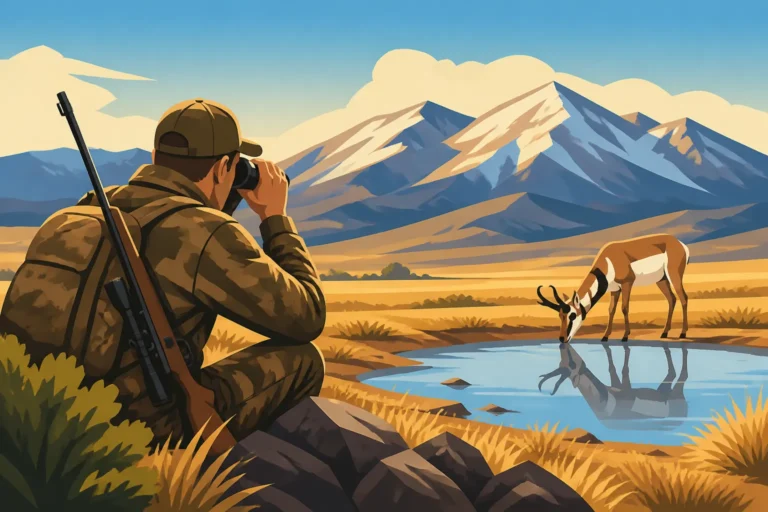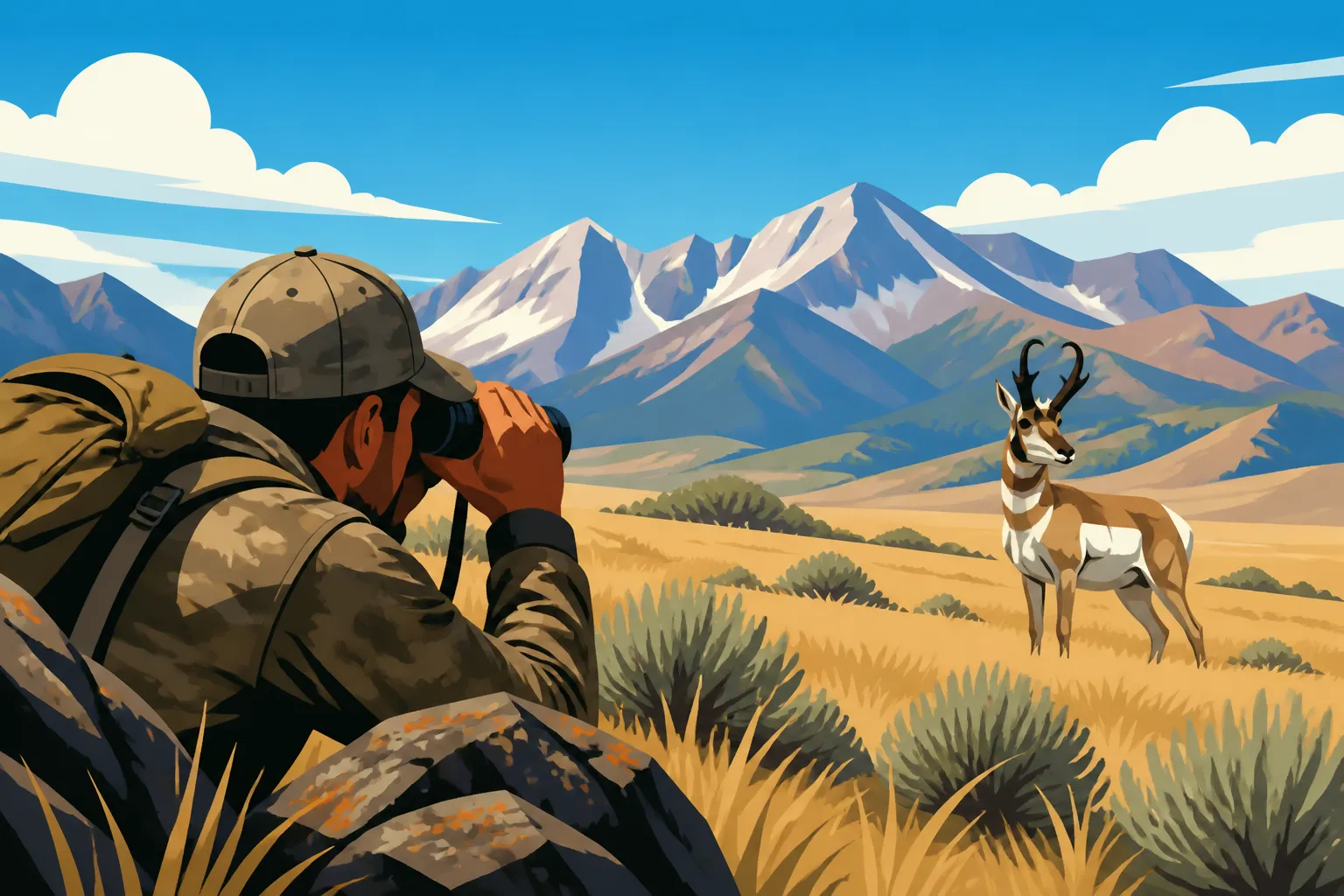
Spot-and-Stalk Pronghorn Tactics
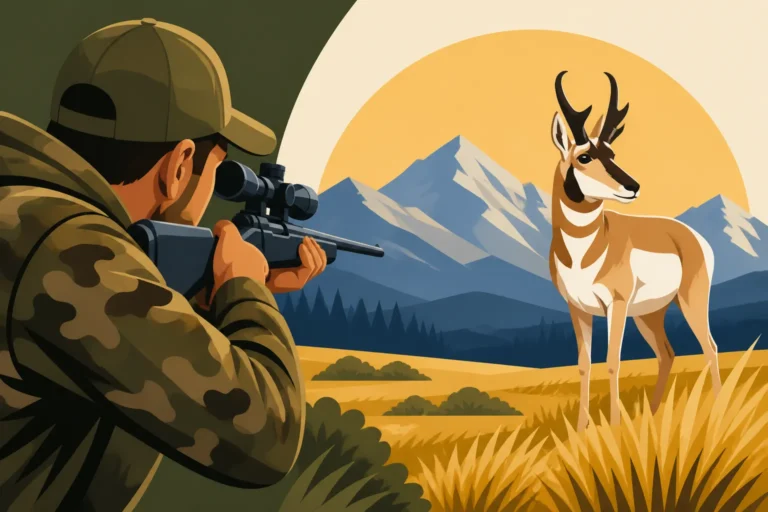
That feeling of despair when you’ve been meticulously glassing for hours, finally spot a magnificent pronghorn buck, only to have it vanish into thin air as soon as you take a single step towards it – it’s a frustration every plains hunter knows intimately. Pronghorn, with their incredible eyesight and blazing speed, are arguably one of the toughest animals to stalk, making a successful approach feel like a genuine triumph. This comprehensive guide is here to break down the highly effective, yet often challenging, spot-and-stalk tactics that will give you a real edge when pursuing Colorado's speed goats.
Understanding the Pronghorn's World
Before you even think about putting boot to ground, you need to get inside the head of a pronghorn. These aren't your typical timber elk; their world is vast, open, and utterly unforgiving for anything that stands out. Understanding their unique behaviors and preferences is the bedrock of any successful spot-and-stalk strategy.
Pronghorn Habitat and Movement Patterns
Colorado’s pronghorn population thrives primarily on the expansive eastern plains, but you’ll also find them in certain high-desert basins on the Western Slope. Unlike deer or elk that seek the cover of dense timber, pronghorn prefer wide-open grasslands, sagebrush flats, and agricultural fields. This preference is deeply ingrained in their survival strategy: their speed is their primary defense, and open country allows them to spot threats from miles away and outrun almost anything.
During the early morning and late evening, you'll often find pronghorn actively feeding, typically on forbs, grasses, and sagebrush. As the day progresses and temperatures rise, especially during early season hunts, they might seek out subtle depressions in the terrain or the sparse shade of a lone tree or small brush patch to bed down. Their daily routine is largely dictated by food, water, and security. Identifying these key resources in a given area is critical for predicting their movements. A great resource for understanding where these magnificent creatures live is our dedicated guide on Colorado Pronghorn: Where to Find Them.
When you're looking at a map, don't just focus on the obvious public land blocks. Pronghorn will frequently move between public and private lands, often crossing fences with ease. They aren't typically bothered by human structures like irrigation pivots or oil wells, and sometimes these man-made features can even provide a slight topographical advantage for a stalk. Knowing how these animals react to their environment, especially during different times of the day, will allow you to anticipate their next move.
Their Incredible Senses: A Hunter's Challenge
Let's be blunt: a pronghorn's eyesight is legendary for a reason. Imagine the best binoculars you own; a pronghorn’s natural vision is often compared to that of an 8x binocular, allowing them to detect movement up to four miles away. This isn't just a slight advantage; it's a game-changer. Any flicker of movement, any silhouette against the skyline, any unusual shape, and they've pegged you.
Beyond their eyesight, their hearing is acute, and their sense of smell, while perhaps not as crucial as their vision in their open environment, is still highly effective. The combination of these senses means you're dealing with an animal that is constantly aware of its surroundings. Ignoring any one of these senses is a recipe for a blown stalk. This is why tactics that rely heavily on cover, wind direction, and absolute stillness are paramount. You can dive deeper into this aspect with our piece on Colorado Pronghorn Speed and Senses.
Understanding these challenges doesn't just mean being careful; it means changing your entire approach. You can't hunt pronghorn like you would a mule deer in timber. The plains demand a level of precision, patience, and meticulous planning that can truly test a hunter's resolve. Every step must be calculated, every piece of terrain utilized, and every gust of wind factored into your strategy.
Essential Gear for the Pronghorn Hunter
Success in pronghorn country often boils down to preparation, and that starts with your gear. You won’t be packing a heavy timber pack; instead, think lightweight, efficient, and optics-heavy. The right tools won't guarantee a tag, but the wrong ones will almost certainly guarantee failure.
Optics: Your Most Important Tool
If there's one piece of gear you absolutely cannot skimp on for pronghorn hunting, it's optics. Your binoculars and spotting scope are your primary scouting tools, your eyes on the ground, and often the key to spotting a buck before it spots you. High-quality binoculars, typically 10x or 12x, are your bread and butter for constant scanning. You'll be spending hours, perhaps days, behind them. Brands like Swarovski, Zeiss, and Vortex are popular choices among serious Western hunters for their clarity and durability.
A good spotting scope, generally with a 20-60x magnification range, is equally critical. This is what allows you to really pick apart distant animals, identify bucks from does, and evaluate horn size without having to get closer and risk blowing the whole herd. It's also invaluable for confirming that what you saw with your binoculars is indeed a pronghorn and not just a distant rock. Investing in a sturdy, lightweight tripod for both your binoculars (with an adapter) and spotting scope is non-negotiable. Trying to hold high-magnification optics steady freehand will lead to fatigue and missed details. For a deeper dive, check out our guide on Best Optics for Colorado Big Game.
| Optic Type | Recommended Magnification | Primary Use | Key Features |
|---|---|---|---|
| Binoculars | 10x-12x | Wide-area scanning, initial spotting | Lightweight, good low-light performance, ergonomic for long glassing sessions. |
| Spotting Scope | 20x-60x | Detailed animal identification, judging size | High resolution, smooth zoom, durable construction, compatible with tripod. |
| Rangefinder | N/A (essential accessory) | Accurate distance measurement | Fast acquisition, precise readings, capable of ranging reflective targets. |
Footwear and Apparel for Open Country
When you're covering miles on the open plains, often through sagebrush, cacti, and uneven ground, your footwear is paramount. Forget your heavy mountain boots; you need comfortable, supportive, and relatively lightweight hiking boots. Look for boots with good ankle support, a stiff sole to protect against sharp objects, and breathability for warm, sunny days. Brands like Crispi or Kenetrek offer excellent options that can handle the varied terrain of Colorado’s plains without being overly bulky.
Your apparel needs to be light, breathable, and provide excellent camouflage. Earth tones or specific open-country patterns are ideal. Layers are your friend, as temperatures can swing wildly from chilly mornings to scorching afternoons. A good sun hat, sunglasses, and gaiters to keep stickers and dirt out of your boots are also highly recommended. Don't forget a lightweight rain shell; plains storms can pop up quickly and bring significant wind and moisture. The key here is not just concealment, but comfort and protection from the elements that can otherwise wear you down.
Rifles and Ammunition Considerations
Given the open nature of pronghorn country, shots can often be on the longer side. While ethical shot distance is always paramount and depends entirely on the shooter's proficiency, a flat-shooting caliber is a definite advantage. Popular choices include the .25-06 Remington, 6.5 Creedmoor, .270 Winchester, .308 Winchester, and .30-06 Springfield. The goal is to minimize bullet drop and wind drift over extended ranges, increasing your effective range and margin of error.
Accuracy is king. Invest in quality hunting ammunition with good ballistic coefficients and practice extensively at various distances. Many pronghorn shots might be taken from a prone position, so a bipod is an invaluable accessory for stability. Even better, bring a shooting stick or tripod-mounted rifle rest for versatility, as suitable prone spots might be scarce or too low to clear the vegetation. Consider how to Colorado Long-Range Shooting Considerations might apply here, focusing on maintaining precision in conditions where a pronghorn might bolt in seconds.
The Art of Spotting and E-Scouting
Finding pronghorn is half the battle, and in their expansive domain, it's largely an optical game. Modern technology also allows you to do a significant amount of "hunting" before you even leave your living room. Combining these two elements provides a powerful advantage.
Effective Glassing Techniques on the Plains
This isn't just looking through your binoculars; it's an intentional, systematic process. When you arrive in a new area, find the highest vantage point you can reasonably access. This might be a small hill, a ridge line, or even the top of your vehicle if it's safe and you're within regulations. Set up your spotting scope and binoculars on a tripod. Start by slowly scanning the terrain, looking for anything that seems "out of place." Pronghorn, even bedded down, often have subtle outlines or distinct color patterns that stand out against the backdrop.
Begin your scan by gridding the area: pick a distant point, scan horizontally, then drop your gaze slightly and scan back in the opposite direction. Repeat this until you’ve covered your entire field of view. Pay close attention to areas around water sources, subtle draws, and edges of agricultural fields. Pronghorn often prefer the fringes where different types of vegetation meet. Don't just look for whole animals; look for an ear, a horn tip, or even just the distinctive white patch on their rump. Remember that their eyes are constantly working, so you need to be stationary and concealed while you're glassing. Patience is your greatest virtue here; spend an hour or two dissecting a promising basin before moving on.
Leveraging Technology for Pre-Hunt Scouting
In today's hunting world, digital scouting tools are a game-changer, especially for species like pronghorn on vast, public lands. Platforms like GoHunt's mapping system or onX Hunt are incredibly powerful for identifying potential hotspots and planning your approach long before opening day. These tools allow you to study topographical maps, identify public land boundaries, locate water sources, and even pinpoint subtle terrain features that might offer cover for a stalk.
Before your boots ever touch the ground, use these apps to:
- Identify potential travel corridors: Look for areas where different habitat types converge or where fences might funnel animals.
- Locate water: Small ponds, stock tanks, or even ephemeral puddles can be magnets for pronghorn, especially in dry conditions. Our guide on How to Hunt Colorado Pronghorn Water Holes offers more specific tactics here.
- Find hidden draws and depressions: These are key for stalking, as they can provide critical cover in an otherwise flat landscape. Mark these points on your map.
- Understand access points: Plan your approach to glassing locations and potential hunting areas to minimize disturbance.
E-scouting with tools like GoHunt allows you to virtually "walk" the landscape, saving you valuable time and boot leather once you're in the field. It also helps you form a solid game plan, giving you contingencies for different wind directions or animal movements. Don't underestimate the power of knowing the lay of the land before you arrive. This detailed pre-planning is a core component of a successful How to E-Scout Before a Colorado Hunt.
Executing the Perfect Spot-and-Stalk
This is where the rubber meets the road. Spotting a pronghorn is one thing; getting within ethical shooting range without being detected is another entirely. This requires calculated movements, intimate knowledge of the terrain, and a keen awareness of the ever-present wind.
Reading the Terrain for Concealment
The plains might look flat, but they are rarely truly flat. Every ripple, every draw, every sagebrush clump, and every gentle rise or fall in elevation becomes a potential piece of cover. Your goal during a stalk is to exploit every single one of these features to keep yourself hidden. Before you even move, take a long, hard look at the landscape between you and the pronghorn. Identify a series of "checkpoints" – a dry creek bed, a patch of taller grass, a slight knoll – that you can move to under cover.
Never walk on a skyline. This is a cardinal sin in pronghorn country. Your silhouette will be visible for miles. Instead, stay below the crest of hills or use natural dips in the terrain. Sometimes, crawling on your hands and knees or even belly-crawling for hundreds of yards is the only way to stay hidden. This is where those comfortable, durable clothes come into play. Visualize your entire route before you begin, considering where you might have to pause, reassess, or change direction. This methodical approach is far more effective than simply walking directly towards your target.
Mastering the Approach: Wind and Speed
Wind is your silent ally, or your worst enemy. Always, always, always keep the wind in your favor, meaning it should be blowing from the pronghorn towards you. This is crucial for two reasons: it carries your scent away, and it can help mask the subtle sounds of your approach. Even a slight shift in wind can expose you, so be constantly aware of it. Carry a small wind checker to confirm direction throughout your stalk.
Your speed of movement is equally critical. Pronghorn are exceptionally sensitive to movement. Think slow, deliberate, and fluid. Avoid jerky movements. If the pronghorn is looking in your direction, freeze. Become a statue. Wait until it looks away or puts its head down to feed before resuming your movement. This often means long waits, sometimes 10-15 minutes or more, in awkward positions. But patience pays off. A stalk can take an hour or more to cover what might appear to be a short distance on a map. Remember, a successful stalk isn't about how fast you get there, but if you get there undetected.
Dealing with Adversity During the Stalk
Not every stalk goes perfectly. You might encounter an unexpected patch of open ground, a second pronghorn you didn't see initially, or a sudden shift in wind. These are moments where your adaptability and experience truly shine. If you get busted by a satellite animal, don't panic immediately. Sometimes, if you freeze, they might not fully identify you as a threat and simply trot off a short distance before resuming feeding. If the target animal busts you, it's often over, but not always. Sometimes, they'll run a few hundred yards and stop to look back. This might offer a very quick, long shot opportunity if you're prepared.
One of the most frustrating aspects can be the "ghost" animals – those lone does or small groups that seem to appear out of nowhere and blow up your carefully planned approach. Always be scanning, even during your stalk, checking your flanks and rear for these unexpected obstacles. GoHunt's mapping tools can help you understand the broader landscape, but in the moment, your eyes and ears are your best defense. If a stalk goes bad, assess what happened, learn from it, and immediately start glassing again for another opportunity. The plains are vast, and another buck might be just over the next rise.
Shooting Fundamentals for Pronghorn
You've put in the hard work, mastered the stalk, and now you're within range. This is the moment of truth, and accurate shooting fundamentals are what will seal the deal. Pronghorn are not huge animals, so shot placement is critical for a clean, ethical harvest.
Judging Distance Accurately
In the wide-open, featureless terrain of the plains, judging distance can be incredibly deceptive. Without trees, ravines, or other landmarks to provide scale, a hundred yards can look like fifty, and three hundred can look like two hundred. This is why a quality rangefinder is an indispensable piece of gear. Every time you pause during your stalk, range known objects in the vicinity – a distant rock, a fence post, a patch of brush. This helps you build a mental map of distances.
When you finally set up for a shot, range the animal multiple times to confirm the distance. If the pronghorn moves, range it again. Many ethical shots are ruined by inaccurate distance estimation. Practice ranging objects at various distances and angles before your hunt, so it becomes second nature. Understand that in a flat trajectory, a small miscalculation in distance can mean a significant difference in bullet impact, potentially resulting in a wound.
Wind Compensation and Shooting Rests
Wind is not just a factor in your stalk; it's a huge factor in your shot. The plains are notoriously windy, and even a moderate crosswind can push your bullet several inches off target at longer ranges. Before you shoot, analyze the wind direction and speed. Watch the grass, dust, or use your wind checker. A little bit of practice with a ballistic calculator for your specific load and bullet will give you an idea of how much wind compensation (hold-off) you'll need at various distances.
Stability is absolutely paramount. Whether you use a bipod, shooting sticks, or a backpack rest, ensure your rifle is rock-steady. Prone is often the most stable position if the terrain allows, but shooting sticks or a tripod-mounted rifle rest can offer invaluable height in knee-high sagebrush. Don't rush the shot. Take a deep breath, settle your crosshairs, and execute a smooth trigger pull. A well-placed shot on a pronghorn is a testament to the culmination of all your efforts. When you do connect, remember our guide on How to Quarter an Elk in the Field for general field processing tips, which can be adapted for pronghorn.
Common Pitfalls and How to Overcome Them
Hunting pronghorn with spot-and-stalk tactics is incredibly rewarding, but it's also a masterclass in humility. Even seasoned hunters make mistakes, and recognizing these common errors can save you from a lot of frustration.
Impatience and Rushing the Stalk
This is probably the number one reason stalks fail. After hours of glassing, the excitement of finally locating a shootable buck can cause an adrenaline rush, leading to hasty decisions. You see the buck, you get tunnel vision, and you start moving too fast, exposing yourself to its incredible eyesight. Or you try to cut corners, opting for a shorter, but more exposed, route.
Overcome this by practicing extreme patience. Remind yourself that the clock is not always ticking as fast as your heart. If the pronghorn is calm and feeding, you have time. Take an extra five minutes to study the terrain. Crawl an extra hundred yards if it means staying hidden. Force yourself to slow down, take deep breaths, and stick to your planned route. If you feel yourself getting rushed, take a pause, back off a little, and reassess. It's better to abort a stalk and start fresh than to blow it entirely by hurrying. Many hunters learn that How to Hunt Elk on Public Land Pressure also applies to plains hunting—the key is being more patient and methodical than the competition.
Underestimating Pronghorn Senses
While their eyesight gets most of the attention, don't forget their other senses. A slight shift in wind can carry your scent directly to them, even if you’re perfectly hidden. A crunch of gravel, a rustle of clothing, or the metallic click of your rifle safety can be enough to alert a close-range pronghorn.
To combat this, pay meticulous attention to wind direction throughout your stalk. Use a wind checker constantly. Wear quiet clothing that won't rustle or snag on brush. Move slowly and deliberately, placing your feet carefully to avoid snapping twigs or kicking loose rocks. Before the hunt, make sure your gear is silenced – remove anything that rattles or clangs. Even a small noise, in the vast silence of the plains, can echo farther than you might imagine. By respecting all of their senses, not just their sight, you drastically increase your chances of a successful approach to this iconic plains animal.
Disclaimer
Please ensure you are aware of and adhere to all current Colorado Parks and Wildlife (CPW) hunting regulations, season dates, and licensing requirements. Hunting carries inherent risks; always prioritize safety, ethical hunting practices, and respect for wildlife and the environment. This guide is for informational purposes only and does not substitute for official regulations or professional guidance.