How to Still-Hunt Colorado Timber
There's nothing quite as frustrating as seeing an elk disappear into a seemingly impenetrable stand of timber, or worse, knowing they're in there, but you just can't get to them. Many hunters feel like dense forests are an impossible maze, where every twig snap spells doom for their chances. This comprehensive guide is designed to transform that frustration, helping you master the quiet, methodical art of still-hunting Colorado's timbered elk country, turning those daunting woods into your strategic advantage.
The Art of Still-Hunting Colorado Timber
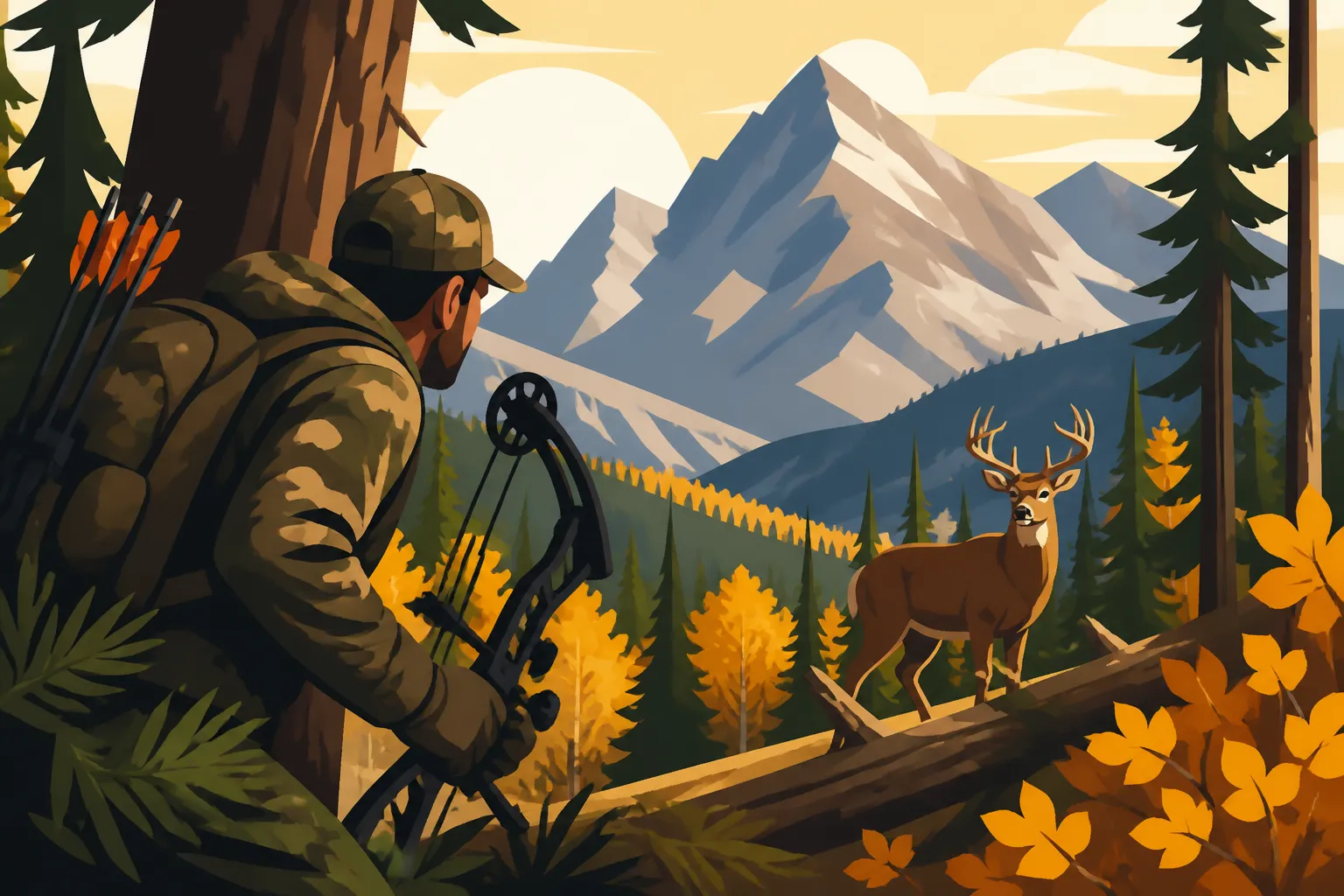
Still-hunting is a nuanced method that prioritizes slow, deliberate movement and acute observation over covering vast distances quickly. It’s not about finding a vantage point and glassing; it’s about becoming part of the forest, moving so stealthily that you blend into the natural rhythms of the woods. In Colorado, where elk often seek refuge in dense timber from pressure, weather, or simply for their daily routines, still-hunting becomes an incredibly effective tool in your arsenal. It allows you to enter their sanctuary on their terms, increasing your odds of encountering them within shooting range.
Why Still-Hunting Works in Dense Forests
Colorado's landscapes are incredibly diverse, but when elk want to disappear, they often head for the dark timber – those thick stands of spruce, fir, and pine that offer both cover and thermal regulation. These areas are typically difficult to glass, and traditional spot-and-stalk methods (where you locate an animal from afar and then plan an approach) often fall apart once an elk enters the really thick stuff. This is precisely where still-hunting shines. Instead of trying to ambush an elk that's already seen you, you're moving slowly enough that you might be the one doing the ambushing.
Imagine working your way through a north-facing slope filled with dense lodgepole pines after a fresh snowfall. The snow muffles your footsteps, and the thick canopy holds heat, making it a perfect bedding area. An elk lying just out of sight might never know you're there if you're patient and quiet. You're not just walking; you're hunting every step, scanning every shadow, dissecting every sound. This method accounts for the elk's superior senses, allowing you to often detect them before they detect you, or at least to react before they bolt. It’s particularly effective in areas where other hunters might give up, deeming the timber too thick or noisy. For a deeper dive into hunting these specific terrains, check out our guide on How to Hunt Elk in the Dark Timber.
Developing Patience and Heightened Senses
Success in still-hunting hinges on patience. It's an active patience, not just waiting, but constantly analyzing. The old adage, "hunt slow," is the absolute mantra here. Many hunters move too fast, driven by the desire to cover ground, only to bump animals they never saw. In still-hunting, you might take an hour to move 100 yards. This gives your eyes time to pick apart the patterns of the forest, to spot the subtle flick of an ear, the horizontal line of a back that doesn't quite fit the vertical trees, or the shadow that moves just a little too much.
Your ears become your primary detection tools. Every snap, rustle, or distant vocalization demands your full attention. Is that a squirrel, or a hoof kicking a rock? Is that a branch rubbing, or an antler scraping? Your nose, too, can be a surprising asset. The musky scent of a bedded elk can be unmistakable on a still morning. The goal is to move, then stop, listen, look, and repeat. This allows the forest to "reset" around you, giving you a chance to detect animals that might have frozen at your initial movement. It's a meditative process that connects you deeply with the environment, sharpening your instincts and making you a more observant hunter overall. It's a core component of Colorado Elk Hunting Methods Explained.
Gear Up for Silence: Equipping Your Still-Hunt
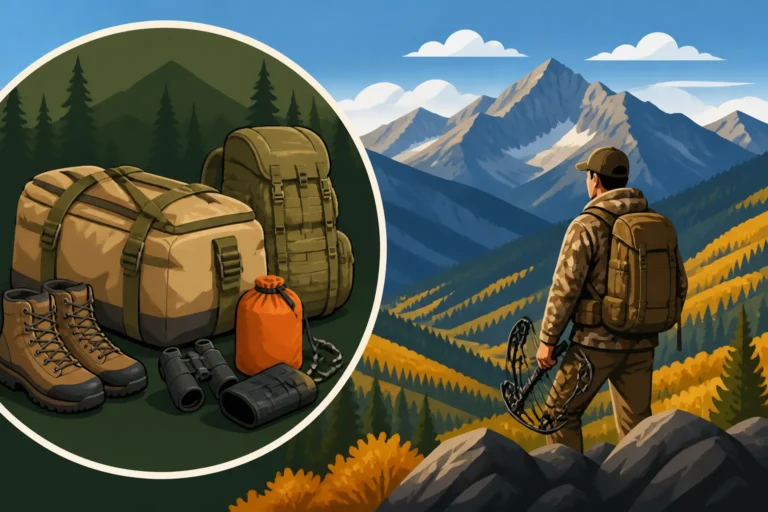
Your gear choices are absolutely critical when still-hunting. Every item you carry, wear, or use must support your primary objective: silence and stealth. This isn't the time for noisy zippers, stiff fabrics, or clunky boots. A well-equipped still-hunter is practically invisible and inaudible, melting into the forest environment. Thinking through your gear is part of preparing for any hunt, especially a DIY one, as detailed in our Colorado DIY Elk Hunting Guide.
Footwear and Clothing for Stealth and Comfort
Let's talk boots first. Your boots are your connection to the ground, and noisy steps are a still-hunter's worst enemy. Opt for boots that are flexible, offer good ankle support for uneven terrain, and most importantly, have soles that provide excellent grip without being overly rigid or loud. Boots with hard, plastic-like soles will transmit every single crunch and scrape. Softer rubber soles are generally preferred. Brands like Crispi, Kenetrek, and Salomon offer models often favored by backcountry hunters for their blend of support, durability, and quiet performance. However, what feels good and quiet to you is paramount. Try them out in different conditions. Remember, you might be standing for long periods or moving at a snail's pace, so comfort is non-negotiable. Our guide on Best Boots for Colorado Elk Hunting offers even more specific recommendations.
For clothing, think layers and quiet fabrics. Wool and fleece are your best friends here. They are naturally quiet, retain warmth even when wet, and offer decent breathability. Avoid anything with a "crinkle" factor – nylon ripstop or stiff synthetics can sound like a flag flapping in the wind with every slight movement. Zippers should be minimized, or at least chosen for their quiet operation. Hooded outer layers are a big plus, allowing you to use the hood to muffle sound and block peripheral vision, focusing your gaze. The idea is to create as little friction and noise as possible as you move through brush or against your pack. A quiet setup allows you to focus on elk, not on wrestling with your clothing.
Essential Optics and Navigation for Timber
While vast landscapes are often associated with high-power spotting scopes, still-hunting in timber calls for a different optical strategy. Your primary optic will be a good pair of binoculars, usually 8x or 10x power. You'll be using them constantly, not just to spot elk at a distance, but to dissect patches of cover for subtle signs of an animal. A 10×42 binocular, for instance, offers a good balance of magnification, light gathering, and a wide field of view, making it ideal for picking apart the dense timber. Focus on high-quality glass from brands like Zeiss, Swarovski, or Vortex, which provide clarity even in low light – a common condition in deep timber.
Navigation is paramount, especially when moving slowly off-trail in dense forest. A reliable GPS device or a hunting app like GoHunt on your smartphone is indispensable. These tools allow you to pinpoint your exact location, understand property boundaries, mark elk sign, and navigate back to your vehicle or camp with confidence. You can pre-load your maps with topographical data, aerial imagery, and even layers showing public/private land ownership. GoHunt offers robust mapping features that are fantastic for this, allowing you to drop pins for fresh tracks, rub lines, or even bedding areas you discover. Always carry a physical map and compass as a backup, and know how to use them. Signal can be spotty in deep canyons or thick timber, and a dead battery can ruin a hunt. Our guide on How to E-Scout Before a Colorado Hunt gives great tips on pre-planning your navigation.
Here's a quick comparison of essential still-hunting gear:
| Gear Item | Key Still-Hunting Features | Why It Matters in Timber |
|---|---|---|
| Boots | Flexible, quiet rubber soles, good ankle support | Reduces noise from footsteps, maintains traction on uneven, potentially wet or snowy ground, prevents fatigue during slow movement. |
| Clothing | Wool/fleece layers, quiet zippers, minimal "crinkle" | Eliminates fabric noise that spooks game, provides warmth and breathability for varied activity levels, allows for quiet movement through brush. |
| Binoculars | 8x-10x power, high-quality glass, wide field of view | Essential for dissecting dense cover, identifying subtle elk features (ears, antlers, horizontal lines), and performing detailed scans in low light conditions. |
| GPS/Mapping App | Pre-loadable maps, boundary layers, waypoint marking | Crucial for pinpoint navigation off-trail, understanding land ownership, marking key sign, and ensuring safe return. |
| Backpack | Quiet fabric, minimal external straps/attachments | Prevents rattling and rubbing noises, allows for silent carrying of essentials, prevents snagging on branches. A good Best Backpack for a Colorado Elk Hunt will be streamlined and silent. |
| Wind Checker | Powder or smoke puffer | Continuously assesses wind direction, critical for scent control in swirling timber thermals. |
Silent Steps: Master Your Movement in Elk Country
This is where the rubber meets the road, or more accurately, where your boot meets the forest floor with the utmost care. Still-hunting isn't just about moving slow; it's about moving intentionally. Every single step is a calculated decision, designed to minimize noise and maximize your sensory input. It’s an intimate dance with the forest, where you become a predator, not a trespasser. To truly master this, you need to understand the cadence and the environmental cues that guide your movement. This careful movement is absolutely essential if you want to know How to Move Quietly Through Colorado Timber.
The Cadence of the Still-Hunt: Stop, Look, Listen
Forget the idea of walking from point A to point B. In still-hunting, you're not walking; you're flowing. The rhythm is often described as "stop, look, listen," but it's more dynamic than that. It's: step, pause, balance, scan, listen, step again.
- The "Pre-Step" Scan: Before you even commit to a foot placement, scan the ground ahead for optimal footing. Look for soft moss, patches of pine needles, or bare dirt that will absorb sound. Avoid crunchy leaves, dry twigs, or loose rocks like the plague.
- The "Slow-Motion" Step: Lift your foot slowly. Place the front of your foot (toe or ball) down first, applying gentle pressure. Feel the ground. If it's silent, slowly shift your weight onto that foot. If it crunches or shifts, you still have the option to lift your foot and adjust without making full contact. This takes incredible balance and core strength.
- The Pause and Observe: Once your weight is fully on the new foot, freeze. And I mean freeze. For 30 seconds, a minute, or even longer. This is your most critical time. Your eyes should be relentlessly dissecting every patch of timber, every shadow, every cluster of trees. Look for horizontal lines (an elk's back or belly) in a vertical world. Listen for the faintest sound – a distant cough, a branch snap, the subtle movement of an animal. This pause allows any noise you did make to dissipate and gives bedded or paused elk a chance to relax or reveal themselves.
- Repeat: Only when you've exhausted all sensory input from your current position do you begin the process for your next step.
The frequency of your stops will depend on the terrain and cover. In super dense, noisy terrain, you might only move a few feet between pauses. In more open timber with better visibility, you might extend your steps a bit. But the principle remains: never move without intention, and always give yourself time to assess the situation before proceeding. This is the ultimate test of patience and discipline.
Leveraging Terrain and Cover to Disappear
The forest isn't just a place to walk through; it's your ally. Smart still-hunters constantly use the terrain and cover to their advantage.
- Undulating Terrain: The mountains of Colorado are rarely flat. Use rises and falls, small knolls, and draws to mask your movement. You can often move more freely on the backside of a small ridge or in the bottom of a shallow drainage, out of sight. When topping a ridge, slow down to an extreme crawl, peeking over with your binoculars or a small portion of your head first, to avoid silhouetting yourself against the sky or surprising an elk on the other side.
- Vegetation as Cover: Dense stands of pines, aspens, or even thick brush are your natural blind. Move from one patch of cover to the next, always keeping something between you and where you expect elk to be. This applies to your visual profile as well as sound. A thick stand of timber can muffle your steps and hide your form.
- Contour Hunting: Rather than traversing straight up or down a steep slope, consider moving along a contour. This often provides more stable footing, minimizes noise, and keeps you from silhouetting yourself on ridgelines. It also follows natural elk travel patterns, as they often use contours to navigate the mountains efficiently. When you do need to climb or descend, look for game trails. These are often cleared of the loudest debris and offer easier footing.
- Reading the Sun and Shadows: Pay attention to how the light falls. Moving with the sun at your back can sometimes make it harder for elk to see you due to glare, but it also casts a long shadow. Moving through shadows can help break up your outline, especially in dappled light. Always consider how the light will affect your visibility and the elk's ability to see you.
By consciously manipulating these elements, you effectively disappear into the forest, making it incredibly difficult for an elk to pinpoint your location even if you do make a slight sound.
Reading the Timber: Signs, Thermals, and Wind
Still-hunting isn't just about moving silently; it's also about knowing where to move and what to look for. The timber holds a wealth of information if you know how to read it. Elk leave clues everywhere, and understanding the interplay of wind and thermals is crucial to entering their world undetected. The more you know about elk behavior and habitat, the better you'll be able to predict where they are. This ties into understanding Colorado Elk Habitat and Elevation.
Deciphering Elk Sign: Tracks, Rubs, and Beds
As you meticulously navigate the timber, your eyes should be peeled for fresh elk sign. This isn't just about confirmation; it's about intelligence gathering.
- Tracks: Fresh tracks are gold. Look for sharp edges, minimal erosion, and clear dewclaw marks. Are they walking tracks, or are they spaced out, indicating a running or trotting animal? Which direction are they heading? If you find a series of fresh tracks heading deeper into the timber, you're likely on the right path. Pay attention to the size – bigger tracks often mean bigger elk.
- Rubs: Bull elk rub their antlers on trees to mark territory, remove velvet, and spar. Fresh rubs, especially on smaller trees or saplings, indicate a bull has been active in the area recently. The height of the rub can give you an idea of the bull's size. Check for sap still oozing or fresh wood shavings.
- Scrapes: Less common than rubs, but still a sign of rutting activity. Bulls will sometimes paw the ground and urinate in these areas.
- Beds: Elk often bed down in dense timber, usually on benches or slight rises that offer a vantage point or a comfortable spot out of the wind. A fresh bed will still have the impression of the elk's body, and you might find fresh droppings or urine nearby. If it's still warm, the elk might be very close. Look for several beds together, indicating a herd.
- Droppings (Poop): The freshest droppings are moist and shiny. As they age, they become drier and duller. A pile of fresh droppings tells you an elk was there very recently. Pay attention to the size and consistency, which can indicate diet and the age of the sign.
- Wallows: Especially during the rut, bulls love to wallow in muddy depressions, coating themselves in mud to cool down and spread their scent. A fresh wallow, muddy and smelling strongly of elk, is a clear indicator of recent activity. Knowing How to Hunt Elk Wallows in Colorado can be a game changer.
By combining these clues, you can paint a picture of elk presence and recent activity, allowing you to fine-tune your still-hunt direction and focus your efforts on the most promising areas.
Navigating Wind and Thermals in Mountainous Timber
Understanding wind and thermals is absolutely non-negotiable for still-hunting, especially in Colorado's mountains. Elk have an incredible sense of smell, and a misplaced gust of wind can ruin hours of careful stalking. Our guide on How to Use the Wind Hunting Colorado Elk goes into more detail, but here are the basics:
- Wind Direction: Always know the prevailing wind. It's your primary defense against getting busted. Your scent travels downwind. Therefore, you want to approach elk from downwind or crosswind. Continuously check the wind using a small bottle of powder or a milkweed stem. The wind is rarely constant in the timber; it can swirl unpredictably due to terrain and canopy.
- Thermals: These are currents of air caused by temperature differences. In the mountains, warm air rises during the day (updrafts), and cool air sinks at night and early morning (downdrafts).
- Morning/Daytime: As the sun hits the slopes, the ground warms, and thermals rise. If you're still-hunting uphill, your scent will be carried up ahead of you. If you're still-hunting downhill, your scent will be carried behind you.
- Evening/Nighttime: As the sun sets and the air cools, thermals reverse and start to sink. If you're still-hunting uphill in the evening, your scent will be carried behind you. If you're still-hunting downhill, your scent will be carried ahead of you.
- Thermal Hubs: Certain areas, like saddles, draws, and drainages, can act as "thermal hubs" where air currents converge and swirl. These are often travel corridors for elk, but they also present a challenge for scent control. Be extra cautious in these areas.
- Using the Canopy: Dense timber can create its own microclimates and affect thermals. A thick canopy can trap cold air longer, delaying thermal shifts, or create localized wind tunnels.
The goal is to always have the wind and thermals carrying your scent away from where you expect the elk to be. This means your approach will often involve complex routes, traversing slopes to maintain an advantageous position. Sometimes, it means waiting for the thermals to shift before continuing your hunt. Patience in waiting for the wind or thermals is just as important as patience in movement.
Executing the Shot and Post-Harvest Protocol
All the silent movement, meticulous observation, and careful planning culminates in one critical moment: the shot. In the close quarters of timber still-hunting, this moment arrives quickly and often without much warning. Being prepared for a snap shot is crucial, as is having a solid plan for what comes after the shot.
Identifying Shooting Lanes and Ethical Shot Placement
Unlike open country hunting where you might have ample time to range and set up, timber hunting often presents narrow, fleeting shooting opportunities. You might only get a small window through the trees.
- Pre-Visualize Shooting Lanes: As you still-hunt, constantly identify potential shooting lanes ahead of you. If an elk were to step out here, or stand there, could you get a shot? What obstacles are in the way? This mental rehearsal helps you react faster when the moment comes.
- Close Quarters: Elk in timber are often within bow range, even if you're rifle hunting. Be prepared for shots that are much closer than you might expect, sometimes under 50 yards. This requires dialing back your scope power if it's set too high for long shots.
- Shot Placement: Regardless of the weapon, ethical shot placement is paramount. Aim for the vitals (lungs/heart). A broadside or slightly quartering-away shot offers the best opportunity for a clean kill. Avoid quartering-to shots, and never take a shot if you're unsure of your bullet's trajectory or what's beyond the animal. The dense timber means an errant shot could travel for a long distance or hit an unseen obstruction.
- Obstructions: Be incredibly mindful of branches, twigs, or small saplings between you and the elk. Even a small twig can deflect a bullet and cause a wounded animal. If you can't see a clear path to the vitals, do not shoot. You've worked too hard to risk a poor shot. Instead, assess if you can adjust your position for a better angle, even if it means moving incredibly slowly for another 20 seconds.
- Follow-Through: After the shot, keep your eyes on the animal. Note its reaction, its direction of travel, and any landmarks where you last saw it. This information is vital for tracking.
Tracking and Recovering Your Animal in Thick Cover
A successful shot is only half the battle; recovering your elk in dense Colorado timber can be incredibly challenging. This is where your still-hunting skills transition to tracking skills. Our How to Pack Out an Elk in Colorado guide provides broader recovery tips, but here are timber-specific considerations:
- Mark the Shot Location: As soon as you shoot, pick a distinctive landmark (a unique tree, rock, or clump of bushes) exactly where the elk was standing. If possible, mark your own position as well. This creates a solid starting point for your track.
- Give It Time: Unless you witnessed the elk drop dead, give it at least 30-60 minutes before you start tracking. For a questionable shot, give it several hours, or even overnight if conditions allow. This gives the animal time to bed down and expire, preventing you from pushing a wounded animal further.
- Look for Sign: Begin at the shot site. Look for blood, hair, bone fragments, and disturbed earth. Even a minimal amount of blood can be enough to start. Small specks of bright red blood with bubbles indicate a lung hit; darker, less bubbly blood could indicate a liver or muscle hit.
- Slow, Methodical Tracking: This is essentially still-hunting in reverse. Move slowly, looking for every tiny clue. Don't just look for blood on the ground; check low-hanging branches, tree trunks, and foliage. Elk can spray blood surprisingly high as they run.
- Grid Search in Lack of Sign: If the blood trail peters out, perform a grid search. Mark your last sign and slowly walk in expanding circles, or in parallel lines, looking for anything that indicates the elk's path.
- Listen for Sounds: If the timber is exceptionally thick, you might hear a dying elk crashing or thrashing.
- Use Your GPS/Mapping App: Mark blood spots and the last known position on your GoHunt app. This creates a visual trail and helps you avoid getting disoriented in the dense woods. It's easy to get turned around when your head is down, focusing on a track.
- Bring Help: If possible, have a hunting partner assist. Two sets of eyes are always better than one when tracking.
- Headlamp and Batteries: If tracking into dusk or night, you'll need a powerful headlamp and spare batteries. Tracking at night is always harder, but sometimes necessary.
Successfully still-hunting Colorado timber requires a profound respect for the animal, the environment, and a relentless commitment to stealth and patience. It’s a challenging but incredibly rewarding method that puts you face-to-face with elk in their most natural habitat.
Disclaimer
Hunting is an inherently dangerous activity. This guide provides information for educational purposes only and does not guarantee success or safety. Always prioritize safety, adhere to all Colorado Parks and Wildlife regulations, and obtain proper licenses and tags. Be aware of your physical limitations and the potential hazards of backcountry travel. The author and publisher are not responsible for any incidents, accidents, or injuries that may occur as a result of using the information contained herein. Always hunt ethically and responsibly.