Colorado BLM Land Hunting
The dream of hunting big game in Colorado is often met with the daunting reality of finding suitable land, especially for those of us who don't have private ranch access. Public land, particularly Bureau of Land Management (BLM) acreage, offers incredible opportunities, but navigating its unique characteristics, regulations, and access points can feel like trying to find a needle in a haystack. This guide is here to unravel the complexities of Colorado BLM land hunting, providing you with the knowledge and strategies to confidently plan your next successful public land adventure.
Understanding Colorado BLM Land for Hunting
When you envision hunting in Colorado, you might picture vast national forests or designated wilderness areas. While those are certainly significant, Bureau of Land Management (BLM) land plays an equally crucial role, offering millions of acres across the state for public use, including hunting. These lands are managed for multiple uses, which means you'll share them with hikers, campers, off-road enthusiasts, and livestock, making it essential to understand their distinct nature.
What Sets BLM Land Apart
BLM lands often differ in character from National Forests, both in terms of landscape and management. Think of BLM lands as generally encompassing a wider variety of terrain, from high desert sagebrush flats and rolling piñon-juniper foothills to steep canyons and mountainous timber pockets, especially on the Western Slope. These areas are frequently lower in elevation than many National Forest lands, though not exclusively. The multi-use mandate for BLM often means more roads and dispersed camping opportunities, but it also means you'll need to be extra vigilant for other users. What's often appealing about BLM is its sheer expanse and the potential for less hunter pressure in some of the more remote, harder-to-reach pockets, particularly outside of the early rifle seasons. It’s truly a treasure trove for those willing to put in the effort.
Why Hunters Should Consider BLM Areas
For many hunters, especially those looking to pursue a Colorado DIY Elk Hunting Guide or a similar self-guided adventure, BLM land is a goldmine. It represents a significant portion of accessible public ground in Colorado, often interspersed with private land, national forests, and state lands, creating a mosaic of hunting opportunities. The varied terrain frequently provides excellent habitat for a diverse range of species, from robust elk herds to trophy mule deer, pronghorn, and even black bear. The lower elevations of many BLM tracts can also mean slightly milder weather conditions earlier and later in the season compared to high-alpine National Forest areas, though this is by no means a guarantee. Crucially, many successful hunters find that BLM land offers the chance to escape the intense pressure sometimes found in more popular National Forest regions, especially if you're willing to walk a bit further or explore less obvious access points.
Navigating Regulations and Access on BLM Land
Hunting on BLM land, like all public land in Colorado, comes with its own set of rules, regulations, and unwritten etiquette that you simply have to know. Ignoring these can lead to frustration, or worse, legal trouble. It's not just about knowing where the property lines are; it's about understanding how to respectfully and legally recreate.
Understanding Land Ownership and Boundaries
Colorado's landscape is a patchwork quilt of land ownership: private, National Forest, State Trust Land, State Wildlife Areas, and, of course, BLM. This intermingling can be a real headache, with private land often creating checkerboard patterns that block access to public areas. This is where tools like onX Hunt become absolutely indispensable. Seriously, I wouldn't step foot on public land in Colorado without it. onX Hunt allows you to clearly see property boundaries, landowner names, and land status directly on your phone or GPS. It prevents accidental trespass, helps you identify potential public land corridors, and can reveal isolated pockets of public land that other hunters might overlook. Before you even leave home, you should spend hours scouting your chosen unit using onX Hunt and other mapping resources to understand the land status and potential access points. Understanding these boundaries is critical for staying legal and respectful.
Specific BLM Hunting Regulations
While Colorado Parks and Wildlife (CPW) regulations generally apply across all public lands, there can be unit-specific rules or restrictions that you need to be aware of. For instance, some BLM areas might have specific vehicle access rules, closures, or restrictions on dispersed camping or campfires, especially during dry conditions. It's your responsibility to check with the local BLM field office for your specific hunting area, as well as the CPW regulations for the Game Management Unit (GMU) you're targeting. These details are often listed in the annual Big Game Hunting Brochure or on the CPW website. Remember, what's legal in one GMU might be restricted in another. Pay close attention to rules regarding ATVs, UTVs, and other motorized vehicles; many BLM roads might be open to these, but driving off-road to retrieve game or access a hunting spot can be illegal and damage delicate ecosystems. It’s also wise to be aware of any oil and gas operations which are common on some BLM lands, and how that might impact your hunting experience or access.
Access Points and Travel Management
Accessing BLM land isn't always as straightforward as pulling off a paved highway. Often, the best hunting opportunities are found deep within the interior, requiring travel on primitive dirt roads or extensive hiking. Some BLM lands are "landlocked," meaning they're surrounded entirely by private property with no legal public access. This is another area where onX Hunt shines, helping you identify legal easements or public roads that might not be obvious on a standard map.
When planning your hunt, consider:
- Designated Access Points: Look for signage indicating public access.
- County Roads: Many county roads cross private land but provide legal access to public land beyond. Always stay on the road!
- Walk-In Access (WIA) Programs: CPW partners with private landowners to create designated public access to some private lands, which might also lead to adjacent public lands. Check the CPW Walk-In Access Program maps.
- Forest Service Roads: In areas where BLM and National Forest lands abut, Forest Service roads can provide access to both.
- Travel Management Plans: BLM offices implement travel management plans that dictate where vehicles are allowed. Always consult these maps, available online or at local BLM offices, to ensure you're not driving where you shouldn't be. Respecting these closures is not only about legality but also about maintaining the integrity of the hunting grounds.
Locating Productive BLM Hunting Units
Choosing the right GMU is paramount for any successful hunt in Colorado, and this holds especially true for BLM lands. Not all BLM acreage is created equal, and some units simply offer better opportunities, healthier game populations, or more manageable terrain than others. This is where thorough research and strategic thinking come into play.
Researching GMU Data and Draw Odds
Before you even think about packing your bags, you need to dive deep into the data. The Colorado Parks and Wildlife website is your absolute best friend here. Look at past harvest statistics for the GMU you’re considering. This data, often broken down by species, season, and public/private land harvest, can give you a realistic idea of success rates. Pay attention to success rates for Colorado OTC Elk Tags Explained if you're going that route, or the draw odds if you're putting in for a limited tag. A unit with a 5% success rate for an elk tag is going to be a much tougher hunt than one with a 20% success rate, even if both have significant BLM acreage.
Websites like GoHunt offer incredible tools for breaking down draw odds, harvest data, and even unit-specific information, often saving you countless hours of digging through CPW reports. They compile this data, along with maps and professional analyses, making it easier to pinpoint units that align with your hunting goals. Consider factors like:
- Elk population trends: Are the herds growing or shrinking in that unit?
- Mule deer numbers: Is there good potential for a quality buck?
- Hunter pressure: Is it a unit notoriously hammered by orange armies, or does it see less activity?
- Weapon specific data: How do archery harvest rates compare to rifle harvest rates?
This rigorous research will help you narrow down your choices and increase your chances of finding a productive area.
E-Scouting and Topographic Analysis
Once you have a few potential GMUs in mind, it's time to hit the digital scouting trail. E-scouting is a non-negotiable step for any serious public land hunter, and it’s especially powerful for BLM. Use tools like onX Hunt, Google Earth, and even CPW's free online Colorado Hunting Atlas Explained to analyze the terrain from your living room.
Look for key features that attract and hold game:
- Water Sources: Ponds, creeks, seeps, and even wallows are magnets for elk and deer, especially in arid BLM regions.
- North-Facing Slopes and Dark Timber: These areas often provide shade, cooler temperatures, and thicker cover, making them ideal bedding areas for elk during warmer parts of the season or day.
- Food Sources: Identify areas with diverse forage. For elk, look for open parks and meadows adjacent to cover. For deer, browse species in canyon bottoms and brushy hillsides are key.
- Escape Cover and Security: Look for steep, broken country, dense timber patches, or secluded canyons where animals can retreat from pressure.
- Travel Corridors: Saddle points, ridge lines, and benches often serve as natural highways for game moving between feeding and bedding areas.
- Roadless Areas: Identify spots far from roads. The further you get from vehicle access, the less hunter pressure you'll typically encounter, and the more likely you are to find undisturbed animals.
Spend hours zooming in, marking waypoints for potential glassing points, water, bedding, and travel routes. This virtual reconnaissance will save you precious time and effort once you're on the ground. For more on this, check out our guide on How to E-Scout Before a Colorado Hunt.
Seasonal Considerations for BLM
The time of year you hunt dramatically impacts where you'll find game on BLM land.
- Early Archery Season (Late August – September): Elk are often higher up, but as the rut approaches, they'll become more vocal and active. Mule deer will be in summer patterns, potentially higher up before migrating. Water sources become even more critical in dry areas.
- Muzzleloader/Early Rifle (Mid-September – Early October): The rut is often peaking for elk, bringing them into more accessible areas. Deer are still scattered but may start to congregate near specific food sources.
- Late Rifle Seasons (Mid-October – November): As snow starts to fall at higher elevations, animals often begin their migration to lower winter ranges, which frequently include vast tracts of BLM land. This can be an excellent time to target elk and deer as they move into more open country, making glassing highly effective. Pronghorn will be primarily found on the plains.
- Late Season Cow Hunts (December): These hunts on BLM can be incredibly productive as elk are generally concentrated on winter ranges.
Understanding these seasonal movements and how they relate to the varied topography of BLM land is essential for successful planning. For a deeper dive into timing, you might want to look at Colorado Elk Season Dates Guide.
Essential Gear and Tactics for BLM Hunting
Hunting BLM land often means covering a lot of ground and being prepared for diverse conditions. The right gear and a solid strategy can make all the difference between a frustrating trip and a memorable experience.
Footwear and Navigation
Your feet are your most valuable asset on a BLM hunt. You'll be walking across everything from rocky slopes to sagebrush flats and potentially steep, uneven terrain. Invest in high-quality, broken-in boots that provide excellent ankle support and traction. Look for something durable, waterproof, and breathable. Brands like Kenetrek and Crispi are popular among serious Western hunters for a reason – they hold up to the abuse. Pairing them with good quality merino wool socks will prevent blisters and keep your feet comfortable. For more, see our guide on Best Boots for Colorado Elk Hunting.
Navigation is equally critical. While a paper map and compass are always smart backups, a reliable GPS unit or a smartphone with the onX Hunt app is non-negotiable. These tools not only show you your precise location but also provide invaluable topographic maps, public/private land boundaries, and the ability to mark waypoints for water, game sightings, or your vehicle. Battery life is a constant concern, so carry a portable charger or extra battery packs.
Optics and Scouting Tools
On vast, open BLM landscapes, your eyes can only take you so far. Quality optics are your scouting multipliers.
- Binoculars (10×42 or 12×50): These are your primary tool for scanning hillsides, distant ridges, and open plains. Choose a reputable brand like Vortex, Leupold, or Swarovski, balancing quality with your budget.
- Spotting Scope (15-45x or 20-60x): Crucial for identifying species, evaluating trophy potential, and confirming an animal's location at extreme distances. A good spotting scope allows you to stay put and scan large areas efficiently, saving your legs.
- Tripod: Essential for stabilizing your binoculars and spotting scope, making long glassing sessions comfortable and effective. A lightweight, sturdy tripod is worth its weight in gold.
- Rangefinder: Critical for accurate shot placement in varying terrain. Know your maximum ethical shooting distance and practice with your rangefinder before the hunt.
Effective glassing is an art form. Find a high vantage point, settle in, and methodically grid the landscape. Don't just scan; scrutinize every shadow, every change in color or texture. Animals often blend in remarkably well. For more on optics, read our guide on Best Optics for Colorado Big Game.
Hunting Methods and Tactics for BLM
BLM lands lend themselves well to specific hunting styles:
- Spot-and-Stalk: This is perhaps the most effective method, especially in more open, broken country or areas with sparse timber. Find a high point, set up your optics, and patiently glass for animals. Once located, plan a careful approach using terrain features to conceal your movement. Wind direction is absolutely critical. For more, see our guide on Colorado Elk Hunting: Spot-and-Stalk Tactics.
- Still-Hunting: In areas with more timber or heavy brush, still-hunting involves moving slowly and deliberately, pausing frequently to observe and listen. This is particularly effective in areas where elk or deer might be bedded in the middle of the day.
- Waterhole Hunting: In arid BLM environments, water sources are precious. Identifying active waterholes or seeps can provide excellent ambush opportunities, especially during warmer periods. Early morning or late evening are prime times.
- Calling: For elk, calling can be incredibly effective, especially during the rut. Learning How to Call Elk in Colorado can bring bulls into range, but be mindful of hunter pressure and always confirm your target.
Remember that BLM land often means covering a lot of ground. Don't be afraid to put in the miles. The further you get from roads, the less competition you'll generally find.
Challenges and Considerations for BLM Hunting
While BLM land offers fantastic hunting opportunities, it also presents unique challenges that you need to be prepared for. Ignoring these can turn an exciting hunt into a miserable ordeal.
Sharing the Landscape with Other Users
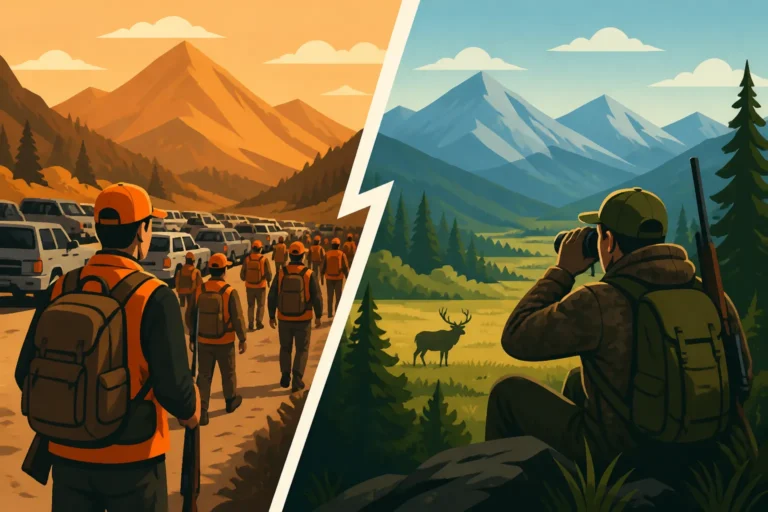
One of the biggest realities of BLM land is its "multi-use" designation. This means you're not just sharing it with wildlife; you're sharing it with ATVs, dirt bikes, campers, hikers, mountain bikers, dog walkers, and livestock. This can be a blessing and a curse. More roads might mean easier access for you, but it also means more recreationalists who might inadvertently (or sometimes purposefully) disturb game animals. During popular hunting seasons, even seemingly remote BLM roads can see significant traffic.
It's vital to:
- Be courteous: A friendly wave goes a long way. Most people are just enjoying the outdoors.
- Be visible: Wear enough blaze orange or pink during rifle seasons, even if it's not strictly required for archery.
- Be patient: You might have to adjust your plans if you encounter unexpected recreational activity. Sometimes, this means moving to a different drainage or waiting for the crowds to dissipate.
- Respect private property: Always assume fences and gates mark private land, unless
onX Huntor signage clearly indicates otherwise. Leave gates as you find them.
Livestock and Fencing
Many BLM lands are leased for livestock grazing, particularly cattle and sheep. You will undoubtedly encounter them. This isn't necessarily a bad thing; sometimes game animals will travel with livestock. However, you need to be aware of:
- Fencing: Ranchers often put up fences to manage their herds. These can sometimes impede your progress or force detours. Always leave gates exactly as you find them (open if open, closed if closed). Cutting fences is illegal and can lead to serious consequences.
- Water sources: Livestock often use the same water sources as wildlife. If a waterhole is heavily used by cattle, elk and deer might shy away from it, or only visit during nocturnal hours.
- Waste: Be prepared for cow patties. Seriously. Wear appropriate footwear and be mindful of your footing.
- Interactions: While generally docile, be aware of bull cattle, especially with calves. Give them space.
Water Availability and Backcountry Logistics
Unlike some high-elevation National Forests with abundant streams, many BLM areas, especially in arid Western Colorado, can be surprisingly dry. Water availability can be a significant limiting factor, not just for game, but for you as a hunter.
- Planning: Always carry more water than you think you need. For day hunts, this means a hydration pack and extra bottles. For longer backcountry trips, you'll need a reliable water filter or purification tablets.
- Scouting for Water: Prioritize identifying reliable water sources during your e-scouting and on-the-ground reconnaissance. Mark them on your
onX Huntmap. - Backcountry Camps: If planning a multi-day trip, consider how you'll resupply water or if your chosen camp location is near a reliable source. Our guide on Colorado Backcountry Hunting Guide can help with more in-depth planning for remote hunts.
- Packing Out: The logistics of packing out an animal, especially a large one like an elk, from remote BLM terrain cannot be underestimated. You need a sturdy frame pack (like those from Mystery Ranch or Kifaru), game bags, and a clear plan. If you're hunting solo, breaking down an animal into manageable loads and making multiple trips is often necessary. Read our guide on How to Pack Out an Elk in Colorado for comprehensive advice.
Navigating these challenges requires careful planning, a flexible mindset, and a willingness to adapt.
Ethical Hunting and Conservation on BLM Lands
As hunters, we are stewards of the land and its wildlife. Our actions on BLM lands directly reflect on the hunting community and can impact future access and opportunities. Practicing ethical hunting and conservation is not just good practice; it's our responsibility.
Leave No Trace Principles
The "Leave No Trace" ethos is more than just a catchy phrase; it's a critical set of principles for minimizing our impact on public lands. When hunting on BLM, this means:
- Pack it in, pack it out: Absolutely everything you bring onto the land must leave with you, including trash, spent cartridges, and any waste.
- Dispose of waste properly: Dig catholes for human waste at least 200 feet from water sources, camps, and trails.
- Minimize campfire impacts: Use existing fire rings, keep fires small, and ensure they are completely out and cold to the touch before leaving. During dry periods, fire bans are common and must be strictly adhered to.
- Respect wildlife: Observe from a distance, never harass animals, and minimize disturbance to their natural behaviors.
- Stay on established trails/roads: Avoid creating new routes that can lead to erosion or damage vegetation.
- Leave what you find: Don't disturb historical artifacts, rocks, plants, or other natural objects.
By adhering to these principles, we help preserve the wild character of BLM lands for future generations of hunters and outdoor enthusiasts.
Respecting Fellow Hunters and Other Users
BLM land is a shared resource, and conflicts can arise when different user groups or even different hunters don't respect each other's space or goals.
- Give space: If you encounter another hunting party, give them a wide berth. If you see them actively stalking or calling, consider moving to a different area to avoid interfering with their hunt.
- Noise awareness: Be mindful of loud noises, especially around popular campsites or trailheads.
- Camp etiquette: Keep your camp clean and organized. Avoid spreading out excessively or monopolizing prime camping spots.
- Communicate: A friendly chat can often resolve potential conflicts before they escalate. Most people out there are good, reasonable folks.
- Roads and vehicles: Drive courteously on primitive roads, minimize dust, and pull over to let others pass. Respect private land signs and do not block access.
By fostering a culture of respect, we ensure that BLM lands remain enjoyable for everyone, reducing friction and preserving access.
Understanding and Reporting Poaching
Poaching is a serious crime that undermines conservation efforts and steals opportunities from legal, ethical hunters. It's a problem that affects all wildlife and all land types, including BLM.
- Know the law: Familiarize yourself with Colorado's hunting regulations and season dates.
- Report suspicious activity: If you witness or suspect poaching, gather as much information as safely possible (vehicle descriptions, license plates, physical descriptions, specific locations, date/time) and report it to Colorado Parks and Wildlife immediately. You can call Operation Game Thief at 877-COLO-OGT (877-265-6648). Your anonymity is protected.
- Protect your harvest: Once you harvest an animal, ensure it's properly tagged, quartered, and packed out in accordance with regulations. Don't leave edible meat in the field.
Being vigilant and reporting poaching helps protect the precious wildlife resources that make hunting on Colorado's BLM lands such a privilege. Our collective responsibility for conservation ensures healthy populations and sustainable hunting for years to come.
| BLM Hunting Aspect | Description | Key Consideration |
|---|---|---|
| Land Type | Managed for multiple uses, often lower elevation, varied terrain (sagebrush, piñon-juniper, canyons, some timber). | Expect varied terrain and potential interactions with diverse recreational users. |
| Regulations | CPW regulations apply, but local BLM field offices may have specific closures, vehicle restrictions, or fire bans. | Always check both CPW and local BLM websites/offices for unit-specific rules. |
| Access | Often involves primitive roads. Can be interspersed with private land. onX Hunt is essential for identifying public access and boundaries. |
Be prepared for extensive hiking; scout legal access points diligently. |
| Wildlife | Holds elk, mule deer, pronghorn, bear, and other species. Lower elevations often become key winter range. | Research harvest data and population trends for your target species and GMU. |
| Challenges | High potential for sharing with ATVs, campers, hikers. Livestock grazing is common. Water can be scarce in arid regions. Long pack-outs are typical. | Plan for water, be courteous, and prepare for strenuous packing. |
| Tactics | Excellent for spot-and-stalk, still-hunting, and waterhole ambushes. Calling for elk can be effective during the rut. | Patience and good optics are paramount for success, especially in open country. |
This detailed breakdown of BLM land hunting in Colorado should provide a robust foundation for planning your next adventure. Remember, success often comes to those who are well-prepared, persistent, and respectful of the land and its resources.
Disclaimer
Hunting is an inherently dangerous activity. This guide provides general information and recommendations. It is crucial to always comply with all local, state, and federal hunting regulations and laws. Hunter safety courses are highly recommended. Always be aware of your surroundings, understand your equipment, and prioritize safety above all else. The author and publisher are not responsible for any accidents, injuries, or legal issues that may arise from hunting activities.