Colorado GMU 76 Hunting Guide
Hunting a specific Game Management Unit (GMU) in Colorado can feel like deciphering a secret code, especially when you're looking at a unit as revered and notoriously challenging as GMU 76. It’s a place that calls to mind rugged mountains and legendary elk, but it also comes with its own set of hurdles, from navigating tough terrain to securing one of its highly coveted tags. This guide will walk you through everything you need to know about hunting GMU 76, from its unique geography to draw strategies and crucial hunting tactics.
Understanding Colorado GMU 76: A Hunter's Overview
GMU 76 is often spoken of in hushed tones among Colorado elk and mule deer hunters, and for good reason. It’s a true high-country paradise, a place where the air is thin, the peaks are dramatic, and the game is legendary. Understanding the fundamental characteristics of this unit is your first step towards even contemplating a hunt here.
Geography and Terrain of GMU 76
Located deep within Colorado's majestic San Juan Mountains, GMU 76 is defined by its extreme elevation and rugged, diverse terrain. We're talking about altitudes that regularly soar above 10,000 feet, with many peaks pushing well past 13,000 and even 14,000 feet. This isn't rolling foothills hunting; this is true mountain wilderness. The landscape is a breathtaking mosaic of steep, dark timbered slopes (primarily spruce and fir), expansive alpine basins, open meadows, and willow-choked creek bottoms. You'll find countless cirques, massive rockslides, and deep canyons that can make traversing even short distances an all-day affair.
Water sources are generally abundant, fed by snowmelt and frequent afternoon rains, creating lush environments in drainages and around natural springs. This provides critical resources for elk and mule deer throughout the hunting seasons. However, these features also mean constantly changing weather patterns, from warm sunny mornings to sudden afternoon thunderstorms and even early-season snow. The nearest small towns that offer limited services and a launching point for a GMU 76 hunt are Lake City to the north and Creede to the east, both charming but remote communities. The sheer scale and wildness of the landscape mean animals have vast areas to roam, making finding them a significant challenge, but also a deeply rewarding experience when successful.
Access and Public Land in GMU 76
One of the defining features of GMU 76, and a major draw for hunters seeking a true wilderness experience, is its extremely high percentage of public land. The unit is almost entirely comprised of National Forest, with a significant portion lying within the vast Weminuche Wilderness Area. This means a hunter has incredible freedom to roam, but it also comes with limitations on motorized access. While some decent forest service roads penetrate the outer fringes of the unit, particularly on the northern and eastern sides, most of the prime hunting ground requires significant foot travel, often miles deep into the backcountry.
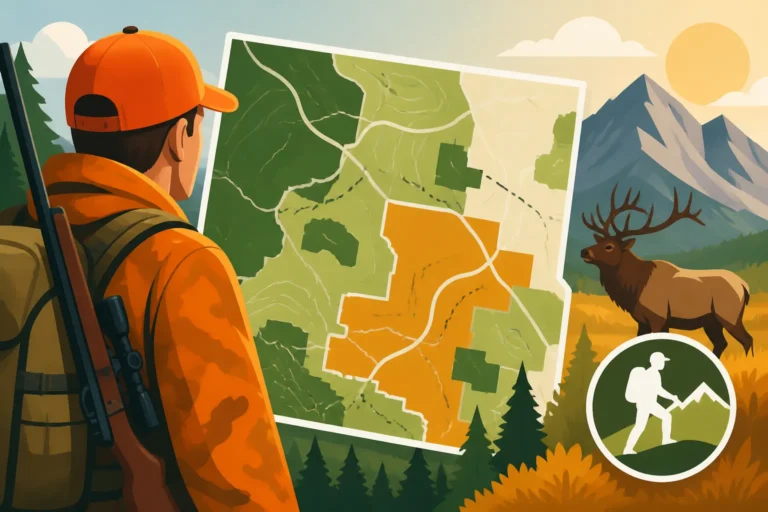
You'll find numerous trailheads that lead into the Weminuche and other remote areas, but these are often long, strenuous hikes that demand robust physical conditioning and excellent navigational skills. Seasonal road closures due to snow are common, even in early archery seasons at higher elevations, forcing hunters to walk further than anticipated. Using mapping applications like onX Hunt is not just recommended here; it's almost mandatory. This tool will be your best friend for identifying public versus private boundaries, deciphering intricate trail systems, locating water sources, and understanding topographical challenges well before you ever set foot on the ground. For more on navigating these vast areas, check out our Colorado Backcountry Hunting Guide.
Primary Game Species and Populations in GMU 76
GMU 76 is primarily known for its incredible elk hunting opportunities, often considered one of Colorado's premier units for both bulls and cows. The sheer size of the unit and its abundant, varied habitat support a robust elk population. While it's not exclusively a "trophy unit" in the sense of guaranteed giant bulls, it certainly holds the potential for mature, high-scoring animals. The ruggedness of the terrain helps keep some of these older bulls from being pressured too heavily, allowing them to reach their full potential.
Mule deer are also present in GMU 76, and while perhaps not as famous as the elk, the unit holds a healthy population of high-country bucks. These deer often inhabit the same general areas as elk, but they tend to prefer the more open, high-alpine environments, rocky slopes, and timberline fringes. Hunters pursuing both species will appreciate the chance to encounter either. The quality of both elk and mule deer in GMU 76 reflects a well-managed herd in a truly wild, expansive environment, offering a fair chase challenge for those willing to put in the effort. For a broader understanding of the species you might encounter, our Colorado Big Game Species Guide can offer more insights.
Navigating the Draw and Tag Opportunities in GMU 76
While the thought of hunting GMU 76 might stir a hunter's soul, securing a tag is where the real challenge often begins. This unit is highly desirable, meaning tags are not simply handed out; they are earned through Colorado's preference point system. Understanding this process is paramount.
Draw Odds and Preference Points for GMU 76
Let's be blunt: GMU 76 is a tough draw, especially for bull elk and quality mule deer buck tags. It consistently ranks among the units requiring the most preference points in the state. For non-residents, drawing a bull elk tag in GMU 76 often requires a significant number of preference points, sometimes pushing into double digits, depending on the specific hunt code and the year's application statistics. Even for residents, while requiring fewer points, it's far from an Over-The-Counter (OTC) unit. Cow elk tags can sometimes be easier to draw, particularly in later seasons, but even those require careful planning.
This high demand means you need to play the long game. Many hunters dedicate years to building up preference points specifically for a shot at a unit like 76. Websites like GoHunt are invaluable resources for researching historical draw odds, understanding point creep, and making informed decisions about when to apply and for which specific hunt code. They break down the number of tags available, the points required by successful applicants, and even the percentage of non-resident allocation. This data is critical for any serious applicant. Dive deeper into the system with our Colorado Draw System and Preference Points guide or learn more about Colorado Preference Points Explained.
Here's a generalized look at point requirements for GMU 76 (actual numbers vary annually and by specific hunt code):
| Species/Sex | Season Type | Resident Preference Points (Avg.) | Non-Resident Preference Points (Avg.) | Difficulty |
|---|---|---|---|---|
| Bull Elk | Archery, Muzzleloader | 5-10+ | 10-15+ | Very High |
| Bull Elk | Rifle (1st, 2nd, 3rd) | 8-12+ | 12-18+ | Very High |
| Cow Elk | Rifle (Later Seasons) | 0-3 | 3-6 | Moderate |
| Buck Mule Deer | Archery, Muzzleloader | 4-8+ | 8-12+ | High |
| Buck Mule Deer | Rifle (Later Seasons) | 6-10+ | 10-15+ | Very High |
Note: These are average estimates and can fluctuate significantly year to year. Always consult the official Colorado Parks and Wildlife (CPW) statistics and resources like GoHunt for the most current data.
Season Dates and Specific Regulations for GMU 76
GMU 76 participates in Colorado's standard big game seasons, offering opportunities during archery, muzzleloader, and multiple rifle seasons. Each season presents its own unique challenges and advantages in this high-country environment. Archery season typically runs from late August through late September, often coinciding with the early rut, which can be an exciting, albeit physically demanding, time to hunt. Muzzleloader season is a short, distinct window in mid-September, offering a specific type of challenge. The regular rifle seasons are staggered, typically from mid-October through November. Understanding the specific Colorado Hunting Seasons Explained can help you plan.
Due to the unit's reputation and management goals, GMU 76 often has specific regulations regarding antler points for bull elk, such as a "4-point or better on one side" rule, or restrictions on legal bucks for mule deer. These regulations are designed to protect younger animals and foster a healthier, older age class. It is absolutely crucial to consult the annual Colorado Big Game Hunting Brochure released by Colorado Parks and Wildlife (CPW) well in advance of applying. This document details all hunt codes, dates, and unit-specific rules. Never rely on old information; always verify the current year's regulations.
Non-Resident Considerations for GMU 76
For non-resident hunters, drawing a tag in GMU 76 presents an even greater hurdle. Colorado has a specific allocation system, reserving a certain percentage of tags for non-residents (typically 20-35% for limited units). While this ensures non-residents have a chance, the sheer number of non-resident applicants for premium units like 76 means the preference point requirements skyrocket. Many non-residents commit to building points for 10, 15, or even 20+ years for a guaranteed shot at a top-tier unit tag.
If you're a non-resident looking to hunt GMU 76, your strategy needs to be meticulous. You must decide whether to apply as a single applicant or with a group, as this can affect your draw odds. Consider which season offers the best balance of draw odds and hunting preferences, and be prepared for the financial commitment of licenses and application fees over many years. While it's a long road, the reward of hunting such a magnificent unit makes the effort worthwhile for many. For deeper insights into non-resident rules, check out our Colorado Non-Resident Hunting License Guide.
Strategies for a Successful Hunt in GMU 76
Drawing a tag for GMU 76 is an achievement in itself, but it's just the beginning. The real work starts with planning and executing a hunt in this challenging, yet incredibly rewarding, environment. Success here hinges on meticulous preparation and smart on-the-ground tactics.
E-Scouting and Pre-Season Preparation
Given the vastness and ruggedness of GMU 76, effective e-scouting is not just a luxury; it's a necessity. Most hunters cannot physically scout this unit before their hunt, making digital tools their primary way to "see" the terrain. Start by utilizing mapping software like onX Hunt and GoHunt (often integrated with detailed maps). Look for key terrain features that dictate elk and deer movement: saddles connecting drainages, benches on steep slopes, natural funnels, secluded dark timber patches for bedding, and open alpine basins for feeding and glassing. Pay close attention to water sources and areas with north-facing slopes, which often hold cooler temperatures and thicker feed later in the season.
Identify potential access points, whether official trailheads or less-used routes. Plot out possible camp locations (especially if planning a backcountry spike camp), emergency exit routes, and areas to avoid, such as extreme cliff faces or impenetrable timber. Consider how the wind and thermals might behave in different drainages. Pre-download maps for offline use, as cell service is virtually nonexistent in most of GMU 76. Even if you can't put boots on the ground, spending countless hours digitally exploring the unit will give you a significant advantage and shorten the learning curve once you arrive. For a full breakdown, check out our How to E-Scout Before a Colorado Hunt guide.
On-The-Ground Hunting Tactics in GMU 76
Once you're actually in GMU 76, your e-scouting needs to translate into actionable hunting strategies. This unit demands a high level of adaptability and a willingness to cover serious ground.
Elk Hunting Tactics
For elk, GMU 76 is a test of endurance and observation. You'll likely be How to Hunt Elk at High Elevation, often starting your days glassing expansive basins from a high vantage point at first light, looking for movement in distant timber patches or open meadows. Due to the vastness, patience with your optics is key. Be prepared to put on miles, whether still-hunting through thick timber or navigating open parks. Understanding how to use the wind and thermals is paramount; in the mountains, thermals often draw up-slope in the morning and fall down-slope in the evening.
Calling can be effective, especially during the archery and early muzzleloader seasons when the rut is in full swing. However, don't just blindly bugle; learn to use subtle cow calls to locate and draw in curious animals, or use bugles strategically to challenge a dominant bull. Remember, this is pressured public land, so often the more silent and stealthy approach, focused on finding unpressured animals in deep timber, yields better results. For more details, our Colorado Elk Hunting Guide is a great resource.
Mule Deer Hunting Tactics
Mule deer in GMU 76 are true high-country residents. They often inhabit the timberline and above, favoring rocky slopes, sparse timber, and alpine bowls. Spot-and-stalk is the name of the game for these animals. Spend hours behind your binoculars and spotting scope, meticulously picking apart every patch of timber, rockslide, and snowfield. Mule deer can blend in incredibly well, so look for subtle clues: a horizontal line, an ear twitch, or the glint of an antler.
They will often bed down in steep, protected areas during the day, so focus your glassing efforts on these spots, especially in the mornings and evenings when they are more active. Be prepared for long stalks over difficult terrain, making sure to use natural cover, manage your scent, and always keep the wind in your favor. Knowing how to interpret their behavior in this extreme environment will greatly increase your chances. For more on this, consult our Colorado Mule Deer Hunting Guide.
Physical Fitness and Mountain Acclimation
Hunting in GMU 76 is not for the faint of heart or the out of shape. The elevations are extreme, the terrain is relentless, and you'll be covering miles with a heavy pack. You must be in excellent physical condition to enjoy, and safely complete, a hunt here. Start your physical training months in advance. Focus on cardiovascular endurance (hiking with a weighted pack, running, stair climbing), strength training (legs, core, back), and flexibility. Simulating hunting conditions by hiking steep trails with the gear you plan to carry is highly beneficial. Consider spending time at elevation if possible before your hunt to begin the acclimation process, or arrive several days early to give your body time to adjust to the thinner air.
Altitude sickness is a real concern and can severely impact your hunt, or worse, put your life at risk. Stay hydrated, eat well, and listen to your body. Don't push yourself past your limits too quickly. Being physically prepared will not only make the hunt more enjoyable but will also increase your mental fortitude when facing the inevitable challenges of hunting Colorado's high country. Remember, if you're successful, packing out an elk from GMU 76 is an monumental task, often taking multiple trips over brutal terrain. Read our How to Physically Prepare for Colorado Elk and How to Pack Out an Elk in Colorado guides for in-depth preparation.
Disclaimer
The information provided in this Colorado GMU 76 hunting guide is intended for informational purposes only and serves as a general overview. Hunting regulations, season dates, and draw odds are subject to change annually. Always consult the most current official Colorado Parks and Wildlife (CPW) regulations and brochures before planning and undertaking any hunting activities. It is the hunter's responsibility to know and abide by all applicable laws and regulations.